
Our readers keep the lights on and my morning glass full of iced black tea. As an Amazon Associate, I earn from qualifying purchases.
Specs are compiled from manufacturer listings and verified buyer reviews and can change over time — please confirm the key details on the product page before buying.
The wrong gym shoe can throw off your squat depth, make your feet ache on the stair climber, and leave you feeling unstable during lateral drills. You need a trainer that handles both the treadmill and the weight room without compromise, whether you are chasing a new deadlift PR or just want a comfortable all-rounder.
I’m Min — the founder and writer behind Gadgets Feed. This guide is built by comparing the manufacturers’ published specifications and the patterns across verified customer reviews, so you get each pick’s real strengths and trade-offs instead of marketing spin.
You’ll find five models that cover everything from budget-friendly versatility to premium stability, each chosen to match a specific training style. This is the definitive guide to the athletic shoes for gym that work as hard as you do.
Quick Picks
- Under Armour Men’s TriBase Reign 6 Trainer Shoes — Top Performer
- Reebok Nano Gym — Best Overall
- Nike Men’s MC Trainer 3 Training/Workout Shoes — Best Value
- New Balance Men’s 608 V5 Casual Comfort Cross — Comfort Champion
- Nike Men’s Flex Train Workout Shoes — Budget Champion
How To Choose The Best Athletic Shoes For Gym
Picking a gym shoe isn’t as simple as grabbing the coolest-looking pair on the shelf. Every type of training — from heavy deadlifts to HIIT and treadmill running — puts a different demand on your footwear. Here are the specs that actually separate a good gym shoe from a great one.
Flatness and Stability: The Lifting Foundation
If you squat or deadlift, a squishy running-shoe sole is your enemy. You want a firm, flat base that doesn’t compress under the bar. Look for a shoe described as having a “low-to-the-ground build” or a “flat, stable base” — this helps you keep your weight over your midfoot rather than rocking forward or backward.
Heel Drop: Cushion vs. Control
Heel drop is the height difference between the heel and forefoot. A high drop (10-12mm) feels more like a running shoe and favors heel-strikers on the treadmill. A low drop (0-6mm) keeps you closer to the ground, offering better proprioception (your body’s sense of position) for lifts and lateral movement. Cross-trainers typically split the difference around 4-8mm.
Upper Material: Breathability vs. Durability
A soft, lightweight mesh upper keeps your feet cool during intense cardio circuits but may not hold up as long against rope climbs or lateral drag. A suede or TPU-reinforced upper offers more protection against abrasion but can run warmer. Think about your most common gym movement: if you’re hitting the turf for prowler pushes, prioritize durability; if you’re mostly on the treadmill, prioritize breathability.
Quick Comparison
| Model | Best For | Weight | Key Feature | Upper Material | Amazon |
|---|---|---|---|---|---|
| Under Armour TriBase Reign 6 | Heavy lifting & explosive WODs | 2.4 lbs | UA WARP upper & TriBase outsole | TPU mesh | Amazon |
| Reebok Nano Gym | CrossFit & strength training | — | TPU heel clip for lateral stability | Mesh & bootie | Amazon |
| Nike MC Trainer 3 | Versatile gym & HIIT | — | Forefoot flex grooves & flat stable base | Breathable mesh | Amazon |
| New Balance 608 V5 | Daily comfort & light gym | — | ABZORB heel crash pad | Suede & mesh | Amazon |
| Nike Flex Train | Light gym & everyday wear | — | Flex rubber outsole cutouts | Lightweight mesh | Amazon |
In‑Depth Reviews
1. Under Armour Men’s TriBase Reign 6 Trainer Shoes
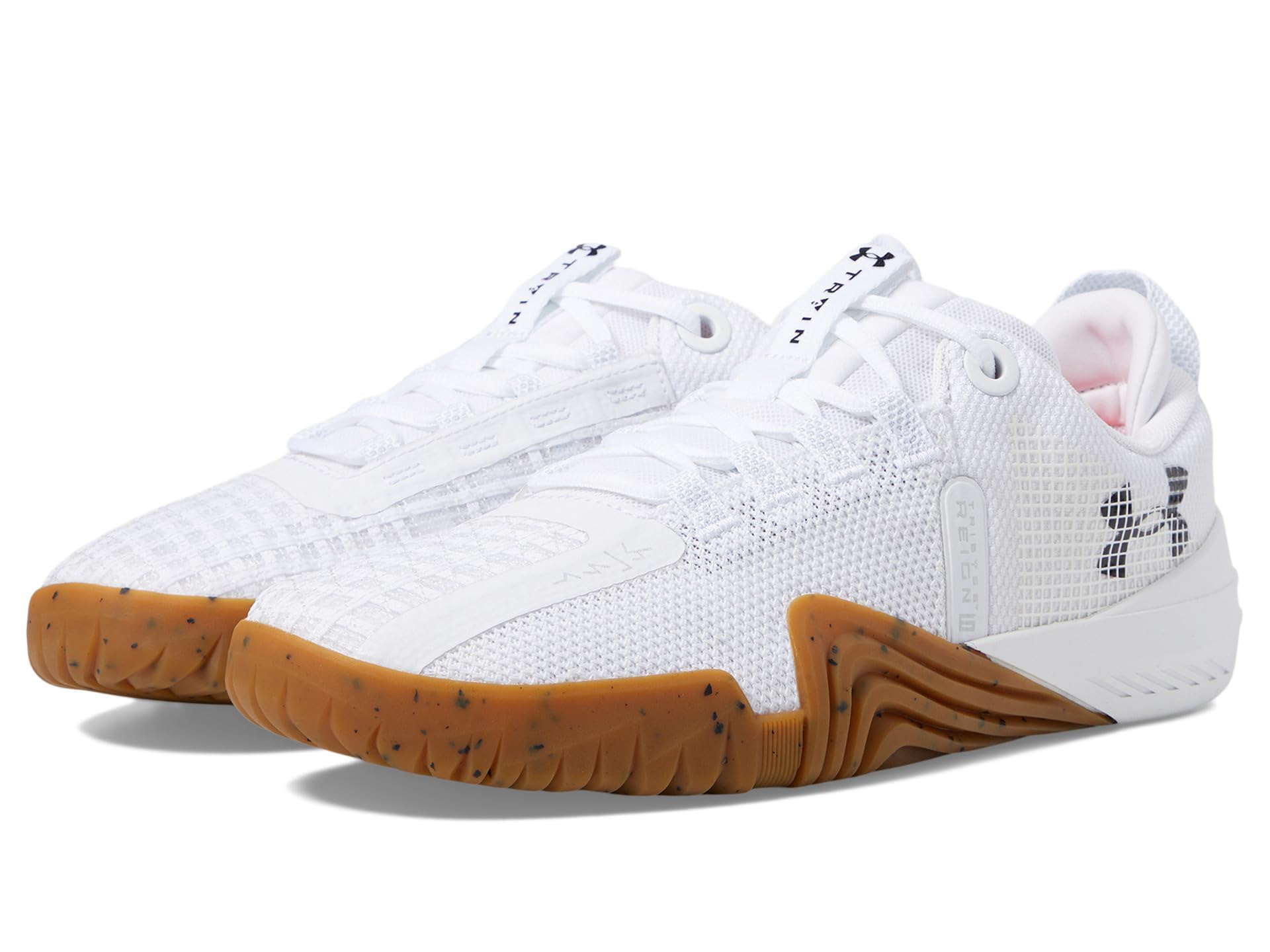
A low-to-the-ground lifter’s weapon that turns every rep into a power transfer.
This is the shoe you reach for when the barbell gets heavy and form matters most. The TriBase Reign 6 uses a three-point ground contact design — the TriBase system — that boost the rubber surface under your foot, helping you feel locked in during deadlifts and squats. Unlike the more cushioned picks on this list, the UA WARP upper wraps your foot with a TPU mesh that blends durability and breathability, so rope climbs and dynamic movements won’t chew through the material quickly.
The dual-density midsole is a smart compromise: a softer forefoot for comfort on lighter cardio, and a firmer heel for stability under heavy loads. The external heel clip and internal heel counter add extra support that buyers report makes a real difference on lateral cuts. At 2.4 pounds for the pair, it’s not the lightest here, but that weight pays off in premium abrasion resistance — the full-rubber outsole wraps up the sides and includes a medial rope grip pattern for climbers.
The stability king: If explosive lifts and WODs are your main gym diet, the TriBase Reign 6 is a safe bet. Its low-to-the-ground build gives you greater feel for the floor than the Nike MC Trainer 3, and the dual-density foam handles heavy squat days without bottoming out. The only trade-off is the slightly higher price tier — you’re paying for durability that will last across hundreds of sessions.
Reach for this if: you squat heavy, hit CrossFit-style workouts, or want a shoe that survives rope climbs and turf sprints.
Look elsewhere if: you only do machine-based cardio and light dumbbell work — the firm heel may feel stiff on long treadmill sessions.
2. Reebok Nano Gym
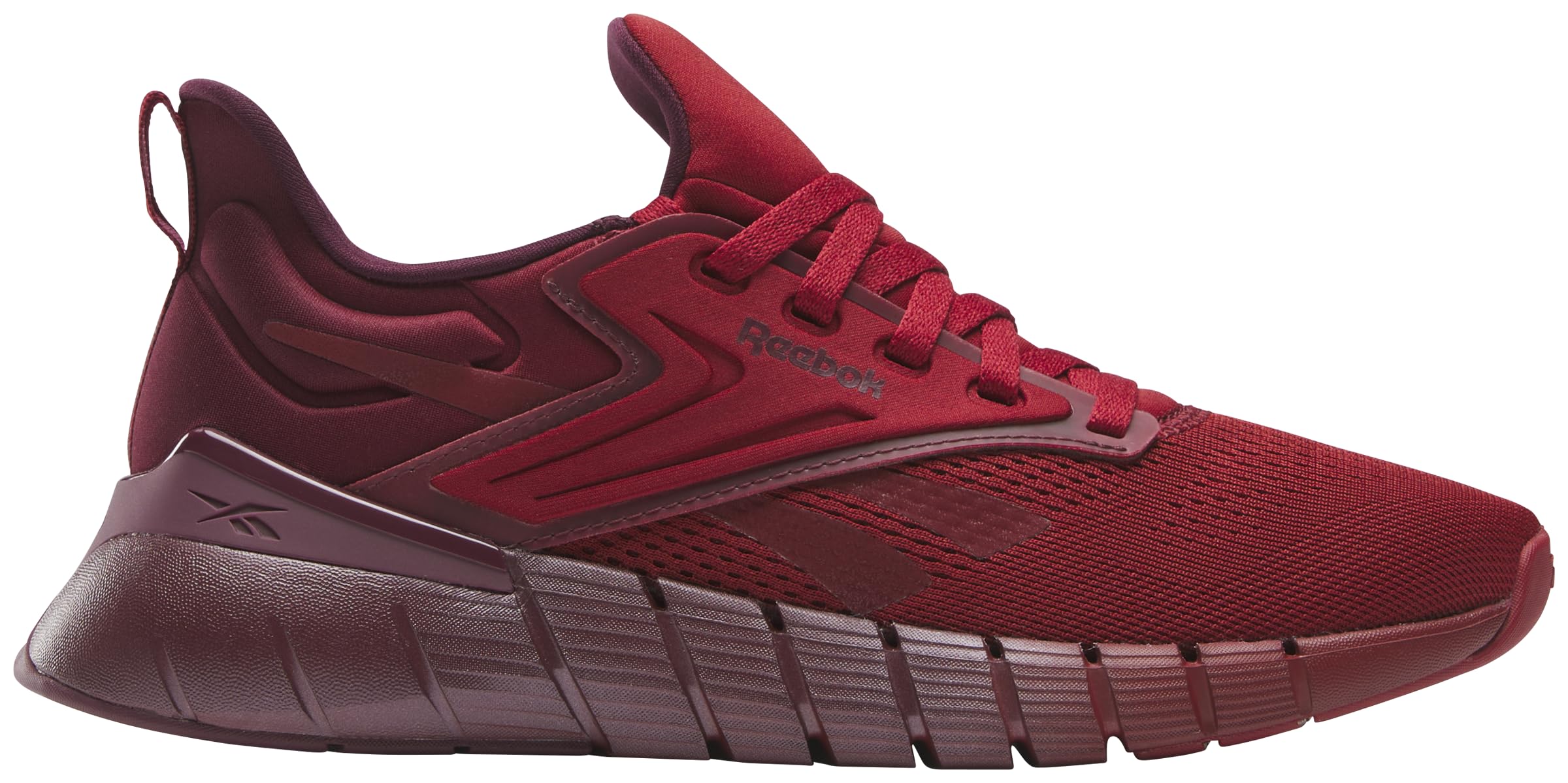
The women’s training shoe that brings CrossFit grit and daily-walk comfort in one package.
Reebok’s Nano line has been a staple in CrossFit boxes for years, and the Nano Gym continues that tradition with a focus on stability and support for lateral movement. The TPU heel clip (a thermoplastic polyurethane wrap around the back) locks your heel in place during side-to-side drills, while a high-traction outsole keeps you planted on rubber gym floors.
Where this shoe differs from the New Balance 608 V5 is its plush foam collar and bootie construction — that snug, sock-like fit around the ankle — which feels secure without pinching. Reviewers who wear these for both strength training and walking note the transition is smooth, which is rare among dedicated training shoes. This is a women’s model in sizes 5-12, so it won’t fit everyone, but for female lifters who want a gym sneaker that also works as an everyday walker, it balances performance and comfort well.
The versatile contender: The Nano Gym covers more ground than a pure lifting shoe, with enough stability for heavy squat sessions and enough cushion for walking a couple miles. The trade-off is that the bootie construction makes it a bit tighter to slip on compared to standard lace-up trainers — you’ll want to size up half a length if you prefer a roomier toe box.
Best for: women who want one shoe that handles CrossFit, HIIT, and daily walking without swapping pairs.
skip it if: you need a men’s size or prefer a traditional tongue-and-lace construction for easy on-off.
3. Nike Men’s MC Trainer 3 Training/Workout Shoes
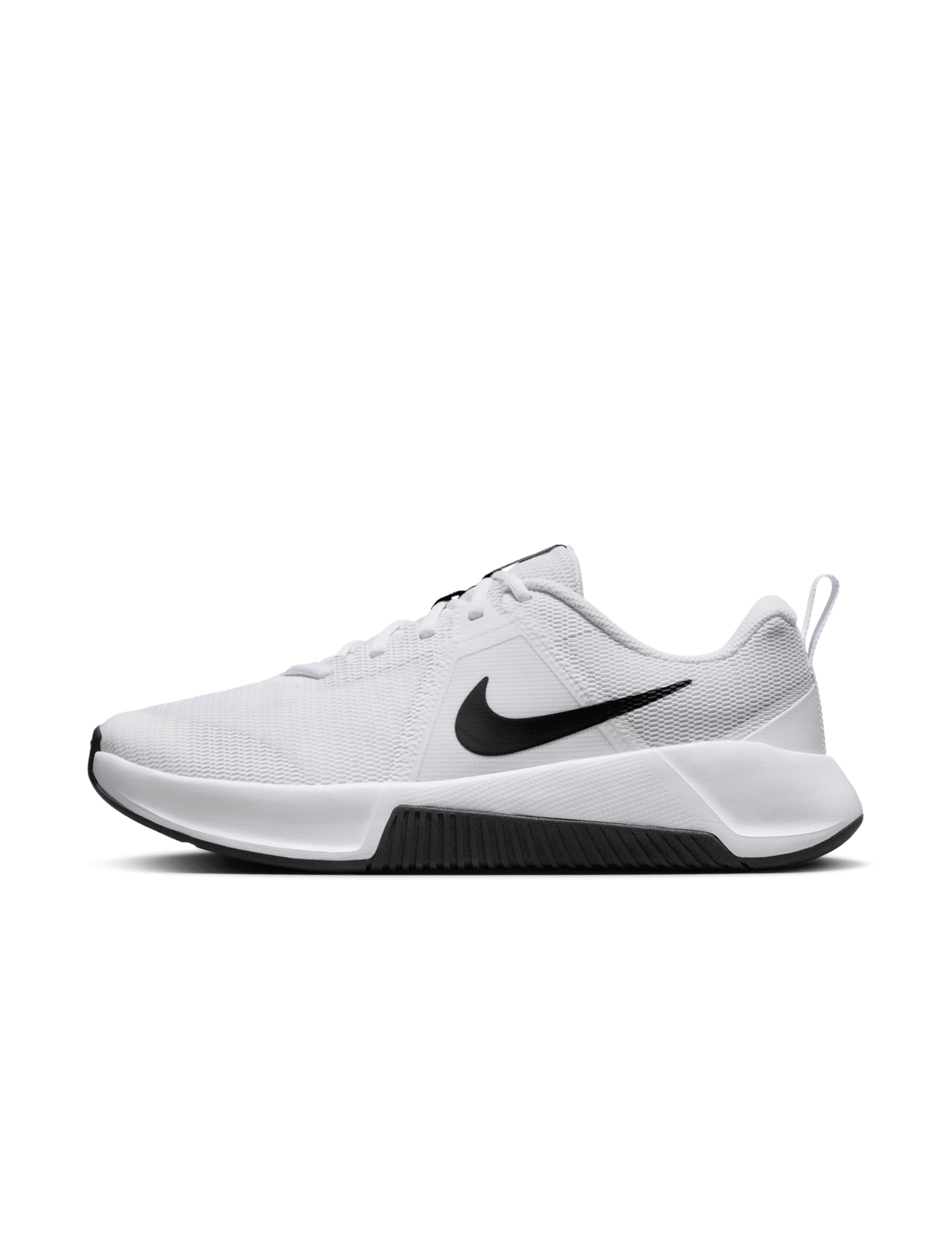
The affordable all-rounder that proves you don’t need to spend big for a solid gym companion.
Nike designed the MC Trainer 3 as a true hybrid: moderate cushioning for treadmill miles, enough stability for barbell work, and surprising flexibility thanks to forefoot flex grooves that let the shoe move naturally with your foot. The flat, stable base is exactly what you want for lateral movements like burpees, side shuffles, and agility drills — it keeps your foot from rolling over under load.
Owners mention that “I workout 2 hours everyday and my feet never hurt,” which matches the foam midsole’s moderate compression. Unlike the firmer Under Armour TriBase Reign 6, this shoe leans more toward comfort, making it a better pick for gym-goers who mix cardio and lifting equally. One reviewer called it the “most versatile and stylish xtrainer on the market” and noted the wide toe box and low drop (a smaller height difference between heel and forefoot) make it ready for everything from rowing to deadlifts.
The value king: At its price point, the MC Trainer 3 delivers a genuinely versatile gym shoe that doesn’t compromise on the basics. It undercuts the premium picks on cost while still offering a dedicated flat base and flex grooves — features you normally have to pay more for. The only area it trails the TriBase Reign 6 is in outright abrasion resistance for rope climbs, but for 95% of gym workouts, this is all you need.
Grab this if: your gym session is a mix of cardio, weights, and HIIT — and you want one shoe that does it all without draining your wallet.
Not for you if: you’re a competitive powerlifter who needs a zero-drop, ultra-firm platform for maximal lifts — the moderate cushion will compress under serious weight.
4. New Balance Men’s 608 V5 Casual Comfort Cross Trainer

The all-day trainer that cushions every step, from the gym floor to the sidewalk commute.
If your gym routine includes a lot of standing — waiting for the squat rack, walking on the treadmill, or staying on your feet all day at work — the New Balance 608 V5 puts comfort first. The ABZORB heel crash pad (a foam insert in the heel that absorbs shock) and a molded PU insert (a firm, supportive insole) work together to soften every heel strike, reducing fatigue during long gym sessions.
The suede and mesh upper is a notable departure from the lightweight synthetics on the Nike picks: it’s sturdier and feels more broken-in over time, but it does run warmer. The dual-density collar foam wraps the ankle in a way that minimizes irritation, and the Phantom Liner interior — which has very few internal seams — helps prevent rubbing or hot spots during dynamic movements. Compared to the Nike Flex Train, the 608 V5 is heavier and less flexible, but that weight comes with a plushness that makes it ideal for beginners or anyone whose gym session involves more walking than explosive lifts.
The comfort-first pick: The 608 V5 is not designed for maximal deadlifting or rope climbs — its strength is in how it feels after two hours of cross-training and errands. The ABZORB crash pad is genuinely noticeable on hard gym floors, and the relaxed fit last gives wider feet the space they need. The catch is that this comfort comes at the cost of ground feel: you won’t feel as connected to the floor during squats as you would in the Nike MC Trainer 3.
Ideal for: casual gym-goers, walkers, and anyone on their feet for long stretches who wants a do-it-all shoe that prioritizes cushioning.
Pass on this if: you’re a serious lifter who needs a flat, minimal platform for barbell work — the thick midsole isn’t stable enough for heavy compound lifts.
5. Nike Men’s Flex Train Workout Shoes
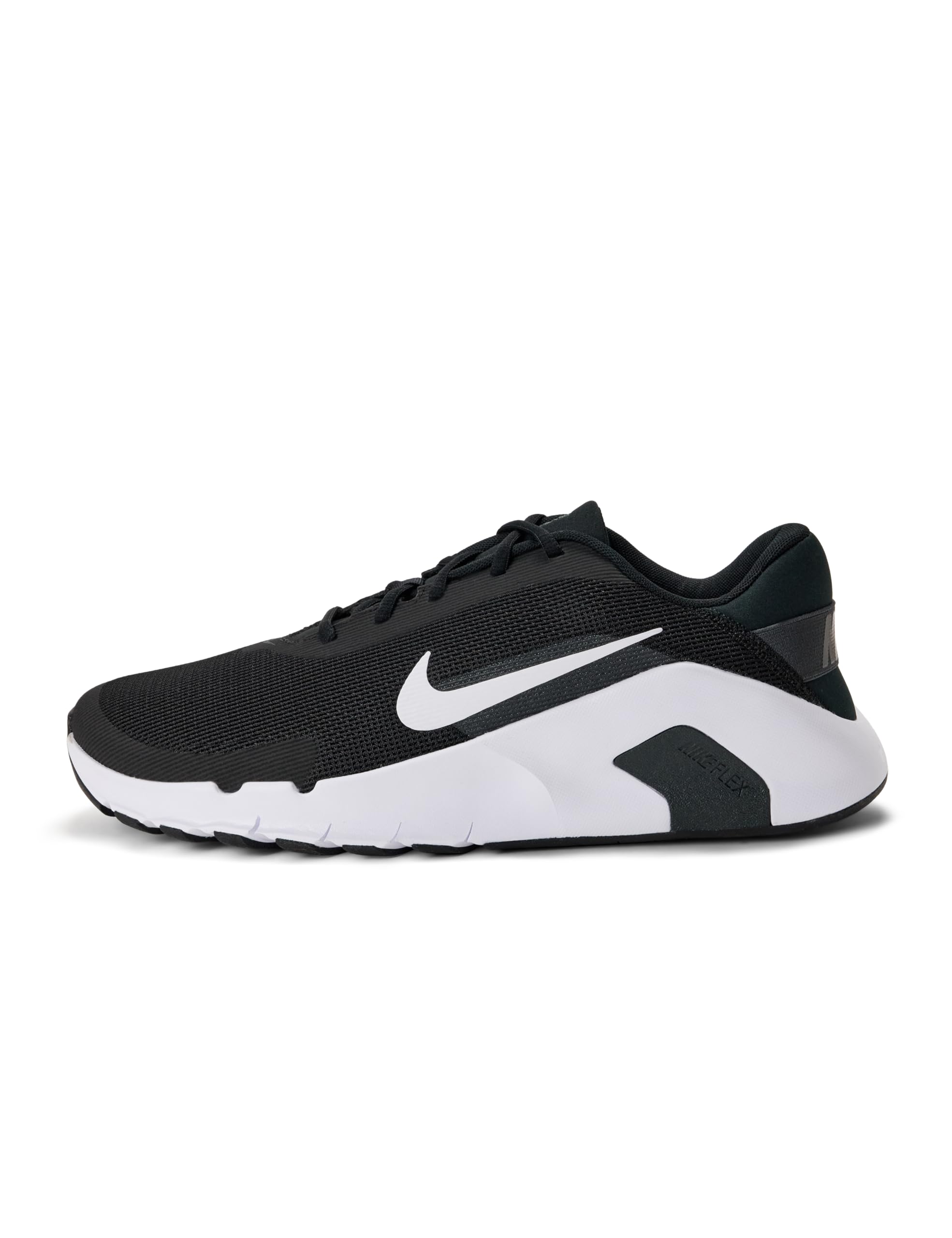
An ultralight daily trainer that’s as comfortable on the gym floor as it is on the street.
The Nike Flex Train is the most budget-conscious pick here, and it leans into an easy, flexible feel that works well for light gym work and everyday wear. The rubber outsole features built-in cutouts that let the shoe bend and move with your foot — hence the “Flex” name — making it a good companion for power walking, light running, and machine-based circuits. A full-length foam midsole provides cushioning that buyers describe as “super light even in a men’s size 13” and “wide for a bigger man’s foot.”
One reviewer at 6’3″ and 220 lbs noted the “slightly large fit” with a “wider, rounder toe box,” which means the Flex Train offers more toe room than the more tapered MC Trainer 3. That extra space is welcome for people who hate cramped toe boxes during squats, but it also means the shoe isn’t as locked-in for lateral agility work compared to the MC Trainer 3’s flat stable base. The soft, lightweight mesh upper breathes well, so your feet stay cooler during warm-up runs than they would in the suede-heavy New Balance 608 V5.
Why it works
- Extremely light and flexible — good for dynamic movement and walking
- Roomy toe box suits wider feet and bigger frames (up to size 13)
- Full-length foam midsole gives solid all-day comfort
The trade-offs
- Flexible outsole means less stability for heavy deadlifts or squats
- Mesh upper is breathable but won’t hold up as long under rope climbs or turf work
Grab this for: light gym sessions, daily errands, and anyone who prioritizes a soft, flexible feel over a rigid lifting platform.
pass on it if: you need a stable, non-compressible sole for heavy compound lifts — the Flex Train’s cutout-based flexibility is the opposite of what a powerlifting shoe provides.
Understanding the Specs
Heel Drop (Offset)
This is the height difference in millimeters between the heel and forefoot of the shoe. A high drop (8-12mm) favors heel-striking runners and takes pressure off the Achilles. A low drop (0-6mm) keeps you more parallel to the ground, which is preferred for squatting and deadlifting because it lets your weight sit over the midfoot. Cross-trainers typically live in the 4-8mm range — enough cushion to run on, flat enough to lift.
Upper Construction and Toe Box
This is what wraps your foot, and its material determines breathability, durability, and fit. A lightweight mesh upper (like on the Nike Flex Train) keeps your feet cool during cardio but is less resistant to abrasion. A suede or TPU-reinforced upper (like on the New Balance 608 V5) adds structure and longevity at the cost of heat retention. The toe box shape matters too: a wider, rounder toe box gives toes room to splay during squats, while a tapered toe box feels more athletic but may pinch wider feet during lateral movements.
FAQ
Can I use running shoes for gym workouts?
What does “heel drop” mean for gym shoes?
How do I know if a gym shoe fits my wide feet?
Are Reebok Nano shoes good for weightlifting?
How long do gym shoes typically last?
Can I use gym shoes for outdoor running?
What’s the difference between the Nike MC Trainer 3 and the Flex Train?
Do I need special shoes for CrossFit or HIIT?
Final Thoughts: The Verdict
For most buyers, the athletic shoes for gym winner is the Under Armour TriBase Reign 6 because it brings a strong mix of stability, durability, and ground feel for serious lifting and explosive training. If you want the best value that still handles a full gym routine, grab the Nike MC Trainer 3. And for all-day comfort without sacrificing training versatility, the New Balance 608 V5 is the one to pick.
How We Picked
We do not accept paid placement. Every pick is matched to a real buyer and a real use-case; we do not hands-on test units.
Sources & Methodology
Specifications: manufacturer listings and product documentation. Review insights: verified customer reviews, as of July 2026. Pricing: not shown on this page (it changes often); check the current price via the retailer link.
As an Amazon Associate, Gadgets Feed earns from qualifying purchases. This does not affect which products we feature.