
Our readers keep the lights on and my morning glass full of iced black tea. As an Amazon Associate, I earn from qualifying purchases.
Specs are compiled from manufacturer listings and verified buyer reviews and can change over time — please confirm the key details on the product page before buying.
Buying a 67mm ND filter is about one thing: controlling harsh daylight without wrecking your image’s color or sharpness. The wrong filter adds a muddy tint or a distracting “X” cross pattern, especially if you grab a variable model. This guide picks the filters that keep your shots clean, your exposure long, and your workflow simple—whether you are chasing silky waterfalls, shallow depth of field in the midday sun, or cinematic video.
I’m Min — the founder and writer behind Gadgets Feed. This guide is built by comparing the manufacturers’ published specifications and the patterns across verified customer reviews, so you get each pick’s real strengths and trade-offs instead of marketing spin.
We break down fixed-stop versus variable designs, glass quality, and coating layers so you can confidently choose the right best 67mm nd filter for your lens without second-guessing compatibility or color accuracy.
Quick Picks
- NiSi 67mm Swift True Color ND-Vario, 1-5 Stops — True Color
- K&F CONCEPT 67mm Variable ND2-2000 — Wide Range
- Gobe 67mm ND1000 (10 Stop) ND Lens Filter — Long Exposure
- Tiffen 67mm Neutral Density 0.6 Filter — Budget Entry
How To Choose The Best 67mm ND Filter
An ND filter is like sunglasses for your lens—it cuts the light entering the camera so you can use a slower shutter speed or wider aperture in bright conditions. The right one lets you blur water, create motion trails, or shoot wide-open for creamy background blur without blowing out the exposure. Here is what to look for.
Fixed-Stop vs Variable ND: Which Do You Need?
A fixed ND filter has a single, unchanging level of darkness. It is the simplest and most color-accurate choice, great for long exposures of landscapes or waterfalls where you know the light level. A variable ND lets you twist to adjust the darkness across a range; that is handy when you are switching between sunlight and shade or shooting video and need to change aperture fast. The trade-off? Variable filters can create an “X” pattern or color cast at their darkest settings, especially on cheaper models.
Stop Reduction: Matching the Filter to the Light
The “stop” tells you how much light the filter blocks. A 1-stop filter cuts light in half; a 10-stop filter lets in only 1/1000th of the light. For blurring water in broad daylight, you generally need a 6 to 10-stop filter. For simply opening your aperture on a bright day to get shallow depth of field, a 2 to 4-stop filter is enough. Read the Photo Filter Factor number—this tells you the actual light reduction multiplier (1024x means it reduces light to 1/1024 of the original).
Glass and Coatings: What Prevents Ghosting and Color Cast
Cheaper ND filters can add an unwanted color tint (often a warm yellow or magenta) that is hard to correct later. Quality optical glass with multiple anti-reflective coating layers reduces this color shift, cuts lens flare, and repels water and smudges. A 16, 18, or 20-layer nano coating also makes the filter easier to clean and less prone to ghosting when shooting towards a bright light source.
Quick Comparison
| Model | Best For | Stop Range | Coating Layers | Weight | Amazon |
|---|---|---|---|---|---|
| NiSi Swift True Color ND-Vario 1-5 Stops | Color-critical video and stills | 1-5 stops (ND2-ND32) | 20-layer Nano Coating | 136 Grams | Amazon |
| K&F CONCEPT 67mm Variable ND2-2000 | Versatile daylight to shade use | 1-11 stops (ND2-ND2000) | 18-layer Multi Coating | — | Amazon |
| Gobe 67mm ND1000 (10 Stop) | Long daylight exposures | 10 stops (fixed) | 16-layer nano-coating | 60 Grams | Amazon |
| Tiffen 67mm Neutral Density 0.6 | Budget-friendly shallow DOF | 2 stops (fixed) | No Coating | 1.6 ounces | Amazon |
In‑Depth Reviews
1. NiSi 67mm Swift True Color ND-Vario, 1-5 Stops
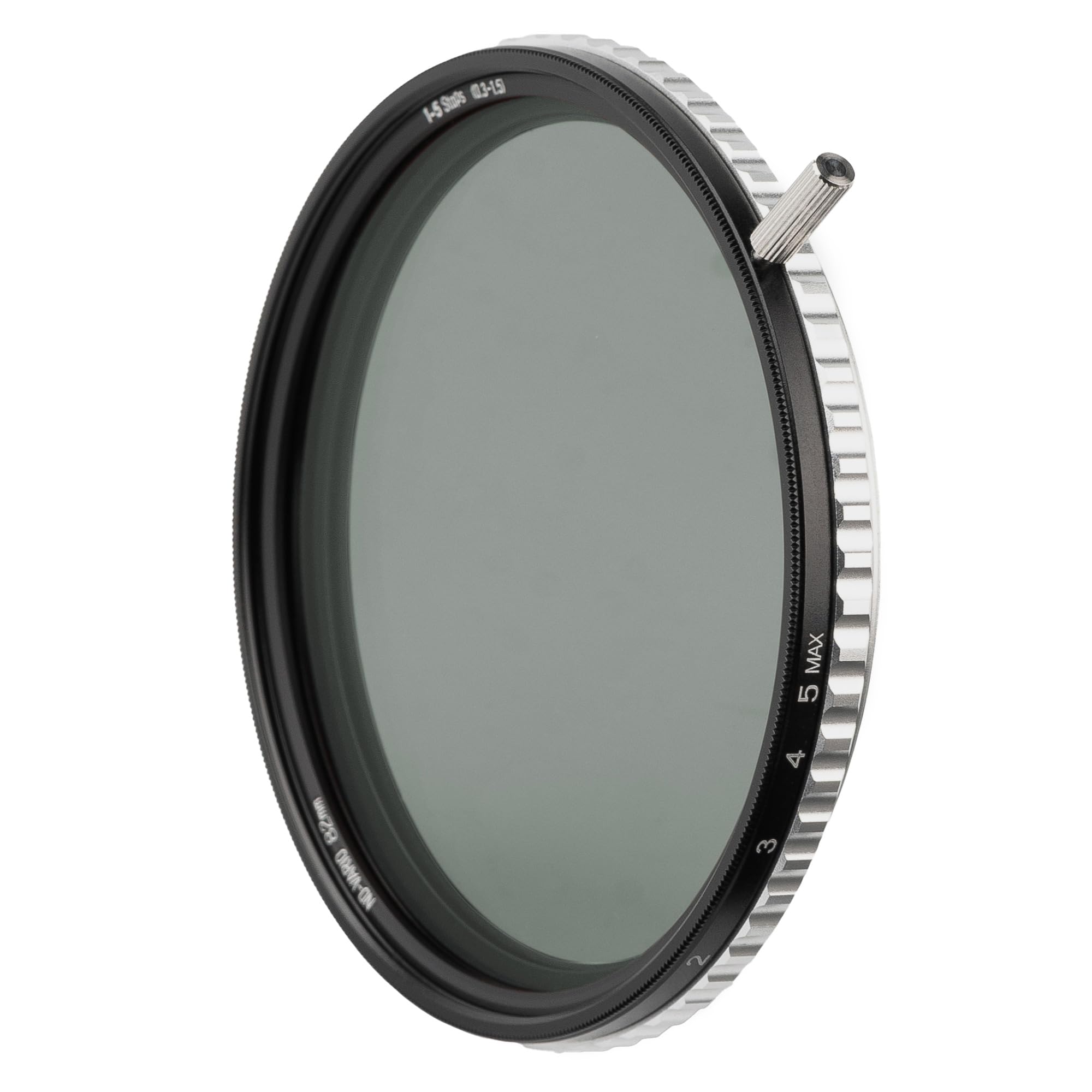
The variable ND that kills the yellow cast most rivals ignore.
The NiSi Swift True Color targets a specific and common annoyance: the warm tint that most mid-range variable ND filters throw over your scene. It uses an exclusive coating that keeps colors neutral across its 1-5 stop range, so you do not waste time in post-production correcting a yellow or magenta shift—a real asset when shooting video where color accuracy matters shot to shot. The filter covers ND2 to ND32, giving you enough range to open your aperture on a bright day for shallow depth of field or to smooth out motion slightly.
Build quality here is serious. The 20-layer multi-nano coating makes the glass water-resistant and easy to wipe clean, and the 72mm front thread (it steps up from 67mm) avoids vignetting on wide-angle lenses at 35mm and longer focal lengths. Note the weight: at 136 Grams, the NiSi is noticeably heavier than the Gobe ND1000 below (60 Grams)—that solid feel comes from the metal frame and extra glass layers. If you already own NiSi Swift System accessories, you can stack additional filters directly onto the front, which is a clever expansion path.
Reviewers mention the build quality and color accuracy as standout points, especially versus cheaper variable filters that shift colors at the dark end. One buyer described it as an ideal addition to your kit for photographers needing neutral color rendering. The catch is the price, which sits at the premium end of the field, and the need to handle the larger front cap (72mm) separately. It trades top-end darkness for reliable color—this stops at 5 stops, not 11, so it is not for extreme long exposures in full sunlight.
Standout Strengths
- True Color coating avoids yellow/magenta cast common in other variable ND filters
- 20-layer nano coating gives excellent water and oil resistance
- No “X” pattern or vignetting, even on wide-angle lenses at 35mm
- Compatible with NiSi Swift System for stacking additional filters
Fair Weaknesses
- Highest price in this lineup—reflects premium glass and coatings
- Limited to 5 stops max, so not suited for multi-second exposures in bright sun
- Requires a 72mm lens cap (sold separately or from your existing gear)
Reach for it if: color accuracy is non-negotiable—you shoot video or stills where correcting a warm tint in post would slow your workflow.
Look elsewhere if: you need extreme 10+ stop darkness for long exposures in sun; a fixed filter like the Gobe ND1000 is cheaper and darker.
2. K&F CONCEPT 67mm Variable ND2-2000 (1-11 Stops)
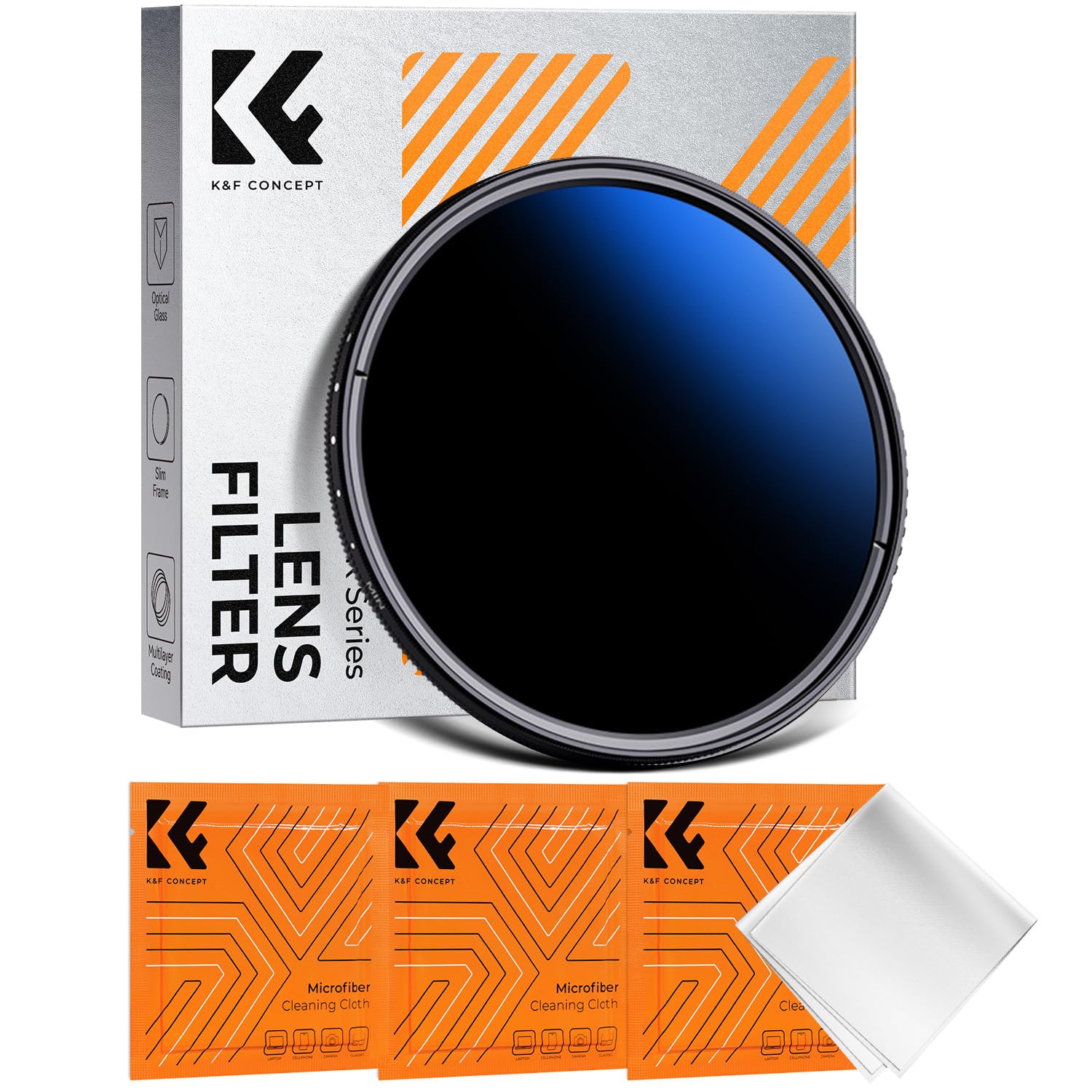
One ring covers everything from subtle haze to full blackout.
The K&F CONCEPT ND2-2000 is the widest-range variable filter in this list—it twists from a subtle 1-stop reduction all the way to an aggressive 11 stops. That versatility means you can walk from a shady street into full midday sun without switching filters. The Photo Filter Factor of 2000x means at maximum darkness it reduces light to 1/2000 of the original, which is double the reduction of the Gobe ND1000’s 1024x factor. For reference, that lets you shoot a 30-second exposure in bright conditions.
The frame is slim at 7.4mm, designed to clear wide-angle lenses without vignetting, and the 18-layer anti-reflective coating minimizes ghosting. The anodized sandblasted surface cuts reflections further. Reviewers point out that the build quality impressed them on first use, and one noted that the filter had held up well over a couple of years. However, a few nuanced reviews flag that at the darkest end (around 10-11 stops), some variable ND filters can show an “X” cross pattern or slight color shift—this is a physics trade-off of variable designs, not unique to this model. It works best in the middle of its range.
Buyers report it holds “accurate color” and “fits perfectly,” with one user capturing an eclipse diamond ring shot at max ND2000. The catch is that some serious photographers consider variable ND filters risky compared to fixed filters for critical color work; one review mentioned it is great for amateur use and on smaller sensor setups but might not replace pro-grade fixed filters.
What It Excels At
- Massive 11-stop range (ND2 to ND2000) adapts instantly to changing light
- Slim 7.4mm frame avoids vignetting on wide lenses
- 18-layer multi-coating reduces reflections and flare
- Solid build quality that reviewer call “impressive” for the price tier
What to Know
- Variable ND risk of “X” pattern at extreme dark settings
- Some color shift at highest stop settings; not as neutral as fixed ND filters
- Maximum shutter speed is 30 seconds (compared to Gobe ND1000’s 1000 seconds)
Go for this if: you want one filter to handle any event—daytime video, outdoor portraits, and even some long-exposure experimentation.
skip it if: color fidelity at extreme darkness is critical; a fixed filter like the Gobe ND1000 will be more consistent at 10 stops.
3. Gobe 67mm ND1000 (10 Stop) ND Lens Filter
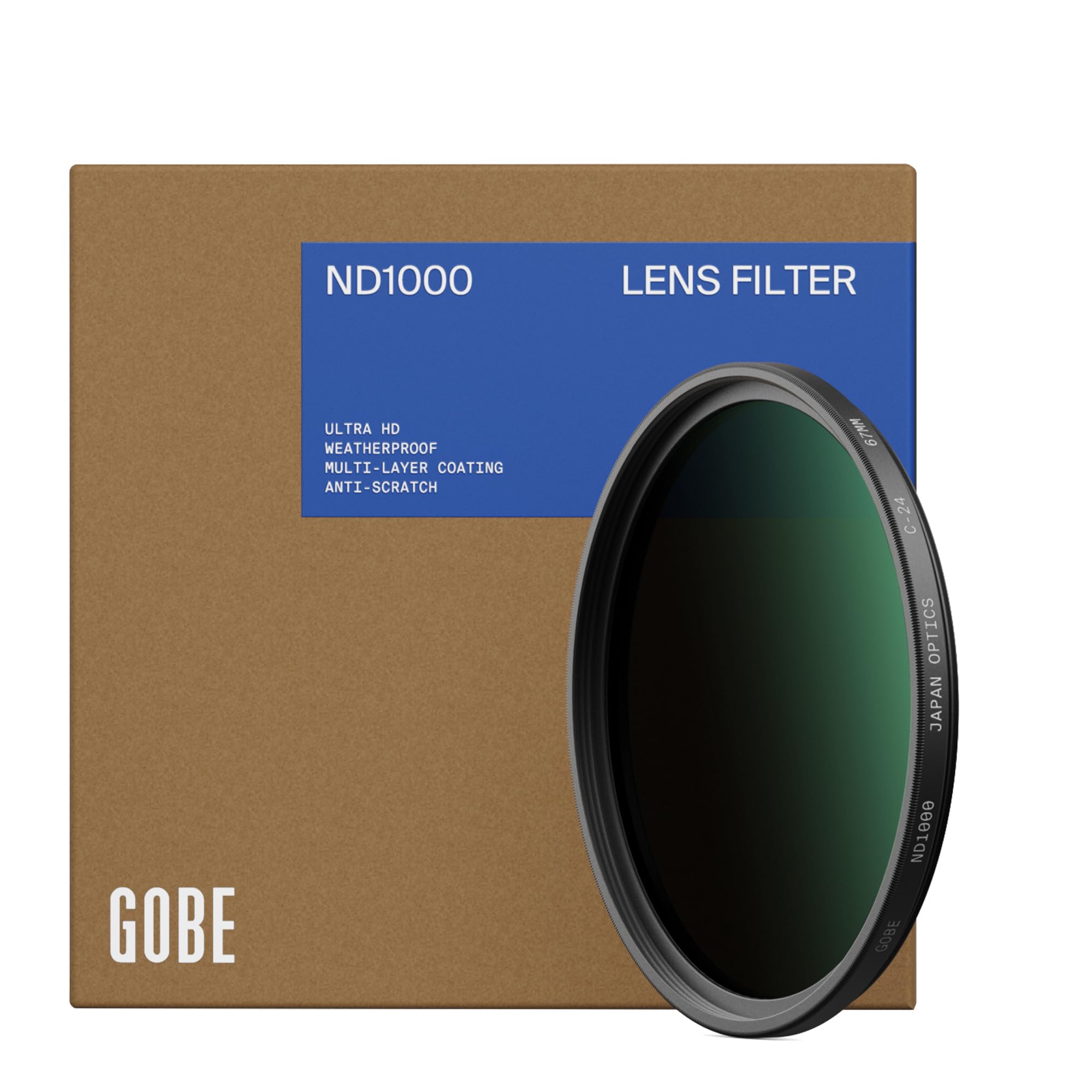
Fixed, dense, and lightweight—built for those silky-water daytime shots.
The Gobe ND1000 is a dedicated tool: a fixed 10-stop filter designed to blur waterfalls, smooth oceans, and eliminate crowds in bright sunlight. With a Photo Filter Factor of 1024x and a Maximum Shutter Speed of 1000 seconds, it gives you the range for exposures measured in minutes if you want them. It uses premium Japanese optical glass with a 16-layer nano coating to keep color neutral and resist lens flare, and the slim magnalium rim (double-threaded for stacking additional filters) avoids vignetting on wide lenses.
At just 60 Grams, it weighs less than half the NiSi variable (136 Grams), so it is easy to toss in a small pouch and forget until you need it. The fixed nature means you get consistent color every time—no “X” pattern, no unexpected color shift. Reviewers remark on the build quality and the effectiveness of the coating for reducing ghosting. The filter includes a lifetime warranty, which is uncommon at this price point and suggests the maker stands behind the glass quality.
The main trade-off is single-use flexibility: with only 10 stops, you cannot adjust the darkness on the fly. If the light drops or you want a subtler effect, you need to swap filters or use a different camera setting. It is a specialist, not a generalist—great for your landscape kit, less useful as an everyday protective filter.
Reliable Workhorse: Fixed 10-stop design gives predictable, neutral color and no “X” pattern—what you see is what you get, every time.
Best for: landscape and long-exposure shooters who want a light, color-true filter for daytime blur effects.
Not for: run-and-gun video or events where you need to adjust exposure speed without unscrewing the filter.
4. Tiffen 67mm Neutral Density 0.6 Filter

The entry-level fix for shooting wide open in bright light.
The Tiffen ND 0.6 is the simplest and most affordable filter in the group. It gives you a fixed 2-stop reduction (ND factor 4x), which is just enough to let you shoot at your lens’s widest aperture on a sunny day without blowing out the highlights—preserving that shallow depth of field and creamy bokeh that buyers specifically call out. It is not trying to enable 30-second exposures; it is here to let you run f/2 in daylight.
It comes with no multi-coating, which means it is more prone to lens flare if you shoot directly into bright light, and you will need to clean it more carefully. But at this price point, the glass clarity and even tint are solid, as multiple owners mention. One buyer described it as a “good budget filter” with “even tint, proper threads, no image quality loss or color issues.” It is also light at 1.6 ounces and uses Tiffen’s standard low-profile metal ring.
The limitation is clear: 2 stops is not enough for serious long-exposure work in daylight. If your goal is silky water at noon, you need the 10-stop Gobe. The case is famously stiff (customers note “hard to open storage case, but not a dealbreaker”).
Plain and Simple: A low-cost, fixed 2-stop filter that lets you shoot wide open in daylight—perfect for learning ND basics or setting up a portrait lens.
Reach for it if: your shoot is about shallow depth of field on a bright day and you want to spend the bare minimum.
Pass if: you need long-exposure effects, water resistance, or flare control—all of which require multi-coated glass or more stops.
Understanding the Specs
Stop Reduction (F-Stop)
Each stop halves the light reaching your sensor. A 10-stop filter like the Gobe ND1000 reduces light to 1/1024 of the original—enough to turn a 1/60-second daylight exposure into a 16-second blurry-water shot. A 2-stop filter (Tiffen ND 0.6) drops it to 1/4, just enough to open your aperture wide on a bright day without clipping highlights. For video where you want a consistent shutter angle, start with a 2 to 6-stop variable.
Photo Filter Factor
This number (like 1024x or 2000x) is the exposure multiplier. A filter factor of 1024x means you multiply your unfiltered shutter speed by 1024. If your metered shot is 1/100 second without the filter, with a 1024x factor you shoot at about 10 seconds. The higher the factor, the darker the filter—and the longer the exposure you can achieve.
Coating Layers
Multi-layer coatings (16, 18, or 20 layers) cut lens flare, ghosting, and reflections. They also make the glass hydrophobic (water beads off) and oleophobic (fingerprints wipe away easier). A filter with “No Coating” like the Tiffen ND 0.6 is more prone to flare and harder to clean, but costs less. For shooting into the sun or bright light sources, a multi-coated filter is strongly recommended.
Vignetting and Frame Thickness
A thick frame can block the corners of a wide-angle lens, creating a dark shadow in the image (vignetting). Slim-profile frames (7.4mm on the K&F, or the Gobe’s magnalium rim) minimize this. The NiSi Vario uses a larger 72mm front thread so the step-up ring shifts the glass further from the lens, giving extra clearance. If you shoot wide-angle (35mm or wider on full-frame), prioritize a slim or step-up design.
FAQ
Will a 67mm ND filter fit all my lenses?
What is the difference between a fixed and a variable ND filter?
How many stops of ND do I need to blur waterfalls in daylight?
Does an ND filter affect image sharpness?
Can I stack two ND filters together?
What does “Photo Filter Factor 1024x” mean on the Gobe ND1000?
Is a variable ND filter good for video?
How do I clean my ND filter without scratching it?
Final Thoughts: The Verdict
For the majority of shoppers, the best 67mm nd filter winner is the NiSi 67mm Swift True Color ND-Vario because its true-color coating eliminates the yellow shift that plagues other variable filters and its 20-layer nano coating resists water and smudges. If you want wide-range flexibility from one ring without switching filters, grab the K&F CONCEPT Variable ND2-2000. And for budget-friendly shallow depth of field without software correction, the standout is the Tiffen ND 0.6.
How We Picked
We do not accept paid placement. Every pick is matched to a real buyer and a real use-case; we do not hands-on test units.
Sources & Methodology
Specifications: manufacturer listings and product documentation. Review insights: verified customer reviews, as of July 2026. Pricing: not shown on this page (it changes often); check the current price via the retailer link.
As an Amazon Associate, Gadgets Feed earns from qualifying purchases. This does not affect which products we feature.