
Our readers keep the lights on and my morning glass full of iced black tea. As an Amazon Associate, I earn from qualifying purchases.
Specs are compiled from manufacturer listings and verified buyer reviews and can change over time — please confirm the key details on the product page before buying.
An 8000 BTU AC is the just-right size for a standard bedroom, a home office, or a small living room — it cools up to 350 square feet without the heavy power draw of a bigger unit. But not all 8000 BTU models are built the same: some save you thirty dollars a year on electricity, others are quiet enough to sleep through, and a few give you smart-home control that actually works. This guide walks you through the ones that earn their spot in your window.
I’m Min — the founder and writer behind Gadgets Feed. This guide is built by comparing the manufacturers’ published specifications and the patterns across verified customer reviews, so you get each pick’s real strengths and trade-offs instead of marketing spin.
You want an 8000 btu ac that cools a medium room while staying affordable or waking you up. We lined up seven models — from a budget-friendly option to a premium inverter unit — and checked what real owners say after a full summer of use.
Quick Picks
- Midea 8,000 BTU U Shaped Smart Inverter Window — Best Overall
- Hykolity 8,000 BTU Smart Inverter Window Air — Premium Pick
- LG 8,000 Window Air Conditioner — Trusted Brand
- DELLA 8000 BTU Energy Saving Window Air — Smart Value
- Electactic Window Air Conditioner, 8000 BTU — Compact Pick
- ZAFRO 8,000 BTU Window Air Conditioner — Budget Value
- ACHAZEL WiFi Enabled 8,000 BTU Window Air — Budget Smart Pick
How To Choose The Best 8000 BTU AC
For an 8000 BTU AC, your main decisions are about energy efficiency, noise level, and control style — not raw cooling power, since they all cover roughly the same 350 square feet. The number that tells you the most about your electric bill is the CEER (Combined Energy Efficiency Rate), which measures how many BTUs you get per watt of electricity. A higher CEER means lower running costs.
Noise and Sleep Comfort
Standard window ACs run around 50-55 dB, which is about the level of a quiet conversation. If you are a light sleeper or putting this unit in a nursery or office, look for an inverter model — they drop to as low as 32 dB, which is barely louder than a whisper. The trade-off is that inverter models cost more upfront.
Smart Features vs. Simplicity
A basic unit with a remote and a 24-hour timer is enough for most people: you set it before bed and forget it. A Wi-Fi enabled AC lets you turn it on from your phone or set a schedule from anywhere, which is handy if you want to cool the room before you get home. Just check the app reviews — some brands have better apps than others.
Quick Comparison
| Model | Best For | CEER | Noise (Low) | Smart Features | Amazon |
|---|---|---|---|---|---|
| Midea U Shaped | Best Overall | High (Inverter) | 32 dBA | WiFi + Alexa/Google | $346.74$399.99Limited time dealAmazon |
| Hykolity Smart Inverter | Premium Quiet | 15.0 | 32 dBA | WiFi + App | Amazon |
| LG LW8024RD | Reliable Brand | Moderate | 53 dBA | Remote only | $239.00$299.00Amazon |
| DELLA Smart | Smart Value | 10.9 | 54 dBA | WiFi + App | Amazon |
| ACHAZEL WiFi | Budget Smart Pick | 11.0 | Not listed | WiFi + App | Amazon |
| Electactic | Budget Simplicity | Not listed | 51 dB | Remote only | Amazon |
| ZAFRO | Budget Value | Not listed | 45-50 dB | Remote only | $229.98$269.99Limited time dealAmazon |
In‑Depth Reviews
1. Midea 8,000 BTU U Shaped Smart Inverter Window Air Conditioner
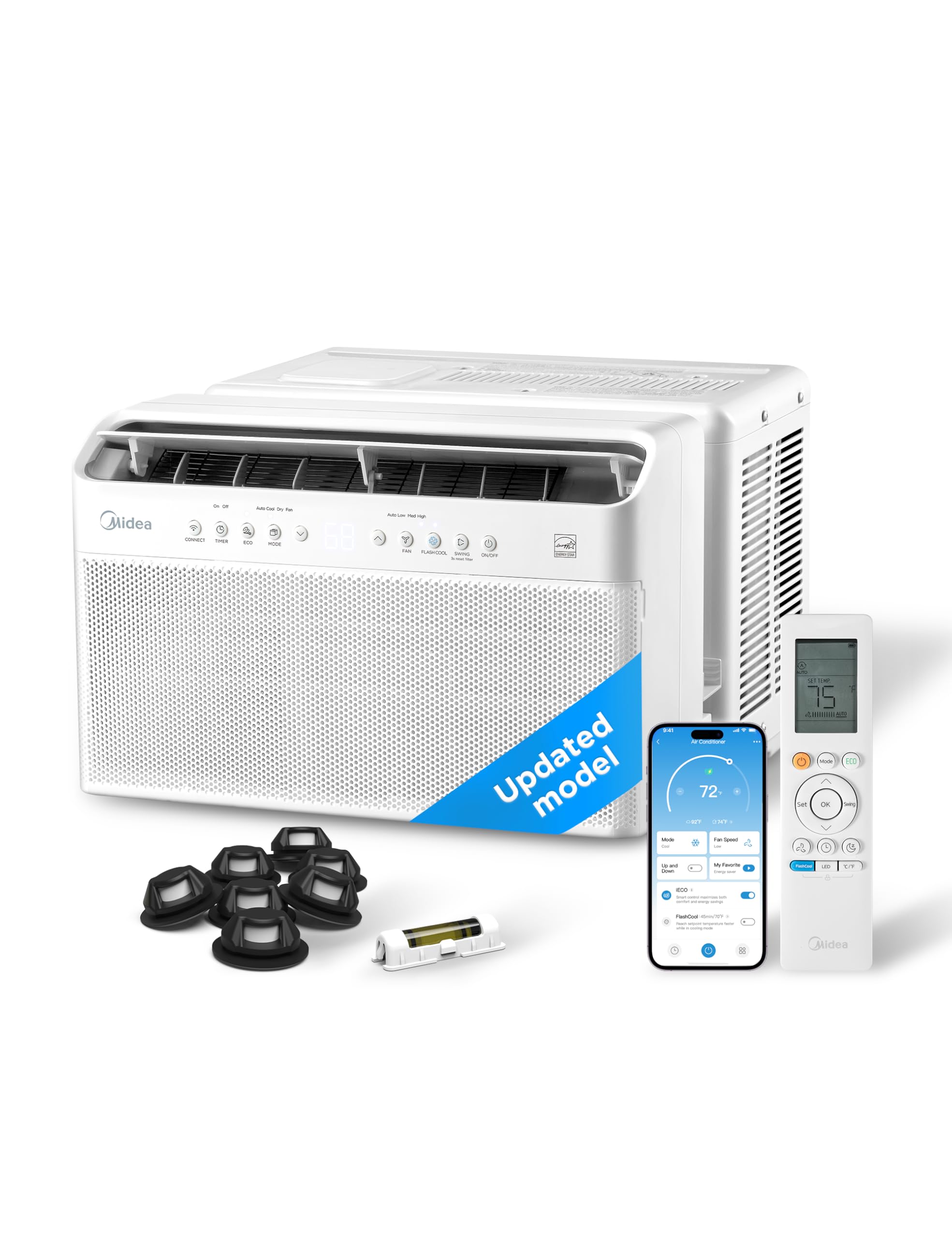
The U‑shaped Midea that stays whisper-quiet while your window stays open.
This is the only 8000 BTU AC that lets you crack your window open for fresh air while it runs, thanks to its U‑shaped body that straddles the sill. The inverter compressor runs as low as 32 dBA — about as loud as a library — and a buyer who has owned one since 2018 says it is still going strong. At 710W cooling power and using R32 refrigerant, it beats most traditional units on energy use.
The catch is that it needs a 22‑36 inch wide window with at least 13.75 inches of height clearance, and some buyers report they had to make minor modifications for non‑standard frames. But if your window fits, this is the quietest, most efficient AC in the list. It works with Alexa and Google Assistant, so you can adjust it from bed without fumbling for the remote.
One owner noted a random beeping noise when the unit was idle, which required a quick unplug and reset. In return, though, you get an oscillating airflow that circulates cold air evenly, and the built‑in drain handles condensation automatically.
Why it wins: It runs whisper-quiet at 32 dBA (about as loud as a library), uses inverter technology to save 37% more energy than standard units (according to the maker), and its U‑shape design lets you open your window while it runs — buy it if your window fits the design.
A real trade-off: Installation takes a bit longer than a standard window unit, and the design may need adjustments for older windows.
Reach for this if: your top priorities are whisper‑quiet sleep and the lowest possible electricity bill.
Look elsewhere if: your window is under 22 inches wide or you need the simplest possible drop‑in installation.
2. Hykolity 8,000 BTU Smart Inverter Window Air Conditioner
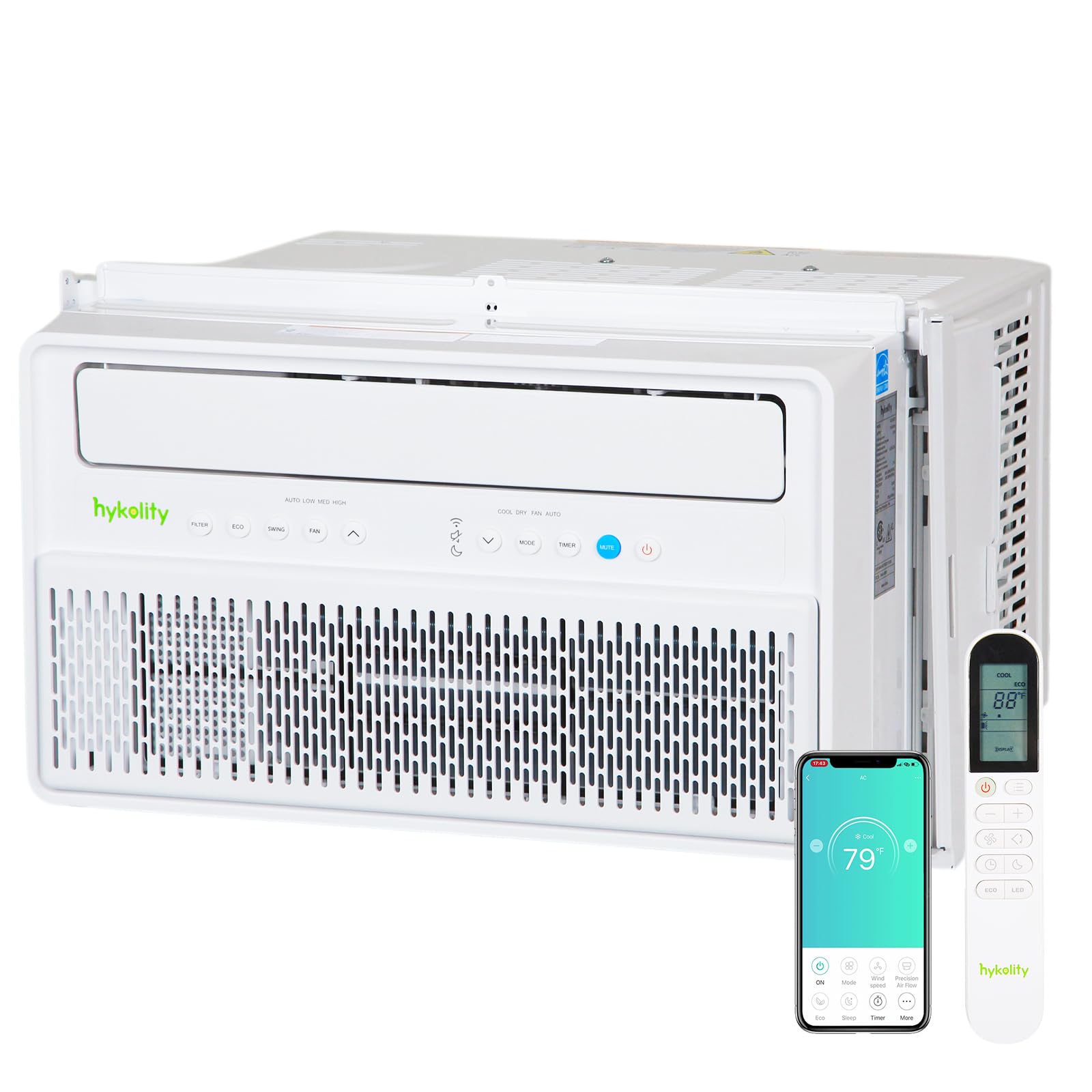
The inverter unit that packs a 15.0 CEER and a 32 dBA promise.
This Hykolity matches the Midea on noise — 32 dBA on low — but it has a traditional box shape, so you don’t need a special window frame. The CEER of 15.0 is the highest on this list, meaning you get the most cooling per watt. A buyer cooling a porch reported that it kept the main house AC from kicking on all day, which they called a big money saver. At 740W, it uses R32 refrigerant and offers a 24‑hour timer plus sleep mode.
One reviewer noted a gap under the unit after installation that needed filling depending on window style, and another said the unit was “VERY loud” — though that contradicts most other feedback, so it may have been a defective unit or a specific speed setting. The washable filter slides out easily from the front, and the Wi‑Fi app control lets you set schedules from your phone.
For a mid‑range inverter that doesn’t force you into a U‑shape design, this is your quiet‑cool option with the strongest energy rating.
Energy standout: 15.0 CEER beats everything else here — if low electricity bills are your goal, this is the unit.
The one caution: Some windows may leave a gap that needs sealing; check the fit before you buy.
Best for: anyone who wants near‑silent inverter cooling without the special U‑shape installation.
Skip if: you need a unit that fits windows narrower than 25 inches.
3. LG 8,000 Window Air Conditioner, 115V, 350 Sq.Ft.
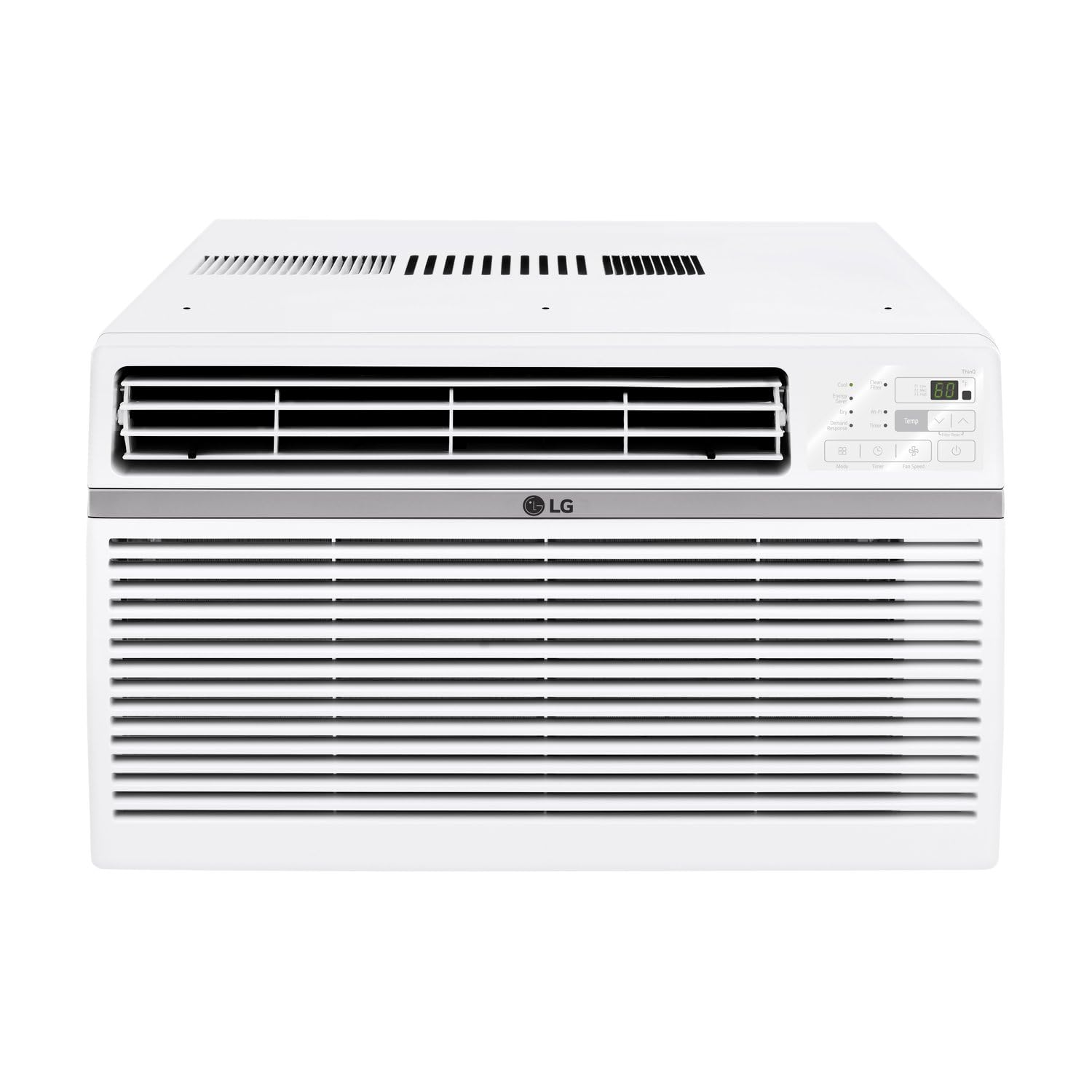
The LG that cools an upstairs bedroom from 80°F back to comfort, year after year.
At 53 dB on low mode, this LG is not the quietest unit here, but it is from a brand most people trust for long‑term reliability. A buyer reported it works perfectly in its second year, cooling a larger space from 85°F outside to 72°F inside. Another reviewer called it a lifesaver for a hot upstairs bedroom, dropping the temperature from 80°F to comfortable. It has three cooling speeds, three fan speeds, and an Auto Cool mode that adjusts the fan for you.
The Auto Restart feature automatically powers the unit back on after a power outage — handy if you live somewhere with summer storms. One buyer warned that the registration card in the box leads to a non‑official LG page with browser warnings, so register directly on LG’s official US website. The unit fits windows for rooms up to 14 by 25 feet, which is about 350 square feet.
Some owners reported units failing after a year, but the pattern from the reviews suggests that is more about shipping damage than a design flaw.
Reliable basics
- Auto Restart after power outages
- Three cooling and three fan speed options
- Effective at cooling rooms up to 350 sq ft
Known drawbacks
- No Wi‑Fi or smart home integration
- Some units have had durability issues within a year
Choose the LG if: you want a straightforward, brand‑name unit with proven cooling and power‑outage recovery.
skip it if: you need whisper‑quiet operation or phone‑based control.
4. DELLA 8000 BTU Energy Saving Window Air Conditioner
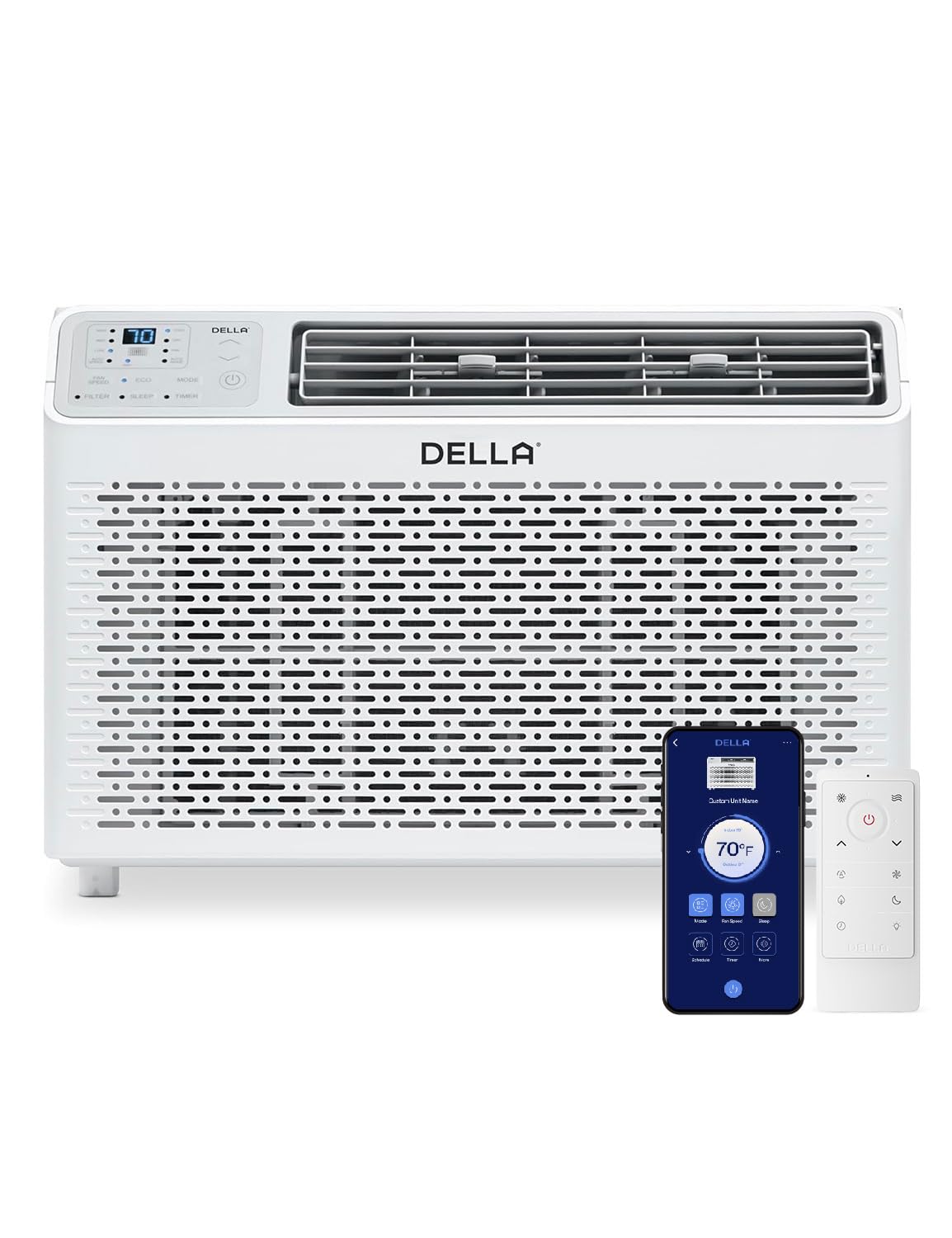
A smart AC that cools a 1300 sq ft house from 85°F to 72°F — and it talks to your phone.
The DELLA is one of the few budget‑friendly units here with built‑in Wi‑Fi, letting you control it from anywhere via the Della+ app. It runs at a CEER of 10.9, which is decent for a non‑inverter unit, and a buyer who used it in a small home said it cooled the entire first floor. It has four modes (Auto, Cool, Fan, Dry) and three fan speeds, plus a sleep mode and an eco mode. The temperature range goes from 61°F to 88°F.
One owner reported a unit that failed within a year, but the company replaced it quickly via UPS with no hassle. Another reviewer said it is quieter and vibrates less than their old unit. It weighs 44.8 lbs and fits windows 23 to 36 inches wide with a minimum height of 14.5 inches.
For the price, you get the convenience of phone control and solid cooling — just keep your expectations in check for long‑term durability.
The core appeal: Wi‑Fi control at a lower price point than the other smart ACs here, plus a CEER of 10.9 that helps with energy savings.
The honest caveat: At 54 dB, it is louder than inverter models, and some units have had reliability issues.
Who it fits: budget‑conscious buyers who still want the convenience of an app and a remote.
Not for: those who expect the unit to run quietly in a bedroom night after night.
5. Electactic Window Air Conditioner, 8000 BTU
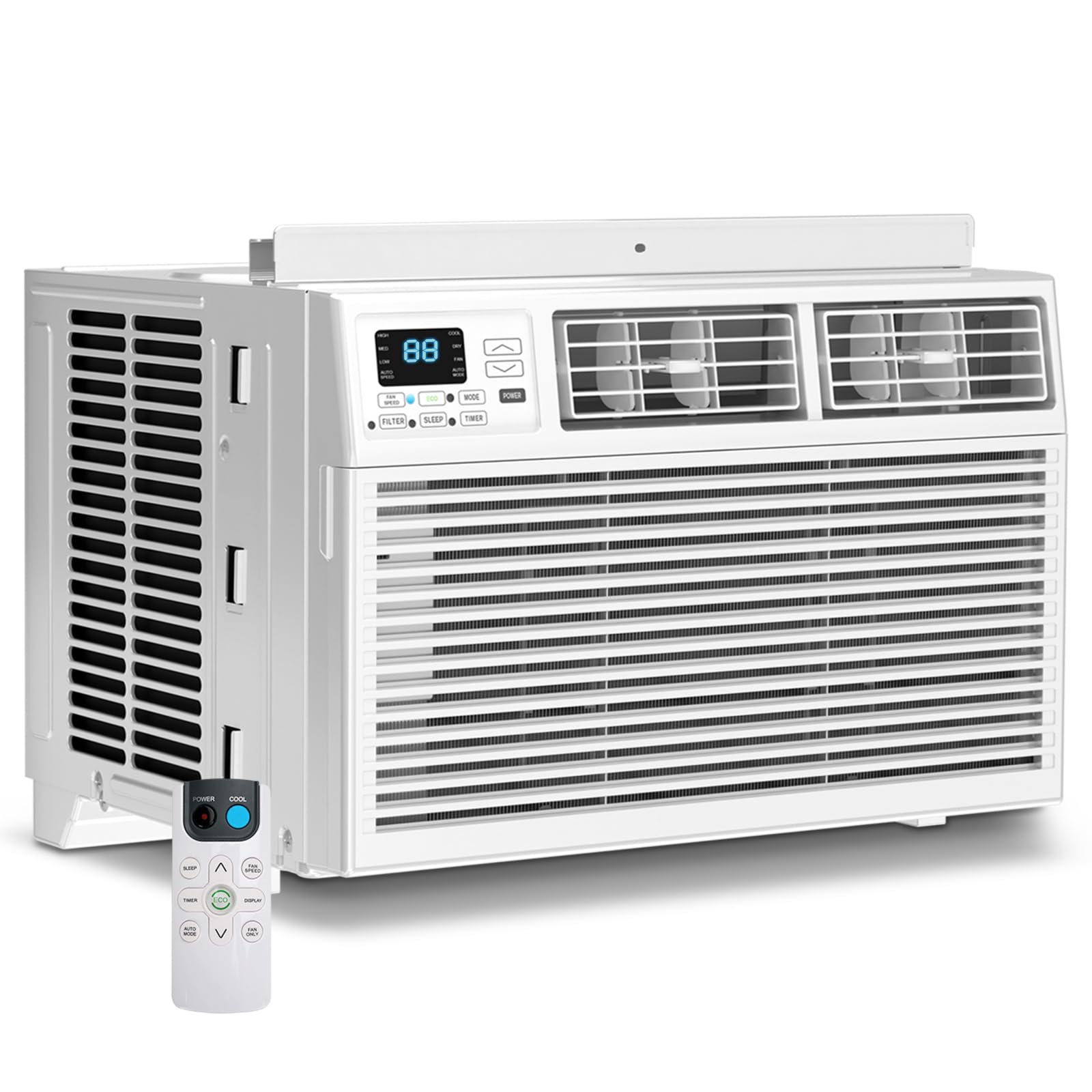
The budget AC that dropped a reviewer’s room from 89°F to 60°F in under two hours.
The Electactic is the entry‑level option that still gives you six modes — Cool, Dry, Fan, Auto, Sleep, and Eco — and a remote control. Owners mention it cools small houses easily, even in 90‑degree weather, and runs at 51 dB, which is fine for most people. One buyer mentioned it arrived with minor cosmetic damage (dents and scratches) but worked perfectly. Another buyer bought two for a 600 sq ft woodworking shop and said they handle humidity well.
The temperature range is adjustable from 61°F to 88°F, and the unit fits single and double‑hung windows 23‑36 inches wide. It also includes a self‑draining system that removes condensation automatically, so you never have to empty a bucket. A separate buyer noted it does a decent job cooling smaller spaces but wished they had sized up for a larger room.
For the lowest sticker price in this lineup, you trade away smart home features and the highest efficiency, but you get reliable cooling at a cost the company estimates at per year.
What it delivers: Genuine rapid cooling — one owner measured an 89°F to 60°F drop in under 2 hours — and a self‑draining system that means zero maintenance.
Where it cuts corners: No Wi‑Fi, no app, and the build quality may show shipping wear before you even plug it in.
Best for: a spare bedroom, workshop, or small apartment where you want effective cooling without spending on extras.
pass on it if: you need smart controls or the absolute quietest operation.
6. ZAFRO 8,000 BTU Window Air Conditioner
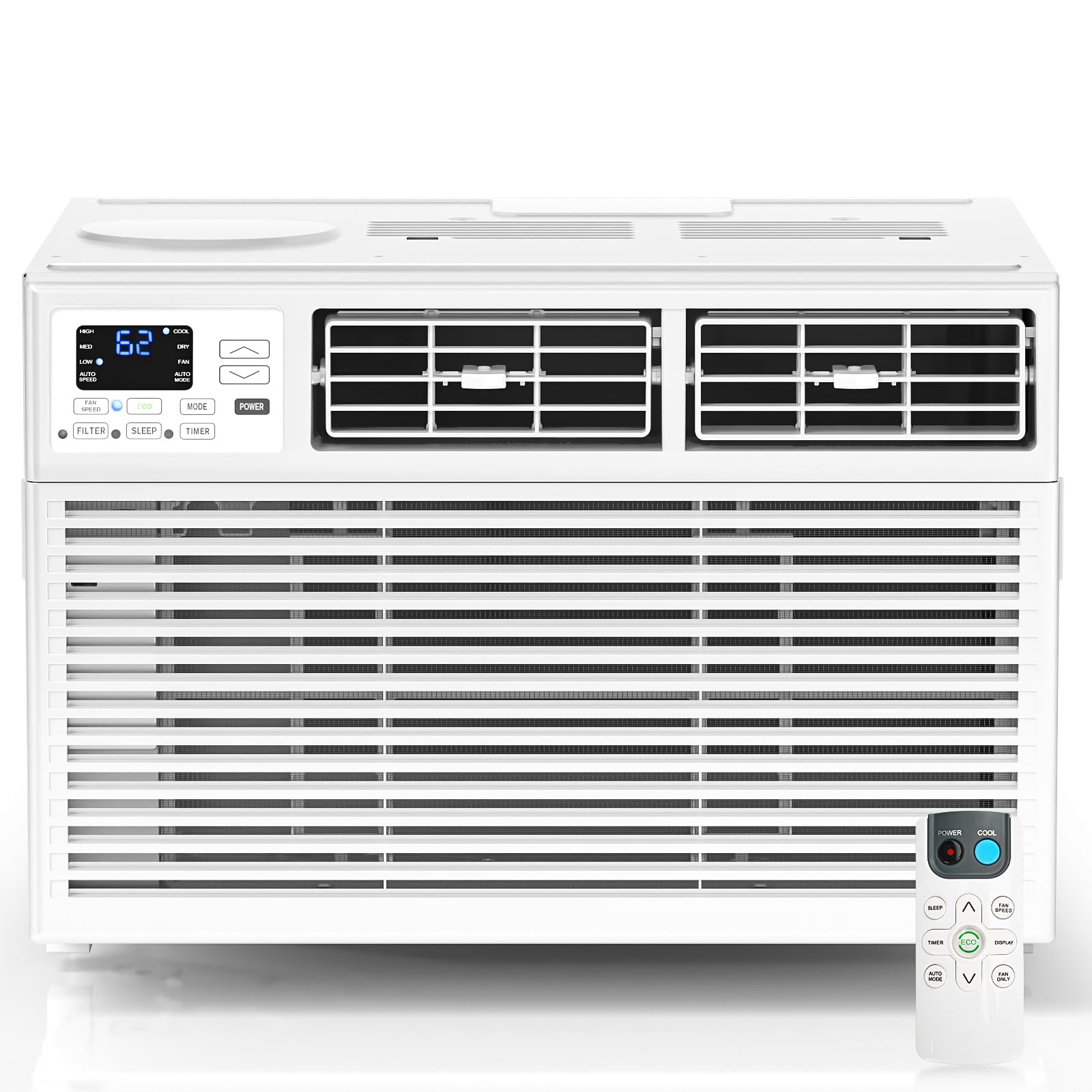
A budget unit that runs as quiet as 45 dB and cools small rooms fast.
The ZAFRO might be the quietest non‑inverter unit here, with operation as low as 45 dB. It has seven modes — more than most competitors — and four fan speeds, plus a dedicated filter check light that tells you when to clean it. Buyers consistently mention easy installation, quiet sleep, and fast cooling for rooms up to 150 square feet. One owner reported it outperformed their previous unit and they plan to buy a second one for themselves.
There is a catch: the Eco mode’s thermostat triggers 10‑15°F late, meaning it may run longer than expected before cycling off. Another buyer warned that the design looks identical to other brands that failed quickly, so they are hoping it lasts more than one season. It uses R32 refrigerant, which is more eco-friendly than older refrigerants, and comes with a washable pre‑filter.
At this price range, you cannot beat the noise level for a non‑inverter AC, but you should be aware of the thermostat delay in Eco mode.
The strong point: At 45 dB minimum, this is the quietest conventional (non‑inverter) 8000 BTU AC you will find — good for light sleepers on a budget.
The weak point: Eco mode’s delayed thermostat response (10‑15°F) means it may not keep your room at the exact temperature you set.
Who it suits: anyone wanting a quiet window AC without paying for inverter technology.
Who should skip it: people who rely on Eco mode for precise temperature control or who need a unit for rooms larger than 200 sq ft.
7. ACHAZEL WiFi Enabled 8,000 BTU Window Air Conditioner
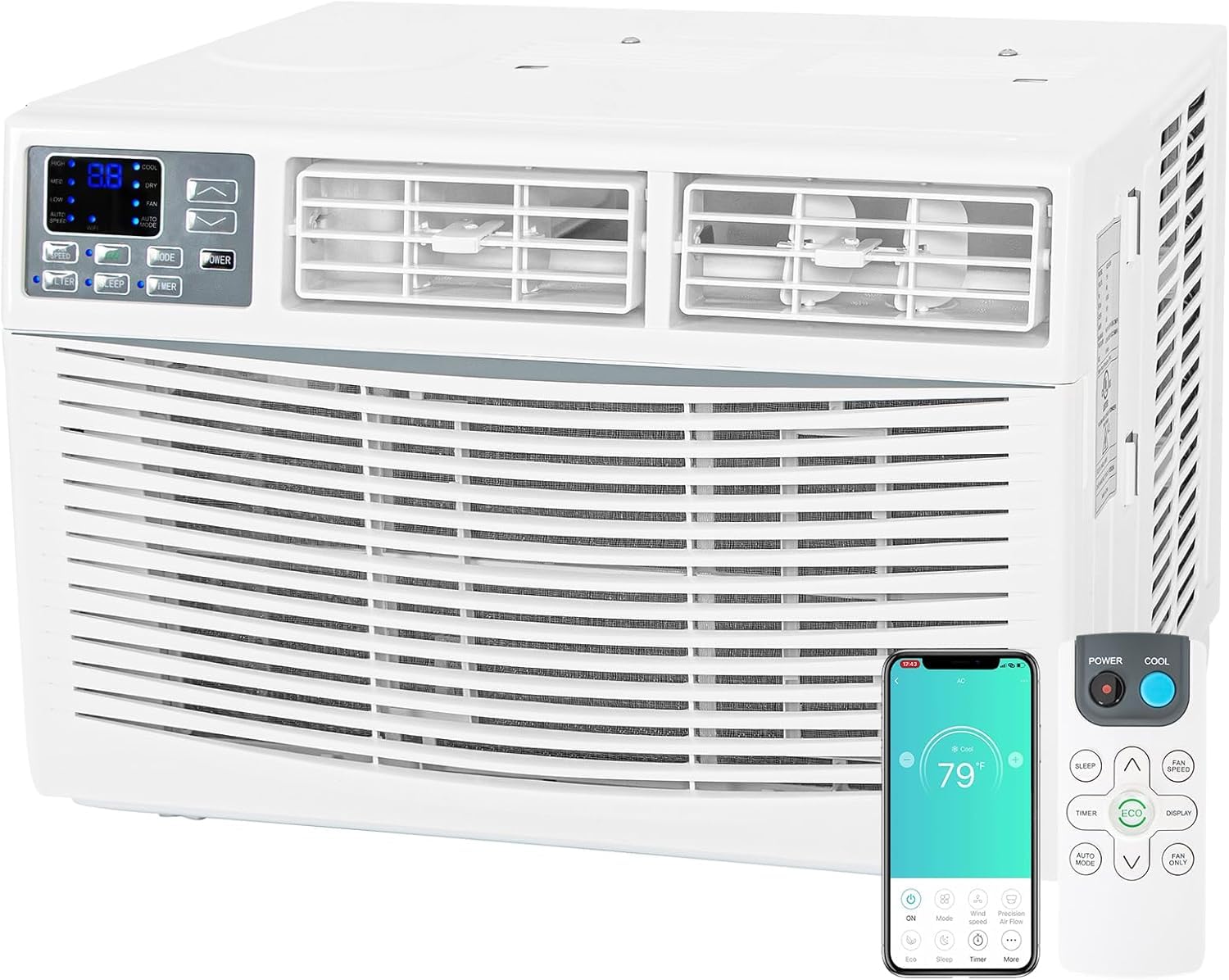
A Wi‑Fi AC that fits a budget, but draws more power than advertised.
The ACHAZEL is the cheapest smart‑enabled 8000 BTU AC you can buy, with a CEER of 11.0 that is decent for the class. It works with the SmartLife app on iOS and Android, giving you three ways to control it: buttons on the unit, a remote, or your phone. A buyer who owns it says it is compact, easy to install, and works well even in cooler weather. The dehumidifier function was also noted as effective.
Here is the honest trade‑off: one owner measured the actual power draw at 723 watts versus the listed 548 watts, which could be a problem if you are running it on a small solar system. Another buyer had a unit that shot water everywhere due to a missing drain hole or low coolant, and the return process was difficult. The temperature range goes from 61°F to 88°F, and it has three fan speeds plus auto speed.
You get the convenience of app control for around the same price as a basic unit, but you are also getting a higher‑risk purchase based on the mixed reviews.
Why consider it
- Wi‑Fi and app control at an entry‑level price
- Compact and easy to install in standard windows
- Three ways to control (unit, remote, phone)
Why be cautious
- Actual power draw (723W) exceeds listed spec (548W)
- Some units have had coolant or water‑leak issues
Reach for this if: you must have smart features at the lowest possible price and are willing to gamble on quality.
Look elsewhere if: you need reliable power‑draw specs for solar or backup‑battery setups, or you want a proven brand.
Understanding the Specs
CEER (Combined Energy Efficiency Rate)
This is the single most important number for your wallet. CEER measures how many BTUs of cooling you get for every watt of electricity pulled from the wall. A unit with a CEER of 15.0, like the Hykolity, will cost noticeably less to run than one with a CEER of 10.9 (the DELLA) over a hot summer. For reference, the minimum federal standard is around 11.0, so anything above that is genuinely saving you money.
Noise Level (dBA)
Decibels (dBA) tell you how loud the AC sounds in your room. Normal conversation is about 60 dBA. A window unit at 50-55 dB is noticeable but not disruptive. Units at 32-45 dB, like the inverter models from Midea and Hykolity, are barely audible — you can sleep or work without the hum. If you are sensitive to noise, aim for anything at 50 dB or below.
Inverter vs. Standard Compressor
A standard compressor is either on (full blast) or off, which means the temperature swings a few degrees, and the unit makes a loud click each time it cycles. An inverter compressor runs at variable speed: it slows down once the room is cool, staying just barely on to hold the temperature. This uses less electricity and makes far less noise. The trade-off is a higher upfront price.
Refrigerant Type (R32 vs R410A)
R32 is a newer refrigerant that transfers heat more efficiently than the older R410A. It also has a lower global warming potential, meaning it is better for the environment. Many of the newer 8000 BTU models now use R32, including the Midea, Hykolity, and ZAFRO. It is not something you need to worry about as a buyer, but it is a sign of a more modern design.
FAQ
Will an 8000 BTU AC cool my 400 square foot living room?
What window size do I need for an 8000 BTU AC?
How loud is an 8000 BTU window AC?
Is a smart (Wi‑Fi) AC worth the extra money?
Do I need to drain an 8000 BTU window AC manually?
How much electricity does an 8000 BTU AC use per hour?
What does the CEER number mean for my energy bill?
Can I use an 8000 BTU AC in a room with a sliding window?
How often should I clean the filter on an 8000 BTU AC?
Are inverter window ACs worth the higher price?
Final Thoughts: The Verdict
For most people, the best 8000 btu ac is the Midea U Shaped Smart Inverter because it runs whisper‑quiet at 32 dBA, saves energy with inverter technology, and lets you open your window while it runs — something no other unit here does. If you want near‑silent operation but your window does not fit the U‑shaped design, grab the Hykolity Smart Inverter with its 15.0 CEER (Combined Energy Efficiency Ratio, a measure of cooling efficiency). And for a simple, reliable cooling setup without Wi‑Fi bells and whistles, the LG LW8024RD is a solid choice from a name you already know.
How We Picked
We do not accept paid placement. Every pick is matched to a real buyer and a real use-case; we do not hands-on test units.
Sources & Methodology
Specifications: manufacturer listings and product documentation. Review insights: verified customer reviews, as of July 2026. Pricing: not shown on this page (it changes often); check the current price via the retailer link.
As an Amazon Associate, Gadgets Feed earns from qualifying purchases. This does not affect which products we feature.
Related Guides
Product prices and availability are accurate as of the date/time indicated and are subject to change. Any price and availability information displayed on Amazon at the time of purchase will apply to the purchase of this product. As an Amazon Associate I earn from qualifying purchases.
CERTAIN CONTENT THAT APPEARS ON THIS SITE COMES FROM AMAZON. THIS CONTENT IS PROVIDED "AS IS" AND IS SUBJECT TO CHANGE OR REMOVAL AT ANY TIME.
Amazon and the Amazon logo are trademarks of Amazon.com, Inc. or its affiliates.