
Our readers keep the lights on and my morning glass full of iced black tea. As an Amazon Associate, I earn from qualifying purchases.
Specs are compiled from manufacturer listings and verified buyer reviews and can change over time — please confirm the key details on the product page before buying.
At this age, the wrong bike can be too heavy, too tall, or just frustrating enough to make your little one give up before they start. This guide cuts through the marketing to find the lightweight, low-slung ride-ons that actually fit a 12-24 month old’s legs and coordination.
I’m Min — the founder and writer behind Gadgets Feed. This guide is built by comparing the manufacturers’ published specifications and the patterns across verified customer reviews, so you get each pick’s real strengths and trade-offs instead of marketing spin.
We break down the six best options for the bike for 1 year old by focusing on what matters most for a toddler’s first ride: weight, seat height, stability, and ease of assembly.
Quick Picks
- SEREED Colorful Lighting Baby Balance Bike — Best Value
- PerKidern Baby Balance Bike — Taller Build
- Liberry Baby Balance Bike — Adjustable Pick
- Radio Flyer Steady Start Balance Bike — Best Overall
- Doselie Colorful Glow Wheel Toddler Balance Bike — Sensory Fun
- Kinderfeets Tiny Tot 2-in-1 Wooden Balance Bike — Eco Convertible
How To Choose The Best Bike For 1 Year Old
Tiny differences in weight and seat height make or break the experience for a one-year-old’s bike. Here is what to look for when picking the right set of training wheels.
Weight: The Lighter, The Better
A bike that’s too heavy is a non-starter for a one-year-old. They need to be able to push it, lift it, and correct their own balance. Look for bikes that weigh around 3 to 5 pounds — any heavier, and your toddler will struggle to move it independently.
Seat Height and Adjustability
The ground is their brake. A proper fit means the child’s feet can sit flat on the floor while they are seated. Adjustable seats, ranging from about 8.5 to 11 inches, let the bike grow with them over a year or more. An adjustable seat is a clear signal of good value.
Stability (3 Wheels vs 4 Wheels)
Four wheels provide the most stable base for a new walker, but three-wheel designs (one in front, two in back) offer more steering practice. Both prevent tipping. The best choice depends on whether your child is already walking confidently or still taking their first steps.
Quiet, Floor-Friendly Wheels
Most of the riding happens indoors on hardwood or tile. Soft EVA (a foam-like rubber material) or rubber wheels are essential to avoid scuff marks and keep the ride quiet enough for apartment living or during nap time.
Quick Comparison
| Model | Best For | Weight | Seat Height | Wheels | Amazon |
|---|---|---|---|---|---|
| SEREED Colorful Lighting Baby Balance Bike | Lightest pick for indoor play | 3.6 lbs | Fixed | 4 Wheels | $34.98$49.99Limited time dealAmazon |
| PerKidern Baby Balance Bike | Taller frame for growing toddlers | 4.6 lbs | Fixed | 4 Wheels | $43.99Amazon |
| Liberry Baby Balance Bike | Best adjustability for growing kids | 5 lbs | 9.7″ to 11″ | 4 Wheels | from $45.99Amazon |
| Radio Flyer Steady Start Balance Bike | Premium 3-wheel stability | 7 lbs | Adjustable | 3 Wheels | $49.99Amazon |
| Doselie Colorful Glow Wheel Bike | Sensory fun with lights & sounds | 5 lbs | Fixed | 4 Wheels | $47.48$55.99Amazon |
| Kinderfeets Tiny Tot 2-in-1 | Premium eco-friendly convertible | 5 lbs | 8.5″ to 11″ | 3 Wheels (converts to 2) | $99.95Amazon |
In‑Depth Reviews
1. SEREED Colorful Lighting Baby Balance Bike

The lightest bike on this list, perfect for a new walker finding their footing.
This SEREED bike weighs 3.6 pounds, while the Radio Flyer Steady Start weighs 7 pounds, making it the easiest bike on this list for a one-year-old to lift and maneuver on their own. The aluminum alloy frame (a lightweight metal used in higher-end bikes) keeps it featherlight without feeling flimsy. The colorful LED wheels light up as they spin — no batteries required — which buyers report is a huge hit, with one noting the “smooth on carpet/hardwood” ride and the easy “5-min assembly” with no tools needed.
The 135-degree steering limit (which means the handlebars can’t turn all the way sideways) helps prevent tip-overs, a thoughtful safety detail. The closed wheel design also protects small feet from getting pinched. The trade-off is that the seat is fixed, so once your child grows past about 24 months, this bike may feel too cramped. It also has no brakes, but at this age, kids stop with their feet anyway — that’s actually the intended learning method for balance bikes.
Why It Wins for Beginners
- Super light at just 3.6 lbs — the lightest pick here
- Tool-free, 1-minute assembly from the start
- Glow wheels encourage kids to ride without any batteries needed
The Growth Limit
- Seat is non-adjustable, so it’s outgrown faster
- No brake system — standard for balance bikes but worth knowing
- Aluminum frame can scratch more easily than steel
Best for: Parents who want the absolute lightest first bike that a brand-new walker can actually push around indoors without help.
Look elsewhere if: You need a bike that adjusts as your child grows taller — the fixed seat limits use to about 12-24 months.
2. PerKidern Baby Balance Bike

This bike’s extended frame fits taller or older toddlers without the weight penalty.
PerKidern specifically designed this bike with a 2-inch longer and 3-inch taller frame than most 12-24 month balance bikes. That extra height is a real benefit for bigger kids or those approaching 2 years old who have outgrown compact rides like the SEREED. One reviewer noted their 29-inch-tall 12-month-old “can’t reach ground yet; needs 2-3 more months,” which puts a realistic timeline on the fit — for an average-height 18-month-old, this bike is likely spot on. The carbon steel frame (a strong, durable steel) adds 1 pound over the SEREED, coming in at 4.6 pounds, but the trade-off is significantly more stability and a higher weight limit.
The cushion-style saddle keeps the child from sliding forward or backward, a detail that matters during active riding. The 4 high-density EVA wheels are quiet and non-scuffing, which buyers appreciate for indoor use. Assembly takes about 5 simple steps with the included toolkit, and the horse-shaped design has a charming look that stands out from the typical minimalist style. The main downsides: the seat is not adjustable, and the brown color scheme may not appeal to every kid.
Length Advantage
- Frame is 2 inches longer and 3 inches taller than standard 1-year-old bikes
- Only 4.6 lbs — light enough for a toddler to manage
- Cushion saddle prevents sliding forward or backward
Fixed Fit
- Seat is not adjustable — it’s one size per build
- Some buyers needed a screwdriver despite “tool-free” claims
- Color options are limited to brown only
Reach for this if: Your child is on the taller side for their age and you want a bike that fits immediately and for the next 6-12 months.
Hold off if: You need precise seat adjustability — the Liberry below is a better choice for a truly expanding fit.
3. Liberry Baby Balance Bike
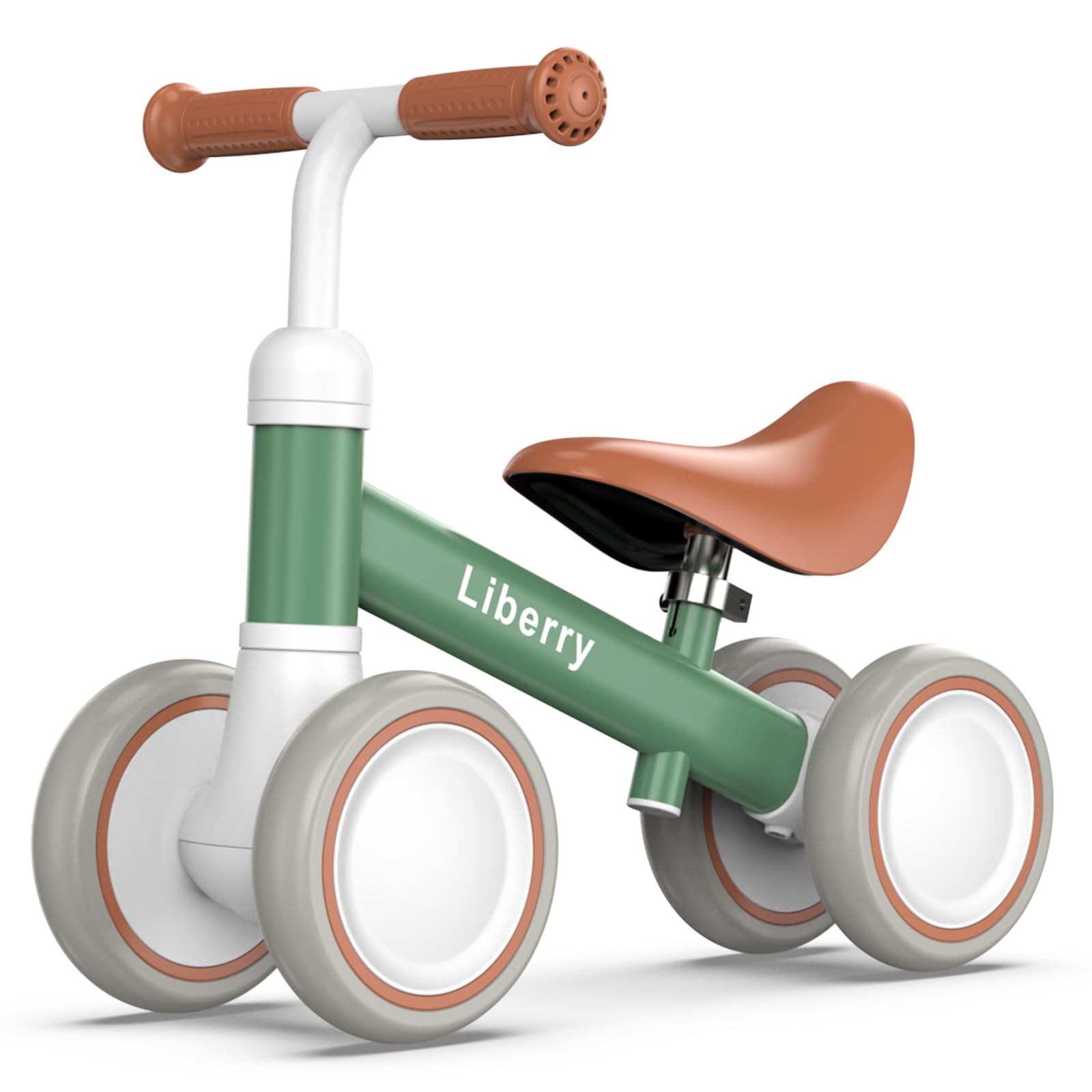
The seat adjusts from 9.7 to 11 inches — a growth-friendly feature most budget bikes skip.
This Liberry bike stands out because of that precise adjustability. The PU foam seat (a durable, wipe-clean synthetic material) can be raised from 9.7 inches to 11 inches, so a 12-month-old can ride with feet flat on the ground, and the same bike still fits a 2-year-old who needs a bit more leg extension. Owners mention it is “good for 13-month-old walker” and that they found it “easy to mount/dismount without tipping” — a big plus for cautious riders. The steel frame has a maximum load-bearing capacity of 55 pounds, which is higher than many plastic-heavy alternatives.
The closed wheels prevent foot pinching, and the rubber handlebars are safer than the foam ones on cheaper models (foam can be chewed and torn by teething toddlers). A nice bonus: the bike comes with a letter sticker sheet so you can personalize it with your child’s name. The main critique: the foot brake is on the rear wheel, and some toddlers won’t use it, so parents should still supervise on slopes.
Growth-Friendly
- Seat adjusts from 9.7 to 11 inches — extends usable life significantly
- 55 lb weight limit supports heavy use
- Rubber handles resist chewing and tearing
Heft Trade-Off
- 5 lbs is heavier than the 3.6 lb SEREED
- Foot brake is there, but young toddlers rarely apply it
- No glow wheels or sounds — a purely functional bike
Who it suits: Parents who want a bike that adapts as their child grows, getting the most years out of a single purchase.
Who might pass: If your child is very small for their age, the lowest setting (9.7″) may still feel tall — consider the SEREED at 3.6 lbs for a lower entry point.
4. Radio Flyer Steady Start Balance Bike

The iconic red wagon maker brings 3-wheel stability to a balance bike that stands on its own.
The Radio Flyer Steady Start is the premium pick because of its clever 3-wheel design — one wide front wheel and two rear wheels that keep the bike standing upright even when your toddler isn’t on it. No kickstand needed. The wide, treaded wheels are designed for both hardwood floors and paved sidewalks, and they roll quietly. The adjustable padded seat and comfort handgrips don’t require any tools, so you can raise the seat as your child grows. At 7 pounds, it is the heaviest bike on this list — a direct result of the durable alloy steel frame and the wide wheel setup — but buyers consistently report that the stability is worth it, calling it “the perfect first bike” with “fat tires providing stability for sitting, pushing, or self-exploration.”
The foot brake is simple: kids just put their feet down. The tool-free adjustable seat and padded handgrips make it comfortable for kids from age 1 to 3. The downside is that it weighs 7 pounds, compared to the SEREED at 3.6 pounds, so a very young or small one-year-old may find it heavy to push. It also has the widest turning radius, making it less maneuverable in tight indoor spaces.
Stability Champ
- 3-wheel design stands upright without a kickstand — always ready to ride
- Tool-free adjustable seat and grips grow with the child
- Premium alloy steel frame backed by a century-old brand
Weight Consideration
- 7 lbs is heavy for a very small or tentative 12-month-old
- Wide turning radius makes it less nimble in small rooms
- Requires a screwdriver for initial assembly despite “tool-free” adjustability
The takeaway: The best choice for parents who want a rock-solid, long-lasting bike that their child can’t tip over easily — ideal for slightly older or more confident toddlers.
One realistic caveat: If your child is under 18 months or on the small side, start with a lighter 4-wheel bike; the weight of this one might frustrate them initially.
5. Doselie Colorful Glow Wheel Toddler Balance Bike
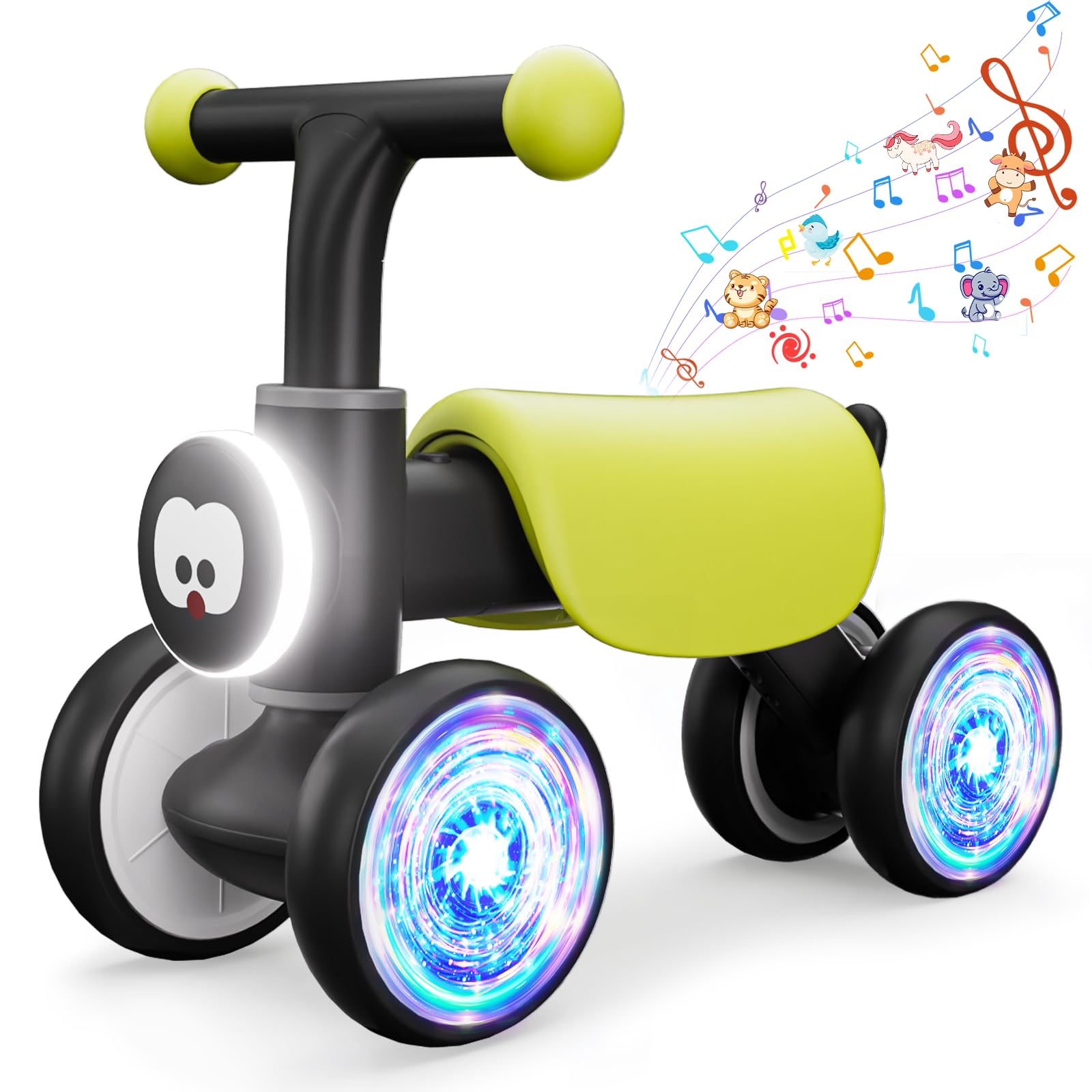
Glow wheels and cute animal sounds turn a balance bike into a multisensory toy.
This Doselie bike adds two layers of entertainment that other picks lack: colorful LED wheels that light up as they spin (no batteries required) and a tail button that plays 5 built-in songs and cute animal sounds at a decibel level that “will not damage the baby’s hearing,” according to the maker. Customers note it is “sturdy, low riding toy with lights, music, and animal sounds” and “perfect for a 1-year-old walker.” At 5 pounds, it’s on the lighter side, and the plastic frame keeps costs down without feeling cheap. The low center of gravity design means the bike stops when the child’s feet land — exactly what a balance bike should do.
The safety features are solid: a 135-degree turning limit to avoid side falls, fully enclosed wheels to prevent foot pinching, and a double triangular structure for stability. The weight capacity is 30 pounds, which is lower than the steel-frame bikes but still covers the 12-24 month range. The main drawback is that the plastic frame is less durable than steel or wood — if your child is rough with toys, this bike may not survive as long. Also, the music and lights are fixed features; you can’t turn them off, which could be distracting during quieter playtime.
Engagement Factor
- LED glow wheels and animal sounds motivate kids to ride
- 5 lbs is light enough for independent toddler play
- Low center of gravity makes it very stable and easy to mount
Durability Concern
- Plastic frame is less durable than steel or wood over years of use
- Music cannot be turned off — some parents may find it annoying
- 30 lb weight limit is lower than the Liberry’s 55 lbs
Go for this if: Your child responds well to lights and sounds — it turns biking practice into a game they’ll ask for again and again.
skip it if: You value long-term durability or want a quiet, no-bells-and-whistles toy that doesn’t need batteries ever.
6. Kinderfeets Tiny Tot 2-in-1 Wooden Balance Bike & Tricycle
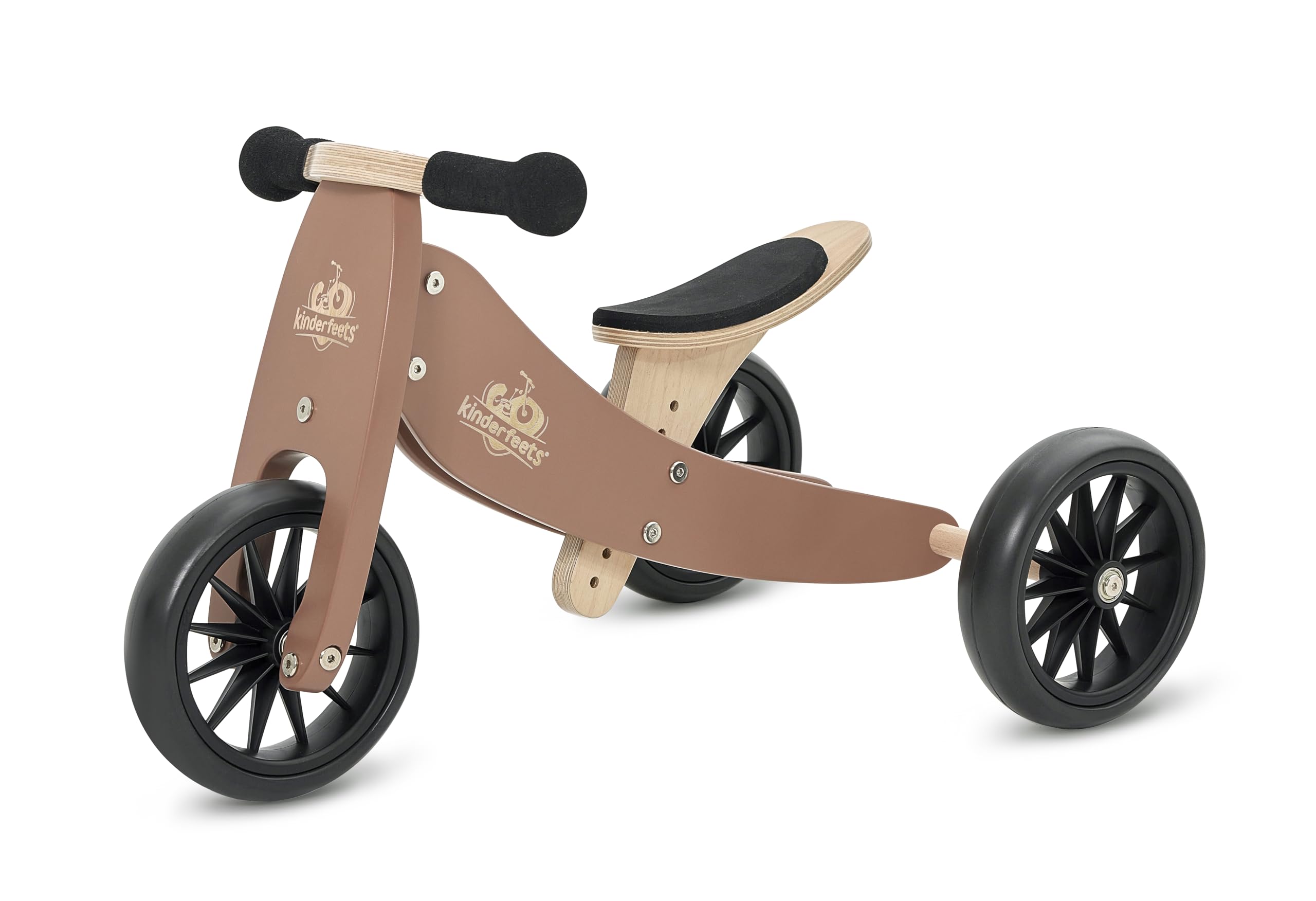
A beautifully crafted wooden bike that transforms from a tricycle to a 2-wheel balance bike.
This Kinderfeets Tiny Tot is the most versatile and eco-friendly pick here. It starts as a tricycle for new riders (ages 12 months and up, up to 44 pounds) and, when your child is ready, converts into a 2-wheel balance bike without any extra parts to buy. The frame is handmade from FSC-certified birchwood (wood sourced from responsibly managed forests) with non-toxic, water-based lacquers. The adjustable cushioned seat ranges from 8.5 to 11 inches — the lowest starting height on this list, ideal for very short toddlers. Buyers rave about the “beautiful and classy craftsmanship,” with one noting that their “just shy of one” year old “grabbed the handlebars and knew exactly what to do.” The 7-inch airless tires are puncture-proof and provide smooth rolling.
The bike weighs 5 pounds — competitive with the lightest options — but the wooden frame has a natural wobble absorption that some parents prefer over metal. It carries safety certifications for the European (CE), North American (ASTM), Australian (AS/NZS 8124), and (EN71) markets. The biggest trade-off: the wooden frame can chip if dragged along curbs or rough pavement, and a few buyers noted the paint chips “easily from curb dragging.” The wheels also have no tread, which one buyer flagged: they “are completely smooth and I wish they had some traction.” It’s a premium, beautiful bike best suited for gentle indoor and smooth outdoor use.
Convertible Magic
- Converts from 3-wheel tricycle to 2-wheel balance bike — true 2-in-1 value
- Lowest seat height (8.5″) — fits the smallest 12-month-olds
- Eco-friendly birchwood with non-toxic finishes
Wood Care
- Paint chips easily against curbs or rough surfaces
- Smooth tires lack traction on slick floors
- Premium price is significantly higher than metal alternatives
Ideal for: Eco-conscious parents who want a convertible, beautifully designed bike that starts as a tricycle and grows into a balance bike without buying two products.
Not the right fit if: Your child will primarily ride outdoors on rough pavement, where the wood frame may scuff quickly and the smooth tires lack grip.
Understanding the Specs
Weight: The Liberty Metric
For a one-year-old, weight is the single most important spec. A bike over 5 pounds can feel like a heavy piece of furniture to a toddler. The lightest options (around 3-4 lbs) allow a child to lift, carry, and reposition the bike independently — which builds confidence. Heavier bikes (6-7 lbs) offer more durability but may require adult help to get rolling.
Seat Height: The Ground Rule
Your child’s feet are their brakes. A bike fits when, with the child seated, their feet rest flat on the floor and their knees bend at a comfortable angle. Adjustable seats (typically 8.5 to 11 inches) let the bike grow with the child. Fixed seats are a gamble — too low and the child’s knees hit their chin; too high and they can’t touch the ground.
Wheel Count: 3 vs 4
Four wheels (two in front, two in back) offer maximum stability — the bike won’t tip side-to-side. Three wheels (one front, two back) teach steering balance and are lighter. A 3-wheel design is a stepping stone to a 2-wheel balance bike, while 4-wheel designs are strictly for stability practice. Both are safe for 1-year-olds.
Frame Material: Aluminum vs Steel vs Wood
Aluminum is the lightest and won’t rust, making it ideal for the smallest riders. Steel (often carbon steel) is heavier but more durable and can handle rougher play. Wood (birch or beech) is eco-friendly and looks beautiful, but it can chip and isn’t weather-resistant. Your choice depends on where the bike will live — indoors, on a patio, or across both.
FAQ
Can a 12-month-old really ride a balance bike?
What if my child can’t reach the ground on a balance bike?
Are pedal bikes or tricycles better for a 1-year-old?
Do balance bikes help with walking?
How long will a balance bike be used?
Are glow wheels and music features worth it?
What is the difference between EVA wheels and rubber wheels?
How do I keep a balance bike from tipping over?
Can a balance bike be used outdoors?
What safety certifications should I look for?
Final Thoughts: The Verdict
For most people, the bike for 1 year old winner is the Radio Flyer Steady Start Balance Bike because it combines class-leading 3-wheel stability with a tool-free adjustable seat and a trusted brand history. If you want a lighter, more indoor-friendly ride that is easier for a brand-new walker to maneuver, grab the SEREED Colorful Lighting Baby Balance Bike. And for a premium convertible that starts as a tricycle and grows into a balance bike with eco-friendly wooden craftsmanship, the standout is the Kinderfeets Tiny Tot 2-in-1.
How We Picked
We do not accept paid placement. Every pick is matched to a real buyer and a real use-case; we do not hands-on test units.
Sources & Methodology
Specifications: manufacturer listings and product documentation. Review insights: verified customer reviews, as of July 2026. Pricing: not shown on this page (it changes often); check the current price via the retailer link.
As an Amazon Associate, Gadgets Feed earns from qualifying purchases. This does not affect which products we feature.
Related Guides
Product prices and availability are accurate as of the date/time indicated and are subject to change. Any price and availability information displayed on Amazon at the time of purchase will apply to the purchase of this product. As an Amazon Associate I earn from qualifying purchases.
CERTAIN CONTENT THAT APPEARS ON THIS SITE COMES FROM AMAZON. THIS CONTENT IS PROVIDED "AS IS" AND IS SUBJECT TO CHANGE OR REMOVAL AT ANY TIME.
Amazon and the Amazon logo are trademarks of Amazon.com, Inc. or its affiliates.