
Our readers keep the lights on and my morning glass full of iced black tea. As an Amazon Associate, I earn from qualifying purchases.
Specs are compiled from manufacturer listings and verified buyer reviews and can change over time — please confirm the key details on the product page before buying.
A pull-up bar you mount to the ceiling is a huge upgrade for any home gym because it gets you out of a cramped doorway and gives you the headroom to move freely through every rep. The right one bolts directly into your ceiling’s joists, which means you can swing, kip, or hang with resistance bands without the whole thing wobbling loose on you. The catch is that not every bar fits your ceiling’s spacing, and some max out at a weight limit that might surprise you once you start adding weight or momentum.
I’m Min — the founder and writer behind Gadgets Feed. This guide is built by comparing the manufacturers’ published specifications and the patterns across verified customer reviews, so you get each pick’s real strengths and trade-offs instead of marketing spin.
The choices below are built around the real numbers that matter when you commit to a permanent ceiling mount, and they represent the best of what is currently available for a ceiling mounted pull up bar.
Quick Picks
- Ultimate Body Press Ceiling Mount Pull Up Bar — Top Performer
- Kipika 48″ Ceiling Mounted Pull Up Bar — Best Height Range
- Kipika 32″ Ceiling Mounted Pull Up Bar — Most Versatile
- Ergonomic Joist Mount Pull Up Bar by Ultimate — Ergonomic Pick
- AmStaff Fitness Joist Mount Pull Up Bar — Wide & Stable
- ATENTO Pull Up Bar, Chin Up Bars Ceiling Mount — Budget Champion
How To Choose The Best Ceiling Mounted Pull Up Bar
Before you buy, measure two things about your ceiling: the distance between your joists (the wooden beams that support your ceiling) and your headroom (the space from your ceiling down to the floor). Those numbers decide which bar fits. After that, your choice depends on weight capacity, grip options, and how much installation work you want. The wrong bar either does not match your joist spacing or bends under the force of a weighted pull-up.
Joist Spacing and Mounting Plates
Most residential ceilings have joists spaced either 16 inches or 24 inches apart on center. Your chosen bar must have a mounting plate or bracket that spans the distance between two joists so you can bolt into solid wood. A bar designed for 16-inch spacing will not work on a 24-inch layout, but some bars like the Kipika models explicitly accommodate both 16 and 32-inch spacing. You should also measure the width of the joist itself — a 2-inch wide joist needs a mounting base that is at least that wide.
Weight Capacity and Dynamic Load
A static weight limit is a helpful guide, but you are not just hanging there — you are pulling, swinging, and sometimes dropping your full body weight with momentum. A bar rated for 350 pounds may feel fine for a slow, controlled pull-up, but kipping or adding a weight belt creates more force. The safer move is to look for a bar with at least 400 to 500 pounds of max weight recommendation if you plan to get aggressive with your workouts. A bar that flexes or tilts under dynamic load is unsafe and distracting.
Riser Height and Head Clearance
The riser is the vertical piece that drops the bar down from the ceiling. Shorter risers around 12 inches give you less clearance but put less leverage on the mount, which can feel more stable. Taller risers around 16 to 21 inches give you more room to hang without your feet touching the floor but create more torque on the bolts. If you have a low ceiling (like 8 feet), a shorter riser will still let you hang while keeping your feet off the ground. For tall ceilings, adjustable height bars let you dial in the exact drop distance.
Quick Comparison
| Model | Best For | Weight Limit | Bar Width | Riser Height | Amazon |
|---|---|---|---|---|---|
| Ultimate Body Press CMP-48 | Standard 8-ft ceilings | 450 lbs | 48″ | 14″ | $99.99Amazon |
| Kipika 48″ | Tall ceilings / adjustable height | 500 lbs | 50.2″ | 25.8″ to 41″ | $92.99Amazon |
| Kipika 32″ | Extra features & punching bag hook | 400 lbs | 39″ | 21.3″ | $80.09$84.54Amazon |
| Ultimate Body Press JMP-S | Ergonomic grip / 500 lbs capacity | 500 lbs | — | 16″ | $43.96Amazon |
| AmStaff Fitness TU038 | Wide grip & head clearance | 400 lbs | 42″ | 12″ | $34.99$39.99Amazon |
| ATENTO Joist Mount | Budget-friendly starter bar | 350 lbs | 40″ | 12.5″ | $35.99Amazon |
In‑Depth Reviews
1. Ultimate Body Press Ceiling Mount Pull Up Bar with 48” Straight Bar and 14” Risers

A straightforward, rock-solid bar engineered for the most common ceiling layout in American homes.
This is the bar that solves the problem of standard 8-foot ceilings with its 14-inch risers. The mounting plates span 48 inches, so they hit two joists at 24-inch spacing or three joists at 16-inch spacing — that covers most typical residential framing. The bar itself is 48 inches wide and has a 1.25-inch diameter, which buyers report is “the perfect diameter for getting a solid grip” compared to thicker tubing they had returned before. It holds up to 450 pounds and uses a through-bolt design on the risers to stop the bar from rotating under hard, dynamic movement.
Owners mention that assembly is straightforward but recommend having a helper because the bar is large and the three-piece design can show slight misalignment during installation. One reviewer at 210 pounds says it “holds me with ease,” and another mentions stable performance even with kipping at 220 pounds. The main trade-off is that the included wrench is cheap and the grip is smooth enough that some users added tennis wrap for extra texture. It only fits joists at 16 or 24-inch spacing, so it may not work for every ceiling.
Unlike the ATENTO bar at 350 pounds, this one gives you a 100-pound higher safety margin, and its 14-inch risers provide noticeably more head clearance than the AmStaff bar’s 12-inch risers. If you have a typical garage or basement ceiling, this is the most proven, straightforward mount you can install today.
Built for Standard Ceilings
- 48-inch plates span 16 or 24-inch joist spacing
- Through-bolt risers prevent rotation under heavy movement
- 1.25-inch bar diameter feels natural for most hand sizes
Two Minor Setup Headaches
- Grip is smooth; some buyers add tape for texture
- Fit and finish can have slight paint chips from the start
Reach for it if: you have a standard 8-foot ceiling with 16 or 24-inch joist spacing and want a bar that simply works without fuss.
Look elsewhere if: your joists are 32 inches apart or you need adjustable height for a very tall ceiling.
2. Kipika 48″ Ceiling Mounted Pull Up Bar

The only bar on this list that adjusts height, making it the right call for vaulted or very tall ceilings.
This Kipika model lets you set the drop distance (the space between the bar and the ceiling) anywhere from 25.8 inches to 41 inches, so you are not stuck with a single height. It supports up to 500 pounds using an 8-hole mounting base — the most attachment points of any bar here — and the bar is 50.2 inches wide, giving you plenty of room for wide-grip pull-ups. The black electrophoretic coating (a rust-resistant finish applied with an electric current) is designed to resist rust, and buyers describe the metal as “heavy duty” and “durable.” One reviewer noted it is “very strong and easily supports weight as specified.”
The main catch, as customers note, is that the height adjustment creates some wobble at the fully extended setting, especially if you are doing fast or swinging movements. One buyer mentioned that the bar is “somewhat wobbly” at the tallest setting but still feels solid for controlled reps. Installation is fairly straightforward for wood joists, but if you have a concrete ceiling, reviewers point out drilling is a major challenge with any bar, not just this one. At 9.25 kilograms (about 20.4 pounds), it is the heaviest pick here, which adds to its stable feel but makes solo installation harder.
Compared to the Kipika 32-inch model, this one has a 100-pound higher weight capacity and over twice the maximum riser height, so it pulls ahead for taller users or higher ceilings. If your ceiling is higher than 8 feet, this is the bar that adjusts to fit.
Customizable Height
- Adjusts from 25.8″ to 41″ drop distance
- 500-pound max weight rating
- 8-hole base for a secure mount
Two Limitations
- Can feel wobbly at full extension during fast movements
- Heaviest bar here at 20.4 pounds; installation alone is tough
Who should pick it: anyone with a ceiling over 8 feet who needs the bar to drop lower than standard risers allow.
skip it if: your ceiling is exactly 8 feet — the bar’s minimum drop of 25.8 inches may leave your feet touching the floor.
3. Kipika 32″ Ceiling Mounted Pull Up Bar

A pull-up bar that doubles as a punching bag mount and resistance band anchor.
This Kipika 32-inch model goes beyond pull-ups by including two multifunctional hooks that let you hang a punching bag, suspension straps, or yoga straps directly from the same ceiling mount. It supports 400 pounds and has a 3-hole mounting base that the company says makes the installation more stable. The mounting holes are spaced 32 inches apart, and the base is 2.2 inches wide, which fits joists that are 2 inches wide or more. One buyer notes they are 250 pounds and “works great” — a strong real-world test.
The trade-off, as shoppers say, is that the included lag screws are long and strip fairly easily if you over-torque them. One reviewer also observed that the bar can tilt under weight due to the cantilever design and had to replace the top lag bolts with longer ones (5/16-inch by 4 inches) for a better hold on the joist. At 8.3 kilograms (about 18.3 pounds), this is a heavy piece of metal, but the weight adds to its stability once you have it bolted in correctly.
Compared to the AmStaff bar at 400 pounds, the Kipika 32 also hits 400 pounds but adds the punching bag hook and adjustable height — features you do not get with the simpler AmStaff design. If you want a single anchor point that supports multiple types of training, this bar gives you the most function per mount.
Multi-Tool Mount
- Two hooks for punching bag, straps, or bands
- 400-pound weight capacity with 3-hole base
- Height adjustable with four gear settings
Installation Heads-Up
- Included lag screws strip easily with standard tools
- Bar can tilt under torque without upgraded bolts
Best suited for: anyone who wants to add a heavy bag or suspension trainer to the same ceiling mount as their pull-up bar.
Not ideal if: you are unwilling to replace the included lag screws with stronger bolts for a rock-solid mount.
4. Ergonomic Joist Mount Pull Up Bar by Ultimate Body Press
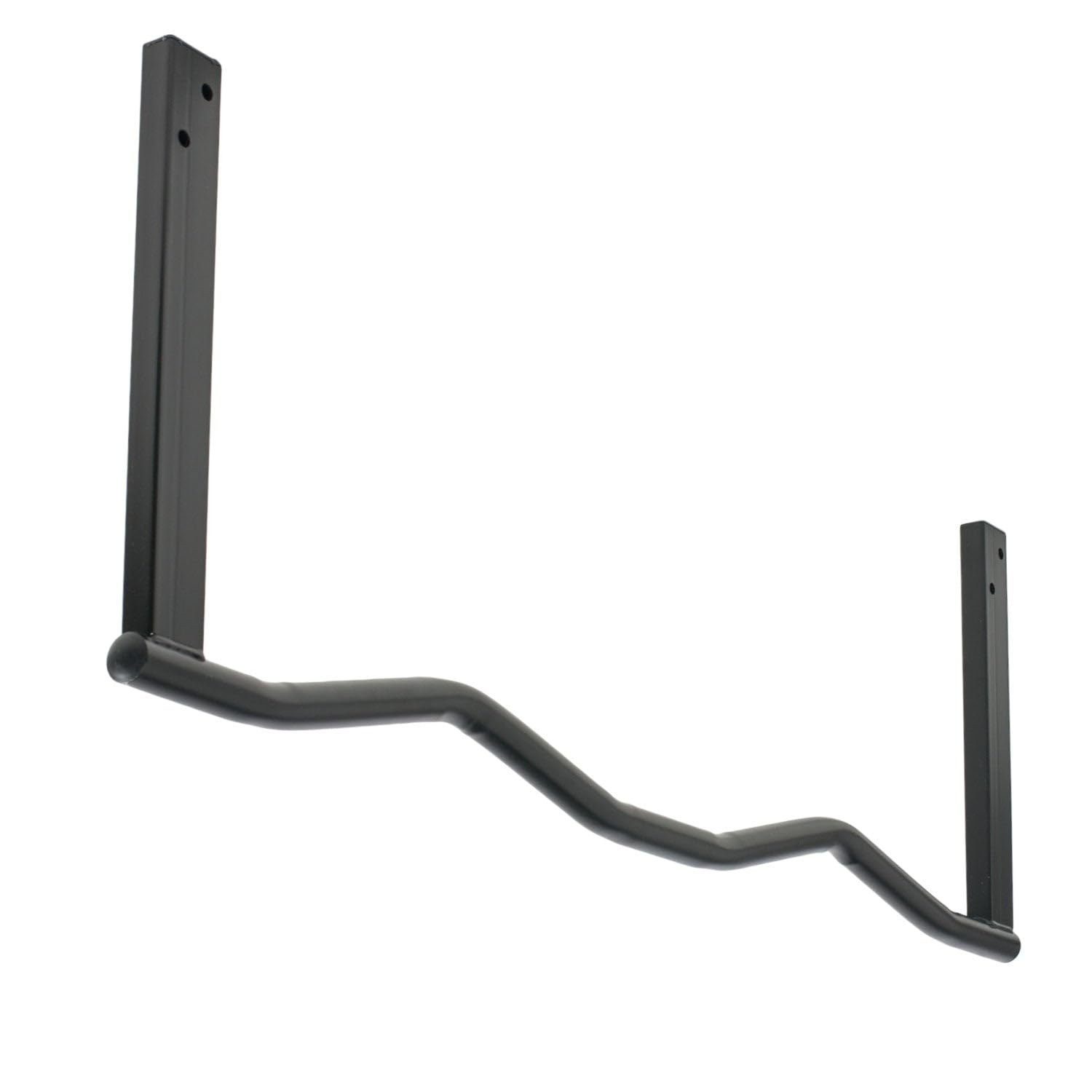
A 500-pound-rated bar built to reduce shoulder strain with a more natural hand position.
This bar uses ergonomic bends in the main tube that angle your hands into a more neutral position, which is intended to reduce stress on your shoulders, wrists, and elbows during a workout. It is all-welded steel with thick 1.25-inch tubing and 16-inch risers that give you better clearance than standard 12-inch risers. The max weight recommendation is 500 pounds — tied for the highest on this list alongside the Kipika 48-inch bar. One owner reported it is “very good quality for price” and praised the welded hollow steel and powder coat finish.
Buyers report that installation can be “tricky mounting parallel to rafters” because the design limits drill space and you may need a larger bit plus extra washers for a tighter assembly. One customer observed the bar is missing internal tube supports to prevent collapse under torque, so they added oak wood inside the tube as a reinforcement — a step not required on simpler designs. That said, the same buyer and many others say the bar is “very sturdy” and gets used by the whole family. The ergonomic shape is the big differentiator here: it is the only bar on this list that actively changes your hand position to protect your joints.
Unlike the AmStaff bar which has a basic straight bar with parallel grips, this Ultimate Body Press bar is designed specifically for people who feel wrist or elbow pain during traditional pull-ups. If your current bar aggravates your joints, this direct swap may make the difference.
Joint-Friendly Design
- Ergonomic shape reduces wrist and shoulder strain
- 500-pound max weight limit
- 16-inch risers for more headroom
Installation Demands
- Drill space is tight when mounting parallel to rafters
- No internal tube supports included; some users add their own
Go with this if: you want the highest weight capacity bar on the list and need an ergonomic grip to protect your wrists and shoulders.
Avoid if: you are looking for a simple, no-fuss installation that does not require additional hardware or modifications.
5. AmStaff Fitness Joist Mount Pull Up Bar

A wide 42-inch grip that gives you room to spread out while keeping a low 12-inch drop for stability.
The AmStaff bar delivers a full 42 inches of grip width and 12-inch vertical supports, which means you get plenty of space for wide-grip pull-ups without the bar hanging too low from the ceiling. This shorter drop creates less leverage on the mount, so the bar feels rigid under load. It is built from 1-inch by 1.75-inch heavy-duty steel and carries a 400-pound weight recommendation. One buyer at 200 pounds says it “supports 200 lbs swinging and pull-ups without flex.” The bar also includes 5-inch parallel grips, which help you vary your hand position to target different back and arm muscles.
The practical drawback, as owners mention, is that at 6 feet 3 inches tall, your legs will need to curl during pull-ups because the bar hangs only about 1 foot below the joist. This is the trade-off for that stable, short drop. Installation is fairly easy with included hardware, though customers note that the multi-part design requires some assembly. At 3.38 kilograms (about 7.5 pounds), this is one of the lighter bars on the list, which makes installation easier but also means it feels less massive than the Kipika bars.
Compared to the ATENTO bar, which also has about a 12-inch drop but only supports 350 pounds, the AmStaff gives you a 50-pound higher max rating and the extra parallel grip option. If you want a wide, low-to-ceiling bar that feels planted and does not take up vertical space, this is a solid mid-range play.
Stable Short Drop
- 42-inch wide bar for comfortable wide-grip training
- 12-inch risers keep leverage low for a rigid feel
- 400-pound weight limit with parallel grip option
Height Limitation
- 12-inch drop means tall users must curl their legs
- Lighter build at 7.5 pounds feels less substantial
Select this for: a wide, low-hanging bar that stays rock-solid and is easy for one person to install.
Pass on it if: you are over 6 feet tall and need more than 12 inches of vertical clearance for your legs.
6. ATENTO Pull Up Bar, Chin Up Bars Ceiling Mount
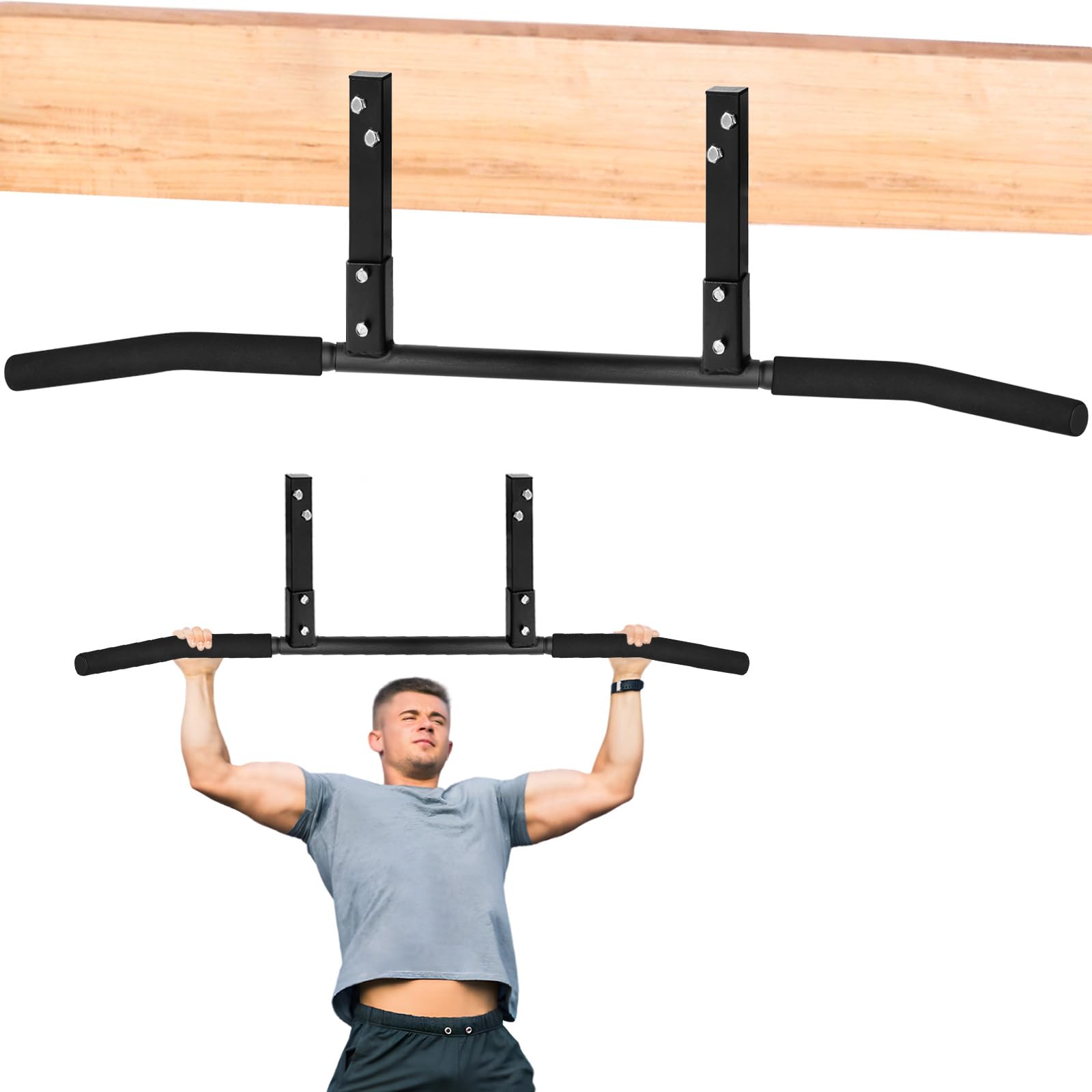
A one-piece steel bar that skips the assembly headache at a weight that is easy on your wallet.
The ATENTO bar is made from a single piece of heavy-gauge steel (thick, strong metal) with a black coating to prevent rust, so there is no multi-part frame to bolt together — just mount the whole unit to your joists. It is 40 inches wide with 12.5-inch grip spacing and supports up to 350 pounds. Reviewers point out it feels “very sturdy” and that at 195 to 200 pounds they are “very comfortable hanging on it.” The foam grips on the steel are thicker than standard padding and are designed to resist wear and slipping.
The catch is its 350-pound maximum weight recommendation, the lowest on this list. Compared to the AmStaff bar which supports 400 pounds for only a small step up in price, the ATENTO has less room for heavier users or anyone adding a weight belt. It is also significantly lighter than the Kipika bars at 2.31 kilograms (about 5.1 pounds) — the AmStaff bar, at 3.38 kilograms, is nearly 50 percent heavier, and the Kipika 32 is a massive 3.6 times heavier at 8.3 kilograms. This lightweight build makes the ATENTO easy to handle during installation, but it does not feel as substantial when you hang on it. Some buyers also reported minor quality control issues with bolt hole alignment and threads.
At this price point, the ATENTO is the clear entry-level option. It gets the job done for controlled pull-ups and chin-ups, but the lower weight capacity and lighter construction mean it is best suited for lighter users or those not doing explosive movements.
Simple & Affordable Setup
- One-piece steel frame needs no assembly
- Thick foam grips reduce slip and blisters
- Lightweight at 5.1 pounds, easy to hold up during install
Lower Capacity
- 350-pound limit is the lowest on the list
- Light build feels less heavy-duty than competitors
Best for: a budget-minded buyer who does controlled pull-ups and does not need a heavy-duty 400+ pound capacity.
Not for you if: you weigh over 220 pounds, use a weight belt, or want a bar that feels massive and indestructible.
Understanding the Specs
Weight Limit vs. Real Use
The max weight recommendation on a bar is for static hanging — you just grab the bar and let your body dangle. Real workouts involve dynamic force: kipping (using a swinging motion), dropping your full body weight with momentum, which can easily double the force on the mount. Your safest bet is to choose a bar with a max weight rating at least 50 to 100 pounds above your actual body weight. For example, the ATENTO bar at 350 pounds is fine for a 200-pound person doing strict pull-ups, but the Ultimate Body Press ergonomic bar at 500 pounds gives you a much wider safety margin for kipping or weighted pull-ups.
Bar Width and Grip Positions
Bar width directly affects which muscle groups you target. A wider bar like the 48-inch Ultimate Body Press or the 42-inch AmStaff lets you open your grip for wider lat engagement. Narrower bars force a closer hand placement that works your biceps and lower lats more. Some bars, like the AmStaff, also include parallel grips that let you palm-face your body during chin-ups. The grip diameter also matters — 1.25 inches is generally considered the most comfortable size for most hands. The Ultimate Body Press CMP-48 uses exactly that diameter, and reviewers specifically call it out as “perfect.”
FAQ
Will a ceiling mounted pull up bar work in my garage?
Can I install a ceiling mounted pull up bar on concrete?
How do I know what joist spacing my ceiling has?
What is the minimum ceiling height needed for a ceiling mounted pull up bar?
Is a 350-pound weight limit enough for pull-ups?
What is the difference between a joist mount and a rafter mount bar?
Can I attach a heavy punching bag to a ceiling mounted pull up bar?
How long does it take to install a ceiling mounted pull up bar?
Final Thoughts: The Verdict
For the majority of shoppers, the best ceiling mounted pull up bar is the Ultimate Body Press CMP-48 because it fits standard 8-foot ceilings, spans both 16 and 24-inch joist spacing, and holds 450 pounds with through-bolts (bolts that go all the way through the joist) that stop the bar from rotating. If you want the absolute highest weight capacity and an ergonomic grip to protect your joints, grab the Ultimate Body Press Ergonomic Joist Mount bar at 500 pounds. And for a vaulted ceiling or a multi-tool mount that can hold a punching bag, the Kipika 32-inch model is your pick.
How We Picked
We do not accept paid placement. Every pick is matched to a real buyer and a real use-case; we do not hands-on test units.
Sources & Methodology
Specifications: manufacturer listings and product documentation. Review insights: verified customer reviews, as of July 2026. Pricing: not shown on this page (it changes often); check the current price via the retailer link.
As an Amazon Associate, Gadgets Feed earns from qualifying purchases. This does not affect which products we feature.
Related Guides
Product prices and availability are accurate as of the date/time indicated and are subject to change. Any price and availability information displayed on Amazon at the time of purchase will apply to the purchase of this product. As an Amazon Associate I earn from qualifying purchases.
CERTAIN CONTENT THAT APPEARS ON THIS SITE COMES FROM AMAZON. THIS CONTENT IS PROVIDED "AS IS" AND IS SUBJECT TO CHANGE OR REMOVAL AT ANY TIME.
Amazon and the Amazon logo are trademarks of Amazon.com, Inc. or its affiliates.