
Our readers keep the lights on and my morning glass full of iced black tea. As an Amazon Associate, I earn from qualifying purchases.
Specs are compiled from manufacturer listings and verified buyer reviews and can change over time — please confirm the key details on the product page before buying.
Swapping a tent for a hammock cuts a few pounds from your pack, but buying the wrong all-in-one rig means waking up soaked or fighting a saggy bug net all night. The real trick is finding a shelter that keeps you dry, bug-free, and flat enough to sleep — without needing a second mortgage or a pack mule to carry it.
I’m Min — the founder and writer behind Gadgets Feed. This guide is built by comparing the manufacturers’ published specifications and the patterns across verified customer reviews, so you get each pick’s real strengths and trade-offs instead of marketing spin.
The right setup starts with a backpacking hammock tent that balances weight, weather protection, and room to stretch out — so your spine stays straight, not banana-curved.
Quick Picks
- Hennessy Explorer Deluxe Zip XL — Premium Pick
- SkyNest 11ft 4 in 1 Hammock Tent — Best Overall
- Night Cat Camping Hammock Tent 4 in 1 — Smart Value
- WintMing 3 in 1 Camping Hammock Tent — Lightest Carry
How To Choose The Best Backpacking Hammock Tent
A hammock tent replaces your tent floor, poles, and footprint with two trees and some rope. But not every all-in-one kit delivers on the three essentials: keeping you dry, keeping bugs out, and letting you actually sleep flat. Here are the specs that separate a great night in the woods from a miserable one.
Total Weight and Packed Size
Every ounce matters when you are carrying it on your back all day. Look for a complete system (hammock, rainfly, bug net, straps) under 4 pounds — that is roughly the weight of a lightweight two-person tent, so you are not adding bulk. A packed size smaller than 12″ x 8″ means it will not eat up your entire backpack.
Length and Flat-Lying Ability
A hammock’s length is the single biggest factor in comfort. An 11-foot hammock gives you enough diagonal space to lie nearly flat, which mimics a real bed. Shorter hammocks (under 9 feet) force your knees up and create that dreaded banana curve that strains your back — side sleepers especially need that extra length.
Weather Protection: Rainfly Coverage
The rainfly is your only roof. Look for a separate, detachable fly that overhangs the hammock on both sides and ends by at least 4-6 inches. A PU coating rating (like PU2000mm or PU3000mm) tells you how much water pressure the fabric can hold back before leaking — the higher the number, the better the storm protection. A fly that attaches securely at the hammock ends (not just the tree straps) prevents wind-driven rain from sneaking in.
Quick Comparison
| Model | Best For | Weight | Dimensions (L x W) | Material | Amazon |
|---|---|---|---|---|---|
| Hennessy Explorer Deluxe Zip XL | Pinnacle comfort & durability | 3 lb 9 oz | 12″L x 8″W (packed) | 140D Nylon bottom | $219.95Amazon |
| SkyNest 11ft 4 in 1 | Versatile, ultralight design | 3.3 lb | 131.8″L x 55″W | 20D Ripstop Nylon | $149.00Amazon |
| Night Cat 4 in 1 | Budget-friendly starter kit | 3.5 lb | 132″L x 55″W | Microfiber | $99.99$159.99Amazon |
| WintMing 3 in 1 | Entry-level value pick | 2.87 lb | 107″L x 55″W | 70D Nylon | $76.49$80.99Amazon |
In‑Depth Reviews
1. Hennessy Explorer Deluxe Zip XL

The legacy-backed hammock that one reviewer called “the best tent sleep ever” right from the start.
The Hennessy Explorer Deluxe Zip XL uses a 140D (thick, tough) nylon bottom that is far more durable than the 20D (thin, ultralight) fabric on the SkyNest — so you do not have to worry about a stray stick poking through under your back. The asymmetric shape is designed to let you lie diagonally and sleep flat, and a structural ridgeline (a fixed cord that runs end-to-end) means you set it up exactly the same way every single night — no guessing how tight to hang it.
The full-length #10 YKK zipper on the side makes getting in and out natural (unlike bottom-entry designs), and the 30D No-See-Um mosquito mesh (fine enough to block tiny biting midges) stays held open with an elastic system so the netting does not flop in your face. Buyers report that the setup takes about two minutes once you have the hang of it, and the stock rainfly has survived torrential Pacific Northwest downpours. The whole package weighs 3 lb 9 oz, which is heavier than the 3.3 lb SkyNest, but the build quality is what you pay for — owners mention it eliminates the back, hip, and shoulder pain they got from sleeping on the ground.
Unlike the lighter picks here, the Hennessy uses 1800 lb test polyester ropes and comes with complimentary webbing straps, so you are not hunting for extra gear on your first trip out. The catch is the cold: reviewers warn that in temperatures around 20°F you will freeze without a dedicated underquilt (an insulated blanket that hangs under the hammock) or sleeping pad, because that thick bottom fabric does nothing to insulate you from the cold air below. Also, the 12″L x 8″W packed size is compact but you need to learn the “snake skin” trick (a sleeve that helps manage the hammock during setup and takedown) to speed up takedown in rain.
What Makes It Special
- Asymmetric shape and ridgeline deliver a consistently flat, comfortable sleep
- 140D (thick, abrasion-resistant) nylon bottom is much tougher than lightweight alternatives for rocky sites
- Full-length YKK zipper makes entry natural and the bug net seals tight
The Real Trade-Offs
- At 3 lb 9 oz it is heavier than the 3.3 lb SkyNest — a noticeable difference on a long climb
- Very cold in sub-30°F temps without an aftermarket underquilt; the stock system does not include insulation
- No integrated sleeve for a sleeping pad, so side sleepers need to buy a wider pad separately
Reach for this if: you prioritize bombproof durability and a proven sleep geometry over every last gram — this is the hammock for serious campers and law-enforcement users who need reliability in rough terrain.
Consider another if: you are trying to hit a 3-pound base weight or you often camp in cold weather and do not want to buy an expensive underquilt right away.
2. SkyNest 11ft 4 in 1 Hammock Tent

A modular 11-foot shelter that reviewers call “the best hammock I own” for its versatility and storm-ready build.
The SkyNest stands out because it does not lock you into one configuration — unlike the all-in-one WintMing or Night Cat, you can use the hammock alone for lounging, zip the bug net on for sleeping, or detach the rainfly entirely and pitch it as a standalone tarp or awning. The rainfly itself is made from 20D ripstop nylon (a lightweight, tear-resistant fabric) coated with silicone, with a waterproof rating of PU3000mm (able to withstand a 3000mm column of water before leaking, which handles a serious rainstorm), plus UPF50+ sun protection (blocking 98% of UV rays) if you use it as a canopy during the day.
At 11 feet long and 55 inches wide, the hammock gives you enough diagonal room to sleep flat — something the 107-inch (8.9-foot) WintMing simply cannot deliver at 107 inches versus 131.8 inches. The double-layer bottom lets you tuck a camping mat between the layers for back support, a feature side sleepers particularly appreciate. Reviewers report that “light, easy setup in storm, bug-proof (even small ones), comfortable, spacious” nails the experience, and the pentagonal interior design (a five-sided shape) keeps the mosquito netting away from your face so it does not brush against you all night.
A few buyers have noted that the tarp can absorb water and leak in prolonged heavy rain rather than fully repelling it — one reviewer noted waking up damp after a storm. The instructions are also thin, so you will want to practice pitching it in the yard before heading into the backcountry. Also, the “porch mode” that creates a cooking awning requires two separate poles that are not included, so factor that cost in if you want that setup.
Standout Strengths
- Full modular design lets you use the hammock, bug net, and rainfly independently — far more versatile than the WintMing or Night Cat combos
- 11-foot length allows a flat sleeping position that shorter hammocks cannot match
- Double-layer bottom with a mat sleeve gives side sleepers real back support
Known Weaknesses
- Some reviewers found the PU3000mm tarp leaked in sustained heavy rain — a point of concern for full-storm reliability
- Setup instructions are minimal; expect a learning curve on the first pitch
- Porch mode requires poles (sold separately), adding cost and weight
Best fit for: the backpacker who wants one system that works as a hammock, a tarp shelter, or even a ground tent (with trekking poles) — the versatility is class-leading here.
skip it if: you need a guaranteed waterproof seal in monsoon conditions without any extra seam-sealing DIY, or you want a system that is truly simple to use to set up in the dark.
3. Night Cat Camping Hammock Tent 4 in 1
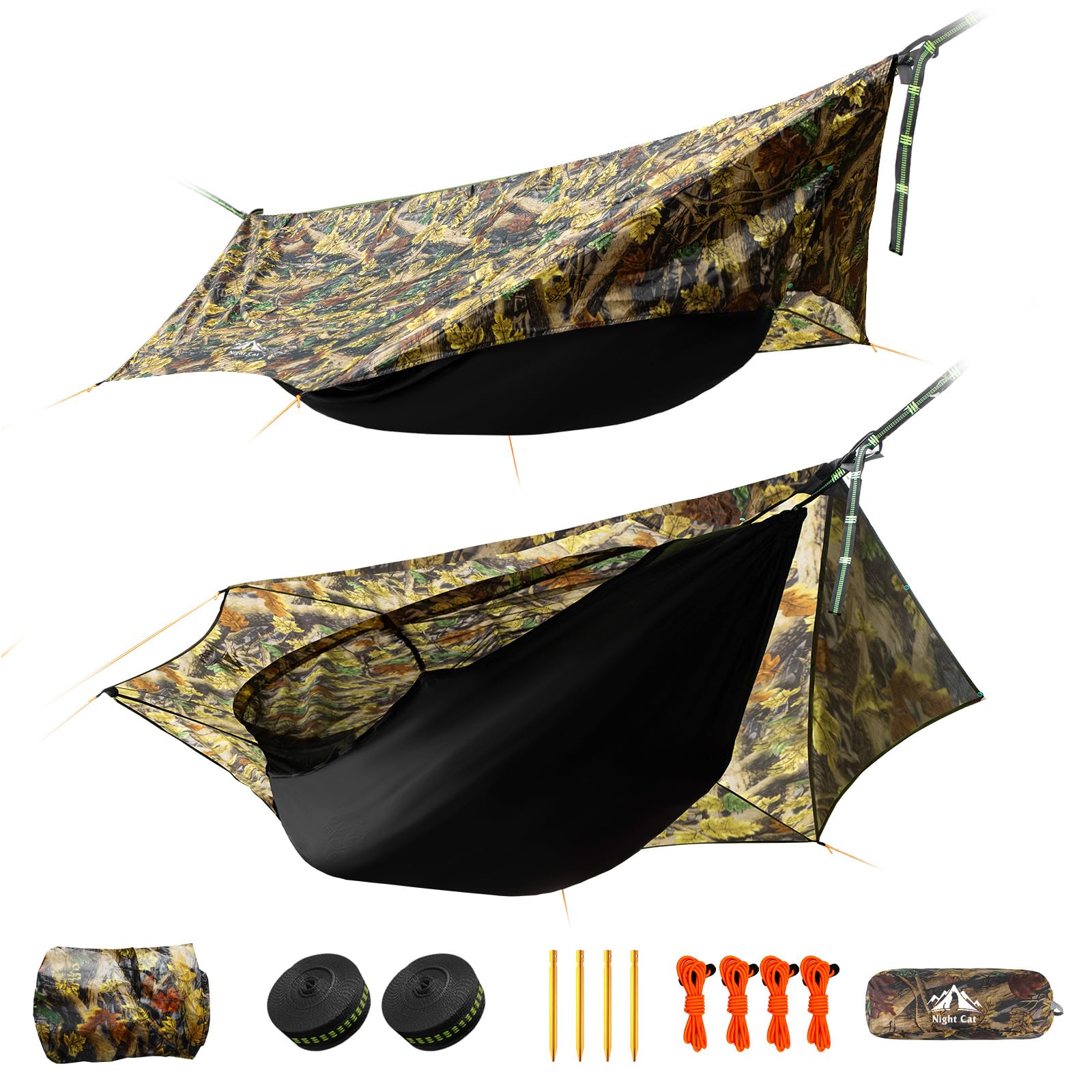
A 132-inch long starter hammock that one buyer called “very easy to set up (about 3 minutes)” and genuinely comfortable.
At 132 inches long, the Night Cat actually beats the SkyNest by a fraction of an inch and crushes the 107-inch (8.9-foot) WintMing by 25 inches — that extra room is what lets you shift diagonally and kill the banana curve. The 4-in-1 package includes the hammock, a rainfly tarp, and a built-in mosquito net, all packed into a 3.5-pound system. A built-in sleeve on the bottom lets you slide an inflatable mattress between the layers, which addresses a major pain point for people who sleep cold.
Reviewers consistently praise the speed of setup — one buyer mentioned they had it hung and comfortable in about three minutes once they were familiar with the system. The rain tarp covers the 55-inch-wide bed and is made from waterproof microfiber, though one early reviewer reported the stock fly was not waterproof and had to return it (Night Cat’s customer service reached out unsolicited to fix the issue). The storage pouch and two interior loops for hanging a light are thoughtful touches you usually only see on premium hammocks.
This hammock runs slightly heavier than the 2.87-pound WintMing at 3.5 pounds, but you gain 25 inches of length for that weight — a trade-off that matters if you are over 5’8″. Customers note that the guy lines (small cords that anchor the hammock to the ground) are essential to stop the hammock from flipping when you climb in, and the rainfly’s tie-out points are not the most sturdy. One reviewer loved it for “CENTCOM area” camping (Kuwait, Iraq, UAE), which speaks to its durability in harsh conditions.
Why It Works
- At 132″L x 55″W it has the longest bed in this lineup, giving tall sleepers the best chance of lying flat
- Integrated mattress sleeve adds warmth and comfort without buying extra gear
- Customer service proactively followed up on a reported rainfly defect — a good sign for warranty confidence
Where It Falls Short
- Mixed reports on the rainfly’s waterproofing — some buyers found it leaked, requiring a DIY treatment or return
- At 3.5 lb it is 0.63 lb heavier than the 2.87 lb WintMing; that extra weight adds up on a multi-day hike
- The microfiber material feels less premium than the nylon used on the Hennessy or SkyNest
Grab this for: a budget-conscious first hammock where length and ease of setup are your top priorities — the long bed makes a real difference for comfortable sleep.
Pass if: you need guaranteed stormproof reliability from the start, or you are trying to keep your total pack weight under 3 pounds for ultralight trips.
4. WintMing 3 in 1 Camping Hammock Tent

The lightest complete system here at 2.87 pounds — versus the Night Cat’s 3.5 pounds.
If ounces dictate your gear list, this 3-in-1 kit is worth a close look. The 70D nylon fabric (medium-thickness nylon that balances weight and tear resistance) is breathable, yet the whole package (hammock, rainfly, bug net, aluminum poles, and tree straps) weighs just 2.87 pounds. That makes it the clear choice for gram-counters — you save nearly a full pound compared to the 3.5-pound Night Cat or the 3 lb 9 oz Hennessy. The rainfly and bug net are both sewn on, so there is no fumbling with separate zippers or clips when you are setting up in fading light.
Reviewers who have spent 30+ nights in this hammock report the “setup/breakdown fast and easy” and found it comfortable down to 20°F with a proper underquilt (an insulated blanket that hangs under the hammock) and sleeping bag. The aluminum poles have magnetic ends that snap together, making the frame assembly quick. The interior includes a small storage pocket (though one owner reported it was sewn backward) and two hooks for hanging a light. The rainfly is made of ripstop nylon and overhangs the hammock by 4-5 inches on the sides and 12 inches on the ends, providing reasonable coverage for rain.
The big catch is the 107-inch (8.9-foot) length — that is about two feet shorter than the SkyNest or Night Cat. At 8.9 feet, this hammock forces your knees up unless you sleep perfectly on the diagonal, and side sleepers will struggle to get flat. One reviewer returned two units because the rainfly opening was sewn on the opposite side from the hammock opening, making it non-functional — a quality-control issue the company was slow to resolve. The nylon base fabric is also thin, raising durability concerns for rocky campsites or extended use.
The Upside
- At 2.87 lb it is the lightest full system in this guide — a real advantage for backpackers counting every ounce
- Magnetic aluminum poles snap together quickly, reducing fumbling during setup in the dark
- Reviewers found it held up well through 30+ nights and wind up to 50 mph when properly guyed out (anchored with cords to the ground)
The Downside
- At 107 inches long, it is 25 inches shorter than the Night Cat — tall or side sleepers will feel cramped
- Multiple reviewers reported the rainfly opening was sewn opposite the hammock opening, a recurring quality-control defect
- Thin fabric raises concerns about snagging on roots or sharp branches; one reviewer rated durability 8/10 and noted stitching at tie-out points could be stronger
Ideal for: ultralight backpackers who prioritize a low pack weight and are under 5’8″ — this is the most portable kit you can get without spending premium money.
Avoid if: you are over 5’8″, you sleep on your side, or you do not want to risk a potential return process for a misaligned rainfly — the SkyNest or Night Cat are safer bets for shape and quality control.
Understanding the Specs
Hammock Length — Why 11 Feet Wins
A hammock that is 107 inches (about 9 feet) forces your body into a banana curve because you cannot get enough diagonal room to straighten your legs. An 11-foot hammock (132 inches) gives you that extra diagonal space so your spine stays flat and your knees do not ache in the morning. If you are over 5’8″, prioritize a hammock at least 11 feet long — the difference between the 107-inch WintMing and the 132-inch Night Cat is a 25-inch gap, and your back will feel it.
Fabric Denier and Waterproof Ratings
The “D” in 70D or 20D stands for denier (the thickness of the nylon threads). Higher denier (70D) means a tougher, more abrasion-resistant fabric, but it is heavier. Lower denier (20D) is lighter and packs smaller but snags more easily. For the rainfly, look at the PU (polyurethane) coating rating — PU2000mm means the fabric can withstand a column of water 2000mm high before leaking, while PU3000mm is better for heavy storms. A silicone-coated fly (like the SkyNest’s) is lighter and stuffs smaller than a PU-coated one but can be harder to seam-seal.
FAQ
Can I sleep on my side in a backpacking hammock tent?
Will a backpacking hammock tent keep me dry in a rainstorm?
How do I keep warm in a hammock tent at night?
What is the difference between a hammock tent and a regular camping hammock?
How much weight can a backpacking hammock tent hold?
Can I set up a hammock tent if there are no trees?
How long does it take to set up a hammock tent?
Is a hammock tent more comfortable than a tent for backpacking?
Will a backpacking hammock tent protect me from mosquitos and gnats?
How do I clean and store a hammock tent after a trip?
Final Thoughts: The Verdict
For the majority of shoppers, the backpacking hammock tent winner is the SkyNest 11ft 4 in 1 because it delivers the best balance of ultralight weight (3.3 lb), storm-ready PU3000mm waterproofing, and a full 11-foot bed that lets average-height sleepers lie flat. If you want proven, bombproof durability and are okay carrying an extra 4 ounces, grab the Hennessy Explorer Deluxe Zip XL. And for a budget-friendly entry point with the longest bed in the roundup, the standout is the Night Cat 4 in 1.
How We Picked
We do not accept paid placement. Every pick is matched to a real buyer and a real use-case; we do not hands-on test units.
Sources & Methodology
Specifications: manufacturer listings and product documentation. Review insights: verified customer reviews, as of July 2026. Pricing: not shown on this page (it changes often); check the current price via the retailer link.
As an Amazon Associate, Gadgets Feed earns from qualifying purchases. This does not affect which products we feature.
Related Guides
Product prices and availability are accurate as of the date/time indicated and are subject to change. Any price and availability information displayed on Amazon at the time of purchase will apply to the purchase of this product. As an Amazon Associate I earn from qualifying purchases.
CERTAIN CONTENT THAT APPEARS ON THIS SITE COMES FROM AMAZON. THIS CONTENT IS PROVIDED "AS IS" AND IS SUBJECT TO CHANGE OR REMOVAL AT ANY TIME.
Amazon and the Amazon logo are trademarks of Amazon.com, Inc. or its affiliates.