
Our readers keep the lights on and my morning glass full of iced black tea. As an Amazon Associate, I earn from qualifying purchases.
Specs are compiled from manufacturer listings and verified buyer reviews and can change over time — please confirm the key details on the product page before buying.
When you are building a fire pit, repairing a furnace, or lining a pizza oven, the mortar you choose is the single thing that decides whether that high-heat structure holds together or crumbles on first serious use. A wrong pick means fine cracks, loose bricks, and a weekend project that needs redoing before it ever really got started. This guide breaks down the real differences between four heat-rated mixes so you know exactly which one handles your job without surprises—and which ones you should steer clear of for your specific project.
I’m Min — the founder and writer behind Gadgets Feed. This guide is built by comparing the manufacturers’ published specifications and the patterns across verified customer reviews, so you get each pick’s real strengths and trade-offs instead of marketing spin.
Whether you are patching a single firebrick or lining a whole forge, choosing the right brick mortar for high-temp use means understanding working time, heat rating, and cure method before you mix a single batch.
Quick Picks
- GIRtech Refractory Cement Dry Mix Mortar 10 LB — Top Performer
- Rutland Dry Mix 211 Refractory Mortar 10 Pound — Best Value
- Tenon Refractory Mortar 10 Pounds — Best Preblended
- Chamber Safe 5 Gallon Mortar Mix — Large Build
How To Choose The Best Brick Mortar
Picking a heat-rated mortar is not just about the temperature number on the label. You have to match its working behavior to your project size, your pace, and the environment you are building in. Here are the three specs that separate a solid build from a cracking headache.
Working Time vs. Project Size
Some mortars set fast—in as little as 20 minutes—while others give you a full hour to work. If you are laying a whole fireplace ring of bricks, a short working window means you must mix small batches and move quickly. Buyers report that the Tenon mix sets up in about 20 minutes, so they made small batches. For bigger parge or cast jobs, a powder you mix yourself lets you control the consistency and pace.
Temperature Rating vs. Real Use
A mix rated to 2550°F handles nearly any residential fireplace, pizza oven, or forge where you work steel. The 3110°F and 2650°F options give extra headroom for industrial-style kilns or foundry work. But a high number does not mean a better all-around mortar—the 3110°F product in this lineup has drawn the most complaints about cracking because its clay-based chemistry needs very careful firing to reach full strength.
Full Cure Time and Firing Sequence
This is where beginners get tripped up. Some mortars cure in 2 hours and do not need heat to harden—you can light a fire on them the same day. Others demand 48 hours of slow air drying before you even strike a match, plus a gradual heat ramp over hours to sinter the clay particles. If you ignore that, you get cracks. If you need a quick repair on a stove you use daily, a 2-hour-cure mix is the obvious choice.
Quick Comparison
| Model | Best For | Working Form | Heat Rating | Full Cure Time | Amazon |
|---|---|---|---|---|---|
| GIRtech Dry Mix 10 LB | High-temp kiln/furnace lining | Dry powder | 3110°F | 48 Hours | Amazon |
| Rutland Dry Mix 211 | Quick Oven/forge repairs | Dry powder | 2550°F | 2 Hours | Amazon |
| Tenon Refractory Mortar | Firebrick setting & parging | Preblended paste | 2550°F | 1 hour (work time) | Amazon |
| Chamber Safe 5 Gallon | Large foundry/furnace builds | Preblended mix | 2650°F | 2 days (stated by user) | Amazon |
In‑Depth Reviews
1. GIRtech Refractory Cement Dry Mix Mortar 10 LB
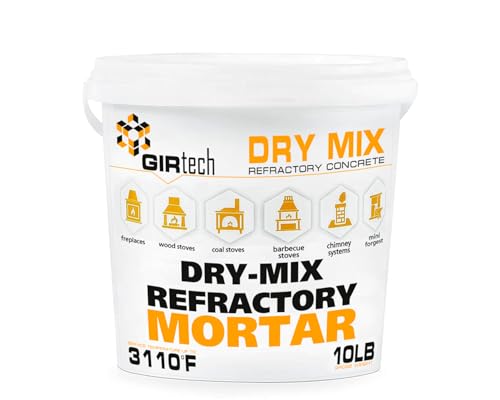
The highest-rated heat mortar demands a patient hand and a careful firing schedule.
This dry powder mix from GIRtech is rated to 3110°F (the next highest in this lineup is 2650°F)—making it the go-to for serious kiln, furnace, or forge work where standard 2550°F mixes might soften. The trade-off is that it is a clay-based refractory mortar, not a cement-based one, which means it needs a 48-hour room-temperature dry time followed by a gradual firing to sinter fully. Unlike the Rutland mix that cures fast without heat, skipping that slow ramp on this product is what leads to the cracks some owners mention.
Customers note that the powder contains rocks that need sifting before mixing for a smooth trowel joint, and one user who slow-dried it for two weeks still saw cracks—so this is not a grab-and-go weekend mix. For the serious home builder repairing a glass-blowing furnace or lining a high-temp kiln, the heat resistance is class-leading. For a quick fireplace brick patch, this is overkill and more demanding than you need.
Why Power Users Reach for It
- 3110°F rating beats every other mix on this list by hundreds of degrees
- Dry powder form lets you mix custom consistency and stores indefinitely
- Non-toxic and food-grade safe for pizza ovens when fired properly
The Firing Catch
- Extremely hard to work with—must sift rocks and manage very wet consistency
- 48-hour cure plus gradual heat ramp is demanding for casual repairs
- Multiple 1-star reviews for cracking even with careful drying
Ideal for serious kiln builders: if your project hits over 2550°F and you are comfortable with a multi-day cure and firing sequence, the heat ceiling here is class-leading.
Not for quick patches: for a same-day stove repair or single firebrick replacement, the Rutland mix below is a far safer pick.
2. Rutland Dry Mix 211 Refractory Mortar 10 Pound
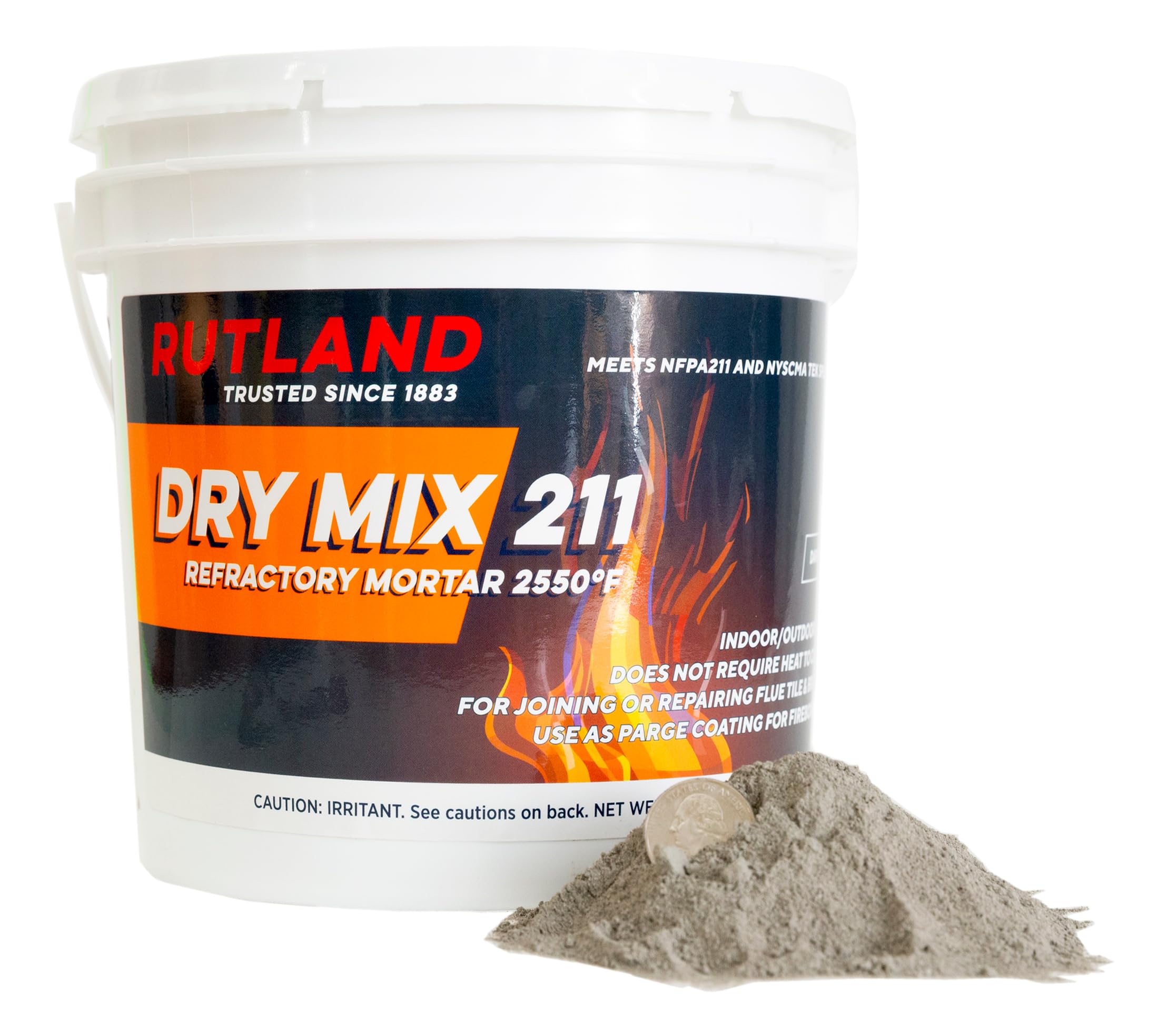
A 2-hour cure time and forgiving consistency make this the easy-choice universal fix.
Rutland’s 211 mix has the shortest full cure time in this roundup at 2 hours, and it does not need any heat to harden—you can light a fire the same day you apply it. That alone makes it a dramatically different product from the 48-hour-cure GIRtech mix above: a 2-hour cure versus a 48-hour cure. At 4.17 pounds it is also the lightest pail here, compared to 30 pounds for the Chamber Safe bucket, so it is far more manageable for small repairs around the house.
Buyers describe it as a “fine fluffy concrete powder” that dries hard, sponges well, and takes heat effectively in forges and wood stoves. The catch is that it can crack if you apply it too thick—multiple reviews note superficial cracking on thick layers—so you want to build up in thin passes. One owner mentioned it held up for six months in a repaired firebox but some pieces loosened. At its price point, it is the best low-friction option for the homeowner who just wants the fireplace back in service.
What Makes It Easy
- 2-hour cure time to full strength—no overnight wait or gradual firing needed
- Powder form mixes to any consistency with just water
- Lightweight at 4.17 lbs for easy handling and shelf storage
The Limits
- Thicker layers tend to crack during drying—requires thin passes
- Only rated to 2550°F, which is less headroom than the GIRtech mix
- Some reviewers point out loosening on vertical surfaces after months of use
Grab this for quick fixes: if you need a same-day stove repair, forge patch, or single firebrick replacement, the fast cure and easy mix win.
Skip for heavy parge coats: if you are cladding a whole firebox chamber with thick mortar layers, the Tenon paste below handles larger beds better.
3. Tenon Refractory Mortar 10 Pounds
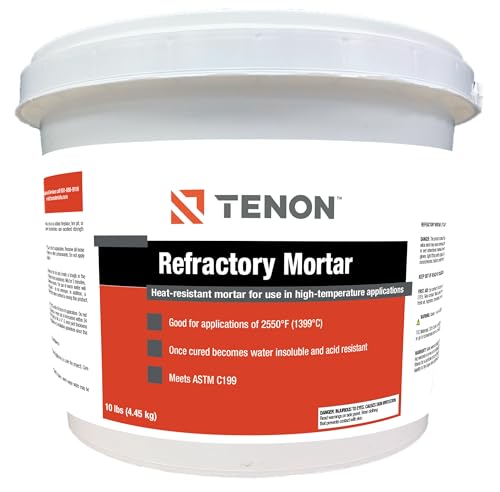
Out of the pail and onto the trowel—no mixing, no measuring, no waiting.
The Tenon mortar is unique in this list because it arrives as a preblended paste, not a dry powder. That means you open the pail and start troweling immediately, which is a real time-saver if you are laying firebrick in a pizza oven or parging a smoke chamber and want zero prep fuss. It gives you one hour of working time before it hardens, which is plenty for a single fireplace ring or flue liner, though shoppers say that in practice it sets up faster—closer to 20 minutes—so small batches are the smart move.
It passes ASTM C199, a certification most building codes require for chimney and flue installations, so it is not just convenient—it is inspectable. The downside vs the GIRtech mix is the temperature ceiling: 2550°F is fine for residential use but lacks headroom for industrial kilns. And unlike the Rutland dry mix that lets you dial in your own consistency, you get what the pail gives you—a paste that stays wet only so long.
Why Grab-and-Go Wins
- Preblended paste—zero mixing, just wet the brick and apply
- ASTM C199 certified for code-compliant chimney and fireplace installs
- Becomes water insoluble and acid resistant after curing
The Working Window
- Real-world work time is about 20 minutes, not a full hour—forces small batches
- 2550°F max is lower than GIRtech and Chamber Safe options
- No ability to adjust consistency; what is in the pail is what you get
Reach for it when speed matters: if you want a code-friendly, ready-to-use paste for setting flue liners or laying firebrick without measuring powder and water, this is your pick.
Look elsewhere for big pours: for a large parge or cast job where you need to adjust consistency on the fly, a dry mix like Rutland gives more control.
4. Chamber Safe 5 Gallon Mortar Mix

A full 5-gallon bucket built for serious parge and cast masonry projects.
The Chamber Safe mix is the heavy hitter of the group at 30 pounds—compared to 4.17 pounds for the Rutland pail—and it is designed for jobs where you need volume: lining a whole foundry, building a cast furnace shell, or parging a large smoke chamber. It resists temperatures up to 2650°F, which splits the difference between the 2550°F standard and the 3110°F GIRtech mix, and it meets ASTM Standards E-196, C199, and C401 plus UL listing, so it holds its own for code-level work.
Buyers report that one 5-gallon bucket is “the right amount for my foundry” with a little left over for patching, and that it works great for pizza oven builds. The paste consistency is meant for parge and cast applications—you pack it in tight, let it dry for two days, then fire gradually. Unlike the GIRtech mix which has drawn consistent complaints about cracking, Chamber Safe users note only minor surface cracks even after hundreds of burn hours in a propane foundry. But at 30 pounds and a bucket this big, it is overkill for a single firebrick repair.
Built for Volume
- Full 5-gallon bucket supplies enough for large foundry or whole pizza oven builds
- 2650°F rating provides solid headroom above standard 2550°F mixes
- Meets ASTM E-196, C199, C401 and is UL Listed for professional installations
The Commitment
- 30-pound bucket is heavy and awkward for small repairs
- Large volume means leftover material that may not store well if opened
- Cure time requires patience—dries for two days before gradual firing
Buy this for a major build: if you are lining a propane foundry, smelting furnace, or whole pizza oven and want one bucket to do the job, this is the right quantity.
Too much for patches: for a single cracked firebrick or small stove repair, grab the 10-pound Rutland instead—you will not waste material.
Understanding the Specs
Full Cure Time vs. Firing Schedule
This is the spec that trips up most first-time buyers. A short cure time like 2 hours means the mortar hardens chemically and you can light a fire the same day—no special sequence needed. A long cure like 48 hours means the mortar needs slow air drying before any heat touches it, followed by a gradual temperature ramp over hours to sinter the clay particles. If you fire a long-cure mortar too fast, it cracks. Always check this number before you mix.
Temperature Rating and Headroom
The rating (2550°F, 2650°F, or 3110°F) tells you the max temperature the mortar can handle before breaking down. For a backyard fire pit or pizza oven that hits 1000-1400°F, a 2550°F mix has plenty of headroom. For a glass-blowing kiln or metal-forge that pushes 2000°F+, a 3110°F mix gives you a safety margin. The number is less about performance at everyday heat and more about the ceiling your project needs so you do not risk melting the joints.
Dry Powder vs. Preblended Paste
Dry powder lets you add water to control consistency—thin for troweling, thick for packing—and stores indefinitely on a shelf. Preblended paste is ready the moment you open the pail and saves the measuring step, but you cannot adjust its thickness and the clock starts ticking toward hardening when the lid comes off. Choose powder if you want flexibility or plan to use the mortar over multiple projects; choose paste for a single fast job where convenience matters most.
Certifications (ASTM C199, UL)
ASTM C199 is the standard most building codes reference for installation of firebrick and flues in chimneys and masonry fireplaces. If your project needs to pass an inspection, you need a mortar that is certified to ASTM C199. UL listing (found on Chamber Safe) adds another layer of safety verification for commercial or high-liability builds. For a backyard forge or personal pizza oven, skipping these certs is fine.
FAQ
What is the difference between refractory mortar and regular cement mortar?
Can I use brick mortar for a fire pit or pizza oven?
How long does refractory mortar take to cure before I can light a fire?
What does the temperature rating on mortar mean?
Will a 10-pound pail be enough for my project?
Can I apply refractory mortar in cold or wet weather?
Is refractory mortar safe for indoor use?
How do I prevent my mortar from cracking during drying?
Can I use leftover dry mix mortar after the bucket is opened?
What mortar works best for a backyard forge?
Final Thoughts: The Verdict
If you want one dependable pick, the brick mortar winner is the Rutland Dry Mix 211 because it combines a forgiving 2-hour cure with a 2550°F rating and an easy-to-mix powder format—making it the safest pick for both quick repairs and dedicated foundry builds. If you need the highest heat ceiling and are comfortable with a demanding, multi-day firing schedule, grab the GIRtech Dry Mix 10 LB. And for a ready-to-use paste that starts working straight from the pail on code-compliant fireplace and chimney work, the Tenon Refractory Mortar gets the job done with zero prep.
How We Picked
We do not accept paid placement. Every pick is matched to a real buyer and a real use-case; we do not hands-on test units.
Sources & Methodology
Specifications: manufacturer listings and product documentation. Review insights: verified customer reviews, as of July 2026. Pricing: not shown on this page (it changes often); check the current price via the retailer link.
As an Amazon Associate, Gadgets Feed earns from qualifying purchases. This does not affect which products we feature.