
Our readers keep the lights on and my morning glass full of iced black tea. As an Amazon Associate, I earn from qualifying purchases.
Specs are compiled from manufacturer listings and verified buyer reviews and can change over time — please confirm the key details on the product page before buying.
A 305/30R20 tire has one job: keep you planted when you hit the gas. The problem is that within this single size, the choices range from all-season daily drivers that last 50,000 miles to drag radials that hook hard at the track but get sketchy when the temperature drops. This guide breaks down five real options so you match the tire to how you actually drive.
I’m Min — the founder and writer behind Gadgets Feed. This guide is built by comparing the manufacturers’ published specifications and the patterns across verified customer reviews, so you get each pick’s real strengths and trade-offs instead of marketing spin.
The most honest way to choose the best 305/30r20 tires is to match the rubber compound and tread design to your car’s power and your annual driving conditions, not the badge on the sidewall.
Quick Picks
- Continental ExtremeContact DWS06 PLUS UHP All — Best Overall
- Nitto NT555 G2 305/30ZR20 103W — Best Value Summer
- Atturo AZ850DR DOT Street-Legal Drag Radial Tire — Drag Strip Pick
- MICHELIN Pilot Sport All Season 4 Performance — Premium All-Season
- Pirelli P ZERO Competition Tire — Summer OEM Pick
How To Choose The Best 305/30R20 Tires
Every 305/30R20 tire fits the same wheel, but the rubber compound, tread pattern, and internal construction change everything about how it behaves. You need to match three things: your car’s weight, your local climate, and whether you care more about drag-strip launches or daily-driver mileage.
Load Index and Speed Rating
The load index number (like 99 or 103) tells you how many pounds one tire can carry. A 103 load index supports 1,929 pounds per tire; a 99 index supports 1,709 pounds. That difference matters when you put a heavy performance car on four corners. Speed ratings like “Y” (up to 186 mph) or “W” (up to 168 mph) are less critical for street driving, but a lower rating can limit track-day options.
Summer vs. All-Season Compounds
A summer tire (like the Nitto NT555 G2 or Pirelli P Zero) uses a softer compound that grips hard when warm but turns slippery below 45°F. An all-season tire (like the Continental DWS06 Plus or Michelin Pilot Sport All Season 4) adds silica and extra sipes so it stays pliable in cold weather and light snow. If you drive year-round in a place that sees frost, all-season is the safer call.
Drag Radial vs. Street Tire
A drag radial like the Atturo AZ850DR uses a super-soft compound and a stiff sidewall to boost off-the-line grip for high-horsepower rear-wheel-drive cars. The trade-off is a short tread life and poor cold-weather traction. A standard street tire gives up some launch bite in exchange for predictable handling in rain, longer wear, and all-season usability.
Quick Comparison
| Model | Best For | Load Capacity | Item Weight | Speed Rating | Amazon |
|---|---|---|---|---|---|
| Continental ExtremeContact DWS06 Plus | Year-Round Daily Driving | 1,929 lbs | 27 lbs | Y | Amazon |
| Nitto NT555 G2 | Summer Street + Occasional Track | 1,929 lbs | 32 lbs | W | Amazon |
| Atturo AZ850DR Drag Radial | Drag Strip / High-HP Launches | 1,929 lbs | 34.5 lbs | Y | Amazon |
| MICHELIN Pilot Sport All Season 4 | Premium All-Season Grip | 1,709 lbs | 35.21 lbs | Y | Amazon |
| Pirelli P Zero | Summer Performance / OEM Replacement | 1,709 lbs | 27.9 lbs | Z | Amazon |
In‑Depth Reviews
1. Continental ExtremeContact DWS06 PLUS UHP All Season 305/30ZR20 103Y XL

The all-season that delivers summer-tire grip without the fair-weather guilt.
Continental’s SportPlus Technology means you get responsive handling on dry pavement, short braking distances in the wet, and enough snow/ice bite to survive a winter commute — all from one tire. At 27 pounds per tire it is also noticeably lighter than the 35.21-pound Michelin, which buyers report makes the car feel livelier over bumps.
Buyers commonly swap these onto Challengers and Jaguars, with one owner who replaced OEM Goodyear Eagle RS-A2 tires at just 4,900 miles on a 2023 Challenger calling the Continental a “huge upgrade” in cold/frost grip and ride softness. The 50,000-mile limited tread life warranty is rare for a performance all-season, though some reviewers do note the tread wears faster than they expected. The Tuned Performance Indicators (D, W, and S symbols that disappear as the tread wears) give you a visual cue when dry, wet, or snow performance drops off.
This is the pick that does everything well and only really gives up a fraction of ultimate dry grip to a dedicated summer tire. If you drive your performance car in three or four seasons and want one set of tires to do it all, this is where your money goes.
What Makes It A Daily Winner
- Loads up to 1,929 lbs per tire — highest in this group alongside Nitto and Atturo
- 27 lbs per tire — much lighter than Michelin’s 35.21 lbs, improving ride quality
- 50,000-mile manufacturer treadwear warranty covers long-term ownership
The Honest Trade-Offs
- Tread can wear quicker than some all-season competitors, per repeat buyers
- Not a dedicated summer tire; ultimate dry grip falls short of a true max-performance summer
Reach for this if: you want a single set of 305/30R20 tires that handles summer heat, rain, frost, and light snow, backed by a real warranty.
Know before you buy: some owners on high-horsepower builds still want a more dedicated summer tire for track days.
2. Nitto NT555 G2 305/30ZR20 103W

The summer tire that still has tread left after 38,000 miles of abuse.
This Nitto uses a silica-infused compound that delivers high stiffness in both wet and dry cornering, plus circumferential grooves that push water out of the contact patch. The load capacity matches the Continental at 1,929 pounds per tire (load index 103), making it a strong fit for heavy coupes and sedans. It is a W-rated summer tire (up to 168 mph), so it is intended for warm-weather driving only — one reviewer explicitly noted it is “poor in cold weather” as expected from a summer compound.
One owner reported putting 38,000 miles on a set including track use without wearing through to the wear bars, which is remarkable for a summer tire in this size. The same reviewer called it the “best street tire” for a 2007 Shelby GT-500, noting minimal traction loss even in first gear once the tire was warm. Buyers also fit these on Polaris Slingshots and appreciate the aggressive tread appearance. The main risk is the same as any summer tire: drive it below 50°F and the compound stiffens, making the car feel loose.
Just keep a second set of wheels for winter.
Its Strongest Points
- 1,929 lbs load capacity matches the top spec in this size
- Owners mention 38,000+ miles with track use — exceptional summer-tire wear
- Silica compound helps wet handling for a summer tire
What To Watch
- Summer compound is unsafe in cold weather and snow
- One buyer received a tire that would not seal on the rim
Best suited for: anyone who drives a high-horsepower car in warm months and wants a summer tire that doesn’t wear out in one season.
Not the right pick if: you drive year-round or face freezing temps — this is a three-season tire only.
3. Atturo AZ850DR DOT Street-Legal Drag Radial Tire, 305/30R20 103Y XL
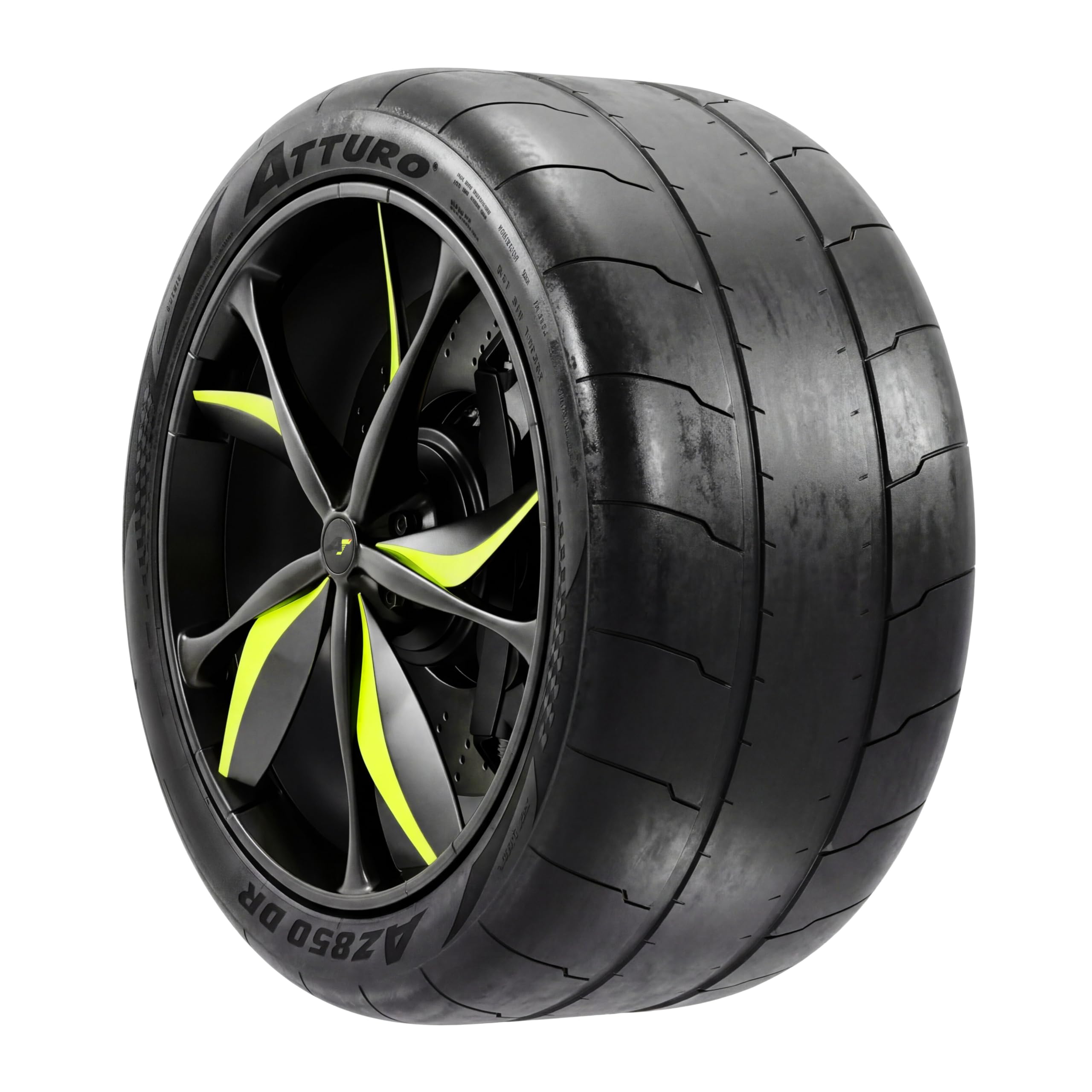
Drive to the strip, run passes, and drive home — no trailer needed.
The AZ850DR is a DOT-compliant drag radial, meaning it is legal for highway use but engineered for rear-axle duty on high-horsepower street cars. The extra-wide center rib stabilizes the tire at speed and the drag-focused compound is tuned for off-the-line bite. At 1,929 pounds per tire (load index 103) it matches the highest load rating in this group, so it handles heavy muscle cars without complaint. The item diameter is 27.2 inches, close to the Continental’s 27.3 inches, so fitment on stock suspension is generally straightforward.
“I’ve got a few hundred miles on them now and they show no signs of wear,” one reviewer noted, while a Challenger Scat Pack owner said “these things HOOOOK!!!” The finely sliced shoulder blocks reduce road noise for street driving, and the solid center rib helps it track straight at highway speeds. The catch is real: one buyer mentioned the tire felt like “roller skates” in 50-degree weather, which is the nature of a drag compound — it needs heat in the rubber to grip.
This is a specialized tool. If you are building a street car that hits the strip regularly and you want to drive it there on the same tires, the AZ850DR delivers. Just do not expect it to double as a year-round daily.
Why It Works At The Track
- DOT-legal so you drive to and from the strip legally
- Customers note hard launches with no visible wear after hundreds of miles
- Extra-wide center rib improves on-center feel at speed
The Cold-Truth Limit
- Drag compound loses grip below 50°F — dangerous in cold weather
- Not intended for front-axle use without matching AZ850 front tires
Ideal for: built Challengers, Mustangs, and other high-horsepower RWD cars that see regular drag-strip time.
skip it if: you need a tire that works in cold rain or frost — this is a summer/strip-only tool.
4. MICHELIN Pilot Sport All Season 4 Performance Tire 305/30ZR20 (99Y)

The first all-season tire Chevrolet trusted for the C8 Corvette.
That OEM endorsement tells you the Pilot Sport All Season 4 is not a compromise tire — it is a genuine performance all-season that Michelin specifically tuned for mid-engine Corvettes. The load capacity is 1,709 pounds per tire (load index 99) compared to the Continental’s 1,929 pounds, so heavy cars or aggressive loads push closer to the limit.
Buyers consistently praise the handling and control at high speeds, with one C8 owner calling them “absolutely perfect replacements” that were cheaper than the dealer’s price. The 45,000-mile treadwear warranty gives you a long service window for an all-season performance tire. The honest trade-off: one owner reported the tread lasted just 12 months and under 6,000 miles despite regular rotations and alignments — tread life varies heavily depending on driving style and alignment on these wide, sticky all-seasons.
If you want the Michelin name, the Corvette pedigree, and the refinement that comes with it, this is a genuinely excellent tire. The load and weight numbers are the main reasons to lean toward the Continental instead if you drive a heavier car.
Strengths On The Road
- Chosen by Chevrolet as OEM for the Corvette — legit performance validation
- 45,000-mile manufacturer treadwear warranty
- Smooth, quiet highway ride with minimal sidewall roll, per verified owners
Real Considerations
- 1,709 lbs load capacity is the lowest in this group
- At 35.21 lbs versus the Continental’s 27 lbs
- A minority of reviewers point out very short tread life (~6,000 miles)
Choose this for: a C8 Corvette, a lightweight sports coupe, or any car where the Michelin badge and OEM pedigree matter to you.
Look at the Continental if: you carry heavy loads, want a lighter tire, or want to save a noticeable amount of money.
5. Pirelli P ZERO Competition Tire – 305/30R20 99Z SL

The quiet summer tire that still delivers the grip you expect from the P Zero name.
Pirelli’s P Zero Competition is a summer performance tire that prioritizes quiet highway manners and predictable handling. At 27.9 pounds it is one of the lighter options in this group — compared to the Michelin at 35.21 pounds — so unsprung weight stays low and ride quality feels sharper. The load capacity is 1,709 pounds per tire (load index 99), which suits lighter performance cars but not heavy muscle builds pushing 4,400+ pounds.
Buyers call it “the quietest riding” summer tire they have tried, and most reviews highlight the good grip and reasonable price. Like any summer tire, it is not designed for cold weather or snow, but for warm-weather daily driving and the occasional spirited run, it delivers the P Zero refinement without the extreme track-only aggression of a Trofeo R or Cup 2. One practical note: this tire is explicitly listed as not for sale in the state of Arkansas, so check your local availability before ordering.
If your car came with P Zeros from the factory and you liked how they rode, this replacement matches the original feel. It is a quiet, composed summer tire that does not shout about itself.
What Stands Out
- At 27.9 lbs it is one of the lightest 305/30R20 summer options
- Buyers describe it as the quietest riding tire they have tested
- Consistent, predictable grip for street driving
Limitations To Note
- Load capacity is 1,709 lbs — not ideal for heavy muscle cars
- Not for sale in Arkansas, per manufacturer restriction
- Summer-only tire; unsafe in cold or snow
A good match for: drivers who want a quiet, OEM-quality summer tire for a lighter performance coupe or sedan.
Not the best fit if: you drive a heavy Challenger, Charger, or muscle car — the lower load index limits payload.
Understanding the Specs
Load Index 99 vs. 103
The load index is a code that tells you how many pounds one tire can carry safely. A 99 load index equals 1,709 pounds per tire; a 103 equals 1,929 pounds. That 220-pound difference per corner adds up to 880 pounds across all four tires. If your car is heavy (like a Challenger Hellcat or a Mercedes E63 AMG), the higher load index gives you more safety margin and stiffer sidewall support.
Speed Ratings: W vs. Y
The speed rating tells you the maximum speed the tire can sustain. A W rating is certified up to 168 mph; a Y rating goes up to 186 mph. For street driving, both are more than enough. The difference matters if you do high-speed track events where sustained velocity pushes past 168 mph — then you need the Y rating for the legal safety certification.
Summer vs. All-Season Rubber
Summer tires use a softer compound that delivers maximum grip when the pavement is warm but turns hard and slippery below 45°F. All-season tires use silica and additional tread sipes to stay flexible in cold weather and bite into light snow. If you drive a performance car as a daily in a state that sees winter frost, an all-season like the Continental DWS06 Plus or Michelin Pilot Sport AS4 is the safer bet for nine months of the year.
Drag Radial Construction
A drag radial (like the Atturo AZ850DR) uses a very soft, sticky compound on a stiff sidewall to boost straight-line launch grip. The extra-wide center rib keeps the tire stable at speed, but the trade-off is fast tread wear and poor cold-weather traction. These are DOT-legal for street driving but tune for rear-axle use on cars that see regular strip time.
FAQ
Will a 305/30R20 tire fit my stock wheel?
What does the 103Y on the Continental ExtremeContact mean?
Can I drive a drag radial like the Atturo AZ850DR in the rain?
How many miles does a 305/30R20 all-season tire typically last?
What happens if I run a 99 load index tire on a heavy car?
Are summer tires safe in 40-degree weather?
Can I mix a drag radial on the rear with a different tire on the front?
What is the difference between the Nitto NT555 G2 and a drag radial?
Final Thoughts: The Verdict
For most buyers, the best 305/30r20 tires winner is the Continental ExtremeContact DWS06 Plus because it balances all-season usability, the highest load capacity in this group (1,929 lbs), a 50,000-mile warranty, and noticeably lighter weight than the Michelin. If you want a summer tire that wears like an iron shoe, grab the Nitto NT555 G2. And for a dedicated drag-strip build, the standout is the Atturo AZ850DR for drive-to-the-track convenience and launch grip.
How We Picked
We do not accept paid placement. Every pick is matched to a real buyer and a real use-case; we do not hands-on test units.
Sources & Methodology
Specifications: manufacturer listings and product documentation. Review insights: verified customer reviews, as of July 2026. Pricing: not shown on this page (it changes often); check the current price via the retailer link.
As an Amazon Associate, Gadgets Feed earns from qualifying purchases. This does not affect which products we feature.