
Our readers keep the lights on and my morning glass full of iced black tea. As an Amazon Associate, I earn from qualifying purchases.
Specs are compiled from manufacturer listings and verified buyer reviews and can change over time — please confirm the key details on the product page before buying.
You have picked out your fabrics, cut your first patchwork squares, but now you need a machine that feeds thick quilt layers evenly without fighting you. The right machine makes your first quilt feel like a joy instead of a test of patience — and the wrong one leaves your seams puckered and your motivation shot. The Brother CP100X is the pick that earns the top spot because it includes a walking foot (a foot that grips the top fabric layer so it moves at the same speed as the bottom layer) and a wide extension table right in the box, and it weighs only 10.5 lbs so you can carry it to a class.
I’m Min — the founder and writer behind Gadgets Feed. This guide is built by comparing the manufacturers’ published specifications and the patterns across verified customer reviews, so you get each pick’s real strengths and trade-offs instead of marketing spin.
Whether you are cutting fabric for the first time or ready to piece an entire quilt top, these picks are the best beginner quilter sewing machine options that balance real quilting capability with the ease a new stitcher needs.
Quick Picks
- Brother CP100X Computerized Sewing — Best Overall
- EverSewn Charlotte: 70-Stitch Computerized — Sturdy All-Rounder
- SINGER Heavy Duty 6700C Computerized Sewing — Powerful & Versatile
- Janome JW8100 Fully-Featured Computerized — Quilting-Ready Package
- SINGER Quantum Stylist 9985 Computerized Sewing — Endless Creativity
- Janome 3160QOV Quilts of Valor Full-Size — Purpose-Built Quilter
- Juki HZL-F600 Computerized Sewing — Premium Powerhouse
- MILLEPUNTI MKR45 25 Built-in Stitches Beginner — Budget-Friendly Starter
How To Choose The Best Beginner Quilter Sewing Machine
Choosing a quilting machine as a beginner depends on a few make-or-break features that separate a joy from a frustration. Here is what to look for before you buy.
The Walking Foot Is Non-Negotiable
A walking foot (also called an even-feed foot) grips the top layer of fabric and feeds it at the same rate as the bottom layer. Without it, your quilt top shifts against the batting and backing, and you end up with puckered seams. Every pick on this list either includes a walking foot in the box or supports one.
Drop Feed Dog for Free-Motion Quilting
A feed dog is the set of metal teeth under the needle that pulls fabric forward. For free-motion quilting — where you move the fabric in any direction to create patterns — you need to drop those teeth. Look for “drop feed dog” or “feed dog cover plate” in the specs. Without it, you are stuck sewing straight lines only.
Throat Space and Extension Table
The throat space is the gap between the needle and the machine’s body. A bigger throat makes it easier to stuff a rolled-up quilt through without wrestling it. An extension table gives you a flat surface to support the quilt’s weight, so it does not drag and pull your stitches crooked. If you plan to quilt more than a lap blanket, you want both.
Quick Comparison
| Model | Best For | Built-in Stitches | Key Quilting Feature | Weight | Amazon |
|---|---|---|---|---|---|
| Brother CP100X | Best Overall Beginner Quilter | 100 | Walking Foot + Wide Table | 10.5 lbs | Amazon |
| EverSewn Charlotte | Sturdy All-Rounder | 70 | Drop Feed Dog, 6.5″ Workspace | 16 lbs | Amazon |
| SINGER HD 6700C | Thick Layers & Denim Quilts | 411 | Walking Foot, Enhanced Piercing Power | 14.6 lbs | Amazon |
| Janome JW8100 | Quilting-Ready from the start | 100 | Even Feed Foot, 1/4″ Foot, Extension Table | 12 lbs | Amazon |
| SINGER Quantum Stylist 9985 | Endless Creative Options | 1,000+ | Walking Foot, Mirror Imaging, Touch Screen | 14 lbs | Amazon |
| Janome 3160QOV | Purpose-Built Quilting Machine | 60 | Walking Foot, Open Toe Darning Foot | — | Amazon |
| Juki HZL-F600 | Premium Quilting Powerhouse | 255 | Huge Workspace, Separate Bobbin Motor | 30 lbs | Amazon |
| MILLEPUNTI MKR45 | Budget-Friendly Starter | 25 | Free Arm, Quilting Guide | 14.9 lbs | Amazon |
In‑Depth Reviews
1. Brother CP100X Computerized Sewing and Quilting Machine

You get a walking foot and a wide table in the box, all in a 10.5 lb frame you can carry to a quilting bee.
The Brother CP100X packs 100 built-in stitches and, crucially, comes with both a walking foot and a quilting foot right in the box. That means you can start piecing and stitching a quilt sandwich immediately without buying anything extra. The durable metal frame construction lets you sew denim and heavy quilts without skipping.
At 10.5 lbs, it is the lightest machine on this list — and buyers report it is “lightweight (10 lbs), easy to use standing up,” which matters if you plan to work at a standing-height table or need to carry it to a quilting class. It also includes a wide table (an extension table) for supporting bigger projects. The 1-step automatic needle threader pushes the thread through the eye for you, though some reviewers mention the threader feels bulky and the bobbin winding can be inconsistent unless you guide the thread by hand.
Unlike the heavier EverSewn Charlotte (16 lbs), the CP100X stays planted at 10.5 lbs but still gives you a fixed needle bar for cleaner stitch lines. It is a fantastic trade-off for anyone who wants real quilting features without the back strain of hauling a heavy machine around.
The Real Strengths
- Includes a walking foot for even quilt feeding.
- Durable metal frame handles thick fabrics and heavy quilts.
- Lightweight design is easy to transport and store.
- Speed slider allows very slow, controlled sewing without the foot pedal.
The Honest Trade-Offs
- Needle threader feels bulky and takes practice to use.
- Bobbin winding can be inconsistent, sometimes requiring manual thread guidance.
The best all-around pick: The Brother CP100X gives new quilters a walking foot, a wide table, and 100 stitches in a machine that is light enough to move around freely.
A small caveat: If you plan to do heavy free-motion quilting immediately, the fixed needle bar is less flexible than a machine with adjustable needle positions.
2. EverSewn Charlotte: 70-Stitch Computerized Sewing Machine

A drop feed dog lets you switch to free-motion quilting on this 16 lb metal-frame machine.
The EverSewn Charlotte is built around a metal internal skeleton, making it a sturdy 16-pound machine that stays put while you wrestle a quilt through its 6.5-inch wide sewing space. A key feature for quilters is the drop feed dog — you lower the metal teeth under the needle to switch from regular straight stitching to free-motion quilting, where you move the fabric in any direction to create patterns.
Owners mention it “sewed through six fabric layers easily,” which shows its piercing power on thick quilt sandwiches. The machine includes 7 standard presser feet, though the walking foot is notably absent from the kit — you will want to buy one separately for quilt piecing. A reviewer also mentioned the tension can be tricky to dial in, and the automatic threader on some units came with defects (the manufacturer sent replacements). Still, for an intermediate beginner ready to explore free-motion work, the drop feed dog gives this machine an edge over many comparably priced models.
Its biggest advantage: The drop feed dog and sturdy build make it a rare sub- machine ready for free-motion quilting.
Reach for this if you: Already know you want to try free-motion quilting and want a metal frame that can take a beating.
Think twice if you: Want a machine that includes a walking foot in the box — you will need to buy one separately.
3. SINGER Heavy Duty 6700C Computerized Sewing Machine

Its strong motor punches through denim and heavy quilt layers, and it comes with a walking foot — but its throat space feels cramped for big projects.
The SINGER HD6700C brings 411 stitch applications, including a lettering font, all controlled through an LCD screen. For quilters, the real story is the enhanced piercing power from its strong motor — it handles denim, leather, and heavy quilting layers with smooth, consistent stitching. It also includes an Even Feed / Walking Foot in the box, so you can feed your quilt top evenly right away.
At 14.6 lbs, it is not the lightest, but it is manageable. A notable limitation: the throat space is small, so if you are quilting a large project, you may feel cramped. One reviewer noted, “the throat is small so if I quilt a quilt I switch to another machine.” It is a solid choice if you plan to piece quilt tops and sew heavy fabrics but switch to a machine with a bigger throat for the actual quilting step. The 7 styles of 1-step buttonholes add versatility for garment sewing alongside your quilting projects.
The standout spec: The walking foot and heavy-duty motor give you easy thick-layer sewing at a mid-range price.
Great for: A beginner who sews a lot of denim, canvas, or thick fabrics and wants a walking foot included.
skip it if you: Plan to quilt large bedspreads — the small throat space becomes a real frustration.
4. Janome JW8100 Fully-Featured Computerized Sewing Machine

An extra-wide extension table, a walking foot, and a 1/4-inch piecing foot all come in the box — no extras to buy.
The Janome JW8100 ships with an extra-wide extension table, a hard cover, an even feed foot (walking foot), and a quarter inch foot for quilt piecing. That means you spend zero extra money on accessories for your first few quilts. It offers 100 built-in stitches and 7 one-step buttonholes, all adjusted easily through an LCD screen.
Reviewers consistently praise its smooth fabric feeding, thanks to the 7-piece feed dog system that prevents shifting on layers. At 12 lbs, it is manageable for a mid-range machine. One buyer who switched from an old Brother machine noted how “smooth it runs” and that it “handles everything with ease.” The jam-proof drop-in bobbin and automatic needle threader save frustration. The only common critique is that the extension table does not lock securely in place — it rests against the machine rather than snapping on — but it still provides the support you need for a full-size quilt.
Why beginners love it: The even feed foot and 1/4 inch foot come included, so you can start piecing precise seams immediately.
Best for: A first-time quilter who wants a complete, no-fuss setup without hunting for extra feet.
Check this if: The loose extension table bothers you — some quilters prefer a snap-lock system for large projects.
5. SINGER Quantum Stylist 9985 Computerized Sewing & Quilting Machine

A color touch screen shows you each of 1,000+ stitches at actual size, and mirror imaging flips patterns for symmetrical quilt borders.
The Quantum Stylist 9985 offers over 1,000 stitch applications, a large color LCD touch screen that previews stitches in actual size, and mirror imaging so you can flip decorative patterns. It comes with 15 presser feet, including an even feed / walking foot, an open toe foot, and a quarter inch foot — everything a creative quilter could need for decorative stitch work and piecing.
Buyers love the automatic features (needle threader, thread cutter, needle up/down) that remove hassle from every step. However, the machine does not include a hard case (a soft dust cover is included instead) and, as one reviewer put it, “missing knee lifter,” which some advanced users expect at this price point. The walking foot makes it quilting-capable, but the focus here is decorative versatility — if your primary goal is simple straight-line quilting, a less feature-packed machine may serve you equally well and cost less.
The real benefit: Mirror imaging and stitch editing let you customize quilt patterns without manual effort.
Ideal for: The creative beginner who wants to do decorative quilting, monogramming, and garment sewing alongside patchwork.
Not for you if: You want a machine strictly for basic quilt piecing — the touch screen and thousand stitches are overkill for simple straight seams.
6. Janome 3160QOV Quilts of Valor Full-Size Quilting Sewing Machine
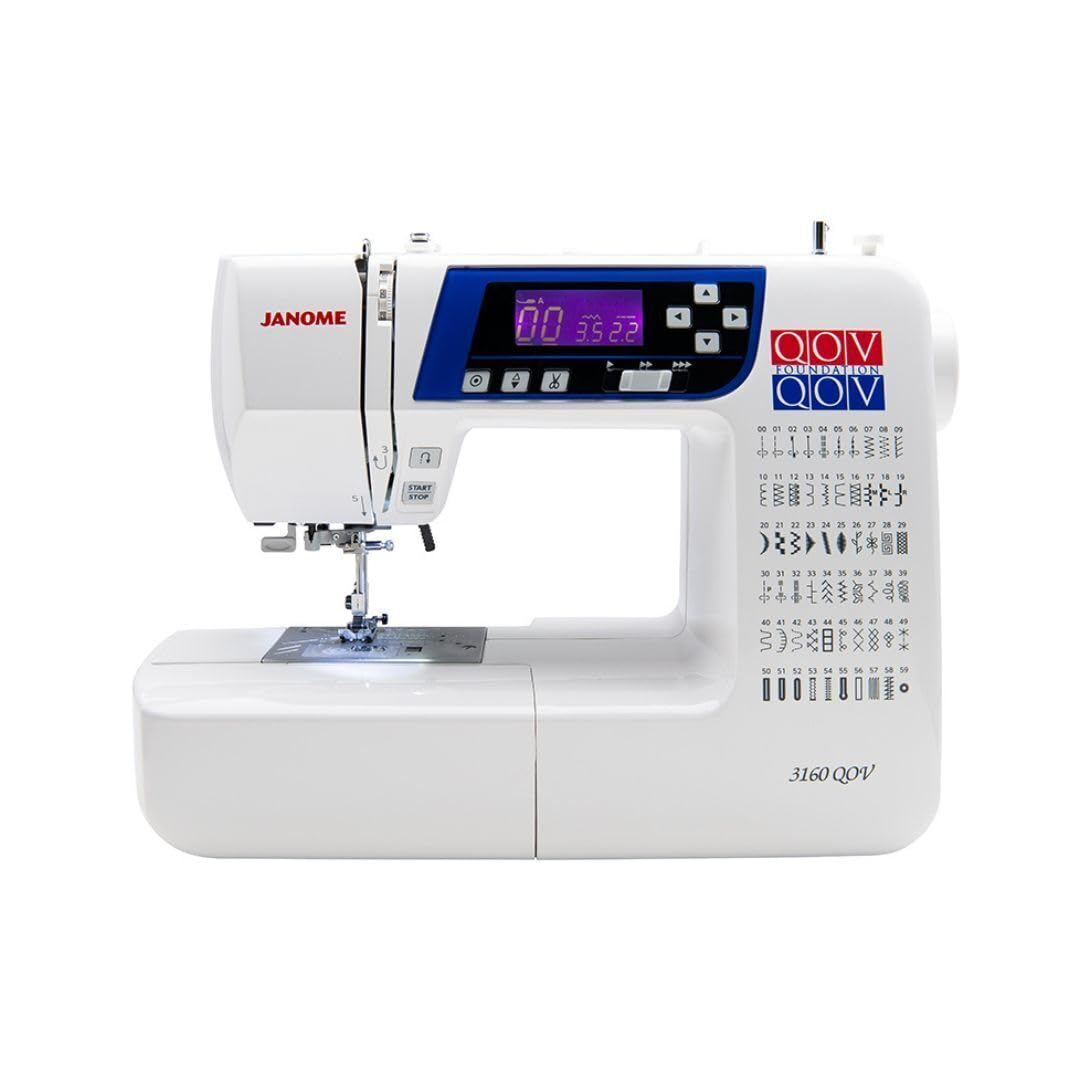
A walking foot, an open-toe darning foot for free-motion work, a hard cover, and an extension table — all dedicated to quilting from day one.
The Janome 3160QOV is built specifically with quilters in mind. It includes a walking foot (Even Feed Foot) and an open toe darning foot for free-motion work, plus an extension table and a hard cover. The Superior Plus Feed System (SFS Plus) ensures smooth fabric feeding without shifting.
Buyers describe it as “quiet, sturdy, easy to use” and appreciate the one-hand needle threader and automatic thread cutter. One buyer mentioned the extension table “doesn’t lock in place” but still provides adequate support. A limitation: stitch #27 (vine) reportedly malfunctions in reverse, causing ugly results. If decorative stitches are a priority, test that stitch early on a scrap piece. For straight-line quilting, patchwork, and free-motion work, the 3160QOV is a focused, high-quality option.
The key advantage: You get a walking foot, darning foot, extension table, and hard cover in one purchase — purpose-built for quilting from the start.
Perfect for: A beginner who is sure quilting is their main focus and wants a machine that will not need upgrading anytime soon.
Watch out: If you want a huge range of decorative stitches, the 60-stitch library may feel limiting.
7. Juki HZL-F600 Computerized Sewing and Quilting Machine

A separate motor for the bobbin winder lets you fill a bobbin while you sew — a feature that makes marathon quilting days faster and smoother.
The Juki HZL-F600 is the heaviest and most expensive machine here at 30 lbs, but it delivers commercial-level quilting capability. It offers 255 built-in stitches and a separate motor for the bobbin winder, meaning you can wind a bobbin without disengaging the main motor — a huge time-saver when you are quilting large projects. The work surface is described by users as “HUGE and very comfortable,” and the extension table makes it even larger.
Customers note the machine is “TOUGH and will go through multiple thick fabrics without a hitch” and handles light jerseys equally well. The automatic needle threader and jam-resistant drop-in bobbin keep frustration low. If you have the budget and the space, this is the machine you grow into rather than out of. The only real trade-off is its weight — it is not a machine you will carry to a quilting class easily.
The huge advantage: The separate bobbin winder and massive work surface make quilting marathon sessions genuinely comfortable.
Spring for this if: You are serious about quilting long-term and want a machine that will not struggle with any fabric or project size.
Pass if: You need portability or have a tight budget — this is an investment you commit to keeping on a dedicated table.
8. MILLEPUNTI MKR45 25 Built-in Stitches Beginner Sewing Machine
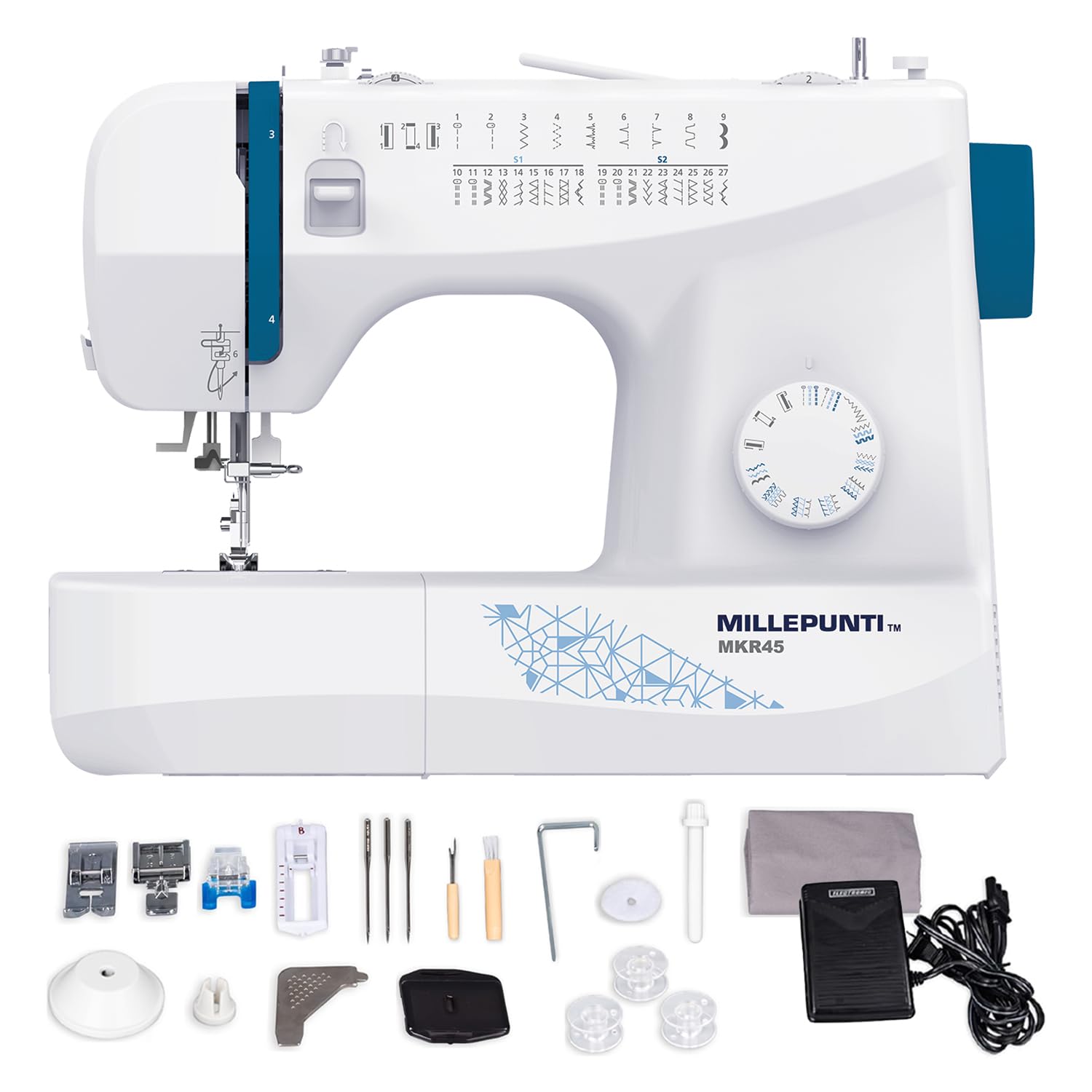
At the lowest price in this list, you get 25 stitches and a free arm for sleeves — but reliability concerns make it a gamble for regular quilting.
The MILLEPUNTI MKR45 is the most affordable machine on the list, offering 25 built-in stitches, a free arm for hemming sleeves, and a quilting guide included in the accessory kit. It includes an automatic needle threader and automatic bobbin winder — features that make setup less intimidating for a complete beginner. It weighs 14.9 lbs and has a compact footprint, measuring 6.49″D x 13.77″W x 10.6″H.
However, reliability is a concern. One long-term buyer reported, “It always breaks the thread after about two seconds of sewing,” and went so far as to partially disassemble the machine trying to find the issue without success. Positive reviews mention it works well for simple seams and quilting with limited eyesight thanks to clear directions. Compared to the Brother CP100X, which is 85% larger in dimensions, the MKR45 feels cramped for large quilt projects. It is best considered a low-commitment trial machine for someone who wants to test the waters of sewing before buying a more capable quilter.
The honest take: It is functional for very basic projects and budget learning, but consistent thread breakage in some units is a real risk.
Only pick this if: Your budget is extremely tight and you are okay with the gamble of inconsistent thread performance.
Look elsewhere if: You want a machine you can rely on for week-after-week quilting — the Brother CP100X or Janome JW8100 will save you future frustration.
Understanding the Specs
Walking Foot (Even Feed Foot)
A walking foot has its own set of feed dogs that move the top layer of fabric at the same speed as the bottom layer. Without it, the top fabric shifts relative to the batting, creating puckered seams. For quilting, this is the single most important accessory — and some machines include it in the box while others require a separate purchase.
Drop Feed Dog
Feed dogs are the metal teeth under the needle that grip the fabric and move it forward. Dropping them (or covering them with a plate) lets you move the fabric freely in any direction for free-motion quilting. If you want to stitch curves, loops, or stippling patterns, the drop feed dog is essential — without it, you are locked into straight lines only.
FAQ
Do I need a walking foot to quilt on a beginner machine?
What is the difference between a sewing machine and a quilting machine?
Can I use a regular sewing machine for quilting?
How many stitches do I need for quilting?
What size throat space do I need for quilting?
Is a metal frame better than a plastic frame for a quilting machine?
What accessories do I need to start quilting?
How does an extension table help with quilting?
Final Thoughts: The Verdict
If you want one dependable pick, the best beginner quilter sewing machine winner is the Brother CP100X because it combines a walking foot, an extension table, 100 stitches, and a lightweight frame at a price that does not scare off a newcomer. If you want a purpose-built quilting machine with a walking foot and darning foot included, grab the Janome 3160QOV. And for premium, long-term investment that handles any fabric, the standout is the Juki HZL-F600.
How We Picked
We do not accept paid placement. Every pick is matched to a real buyer and a real use-case; we do not hands-on test units.
Sources & Methodology
Specifications: manufacturer listings and product documentation. Review insights: verified customer reviews, as of July 2026. Pricing: not shown on this page (it changes often); check the current price via the retailer link.
As an Amazon Associate, Gadgets Feed earns from qualifying purchases. This does not affect which products we feature.