
Our readers keep the lights on and my morning glass full of iced black tea. As an Amazon Associate, I earn from qualifying purchases.
Specs are compiled from manufacturer listings and verified buyer reviews and can change over time — please confirm the key details on the product page before buying.
You want a screen so big it changes how you watch movies, sports, and games — but the market doesn’t actually sell a 96-inch panel. Every TV here is the closest available size (98 or 100 inches) that delivers that same wall-filling experience. The real decision depends on panel technology, brightness for your room, and how deeply you want the specs to match your wallet.
I’m Min — the founder and writer behind Gadgets Feed. This guide is built by comparing the manufacturers’ published specifications and the patterns across verified customer reviews, so you get each pick’s real strengths and trade-offs instead of marketing spin.
With many of these sets crossing into premium territory, the stakes are high — which is why you need a clear-eyed breakdown of the 96 inch tv options that actually exist, sorted by what each does best for your room and your usage.
Quick Picks
- Samsung 98-Inch Class Neo QLED 4K QN90F Series — Glare-Free Beast
- LG 97-Inch Class OLED evo AI 4K G5 Series Smart — Perfect Black
- Samsung 98-Inch Class Neo QLED 4K QN90D Series — Sound & Sight
- Samsung 100-Inch Class Neo QLED QN80F 4K Mini — Smart Value
- Sony BRAVIA 5 98 Inch TV, Mini LED — Processor King
- Hisense 100″ U6 Pro Series Mini‑LED ULED 4K UHD — Giant Value
- TCL Amazon Exclusive 98 Inch Class QM64L Series — Budget Mini LED
- SAMSUNG 98-Inch Class QLED 4K Q80C Series — Gamer’s QLED
- SAMSUNG 98-Inch Class Neo QLED 4K UHD QN90A — Flagship Discount
How To Choose The Best 96 Inch TV
A 98-inch or 100-inch screen isn’t a casual purchase — you need to think about panel brightness, reflection handling, and how the TV processes content before you even think about mounting it. Here is what actually matters.
Panel Technology: Mini LED vs. OLED
Mini LED uses thousands of tiny light zones behind the screen to control brightness and black levels. OLED evo lights each pixel individually, which gives you perfect black and infinite contrast but may not hit the same peak brightness in a sunlit room. If you watch mostly in a dim room, OLED is the king. If you have big windows, Mini LED with anti-glare wins.
Refresh Rate and Gaming Features
A 120Hz or 144Hz refresh rate (how many times per second the screen redraws the image) keeps fast-moving sports and games smooth without blur. If you game on a console or PC, look for HDMI 2.1 ports and variable refresh rate (VRR) support — those keep the picture from tearing during high-speed action.
AI Processing and Upscaling
Not every TV handles older content the same way. AI upscaling uses a processor to sharpen lower-resolution video (like 1080p or HD streams) so it looks closer to 4K on a massive screen. Brands like Sony and Samsung use dedicated neural networks for this, while others rely on simpler algorithms. On a 98-inch panel, bad upscaling shows every flaw.
Room Fit and Mounting
Before you buy, measure your wall space, doorway width, and elevator or stairwell clearance. These TVs weigh between 75 and well over 100 pounds and often require professional installation. Always check the VESA mount pattern and whether the stand fits your media console depth.
Quick Comparison
| Model | Best For | Panel Type | Refresh Rate | Size Class | Amazon |
|---|---|---|---|---|---|
| Samsung 98″ Neo QLED QN90F | Ultimate brightness & anti-glare | Mini LED | 165Hz | 98 Inches | Amazon |
| LG 97″ OLED evo G5 | Perfect black & infinite contrast | OLED evo | 120Hz | 97 Inches | Amazon |
| Samsung 98″ Neo QLED QN90D | Rich sound + Mini LED | Mini LED | 144Hz | 98 Inches | Amazon |
| Samsung 100″ Neo QLED QN80F | AI upscaling & smart features | Mini LED | 144Hz | 100 Inches | Amazon |
| Sony BRAVIA 5 98″ | Best processing & PS5 pairing | Mini LED | 120Hz | 98 Inches | Amazon |
| Hisense 100″ U6 Pro | Value & native 144Hz gaming | Mini LED | 144Hz | 100 Inches | Amazon |
| TCL 98″ QM64L | Budget-friendly Mini LED | Mini LED | 144Hz | 98 Inches | Amazon |
| Samsung 98″ QLED Q80C | Cloud gaming & Q-Symphony | QLED | 120Hz | 98 Inches | Amazon |
| Samsung 98″ Neo QLED QN90A | Older flagship on a budget | Mini LED | 120Hz | 98 Inches | Amazon |
In‑Depth Reviews
1. Samsung 98-Inch Class Neo QLED 4K QN90F Series, Vision AI, Mini LED Smart TV (2025 Model, 98QN90F)

The near-100-inch screen that fights glare so hard you forget the lights are on.
If your living room gets sunlight at any point during the day, this is the set that handles it best. The Glare Free coating is so effective that buyers report noticing “no reflections even with lights on” — meaning you keep deep black levels and crisp details without closing the curtains. The NQ4 AI Gen2 processor runs 128 neural networks to upscale everything to 4K, so even older HD content looks sharp on this massive 98-inch canvas.
Gamers get a treat here too: the variable refresh rate (VRR, which syncs the TV’s refresh rate to your console or PC to eliminate screen tearing) hits up to 4K 165Hz, a step ahead of the 144Hz found on most competitors. The Object Tracking Sound+ with Dolby Atmos creates directional audio that follows on-screen movement, so owners mention no separate soundbar is needed. Just be ready for the weight — customers note it is heavy and needs help lifting.
The only real friction point some owners mention is the remote — one reviewer found it small and hard to use, and the base felt a little wobbly. Otherwise, this is the premium pick that does nearly everything at flagship level.
Where It Wins
- Exceptional anti-glare that kills reflections even in bright rooms
- Fastest refresh rate on this list at 165Hz for VRR gaming
- AI upscaling with 128 neural networks keeps old content sharp
Where It Bends
- Very heavy — professional installation strongly recommended
- Remote lacks direct input switching, which some find clunky
Grab this if: you watch TV in a bright room and want the best reflection handling on a 98-inch Mini LED.
Look elsewhere if: you need perfect black levels in a light-controlled room — OLED still wins that contest.
2. LG 97-Inch Class OLED evo AI 4K G5 Series Smart TV (OLED97G5WUA, 2025)

The only OLED on this list, and it shows — perfect black that Mini LED can’t touch.
This is the panel for the cinephile who watches in a dark room and wants each pixel to turn completely off for true black. The Brightness Booster Max technology pushes each self-lit pixel harder, and LG claims it is verified by UL for “Discomfort Glare Free” (UGR less than 22), so it holds up better in bright rooms than older OLEDs. The Alpha 11 AI Processor Gen2 handles AI Super Upscaling and adjusts picture and sound per scene using AI Director Processing.
Buyers upgrading from older LG OLEDs note they see “shades of color I’ve never seen before” with peak brightness reportedly hitting over 2000 nits in HDR content. For gamers, the response time sits at 0.1ms with 120Hz refresh rate plus NVIDIA G-Sync and AMD FreeSync Premium support, plus four HDMI 2.1 inputs for multiple consoles. A key contrast versus the Samsung QN90F: this LG runs at 120Hz, not 165Hz, but the pixel-level contrast is class-leading in dim lighting. Reviewers point out the remote lacks backlit buttons — a small annoyance on a premium product.
One trade-off is the weight and the fact the TV does not include a wall mount (you need a VESA universal mount separately). Also, some buyers found the LG webOS software bloated and spent hours disabling features, though the picture quality itself is universally praised.
Why It Excels
- Perfect black levels with over 8.3 million self-lit pixels for infinite contrast
- Over 2000 nits peak brightness in HDR according to reviewers
- Four HDMI 2.1 inputs with G-Sync, FreeSync, and 0.1ms response
Where It Falls Short
- No backlit remote — frustrating in a dark room
- No mount included, and LG’s software can feel bloated from the start
Reach for this if: you prize contrast and black levels above all else and mostly watch movies in a dim or dark room.
skip it if: you need the brightest possible image for a living room with floor-to-ceiling windows.
3. Samsung 98-Inch Class Neo QLED 4K QN90D Series, Neo Quantum HDR+, Dolby Atmos (QN98QN90D, 2024)

Built-in sound so convincing that shoppers say they skipped the soundbar altogether.
The QN90D pairs Quantum Matrix with Mini LEDs for precision lighting in dark and bright scenes, but the real standout is the audio. Object Tracking Sound+ creates 3D audio that follows movement on screen — when a car speeds across, the sound moves with it — and the built-in Dolby Atmos means you get a convincing surround effect without extra speakers. Buyers describe the sound as “rich and rich, eliminating need for a soundbar,” which is rare at this screen size.
The NQ4 AI Gen2 Processor uses 20 neural networks to upscale content to sharp 4K resolution scene by scene. Neo Quantum HDR+ analyzes each scene for contrast and color, and the Real Depth Enhancer Pro adjusts the focal point in each frame to add a dimensional feel that flat screens usually lack. The Motion Xcelerator 144Hz keeps fast sports and racing games blur-free. One quirk: the glossy screen can show reflections, and some buyers report slight upscaling artifacts on older 4:3 content. The base is 14.4 inches deep, so measure your stand carefully.
Buyers comparing this to the QN90F above note the QN90D peaks at the same 144Hz gaming speed but uses an earlier processor generation (20 networks vs. 128). Still, for the price gap, the audio performance here is a standout feature that makes it a strong mid-high contender.
What Makes It Special
- Object Tracking Sound+ with Dolby Atmos for rich built-in audio
- Real Depth Enhancer Pro adds dimensional depth to the picture
- Smooth 144Hz gameplay with fast pixel response
Things to Watch
- Glossy screen may show reflections in bright rooms
- Upscaling artifacts can appear on very old 4:3 content
Best suited for: those who want a premium Mini LED with killer built-in audio and don’t want to buy a separate soundbar.
Consider another if: your room has bright direct light — the anti-glare on the newer QN90F handles that much better.
4. Samsung 100-Inch Class Neo QLED QN80F 4K Mini LED Smart TV (2025 Model)

The 100-inch screen that uses 20 AI neural networks to sharpen everything you throw at it.
The NQ4 AI Gen2 Processor with 20 neural networks is dedicated to upscaling your content to 4K, which matters on a screen this large where every pixel is stretched. The Quantum Matrix Technology uses concentrated zones of Mini LEDs to increase contrast and extra brightness in each scene, so shows and movies look vivid without washing out.
Samsung includes Motion Xcelerator for smooth sports and VRR gaming at up to 4K 144Hz, and the AI sound optimization adapts audio to your content. Buyers who own multiple Samsung Neo QLEDs say “colors pop off the screen” and the interface is easy to navigate once you connect via smartphone. The catch: setup takes time, with one buyer noting they needed help from family to get everything configured properly. The base depth is 16.4 inches, which is deeper than the QN90D, so check your furniture fit ahead of time.
Compared to the premium QN90D above, the QN80F lacks Object Tracking Sound+ and has fewer local dimming zones, but at a noticeably lower entry point into the 100-inch class, it represents a compelling middle-ground option.
What Stands Out
- Largest screen size on this list at 100 inches native
- AI upscaling with 20 neural networks for sharp 4K from any source
- 144Hz VRR gaming support for smooth action
What to Be Aware Of
- Setup can be involved — may need a second person
- Deeper base (16.4 inches) requires a large media console
Ideal for: buyers who want a massive 100-inch screen with strong upscaling but don’t need the absolute highest brightness and audio processing of the flagship models.
Not for you if: you plan to wall-mount in a tight corner — the base needs significant depth.
5. Sony BRAVIA 5 98 Inch TV, Mini LED, 4K Smart Google TV, XR Processor (K-98XR50)

Sony’s XR Processor makes old DVDs look surprisingly good on a 98-inch canvas.
The XR Processor with AI technology is the brain here, and it is the only processor on this list that studio-calibrates picture modes specifically for Netflix, Prime Video, and Sony Pictures CORE. Reviewers consistently say the upscaling is superb — even standard DVDs and older games look crisp, with one buyer calling it “superb upscaling for DVDs and games.” The Mini LED backlight is controlled by XR Backlight Master Drive to deliver captivating brightness and authentic contrast, with buyers reporting deep blacks and impressive Dolby Vision HDR.
For PlayStation 5 owners, this TV has exclusive features — it auto-detects the console and tune settings for HDR tone mapping and low latency. The refresh rate is 120Hz, which is a step behind the 144Hz Samsung QN90D and the 165Hz QN90F, but the processing quality is so strong that many reviewers feel it delivers a smoother-looking image overall. The catch: only 2 of the 4 HDMI ports support the full 2.1 bandwidth. Buyers also note the remote lacks backlighting, a small annoyance on a premium-priced set.
The Sony’s 120Hz refresh rate (versus the Hisense’s 144Hz) means its XR Motion Clarity and upscaling often produce a cleaner image for movies and streaming.
Where Sony Shines
- XR Processor AI upscaling is widely considered the best in the business
- Studio-calibrated modes for Netflix and Prime Video from the start
- Exclusive PlayStation 5 features for auto HDR and low latency
Where It Holds Back
- Only 2 of 4 HDMI ports are 2.1 — not ideal for multiple consoles
- 120Hz refresh rate is lower than the 144Hz competitors on this list
Reach for this if: you watch a lot of older content and want the best upscaling available, or you primarily game on PS5.
Consider a different pick if: you need four full HDMI 2.1 ports for a multi-console setup or want the fastest 4K refresh rate.
6. Hisense 100″ U6 Pro Series Mini‑LED ULED 4K UHD HDR Gaming AI Smart Fire TV (100U6SF Pro, 2026)
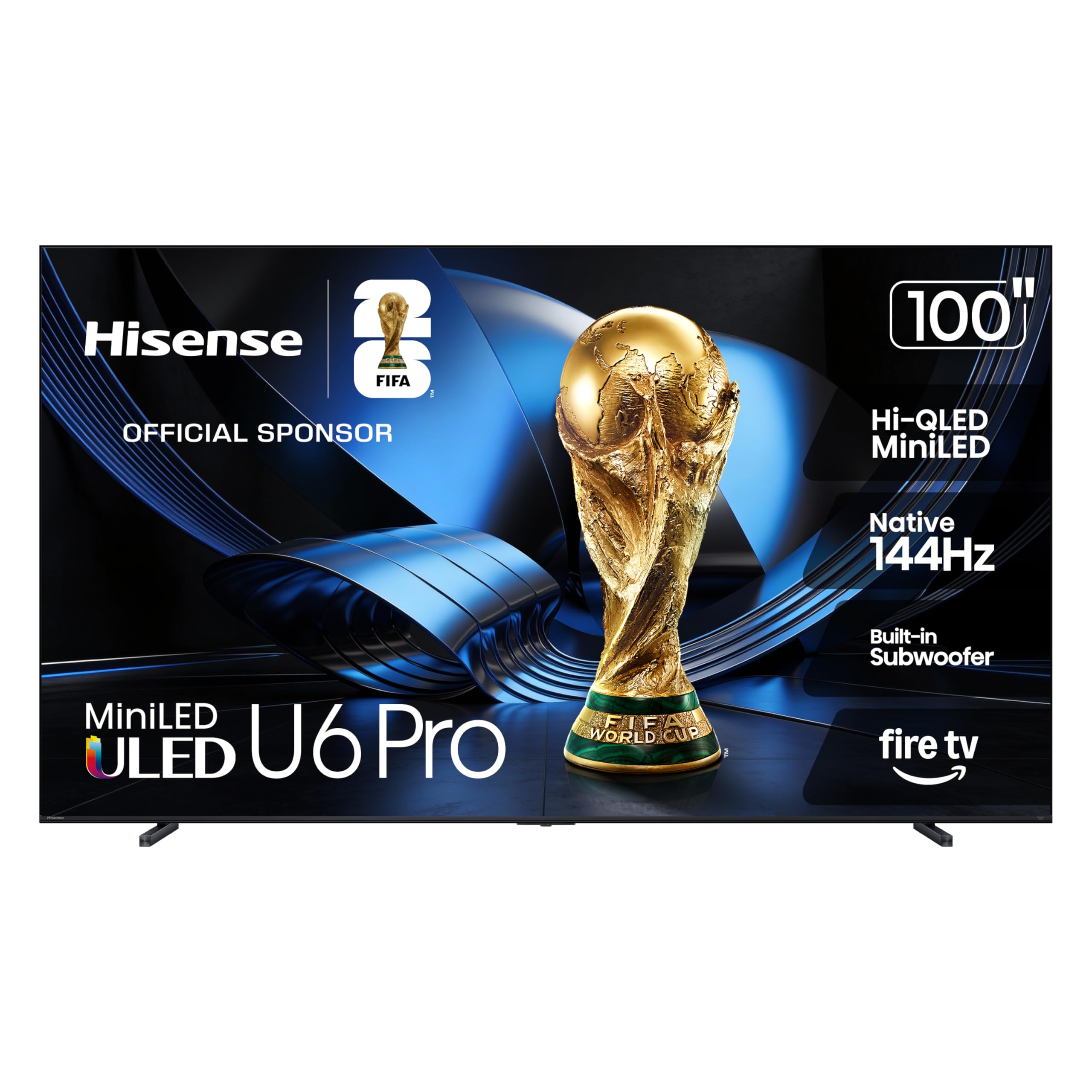
A 100-inch Mini LED with native 144Hz that undercuts the premium brands by thousands.
The U6 Pro delivers Hi-QLED Mini LED technology with a native 144Hz refresh rate — the same 144Hz found on the Samsung QN90D but at a fraction of the price. This means you get fluid motion for sports and competitive gaming without interpolation tricks. Owners mention “the 100″ size is really impressive” and that the picture is “bright, clear, and the colors look great right from the start.” The inclusion of built-in subwoofer adds bass for explosions and music without requiring external speakers, though some customers note a soundbar would still be an upgrade.
The Glare-Free coating is one of the best features at this price point — buyers describe it as “unreal,” noting you can have a light directly in front of the screen and see zero glare. The Hi-View AI Engine automatically adjusts the picture for movies, sports, or gaming. HDR support spans Dolby Vision IQ, HDR10+ Adaptive, HDR10, and HLG, giving it broad format compatibility. The 100-inch screen, at 100 inches versus the TCL’s 98 inches, offers slightly more viewing area.
The Fire TV operating system is a sticking point for some — it works fine if you are an Amazon household, but buyers who prefer Google TV or Roku may find the interface limiting. One reviewer also noted that the optical audio out volume is not controlled by the remote, which could be an issue for some soundbar users.
Why It’s a Steal
- Native 144Hz refresh rate at a mid-range price point
- Exceptional anti-glare coating that kills reflections completely
- Built-in subwoofer adds real bass to the sound
What to Know
- Fire TV OS may not be everyone’s preferred smart platform
- Optical audio output volume is not controlled by the TV remote
Best for: value-conscious buyers who want a huge 100-inch screen with gaming-ready 144Hz and don’t mind the Fire TV ecosystem.
Look elsewhere if: you are set on the Google TV interface and need pristine audio control via optical cable.
7. TCL Amazon Exclusive 98 Inch Class QM64L Series Mini LED QLED 4K HDR Smart Fire TV (98QM64L, 2026)
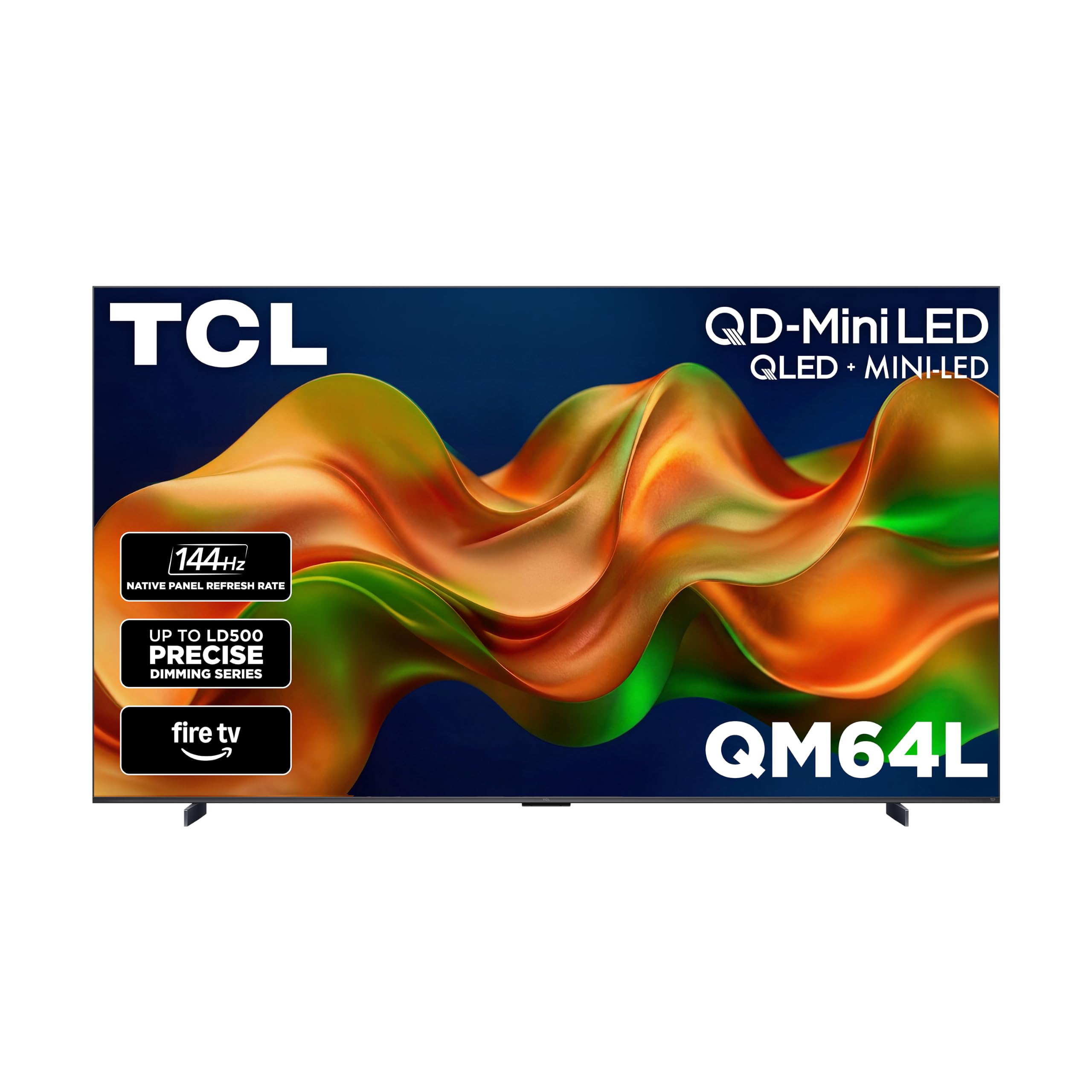
The cheapest way to get a 98-inch Mini LED with 144Hz for gaming and movies.
This TCL is the entry point to the 98-inch class with modern Mini LED backlighting and a 144Hz refresh rate. The TCL Halo Control System combines a new Super High Energy LED Microchip, Condensed Micro Lens, and a 23-bit Backlight Controller to minimize halo effects around bright objects on dark backgrounds. Local Dimming Pro adapts dimming dynamically to on-screen content, and the High Brightness Pro ensures the picture stays punchy in a lit room. Reviewers point out the picture is “sharp, vibrant, with excellent color and contrast” and call it a great value for the price.
However, there is a notable trade-off with the Fire TV operating system. One reviewer noted that “FireTV OS is terrible: pauses cause shutdown after 1 min, favorites disappear, Prime menu requires reboots” and that the optical audio out volume is not controlled by the remote. Another review mentioned audio sync issues. These are not universal complaints — many buyers love the interface — but they suggest the software experience can be inconsistent. TCL’s Enhanced QLED uses new alloy structures that the company claims extend panel life to 100,000 viewing hours.
At this price, you are getting genuine Mini LED and 144Hz performance, but the smart platform and potential software quirks are the compromises you accept. The TCL is 98 inches, so it is slightly smaller than the Hisense 100-inch U6 Pro, but the price difference reflects that.
What You Get
- Mini LED with Local Dimming Pro for deep blacks and strong contrast
- 144Hz refresh rate at the lowest price on this list
- TCL Halo Control System minimizes blooming around bright objects
What You Give Up
- Fire TV OS can be buggy — shoppers say shutdowns and audio sync issues
- Optical audio volume not controlled by remote
Great for: budget-minded buyers who want Mini LED and 144Hz on a 98-inch screen and are willing to accept some software quirks.
pass on it if: you need a rock-solid smart TV experience from the start — consider spending more for a different OS.
8. SAMSUNG 98-Inch Class QLED 4K Q80C Series, Quantum HDR+, Dolby Atmos (QN98Q80C, 2023 Model)

Cloud gaming built right in — no console required on this 98-inch QLED.
The Q80C uses Samsung’s Direct Full Array backlighting for precision-controlled contrast with deep blacks and bright whites, though it uses standard QLED rather than Mini LED. The Neural Quantum Processor with 4K upscaling analyzes and enhances each scene, and Quantum HDR+ delivers rich details. The standout feature for gamers is the Samsung Gaming Hub, which puts console games, streaming games, and apps all in one place — buyers report “the cloud gaming option already built into it is the best, don’t need another console.” The Motion Xcelerator Turbo+ runs at 4K 120Hz, which is sufficient for most console gaming but behind the 144Hz from competitors.
Buyers praise the picture quality for both movies and gaming, calling it “a great choice for gamers” and noting the audio from Dolby Atmos and Object Tracking Sound Lite is solid. However, there are reliability concerns: one buyer mentioned the TV failed “a few months after warranty expired” with a dark screen (sound only), and the repair cost exceeded the price of a new set. The Q-Symphony 3.0 feature lets you pair the TV speakers with a Samsung soundbar for unified audio, a nice bonus if you stay in the Samsung ecosystem.
As a 2023 model, this is an older generation than the newer Neo QLED options, but the dedicated gaming features and cloud integration make it a solid choice for casual gamers who want a huge screen without buying a separate console.
The Bright Spots
- Samsung Gaming Hub includes cloud gaming without needing a console
- Direct Full Array contrast with deep blacks and bright whites
- Q-Symphony 3.0 pairs smoothly with Samsung soundbars
The Risks
- Some owners mention the set failing shortly after warranty expiration
- Standard QLED, not Mini LED — less precise local dimming
Go for it if: you want cloud gaming built into a 98-inch screen and aren’t planning to use it for 144Hz PC gaming.
Think twice if: longevity is your top priority — some reliability reports raise concerns about post-warranty failure.
9. SAMSUNG 98-Inch Class Neo QLED 4K UHD QN90A Series, Mini LED, Quantum HDR 32x (QN98QN90AAFXZA, 2021 Model)

An older flagship that still delivers excellent Mini LED picture at a lower price.
The QN90A was Samsung’s 2021 flagship and still holds up well today. The Quantum Matrix Technology uses Mini LEDs for hyper-focused brightness and dimming, and the Neo Quantum Processor 4K uses AI-based learning to tune content scene-by-scene. Customers note the picture is “far superior” to older sets, with “colors bright/natural, blacks true with local dimming, no blooming.” The 98-inch size creates an rich experience that many reviewers call the “BEST” when paired with quality audio equipment.
The catch is sound quality — multiple buyers flag that the built-in speakers are weak and external audio is essentially required. One reviewer gave it 4/5 specifically because “like all the new flat screen TVs, the speakers are tiny and external speakers or sound bar makes a significant difference.” The refresh rate is 120Hz, not the 144Hz found on newer models, and the Bluetooth version is 4.2 (compared to 5.3 on the 2025 models). Some buyers also report confusion about whether the TV includes a NextGen TV (ATSC 3.0) tuner — several say it does not, despite some claims.
As a 2021 model, this is the oldest TV on the list, but the Mini LED technology and Quantum HDR 32x still deliver a strong picture that rivals many newer mid-range sets. The trade-off for the lower price is older connectivity and weaker audio that needs supplementing.
What Still Works
- Quantum Matrix Mini LED with excellent black levels and no blooming
- AI-powered Neo Quantum Processor 4K upscales content well
- Lower price for a flagship-level 98-inch picture
What Shows Its Age
- Built-in speakers are weak — you will need a soundbar or external audio
- Bluetooth 4.2 instead of 5.x and no ATSC 3.0 tuner confirmed
Best for: shoppers who want flagship Mini LED picture quality on a 98-inch screen at a discount and plan to use an external sound system anyway.
Not ideal if: you want the latest connectivity standards, built-in audio, or a warranty that covers a new model.
Understanding the Specs
Mini LED vs. QLED vs. OLED evo
Mini LED uses thousands of tiny LEDs behind the screen, divided into zones, so bright parts of the image can be very bright while dark parts stay nearly black. QLED uses a standard LED backlight with a quantum dot filter for better colors but lacks the local dimming precision. OLED evo lights each pixel individually, achieving true black (pixels turn off completely), which delivers infinite contrast but may not hit the same raw brightness as Mini LED in a bright room.
Refresh Rate (120Hz vs. 144Hz vs. 165Hz)
The refresh rate tells you how many times per second the screen can change the image. 120Hz is standard for most movies and console games. 144Hz is preferred for competitive PC gaming because it reduces motion blur. 165Hz (found on the Samsung QN90F) is even faster, though the difference from 144Hz is minimal to most eyes. A higher refresh rate also helps the picture feel smoother during fast sports and action scenes.
AI Upscaling
When you feed a 98-inch TV a 1080p signal, the processor must stretch that image to fill the screen. AI upscaling uses machine learning to fill in the missing detail so the picture looks closer to true 4K. Sony’s XR Processor and Samsung’s NQ4 AI Gen2 are considered leaders here, while simpler upscaling can make older content look soft or pixelated on a very large screen.
HDMI 2.1 and VRR
HDMI 2.1 is the latest standard that supports higher bandwidth — necessary for 4K at 120Hz or higher with full color depth. Variable Refresh Rate (VRR) syncs the TV’s refresh rate to your game console or PC so the image does not tear or stutter when the frame rate fluctuates. If you game on a PS5, Xbox Series X, or high-end PC, you want HDMI 2.1 ports and VRR support.
FAQ
Why are there no actual 96-inch TVs on the market?
Will a 98-inch TV fit through my door and up my stairs?
Is Mini LED better than OLED for a bright living room?
Can I use a 98-inch TV for PC gaming?
Does a 98-inch TV need professional installation?
What is the difference between 120Hz and 144Hz?
Do these TVs come with a wall mount?
How does Dolby Atmos work on a TV without external speakers?
Which gaming console works best with these massive TVs?
How much electricity does a 98-inch TV use?
Final Thoughts: The Verdict
For the majority of shoppers, the 96 inch tv winner is the Samsung 98-Inch Neo QLED QN90F because it combines the highest 165Hz refresh rate, exceptional anti-glare, and a powerful AI processor into the best all-aroundpackage for bright-room viewing and gaming at the flagship level. If you want perfect black levels and infinite contrast in a dedicated home theater room, the LG 97-Inch OLED evo G5 is the class-leading choice for cinematic purity. And for the budget-conscious buyer who still wants a massive 100-inch Mini LED with 144Hz, the Hisense 100″ U6 Pro offers incredible value without the premium price tag.
How We Picked
We do not accept paid placement. Every pick is matched to a real buyer and a real use-case; we do not hands-on test units.
Sources & Methodology
Specifications: manufacturer listings and product documentation. Review insights: verified customer reviews, as of July 2026. Pricing: not shown on this page (it changes often); check the current price via the retailer link.
As an Amazon Associate, Gadgets Feed earns from qualifying purchases. This does not affect which products we feature.