
Our readers keep the lights on and my morning glass full of iced black tea. As an Amazon Associate, I earn from qualifying purchases.
Specs are compiled from manufacturer listings and verified buyer reviews and can change over time — please confirm the key details on the product page before buying.
You order a cherry blossom tree and a stick shows up in a box. You hope it grows, but often the roots never wake up. The real question is not which tree looks best in a photo — it is which one will actually leaf out, survive transplant shock, and turn into the cloud of pink or white you imagined. This guide breaks down how three different arboles de cerezo options actually perform based on the specs and patterns in verified buyer reviews, so you know what to expect before you order.
I’m Min — the founder and writer behind Gadgets Feed. This guide is built by comparing the manufacturers’ published specifications and the patterns across verified customer reviews, so you get each pick’s real strengths and trade-offs instead of marketing spin.
You want a tree that arrives alive and keeps growing. Here is a close look at the arboles de cerezo that have earned the most trust from people who actually planted them.
Our Picks at a Glance

How To Choose The Best Arboles De Cerezo
A cherry blossom tree arrives as a dormant plant — a leafless stick in soil or bare roots wrapped in damp paper. If you have never bought one before, that stick can look dead. But it is not. The key is knowing what signs of life to check and which features separate a grower from a gamble.
Unit Count: Your Insurance Policy
Most cherry blossom trees ship as a single 1.0 Count plant — you get one shot. If that stick does not wake up, you start over. Premium options often bundle 2.0 Count, giving you two trees. That doubles your chance and lets you plant a small grove or give one away. That extra count matters when half the battle is getting past the first month in the ground.
Height on Arrival vs Mature Expectations
Sellers list the height at shipment — usually between 6 and 18 inches. A taller plant on arrival means more established root mass and a head start. But it also stresses more during transplant. Short, dormant saplings (8 to 12 inches) often bounce back faster because they lose less water through leaves they do not have yet. Do not pay extra for height — pay for roots that are alive.
Sunlight and Soil Match
Cherry trees need Full Sun or Partial Sun — between 4 and 6 hours of direct light daily. They demand well-drained or loam soil. If you have heavy clay that stays wet, no amount of careful planting will save the tree. Check your spot before you order. A tree labeled Partial Sun can handle a bit of afternoon shade, but a Full Sun tree put in shade will struggle to flower.
Quick Comparison
| Model | Best For | Unit Count | Height on Arrival | Sunlight Need | Amazon |
|---|---|---|---|---|---|
| Live Kwanzan Cherry Blossom Tree | Classic pink blossoms, mid-range price | 1.0 Count | 8-12 Inches | Partial Sun | Amazon |
| 2 Black Cherry Trees Live Plant | Highest odds of success | 2.0 Count | 1-1.5 Feet | Full Sun | Amazon |
| Okame Cherry Blossom Plant | Best long-term payoff for patient growers | 1.0 Count | 6-10 Inches | Full Sun | Amazon |
In‑Depth Reviews
1. Live Kwanzan Cherry Blossom Tree Plants
Fragrant pink Kwanzan blossoms are the classic look — but some buyers ended up with a dead stick.
This Kwanzan cherry arrives in a 2.5-inch pot at 8 to 12 inches tall. Its Partial Sun tolerance makes it more flexible about your yard’s light than the Okame. The pink flowers are the classic cherry blossom look. The plant is labeled as Heirloom with a Fragrant special feature — meaning the blooms carry a light scent when they appear. It is an outdoor perennial ready for spring planting.
The catch is reliability. Buyer experiences split sharply. Some got a “healthy replacement after first died in shipping” and reported the small sapling quickly sprouted new leaves and kept growing. Others called it a “sad little tree” that “did not grow.” One famously described it as “I nurtured a stick.” At 1.0 Count, you do not get a second chance if yours is the stick. On the positive side, one reviewer noted the tree survived its first dormant year in a pot, was planted in the ground in its second year, and is “finally getting bigger.”
Compared to the 2 Black Cherry Trees set (2.0 Count), this Kwanzan lands at 1.0 Count. It demands Moderate Watering and well-drained soil. The inconsistent reviews make it a less certain pick than the 2.0 Count bundle. But if you get a live one, the pink blossoms and fragrance are a genuine payoff.
The Potential Payoff
- Fragrant pink Kwanzan blossoms are the most recognizable cherry flower type
- Partial Sun tolerance — more flexible for shady yards than Full Sun varieties like the Okame
- Buyers confirm that healthy plants do survive and leaf out after transplant
The Gamble
- High failure rate in reviews — many shoppers say a dormant stick that never grows
- Single 1.0 Count means no backup if the tree arrives dead or dies quickly
- Heirloom variety may be finicky about conditions compared to hardier rootstock
For the pink-flower seeker: Go with the Kwanzan if the fragrant pink blossom is your must-have and you are willing to roll the dice on a single sapling.
But know this: More than a few buyers ended up with a dead stick. Have realistic expectations about survival odds — you are gambling on one tree.
2. 2 Black Cherry Trees Live Plant
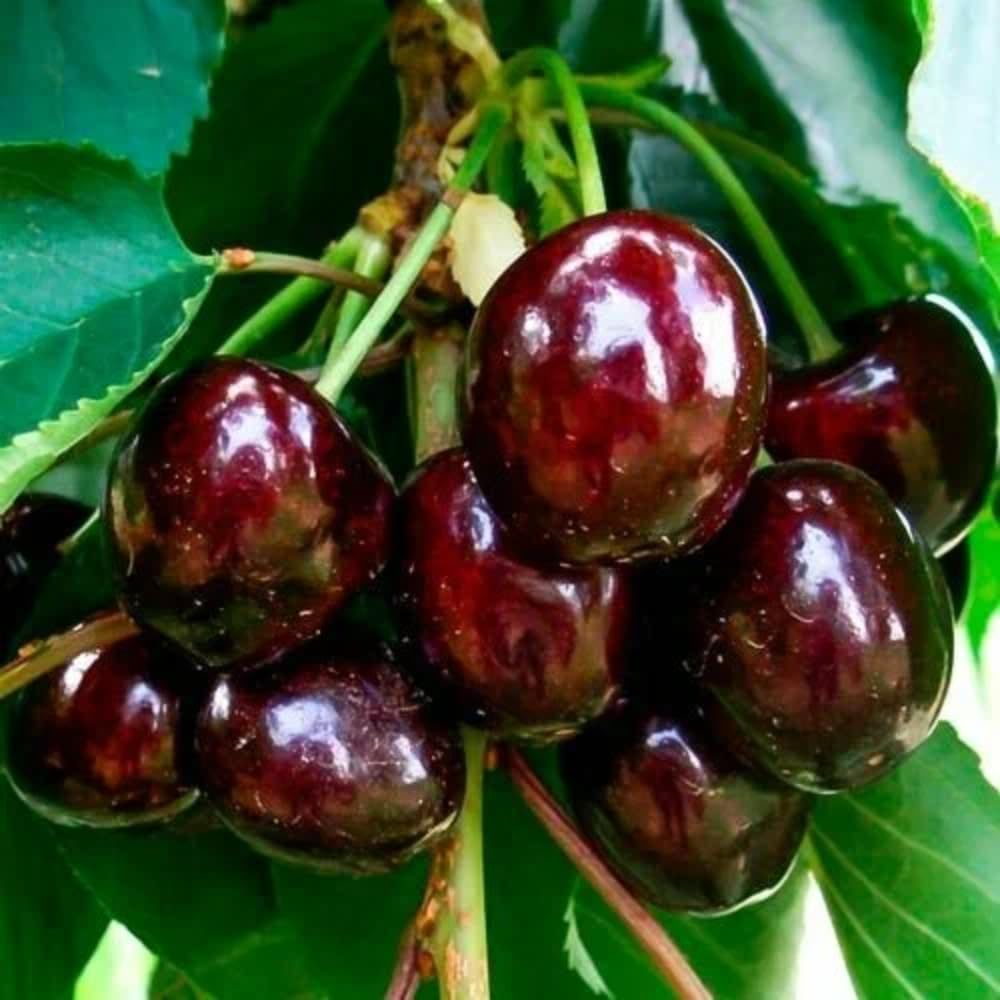
You get two trees, not one — that alone doubles your odds of a live cherry tree.
This pick gives you a 2.0 Count bundle: two bareroot dormant trees, each standing 1 to 1.5 feet tall. Unlike the single-unit Kwanzan or Okame below, a second tree means you can plant one in the best spot and test the other in a pot. Or you just hedge against a failed first year. The black cherry variety ripens fruit in late June. It is rated for growing zones 4 through 8, which covers most of the continental US except the deep South and far northern plains.
The trade-off is that bareroot dormant trees arrive looking like sticks with wrapped roots, and buyers report mixed results. Some received healthy plants that were already starting to bloom. Others noted they “were late and completely dried up.” That 2.0 Count matters here — even with one weak tree, you still have a second that may be fine. The loam soil and Full Sun recommendation means you need a bright, well-drained spot. The trees are not forgiving of soggy clay.
Owners mention that the young plants require patience. One described them as “small stick-like starters” that adjusted well after immediate planting. Another buyer said they are “growing quickly,” suggesting that when conditions line up, these trees establish fast. At 1-1.5 feet, they arrive taller than the 8-12 inch Kwanzan. But bareroot trees generally need more careful handling than potted ones.
The Insurance Factor
- 2.0 Count gives you two trees — double the chance of success versus the 1.0 Count alternatives
- Tallest on arrival at 1-1.5 feet, giving a head start in the ground
- Produces sweet black cherries ripening in late June
The Bare-Root Reality
- Dormant bareroot form means they look dead on arrival — first-time buyers often worry
- Some shipments arrive dried out, as customers note “completely dried up” in some cases
- Requires Full Sun and loam soil — not flexible about shade or poor drainage
The two-tree edge: Pick this if you want the highest odds of at least one surviving cherry tree and have a sunny, well-drained spot ready.
One real catch: Bareroot dormancy means you have to trust the stick. If both arrived dry, you are out two trees instead of one.
3. Okame Cherry Blossom Plant

This Okame starts tiny at 6-10 inches but reviewers point out it hitting 8 feet in just two years.
At 6 to 10 inches on arrival, this is the smallest plant in the comparison. But it makes up for size with long-term momentum. One buyer summed it up: “I waited 2 years before write my review. Purchased my okame cherry tree. Today my tree is approximately 8 feet.” That is a leap from a starter that can be as short as 3 inches. The Okame is a Japanese cherry blossom type known for early spring flowers and fast growth once established in Full Sun.
The downside is fragility at the start. Some buyers received a tree “snapped in half to fit” in a damaged box with bone-dry soil. Others reported a healthy, well-packaged plant that arrived at 7 inches and is now thriving. The inconsistency depends on shipping handling. Unlike the 2 Black Cherry Trees set (2.0 Count), this is a single 1.0 Count plant. If yours arrives damaged, you have no backup. Buyers also note that the tree needs Full Sun, which is stricter than the Kwanzan’s Partial Sun tolerance.
Reviewers report good results after transplant: plants showing “good growth with new leaves” and “adjusting well with no stress.” The seller included care instructions. One buyer successfully fixed minor root lock by repotting. This pick is for the grower who does not need instant gratification and can handle a leafless stick for the first season.
The Long Game
- Proven to reach 8 feet after two years in the ground based on buyer reports
- Japanese Okame variety — blooms early and grows fast once established
- Well-packaged examples arrive healthy and ready for transplant
The Risk at the Start
- Single 1.0 Count means one bad shipment wipes out your whole order
- At 6-10 inches, it is the shortest on arrival — more vulnerable from the start
- Will not ship to Arizona or California, limiting where you can order it
For the patient planter: Choose the Okame if you want a fast-growing Japanese cherry that can reach 8 feet in two years and are okay with a very small starter.
Watch out for: Shipping damage is a real risk with this single-unit tree, and Full Sun is non-negotiable — no shade at all.
Understanding the Specs
Unit Count: 1.0 vs 2.0
This is the number of individual plants you get in one order. A 1.0 Count means one tree — if it dies, you are back to square one. A 2.0 Count gives you two trees, which doubles your chance of success and lets you plant in two spots or give one away. For cherry trees where the first few months are the hardest, an extra unit is cheap insurance.
Dormant vs Potted Arrival
Most affordable cherry blossom trees ship dormant — they look like a bare stick with roots wrapped in damp material or in a small 2.5-inch pot. Dormant is normal for winter shipping; the tree is sleeping, not dead. It should leaf out in spring if the roots are alive. A potted arrival reduces transplant shock but usually costs more. Check that the roots are moist and the stem is not brittle when your tree arrives.
Sunlight: Full Sun vs Partial Sun
Full Sun means at least 6 hours of direct sunlight each day — no shade from buildings or large trees. Partial Sun means 4 to 6 hours. Cherry trees flower best in Full Sun, but a Partial Sun variety like the Kwanzan gives you more leeway if your yard has some afternoon shade. Planting a Full Sun tree in shade will result in sparse leaves and few, if any, blooms.
Height on Arrival
Listed as the plant’s height when it ships — typically 6 to 18 inches for young cherry trees. Taller plants may have larger root systems, but they also lose more water after transplant. A short, dormant tree often establishes faster because it puts energy into roots instead of supporting leaves it does not have yet. Do not choose purely by height — choose by overall root health.
FAQ
Will a Kwanzan cherry tree grow in partial shade?
How tall will an Okame cherry tree get after a few years?
What does it mean for a cherry tree to arrive dormant?
Can I plant two cherry trees close together?
Why did my cherry blossom tree arrive as a stick with no leaves?
What zones do black cherry trees grow in?
Are these cherry trees guaranteed to produce fruit?
How should I plant a bareroot cherry tree?
Final Thoughts: The Verdict
For most people, the arboles de cerezo that makes the most sense is the 2 Black Cherry Trees Live Plant — the 2.0 Count gives you two chances at a thriving tree, and at 1-1.5 feet they arrive taller than the single-unit alternatives. If you want a fast-growing Japanese cherry that owners mention hitting 8 feet in two years, grab the Okame Cherry Blossom Plant. And for the classic pink fragrant blooms in a Partial Sun spot, try the Live Kwanzan Cherry Blossom Tree — just know you are rolling the dice on a single sapling.
How We Picked
We do not accept paid placement. Every pick is matched to a real buyer and a real use-case; we do not hands-on test units.
Sources & Methodology
Specifications: manufacturer listings and product documentation. Review insights: verified customer reviews, as of July 2026. Pricing: not shown on this page (it changes often); check the current price via the retailer link.
As an Amazon Associate, Gadgets Feed earns from qualifying purchases. This does not affect which products we feature.