
Our readers keep the lights on and my morning glass full of iced black tea. As an Amazon Associate, I earn from qualifying purchases.
Specs are compiled from manufacturer listings and verified buyer reviews and can change over time — please confirm the key details on the product page before buying.
Repairing aluminum is a headache—a tough, invisible oxide layer (a skin that forms instantly on bare aluminum) melts at a much higher temperature than the metal underneath. Most welding rods just ball up and roll off that layer. A useful aluminum welding stick does two jobs at once: it scrubs through the oxide with a built-in flux (a cleaning agent that removes the layer as you heat it) and then flows into the crack like thick syrup. This guide explains the rods that actually do that for different jobs—from thin evaporator coils to thick engine brackets—using only the specs and verified buyer feedback.
I’m Min — the founder and writer behind Gadgets Feed. This guide is built by comparing the manufacturers’ published specifications and the patterns across verified customer reviews, so you get each pick’s real strengths and trade-offs instead of marketing spin.
If you are patching a refrigerator coil with a propane torch or building up a cast-aluminum part with a TIG setup, this roundup of top-rated aluminum welding sticks covers the heat range you need, the flux core (the built-in cleaner that saves you a messy step), and how sticky each rod actually is.
Our Picks at a Glance

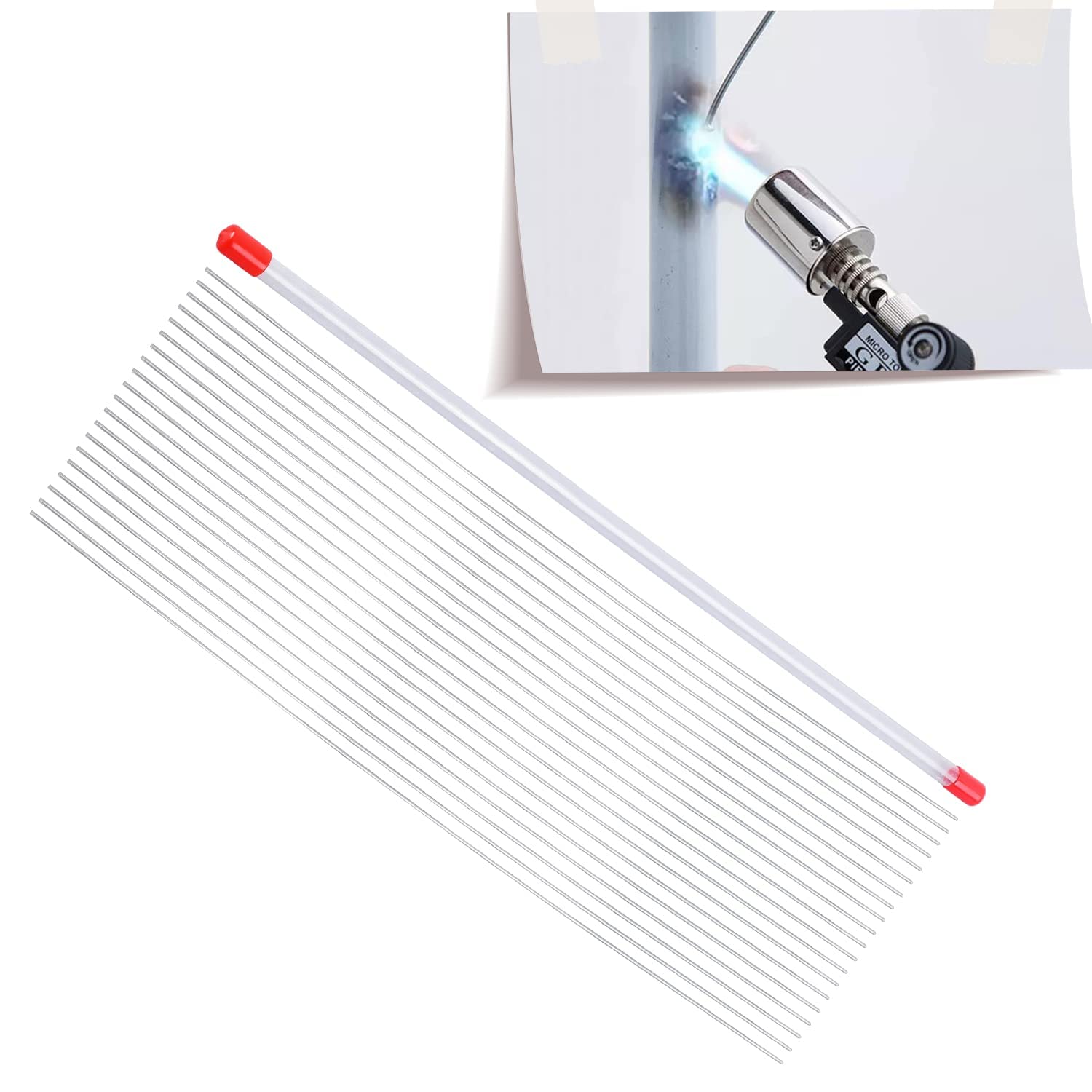
How To Choose The Best Aluminum Welding Sticks
The wrong rod wastes your torch gas and leaves a puddle of unmelted alloy on the bench. Three specs define a useful rod: its melting point, the presence and type of flux, and its diameter relative to the metal thickness.
Melting point and your heat source
Aluminum welding rods fall into two camps. Low-temperature rods (around 700–730°F) work with a standard propane or MAPP gas torch (the yellow or blue tanks at the hardware store). Higher-temperature rods (above 1100°F) usually need a TIG welder or a focused oxy-acetylene flame because a basic propane torch cannot reach the temperature to melt the rod into the parent metal. Check the published solidus (the temperature at which the rod first starts to melt) to see if your torch can handle it.
Flux core versus solid rod
Flux-cored rods have a cleaning compound sealed inside the alloy that activates when hot. That flux scrubs away the aluminum oxide layer—the tough invisible film that forms instantly on bare aluminum—so the filler metal can bond to the base. Solid rods (like TIG filler ER4043) need a separate argon shielding gas (an inert gas that pushes oxygen away from the weld pool) to keep the oxide from reforming. For torch-based repairs on thin parts like AC coils or radiators, a flux-cored stick is dramatically easier because you do not need a gas bottle.
Rod diameter and joint thickness
A 1/16″ (roughly 1.6 mm) rod works for thin-gauge work like evaporator coils, lawnmower fuel tanks, or body panels. A thicker 1/8″ (roughly 3.2 mm) rod carries more mass into the joint, so it suits heavier repairs like engine brackets, timing covers, or castings. Mismatch the rod to the metal—too thick on thin sheet and you burn through the part before the rod melts; too thin on a heavy block and the rod evaporates before it fills the gap.
Quick Comparison
| Model | Best For | Rod Diameter | Melting Temp | Flux Core | Amazon |
|---|---|---|---|---|---|
| Hobart 770206★ Best Overall | Thick aluminum engine repairs | 1/8″ | 700°F | Self-fluxing | Amazon |
| GEOYLE 20-packPrecision Flow | Precision brazing on alloys | 1/16″ | 716°F | 18% flux core | Amazon |
| Guangfan 100-pack | Budget stick for small projects | 1/16″ | 1112°F | Flux-cored | Amazon |
| BLUEFIRE 12-pack | Multi-metal soldering | Not listed | 728°F | No | Amazon |
| Lucas Milhaupt 99088 | HVAC coil & copper joints | Not listed | Not listed | Flux-cored | Amazon |
| Uniweld Aluma-Braze | Refrigeration & copper bonds | 0.078″ | Not listed | Flux-cored | Amazon |
| YESWELDER ER4043 | TIG machine welding | 3/32″ | Not listed | No (TIG filler) | Amazon |
In‑Depth Reviews
1. Hobart 770206 Brazing Rod, 1/8-Inch by 18-Inch, Quantity-7
Our pick — over 4★ from 700+ verified ratings; the strongest balance of quality and price.
This is the rod for thick parts—one buyer fixed a 3/16″ timing cover with MAPP gas alone.
The Hobart 770206 uses a 1/8″ diameter rod so you get enough filler metal to fill gaps that a thinner 1/16″ rod would evaporate before sealing. It melts at 700°F, so a standard propane or MAPP torch can handle it, though one buyer found it would not seal thin radiator cores. The rod is self-fluxing (no separate powder needed), and at 18 inches long you have reach for awkward engine-bay spots. A reviewer reports that the trick is heat-soaking thick aluminum patiently: he repaired a 3/16″ thick timing cover hole using a TS8000 torch and an electric burner preheat, and the rod melted and flowed perfectly once the parent metal reached temperature.
Seven rods is a modest count compared to the GEOYLE 20-pack, but each rod is nearly twice the diameter, so the total usable alloy mass is substantial. Builders note that clean the joint with a stainless steel brush, keep the weld level to gravity, and the rod alloys into the parent metal without a brittle seam. Do not reach for this on thin aluminum foil or radiator cores—it is built for heavy structural repairs.
What makes it stick
- Low 700°F melt works with a basic propane torch
- Self-fluxing rod eliminates the extra step of applying flux powder
- 1/8″ diameter handles thick brackets and castings
The real limit
- Too thick for thin radiator or evaporator coils
- Only 7 rods per pack, runs out fast on big repairs
- Requires patient preheating of the parent metal
Best for engine blocks and castings: If you need to patch a thick aluminum timing cover or a chainsaw handle with a handheld torch, this rod delivers the most proven results in the list.
Not for thin-gauge work: On sheet aluminum under about 1/16″ you risk melting the parent metal before the rod flows.
2. GEOYLE 20 Sticks Aluminum Brazing Rods 1/16″ x 14″
Twenty thin rods with a narrow melt window that makes heat control easier than the Hobart’s wider range.
This pack gives you 20 rods at 1/16″ diameter—a count 5.0x higher than the Hobart seven-pack, but each rod is thinner, so the total alloy mass is lower. The melting range is published as 716°F solidus to 752°F liquidus, meaning the rod starts to soften at 716°F and is fully liquid at 752°F—a 36°F window that gives you more control than a broader range. The composition is 12% silicon with an 18% flux core, so the cleaning action is baked right into the rod. Buyers found that the flux core helps the rod flow into narrow gaps and leave a flat bead.
The sealed transparent tube packaging is practical—you can toss it in a toolbox without the rods rattling loose. At only 1.44 ounces total (4.1x lighter than the Guangfan 100-pack at 5.3 ounces), this is a very portable kit. The manufacturer states it works on aluminum alloys and aluminum-magnesium alloys but explicitly not for cast iron. For brazing thin aluminum sheet or alloy engine parts with a propane torch, the 716–752°F band means you do not need to overheat the base metal.
Why this works
- Narrow melt range (716–752°F) gives predictable flow
- 18% active flux core cleans oxide as you heat
- 20 rods with sealed tube storage
The catch
- 1/16″ is too thin for heavy-block repairs
- Low total alloy weight—runs out fast on large joints
- No verified buyer reviews to cross-check
Pick this for thin alloy sheet and tank repairs: The 716°F solidus and flux core make it a solid choice for leak welding fuel tanks or condenser bodies with a propane torch.
Skip it for thick castings: You will use up the 20 sticks quickly on a single engine-block repair and wish you had the Hobart 1/8″ rods.
3. Aluminum Welding Rods Low Temp Flux-Cored 100Pcs (Guangfan)

One hundred rods for a low price—but the 1112°F melt temperature makes them useless with a standard propane torch, unlike the 700°F Hobart.
At first glance the 100-count looks like a great deal, and the weight of 5.3 ounces means a fair amount of metal. The critical spec is the reported melting temperature: 600–650°C, or 1112–1202°F. That is far above the 700°F range of typical flux-cored brazing rods and too high for a simple propane torch. Buyers confirm that a heat gun reaching 1300°F still would not melt the rod against the parent metal. One reviewer stated the rods melted and rolled off without sticking even when the aluminum was heated to 1200°F. Another reviewer who got good results used a TS8000 torch with MAPP gas and a strict cleaning regimen with acetone and a new stainless steel brush.
Buyers who succeeded report that the rod beads up and shines when the aluminum is hot enough, then flows cleanly. If you own a MAPP or oxy-acetylene torch and you are willing to practice the prep steps, the value is clear—100 rods for occasional small projects means you will not run out. But with only a basic propane torch, the 1112°F requirement will frustrate you as it frustrated reviewers who called it a waste of money.
The upside
- 100 rods per pack, the highest count in the list
- Corrosion-resistant joint once bonded
- No separate flux powder needed
The downside
- Il1112°F melt requires MAPP gas or hotter—not propane-friendly
- Inconsistent results: several buyers reported the rod would not stick
- Heavier pack (5.3 oz) compared to the GEOYLE 20-stick pack (1.44 oz)
Great for the practiced user with a hot torch: If you already own a TS8000 or equivalent MAPP torch and know how to prep aluminum, the per-rod cost is unbeatable.
Not for the first-timer with a basic propane torch: The high melt temperature causes most beginners to burn the parent metal before the rod flows.
4. BLUEFIRE 12 sticks 1/2 lb Low Temperature Aluminum Zinc Alloy Brazing Rods

The lowest melting point on paper at 728°F—but buyer reports say it fails the stick test on aluminum.
At a stated 728°F, this rod should work well with a standard propane torch, similar to the Hobart’s 700°F. The rods are a zinc-aluminum alloy marketed for copper, stainless steel, and iron too, making it the most versatile candidate for mixed-metal soldering. The 0.5-pound pack (8 ounces) with 12 sticks comes in a self-contained holder that buyers appreciated for storage. The included flux in the package (separate, not cored) is a key detail—you must dip or brush it onto the joint because the rod itself has no built-in flux core.
The honest truth from reviews is mixed. One buyer loved the adhesion on metals that had previously failed, but two separate buyers reported the rod simply would not stick to the base metal even after melting with a blow torch. A reviewer specifically warned that the instructions should better explain how to use it for first-timers and recommended buying additional flux. Compared to the Lucas Milhaupt 99088 or the Hobart rods where the flux is integrated, the BLUEFIRE requires an extra learning step and more trial and error.
What stands out
- 728°F melt—works with basic propane torches
- Zinc-aluminum alloy bonds multiple metal types
- 0.5 lb pack with a handy self-contained holder
Where it stumbles
- No built-in flux core—you have to add flux separately
- Multiple buyers report the rod melted but would not stick to aluminum
- 35 ratings only—a much smaller sample than the top picks
Reach for this if you are joining dissimilar metals: The low 728°F melt and the zinc-aluminum formulation make this a reasonable experiment for soldering aluminum to copper or steel.
Look elsewhere if you want certainty: The non-flux-cored design and the “did not stick” complaints make it a gamble compared to the self-fluxing options above.
5. Lucas Milhaupt Flux Cored Aluminum Braze Al822 Part # 99088, 4 Stick Tube

Four rods that HVAC techs call a revelation for bonding aluminum to copper—a tricky job where the Hobart rod struggles.
This is the rod the heat pump and refrigerator repair crowd uses when the factory evaporator springs a leak. The flux-cored construction means no separate flux paste in a tight, sooty space—just heat the joint until the copper changes color and dab the rod in. One buyer who repaired an LG refrigerator evaporator reported the aluminum was kinked and leaking but the rod flowed in and sealed it, avoiding a full evaporator replacement. Another HVAC technician using it for refrigeration systems found it worked for both aluminum-to-aluminum and copper-to-aluminum bonds—a notoriously tricky transition because the two metals expand at different rates.
At only 1.28 ounces, the four-stick tube is the smallest total quantity in the list. The rod is made in the United States, and the manufacturer Lucas Milhaupt is a known specialty alloy house rather than a generic import brand. The item dimensions (50.8 cm long sticks) give you decent reach. The trade-off is price per rod—you pay more here than for bulk rods, but you are buying specific alloy chemistry and reliable self-fluxing performance that pros depend on. Owners mention it flows easily once you learn the copper-discoloration cue.
The pro choice
- Flux-cored for clean, neat joints without separate flux
- Bonds both aluminum and copper reliably
- US-made specialty alloy from Lucas Milhaupt
The limit
- Only 4 rods in the tube—expensive per-rod cost
- No published melt temperature to match your torch
- Shortest pack in the comparison—1.28 oz total weight
Your go-to for HVAC and refrigerator repairs: If you are a pro or a serious DIYer fixing an AC line or a refrigerator coil that mixes copper and aluminum, this rod is the most proven solution in the list.
Not for heavy fabrication projects: Four sticks at 1.28 oz total will vanish fast on any repair larger than a pinhole or a single joint.
6. Uniweld UAB Aluma-Braze, All-In-One Flux Cored Aluminum Brazing Alloy

A continuous 100-inch coil instead of pre-cut sticks—you cut only what you need, unlike every other rod pack here.
Rather than fixed-length sticks, the Uniweld Aluma-Braze delivers approximately 100 inches of 0.078″ diameter flux-cored alloy on a single continuous coil. You snip off exactly the length you need, reducing waste compared to using whole sticks for small tack welds. The alloy is a cadmium-free zinc-aluminum filler (safer in tight spaces with less toxic fume risk than older cadmium-bearing rods). It is designed for HVAC and refrigeration repairs—patching aluminum coils and brazing copper-to-aluminum transitions. One reviewer noted repairing a freezer coil and pressurizing it to 50 psi with the rod holding perfectly.
Another user fixed a pinhole leak in a 3-ton air handler evaporator coil using only a propane torch, stating the rod went on like glue after gentle heating. The flux core gives good capillary action (the molten alloy wicks into the gap rather than beading on top), which is critical for sealing hairline cracks. The Uniweld brand has a 1-year warranty from the date of sale, a solid signal for a consumable product. The only downside: the 1.12 ounce total weight is lower than some stick packs, so multiple large joints might deplete the coil quickly.
Smart design
- Continuous 100-inch coil means zero waste—cut what you need
- Cadmium-free zinc-aluminum alloy for safer fume profile
- Proven on refrigeration coils and copper-to-aluminum transitions
The trade-off
- 1.12 oz total weight—less material than stick packs
- No melt temperature published in the data
- Requires a propane/MAPP torch with enough reach
Ideal for coil and line-set repair: The continuous coil format is a better fit for AC technicians who need small snippets for multiple pinhole leaks rather than burning a whole stick each time.
Not for thick structural welding: The 0.078″ diameter is too thin for engine-block-grade repairs—stick to the Hobart 1/8″ rod for heavy sections.
7. YESWELDER Aluminum TIG Welding Rod ER4043 3/32″ x 16″ 5LB

Five pounds of ER4043—the most common aluminum TIG filler—with no flux or torch gimmicks, unlike every other rod in this guide.
This is a true TIG filler rod, not a torch brazing stick. ER4043 (AlSi5 with 5% silicon) is the do-everything aluminum wire that shops buy by the pound. The 3/32″ diameter is a middle ground—thicker than 1/16″ for good filler deposition but slim enough for controlled TIG work on 3003, 3004, 5052, 6061, and 6063 alloys. The silicon content makes the puddle more fluid so it wets out nicely and reduces cracking, which is why ER4043 is often the first rod a TIG student learns with.
The YESWELDER pack weighs 5.32 pounds—more than any other product in this roundup—and comes as straight 16-inch rods. Customers note the shorter length is easier for beginners to control, though it wastes more filler since you discard the stub earlier. One returning buyer purchased a second 5-pound box, confirming consistent quality. The catch: you need a TIG welder with 100% argon (or an argon/helium mix) as a shielding gas because there is no flux core. If you own a TIG machine and stock up on ER4043, this is the best dollar-per-pound ratio here. If you only have a propane torch, skip it.
The workhorse
- 5.32 lbs of ER4043—the highest total alloy mass here
- Low crack sensitivity and excellent fluidity
- Works across 3003, 5052, 6061, 6063, and casting alloys
Not for torch users
- Requires a TIG machine and argon shielding gas
- No built-in flux core—cannot be used with a propane torch
- Short 16″ sticks create more stub waste than full-length rods
If you own a TIG welder, this is the best value filler rod: The 5-pound box of ER4043 gives you the alloy professionals trust, at a mass that beats every other pack in this guide for machine-based welding.
Do not buy it for torch brazing: Without a TIG power source and argon, this rod is just decorative metal.
Understanding the Specs
Melting Temperature (Solidus / Liquidus)
Solidus is the temperature at which the rod first starts to soften; liquidus is the temperature at which it is fully molten. For torch brazing, you want a rod whose solidus is within reach of your heat source—propane torches max out around 500°F heat input into aluminum before the base metal melts, so rods near 700-730°F are ideal. Rods above 1100°F (like the Guangfan 100-pack) require MAPP gas, oxy-acetylene, or a TIG machine because a standard propane torch cannot push that much heat into a thick aluminum joint fast enough.
Flux Core vs. Solid Rod
Flux is a chemical compound that removes the aluminum oxide layer so the filler metal can actually bond to the underlying aluminum. Flux-cored rods have this cleaner sealed inside the alloy, so as you heat the rod the flux releases and scrubs the joint automatically. Solid rods (like ER4043 TIG filler) have no flux and require either an argon shielding gas (for TIG) or a separate flux powder brushed onto the joint (for torch work). For a first-time repair with a gas torch, a flux-cored rod removes the variable of applying the right amount of flux.
FAQ
Can I use aluminum welding sticks with a basic propane torch?
What is the difference between flux-cored and solid aluminum rods?
Will these sticks work on aluminum that is painted or anodized?
Can I weld aluminum to copper with these rods?
How many rods do I need for a typical repair?
What does ER4043 mean on a TIG welding rod?
Can I use a heat gun instead of a torch to melt these rods?
Why does the rod ball up and roll off instead of sticking?
How thick can aluminum be welded with a 1/16″ rod?
Final Thoughts: The Verdict
For most buyers who need a propane-torch-friendly rod for heavy aluminum repairs, the top pick among aluminum welding sticks is the Hobart 770206 because its 700°F self-fluxing alloy proved itself on thick engine parts in verified buyer reviews. If you work in HVAC and need a reliable flux-cored rod for both aluminum and copper joints, grab the Lucas Milhaupt Part # 99088. And for TIG users who want the best mass-per-dollar for machine welding, the standout is the YESWELDER ER4043 5-pound box.
How We Picked
We do not accept paid placement. Every pick is matched to a real buyer and a real use-case; we do not hands-on test units.
Sources & Methodology
Specifications: manufacturer listings and product documentation. Review insights: verified customer reviews, as of July 2026. Pricing: not shown on this page (it changes often); check the current price via the retailer link.
As an Amazon Associate, Gadgets Feed earns from qualifying purchases. This does not affect which products we feature.