
Our readers keep the lights on and my morning glass full of iced black tea. As an Amazon Associate, I earn from qualifying purchases.
Specs are compiled from manufacturer listings and verified buyer reviews and can change over time — please confirm the key details on the product page before buying.
You want a headphone amp that does not cost a lot, but you worry about trade-offs—maybe it lacks power for your 300-ohm Sennheisers, or it hisses with your sensitive IEMs (in-ear monitors). The good news is you no longer need to spend hundreds to get clean, high-resolution sound and enough power to drive most headphones.
I’m Min — the founder and writer behind Gadgets Feed. This guide is built by comparing the manufacturers’ published specifications and the patterns across verified customer reviews, so you get each pick’s real strengths and trade-offs instead of marketing spin.
After looking at output power, chipset quality, connectivity options, and real-user feedback, these seven models stand out as the most reliable options when you are searching for a budget amp for headphones that actually delivers clean, detailed sound without emptying your wallet.
Our Picks at a Glance


How To Choose The Best Budget Amp For Headphones
Finding the right amp for your headphones depends on matching a few core specs with what you actually own. You want something that drives your particular headphones without adding noise or distortion, and you want the right connections so you can plug it into your phone, computer, or console without adapters.
Output Power and Impedance Range
The most important number is how much power the amp delivers, measured in milliwatts (mW), and what headphone impedance range it supports, measured in ohms (Ω). A high-impedance headphone like the 300-ohm Sennheiser HD 600 needs more voltage to reach a satisfying volume, while a low-impedance IEM (in-ear monitor) around 16 to 32 ohms needs less power but is more sensitive to background hiss. Look for an amp that states its output at a specific impedance—like 170mW@32Ω—so you know how it behaves with your gear.
DAC Chip and Decoding Support
The DAC (digital-to-analog converter) chip inside determines the maximum audio resolution and how clean the signal is. Common chips you will see are the Cirrus Logic CS43131 or CS43198 and the ESS ES9038Q2M. These handle high-resolution formats like PCM up to 32-bit/768kHz and DSD (Direct Stream Digital, a high-resolution audio format) up to DSD256 or DSD512. A better DAC chip also typically means a lower THD+N (Total Harmonic Distortion plus Noise, measured as a percentage—lower is cleaner), which translates to a quieter background and more detail in your music.
Outputs and Connectivity
Most budget amps offer a 3.5mm single-ended output, which works with standard headphones. A 4.4mm balanced output is a step up because it separates the left and right audio channels, reducing crosstalk (signal leakage between channels) and often delivering more power. If you use high-end headphones or IEMs with a balanced cable, the 4.4mm output can noticeably widen the soundstage (the sense of space and separation in the audio). For connectivity, USB-C is the standard for modern phones and laptops, but some desktop amps also include optical or coaxial inputs for connecting to a TV, CD player, or game console.
Portability vs. Desktop Use
Consider where you will use the amp most. A dongle-style amp (like the Fosi Audio DS2) is ultra-portable and slips into a pocket, ideal for commuting or pairing with a phone. A compact desktop unit (like the S.M.S.L DS100) stays on your desk and may offer more input options and a physical volume knob, but it needs to sit near a power source. Your choice depends on if you need a mobile solution or a fixed setup for your computer or home stereo.
Quick Comparison
| Model | Best For | Output Power | DAC Chip | Outputs | Amazon |
|---|---|---|---|---|---|
| Douk Audio U3 PRO★ Best Overall | High-impedance desktop use | 1500mW @ 32Ω | OP42 + BUF634 | 3.5mm + 6.35mm | Amazon |
| Fosi Audio DS2Best Value | High-resolution portable pairing | 170mW @ 32Ω | Dual CS43131 | 3.5mm + 4.4mm | Amazon |
| Dawn PRO 2 | Balanced portable with app EQ | 124mW @ 32Ω | Dual CS43198 | 3.5mm + 4.4mm | Amazon |
| Fosi Audio DS1 | DSD512 high-res travel | 220mW | ES9038Q2M | 3.5mm + 4.4mm | Amazon |
| Protocol Max | Custom EQ + high power | 600mW (balanced) | Dual CS43198 | 3.5mm + 4.4mm | Amazon |
| EYTSE HA03 | Ultra-portable phone companion | — | Dual CS43131 | 3.5mm + 4.4mm | Amazon |
| S.M.S.L DS100 | Desktop MQA multi-input | 7 Vrms @ 600Ω | CS43131 | 6.35mm + 4.4mm | Amazon |
In‑Depth Reviews
1. Douk Audio U3 PRO
A desktop powerhouse that delivers massive headroom for high-impedance headphones at a price that barely registers.
For anyone using hard-to-drive headphones like 600-ohm Beyerdynamic DT880s or Hifiman Ananda, the U3 PRO solves the problem of insufficient volume and thin sound. It delivers up to 1500mW at 32Ω, which means it can drive headphones with impedances from 18Ω up to 600Ω without breaking a sweat. A built-in voltage boost circuit maintains a high operating voltage of ±14V from a standard DC 5V input, keeping distortion ultra-low.
Unlike the portable dongles below, this is a desktop unit that stays on your desk, but it brings a unique flexibility for tinkerers: the pluggable op-amp (operational amplifier) socket lets you swap in models like the AD797 or OPA627 to customize the sound signature. Buyers report that the U3 Pro “eliminates distortion with high-impedance BeyerDynamic DT880s” and delivers “fuller sound and more evident bass.” The trade-off is that there is no 4.4mm balanced output, so it lacks the channel separation of options like the Fosi Audio DS2, and the volume knob lacks markings, so one reviewer warns you can damage hearing if you overshoot the level.
Why It Wins
- Highest output power in its class at 1500mW @ 32Ω
- Replaceable op-amps let you tune the sound to your taste
- Drives 18Ω to 600Ω headphones with ease
The Limitations
- No 4.4mm balanced output
- Volume knob is unmarked, making precise level tricky
- Desktop form factor, not portable
Reach for this if: you own high-impedance headphones (300Ω or above) and want desktop-grade power and the ability to customize your sound via swappable op-amps.
Look elsewhere if: you need a portable dongle for on-the-go listening or specifically want a 4.4mm balanced connection.
2. Fosi Audio DS2
A portable dongle that brings high-end chipset clarity and balanced power to everyday listening.
The DS2 uses two next-generation Cirrus Logic CS43131 DAC chips (the same hardware found in more expensive mid-tier gear) to handle decoding up to DSD256 and PCM 32-bit/384kHz. It delivers 170mW@32Ω per channel, which is enough to power both low-impedance IEMs and 300-ohm full-size headphones like the Sennheiser HD 600. The noise floor is impressively low at 1μV (microvolt, a measurement of electrical noise—lower means a quieter background), and the THD (total harmonic distortion) is just 0.0001%, so your music comes through cleanly without added grit.
One of the standout features here is the independent 60-step volume control with a memory function, so you do not have to reset your level every time you plug it in. Owners mention that the DS2 is “excellent with high-end headphones via 4.4mm balanced” and call it a “massive improvement on 300-ohm Sennheisers.” The catch is that it draws significant power from your phone—one reviewer noted a 16% battery drain in two hours on an iPhone—so you may want a USB hub with external power for long sessions.
The Upside
- Excellent 1μV noise floor for a clean, black background
- 170mW@32Ω per channel drives most headphones well
- Independent volume control remembers your setting
The Trade-Off
- High battery drain on phones (about 16% in 2 hours per one report)
- Included USB-C cable is low quality
- Requires HiBy Music app for some adjustments
Who it fits: listeners who want a portable dongle with a clean balanced output for both IEMs and full-size headphones, and who prioritize a low noise floor.
skip it if: you need long battery life when using it with a phone, or you want truly plug-and-play simplicity with no app interaction.
3. Protocol Max
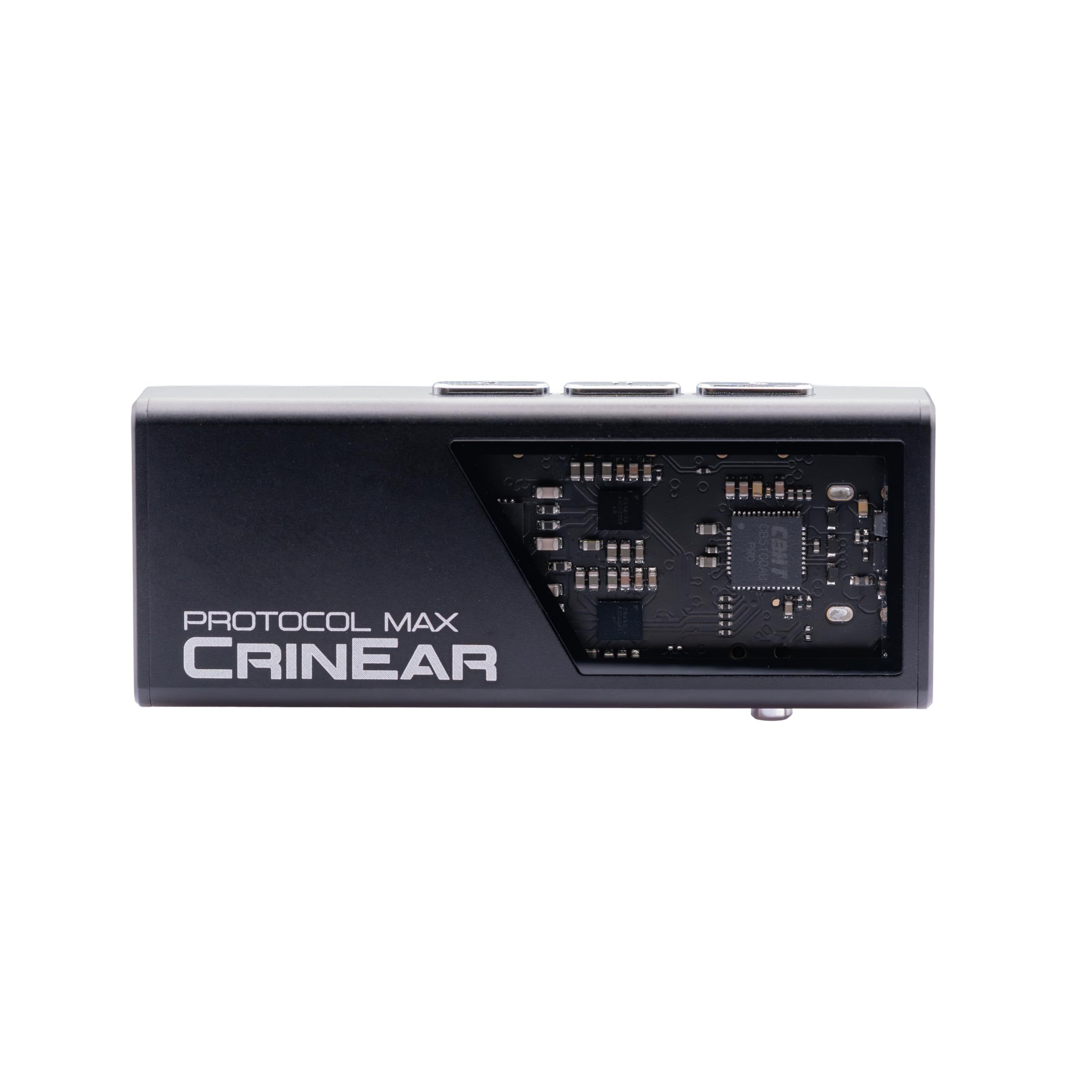
A high-power portable DAC-amp with a browser-based parametric EQ that eliminates the need for headphone upgrades.
The Protocol Max stands out because it combines raw power with deep customization. It delivers up to 600mW through its balanced 4.4mm output, using dual Cirrus Logic CS43198 DAC chips and dual SG Micro SGM8262-2 operational amplifiers. That power easily drives demanding planar magnetic headphones (headphones that use a flat diaphragm between magnets for lower distortion and faster response) like the Monarch MkII and Clear MG to high volumes. But the real draw is the browser-based 10-band parametric equalizer (PEQ) that lets you create custom sound profiles and save them directly to the device without needing a separate app.
Customers note the PEQ is “game-changing” and allows you to “tune to any target, eliminating the need for headphone upgrades.” The device has two power modes—eco and boost—though boost mode drains your device’s battery faster. One early adopter had a defective first unit with right-channel static, but the replacement worked perfectly. The main limitation is that the EQ is set via a desktop website, so you cannot make adjustments on the go with an iOS app, and the documentation is minimal.
Why It Shines
- 600mW balanced output powers demanding planars
- 10-band PEQ saved directly to the device
- Browser-based setup requires no app downloads
What to Know
- No iOS app for on-the-go EQ adjustments
- Gets warm during use, significant battery drain in boost mode
- Minimal documentation included
Best for: audio enthusiasts who want both high power for planar headphones and the ability to dial in a custom EQ curve without spending on new headphones.
Not for: those who want simple plug-and-play and never touch EQ settings, or anyone who needs a dedicated mobile app for adjustments.
4. S.M.S.L DS100

A compact desktop DAC-amp that brings MQA support and multiple inputs to a clean, no-fuss package.
The DS100 is built around the Cirrus Logic CS43131 DAC chip, and it adds support for MQA and MQA-CD decoding (a format that folds high-resolution audio into a smaller file size, then unfolds it for playback), so you can play Tidal Masters natively. It uses the third-generation XMOS XU-316 processor for USB decoding, supporting PCM up to 32-bit/768kHz and DSD256. The headphone output is substantial: 7 Vrms (volts root mean square, a measure of output voltage) for 600Ω headphones, which means it can drive even very high-impedance headphones to loud levels cleanly.
Unlike the portable dongles on this list, the DS100 sits on your desk and offers USB, optical, and coaxial inputs, letting you connect a computer, CD player, and TV simultaneously. Buyers call it a “transparent DAC, zero noise” and note it works perfectly with a Fosi amp for speakers. The headphone amp is solid but outputs only 61mW for 16Ω headphones, so it is less tune for sensitive IEMs (in-ear monitors) compared to the low-noise Fosi Audio DS2. Windows users need to download a driver from the S.M.S.L website, and no 3.5mm jack is included—you will need a separate adapter for standard IEMs.
Core Strengths
- MQA and MQA-CD decoding for Tidal Masters
- USB, optical, and coaxial inputs for multi-device setups
- 7 Vrms output drives 600Ω headphones easily
Limitations
- Windows requires a separate driver download
- 61mW @ 16Ω output is modest for sensitive IEMs
- No 3.5mm output; needs an adapter
Ideal for: desktop users who want a single hub for a computer, CD player, and TV, plus MQA decoding for high-res streaming.
Not the best if: you mainly use sensitive IEMs or need a portable solution for phones and laptops.
5. MOONDROP Dawn PRO 2
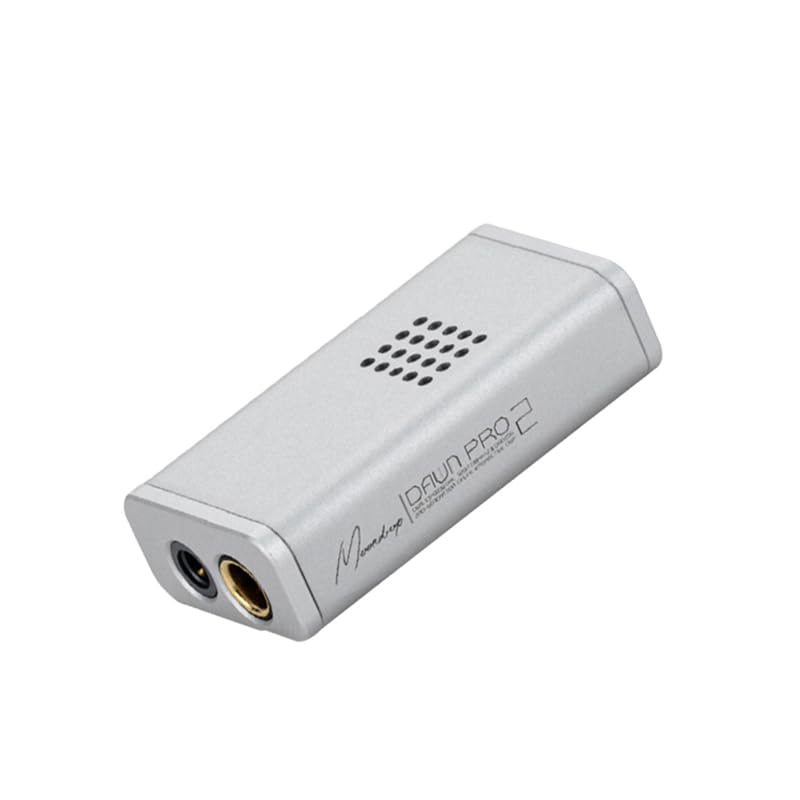
A well-built dongle with a lossless volume ladder and a community-driven app for fine-tuning your sound.
The Dawn PRO 2 uses dual Cirrus Logic CS43198 DAC chips and three independent LDO (low dropout regulator, which provides stable, clean power to different parts of the circuit) power chips to keep the noise floor low and the output clean. It puts out 124mW per channel through both 3.5mm single-ended and 4.4mm balanced outputs, with a 4Vrms output voltage that works well with most IEMs and many full-size headphones. The 100-level smooth DAC volume control is nearly lossless, meaning you get precise level adjustment without the signal compression that can happen with digital volume on a phone.
What sets this apart is the MOONDROP app, which lets you access a parametric equalizer and a community headphone frequency response database for tuning. Reviewers point out the “sound quality and output power is great over the 4.4mm balanced connection” and note it offers “excellent app with community EQ.” On the downside, the programmed EQ settings reset when you unplug the device, and one reviewer had a quality-control issue where the 4.4mm connection was finicky.
High Points
- 100-level lossless volume control for precise adjustments
- MOONDROP app with community EQ database
- Aerospace-grade aluminum housing dissipates heat well
Low Points
- EQ settings reset when unplugged
- Some reports of finicky 4.4mm connection
- 124mW power is modest compared to higher-end options
Who this suits: mobile listeners who want a solid all-rounder dongle with the option to tweak the sound via an app and a clean, lossless volume control.
Who should pass: anyone needing high power for 300-ohm+ headphones or those who want a plug-and-play solution without using an app.
6. Fosi Audio DS1

A compact, high-resolution dongle that packs an ESS chip and powerful output for travel-friendly hi-fi.
The DS1 uses the ESS Technology ES9038Q2M DAC chip—the same chip found in much more expensive desktop DACs—and supports DSD512 and 32-bit/768kHz PCM, which is among the highest consumer audio resolutions available. It outputs 220mW of power, enough to handle headphones with impedance above 200Ω, and offers both a 3.5mm single-ended and a 4.4mm balanced output. The THD+N is under 0.0006%, the signal-to-noise ratio (SNR) is above 120dB, and the noise floor is below 1.6μV, ensuring a clean, detailed sound without background hiss.
Shoppers say it offers “crisp highs, forward mids, fast bass, good separation” and drives 300-ohm headphones comfortably. At just 0.08 pounds, it is truly portable, and it comes with a USB-C to C cable and a USB-A to C converter. The catch is that some phones, like the Google Pixel 8, are incompatible and produce static noise. The volume control also lacks a visual indicator, making it hard to know the exact level. It gets warm during extended use, though not hot.
Reasons to Buy
- ES9038Q2M DAC chip with DSD512 support
- 220mW output drives mid-to-high impedance headphones
- Lightweight at 0.08 pounds
Reasons to Consider
- Incompatible with some phones (e.g., Google Pixel 8)
- No visual indicator for volume level
- Gets warm during use
Best for: travelers who want the highest possible audio resolution in a tiny package, provided their phone is compatible.
Not for: users of Google Pixel 8 or anyone who wants a clear volume readout, or people who need a cool-running device.
7. EYTSE HA03
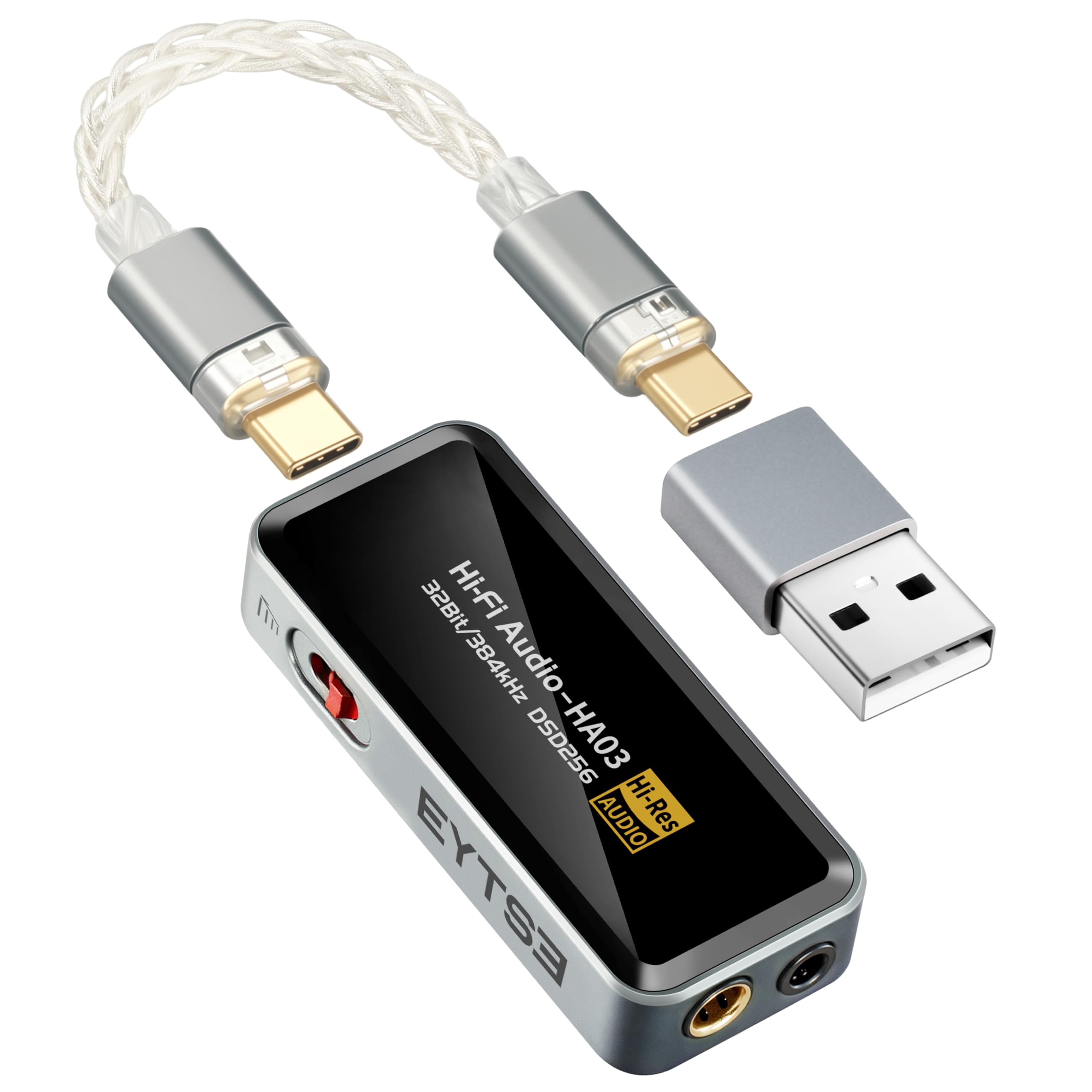
An ultra-light dongle that adds physical controls and a dual-DAC chipset to your phone without the bulk.
The EYTSE HA03 is built around dual CS43131 DAC chips—the same flagship decoder found in more expensive mid-tier gear—and achieves a THD+N of less than 0.0005%, meaning music comes through with minimal distortion. It weighs just 18 grams, or about as much as a few sheets of paper, and uses an aerospace aluminum body with a 2.5D glass face to dissipate heat effectively. The design includes a smart gain switch: low gain for sensitive IEMs to prevent over-driving, and high gain for more power-hungry headphones.
What makes this dongle different from many competitors is the inclusion of physical playback buttons—play, pause, and volume controls that work on both iPhone and Samsung without pulling out your phone. A high-quality braided USB-C cable is included, which is a noticeable step up from the stiff cables bundled with many budget dongles. Buyers report it has “smooth sound, no heat” and works as a “portable external sound card” for PCs. However, one buyer mentioned it was “not enough improvement over Apple dongle to justify price” for some, and that it is “insufficient for high-end cans.”
What Works
- Only 18 grams, barely noticeable in a pocket
- Physical playback buttons work on iPhone and Samsung
- Dual CS43131 chips with under 0.0005% THD+N
What Doesn’t
- Modest improvement over the standard Apple dongle
- Not powerful enough for high-end, demanding headphones
- Some buyers may not notice a major upgrade
Who it works for: smartphone users who want a slight audio upgrade plus physical controls, and who value ultra-portability and a cool-running aluminum body.
Who should skip: owners of high-impedance or planar headphones that need substantial power, or anyone expecting a night-and-day improvement over a basic dongle.
Understanding the Specs
Output Power and Impedance
Output power, measured in milliwatts (mW), tells you how loud the amp can drive a headphone at a given impedance (measured in ohms). A higher number at a lower impedance—like 1500mW@32Ω—means tons of headroom, but the real test is how much voltage the amp can deliver at higher impedances, like 300Ω or 600Ω. If you own high-impedance headphones, look for an amp that specifies output at those resistances, like the S.M.S.L DS100’s 7 Vrms at 600Ω.
THD+N and Signal-to-Noise Ratio (SNR)
THD+N (Total Harmonic Distortion plus Noise) is a percentage that tells you how much distortion and noise the amp adds to the signal. Lower is better—0.0001% is excellent, and anything under 0.001% is usually inaudible. The signal-to-noise ratio (SNR), measured in decibels (dB), describes how loud the music is compared to the background hiss. An SNR above 110dB means the noise floor is extremely quiet, so you hear only your music, not electronic hum.
DAC Chips and Decoding Formats
The DAC (digital-to-analog converter) chip is the brain that turns digital audio files into analog sound waves. Common high-performance chips you will see in budget amps are the Cirrus Logic CS43131, CS43198, and the ESS ES9038Q2M. These chips support high-resolution PCM (up to 32-bit/768kHz) and DSD (Direct Stream Digital) at rates like DSD256 or DSD512. Some amps also support MQA (Master Quality Authenticated), a format used by Tidal for foldered high-resolution tracks.
Balanced vs. Single-Ended Outputs
A single-ended 3.5mm output sends the audio signal along two conductors (left and right), while a balanced 4.4mm output uses four conductors to separate the positive and negative signal paths for each channel. This separation cancels out interference and crosstalk (signal leakage between channels), resulting in a wider soundstage (the sense of space and separation in the audio) and typically more power. If your headphones have a balanced cable, a 4.4mm output can deliver noticeably cleaner sound and more volume.
FAQ
Do I need a separate DAC and amp, or is a combo unit fine?
Can I use a headphone amp with my iPhone or Android phone?
What is the difference between 3.5mm and 4.4mm outputs?
Will a budget amp improve sound quality with cheap headphones or IEMs?
How much power do I really need for my headphones?
What does “high-impedance” mean and why does it matter?
Can I use a headphone amp as a preamp for powered speakers?
What is the noise floor and why does it matter for IEMs?
Will a headphone amp drain my phone battery quickly?
What does the gain switch do on these portable amps?
Final Thoughts: The Verdict
Across the board, the best budget amp for headphones winner is the Douk Audio U3 PRO because it offers class-leading 1500mW output, replaceable op-amps for customization, and the ability to drive virtually any headphone from