
Our readers keep the lights on and my morning glass full of iced black tea. As an Amazon Associate, I earn from qualifying purchases.
Specs are compiled from manufacturer listings and verified buyer reviews and can change over time — please confirm the key details on the product page before buying.
Picking a 35mm point and shoot is like choosing between a disposable party favor and a tool that can actually make memories last. The difference depends on the lens, build quality, and reliable film handling. Cheap plastic cameras produce blurry, washed-out photos that waste film and money.
I’m Min — the founder and writer behind Gadgets Feed. This guide is built by comparing the manufacturers’ published specifications and the patterns across verified customer reviews, so you get each pick’s real strengths and trade-offs instead of marketing spin.
The three cameras below cover the real options worth your time, from the budget-friendly pocket rocket to the premium rig that stretches every roll. This is your honest breakdown of which 35mm point and shoot camera actually delivers the photos you want without the frustration.
Our Picks at a Glance
How To Choose The Best 35mm Point And Shoot Camera
A 35mm point and shoot camera is supposed to let you just frame the shot and press the button — no fiddling with settings. But the cheapest ones cut corners that ruin your photos. Here is what actually separates a good one from a dud.
The Lens: Glass vs. Plastic
The lens element material is the single most important factor in image quality. A 3-element glass lens gives you sharpness and detail, especially in daylight. Cheap plastic lenses produce soft, hazy images that look like they were shot through a foggy window. Always check if the camera uses a glass lens — it makes the difference between a photo you want to print and one you delete.
Focus System: Zone vs. Nothing
Many budget point-and-shoots have a fixed focus, which means everything from about four feet to infinity is supposed to be in focus, and close-up shots come out blurry. A zone-focus system lets you switch between two or more settings (like “portrait” and “distant”), giving you sharper images at specific distances. Some advanced models even have autofocus, but zone focus is the balance for simplicity and control.
Half-Frame vs. Full-Frame
A half-frame camera takes two photos inside one standard 35mm frame, doubling the number of shots you get from a roll. A 36-exposure roll becomes 72 shots. This is great for experimenting and saving money on film, but the images are smaller and may not look as good in large prints. Full-frame gives you bigger negatives and higher-quality enlargements, but you burn through film twice as fast.
Build Quality and Reliability
A camera that jams, shreds film, or arrives broken is worse than no camera. Look for models with a reputation for solid construction. Reviews that mention “shredded my film” or “jammed” are a clear red flag. A sturdy body (metal or thick plastic) and a smooth film advance mechanism are essential for actually enjoying the experience.
Quick Comparison
| Model | Best For | Lens Type | Focus System | Frame Type | Amazon |
|---|---|---|---|---|---|
| KODAK Snapic A1★ Best Overall | Entry-level shooters who want sharp photos | 3-Element Glass Lens | 2-zone focus | Full-frame | $99.00Amazon |
| Pentax 17 | Serious hobbyists who want creative control | 25mm F3.5 (HD coated glass) | 6-zone focus | Half-frame (72 shots per 36-roll) | $496.95Amazon |
| Halina Tegra AF290 | Vintage look seekers on a budget | 35mm wide angle (plastic) | Autofocus | Full-frame | $165.00Amazon |
In‑Depth Reviews
1. KODAK Snapic A1 35mm Film Camera
Our pick — 4.5★ from 100+ verified ratings; the strongest balance of quality and price.
The lightweight pocket camera that beats the plastic competition with a real glass lens.
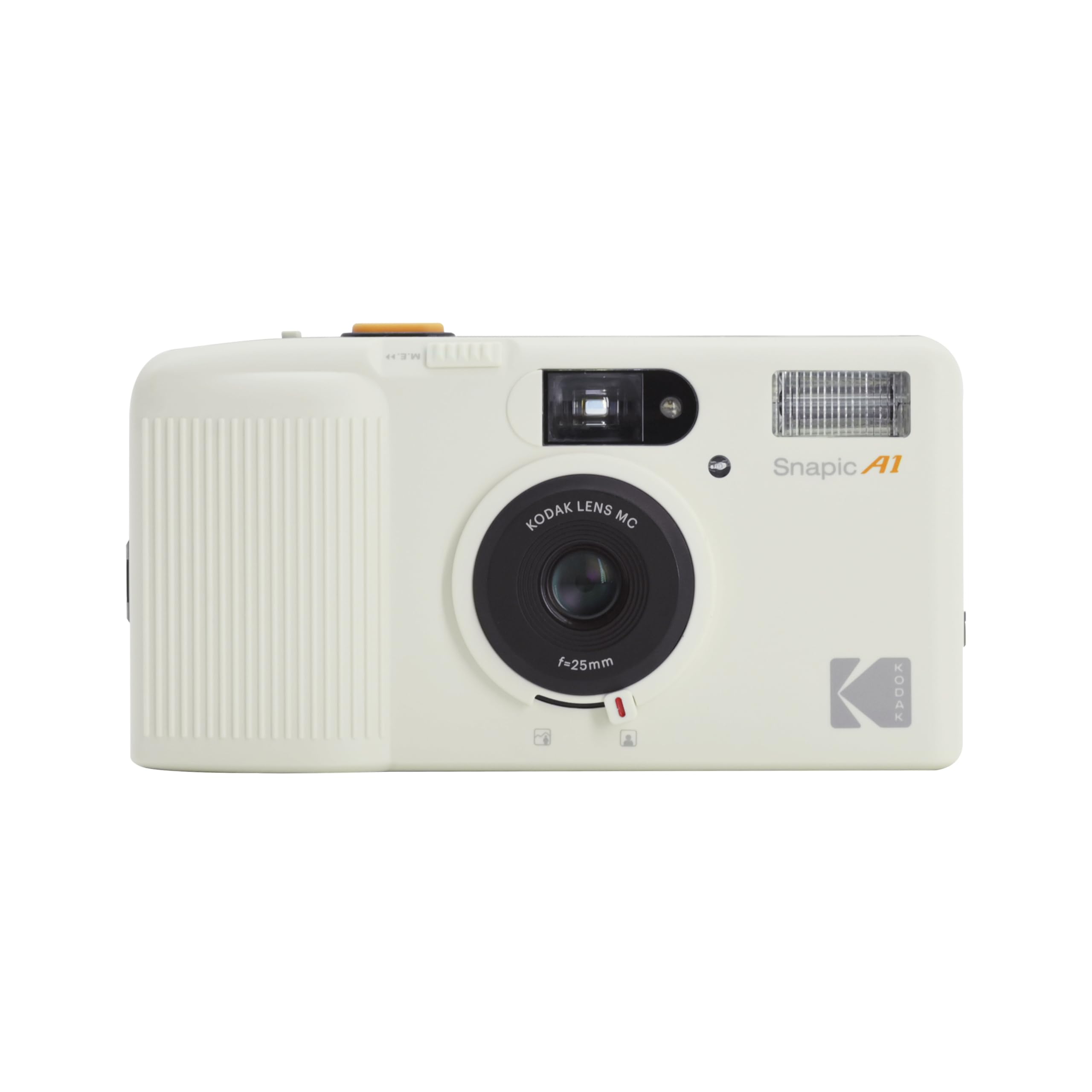
The KODAK Snapic A1 is the entry-level camera that actually delivers sharp photos, thanks to its 3-element glass lens. Most cameras at this price point use cheap plastic that makes everything look soft, but this one produces images with real detail — owners mention it is “worth extra over Ektar.” It is a compact full-frame camera, measuring just 4.65 x 2.44 x 1.38 inches and weighing 117 grams, making it far more pocketable than the much larger Pentax 17.
The 2-zone focus system lets you switch between two focuses — one for closer subjects and one for infinity — and the built-in auto flash includes red-eye reduction. The camera also has a multiple exposure feature, which lets you capture layered images by blending two different scenes on a single photo. The maximum shutter speed is 1/100 seconds. It runs on a single AAA battery (not included). One reviewer noted “anything past 5-6 feet is distance setting” on the zone focus, making it easy to just set and forget for most daytime shots.
Why It Works
- Glass lens produces sharper, more detailed images than plastic-lens competitors at a similar price.
- Compact and lightweight at 4.65 x 2.44 x 1.38 inches and 117 grams — truly pocketable compared to the Pentax 17.
- Auto film winding, auto rewind, and a shot counter screen make it genuinely point-and-shoot easy.
Where It Falls Short
- 2-Zone focus is less flexible than the Pentax 17’s 6-zone system, limiting creative control.
- Built-in flash works well but night shots can be underexposed, according to reviewers.
- Plastic build is durable but feels less premium than the Pentax’s magnesium alloy.
For First-Time Film Shooters: The Snapic A1 is the easiest recommendation for anyone who wants to try 35mm film without a big investment. It is simple, sharp, and small.
The Catch: If you want to shoot in low light without flash or need more focus control for artistic shots, you will outgrow this camera fast and want the Pentax 17.
2. Pentax 17 35mm Film Camera

The premium Pentax that stretches your film dollars with every click.
The Pentax 17 is not just a point and shoot; it is a half-frame camera, which means it takes two photos inside a single 35mm frame. This lets you capture up to 72 images per roll of 36 exposures — buyers report this is “perfect for experimenting and not worrying about burning through film.” It has a 25mm F3.5 lens (equivalent to a 37mm lens in the 35mm format), treated with HD coating, the same coating used on Pentax’s SLR lenses, to keep images sharp and clear even when you are shooting half-size pictures.
The focus system is zone-based, split into six zones, so you just pick the mark that matches your distance to the subject — closer for portraits, farther for landscapes. The body itself is retro-inspired with top and bottom covers made of solid, lightweight magnesium alloy. The manual film-winding lever recreates the feel of a traditional film camera. Unlike the KODAK Snapic A1 below, which is a compact 4.65 x 2.44 x 1.38 inches, the Pentax is noticeably larger at 7.68 x 5.39 x 4.09 inches, so this is not a pocket camera — it is a bag camera. Reviewers praise the build quality but note it is “twice as expensive as any other comparable point-and-shoot,” and the ISO range spans ISO 50 to 3200.
The Half-Frame Advantage: This is a serious investment, but you get two shots for the price of one frame of film, which adds up fast if you shoot often. The lens quality, using HD coating, is a clear step above the KODAK’s 3-element glass in terms of sharpness and character.
The Zone Focus Learning Curve: The six-zone focus is more flexible than the KODAK’s two-zone system, but it takes a few rolls to get comfortable estimating distances. If you want a truly automatic experience, this requires a little more thought.
Reach for this if: you are a hobbyist who loves film, wants to shoot more without spending a fortune on film and development, and appreciates a well-built, thoughtfully designed camera that gives you creative control.
Look elsewhere if: you need a pocket-sized, grab-and-go camera or your budget is under.
3. Halina Tegra AF290 35mm Film Camera

A vintage-styled autofocus camera, but reliability is a real gamble.
The Halina Tegra AF290 is a 35mm point and shoot with a 35mm wide angle lens, autofocus using contrast detection, and a built-in flash. It has an aperture range of F2.8-F5.6 and runs on 2x AA batteries. The camera promises a vintage/retro look and comes boxed with a manual and strap. On paper, the autofocus and wide-angle lens are appealing features at a lower price than the KODAK Snapic A1.
However, the real-world feedback is a stark warning. Buyer reviews report the camera shredding film, arriving with jammed dials, or being broken on arrival. Its 3.7 out of 5 rating from only 28 ratings makes it a higher-risk purchase than the KODAK or Pentax. Unlike the KODAK Snapic A1, which has a proven glass lens, the Halina’s plastic build and inconsistent quality make it a much less reliable choice.
The Low Price Trap: The Halina looks like a bargain with its autofocus and wide-angle lens, but the reviews suggest you have a real chance of getting a defective unit that wastes both your money and a roll of film. The KODAK Snapic A1 is a safer bet at a similar price point.
The Autofocus Appeal: If you do get a working unit, the contrast-detection autofocus and 28mm wide-angle are genuinely useful features not found on the KODAK or Pentax. But given the pattern of negative reviews, it is a leap of faith.
Who It Is For: A buyer who is comfortable with the risk of return for a vintage autofocus experience on a budget, and who may be buying it as a fun experiment rather than a primary camera.
skip it if: You want a reliable camera ready to shoot on day one. The consistent reports of jams and broken parts make this too risky for most people — spend a little more on the KODAK Snapic A1 for guaranteed reliability.
Understanding the Specs
Glass Lens vs. Plastic Lens
The lens element material is the single biggest factor in image quality. A 3-element glass lens, like the one on the KODAK Snapic A1, lets in more light and produces sharper, more detailed photos. A plastic lens, common on very cheap cameras, creates soft, hazy images that lack contrast. If the spec does not say “glass lens,” assume it is plastic.
Half-Frame vs. Full-Frame
A half-frame camera (like the Pentax 17) takes two photos inside a single 35mm frame, so a standard 36-exposure roll gives you 72 shots. This saves money on film and development but produces smaller negatives. A full-frame camera (like the KODAK Snapic A1) uses the entire frame for each shot, giving you bigger negatives for larger prints but half the shots per roll.
FAQ
Do 35mm point and shoot cameras need batteries?
What is zone focus on a 35mm camera?
Is a half-frame camera better than full-frame?
Can I use any 35mm film with these cameras?
What does a glass lens do for image quality?
Is the Halina Tegra AF290 reliable?
Which camera is easiest to use for a beginner?
How many shots do I get from a roll with the Pentax 17?
Final Thoughts: The Verdict
If you want one dependable pick, the best 35mm point and shoot camera is the Pentax 17 because it combines a sharp HD-coated lens with the cost-saving half-frame format and premium build quality that serious hobbyists appreciate. If you want a compact, affordable, and reliable entry point, grab the KODAK Snapic A1 — it has a real glass lens and a simple 2-zone focus system for under a hundred dollars. And for those on a tight budget who are willing to gamble on vintage style, the Halina Tegra AF290 offers autofocus but carries a much higher risk of receiving a defective unit.
How We Picked
We do not accept paid placement. Every pick is matched to a real buyer and a real use-case; we do not hands-on test units.
Sources & Methodology
Specifications: manufacturer listings and product documentation. Review insights: verified customer reviews, as of July 2026. Pricing: not shown on this page (it changes often); check the current price via the retailer link.
As an Amazon Associate, Gadgets Feed earns from qualifying purchases. This does not affect which products we feature.
Related Guides
Product prices and availability are accurate as of the date/time indicated and are subject to change. Any price and availability information displayed on Amazon at the time of purchase will apply to the purchase of this product. As an Amazon Associate I earn from qualifying purchases.
CERTAIN CONTENT THAT APPEARS ON THIS SITE COMES FROM AMAZON. THIS CONTENT IS PROVIDED "AS IS" AND IS SUBJECT TO CHANGE OR REMOVAL AT ANY TIME.
Amazon and the Amazon logo are trademarks of Amazon.com, Inc. or its affiliates.