
Our readers keep the lights on and my morning glass full of iced black tea. As an Amazon Associate, I earn from qualifying purchases.
Specs are compiled from manufacturer listings and verified buyer reviews and can change over time — please confirm the key details on the product page before buying.
A rubber roof that leaks is a nightmare you can fix only if the glue truly holds. The wrong adhesive peels away in the first heat wave, and you are back on the ladder with a fresh can of frustration. So the real question is simple: which one sticks to EPDM or TPO without letting go when the sun bakes or the rain pours?
I’m Min — the founder and writer behind Gadgets Feed. This guide is built by comparing the manufacturers’ published specifications and the patterns across verified customer reviews, so you get each pick’s real strengths and trade-offs instead of marketing spin.
Whether you are bonding a new membrane to plywood or sealing seams on an aging camper, the right adhesive for rubber roofing can mean the difference between a repair that holds for years and one that fails by next season.
Our Picks at a Glance
How To Choose The Best Adhesive For Rubber Roofing
Choosing the wrong adhesive can lead to costly roof failure. Focus on these three factors to pick the right adhesive.
Water-Based vs Solvent-Based
Most modern rubber roof adhesives are water-based acrylic. That means you clean up with water instead of harsh chemicals, and the low odor makes working inside a camper bearable. Solvent-based options (which are rare in this category) smell stronger and are harder to clean, but some old-school installers say they grab faster. Water-based adhesives offer easier cleanup and lower odor.
Compatibility: EPDM vs TPO
Not every adhesive works on every rubber membrane. EPDM (ethylene propylene diene monomer) and TPO (thermoplastic polyolefin) are different materials that need different chemistry to bond. Look at the fine print on the can — some adhesives like the Dicor 901BA-1 are made for EPDM and TPO only, while others also cover PVC and Hypalon. Always verify compatibility with your roof membrane.
Coverage and Application Method
A typical gallon covers about 160-200 square feet, but that depends on whether you brush, roll, or spray it on. Thicker applications use more glue. Lap sealants (the tubes you squeeze along seams) have a totally different job — they are self-leveling and meant for secondary sealing, not full-sheet bonding. Determine if you need a bonding adhesive or a lap sealant.
Quick Comparison
| Model | Best For | Type | Coverage | Weight | Amazon |
|---|---|---|---|---|---|
| WELLUCK 12PC Self Leveling RV Roof Sealant★ Best Overall | Seam & lap sealing | Butyl rubber / polyisobutylene | — (sealant tubes) | 10.01 fl oz per tube | $75.95$79.95PrimeAmazon |
| RecPro RV Rubber Roof Adhesive 8010Top Performer | Overall reliability | Water-based modified acrylic | 160-200 sq ft/gal | — | $73.95Amazon |
| Dicor Alpha 8010 Universal RV Roof Adhesive | Strong age-hardening bond | Water-based acrylic | 160-200 sq ft/gal | 9 lbs | $73.95Amazon |
| Dicor 901BA-1 Water-Based RV Roof System Bonding Adhesive | EPDM & TPO only | Water-based | ~160 sq ft/gal | 8.4 lbs | $77.99Amazon |
| Class A Customs Acrylic Water Based Adhesive | Large roof projects | Water-based acrylic | 160-200 sq ft/gal | 10 lbs | $45.95Amazon |
In‑Depth Reviews
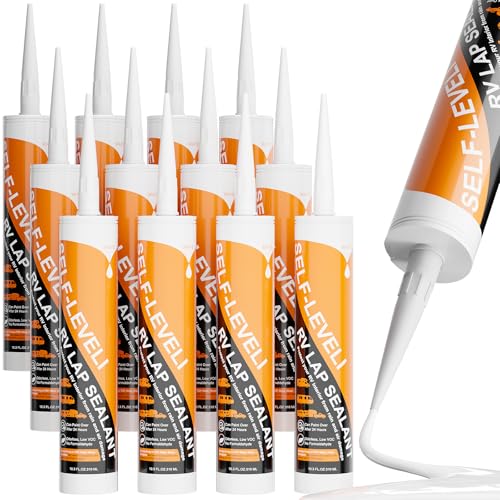
1. WELLUCK 12PC Self Leveling RV Roof Sealant
Our pick — over 4.5★ from 500+ verified ratings; the strongest balance of quality and price.
A liquid-like lap sealant that flows into cracks on its own — perfect for RV seam work, not full-sheet bonding.
This is fundamentally different from the gallon adhesives above. The WELLUCK sealant is a self-leveling formula made from a blend of butyl rubber and polyisobutylene, not a water-based acrylic. That means it stays flexible after curing and works in temperatures from 0 to 104°F. Each tube holds 10.01 fluid ounces, and you get 12 tubes per pack. You squeeze it along roof edges, vents, and seams, and it levels itself without needing to spread it with a tool.
Owners mention that it is noticeably “thinner than Dicor” (one reviewer’s words) but still works extremely well. The same buyer ended up buying 8 tubes total, suggesting the coverage is generous enough that a 12-pack goes further than you might expect. The sealant has a 10-minute working time before it starts to set, and it cures fully in 24 hours. It also produces low odor and low VOCs, which makes working inside an RV more comfortable.
Unlike the RecPro or Dicor Alpha adhesives that bond entire sheets of rubber, the WELLUCK sealant is strictly for secondary sealing — think of it as the insurance layer on top of your bonding adhesive.
What Shoppers Love
- Self-leveling means no messy finger-spreading needed.
- Compatible with EPDM, TPO, aluminum, steel, glass, wood, and PVC.
- Low odor and waterproof once cured.
A Few Buyer Notes
- Very runny — works great for seams but not for vertical gaps.
- One owner reported it sets up faster than expected when working in direct sun.
- A 12-pack goes fast on a large roof; 2 packs may be needed for full coverage.
Reach for it when: You need to reseal vents, roof edges, and lap joints on an RV, and you want a tube that flows into cracks on its own.
Do not buy it for: Bonding a full rubber membrane to plywood — that job needs a gallon of bonding adhesive, not lap sealant tubes.
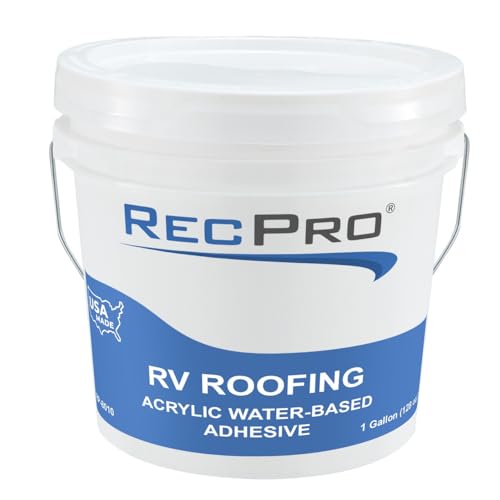
2. RecPro RV Rubber Roof Adhesive 8010
A reliable, water-based modified acrylic that is ready to roll the moment you open the pail.
You get a consistent bond across 160-200 square feet per gallon when you spread a single coat at 8-10 mil thickness. Its flexible chemistry accommodates membrane expansion and contraction, preventing early roof failure. Made in the USA, offering added quality assurance.
Buyers report that you should use a roller, not a brush, for even coverage. One reviewer noted the adhesive dries tacky in 5-10 minutes, which gives you just enough time to position the membrane before it grabs. They also reminded to remove bubbles quickly and keep the work area clean for the strongest hold.
Unlike the Class A Customs adhesive that sits at a heavier 10 pounds and has some mixed reviews on adhesion over time, the RecPro 8010 earns a 4.6 out of 5 from 276 ratings — a stronger buyer vote of confidence.
Smart application tips: One buyer recommended mixing the adhesive with a paint paddle after opening, and using gloves for easy cleanup. They also said the adhesive holds well under a roller brush.
Reach for this if: you want a straightforward water-based adhesive that applies cleanly with a roller and holds strong on EPDM roofing.
Look elsewhere if: you need a product that also bonds to metal, fiberglass, or membrane-to-membrane — this is designed for rubber-to-plywood bonding.
3. Dicor Alpha 8010 Universal RV Roof Adhesive

This adhesive strengthens with age, unlike most that weaken over time.
Dicor Alpha Systems claims this water-based acrylic grows more tenacious as it cures, which means the bond becomes tougher every season rather than brittle. At 9 pounds per gallon, it is a bit lighter than the 10-pound Class A Customs option, and you still get the same 160-200 square feet of coverage. The white pail holds a liquid that stays flexible enough to handle the roof membrane’s natural expansion and contraction.
One buyer shared a creative use: they adhered a rubber pool liner to old liner and plywood, noting the glue stayed fluid for over 3 minutes, which gave plenty of time for adjustment. They also said cleanup was easy with water. Another reviewer applied a thin layer to plywood and EPDM on a warm day and reported it dried quickly and stuck solidly to both wood and a metal drip edge — using just over a gallon for 160 square feet.
Compared to the Dicor 901BA-1, the Alpha 8010 is a universal formula that works on more material types, while the 901BA-1 is restricted to EPDM and TPO only.
The honest catch: The pail arrived with no instructions, so first-time users should watch a guide online before starting. Also, the glue dries fast on a warm day, so you need to work quickly once the adhesive hits the surface.
One-sentence verdict: The Dicor Alpha 8010 is the most forgiving, age-hardening glue that suits both full roof replacements and smaller repairs on EPDM and TPO.
Who should skip it: Anyone looking for a lap sealant tube for seam work — this is a bonding adhesive for full sheets, not caulking.
4. Dicor 901BA-1 Water-Based RV Roof System Bonding Adhesive

A water-based adhesive made exclusively for EPDM and TPO — it does not try to be everything, and that focus pays off.
At 8.4 pounds per gallon, this is the lightest pail among the bonding adhesives here, which matters if you are hauling it up a ladder. The coverage is about 160 square feet per gallon, right in line with the competition. Dicor specifically warns against using it on metal, fiberglass, or membrane-to-membrane applications, so you must keep it on the materials it was designed for.
One buyer who used it on a 5th wheel with EPDM roofing noted it needs two coats because the first gets absorbed into the wood. They also said the initial hold was weak but improved significantly over time — exactly the “grows with age” pattern the Alpha 8010 also follows. Another reviewer called it forgiving for a first EPDM project, allowing easy adjustment for creases in the membrane.
Compared to the Class A Customs glue, the Dicor 901BA-1 has the advantage of a very specific material compatibility list, so you know what you are getting. The Class A Customs product, on the other hand, tries to cover PVC and Hypalon too, which some buyers found made its adhesion less reliable on certain surfaces.
Workflow Tips from Buyers
- Thick consistency that is easy to stir — no lumps.
- Forgiving enough to reposition the membrane for a few minutes.
- Cleanup is water-only, no solvents needed.
Three Real Downsides
- Needs two coats on porous wood due to absorption.
- Initial grab is weak — the bond improves over days.
- The can often arrives dented with poor packaging.
Who it fits: Homeowners doing a full EPDM or TPO roof replacement who can wait a few days for the bond to fully strengthen.
Who should pass: Anyone trying to glue metal trim or fiberglass panels — this product is not designed for those materials.
5. Class A Customs Acrylic Water Based Adhesive Glue
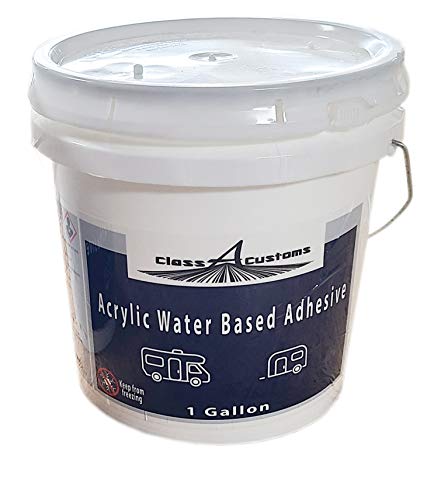
A gallon of clear acrylic glue that covers a big roof without emptying your wallet — but check the buyer feedback before you commit.
This adhesive from Class A Customs claims to be stronger than leading competitors and covers 160-200 square feet per gallon, just like the premium picks. At 10 pounds, it is the heaviest pail in the lineup, but the extra weight comes from the liquid volume, not the packaging. The glue dries clear and is waterproof once cured, with low VOCs (volatile organic compounds, the chemicals that create strong smells) so you can work in an enclosed camper without getting dizzy.
One buyer gave a positive report: “The adhesive application is easy and a year later, the bond is very strong.” That is exactly what you want from a budget-friendly option. But the reviews also tell a mixed story. Another buyer who purchased 5 gallons said the glue did not dry well and failed to adhere to the surfaces it claimed to work with. They returned 3 gallons and were charged a restocking fee, which frustrated them.
At 4.0 out of 5 with only 31 ratings, this product has a smaller buyer base and a wider variation in experiences than the Dicor or RecPro options.
Heads-up for buyers: One buyer mentioned that their roof product marketed as EPDM may actually have been a low-end TPO, which could explain adhesion issues. Verify your roof material matches the adhesive’s compatibility list before buying.
Best for: Large projects on a tight budget where you are willing to test the adhesive on a small patch first to confirm it works with your specific membrane.
skip it if: you cannot afford a restocking fee on returns, or you want the confidence of a brand with thousands of reviews.
Understanding the Specs
Water-Based vs Butyl Rubber
Most bonding adhesives in this category are water-based acrylic, which means you clean them up with just water, they emit low odor, and they remain flexible after curing. The WELLUCK sealant, on the other hand, is a blend of butyl rubber and polyisobutylene — a different chemistry that stays sticky and self-levels but is meant only for seam sealing, not full-sheet bonding. The choice between the two depends on whether you are bonding a roof membrane (water-based acrylic) or sealing seams (butyl-based lap sealant).
Coverage Rate: 160-200 sq ft/gal
You will see this number on nearly every gallon pail. It means one gallon spreads thin enough to cover a 10×16 foot area in a single coat. In practice, the actual coverage depends on how porous your substrate is. The Dicor 901BA-1 often needs two coats on plywood because the wood soaks up the first layer. If you are working on a large RV roof, budget for 1.5 to 2 gallons to account for absorption and waste.
FAQ
Can I use this adhesive on a wet rubber roof?
Will these adhesives work on TPO roofing?
How long does a water-based roof adhesive take to dry?
Can I paint over the adhesive after it dries?
Do I need a primer before applying the adhesive?
What is the difference between a bonding adhesive and a lap sealant?
How do I remove excess adhesive from my hands or tools?
Will the adhesive stick if my roof membrane has old sealant residue?
Final Thoughts: The Verdict
For most people, the adhesive for rubber roofing winner is the RecPro RV Rubber Roof Adhesive 8010 because it earns the highest buyer rating (4.6/5) and applies cleanly with a roller — no fuss, no guessing. If you want an adhesive that actually gets stronger as it ages, grab the Dicor Alpha 8010 Universal RV Roof Adhesive. And for sealing seams and vents after the big bond is done, the standout is the WELLUCK 12PC Self Leveling RV Roof Sealant.
How We Picked
We do not accept paid placement. Every pick is matched to a real buyer and a real use-case; we do not hands-on test units.
Sources & Methodology
Specifications: manufacturer listings and product documentation. Review insights: verified customer reviews, as of July 2026. Pricing: not shown on this page (it changes often); check the current price via the retailer link.
As an Amazon Associate, Gadgets Feed earns from qualifying purchases. This does not affect which products we feature.
Related Guides
Product prices and availability are accurate as of the date/time indicated and are subject to change. Any price and availability information displayed on Amazon at the time of purchase will apply to the purchase of this product. As an Amazon Associate I earn from qualifying purchases.
CERTAIN CONTENT THAT APPEARS ON THIS SITE COMES FROM AMAZON. THIS CONTENT IS PROVIDED "AS IS" AND IS SUBJECT TO CHANGE OR REMOVAL AT ANY TIME.
Amazon and the Amazon logo are trademarks of Amazon.com, Inc. or its affiliates.