
Our readers keep the lights on and my morning glass full of iced black tea. As an Amazon Associate, I earn from qualifying purchases.
Specs are compiled from manufacturer listings and verified buyer reviews and can change over time — please confirm the key details on the product page before buying.
Standing on a frozen lake for hours changes what you value in a boot. You stop caring about looks and start caring about whether your toes still have feeling after the third hour. The right pair keeps the cold out, the warmth in, and your footing secure on slick ice. This guide cuts through the noise to find the boots that actually deliver on those promises.
I’m Min — the founder and writer behind Gadgets Feed. This guide is built by comparing the manufacturers’ published specifications and the patterns across verified customer reviews, so you get each pick’s real strengths and trade-offs instead of marketing spin.
If you are walking out onto a windswept lake or settling into a permanent shanty for a long sit, the goal is the same: your feet stay warm, dry, and stable on the ice all day. Finding the right pair of boots for ice fishing depends on insulation, waterproofing, and traction.
Our Picks at a Glance

How To Choose The Best Boots For Ice Fishing
Ice fishing is not a walk in the park. You stand still on a frozen surface for hours, so your boots need to handle extreme cold, wet conditions, and slippery terrain. Here are the key specs to focus on.
Insulation: How Warm Is Warm Enough?
Insulation is rated in grams — the higher the number, the more heat your boot traps. For ice fishing, look for at least 400 grams of insulation. Boots with 1,200 or 1,600 grams are built for standing still in sub-zero temperatures for long stretches. The material matters too; Thinsulate Ultra insulation is a popular choice because it provides warmth without adding a lot of bulk.
Waterproofing: Keeping the Slush Out
Ice fishing means walking through slush, snow, and sometimes standing water. A waterproof membrane (often built into the boot’s construction) keeps moisture from seeping in. Look for boots that explicitly say “waterproof” — not just “water-resistant” — and note the construction type, like Rocky Waterproof or a neoprene and rubber build.
Traction: Staying Upright on Slick Ice
The outsole is the pattern on the bottom of the boot. For ice fishing, you need a multi-directional tread that can grip snow and provide some purchase on ice. Aggressive lugs help you stay stable when drilling holes or carrying gear. Some boots use a “Blizzard” or “Burly Pro” outsole specifically designed for this kind of terrain.
Quick Comparison
| Model | Best For | Insulation | Waterproof | Weight (Size 10 / Per Pair) | Amazon |
|---|---|---|---|---|---|
| Helly Hansen Garibaldi V3★ Best Overall | Versatile warmth & traction | 400g | Waterproof | 3.1 lbs | $102.59$170.00Amazon |
| Rocky Blizzard Stalker ProCold-Standing Champion | Extreme cold & standing still | 1,200 grams Thinsulate Ultra | Rocky Waterproof | 5.4 lbs | $134.99Amazon |
| LaCrosse Alphaburly Pro 18″ | Deep snow & quick on/off | 1,600 grams Thinsulate Ultra | Hand-laid rubber & neoprene | — | $167.99$209.95Amazon |
| Columbia Expeditionist Shield | Lightweight everyday winter wear | Thermal-reflective tech | Waterproof-breathable | — | $104.96$140.00Amazon |
| KEEN Revel 4 Polar | Wide feet & hiking snow | Thermal heat shield | Waterproof-breathable | — | $75.83$189.95Amazon |
In‑Depth Reviews
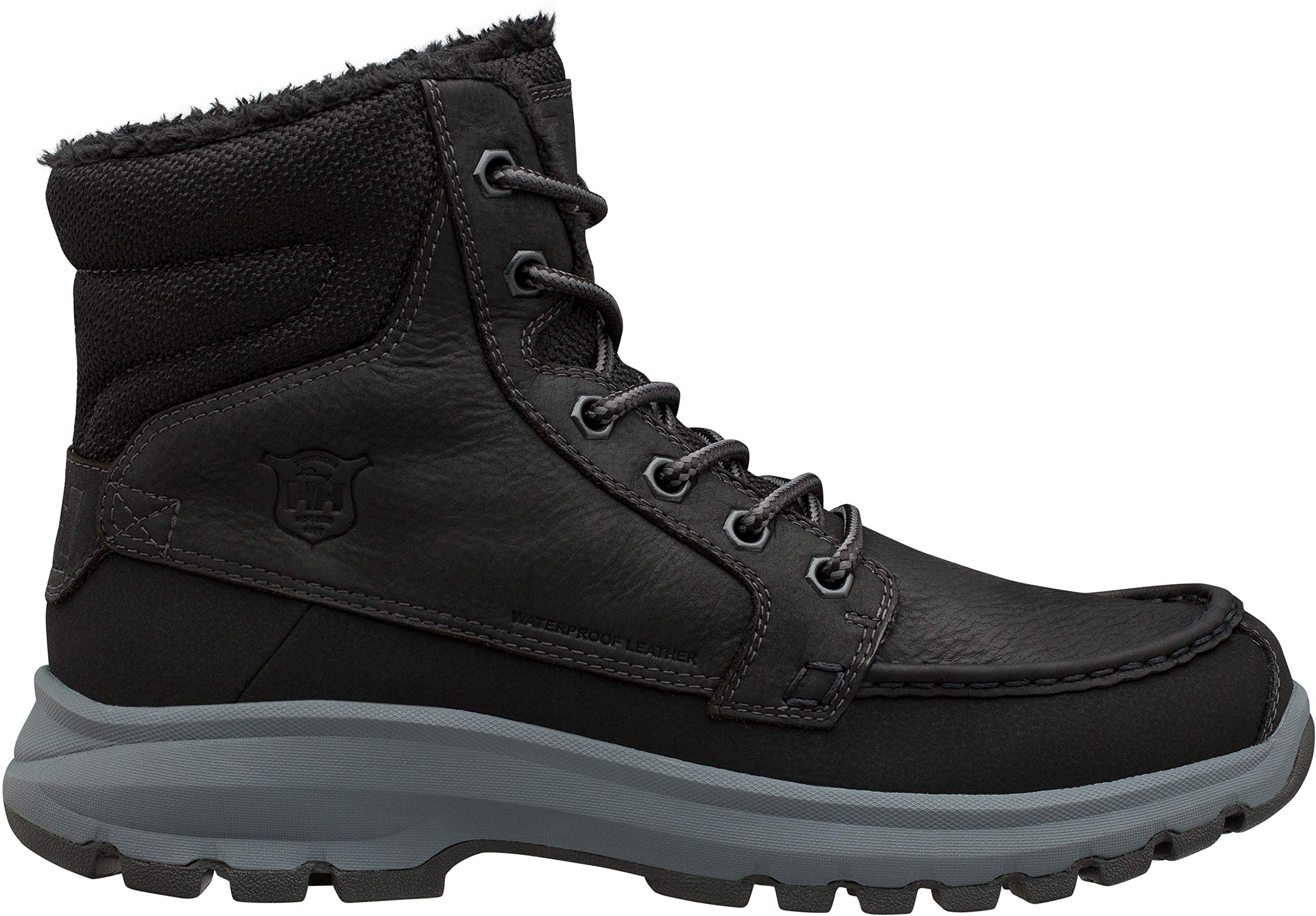
1. Helly Hansen Men’s Garibaldi V3 Waterproof Winter Boots – Durable, All Terrain, 400g Insulation, Max Grip for Better Traction
Our pick — over 4.5★ from 700+ verified ratings; the strongest balance of quality and price.
At just 3.1 pounds, this 400g insulated boot is far lighter than the extreme-cold specialists, yet still warm enough for most days on the ice.
Not every ice fishing trip happens in sub-zero blizzards. On milder days — in the 20s or teens — the Garibaldi V3 hits a balance. The Helly Hansen brand is built on Arctic-proven gear, and the “Max Grip” outsole handles snow and packed trails with confidence.
Customers note that the boots keep feet warm even when temperatures drop to -11°F, which shows that insulation grams are not the only factor — the boot’s overall construction and seal play a huge role. One owner in Northern Michigan called them “amazing” for terrible weather. The trade-off is that you cannot push these into the same extreme cold as the 1,200g Rocky Blizzard Stalker Pro for hours of sitting still. They are a great choice for the angler who is active on the ice, moving around, drilling, and tending tip-ups.
Reviews also praise the fit, noting they run true to size and don’t come unlaced on their own. The comfort level is high enough that some buyers wear them as their everyday winter boot, not just for fishing. For active anglers, this is the pick — its light weight and solid warmth beat the heavier competition. But stationary hours in -20°F will push the 400g insulation past its limit.
Why It Works
- Lightweight at 3.1 lbs — easy to walk in all day.
- Stays warm in temps as low as -11°F according to buyers.
- True-to-size fit with reliable lacing.
Where It Falls Short
- 400g insulation is not enough for hours of sitting in extreme sub-zero cold.
- Not as tall as the LaCrosse — slush can get in on deeper snow.
Best for active anglers: If you are drilling holes and moving around, the light weight and solid warmth make this a great option.
Not for long sits in deep freeze: Stationary hours in -20°F will push the 400g insulation past its limit.
2. Rocky Blizzard Stalker Pro Waterproof 1200G Insulated Boot
With 1,200 grams of Thinsulate Ultra, this is the boot for standing still when the wind is howling.
For ice fishing, heat retention is everything. This boot uses 1,200 grams of Thinsulate Ultra insulation (a thick, synthetic material that traps body heat without making you feel like you are waddling) along the whole boot. Buyers report using it for ice fishing in Colorado and confirm that it keeps feet warm and dry all day. The Rocky Waterproof construction (a factory-sealed barrier that keeps slush and standing water out) means you can wade through wet snow near the hole without your socks getting soaked.
The multi-directional Blizzard outsole (the tread pattern on the bottom of the boot) is built to grip snow and uneven terrain. Owners mention that while it holds well on light powder snow, grip on pure ice is decent but not miraculous — you still want to watch your step on glare ice. At 5.4 pounds per pair for a size 10, these are heavier than a standard hiking boot, but the warmth they trade for the weight is the whole point.
One thing to note from the reviews: these boots run about a half to a full size large, so if you plan to wear thick wool socks (which you should), that sizing quirk works in your favor. A couple of owners did mention that the bootlace hooks can break after a few wears, so handle the laces with care.
This is the best pick for sitting on a bucket for hours in single-digit temps. The 1,200 grams of insulation are your best defense. But if you cover miles while hiking to your spot, the weight and limited ankle flexibility of this boot will feel like a drag — you will be better off with the lighter Helly Hansen Garibaldi V3.
Why These Stand Out
- 1,200 grams of Thinsulate Ultra insulation delivers serious warmth for sub-zero sitting.
- Rocky Waterproof construction keeps feet dry in slushy conditions.
- Multi-directional Blizzard outsole gives stable footing on snow.
What To Watch For
- Bootlace hooks reported breaking after limited use.
- Runs large — plan for thick socks or size down.
- Glare ice grip is just okay.
Best for the deep freeze: If you sit on a bucket for hours in single-digit temps, this boot’s insulation is your best defense.
Pass if you move a lot: Hikers and active anglers who cover miles will find the weight and limited ankle flexibility a drag.
3. LaCrosse Alphaburly Pro 18″ Insulated Hunting Boots for Men Featuring Waterproof Rubber, 1600G Thinsulate, and EVA Footbed
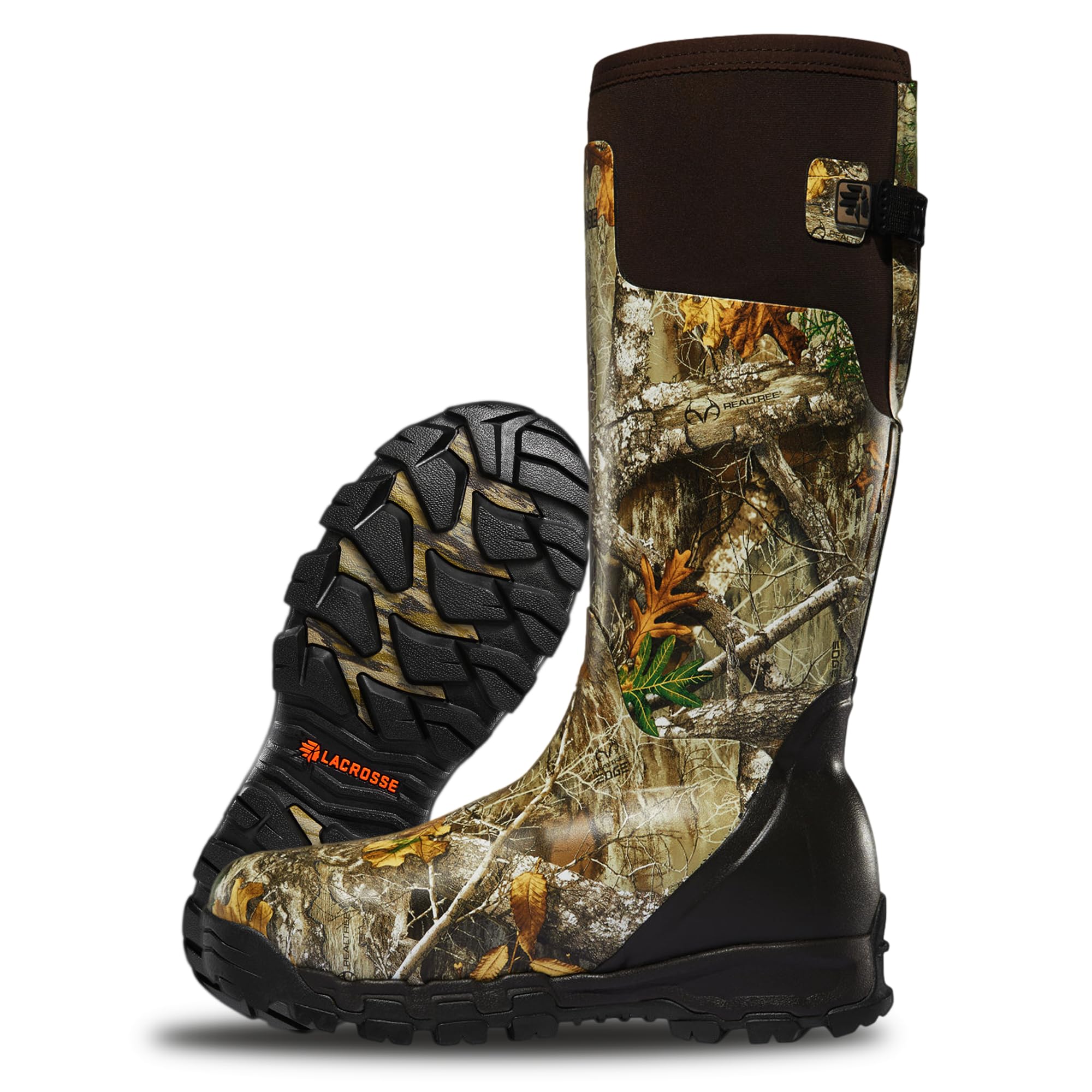
An 18-inch tall boot with 1,600 grams of Thinsulate insulation lets you wade through deep snow in total warmth.
If your ice fishing spot involves trudging through snowdrifts or you just hate cold slush hitting your calf, this boot’s 18-inch height is a standout. It is built from hand-laid, scent-free rubber and naturally insulating neoprene (a stretchy, rubber-like material that holds warmth), all combined to keep moisture and cold out completely.
The Burly Pro outsole (the boot’s tread design) features chamfered edges that shed mud and snow, so you are not carrying half a pound of ice on each foot. An adjustable rear gusset lets you tighten or loosen the boot around your calf, and the design slips on fast — buyers mention they can go from work boots to these in a matter of minutes. That matters when you are rushing to the shanty before the perch stop biting. The trade-off is that getting them on the first few times can be a little tight due to suction, but they loosen up after a few wears.
Once broken in, the convenience of slipping them on and off quickly becomes a major plus. This is the boot for northern winters where snow drifts are the norm — the tall shaft and massive 1,600-gram insulation beat the Rocky Blizzard Stalker Pro for deep-snow protection. But if you prefer a lighter, more nimble boot for short trips, the 18-inch height and thick insulation will feel like overkill.
What Makes It Special
- 18-inch height keeps deep snow and slush from getting in.
- 1,600 grams Thinsulate Ultra insulation is the highest on this list.
- Adjustable rear gusset gives a custom fit around the calf.
What To Keep In Mind
- Can be tricky to get on at first due to tight suction.
- Ankle movement feels different than standard boots until broken in.
Reach for this if you fight deep snow: The tall shaft and massive insulation make it the pick for northern winters where snow drifts are the norm.
Look elsewhere for less bulk: If you prefer a lighter, more nimble boot for short trips, the 18-inch height and thick insulation might feel like overkill.
4. Columbia Men’s Expeditionist Shield

Columbia’s most advanced thermal-reflective tech in a boot that feels more like a hiker than a heavy snow boot.
Columbia uses its own Omni-Heat thermal-reflective lining (a metallic layer that bounces your body heat back toward your skin) to keep you warm without piling on thick foam. The result is a boot that buyers describe as “lightweight” — more like a hiker than a Sorel — and comfortable enough to wear every day. One reviewer noted that they rarely even sweat in wool socks, which is a rare compliment for an insulated boot.
The waterproof-breathable build keeps moisture out while letting sweat vapor escape, a key feature if you are walking a mile across the ice before settling in to fish. Reviewers point out that although it is not fully submersible, it does a decent job of staying water-free in wet snow and dries relatively quickly if it gets wet. The cold-tune traction grips snow and ice better than a standard lug sole. One owner who uses the Expeditionist Shield as their daily driver in deep snow says the only downside is that the aggressive tread tracks snow and salt inside, so you will want to wipe your feet before stepping in the shanty.
One important sizing note: shoppers say the boots run about a half size small, so order up if you are between sizes. This boot is for all-day comfort — it works for the walk to the lake and keeps you warm on the ice without feeling clunky. skip it if you are wading through deep slush or standing in water; a fully waterproof boot like the Rocky or LaCrosse is a safer bet.
What It Does Well
- Thermal-reflective lining keeps feet warm without bulk.
- Lightweight feel — more like a hiking boot than a snow boot.
- Comfortable enough to wear all day, every day.
Consider This First
- Runs a half size small — size up for a good fit.
- Not fully waterproof in deep slush or standing water.
- Aggressive tread brings snow and salt indoors.
Choose this for all-day comfort: If you want a boot that works for the walk to the lake and then keeps you warm on the ice without feeling clunky.
Skip it for extreme wet: If you are wading through deep slush or standing in water, a fully waterproof boot like the Rocky or LaCrosse is a safer bet.
5. KEEN Revel 4 Mid Height Polar Insulated Waterproof
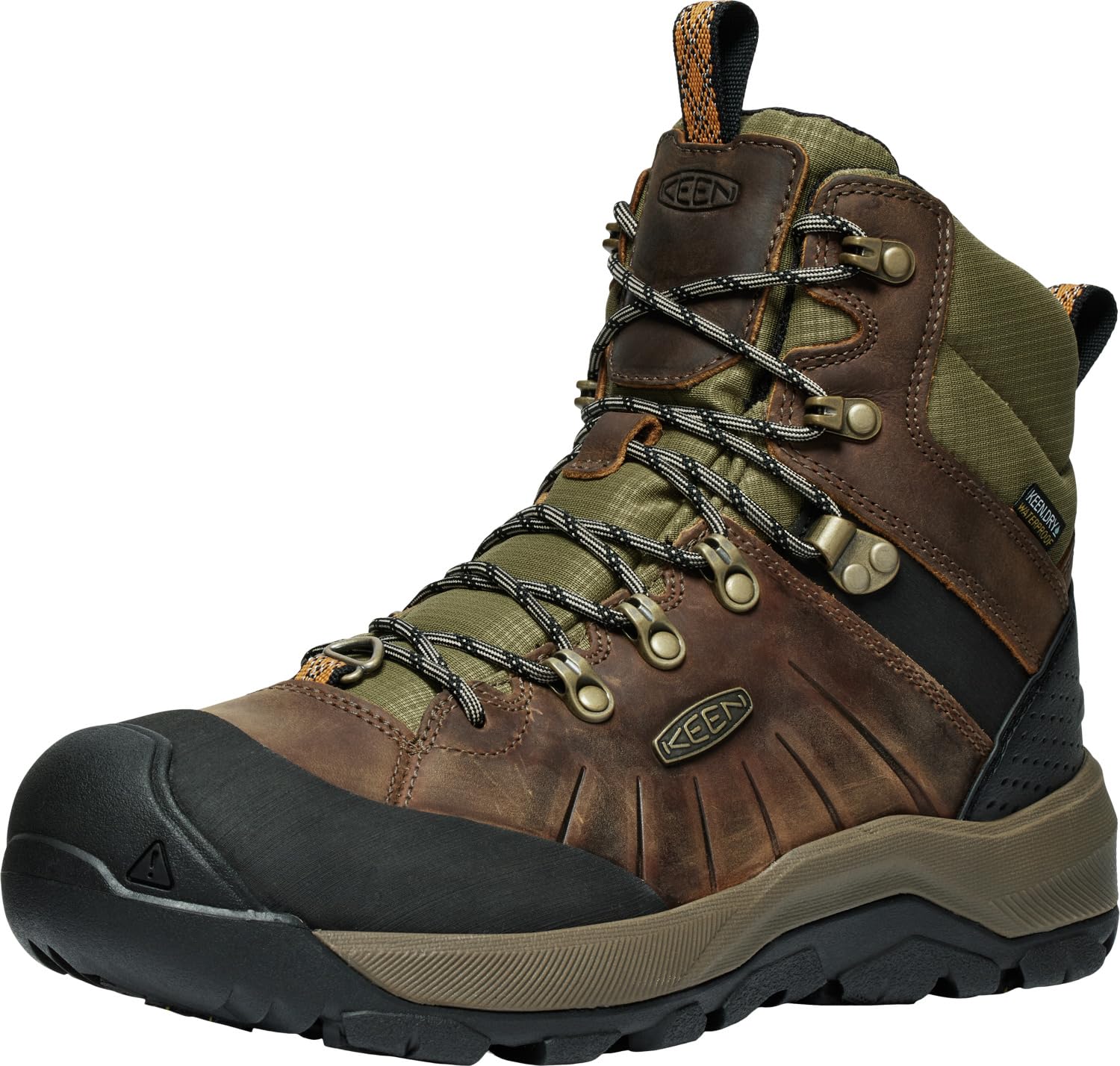
A snow boot built on KEEN’s naturally wider last that fits wide feet without squeezing your toes.
If you have EEE width feet or just dislike cramped toe boxes, the Revel 4 is likely your best match. KEEN is known for its wider-than-average fit, and this boot continues that tradition. One buyer specifically noted that after two boots from other brands were too narrow for their EEE feet, the KEEN Revel 4 fit comfortably. The thermal heat shield inside (a layer that captures warmth from your foot) works with the waterproof-breathable membrane to keep you warm and dry. Buyers report that these boots kept feet warm and dry even while climbing a fourteener in Colorado in March with wind chill at -5°F.
The speed-lace webbing system lets you cinch the boot up quickly, which is handy when you are in a hurry to get out of the wind. Traction is strong on snow and works well with snowshoes, and owners mention the boots are surprisingly light for how warm they are. The fit is true to size, though some reviewers suggest going up a size if you plan to wear very thick technical liners. One long-term owner rated the durability highly after a full year of winter use, saying they showed minimal wear.
This boot is a mid-height design, so it does not offer the deep-snow protection of the 18-inch LaCrosse. For slush deeper than a few inches, you will want gaiters or a taller boot. This is the pick for wide-footed anglers — if standard boots squash your toes, KEEN’s wider fit is the solution without sacrificing warmth.
Why It Is A Great Pick
- Wider toe box fits EEE width feet comfortably.
- Thermal heat shield and waterproof build handle sub-zero temps.
- Speed-lace system for quick on and off.
What To Think About
- Mid-height design lets deep slush get in.
- Some users prefer sizing up for thick sock room.
Ideal for wide-footed anglers: If standard boots squash your toes, KEEN’s wider fit is the solution without sacrificing warmth.
Not for deep snow wading: The mid cut is better for packed trails and shallow slush than for postholing through drifts.
Understanding the Specs
Insulation (Grams)
This number tells you how much material the boot uses to trap heat. More grams usually mean more warmth, but also more weight and stiffness. For standing still on ice, 1,200g or higher gives you a big safety margin. If you stay active while fishing, a 400g boot can work well and is much more flexible for walking.
Waterproof Construction
A waterproof boot uses a sealed membrane (like Rocky Waterproof or a rubber neoprene shell) to stop water from soaking through the material. This is non-negotiable for ice fishing because melting snow and slush will soak a non-waterproof boot within minutes. Look for the word “waterproof” — not “water-resistant.”
Outsole Traction
The tread pattern on the bottom of the boot is called the outsole. For ice fishing, look for multi-directional lugs that bite into snow and provide some grip on ice. Some boots have specific outsole names like “Blizzard” or “Burly Pro” that are designed for this kind of terrain. No boot is perfect on glare ice, but a good outsole makes a big difference.
Boot Height
Taller boots (like the 18-inch LaCrosse) keep snow and slush from spilling over the top. Shorter mid-height boots (like the KEEN Revel 4) are lighter and more flexible but leave your lower calf exposed. Your choice depends on how deep the snow is where you fish.
FAQ
How many grams of insulation do I need for ice fishing?
Can I use hunting boots for ice fishing?
Should I buy boots a size larger for thick socks?
What is the difference between Thinsulate and regular insulation?
How do I keep my feet warm when standing still on ice?
Are rubber boots good for ice fishing?
What is the best outsole for ice fishing?
Can I wear insulated boots in warmer weather?
How long do insulated ice fishing boots last?
Final Thoughts: The Verdict
For most ice fishermen, the winning boots for ice fishing are the Rocky Blizzard Stalker Pro — its 1,200-gram Thinsulate Ultra insulation and Rocky Waterproof construction deliver the extreme-cold performance you need without going overboard on height. If you fish in deep snow and want total coverage, grab the LaCrosse Alphaburly Pro 18″. And for active anglers who value light weight and all-day comfort on milder days, the Helly Hansen Garibaldi V3 is the smart choice.
How We Picked
We do not accept paid placement. Every pick is matched to a real buyer and a real use-case; we do not hands-on test units.
Sources & Methodology
Specifications: manufacturer listings and product documentation. Review insights: verified customer reviews, as of July 2026. Pricing: not shown on this page (it changes often); check the current price via the retailer link.
As an Amazon Associate, Gadgets Feed earns from qualifying purchases. This does not affect which products we feature.
Related Guides
Product prices and availability are accurate as of the date/time indicated and are subject to change. Any price and availability information displayed on Amazon at the time of purchase will apply to the purchase of this product. As an Amazon Associate I earn from qualifying purchases.
CERTAIN CONTENT THAT APPEARS ON THIS SITE COMES FROM AMAZON. THIS CONTENT IS PROVIDED "AS IS" AND IS SUBJECT TO CHANGE OR REMOVAL AT ANY TIME.
Amazon and the Amazon logo are trademarks of Amazon.com, Inc. or its affiliates.