
Our readers keep the lights on and my morning glass full of iced black tea. As an Amazon Associate, I earn from qualifying purchases.
Specs are compiled from manufacturer listings and verified buyer reviews and can change over time — please confirm the key details on the product page before buying.
You want a speaker that sounds good, but you do not want to waste cash on a box that buzzes or dies after an hour. The trick is knowing which specs actually matter—battery life, waterproofing (how well it survives water), and power (watts) for your space—so you stop wasting money on junk.
I’m Min — the founder and writer behind Gadgets Feed. This guide is built by comparing the manufacturers’ published specifications and the patterns across verified customer reviews, so you get each pick’s real strengths and trade-offs instead of marketing spin.
This breakdown of the best cheap speakers covers everything from a portable blaster for the beach to a pair of bookshelves for your turntable or desktop monitors for gaming.
Our Picks at a Glance

How To Choose The Best Cheap Speakers
Before you click “buy,” focus on three things: where you will use the speaker, how long you need it to run, and what you are connecting it to. A portable Bluetooth speaker needs different specs than a pair of bookshelf speakers for your desk.
Portable vs. Bookshelf — Pick Your Format First
Portable speakers live in your bag and rely on a built-in battery. They are built for the outdoors, the shower, or the park. Bookshelf speakers (powered or passive) sit on a shelf or desk, plug into a wall outlet, and usually offer better sound quality and more inputs like RCA (a standard analog audio plug) or optical (a digital audio cable). Decide your primary use case — moving around or staying put — and the rest of the specs fall into place.
Waterproofing and Durability
If you plan to take a speaker outside, look for an IPX7 or IPX8 rating. IPX7 means it can survive being submerged in up to 1 meter of water for 30 minutes. IPX8 goes deeper or longer. For a shower speaker or poolside use, IPX7 is the bare minimum. For the desk or living room, you do not need any waterproofing at all.
Battery Life and Bluetooth Version
Bluetooth speakers live and die by their battery. Look for at least 12 hours of playtime for an all-day trip. A 5,200mAh battery (a measure of energy capacity; higher means longer playtime), like in the top portable picks, will keep the music going from morning to night. Bluetooth 5.0 or newer gives you a more stable connection and longer range, typically up to 66 feet line-of-sight (the distance between the speaker and your phone with no walls in between).
Quick Comparison
| Model | Best For | Type | Battery Life | Waterproof | Amazon |
|---|---|---|---|---|---|
| Anker Soundcore 2★ Best Overall | Best all-day battery | Portable Bluetooth | 24 hours | IPX7 | $33.99$45.99Amazon |
| JBL Flip 5Also Great | Premium portable sound | Portable Bluetooth | 12 hours | IPX7 | $79.95$99.95Amazon |
| Monster S620 | Loud outdoor parties | Portable Bluetooth | ~12-15 hours | IPX8 | $39.99$69.99Ends inAmazon |
| OHAYO 60W | Desktop PC audio | Powered Bookshelf | Wired | No | $69.99Amazon |
| Ortizan C7 | Home studio monitoring | Powered Bookshelf | Wired | No | $79.99$109.99Amazon |
| Electrohome Huntley | Turntable or TV setup | Powered Bookshelf | Wired | No | $54.99Amazon |
| RIOWOIS DS6701NP | Best budget bookshelf | Powered Bookshelf | Wired | No | $49.99Amazon |
In‑Depth Reviews
1. Anker Soundcore 2
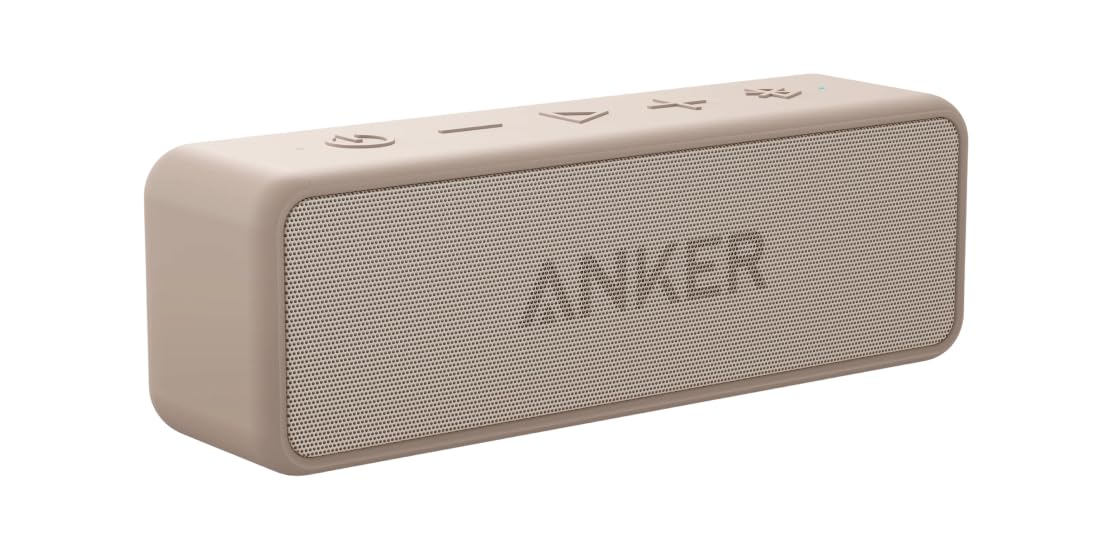
A 5,200mAh battery keeps this little box playing longer than you will stay awake.
This is the portable speaker for weekend campers or lake-day loungers who do not want to carry a charger. The Anker Soundcore 2 packs a 5,200mAh Li-ion (lithium-ion) battery that delivers a full 24 hours of playtime — at 24 hours versus the JBL Flip 5’s 12 hours. Despite its budget price, it uses a 12W amplifier with BassUp technology (a feature designed to boost lower frequencies) and a patented spiral bass port to push low-end frequencies, so hip-hop and EDM actually hit. Owners mention: “It gets really loud, but sound remains clear.”
It has an IPX7 waterproof rating that protects against splashes, waves, and rain, though it may not float (one reviewer was unsure). The Bluetooth 5 connection reaches 66 feet — at 66 feet versus the Monster’s 33 feet. The downside is the square design, which can look a bit utilitarian, and it lacks a battery level indicator, so you might be surprised when it dies.
The Soundcore 2 offers incredible value. It does not get as loud as the Monster S620, and its sound is not as refined as the JBL Flip 5, but for sheer stamina and bass for the size, it beats both on battery life and range.
class-leading battery endurance: 24 hours of playback from a 5,200mAh cell means you can leave for a weekend trip without the charger — no other portable speaker here matches that.
The honest catch: The 12W output is not as loud as the Monster’s 60W, and the sound lacks the high-end clarity of the JBL Flip 5.
Grab it for long trips: If your priority is a speaker that lasts three full days of casual use and you value battery life above all else, the Anker is your match.
Pass if you need max volume: For a backyard party with 10+ people, you will want the louder Monster or JBL instead.
2. JBL Flip 5
The brand-name portable that proves buy-once-cry-once is real, even on a budget.
This speaker keeps showing up in recommendations for a reason: clear, room-filling sound from a compact body. The JBL Flip 5 pumps out premium JBL sound quality that fills a room despite its small size — it is compact but loud and clear, with great bass response that does not distort at high volume. You get 12 hours of playtime from its 3000mAh battery, which is enough for a full day trip or a long backyard hangout.
It carries an IPX7 waterproof rating, so a drop in the pool or a sudden downpour is not an issue — one reviewer noted it survived a river drop without any problems. You can also pair multiple speakers using Party Boost (a JBL feature that links multiple compatible speakers) for a bigger soundstage. The only catch is the 12-hour charge time, which is slow compared to newer rivals, and a charging cable is included but no case for travel.
The trade-off is straightforward: you get better brand reliability and sound tuning than most budget competitors, but you pay a little more for it. The Anker Soundcore 2 below holds a 24-hour battery life, compared to the JBL’s 12 hours, but the JBL is more refined in clarity and bass punch.
top-tier sound: The Flip 5 delivers the best overall audio quality in this portable list, with deep bass and clear highs that rival speakers costing twice as much.
One real limit: The 12-hour battery is less than the Anker’s 24 hours, so long-weekend campers will need to recharge midway.
Reach for this if you want the most reliable, great-sounding portable speaker at a reasonable price and you prioritize audio clarity over absolute battery endurance.
Look elsewhere if you need a speaker that runs for two full days without a charge, or you want the loudest possible output for a big outdoor party.
3. Monster Bluetooth Speaker S620
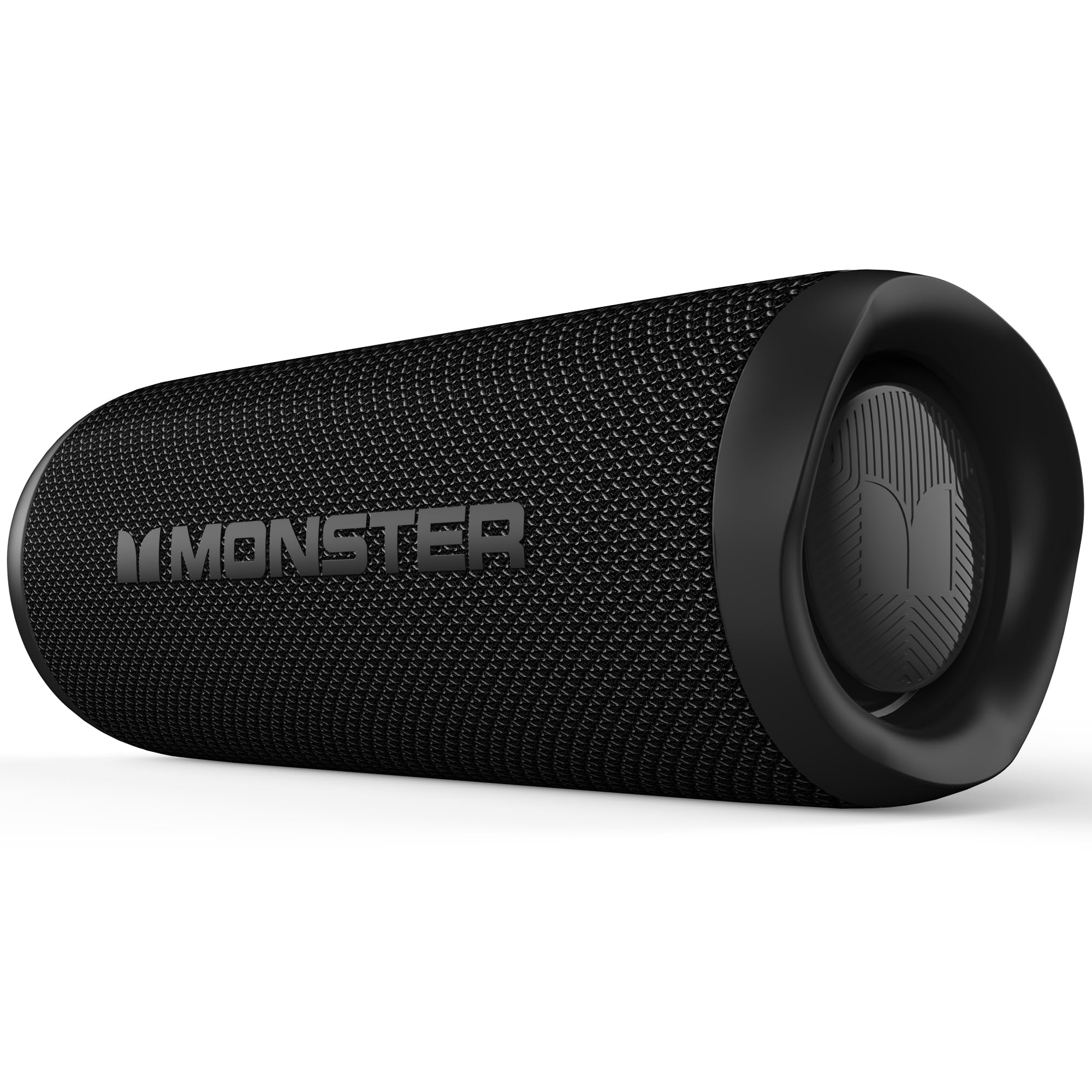
The party-starter that brings 60 watts of portable thunder while staying affordable.
If you want your music loud enough for a beach party or a poolside barbecue, this is the speaker to grab. The Monster S620 delivers 60W of 3D HD stereo sound and can pair two together for 120 watts of true wireless stereo — this raw output puts it well ahead of most competitors. It uses the latest Bluetooth 5.4, which gives you faster pairing and a stable signal, though the wireless range is listed at 33 feet (buyers report getting 35-45 feet line-of-sight and 20-25 feet through walls, a shorter reach than the Anker’s 66 feet).
It is built to survive serious weather with an IPX8 waterproof rating — one buyer mentioned it survived heavy rain without any issues. A built-in microphone works for hands-free calls, and the TF card slot (a small memory card slot for playing stored music) gives you a wired playback option. The trade-off is the bass, which holds up well up to mid-volume but diminishes at maximum loudness, and a few users noted the stand feels slightly unstable. At roughly the size of a 16oz can, it is portable enough for a backpack but not pocket-size.
The Monster pushes louder than the JBL Flip 5 and beats it on waterproofing (IPX8 vs IPX7), but it loses on Bluetooth range (33 feet vs 66 feet). Pick this when volume is your priority.
What stands out
- 60W output is the loudest in this portable lineup
- IPX8 waterproofing handles submersion better than any competitor here
- Dual-pairing delivers true 120W stereo
The compromises
- Bluetooth range is 33 feet — compared to the Anker’s 66 feet
- Bass drops off at very high volume
- Stand base feels slightly unstable according to reviewers
Best for loud outdoor gatherings: If you are hosting a party and need a speaker that fills a large space with sound, the Monster’s 60W output and IPX8 build make it the top choice among these cheap speakers.
Skip it for quiet listening: If you mostly listen at home or in a small room, the bass detail gets lost at low volumes, and the shorter Bluetooth range may frustrate you.
4. OHAYO 60W Computer Speakers

Bookshelf-sized audio that upgrades your gaming or music setup with real tweeters and serious output.
The OHAYO 60W speakers step up from basic PC speakers by pairing a 0.75-inch carbon fiber silk dome tweeter (a small speaker that handles high-pitched sounds) with a 3-inch carbon fiber full-range driver (a speaker that covers bass and midrange) in each speaker, delivering 30Wx2 of distortion-free sound. A rear bass port amplifies low-end depth, and the integrated independent sound card keeps audio playback smooth. Customers note the audible frequency range goes from 20Hz to 22.8kHz (the range of sound frequencies the speakers can produce; lower numbers mean deeper bass) — solid for music production and gaming.
Connectivity is versatile: Bluetooth 5.3 (the latest standard for wireless connections), RCA (standard analog plugs), AUX (a 3.5mm headphone jack), and USB inputs mean you can hook it to a laptop, smartphone, turntable, or TV. The front volume knob is convenient, and separate treble and bass knobs give you real tone control. It is built with a premium MDF (medium-density fiberboard) wooden enclosure that reduces box resonance (the unwanted vibration of the cabinet), and reviewers point out it is very energy efficient. The trade-off is the lack of deep sub-bass due to the 3-inch drivers — it will not shake the room for action movies without a separate subwoofer (an extra speaker dedicated to very low bass).
Compared to the Ortizan C7 below, the OHAYO offers more convenience with tone knobs and Bluetooth, but the Ortizan has a flatter response curve (meaning it reproduces sound more neutrally, without boosting bass or treble) better suited for critical monitoring.
Why it stands out
- Clear, room-filling sound with independent tweeters and woofers
- Front-panel treble and bass controls for instant tuning
- Multiple input options including Bluetooth 5.3 and USB
Know before you buy
- Lacks deep sub-bass for cinematic rumble
- 3.5mm input can sound hollow compared to USB or Bluetooth, per reviewers
- No subwoofer output for expanding later
Ideal for the desktop all-rounder: If you game, stream music, and watch videos at your desk and want better sound than PC speakers, the OHAYO delivers great clarity and control.
Not for deep bass lovers: If you want floor-shaking lows for movies or heavy rock, pair these with a subwoofer or choose a larger bookshelf setup.
5. Ortizan C7 Dual-Mode Studio Monitors

Near-field monitors that give you a flat, honest sound for music production without the pro price tag.
The Ortizan C7 is built for creators who need accurate audio monitoring (listening to a recording with minimal colorization to judge its true quality). Each speaker houses a 3.5-inch carbon fiber mid-bass driver and a 0.75-inch silk dome tweeter, paired with an electronic 2-way crossover (a circuit that splits the audio signal between the tweeter and the woofer for cleaner sound) that delivers a layered, precise sound. The built-in 24-bit DAC (digital-to-analog converter, which converts digital audio files into analog sound waves) captures digital audio directly via USB, minimizing signal loss — a key feature for producers. The result is a near-flat frequency response, with bass reaching down to about 45Hz (the lowest bass frequency it can produce), treble and mids that are precise and neutral, and minimal distortion. One reviewer described it as “the best bridge between cheap and pro.”
Input options are generous: Bluetooth 5.3, USB-C (for the DAC), RCA, AUX, and even TRS balanced inputs (a three-pin professional audio connector that rejects noise), which is rare at this price. A Monitor/Music mode switch lets you toggle between flat response and enhanced sound. The trade-offs are real: the bass is weak compared to consumer bookshelf speakers, there is a mild idle hiss (a low background noise when no music is playing), and the volume dial has noticeable jumps (it goes up or down in uneven steps). There is no remote or grille cover, and the Bluetooth sound effects can feel cheap.
Against the OHAYO, the Ortizan takes the lead for accuracy thanks to the 24-bit DAC and TRS inputs, while the OHAYO wins on convenience with tone knobs and a more consumer-friendly sound profile.
Budget monitoring champion: The near-flat response, 24-bit DAC, and TRS inputs make the C7 the closest you can get to professional studio monitors without spending hundreds.
The real-world catch: Weak low-end bass, a perceptible idle hiss, and a jumpy volume knob are the trade-offs for that accuracy — fine for near-field mixing (mixing music at a close listening distance), less fun for casual listening.
Choose this for content creation: If you mix music, edit podcasts, or produce audio and need honest sound without coloration, the Ortizan C7 is the best value in this list.
Skip if you just want fun listening: For casual music or movies, the weak bass and hiss will be more noticeable than the flat response — go with the OHAYO instead.
6. Electrohome Huntley EB10

Handcrafted wood cabinets bring warm, natural sound to your turntable setup without the amp hassle.
The Electrohome Huntley is a powered bookshelf speaker pair that slots perfectly into a vinyl or TV setup. It uses 3-inch drivers inside handcrafted acoustically tuned wood cabinets with a rear ported design to enhance bass response. The sound is described as warm and natural — well-balanced without being harsh. Reviewers consistently praise how easy these are to set up and how good they look on a console.
Connectivity covers the essentials: RCA, Aux-In, and Bluetooth 5. The Bluetooth range is listed at 60 meters (about 197 feet), which is far beyond any portable speaker here — you can leave your phone in the house and walk across the yard. You get a 6ft power cord, 8ft speaker wire, and lifetime customer support. The catch is that bass is noticeably lacking compared to larger bookshelf speakers, and one owner reported you might need a separate equalizer (a device that adjusts the balance of frequencies) to fine-tune the sound to your liking. Some also mention cable management is tricky but worth the effort for the clean look.
Compared to the RIOWOIS below, the Electrohome sounds warmer and more natural, but the RIOWOIS offers more inputs (optical, TV-ARC) for connecting directly to a TV. Choose the Electrohome for a turntable; choose the RIOWOIS for a small home theater.
Why it works
- Warm, natural sound profile perfect for vinyl playback
- High-quality wood cabinets reduce resonance and look great
- Excellent Bluetooth range – 60 meters for whole-house audio
Where it falls short
- Bass response is lacking for bass-heavy genres
- No optical input or HDMI ARC for TV connection
- Needs an external pre-amp for most turntables
Great for turntable enthusiasts: If you want affordable powered speakers that look right next to your record player and deliver a warm, non-fatiguing sound, the Electrohome Huntley is a perfect match.
Not for home theater use: Without optical or HDMI inputs, and with limited bass, these are not the best choice for connecting to a TV.
7. RIOWOIS DS6701NP Powered Bookshelf Speakers

The most input-rich budget bookshelf speaker, letting you plug in a turntable, TV, or computer with zero extra gear.
The RIOWOIS DS6701NP gives you options that are rare in the budget tier: AUX, optical, TV-ARC (so you can use your TV remote to control volume), and Bluetooth 5.3. This makes it the most flexible cheap speaker for a small living room setup where you want to connect a turntable, a TV, and your phone without swapping cables. It uses a 2.75-inch woofer and puts out 40W of powered sound — no receiver or amplifier needed.
Shoppers say that the sound quality is excellent for the price and that it mates perfectly with a subwoofer via a 60Hz crossover (a filter that sends bass below 60Hz to the subwoofer while the speakers handle the rest). The midrange clarity is called out as exceptional, especially for vocals. The reinforced MDF cabinet minimizes crackling, and the classic wood grain design looks mature. The remote lets you switch between 3 sound effects and control volume from across the room. The trade-offs: max volume is limited (it will not fill a large room), and there is no audible distortion only if you keep it at moderate levels. Also, it is not compatible with receivers or amplifiers, and the optical cable is not included. If your turntable only has a Bluetooth receiver (input), not a transmitter (output), it will not work wirelessly with these speakers — check your specs before buying.
The RIOWOIS beats the Electrohome Huntley on connectivity (optical/ARC vs. none) and has a slightly better price, but the Electrohome sounds warmer for vinyl listening. Choose the RIOWOIS if you need to hook up a TV; choose the Electrohome for pure turntable listening.
Connectivity champion: TV-ARC, optical, AUX, and Bluetooth 5.3 in one set means this is the only speaker you need for a small home entertainment system.
The honest limit: The 40W output and 2.75-inch driver can only go so loud — moderate volumes for a small room are ideal, but a large party will overwhelm these.
Best for the all-in-one small room: If you want one set of speakers that handles your turntable, TV, and phone without a receiver, the RIOWOIS is the most versatile option in this list.
Pass if you need room-filling volume: For a large living room or frequent parties, these will run out of headroom — look at the OHAYO or Monster instead.
Understanding the Specs
Wattage (Power Output)
Measured in watts (W), this tells you how loud a speaker can get. More watts generally mean more volume, but it is not a direct measure of sound quality. A 60W speaker like the Monster can fill a large backyard, while a 12W speaker like the Anker Soundcore 2 is perfect for a small room or campsite. For desktop use, 20-30W per channel is plenty; for outdoor parties, aim for 40W or more.
IPX Waterproof Ratings
An IPX rating means the speaker is protected against water. IPX7 means it can be submerged in 1 meter of water for up to 30 minutes — good for poolside or rain. IPX8 goes deeper or for longer submersion (the Monster handles this). There is no universal standard for IPX8 duration, so check the manufacturer’s specifics. For a speaker that never leaves your desk, you do not need any IPX rating.
Battery Capacity (mAh) and Playtime
Battery life is listed in hours at moderate volume. The real-world figure changes based on how loud you play. A 5,200mAh battery (as in the Anker Soundcore 2) can deliver 24 hours at 50% volume. The JBL Flip 5’s 3,000mAh battery gives about 12 hours. For a full day out, aim for at least 12 hours of claimed playtime. Note that “playtime” is typically tested at 50% volume — cranking it to max will drain the battery much faster.
Bluetooth Version and Range
Bluetooth 5.0 and newer (5.3, 5.4) offer better range, stability, and power efficiency than older versions. Range is usually listed in feet (e.g., 33 feet or 66 feet) and is measured in open air. Through walls, expect that range to drop by half. Bluetooth 5.4 is the latest and gives the fastest pairing, but for most buyers, Bluetooth 5.0 is already very reliable for listening around the house.
FAQ
Can I use a cheap Bluetooth speaker for my TV?
Are cheap speakers worth it for music production?
How loud is 60W from a portable speaker?
Do I need an amplifier for powered bookshelf speakers?
What is the difference between bookshelf and portable speakers?
Can I pair two different Bluetooth speakers together?
How long do budget Bluetooth speaker batteries last in real use?
Will my turntable work with these Bluetooth speakers?
Are cheap speakers durable for outdoor use?
Do I need a subwoofer with cheap bookshelf speakers?
Final Thoughts: The Verdict
Across the board, the best cheap speakers are the Anker Soundcore 2 because it combines a 24-hour battery, IPX7 waterproofing, and solid bass at a price that undercuts almost everything else. If you want the loudest outdoor portable, grab the Monster S620 for its 60W output and IPX8 build. And for desktop or home theater use, the Ortizan C7 delivers studio-grade monitoring or the RIOWOIS DS6701NP handles all your TV and turntable connections.
How We Picked
We do not accept paid placement. Every pick is matched to a real buyer and a real use-case; we do not hands-on test units.
Sources & Methodology
Specifications: manufacturer listings and product documentation. Review insights: verified customer reviews, as of July 2026. Pricing: not shown on this page (it changes often); check the current price via the retailer link.
As an Amazon Associate, Gadgets Feed earns from qualifying purchases. This does not affect which products we feature.
Related Guides
Product prices and availability are accurate as of the date/time indicated and are subject to change. Any price and availability information displayed on Amazon at the time of purchase will apply to the purchase of this product. As an Amazon Associate I earn from qualifying purchases.
CERTAIN CONTENT THAT APPEARS ON THIS SITE COMES FROM AMAZON. THIS CONTENT IS PROVIDED "AS IS" AND IS SUBJECT TO CHANGE OR REMOVAL AT ANY TIME.
Amazon and the Amazon logo are trademarks of Amazon.com, Inc. or its affiliates.