
Our readers keep the lights on and my morning glass full of iced black tea. As an Amazon Associate, I earn from qualifying purchases.
Specs are compiled from manufacturer listings and verified buyer reviews and can change over time — please confirm the key details on the product page before buying.
A Gore-Tex jacket for the field isn’t just about staying dry—it’s about staying in the fight when the weather turns. The right Army Gore-Tex jacket lets you move quietly, layer up without feeling bulky, and trust that the membrane will hold up through a full day of rain, snow, or unexpected downpour. The hard part? Sorting through which shell actually delivers on “waterproof” without sounding like a plastic bag every time you move.
I’m Min — the founder and writer behind Gadgets Feed. This guide is built by comparing the manufacturers’ published specifications and the patterns across verified customer reviews, so you get each pick’s real strengths and trade-offs instead of marketing spin.
You want a jacket that takes a beating in the brush, keeps you dry when the rain turns sideways, and doesn’t overheat you on the hike in. Here is the field guide to the best army gore-tex jacket for your next hunt, trek, or duty in wet conditions.
Our Picks at a Glance

How To Choose The Best Army Gore-Tex Jacket
Picking the right shell for tactical, hunting, or outdoor use depends on balancing protection, weight, and stealth. The best choice for you depends on whether you’re sitting in a tree stand, humping miles through alders, or standing post in freezing drizzle.
Face Fabric Denier (D) — Durability vs. Weight
The denier (a unit that measures the thickness of the nylon or polyester threads) of the outer fabric tells you how well the jacket will shrug off brush, rocks, and pack straps. A 20D (denier) nylon ripstop face, like on the SITKA Dew Point, sheds weight and packs small but won’t handle heavy abuse. A 70D fabric, like the Rab Kangri GTX, feels substantial—buyers report it “has weight and feels substantial/durable”—and survives repeated scrapes against deadfall and granite. If you are mostly in pine forests or rocky terrain, look for a face fabric of 40D or higher so the jacket lasts longer.
Breathability and Venting
A waterproof shell that does not breathe turns you into a sweat factory. Look for pit zips (underarm vents that you can unzip to let out hot air) on the climb so you can dump heat without taking off your jacket. The SITKA Dew Point has YKK pit zips (YKK is a brand of zipper known for durability) for exactly this reason. If the jacket has no pit vents, like the 686 Core Jacket—one reviewer noted “needs pit vents 100!”—you will feel clammy after any real activity.
Noise and Fabric Hand
For hunting or tactical use, noise is a dealbreaker. A standard Gore-Tex Pro shell can sound “crinkly” when you move. The SITKA Thunderhead uses a brushed polyester knit face (a soft fabric that makes less sound) that stays quiet—buyers confirm it is “quiet” and call the “stealth fabric makes a strong selling point.” If you bow hunt or stalk, prioritize a quiet face fabric over pure durability.
Quick Comparison
| Model | Best For | Face Fabric | Weight | Pit Zips | Amazon |
|---|---|---|---|---|---|
| SITKA Dew Point★ Best Overall | Lightweight packable shell | 20D nylon ripstop | Not listed | Yes | Amazon |
| SITKA ThunderheadQuietest Shell | Quiet big-game hunting | Brushed polyester knit | Not listed | No | Amazon |
| 686 Core Jacket | Snow sports / skiing | 2-layer Poly + DWR | Not listed | No (chest vent only) | Amazon |
| Rab Kangri GTX | Hiking & mountaineering | 70D nylon | 7.8 oz | Yes (2-way) | Amazon |
| Arc’teryx Beta AR | All-round alpine shell | Gore-Tex Pro hybrid | Not listed | Yes | Amazon |
| Carinthia PRG 2.0 | Duty & wet-cold conditions | Polyamide (sturdy) | 580 g | Not listed | Amazon |
In‑Depth Reviews
1. SITKA Dew Point Hooded Jacket
Our pick — over 4.5★ from 100+ verified ratings; the strongest balance of quality and price.
A featherlight shell that disappears into a pack but does not quit when the sky opens up.
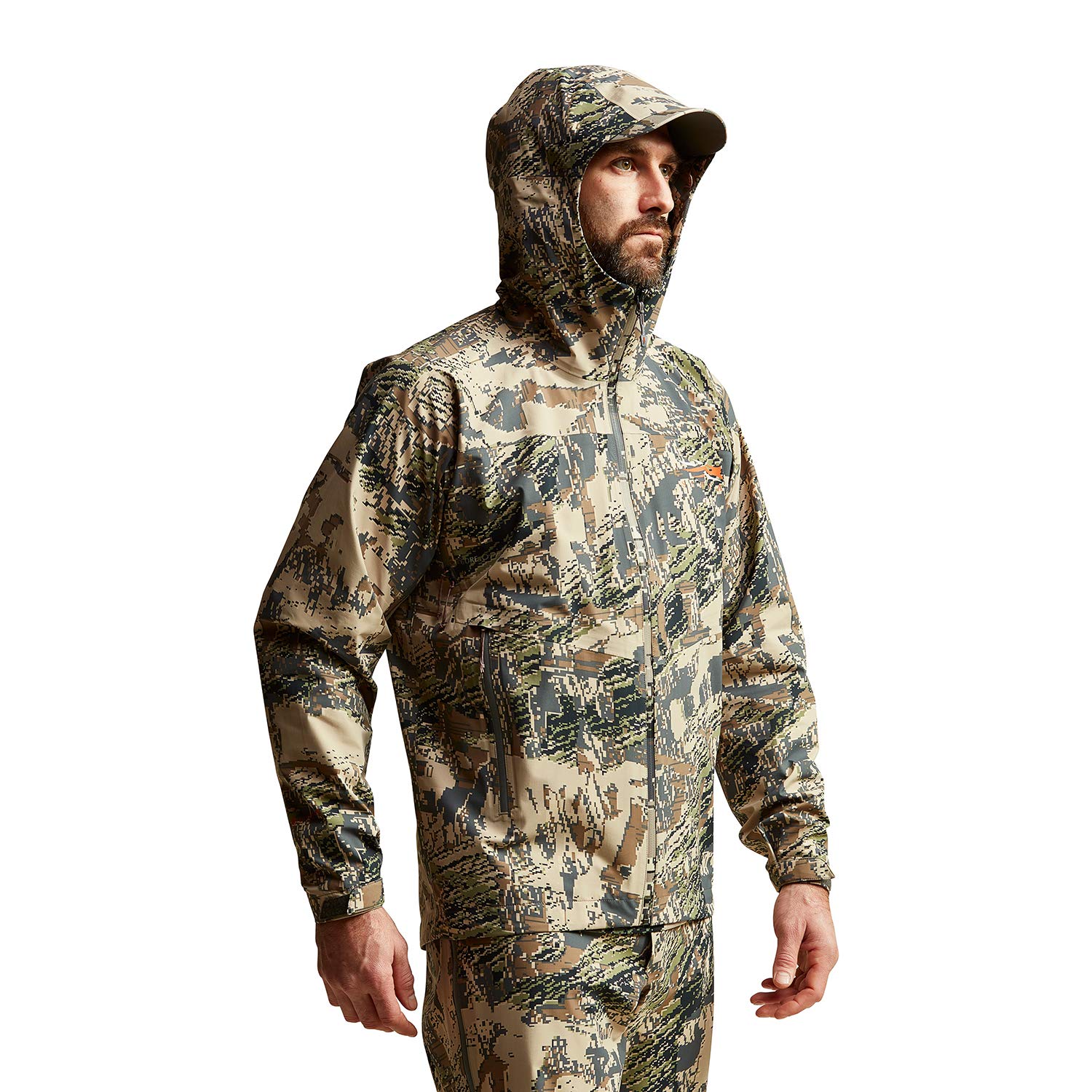
The SITKA Dew Point nails what most outdoor shells get wrong: it is genuinely lightweight, using a 20D nylon ripstop face with a pliable GORE C-KNIT Backer Technology (a thin inner layer that makes the jacket more comfortable against skin), without sacrificing waterproofing. The 3-layer Gore-Tex (three layers bonded together for durability and breathability) keeps you dry in hard-driving rain—owners mention it “stayed bone dry” through multiple downpours—and the micro-taped seams cut weight where every gram counts. YKK pit zips let you dump heat on a steep climb without unzipping the whole front, and the hood drops away when you do not need it. Unlike the SITKA Thunderhead, this one prioritizes packability over noise reduction—it is noisier than the brushed-knit Thunderhead, but it packs far smaller for the same level of weather protection.
Zippered pockets stay accessible even when you are wearing a pack belt, and the Mountain Optics Harness compatibility means binoculars or a rangefinder ride without fouling your draw. One reviewer who also owns other Sitka shells noted this one offers “lightweight and comfortable” fit over fishing and hunting gear. The catch? The 20D face fabric is on the lighter side—if you are busting through thick alder or basalt scree, you may want the 70D Rab Kangri GTX’s “substantial/durable” feel instead.
Trail winner: The lightest, most packable full-Gore-Tex shell in the lineup—ideal for hikers, bow hunters, and anyone who moves a lot in wet weather.
Consider the trade: The 20D face fabric will not shrug off heavy brush as well as the Rab Kangri GTX’s 70D denier, so rock-scramblers and alder-bashers should size up to something more rugged.
Reach for it if: you want a shell that stuffs into its own pocket and will not weigh you down on long foot movements through wet weather.
Look elsewhere if: you bash through thick brush daily—the face fabric is designed for lightness, not heavy abuse.
2. SITKA Thunderhead Jacket
Moves through wet brush like a ghost—quiet enough to sneak inside bow range.
The SITKA Thunderhead is the quietest Gore-Tex option on this list, thanks to a brushed polyester knit face that deadens sound. No swishing or crinkling when you shoulder a rifle or draw a bow. That makes it a top pick for big-game hunters who need to stalk in rainy conditions without spooking every deer in the valley. It uses a Gore-Tex laminate (a bonded membrane and fabric layer) for full waterproofing—one hunter reported using it for four days in snow and rain with temps 17 to 24 degrees without any issues. The fabric is heavier and more durable than the Dew Point’s 20D face, though not as ultralight.
Customers note it is “quiet, durable and waterproof” and that the hood tightens without turning your head. However, a reviewer also flagged that “it’s not ultralight and packable” and that it takes up most of a scouting pack. Another pointed out it is “a bit noisier than I’d like for the price,” though still quiet compared to standard Gore-Tex shells. The Thunderhead is heavier-duty than the compact Dew Point, so bring it when stealth matters more than shaving ounces. Unlike the Rab Kangri GTX, it lacks pit zips, so on warmer days you will want to manage layers.
Silent advantage: The brushed knit face is the quietest in this review—crucial for still-hunters and bow seasons where one scrape of nylon costs you the stalk.
Packing penalty: This jacket eats pack space. If you need to lash it to the outside, plan for it. The Dew Point packs far smaller.
Stalk with it if: you hunt big game in rain and need the quietest shell that still offers full Gore-Tex protection.
skip it if: you need an ultralight packable shell for long hikes—the Thunderhead prioritizes stealth over portability.
3. 686 Men’s Gore-TEX Core Jacket

Born in the snowboard park, built with Gore-Tex seams that will not leak—if you can find your size.
The 686 Core Jacket brings 2-layer Bluesign Approved Gore-Tex fabric (a two-layer construction where the membrane is bonded to the outer face only, with a separate inner liner) and fully taped seams to the snow-and-slush crowd. It is an insulated shell with a powder skirt (a waistband that seals out snow), a helmet-compatible hood with a hood link system, and a glove link inner thumb grip—features clearly designed for lift-served skiing and snowboarding. One reviewer who works as a ski instructor praised the fit and quality, noting “anything from this company is legit.” The jacket also has a phone-heater pocket and an internal goggle storage pocket, making it convenient for a day on the mountain.
The big miss? No pit zips. Multiple reviewers flagged this, with one saying “needs pit vents 100!” The jacket does have an Air-Flo chest vent, but it is not a substitute for underarm zippers. Another buyer felt it was “overpriced for a shell,” and the sizing ran large for some. Compared to the SITKA Thunderhead, this is noisier and less hunting-oriented. If you are buying for snow sports and want a Gore-Tex shell with a powder skirt, this fits. If you need a quiet field jacket for stalking, look toward the SITKA options.
Built for the mountain
- Fully taped Gore-Tex seams for zero leaks
- Helmet-compatible hood with powder skirt keeps snow out
- Internal goggle and stash pockets
Missing vents
- No pit zips—this means you will sweat more during aerobic activity
- Sizing runs large; order down if you are between sizes
- Limited color options and availability
Pack it if: you need a dedicated resort shell with a powder skirt and Gore-Tex reliability—the 686 delivers there.
Pass if: you plan to hike or skin uphill—without pit zips, you will soak your base layer with sweat.
4. Rab Men’s Kangri GTX Jacket

A 70D tank that feels like it will outlast two Beta ARs—with better pockets and a two-way zipper.
The Rab Kangri GTX is the toughest shell in this roundup, with a 70D (70 denier) nylon face that buyers describe as “has weight and feels substantial/durable.” It uses Gore-Tex Performance fabric for full stormproofing, and three-layer construction (membrane, face fabric, and inner liner all bonded together) keeps it packable at 7.8 oz—lighter than you would expect given the fabric weight. Two-way pit vents (zippers you can open from the top or bottom) dump heat on the ascent, and the fully adjustable hood has a stiffened peak for coverage in wind-driven rain. One buyer compared it directly to newer Arc’teryx Beta models and felt the Rab was heavier but “for the same money… feels like it will last longer, it has more/better pockets, a two-way zipper, and a snap at the bottom.”
The Kangri also features a fleece-lined inner collar to prevent chafing or beard pull—a thoughtful touch. Compared to the SITKA Dew Point’s 20D face fabric, the Rab’s 70D is noticeably more resilient against rock and branch scrape, but it is heavier and less compressible. The jacket falls below the waist to keep you dry in downpours, and buyers rave about the “excellent construction.” One noted it works exactly as expected in heavy rain on day one. This is the pick for mountaineers and backpackers who want a jacket that takes a beating and holds its resale value.
Rugged performer: The 70D denier is the highest face-fabric weight on this list—brush and rock will not faze it. Two-way pit vents keep you from stewing on the climb.
Heft trade: It is heavier and less packable than the 20D SITKA Dew Point. If you count every gram in a climbing pack, the Rab takes up more space and weight.
Carry this if: you are a hiker, climber, or trekker who puts your jacket through rough granite and alder—this shell will take the abuse.
pass on it if: you need a wispy ultralight shell for fast-and-light trips—the Dew Point or a Beta LT would shave ounces.
5. Arc’teryx Beta AR Men’s Jacket
The benchmark alpine shell that has launched a thousand mountain trips—now slightly roomier for layering.
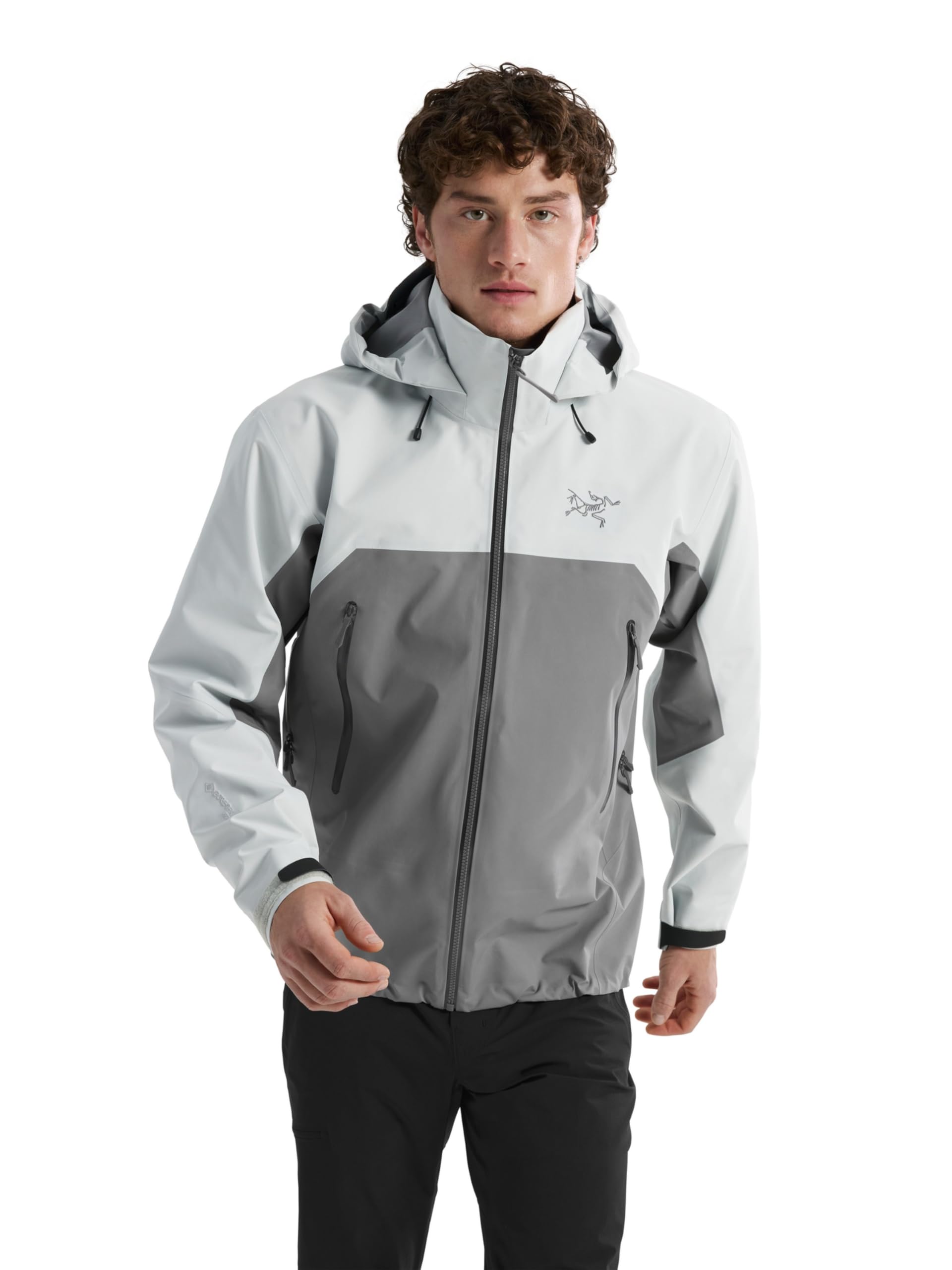
The Arc’teryx Beta AR is the just-right shell for year-round mountain use. It uses Gore-Tex Pro, the most breathable and durable Gore-Tex membrane, in a hybrid-material build that reinforces high-wear zones (like shoulders and arms) while keeping weight down. Reviewers point out “a true classic, slightly larger than the previous version,” which gives room for a mid-layer under the shell. One owner said their last Arc’teryx jacket lasted “nearly 20 years,” which frames the price in a different light. The jacket has pit zips, a helmet-compatible hood, and a trim athletic cut that fits purposefully over layers.
The main friction point is sizing. Multiple reviews mention it runs large: one buyer at 6′ and 205 lbs with broad shoulders found the Large too tight and went up to XL; others suggest sizing down for a clean fit. One buyer mentioned the “Gore pro is a bit crinkly sounding”—so it is not the quietest shell here. Compared to the SITKA Thunderhead’s brushed knit, the Beta AR sounds louder in the brush. But for alpine climbing, resort skiing, and everyday wear, it is a hard-to-beat balance of weight, durability, and breathability that the 686 Core Jacket lacks in venting.
Versatile icon: Gore-Tex Pro pairs with hybrid face fabric for a shell that breathes well on the ascent and shrugs off light brush. The slightly larger cut gives you layering room for a puffy underneath.
Sizing snag: The Beta AR runs slightly larger than prior versions. If you are between sizes, try before you buy—especially if you have broader shoulders.
Buy it if: you want one shell for everything—backcountry, resort, and daily wet-weather errands—and value long-term durability over niche quietness.
Look away if: you need the quietest possible jacket for bow hunting—the Beta AR’s crinkly Gore-Tex Pro fabric will give away your position.
6. Carinthia PRG 2.0 Jacket

European military-grade waterproofing built like a fortress—if the collar fits your neck.
The Carinthia PRG 2.0 comes from the Austrian brand known for supplying NATO forces. It uses a sturdy 100% polyamide outer fabric (a type of nylon) with a Gore-Tex bi-component ePTFE membrane (a waterproof, breathable film), delivering waterproof, windproof, and breathable protection in a package that weighs 580 g (about 20.5 oz). Buyers call it “eine Festung” (a fortress) for its build quality, with one reviewer noting the hood adjustment cords are exposed inside and the Velcro cuffs take getting used to. The jacket fits true to size for taller frames, but one reviewer flagged that the collar is too tight even in XXL when worn over a fleece.
Compared to the Arc’teryx Beta AR, the Carinthia runs heavier and stiffer but costs less for the same level of overall rain protection. It lacks pit zips, making it less ideal for high-output use, but the breathable Gore-Tex membrane compensates somewhat. The fit is tailored for European body shapes (longer torso, slimmer waist). One reviewer at 179 cm and 80 kg found size L ideal. If you are looking for a dedicated patrol or tactical shell that shrugs off rain and is available in olive without screaming “operator,” this is a strong pick—as long as your neck and chest fit the collar.
European workhorse: The 580 g weight and polyamide face give it a rugged feel that stands up to daily patrol use. The Gore-Tex membrane keeps you dry in sustained downpours.
Collar catch: The neck opening is surprisingly snug for a tactical shell. Plan to try it with your typical layering base (fleece or grid layer) before committing.
Reach for it if: you need a no-nonsense Gore-Tex shell with military provenance that handles sustained wet weather without breaking down.
Pass if: you have a thicker neck or plan to wear a heavy fleece underneath—the collar runs tight and may restrict airflow.
Understanding the Specs
Gore-Tex Membrane Layers
Gore-Tex comes in different constructions. 2-layer fabric (used in the 686 Core Jacket and SITKA Blizzard Aerolite) has the membrane bonded to an outer face fabric with a separate liner, making it less packable but cheaper. 3-layer fabric (used in the SITKA Dew Point and Rab Kangri GTX) bonds the membrane to both the face fabric and an inner liner, making it more durable and breathable. Gore-Tex Pro (used in the Arc’teryx Beta AR) is the most rugged and breathable version—ideal for year-round alpine use. For most field and hunting applications, 3-layer or Pro membranes offer the best trade-off of weight, quietness, and durability.
Face Fabric Denier (D)
The denier (a unit measuring the thickness of the nylon or polyester threads) tells you the thickness of the outer fabric. A lower number like 20D (SITKA Dew Point) feels soft, packs small, and weighs less, but abrades faster against rock or wood. A higher number like 70D (Rab Kangri GTX) feels stiff, resists punctures, and survives years of heavy brush. A middle option like the brushed knit face of the SITKA Thunderhead delivers quietness at the cost of packability. If you are hunting in thorny country or climbing in granite, aim for 40D or higher. If you are hiking long distances with a light pack, a 20D face saves your legs on the climb.
FAQ
Can I wear a Gore-Tex jacket in summer without cooking myself?
How long does a genuine Gore-Tex membrane last before delaminating?
What is the quietest Gore-Tex jacket for bow hunting?
Does the 686 Core Jacket have pit zips for breathability?
Is the Carinthia PRG 2.0 true to US military sizing?
Can I wash a Gore-Tex jacket in a regular washing machine?
Which jacket is better for mountaineering—Rab Kangri GTX or Arc’teryx Beta AR?
How does the SITKA Dew Point compare to the SITKA Thunderhead for hiking?
Final Thoughts: The Verdict
For most people, the best army gore-tex jacket winner is the SITKA Dew Point Hooded Jacket because it gives you lightweight 3-layer Gore-Tex with pit zips and packable 20D face fabric at a reasonable weight. If you want the quietest possible shell for stalking wet brush, grab the SITKA Thunderhead Jacket. And for heavy-duty mountaineering with a 70D face that customers note feels built to last, the standout is the Rab Kangri GTX Jacket.
How We Picked
We do not accept paid placement. Every pick is matched to a real buyer and a real use-case; we do not hands-on test units.
Sources & Methodology
Specifications: manufacturer listings and product documentation. Review insights: verified customer reviews, as of July 2026. Pricing: not shown on this page (it changes often); check the current price via the retailer link.
As an Amazon Associate, Gadgets Feed earns from qualifying purchases. This does not affect which products we feature.