
Our readers keep the lights on and my morning glass full of iced black tea. As an Amazon Associate, I earn from qualifying purchases.
Specs are compiled from manufacturer listings and verified buyer reviews and can change over time — please confirm the key details on the product page before buying.
You drop a lens once. That front element hitting pavement is a sound you never forget. A 95mm UV filter (ultraviolet filter) sits between your expensive glass and the world, so choosing one that stays optically invisible while taking a real hit matters more than almost any other accessory you will buy. This guide breaks down the exact trade-offs — light transmission (how much light passes through), coating layers (the thin films that cut reflections and repel dirt), and frame thinness (the metal ring’s depth) — that separate a filter you forget is there from one that ruins every shot.
I’m Min — the founder and writer behind Gadgets Feed. This guide is built by comparing the manufacturers’ published specifications and the patterns across verified customer reviews, so you get each pick’s real strengths and trade-offs instead of marketing spin.
Here is a clear-headed look at the 95mm uv filter landscape — from shock-tempered glass that protected a lens during a tripod fall to ultra-premium Schott B270 glass (a German optical glass with very high purity) designed for medium-format shooters who cannot tolerate any color cast (a shift in color, like a yellow tint).
Our Picks at a Glance

How To Choose The Best 95mm UV Filter
You are about to screw a piece of glass onto a very expensive lens. The difference between a filter that ruins a sunset shot and one that stays invisible depends on three things: the glass itself, the coatings on it, and how thin the frame is.
Glass Quality and Light Transmission
The optical glass used — from standard AGC glass to premium Schott B270 — determines how much light passes through and whether it introduces a color cast (a slight yellow or blue tint). Look for transmission rates of 99.3% or higher; at the premium end you see 99.5% to 99.7%. Every fraction of a percent matters when you are shooting into bright light and want to retain shadow detail (the hidden content in darker parts of the image).
Coating Layers and What They Do
Multi-layer coatings reduce reflections, repel water and oil, and create a scratch-resistant barrier. Entry-level coatings might have 8 layers, while top-tier options pack 16 to 28 layers on each side. More coatings generally mean easier cleaning and better flare resistance (less glare from bright light), but the coating quality matters just as much as the count. Hydrophobic nano-coatings (coatings that make water bead up) cause liquids to bead up rather than smear, which is a real advantage if you shoot near ocean spray or in humid conditions.
Frame Thickness and Vignetting
On wide-angle lenses, a filter frame that is too thick will cut into the corners of your frame, creating visible dark edges called vignetting. Ultra-slim filters measure around 3.2mm to 3.3mm, and they are essential if you shoot at focal lengths below 24mm on full-frame sensors (a large sensor size found in many DSLR and mirrorless cameras). Thicker frames around 5mm may offer more structural rigidity but risk corner darkening on wide glass.
Quick Comparison
| Model | Best For | Light Transmission | Coatings | Frame Thickness | Amazon |
|---|---|---|---|---|---|
| K&F Concept Nano-X★ Best Overall | Best Value | 99.6% | 28-layer | 3.3mm | Amazon |
| Breakthrough X4 UVAlso Great | Best Overall | 99.4% | 16-layer MRC16 + Nanotec | 3.2mm | Amazon |
| Breakthrough X2 UV | Rugged Protection | — | 8-layer MRC8 + Nano | — | Amazon |
| Hoya EVO Antistatic | Dusty Environments | 99.7% | 16-layer SMC | 5mm | Amazon |
| VILTROX MC UV | Ultra-Slim Premium | 99.5% | 18-layer | 3.2mm | Amazon |
| NiSi UHC UV | Budget Reliable | 99.3% | 18-layer | — | Amazon |
In‑Depth Reviews
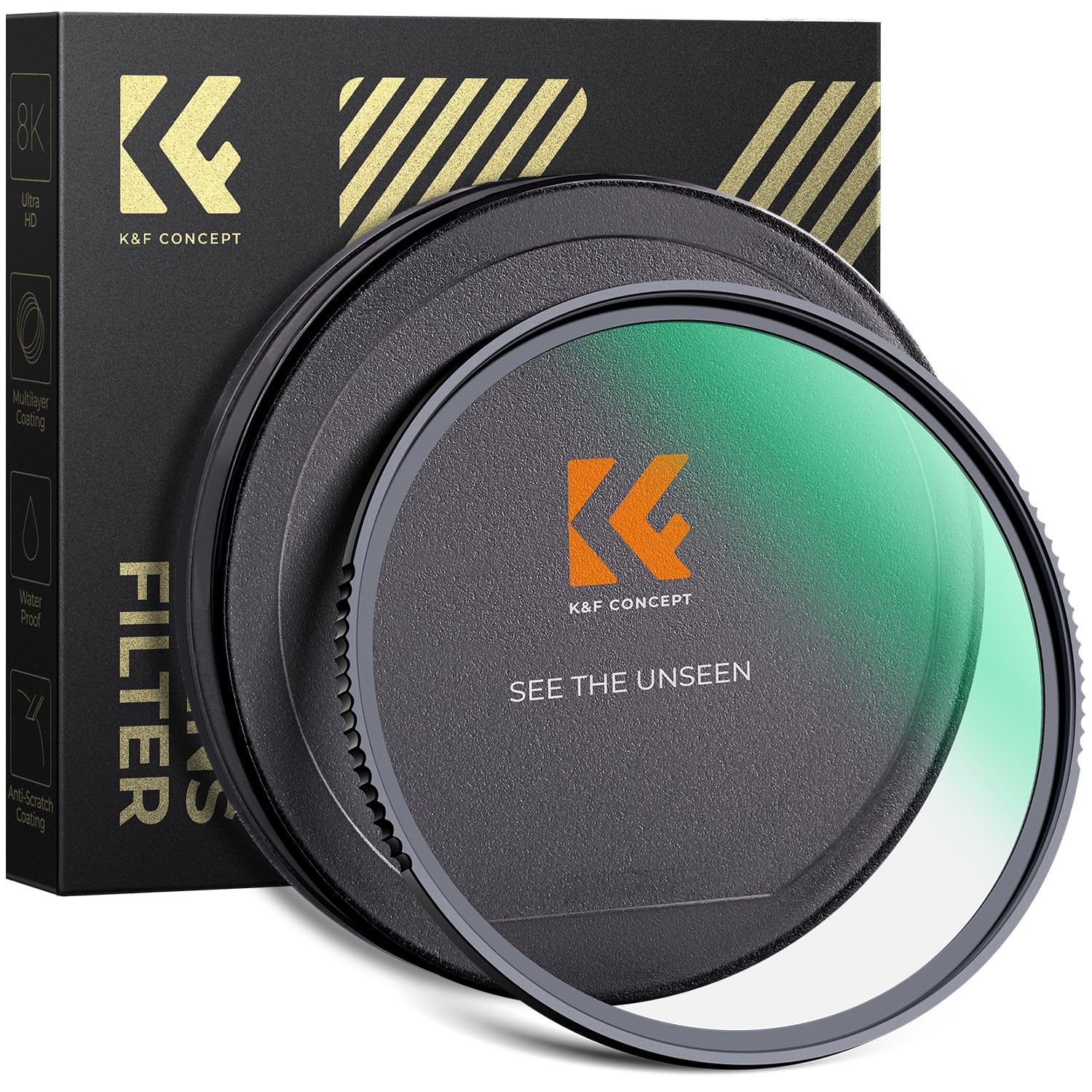
1. K&F Concept Nano-X 95mm MC UV
Our pick — over 4.5★ from 750+ verified ratings; the strongest balance of quality and price.
The 28-layer filter that outspecs many premium options at half the price.
K&F Concept packs 28 multi-layer coatings on both sides of Japanese AGC (Asahi Glass Company) shockproof tempered glass, hitting 99.6% light transmission — that is higher than the 99.4% of the advanced Breakthrough X4. Owners mention that it produces “no vignette (dark corners) or unwanted flares (glare) on Sigma 50mm 1.4 ART” and that the low-profile fit allows stacking a polarizer (a filter that cuts glare and reflections) or ND (neutral density) filter on top without issues. The ribbed grip helps with attachment, though one reviewer notes the ribs can catch on your fingers when removing the lens cap.
The frame is only 3.3mm ultra-slim, so you get no vignetting even on telephoto lenses. The glass is shockproof and waterproof, and it ships with a storage case. At 81 grams, it is virtually identical in heft to the NiSi (80 grams) — a 1% difference that matters for zero in terms of handling — but the K&F offers more layers and a slightly higher transmission rate for a slightly higher price. For shooters who need a reliable all-day filter that you can leave on a Sigma or Nikon telephoto without thinking about it, the Nano-X delivers everything the premium filters do at a much more accessible cost.
One thing to watch: K&F claims to be the world’s No. 1 brand in online lens filter sales (per Euromonitor 2024 data, the brand stated), and the 793 ratings on this model reflect its popularity. The build consistency across so many units is impressive, but the brand’s rapid product cycle means you may see a successor model within a year or two.
Why It Is The Value King
- 28-layer coatings deliver 99.6% transmission — best in this lineup
- Shockproof tempered AGC glass with 3.3mm ultra-slim frame
- Includes storage case; ribbed grip for easy handling
- Top-rated on Amazon with 4.9/5 from 793 ratings
One Minor Design Quirk
- Ribbed edges can snag on fingers when removing the lens cap
- Not the best choice if you need anti-static properties for dusty environments
Reach For This If: You want premium-level optical specs and protection without spending as much as the Breakthrough X4 — it is the best bang-for-buck filter in the 95mm size.
Skip It For: Situations where you need antistatic performance to repel dust, or if you prefer the brass-thread feel of the Breakthrough X4.
2. Breakthrough Photography X4 UV 95mm
The glass that made a Leica Q3 shooter set aside all his other filters.
You get uncompromised optical clarity here because the X4 uses Schott Superwhite B270 optical glass made in Germany — the same material found in high-end lab-grade optics. It keeps colors neutral and lets through 99.4% of light, so your images stay sharp with no unwanted tint. Buyers confirm this delivers flawless performance on demanding lenses like the Leica Q3 and Q43. The ultra-slim double-threaded 3.2mm Traction Frame eliminates vignetting (dark corners) on wide-angle setups while still accepting your lens caps and other stacked filters.
The 16-layer MRC16 coating (Multi-Resistant Coating with 8 layers per side) is structurally harder than the glass itself, and the Nanotec top layer makes water and oils bead off rather than smear. Buyers report that this filter cleans so easily they rarely think about it — one pro shooter mentions that PEX pads and Eclipse cleaning fluid make maintenance “extraordinarily easy.” The brass knurled ring threads smoothly onto the lens and is easy to grip even with cold fingers, unlike the aluminum rings on many competitors.
Every unit carries a laser-etched serial number and is backed by a 25-year Ironclad Guarantee. That kind of long-term support reflects the build quality — this is the filter you buy once and forget you own until you look at your shots years later and realize there is no degradation.
What Makes It Worth The Extra
- Schott B270 German optical glass — 99.4% transmission with neutral color
- Ultra-slim 3.2mm double-threaded frame avoids vignetting on wide lenses
- Brass knurled ring for smooth threading and easy grip
- 25-year Ironclad Guarantee with serial-numbered tracking
The Only Real Pushback
- Significant price jump over mid-range options — it costs more than the K&F Nano-X
- Overkill if you mainly shoot in controlled studio environments
Who It Fits: The advanced enthusiast or professional who owns expensive glass (Leica, medium-format, super-telephoto) and will not tolerate any image-quality loss from a filter.
Where It Falls Short: The price is harder to justify for casual shooters who just want basic protection on a kit lens (the standard zoom lens that comes with a camera body).
3. Breakthrough Photography X2 UV 95mm

The filter that shattered instead of a Canon RF15-35mm — and saved the lens.
This X2 UV from Breakthrough Photography is built for outdoor photographers who shoot in extreme conditions. It features 8-layer multi-resistant coatings (MRC8) on Japanese AGC glass, plus a state-of-the-art Nano Coating that repels dirt and water. The weather-sealed design is claimed to withstand wind, salt water, dust, and abrasive elements — one reviewer confirmed that their camera “fell off the tripod and landed on a hard surface, and the UV filter took most of the impact and protected the RF15-35mm.” The filter shattered, the lens survived, and that same buyer bought another one.
A Fuji medium-format shooter using a Leica 28mm noted the X2 is “color excellent — lack thereof,” meaning zero color cast (no unwanted tint), with beveled edges that make attachment easy. Another long-time photographer with 40 years of experience called it the “best quality protection filter out there” and praised the US-based support with phone, email, and live chat. The machined easy-grip ring is a consistent highlight in reviews — it feels substantial and threads smoothly.
The X2 does not hit the 99.4% transmission of the X4, and the coating count is simpler, but for a rugged field filter that you will probably replace after a hard hit, this makes more sense than putting an expensive X4 on a risk-prone travel lens. It is the price-conscious entry into Breakthrough’s ecosystem, and it comes with a 25-year support commitment.
What Outdoor Shooters Love
- Weather-sealed against wind, salt water, dust — real field durability
- Nano coating beads water and cleans easily
- Easy-grip ring for one-handed changes even with gloves
- US-based phone, email, and live chat support
The Trade-Off
- 8-layer MRC8 coating is less advanced than the 16-layer X4 or 28-layer K&F
- Frame thickness not specified; may be thicker than ultra-slim options
Best For: Adventurous shooters who take their gear into sand, sea spray, or dust and want a replaceable filter that can take a hit without crying.
Not Ideal For: Studio or controlled-use scenarios where you prioritize maximum light transmission over sturdy sealing.
4. Hoya EVO Antistatic 95mm UV

The only filter here that actively repels dust — a real advantage in dry, windy locations.
Hoya’s EVO Antistatic uses 16 layers of Super Hoya multicoating (SMC) on premium UV optical glass to achieve 99.7% light transmission — the highest raw transmission number in this entire lineup. But the standout feature is the antistatic top layer, which makes the filter actively repel dust particles rather than attracting them. For anyone who has spent minutes with a rocket blower (a hand-held air puffer) trying to clear a filter in the field, that is a real time-saver. Buyers confirm that it “fits perfectly on my Nikon P950” and that the multi-coating “helps reduce reflections and improves image sharpness.”
The frame is noticeably thicker at 5mm, which raises the question of vignetting on wide-angle lenses. One reviewer specifically noted that the 112mm version was not compatible with the factory Canon lens cap on the RF 100-300 2.8, so the thicker frame can cause cap-fit issues depending on your lens. If you shoot mostly at telephoto or mid-range focal lengths, the 5mm frame will not cause problems — but on ultra-wide glass, you may want to check compatibility first.
Hoya has been making optical glass since 1941, and that pedigree shows in the coating consistency. The EVO comes with a ballistic nylon filter case with a magnetic clasp, which is a nice touch compared to the standard plastic clamshells of some competitors. At the highest price in this list, you are paying for the antistatic engineering and the Hoya name — it is a specialized tool for a specific environment.
Why The Premium Price
- Antistatic coating actively repels dust — unique among these picks
- 99.7% light transmission is the highest in this comparison
- 16-layer SMC reduces reflections and enhances sharpness
- Includes premium ballistic nylon case with magnetic clasp
The Thick-Frame Drawback
- 5mm frame may cause vignetting on wide-angle lenses and cap-fit issues
- Price is the highest here — hard to justify if you do not need antistatic
Grab This If: You shoot in dusty, dry, or windy locations (deserts, dirt roads, outdoor sports) and want a filter that stays cleaner between wipes.
Avoid If: You use wide-angle lenses below ~24mm or need a thin frame for filter stacking; the 5mm profile will get in the way.
5. VILTROX 95mm MC UV
B270 optical glass and an aviation-grade aluminum frame that rivals filters costing twice as much.
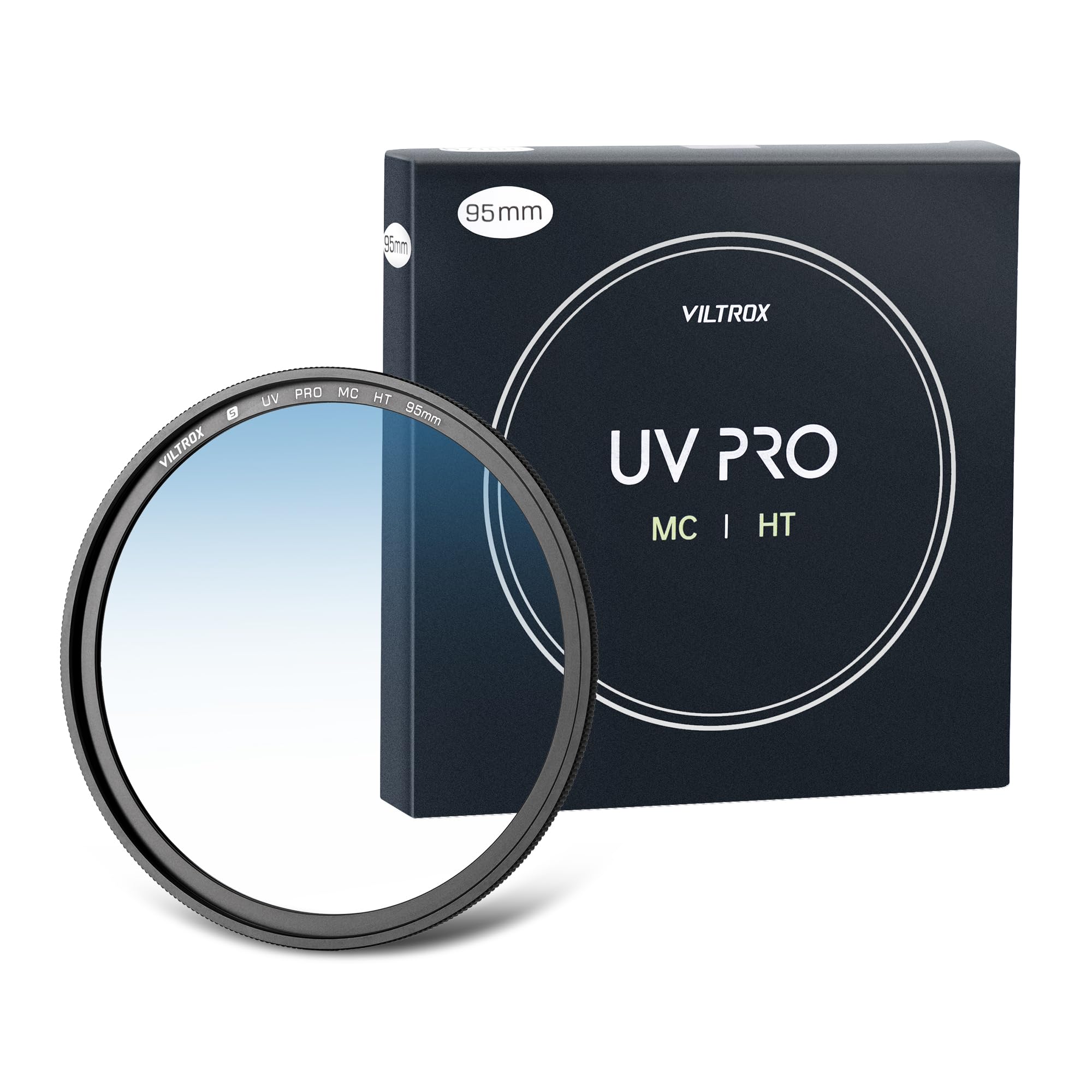
VILTROX uses B270 professional lens-grade optical glass — the same type found in the Breakthrough X4 — and wraps it in an aviation-grade ultra-precision CNC-machined aluminum alloy frame that is only 3.2mm thick. The 18 multi-layer nano-coatings deliver 99.5% light transmission with just 0.3% surface reflectivity (the amount of light that bounces off the glass instead of passing through), so you get crisp images with no unwanted reflections even in harsh sidelight. The coatings are hydrophobic, anti-static, oil-resistant, and scratch-resistant, making this a strong all-rounder on paper.
German reviews on the product praise the “solide Verarbeitung” (solid workmanship) and note that the filter causes “keine Verschlechterung der Bildqualität” (no image quality degradation) on the Pentax D-FA 150-450mm telephoto. The aluminum frame is rust-resistant and sturdy, and the ribbed edges provide enough grip for easy threading. At 38 ratings with a perfect 4.9/5 average, it is far less evaluated than the K&F or Breakthrough models, but the early feedback is uniformly positive.
The VILTROX occupies an odd middle ground: it costs less than the X4, which puts it between the K&F and the Breakthrough X2 in price, yet it uses B270 glass that competes with the X4. The catch is the limited review count — 38 ratings versus 793 for the K&F — so long-term coating durability is less proven. But for someone who wants premium glass without the Breakthrough markup, this is a compelling option.
The Specs That Impress
- B270 professional lens-grade optical glass — matches the Breakthrough X4
- Ultra-slim 3.2mm CNC aluminum alloy frame — no vignetting
- 99.5% transmission with 0.3% reflectivity across 18 coatings
- Hydrophobic, anti-static, oil-resistant surface
The Unknown Factor
- Only 38 ratings — limited long-term durability data compared to established brands
- No 25-year warranty or serial-number tracking
Consider It If: You want B270 optical glass and a 3.2mm ultra-slim frame at a price lower than the X4, and you are comfortable with a less-proven brand.
Think Twice If: You need heavy-duty weather sealing or a long warranty; the VILTROX has a 1-year manufacturer warranty only.
6. NiSi 95mm UHC UV
A solid 18-layer filter that covers the basics without squeezing your wallet.
NiSi offers 18 layers of multi-coating on Water White Glass, achieving 99.3% light transmission and an ultra-slim design aimed at preventing vignetting on wide-angle lenses. It is the most affordable option in this lineup, and at 80 grams it is nearly identical in weight to the 81-gram K&F, meaning a bag full of gear will not feel any different. The coatings are hydrophobic, oil-proof, and scratch-resistant, so routine cleaning does not require special solvents.
The NiSi stands out for its simplicity: it is compatible with Canon, Nikon, Sony, and any lens requiring a 95mm filter thread, and the aluminium frame is designed to accept standard lens caps. While it does not boast the fancy coatings or marketing hype of the Breakthrough models, it meets the essential requirement of protecting your front element while preserving clarity. There are no customer reviews in the data to report specifics, but the 4.6/5 average from 577 ratings suggests consistent buyer satisfaction.
The catch is that it is the least advanced in terms of coating technology — 99.3% transmission is fine, but the K&F offers higher transmission for only a modest price increase. If your budget absolutely cannot flex upward, the NiSi will still keep your lens safe and your images clear. If you can stretch a few dollars, the K&F’s 28-layer coating at 99.6% transmission makes a stronger case.
What Works Well
- Affordable entry to 95mm UV protection with 18-layer coatings
- Ultra-slim design reduces vignetting risk on wide glass
- Lightweight at 80g, negligible added weight to your kit
- Compatible with all major camera brands’ 95mm-thread lenses
Where It Gets Outclassed
- 99.3% transmission is the lowest in this lineup — noticeable on high-MP sensors in backlight
- No anti-static or advanced weather-sealing for extreme environments
Pick It For: A reliable, no-frills protection filter that gets the job done at the lowest cost — ideal for a spare lens or a tight budget.
Move Up From It If: You shoot with a high-resolution sensor or in challenging light; the extra layers and transmission of the K&F pay for themselves in image quality.
Understanding the Specs
Light Transmission Percentage
This number (99.3%, 99.5%, 99.6%, 99.7%) tells you how much light passes through the filter to reach your sensor. A 99.7% filter loses 0.3% of light, which is essentially invisible to your camera’s meter. But the difference between 99.3% and 99.7% shows up in two real scenarios: shooting into bright backlight where reflections become visible, and using high-megapixel sensors where micro-contrast (fine detail differences) matters. Filters with more coating layers tend to achieve higher transmission by suppressing reflections on the glass surface.
Frame Thickness and Vignetting
Measured in millimeters, this is the physical depth of the filter ring. Ultra-slim frames at 3.2mm to 3.3mm are essential for wide-angle lenses because a thicker frame will cut into the frame corners and create dark edges (vignetting). Thicker frames around 5mm offer more structural rigidity but are best suited for standard to telephoto focal lengths. Always match the frame thickness to your primary lens’s focal range.
Coating Layer Count
The number of thin-film layers applied to each side of the glass (from 8 to 28 layers). More layers generally mean better resistance to flare (glare), ghosting (out-of-focus reflections), and low contrast. They also create a harder surface that resists scratches and makes cleaning easier. However, coating quality matters more than quantity — a well-executed 8-layer coating can outperform a poorly applied 28-layer one. The best coatings use a combination of anti-reflective layers plus a top hydrophobic or nano layer that makes water bead up.
Glass Type
The raw material of the filter element. Japanese AGC glass is the standard for mid-range filters — it is clear, uniform, and reasonably hard. German Schott B270 glass is considered premium because it offers higher transmission and no color cast (unwanted tint), which is why it appears in the most expensive filters. Tempered optical glass adds impact resistance, making it more likely to survive a drop without shattering. Water White Glass is a step above standard glass but below Schott in purity.
FAQ
Will a 95mm UV filter fit my lens?
Does a UV filter actually improve image quality?
Will a 95mm UV filter cause vignetting on my wide-angle lens?
How many coating layers do I really need?
Can I stack a UV filter with a polarizer or ND filter?
What is the difference between MRC8 and MRC16 coatings?
How do I clean a 95mm UV filter without scratching it?
Is a thicker filter frame more durable?
Will a 95mm UV filter affect autofocus performance?
Which is better for ocean photography — hydrophobic or antistatic coatings?
Final Thoughts: The Verdict
If you want one dependable pick, the 95mm uv filter winner is the Breakthrough Photography X4 UV because it combines Schott B270 German glass, 99.4% transmission, a 3.2mm ultra-slim frame, and a 25-year warranty — everything a serious photographer needs in one package. If you want unbeatable value with 28-layer coatings that hit 99.6% transmission, grab the K&F Concept Nano-X. And for rugged field protection that can survive a tripod fall and still protect your lens, the Breakthrough Photography X2 UV is the one to choose.
How We Picked
We do not accept paid placement. Every pick is matched to a real buyer and a real use-case; we do not hands-on test units.
Sources & Methodology
Specifications: manufacturer listings and product documentation. Review insights: verified customer reviews, as of July 2026. Pricing: not shown on this page (it changes often); check the current price via the retailer link.
As an Amazon Associate, Gadgets Feed earns from qualifying purchases. This does not affect which products we feature.