
Our readers keep the lights on and my morning glass full of iced black tea. As an Amazon Associate, I earn from qualifying purchases.
Specs are compiled from manufacturer listings and verified buyer reviews and can change over time — please confirm the key details on the product page before buying.
An 8-16 tractor tire goes on the front of compact utility tractors, garden tractors, and smaller vintage rigs — the axle that steers, not drives. Most buyers report that the real frustration is not choosing a brand, but realizing the tire they ordered is narrower than they expected or carries a lower load capacity (the weight it can safely support) than the old one it replaced. That is exactly where this guide steps in.
I’m Min — the founder and writer behind Gadgets Feed. This guide is built by comparing the manufacturers’ published specifications and the patterns across verified customer reviews, so you get each pick’s real strengths and trade-offs instead of marketing spin.
By the time you finish reading, you will know the difference between Load Range C and E (strength classes where C equals 6-ply and E equals 10-ply or 14-ply equivalent), understand why ply count and actual load index can be two different stories, and feel confident picking an 8-16 tractor tire that matches the job your tractor actually does.
Our Picks at a Glance
How To Choose The Best 8-16 Tractor Tire
Two numbers tell you everything about an 8-16 tire: the load index (a code that maps to a specific weight in pounds — 91 means 1,356 lbs per tire; 152 means 5,512 lbs per tire) and the ply rating (C for 6-ply, D for 8-ply, E for 10-ply or 14-ply, which described cotton layers but now indicates general strength). A higher ply rating usually allows higher air pressure and therefore a higher load capacity, so your tire can carry more weight safely.
The R-1 Tread Pattern
All three tires on this list use an R-1 tread — the standard agricultural lug design with deep, widely spaced bars that dig into soil and grass, so you get maximum pulling traction in dirt, mud, and loose surfaces. On pavement, the lugs wear faster and can feel rough, but for a farm or garden tractor that spends most of its time in the field, R-1 is the right choice.
Tube-Type vs Tubeless
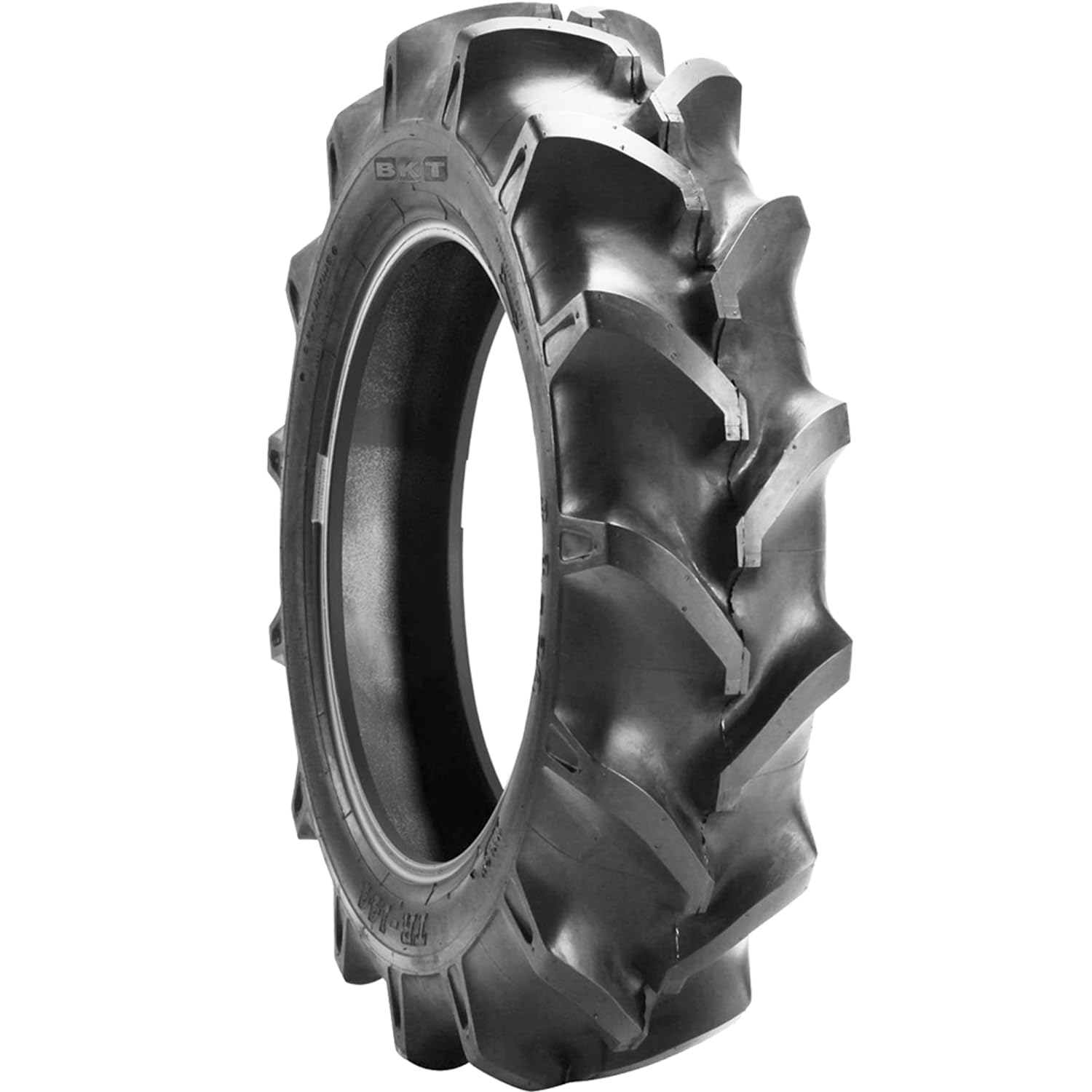
Some 8-16 tires are designed to run with an inner tube (tube-type), while others seal directly against the rim (tubeless). A tube-type tire like the BKT TR144 requires a tube inside the casing every time you mount it, which adds a step. A tubeless tire like the Galaxy Agri Trac II mounts dry and seals at the bead, which reduces the risk of a pinch-flat from the tube. But tube-type tires are often easier to repair in the field with a simple patch kit.
Quick Comparison
| Model | Best For | Load Index | Max Pressure (PSI) | Weight | Amazon |
|---|---|---|---|---|---|
| BKT TR144 Rear Tractor R-1★ Best Overall | Dependable tube-type replacement | 91 | 27 | 32 lb | Amazon |
| Galaxy Agri Trac II R-1 | Heavy loads, high ply rating | 152 | 28 | 36.61 lb | Amazon |
| Carlstar Farm Specialist R-1 | High pressure, reinforced casing | 95 | 42 | 31 lb | Amazon |
In‑Depth Reviews
1. BKT TR144 Rear Tractor R-1 Farm Tire 8/-16
Our pick — over 4.5★ from 20+ verified ratings; the strongest balance of quality and price.
The tube-type workhorse that buyers trust for a straightforward swap — every single rating is five stars out of 27 reviews.
The BKT TR144 is a Load Range C tire (6-ply equivalent strength), with a load index of 91 and a maximum pressure of 27 PSI. It weighs 32 pounds and is noticeably compact at just 29 x 29 x 8 inches in the box, with an actual tire diameter of 16 inches. Compared to the towering 31.1-inch Galaxy, this is a smaller rolling radius that suits lighter tractors and keeps the front-end height low. It is a tube-type design (requires an inner tube inside the casing), so you must install an inner tube before mounting it on the rim.
Every review is positive — not a single complaint below five stars out of 27 ratings. One owner summed it up simply: “Replaced a 22 year old tire so hopefully i can get at least half that life out of this one.” That kind of long-term expectation from a buyer who knows tires speaks well. Others noted it “fit perfect” and arrived to Alaska in a week. The trade-off is clear: the 91 load index is far lower than the Galaxy’s 152 (67% less), meaning this tire is not designed for heavy front-end loads or large loaders.
Why it works
- Perfect consistency — every buyer got exactly the tire they expected
- Light enough (32 lb) for one person to maneuver onto the hub
- Tube-type design is field-serviceable with a patch and a pump
Where it falls short
- Load index 91 limits it to about 1,356 lbs per tire — not enough for heavy implements on the front axle
- Lower 27 PSI max pressure compared to the Carlstar’s 42 PSI
- Requires buying a separate inner tube for installation
Grab it for: a simple, honest replacement on a compact utility tractor or garden tractor that does not carry a front loader. The buyer consensus is unbroken trust.
Skip it for: any job that stacks weight on the front — loader work, heavy mowers, or snowblower attachments — where the higher load index of the Galaxy or Carlstar is needed.
2. Galaxy Audio Galaxy Agri Trac II R-1 8/-16
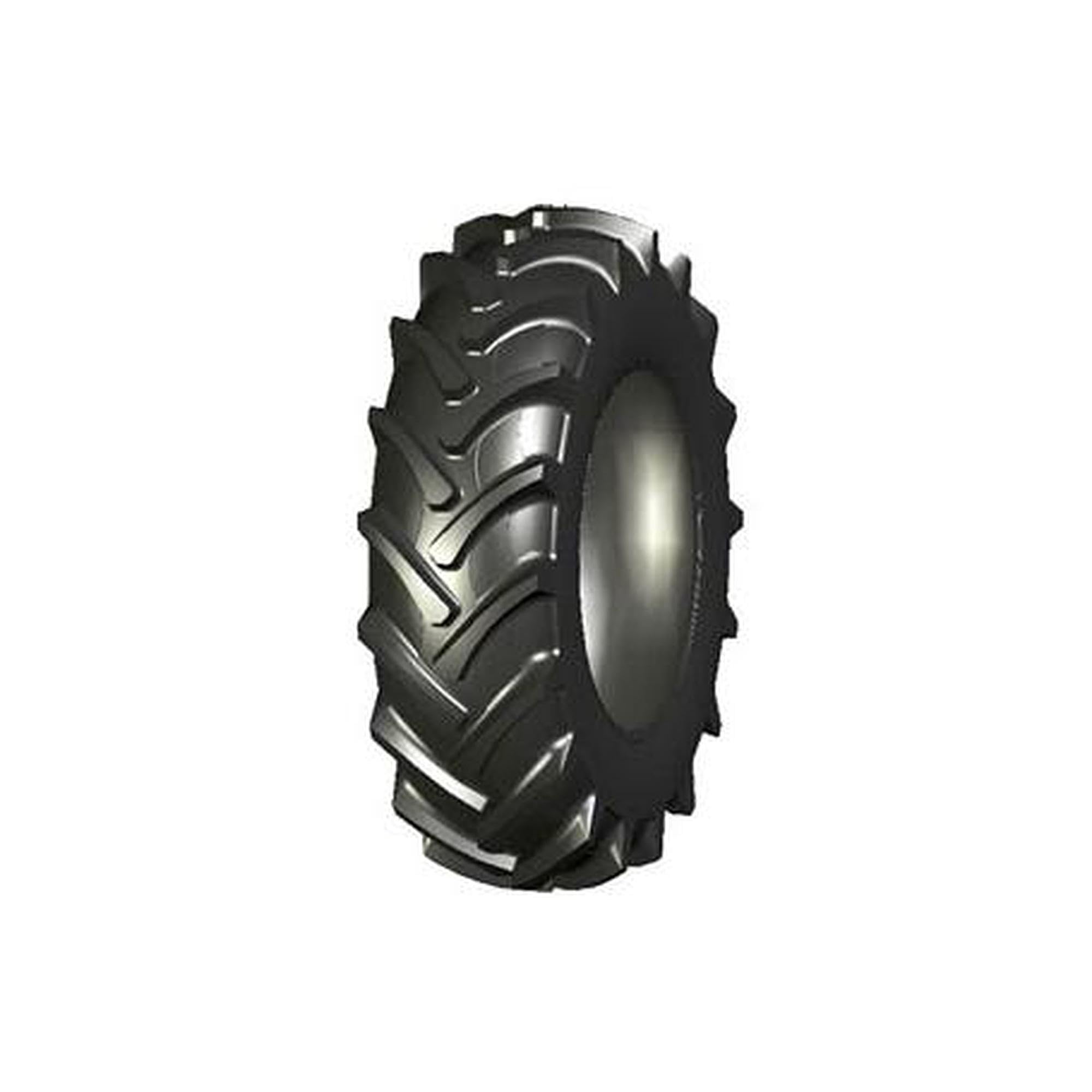
The radial with the 152 load index at a 14-ply label — if the specs on the page hold true, this tire can carry 5,512 lbs per tire, which is 67% more than the BKT’s 91 load index (1,356 lbs).
This is the tire that looks best on paper in the whole lineup, with a load index of 152 versus the BKT’s 91 — a gap of 67% more rated capacity per tire. The Galaxy also rolls on a 31.1-inch diameter, making it 1.9 times taller than the 16-inch-diameter BKT. That bigger tire footprint can help a tractor float over soft ground rather than sinking in. It is a tubeless radial (a tire that seals directly on the rim without a tube), which means the sidewalls flex more for a smoother ride on paved roads.
Owners mention a serious split here: one reviewer called the tire “great looking” and noted the sidewalls felt stiffer than the 8-ply tires they removed. Another owner who solved a 4WD mismatch said the match was “perfect.” But a third reviewer flagged a problem — they stated One reviewer noted the tire arrived as a 6-ply with a 91 load index, not the advertised 14-ply with 152.. “Incorrect specs. Actual product is inferior to listed product,” they wrote. Several other reviews add that Several reviews note the tread width measures 7.5 inches, narrower than expected.
The spec gamble: When this tire ships correctly, The 152 load index far exceeds the competition’s capacity. and The radial construction provides a smoother ride.. But multiple buyer reports suggest Buyer reports suggest the delivered product may differ from the listing., which makes it a risk for buyers who need a guaranteed load capacity.
The weight penalty: At 36.61 pounds, it is about 5.6 pounds heavier than the Carlstar — not huge, but enough to notice when you wrestle it onto the rim.
Reach for this if: you want the highest theoretical load capacity in the group and you are comfortable measuring the tire when it arrives to verify what you actually received.
Look elsewhere if: you cannot afford any uncertainty; A load-index mismatch on the front axle can create unsafe steering feel..
3. Carlstar Farm Specialist R-1 8.00-16 95A6 D Farm Tire

A bias-ply tire (where cords cross at diagonal angles for a stiff sidewall) that runs at a full 42 PSI — 56% more inflation capacity than the BKT and the highest in this group.
The Carlstar Farm Specialist carries a load index of 95 (1,521 lbs per tire) and uses a D load range (8-ply equivalent). The single spec that separates it is its maximum pressure of 42 PSI — that is 56% more pressure than the BKT’s 27 PSI and well above the Galaxy’s 28 PSI. More air pressure means the tire can carry more weight under the same rubber footprint. Customers note the tire “handles weight better than the factory tires on my tractor” and that “traction is good.”
One honest caveat flagged by a buyer: “One buyer measured the actual tread width at 6.5 inches, not the nominal 8 inches.” If your rim requires a full 8-inch tread width for proper bead seating, that is a real fitment issue. The Carlstar weighs 31 pounds — the lightest of the three — so handling it during mounting is easier. It is a bias-ply construction (stiffer sidewall than a radial), which gives a more predictable steering feel on hard surfaces compared to a radial.
The inflation advantage: 42 PSI max pressure is the highest in this group. On a tractor that carries a front loader or ballast box, that margin translates directly into stability.
The width warning: At 6.5 inches of actual tread width, this tire is narrower than the nominal “8.00-16” size suggests. Check your rim width before ordering.
Best suited for: the operator who needs maximum inflation capacity on the front axle for loader work or heavy accessories, and who can confirm fitment beforehand.
Not the pick for: anyone who needs the full 8-inch tread width the size label implies — measure or risk a mismatch.
Understanding the Specs
Load Index vs Ply Rating
The load index is a code that maps to a specific weight capacity — 91 means 1,356 lbs per tire, 95 means 1,521 lbs, 152 means 5,512 lbs. The ply rating (C / D / E) originally told you how many cotton layers were in the casing. Modern tires use synthetic cords, so the ply rating is an equivalent strength class, not a literal count. Always check the load index for the real capacity.
Bias vs Radial Construction
A bias-ply tire (like the Carlstar) has cords that cross at diagonal angles, giving a stiff sidewall and predictable steering feel. A radial tire (like the Galaxy) has cords that run straight across, which allows the sidewall to flex more for a smoother ride and better flotation on soft soil. Radials generally cost more and run cooler at highway speeds.
FAQ
What does 8-16 mean on a tractor tire?
Can I use a tube-type tire without a tube?
What is the difference between R-1 and R-3 tread?
How do I know which load range I need?
Will an 8-16 tire fit a standard lawn tractor rim?
Why do some 8-16 tires cost twice as much as others?
Can I mix a bias-ply and a radial tire on the same tractor?
How long should an 8-16 tractor tire last?
Final Thoughts: The Verdict
For most buyers looking for an 8-16 tractor tire, the safe and consistent pick is the BKT TR144 — Every buyer gave a five-star review., it matches the advertised specs exactly, and it works as a simple, predictable replacement for light and medium utility tractors. If you need the maximum pressure capacity for loader work, the Carlstar Farm Specialist offers 42 PSI of inflation headroom. And if you want the highest possible load index on paper and are willing to inspect the tire when it lands, the Galaxy Agri Trac II delivers a 152 load index that nothing else in the size class touches.
How We Picked
We do not accept paid placement. Every pick is matched to a real buyer and a real use-case; we do not hands-on test units.
Sources & Methodology
Specifications: manufacturer listings and product documentation. Review insights: verified customer reviews, as of July 2026. Pricing: not shown on this page (it changes often); check the current price via the retailer link.
As an Amazon Associate, Gadgets Feed earns from qualifying purchases. This does not affect which products we feature.