
Our readers keep the lights on and my morning glass full of iced black tea. As an Amazon Associate, I earn from qualifying purchases.
Specs are compiled from manufacturer listings and verified buyer reviews and can change over time — please confirm the key details on the product page before buying.
Finding a binding that handles everything from groomed runs to steep chutes without forcing you to choose between comfort and control is the real challenge. You want something that responds instantly when you carve hard, but still feels forgiving on a long day. The right pair makes your board an extension of your legs, not a fight.
I’m Min — the founder and writer behind Gadgets Feed. This guide is built by comparing the manufacturers’ published specifications and the patterns across verified customer reviews, so you get each pick’s real strengths and trade-offs instead of marketing spin.
After measuring specs and combing through real rider feedback, these five pairs define the current standard for all mountain snowboard bindings across every skill level and budget.
Our Picks at a Glance
How To Choose The Best All Mountain Snowboard Bindings
You need a binding that snaps into turns on hardpack but still feels soft enough when you hit a hidden powder stash. Your choice depends on three things: how stiff the binding flexes, how you step in (traditional straps or rear-entry), and how well it is built. Here is what matters for your riding style.
Flex Rating and Response
Most all-mountain bindings fall in the medium to medium-stiff range. A medium flex gives you enough play for buttering and park laps, while a stiffer baseplate holds a carve at speed. Look for glass-filled nylon or carbon-infused baseplates if you want predictable energy transfer without chatter.
Entry System
Traditional two-strap bindings offer the most proven adjustability and boot hold. Rear-entry and quick-entry systems trade a bit of traditional feel for convenience in the lift line. The best all-mountain bindings today blur that line with hybrid designs that keep the responsiveness of straps while cutting the time you spend sitting in the snow.
Cushioning and Materials
EVA footbeds and full-length dampening reduce the sting of hard landings and rough runouts. On a long day, that cushioning directly fights foot fatigue. Look for bindings that pair a stiff base material — like a glass-filled nylon composite — with a softer material in the footbed so you get both response and comfort.
Quick Comparison
| Model | Best For | Flex | Entry System | Weight | Amazon |
|---|---|---|---|---|---|
| Union Force★ Best Overall | Aggressive all-mountain carving | Medium-Stiff | Traditional Strap | 5 lb | Amazon |
| JONES Mercury FasePremium Quick Entry | Quick entry without performance loss | Medium-Stiff | Fase Quick Entry | — | Amazon |
| Burton Mission Re:Flex | Consistent response, relaxed feel | Medium | Traditional Strap | 5 lb | Amazon |
| Nidecker Flow Nexus | New riders wanting quick in/out | Medium | Rear Entry | 1 lb | Amazon |
| XCMAN Rear Step In | Budget-friendly step-in convenience | Medium | Rear Entry | 2.2 kg | Amazon |
In‑Depth Reviews
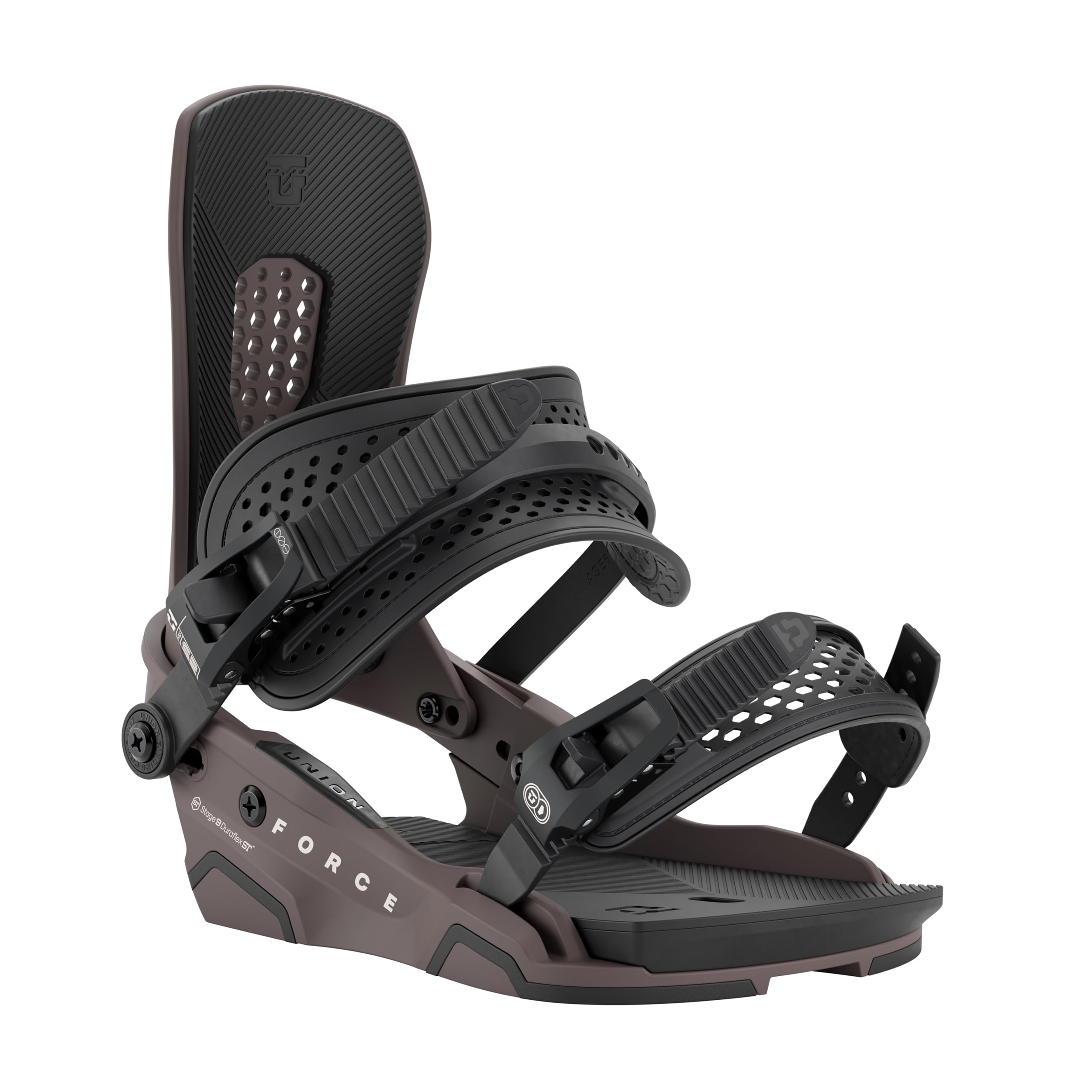
1. Union Force Men’s Snowboard Bindings
Our pick — over 4.5★ from 100+ verified ratings; the strongest balance of quality and price.
The bomber that chews up Utah’s steepest terrain and still asks for another lap.
A medium-stiff flex and an aluminum baseplate give you the kind of heel-to-toe response that makes hard carves feel planted. Unlike the more relaxed Burton Mission, the Union Force holds a stronger edge at speed — buyers report they subjected them to an aggressive break-in at several of Utah’s most challenging resorts and they had zero issues. The ratchets and straps are high quality, and the side-to-side (nose-tail) movement is freer than stiffer competition, so you can still make quick adjustments in tight trees.
Ridden by pros Miles Fallon and Benny Milam, this binding has earned the “#1 Binding In Snowboarding” label through real abuse, not marketing. The EVA padding on the footbed soaks up chatter without deadening your board feel. One honest note: if you wear a US size 14 boot or larger, owners mention the large size does not fit very easily and you should look elsewhere.
Why It Wins
- Aluminum baseplate delivers direct, predictable response
- High-quality ratchets and straps hold up season after season
- Relaxed side-to-side movement keeps it playful on variable terrain
Watch For
- Heavy compared to rear-entry options — weighs 5 lb
- Boot size 14 or above will struggle to fit in the large size
Best bet for: Aggressive all-mountain riders who want a proven, bomb-proof strap binding that handles everything from resort groomers to backcountry boot packs.
skip it if: You have very large boots (size 14+) or want to save time in the lift line with a quick-entry system.
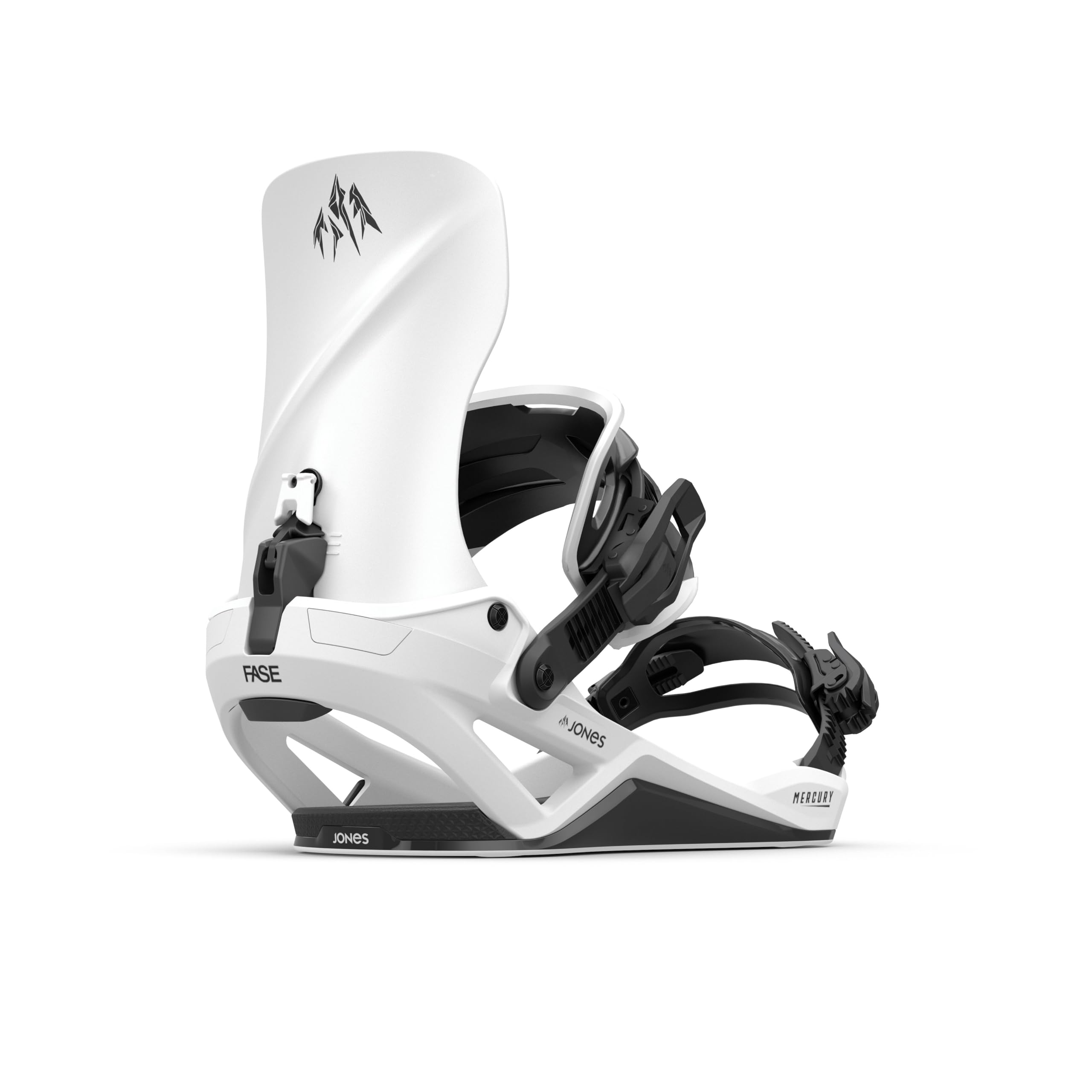
2. JONES Mercury Fase Snowboard Bindings
The quick-entry binding that makes traditionalists rethink everything.
If you have always been against easy-entry bindings because they sacrifice performance, the Mercury Fase is the pair that changes your mind. Its Fase Fast Entry system gives you the convenience and speed of a rear-entry hybrid without losing the precision of a two-strap. One rider put it simply: rode them for a week in Tahoe and was sold after the first run. The medium-stiff response is strong enough for freeride power on steep chutes, yet playful enough for freestyle laps — exactly the range you need from an all-mountain binding.
Downsides are few. The system takes a run or two to get used to — one first-time owner noted it was a little getting used to, which is typical for any new entry style. But the payoff of not sitting down to strap in while retaining full control over comfort and aggressiveness is significant. The 30% glass-filled nylon baseplate and TPU chassis work together to give that stable, precise carve, while the EVA bottom pad keeps fatigue low on long days.
What Stands Out
- Fase entry system blends strap precision with rear-entry speed
- Medium-stiff flex handles carving and mixed snow with confidence
- Enveloping straps and full cushioning reduce fatigue
Consider This
- Premium price point is a serious investment
- A slight learning curve to master the entry mechanism
Reach for this if: You want the convenience of a step-in binding without giving up the control and adjustability of traditional two-straps.
Look elsewhere if: You need a budget-friendly option or prefer the simplicity of a standard strap binding.
3. Burton Men’s Mission Re:Flex Snowboard Bindings

The relaxed all-mountain standard that plays well with any board in your quiver.
A medium flex binding with a nylon composite base blended with 30% short-glass, the Mission Re:Flex is built for riders who want a playful response that still holds a carve. Unlike the stiffer Union Force, the Mission offers a zero forward lean hi-back that sits completely vertical, giving you a more relaxed feel right from the start. That makes it a better match for intermediate riders who are still dialing in their stance, or for anyone who prefers all-day comfort over hard-charging speed.
The Re:Flex mounting system is fully compatible with every mounting system on the market — channel, 4×4, and 2×4 — so it transfers between boards easily. The full underfoot cushioning (FullBED) reduces fatigue noticeably, and the lifetime warranty on the baseplate makes the price easier to stomach. The catch: at 5 lb, it is a full 4 lb heavier than the Nidecker Flow Nexus, something you will feel if you walk up boot packs or haul your board on long traverses.
Comfort-First Design: The Smooth Glide buckles are easy to secure, and the Supergrip Capstrap wraps over the toebox rather than across it, which reduces pressure points.
One Downgrade: The relaxed flex and zero forward lean mean it lacks the aggressive edge hold of stiffer bindings when you really lay into a carve.
Who it fits: Intermediate to advanced riders who want a versatile, comfortable binding that works across multiple boards and doesn’t demand a stiff stance.
Who should skip: Aggressive freeriders looking for maximum power transfer and minimal weight.
4. Nidecker Flow Nexus Snowboard Bindings

The featherweight rear-entry binding that makes lift lines a non-event.
At just 1 pound, the Flow Nexus is a full 4 lb lighter than both the Burton Mission and the Union Force — a massive difference when you are carrying your board or walking through deep snow. The reclining hi-back opens wide so you can slide your foot in while standing, and the Fusion Strap wraps across the whole foot for even pressure. Newer and progressing riders benefit from the friendly flex that provides accessible response without feeling flimsy. The cushioned footbeds absorb chatter and impacts, reducing fatigue on long days.
No binding is perfect, and the Nexus has a real caveat. One reviewer noted that it was too hard to get their boots out of the bindings, and another said their boot broke while trying to exit. This seems to be a specific issue with the release mechanism on certain boots, so be cautious if you have a stiff boot with a bulky heel. On the flip side, other owners call it light, solid, and easy in and out, and say it is so easy to unbind and get back in the lift line.
Key Strengths
- Weighs only 1 lb — the lightest in this list by a wide margin
- Tool-free adjustments make dialing fit quick and easy anywhere
- Dampening footbeds reduce fatigue on long, bumpy runs
Potential Issue
- Some boots may be very difficult to remove from the binding
- Beginner-to-intermediate rating may feel soft for aggressive riders
Best fit: Beginners and progressing riders who want the convenience of rear-entry and a featherlight build that makes the whole day easier.
Not for: Riders with stiff boots or anyone who prioritizes hardcore edge hold over ease of entry.
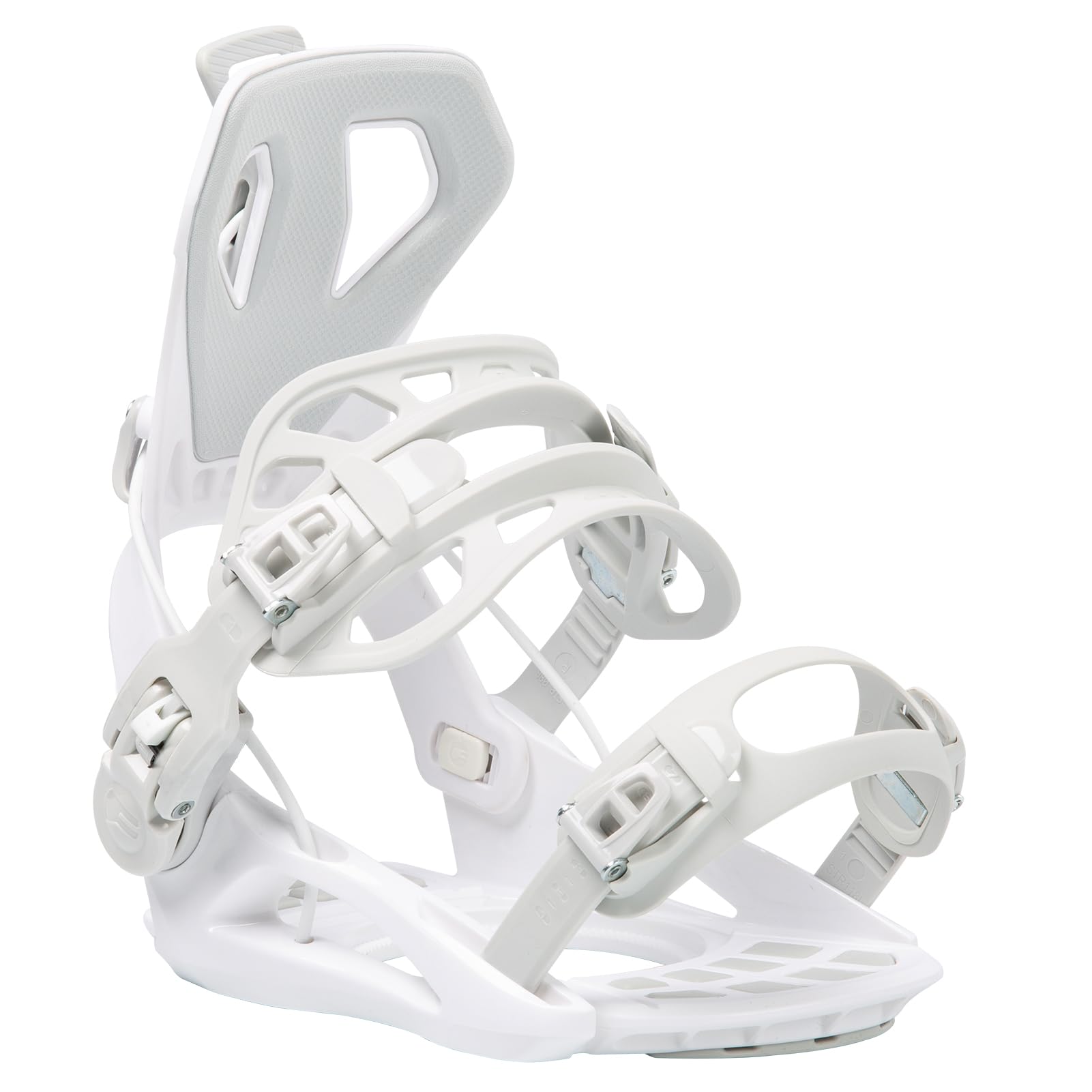
5. XCMAN Rear Step in Style Snowboard Bindings
The budget binding that finally makes step-in convenience affordable.
Rear entry bindings usually cost a premium, but the XCMAN brings a functional step-in design to a price point that opens the category up to riders who are watching their wallet. The hi-back flips down so you slide your foot in and ride away without sitting in the snow. The Fusion one-piece Power Straps use a 3D design that covers a larger area of the foot for comfort and control, and the hybrid nylon fiber baseplate provides stability while cutouts keep snow from building up underneath.
One buyer mentioned that one strap came undone due to snow buildup, but re-tightened easily — a minor annoyance that is common with budget step-in designs. Other riders call them smooth, easy to mount and adjust, and surprisingly solid quality for the money. The adjustable turntable lets you dial in multiple stance angles, and the rear board tilt can be fine-tuned for different riding styles. Just know that the warranty description says “No,” so you are trading long-term support for up-front savings.
Bang for Buck
- Good build quality and durability for the price point
- Super fast in and out — great for riders over 40 who want to save effort
- Fits most major boards with multiple angle adjustments
The Catch
- Snow buildup can occasionally cause a strap to release
- No warranty included — you accept the full risk
Best for: Beginner to intermediate riders on a budget who want the convenience of rear-entry without investing heavily in a premium brand.
Not the right pick if: You ride aggressively every weekend and need a warranty-backed binding that can take repeated hard use.
Understanding the Specs
Flex and Baseplate Material
The baseplate material determines how much energy passes from your legs to the board. Glass-filled nylon composites (like the 30% short-glass in the Burton Mission or the full glass-filled setup in the Nidecker Flow Nexus) offer a predictable medium flex that works across all-mountain terrain. Aluminum baseplates like the Union Force give a stiffer, more immediate feel at the cost of extra weight. A medium-stiff flex is generally the most versatile for mixed conditions, but a full-stiff baseplate is overkill if you spend most of your time on groomers.
Weight and Your Day
Every extra pound on your feet makes your legs work harder over a full day of riding. The Nidecker Flow Nexus weighs just 1 pound, while the Burton Mission and Union Force both sit at 5 pounds — a 4-pound difference that changes how tired you feel by the afternoon and when you hike through deep snow. Rear-entry bindings (you step in from the back instead of buckling straps) tend to save weight because they use fewer moving parts, but traditional strap bindings usually give you stronger edge hold. Pick rear-entry if you want to click in fast at the lift line; pick straps if you want more control on every carve.
FAQ
What flex rating is best for all-mountain riding?
Are rear-entry bindings as responsive as traditional strap bindings?
How do I know what size snowboard binding to buy?
Will these bindings work with my snowboard’s mounting system?
How long do snowboard bindings typically last?
What is the difference between a traditional strap and a rear-entry binding?
What should I do if my rear-entry binding is hard to get out of?
Can I use all-mountain bindings in the park?
Final Thoughts: The Verdict
For most riders, the all mountain snowboard bindings winner is the Union Force because it delivers bomb-proof build quality and a responsive medium-stiff flex that handles everything from steep chutes to groomers without compromise. If you want the convenience of a quick-entry system without sacrificing performance, grab the JONES Mercury Fase. And for the best all-around value that still feels modern and comfortable, the Burton Mission Re:Flex is a no-brainer.
How We Picked
We do not accept paid placement. Every pick is matched to a real buyer and a real use-case; we do not hands-on test units.
Sources & Methodology
Specifications: manufacturer listings and product documentation. Review insights: verified customer reviews, as of July 2026. Pricing: not shown on this page (it changes often); check the current price via the retailer link.
As an Amazon Associate, Gadgets Feed earns from qualifying purchases. This does not affect which products we feature.