
Our readers keep the lights on and my morning glass full of iced black tea. As an Amazon Associate, I earn from qualifying purchases.
Specs are compiled from manufacturer listings and verified buyer reviews and can change over time — please confirm the key details on the product page before buying.
Nothing kills a day on the water faster than a cloud of blue smoke trailing your boat. The wrong 2-stroke oil gums up your plugs, sticks your piston rings, and turns a smooth idle into a rough stutter. You need an oil that burns clean, protects hard, and keeps your outboard running season after season while staying affordable. We looked at the real specs and what actual buyers report to sort the best from the rest.
I’m Min — the founder and writer behind Gadgets Feed. This guide is built by comparing the manufacturers’ published specifications and the patterns across verified customer reviews, so you get each pick’s real strengths and trade-offs instead of marketing spin.
You need a 2 stroke outboard oil that burns cleanly, protects your engine from wear, and does not cost a fortune. The key specs to look for are a high flash point (the temperature at which the oil ignites, so it burns fully instead of leaving gunk), a strong additive package (chemicals that reduce friction and prevent rust), and a price that fits your budget.
Our Picks at a Glance

How To Choose The Best 2 Stroke Outboard Oil
Picking an oil for your outboard is not just about grabbing the cheapest bottle off the shelf. The wrong formula can gum up your powerhead and shorten your motor’s life. Here are the three decisions that matter most.
TC-W3 Certification Is Your Baseline
Every marine 2-stroke oil worth buying carries the NMMA TC-W3 rating. This certification means the oil has passed tests for lubricity, rust protection, and deposit control in a water-cooled outboard. Any oil without this stamp is a risk you do not want to take with your motor. Every pick on this list meets or exceeds TC-W3.
Conventional, Synthetic Blend, or Full Synthetic
Standard TC-W3 mineral oil is cheapest and works fine in older, low-compression motors under light loads. A synthetic blend, like the STAR BRITE Premium, adds extra protection without a huge price leap. Full synthetics, such as the Klotz TechniPlate, run cleaner, resist high heat better, and produce noticeably less smoke. For a modern high-compression or direct-injection engine, a full synthetic or a super-premium blend is the safer choice.
Pre-Mix vs. Oil Injection
Some outboards mix oil and gas in the tank (pre-mix), while others have an injection system that meters oil from a separate reservoir. All TC-W3 oils work in pre-mix setups, but for direct-injection (DFI) motors like Mercury Optimax or Evinrude E-TEC, you need a specific DFI formulation to prevent coking and piston scuffing. The Quicksilver DFI is built exactly for that job.
Quick Comparison
| Model | Best For | Volume | Fluid Type | Item Weight | Amazon |
|---|---|---|---|---|---|
| Valvoline 2-Cycle Marine TCW-3★ Best Overall | All-around clean burn | 1 Gallon (case of 3) | Full Synthetic | — | Amazon |
| STAR BRITE Super Premium+Best for Older Motors | Older outboards & high performance | 128 fl oz | Synthetic Blend | 7.66 lbs | Amazon |
| Klotz Outboard TechniPlate | Minimal smoke & vintage motors | 128 fl oz | Full Synthetic | 6 lbs | Amazon |
| XD30 Johnson Evinrude | OEM-grade for Johnson/Evinrude | 128 fl oz | Mineral-based | — | Amazon |
| Quicksilver DFI | Direct-injection engines | 128 fl oz | Synthetic Blend | — | Amazon |
| STAR BRITE Premium | Budget-friendly value | 32 fl oz | Synthetic Blend | 1.99 lbs | Amazon |
In‑Depth Reviews
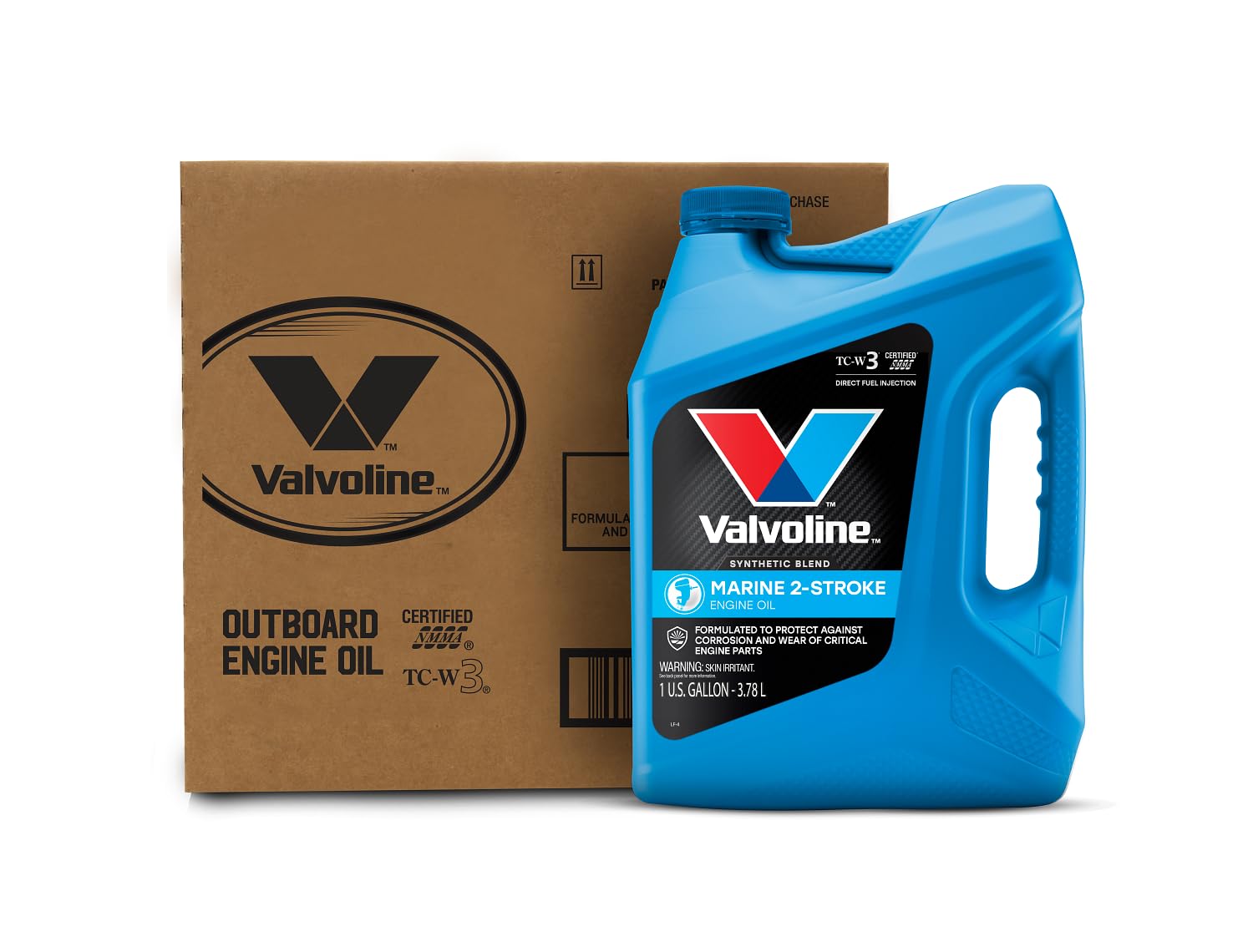
1. Valvoline 2-Cycle Marine TCW-3 Motor Oil 1 GA, Case of 3
Our pick — over 4.5★ from 800+ verified ratings; the strongest balance of quality and price.
A full synthetic oil that burns cleanly and protects modern outboards for the long haul.
This Valvoline has a flash point (the temperature at which the oil ignites) of 196 Degrees Celsius — nearly three times higher than the STAR BRITE Super Premium+’s 68 Degrees Celsius. That means it resists vaporizing at high temperatures, so more oil stays inside the cylinder to lubricate moving parts instead of burning off. Owners mention using it on a 2022 Mercury 90 outboard, saying the engine “runs extremely smooth” with “no smoke from the engine.”
The ashless detergent additive package fights piston ring sticking and keeps the ports from getting blocked, which is the main reason a 2-stroke loses power over time. This is a full synthetic at a volume that covers you for multiple oil changes — each case holds 3 gallons, making it convenient for any boater who runs their motor regularly.
The downside: you must buy a three-pack, so if you only need one gallon for a small kicker motor you rarely use, you will have extra oil to store. For the owner of a main outboard, though, the per-gallon value is excellent.
What It Does Well
- Full synthetic formulation keeps deposits and spark plug fouling low
- High flash point (196°C) resists burn-off at high engine temps
- Case of 3 gallons cuts the per-unit cost significantly
One Trade-Off
- Only sold as a 3-count case, not a single gallon
Reach for this if: You want a full synthetic with excellent high-heat protection and do not mind stocking three gallons at once — ideal for the primary outboard on your boat.
Look elsewhere if: You own a direct-injection engine like an Optimax that specifically needs a DFI-rated oil instead of a standard TC-W3.
2. STAR BRITE Super Premium+ 2-Cycle Synthetic Blend TC-W3 Engine Oil
A synthetic blend that cuts smoke and cleans up carbon in older, high-performance 2-strokes.
This oil includes a PIB (polyisobutylene) viscosity modifier (a friction-improving additive) that reduces smoking noticeably — one buyer named it the “best TC-W3 oil for older 2-stroke outboards,” saying the spark plugs look clean like a 4-stroke. At 7.66 pounds per gallon, it is noticeably heavier than the 1.99-pound STAR BRITE Premium quart, which reflects its thicker synthetic blend formulation designed for high-compression and high-RPM motors.
It is marketed for FICHT, E-TEC, Optimax, and HPDI outboards, meaning it handles both pre-mix and direct-injection systems. The high-detergent formula actively cleans out deposits from the fuel delivery system, which is a real plus if you are running a motor that has accumulated years of varnish from standard mineral oil.
The flash point (ignition temperature) is 68 Degrees Celsius — much lower than the Valvoline’s 196 Degrees Celsius. Different test methods can produce different numbers, so this is not a direct comparison, but it is worth knowing if you run your engine hard and hot for long periods.
Why It Stands Out
- PIB additive reduces smoke and improves lubrication under heavy load
- Works with high-performance engines like E-TEC and Optimax
- High-detergent formula actively cleans old carbon deposits
Keep In Mind
- Lower flash point compared to full synthetics may mean faster consumption at extreme engine temperatures
Best fit: The owner of an older high-performance outboard, especially a FICHT or HPDI, who wants to reduce smoke and clean up years of carbon buildup.
Not the pick if: You need a dedicated DFI oil for a Mercury Optimax — Quicksilver DFI is the safer choice there.
3. Klotz Outboard TechniPlate Synthetic Premix/Injector Oil for 2-Stroke TC-W3 Marine Engines
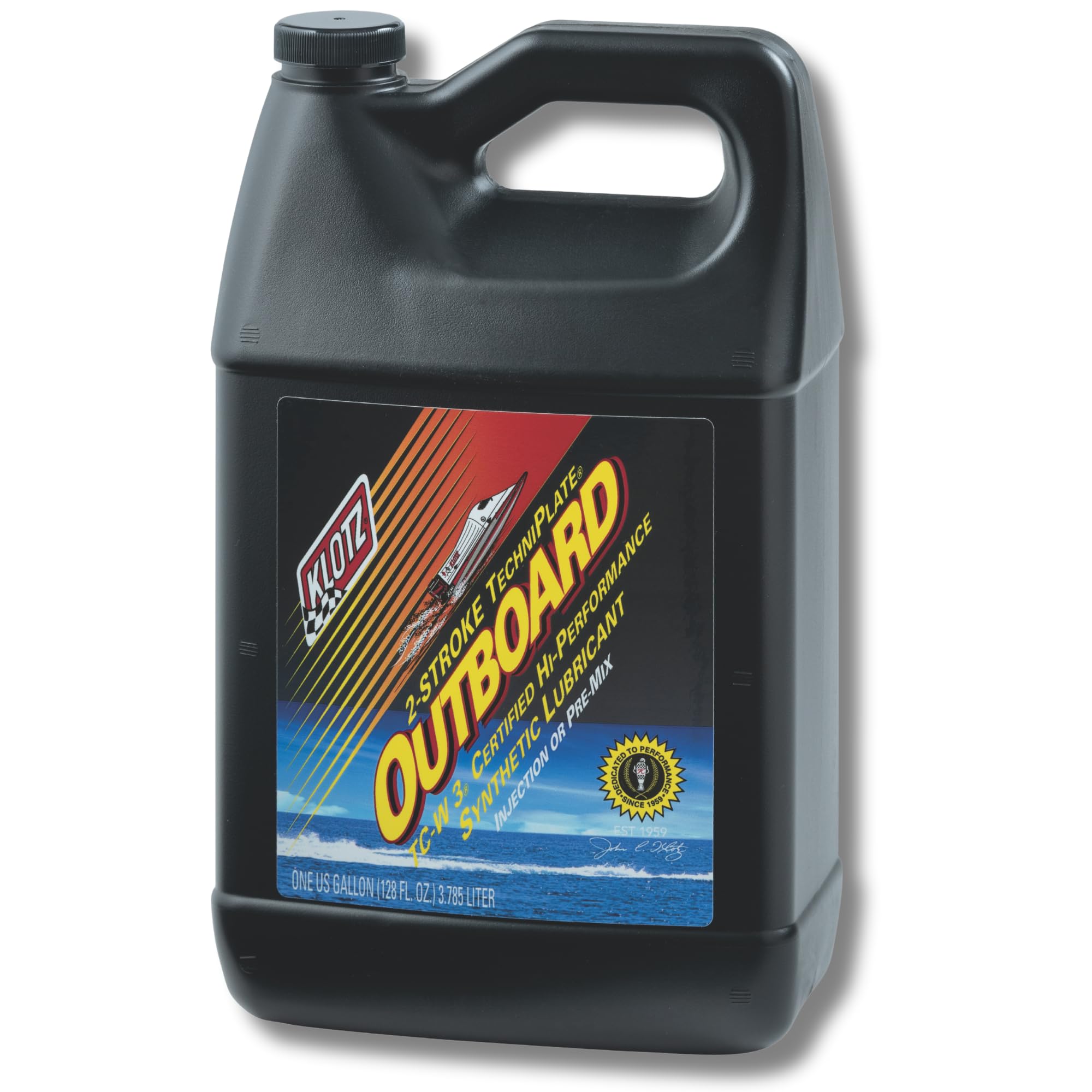
A full synthetic that makes even a vintage Force 120 smell tolerable and start instantly.
Klotz is a cult name in racing circles, and this TechniPlate formula brings that pedigree to outboards. It is a 100% fully synthetic oil that exceeds both NMMA TC-W3 and JASO FD (a Japanese standard for high-performance 2-stroke oil with extra detergency). Owners of antique outboards love it — one collector runs it in motors originally designed for a 10:1 oil ratio and reports “less smoke” and fumes that are much less unpleasant than conventional oils.
One reviewer runs this at a 64:1 ratio in a Force 120HP outboard (which calls for 50:1), claiming the oil is so good that the leaner mix still delivers full protection with more RPMs and faster starting. We do not recommend deviating from your engine’s spec, but that real-world confidence points to a strong additive package (chemicals that reduce friction and prevent wear). Multiple owners also mention the sweet, less irritating smell compared to standard TC-W3 oils.
At 6 pounds per gallon, it is lighter than the STAR BRITE Super Premium+ (7.66 lbs), which reflects the different base stock composition. The price per gallon is higher than the mid-range options, but for someone who runs an older motor and values a clean, low-smoke experience, it is money well spent.
What Makes It Special
- Full synthetic with JASO FD rating for maximum detergency and protection
- Much less smoke and a more tolerable smell than standard oils
- Designed for pre-mix, oil injection, and DFI systems
Consider This
- Premium price point compared to entry-level budget oils
Ideal for: The vintage outboard owner who wants the cleanest possible burn, minimal smoke, and a pleasant exhaust smell — or any boater who prioritizes top-tier synthetic protection.
Pass if: You are on a tight budget and only need a cheap oil for a low-stress low-horsepower motor.
4. XD30 Johnson Evinrude 2 Stroke TCW3 Outboard Motor Oil Gallon 0779725

Genuine OEM oil designed specifically for water-cooled Johnson and Evinrude 2-stroke outboards.
This is the brand-name XD30 formula from Johnson and Evinrude, with the part number 0779725 printed right on the bottle. It is formulated for water-cooled 2-stroke engines that specify NMMA TC-W3, API TC, or JASO FB certification (a standard focused on basic lubrication and detergency). If you own a Johnson or Evinrude and want the exact oil the engineers designed the engine around, this is it.
At 128 fluid ounces, this is a full gallon — four times the size of the STAR BRITE Premium’s 32-fluid-ounce quart. Buyers consistently say the price beats their local marina, and the oil arrives quickly. One owner of a 150 Johnson motor noted it “does smoke quite a bit compared to a synthetic.” That is an honest trade-off: this is a mineral-based formula, not a full synthetic, so it produces more visible exhaust than the Klotz or Valvoline options.
For general light-duty use and for owners who want to stick with factory-recommended fluid, this is a dependable and affordable choice. It minimizes carbon and deposit buildup and protects against wear with what the brand calls “premium lubricity.”
Where It Excels
- Genuine Johnson/Evinrude OEM formula — exact fit for those engines
- Full gallon size at a price that undercuts local marinas
- Approved for both pre-mix and oil injection systems
Keep In Mind
- Mineral-based formula smokes noticeably more than full synthetics
Who it suits: Johnson and Evinrude owners who want the factory oil without paying marina markup — perfect for general-purpose boating under normal loads.
skip it if: You want a low-smoke, high-performance synthetic for a high-compression or direct-injection motor.
5. Quicksilver DFI 2-Stroke Marine Outboard Engine Oil, 1 Gallon
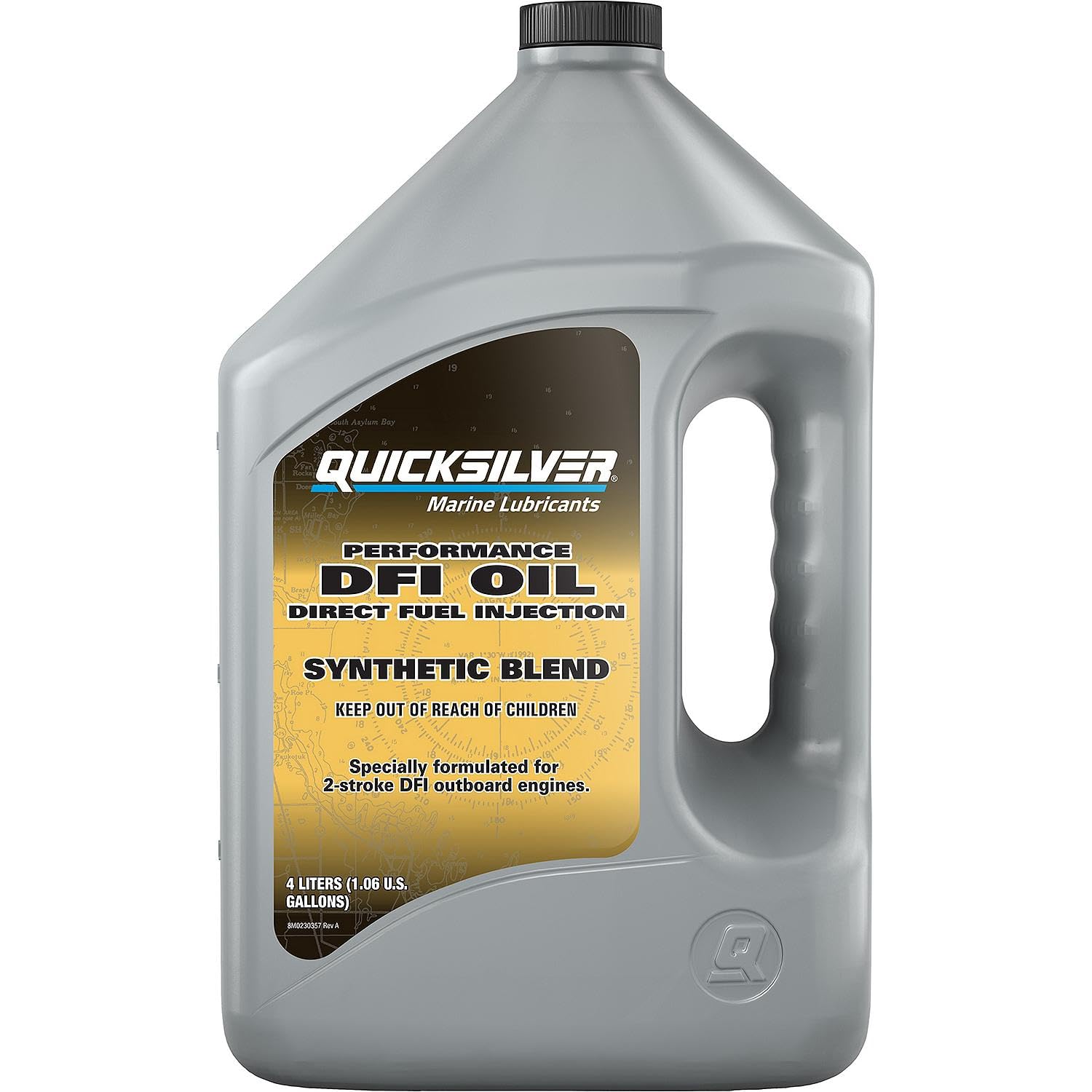
The oil your direct-injection Mercury Optimax demands — nothing else will do.
This is not a general-purpose TC-W3 oil. Quicksilver DFI is specifically formulated for direct-injection (DI) outboard engines, where the oil is injected directly into the combustion chamber. A standard oil can coke up inside a DI motor and ruin the powerhead. One buyer with a 2006 Mercury Optimax 90 HP says this oil “eliminated smoking on start-up,” and another calls it the best two-stroke oil available, stating he has “never had an oil problem with my Optimax.”
The formula is designed to provide outstanding wear and corrosion protection while minimizing the carbon deposits that plague direct-injection engines. It also increases lubricity and resistance to scuffing — the kind of protection you need when an engine is running leaner and hotter than a traditional carbureted outboard.
The price per gallon is higher than standard TC-W3 oils, but that is the cost of running a modern DFI motor safely. Do not substitute a cheaper oil here; your engine will not thank you.
Why You Need It
- Specifically engineered for direct-injection outboards to prevent coking
- Reduces exhaust smoke noticeably on Optimax and similar motors
- Provides wear and corrosion protection for high-compression DI engines
The Catch
- Higher price per gallon — no substitute for a standard TC-W3 oil if you are on a budget
- Vehicle-specific fit: only for direct-injection engines, not all 2-strokes
Must-buy if: You own a Mercury Optimax, Evinrude E-TEC, or any other direct-injection 2-stroke outboard — this is the oil the motor was designed to run.
Wrong choice if: You have a standard carbureted outboard; you will pay extra for a feature you do not need.
6. STAR BRITE Premium 2-Cycle Engine Oil TC-W3-1 GAL (19000)
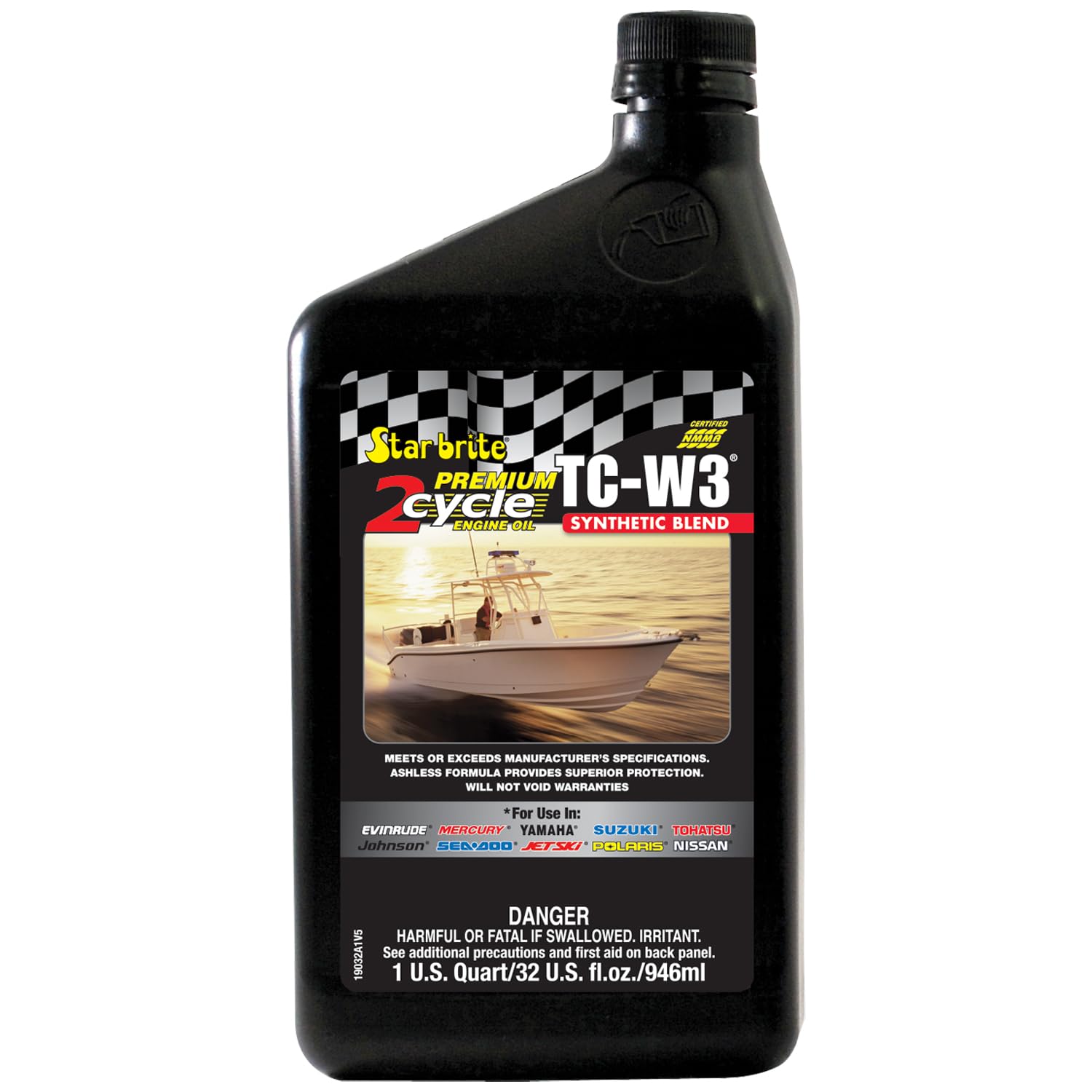
A synthetic-blend quart that delivers quality protection at a price that makes bulk-buying easy.
At 32 fluid ounces and 1.99 pounds, this is the smallest and lightest bottle on the list. But it is a genuine synthetic blend (a mix of synthetic and mineral base oils) that outperforms basic OEM oils — so you get better protection than the cheapest mineral oils without a big price jump. One buyer summed it up: “High quality marine oil at half the local store price.”
It is engineered for all makes and models of 2-cycle outboard engines, including pre-mix and direct-injection systems, though we would still recommend a dedicated DFI oil for Optimax-style motors. That dark green color one veteran 40-year 2-stroke mechanic called out as a telltale sign of quality is present here. The ashless, clean-burning formula helps prevent piston seizing and carbon deposits.
The downside is the volume — at a 4.0x gap compared to the 128-fluid-ounce XD30 gallon, you will run through this quart quickly if you do a lot of boating. For a single weekend’s pre-mix or a small kicker motor, it is perfect. For a full season on a main engine, you will want to buy multiple bottles or step up to the gallon-sized STAR BRITE Super Premium+.
Good Points
- Synthetic blend offers real protection improvements over basic mineral oil
- Compact quart size is easy to store and pour for small jobs
- Very affordable per-bottle price point
Downside
- 32 fl oz bottle runs out fast — not a great value for heavy users compared to gallon jugs
Pick this if: You need a small quantity for a portable tank, a kicker motor, or an occasional trip, and you want a synthetic blend without paying for a full gallon.
pass on it if: You run a main outboard regularly — you will save money and hassle buying a full gallon of a mid-range or premium oil.
Understanding the Specs
TC-W3 Certification
This is the National Marine Manufacturers Association standard for 2-stroke outboard oil. It means the oil has passed tests for rust prevention, wear protection, and deposit control in a water-cooled marine engine. Every outboard oil on this list meets TC-W3, so you know you are getting a product that was tested for exactly the conditions your motor faces — salt spray, high humidity, and prolonged idle.
Flash Point
The flash point is the temperature at which the oil’s vapors can ignite. A higher flash point, like the Valvoline’s 196 Degrees Celsius, means the oil resists burning off at high engine temperatures, keeping more lubricant where it is needed. A lower flash point does not mean the oil is bad — it can indicate a different base stock blend — but for sustained high-RPM running, a higher flash point is generally a safer bet.
Synthetic vs. Conventional
Full synthetic oils (like the Klotz TechniPlate or the Valvoline) are chemically engineered to resist breakdown at high heat and produce fewer deposits. Synthetic blends (like both STAR BRITE oils) mix conventional base stocks with synthetics for better protection at a lower price. Conventional mineral oils (like the XD30) are the cheapest and work fine in low-stress applications, but they smoke more and can leave more carbon inside the engine over time.
Direct Injection (DFI) Oils
Standard TC-W3 oils are not always suitable for direct-injection outboards like Mercury Optimax or Evinrude E-TEC. These engines inject oil directly into the combustion chamber. A DFI-specific oil, such as the Quicksilver DFI, is formulated to resist the higher cylinder temperatures and prevent coking (hard carbon deposits) that can seize the piston rings. Using the wrong oil in a DFI motor can cause expensive damage.
FAQ
Can I use regular 2-stroke oil in my outboard?
What does TC-W3 stand for?
What is the difference between TC-W3 and JASO FD certification?
Can I use a synthetic blend in my old 2-stroke outboard?
How much oil should I mix per gallon of gas?
Why does my outboard smoke with some oils but not others?
Do I need a special oil for a direct-injection outboard?
Can I use pre-mix oil in an oil-injection system?
How long does 2-stroke outboard oil last in storage?
What is the best 2-stroke oil for a Mercury Optimax 90 HP?
Final Thoughts: The Verdict
If you want one dependable pick, the best 2 stroke outboard oil is the Valvoline 2-Cycle Marine TCW-3 because it combines a full synthetic formula with a high 196 Degrees Celsius flash point for excellent high-temp protection at a great per-gallon value. If you want noticeably less smoke and a cleaner-running vintage motor, grab the Klotz Outboard TechniPlate. And for a direct-injection engine that demands a dedicated lubricant, choose the Quicksilver DFI 2-Stroke Marine Outboard Engine Oil.
How We Picked
We do not accept paid placement. Every pick is matched to a real buyer and a real use-case; we do not hands-on test units.
Sources & Methodology
Specifications: manufacturer listings and product documentation. Review insights: verified customer reviews, as of July 2026. Pricing: not shown on this page (it changes often); check the current price via the retailer link.
As an Amazon Associate, Gadgets Feed earns from qualifying purchases. This does not affect which products we feature.