
Our readers keep the lights on and my morning glass full of iced black tea. As an Amazon Associate, I earn from qualifying purchases.
Specs are compiled from manufacturer listings and verified buyer reviews and can change over time — please confirm the key details on the product page before buying.
If your ears ache after an hour of wearing traditional earbuds, or you hate the isolated feeling of noise-canceling headphones during a run, open-ear headphones are the fix you have been looking for. They sit outside your ear canal — clipping over your ear or resting on your cheekbone — so your ears can breathe and you stay alert to traffic, announcements, or a colleague walking up to your desk. The trade-off is sound quality: an open design naturally leaks bass and struggles in noisy spaces, so picking the right pair means knowing exactly which spec matters for your routine.
I’m Min — the founder and writer behind Gadgets Feed. This guide is built by comparing the manufacturers’ published specifications and the patterns across verified customer reviews, so you get each pick’s real strengths and trade-offs instead of marketing spin.
if you need earbuds for sweaty gym sessions, all-day work calls, or weekend trail runs, these seven bluetooth open ear headphones represent the best options across comfort, battery life, and connectivity.
Our Picks at a Glance


How To Choose The Best Bluetooth Open Ear Headphones
Open-ear headphones solve a specific problem — ear fatigue and situational awareness — but they introduce a few trade-offs you need to understand before buying. Here are the specs that separate a pair that disappears on your ears from one that buzzes, slips, or dies mid-run.
Bone Conduction vs Air Conduction
Bone conduction headphones (like the SHOKZ OpenRun Pro) send sound vibrations through your cheekbone, leaving your ear canals completely open. This is the best choice if you absolutely need to hear everything around you — traffic, a baby monitor, a coworker. The downside is that bass is less punchy and the headphones can tickle or vibrate at higher volumes. Air conduction models (like the CXK and Soundcore V30i) use a small forward-facing speaker that sits just above your ear canal. They offer noticeably fuller bass and clearer mids, but they leak a little more sound at high volume. If sound quality is your priority, pick air conduction; if total environmental awareness matters more, go bone conduction.
Battery Life: Single-Charge vs Total Playtime
Manufacturers often list a big number like “36 hours” — but that includes the charging case. What matters more is how long a single charge lasts, because that is what you get between charges if you forget the case at home. For example, the Soundcore V30i offers 12 hours on a single charge and 36 total with the case, while the LEVN gives you 14 hours on a single charge but has no case — you plug it in directly. For daily commuters, 8 to 12 hours of real-world playback (accounting for volume and calls) is a practical minimum.
Bluetooth Version & Multipoint Connection
Bluetooth 5.3 (or newer, like 6.0 and 6.1) brings three real-world benefits: a more stable connection through interference (gyms, crowded streets), lower power draw (longer battery life), and better multipoint performance — the ability to stay paired to your phone and laptop simultaneously and switch audio automatically. Bluetooth 5.1, which the SHOKZ OpenRun Pro uses, is perfectly reliable but may not handle dual-device switching as smoothly. If you take calls on your laptop and listen to music on your phone, prioritize a model with Bluetooth 5.3 and explicit multipoint support.
Quick Comparison
| Model | Best For | Battery (Single) | Bluetooth | Weight | Amazon |
|---|---|---|---|---|---|
| SHOKZ OpenRun Pro★ Best Overall | Outdoor runners & cyclists needing full awareness | 10 hours | 5.1 | 26 g | Amazon |
| Soundcore V30iBest Value | Budget-friendly all-day listening with a carrying case | 12 hours | 5.3 | — | Amazon |
| SHOKZ OpenFit Pro | Premium all-day wear with noise reduction & Dolby Atmos | 12 hours | 6.1 | — | Amazon |
| LEVN Open Ear Headphones | Extended single-charge playback for long workouts | 14 hours | 5.3 | — | Amazon |
| Soundcore C50i | Budget-friendly clip-on with strong bass for the gym | 8 hours | 6.0 | — | Amazon |
| CXK Open Ear Headphones | Ultra-light headset for calls & meetings | 12 hours | 5.4 | 23 g | Amazon |
| Boytond Ultra Open Ear | Budget-friendly clip-on bone conduction alternative | 10 hours | 5.3 | — | Amazon |
In‑Depth Reviews
1. SHOKZ OpenRun Pro
Our pick — 4.5★ from 26,500+ verified ratings; the strongest balance of quality and price.
The gold standard for runners who refuse to give up situational awareness.
These are bone conduction headphones — they send sound through your cheekbone using SHOKZ’s 9th generation technology, leaving your ear canals completely unobstructed so you can still hear traffic, a bike bell, or a friend calling your name. The wraparound titanium frame makes them incredibly stable during sprints and high-intensity interval training, and the IP55 sweat resistance handles heavy perspiration. Battery life sits at 10 hours per charge, and when you are in a rush, a 5-minute quick charge gives you 1.5 hours of playback — enough for a quick run.
Buyers report that the “bass is thumping” for bone conduction, which is high praise given the technology’s natural weakness — SHOKZ’s TurboPitch dual drivers are designed to push noticeably richer low-end than most competitors. One reviewer noted: “Battery life is excellent (I easily get 8+ hours), Bluetooth connectivity is reliable, and the build quality feels premium.” The catch? At higher volumes you may feel a vibrating or tingling sensation on your cheekbone — a quirk of bone conduction — and the 10-hour battery compared to the Soundcore V30i’s 12-hour single-charge playback.
Why Runners Love These
- True open-ear awareness — no ear canal blockage at all
- Secure wraparound titanium frame stays put during sprints
- Quick-charge gives 1.5 hours in just 5 minutes
The Trade-Offs
- Bluetooth 5.1 — behind the 5.3 found on the Soundcore V30i
- Vibration sensation at higher volumes can be distracting
- Bass is improved but still thinner than air-conduction models
Grab these if: you run or cycle in traffic and need total awareness of your surroundings — bone conduction is the only safe way to get audio and keep your ears free.
Look elsewhere if: you want deep, room-filling bass or a Bluetooth version that supports smooth multipoint switching between devices.
2. Soundcore by Anker V30i
Anker’s all-day air-conduction earbuds that outperform their price tag.
Unlike bone conduction, these use a 14.2mm bio-material dynamic driver aimed at your ear canal from outside, which means you get fuller bass and clearer mids without sealing off your ears. The real headline here is battery: 12 hours on a single charge and 36 hours total with the charging case. That is 36 hours total playtime, compared to the SHOKZ OpenRun Pro’s 10 hours. A 10-minute quick charge adds 3 hours of listening, so you can top up while you shower and barely miss a beat.
Buyers consistently note these are incredibly comfortable for long stretches — one reviewer called them “ultra-comfort and light weight” and said they fell asleep wearing them. The IP55 rating with SweatGuard nano-coating protects the chipsets from moisture, so gym sweat or a light rain is not a problem. Sound quality is excellent for open-ear, though bass heads should know they won’t match closed-back over-ear headphones. The Bluetooth 5.3 connection is noticeably more efficient than the SHOKZ’s 5.1, contributing to the long battery life.
Why This Is a Bargain
- 12-hour single charge — compared to the SHOKZ OpenRun Pro’s 10 hours
- Bluetooth 5.3 gives stable, low-power connection
- Charging case extends total playtime to 36 hours
What to Expect
- Does not block out loud ambient noise — not ideal for libraries
- Bass is good for open-ear but not room-shaking
- Touch controls can be slightly finicky during sweaty workouts
Perfect for: anyone who wants a single pair of open-ear buds for the gym, commuting, and casual home listening — the battery life alone makes it a no-brainer.
Skip these if: you need bone conduction’s total ear openness for safety on busy roads, or you prefer physical buttons over touch controls.
3. SHOKZ OpenFit Pro
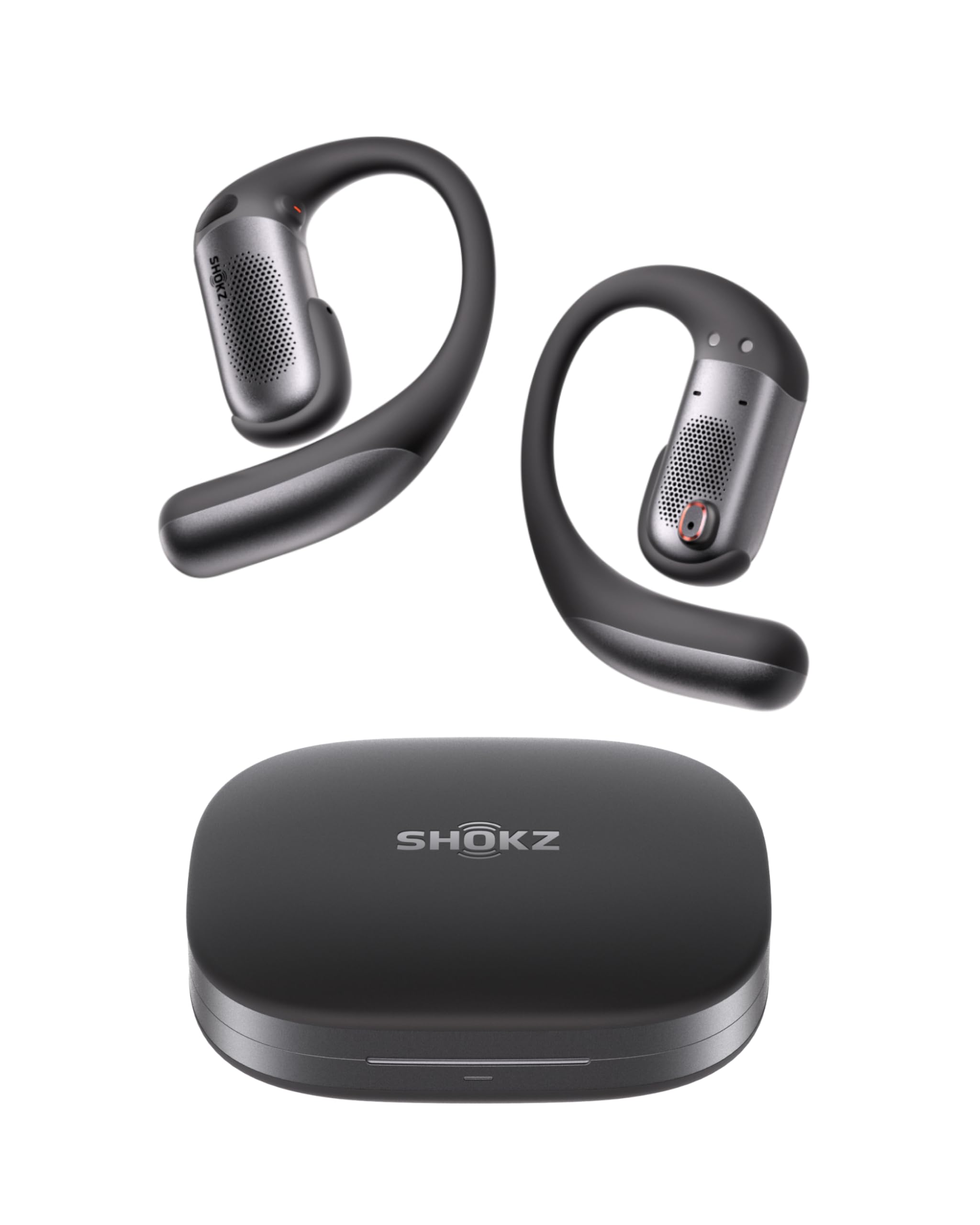
SHOKZ’s flagship air-conduction earbud with active noise reduction and Dolby Atmos.
This is the first SHOKZ earbud to feature Open-Ear Noise Reduction — an ear-adaptive algorithm that analyzes noise in real time and reduces it without sealing your ear canal. That means you can cut out the drone of a gym fan or office AC while still hearing a coworker call your name. The 11 x 20mm dual-diaphragm driver is the largest in this guide, and together with Dolby Atmos head tracking, it delivers genuinely rich spatial audio that the other picks cannot touch. Battery life is class-leading: 12 hours on a single charge and 50 hours total with the case, with a 10-minute quick charge giving 4 hours of playback.
The IP55 rating and physical buttons (no frustrating touch controls) make it practical for sweaty workouts, and the triple-mic AI system is designed by SHOKZ to reduce background wind noise by up to 99.4%. Buyers describe the fit as “extremely lightweight and comfortable” and say they “forget wearing it.” The drawback is straightforward: at a premium price, this is the most expensive pair in the list, and the noise reduction is designed for consistent background hums — it will not cancel a lawnmower or a loud conversation the way sealed ANC earbuds would.
Flagship Features
- Open-ear noise reduction keeps you aware but less distracted
- 50-hour total battery with wireless charging case
- Dolby Atmos with head tracking for rich spatial audio
Premium Trade-Offs
- Premium price
- Noise reduction reduces hums, not full conversations
- Larger earbud housing may not fit every ear comfortably
Buy this if: you want the absolute best open-ear sound quality and battery life, and you value spatial audio and active noise reduction in an open design.
Maybe overkill if: you just need basic open-ear audio for runs or calls — the Soundcore V30i delivers comparable utility for a fraction of the price.
4. LEVN Open Ear Headphones

The open-ear headphone that outlasts almost every model here on a single charge.
While most open-ear headphones tap out around 8 to 12 hours, the LEVN pushes 14 hours of continuous playback on a single charge — no charging case needed. The 15mm dynamic drivers deliver noticeably clear mids and highs for podcasts, coaching cues, and calls, and the multipoint Bluetooth 5.3 lets you stay connected to both your phone and laptop simultaneously, switching between music and meetings as needed. The frame uses a soft silicone build that wraps around the ear, making it flexible enough for different head shapes while staying put during runs or cycling.
Owners mention that the “Bluetooth connection is surprisingly strong” and that the fit becomes comfortable after a short break-in period — one reviewer used them for a week of daily walking and running and only needed to charge once. The catch is ergonomics: a few reviewers mention that the ear piece sits directly over the ear opening rather than in front of it, which can cause soreness on the tragus (the small bump in front of your ear canal) for some users. It is also note this model does not come with a charging case, so you will plug it directly into USB-C.
Battery Champion
- 14 hours on a single charge — beats the SHOKZ OpenRun Pro by 4 hours
- Multipoint Bluetooth 5.3 for dual-device switching
- Soft silicone frame is flexible and lightweight
Fit to Watch
- Ear piece placement can cause tragus soreness for some users
- No charging case — must plug in directly
- Bass sounds are somewhat lost compared to larger driver models
Reach for this if: you regularly go through long shifts or back-to-back workouts and want the longest possible runtime before reaching for a charger.
Think twice if: your ears are sensitive to pressure on the front of the ear canal, or if you prefer keeping a charging case in your bag for confidence.
5. Soundcore C50i by Anker
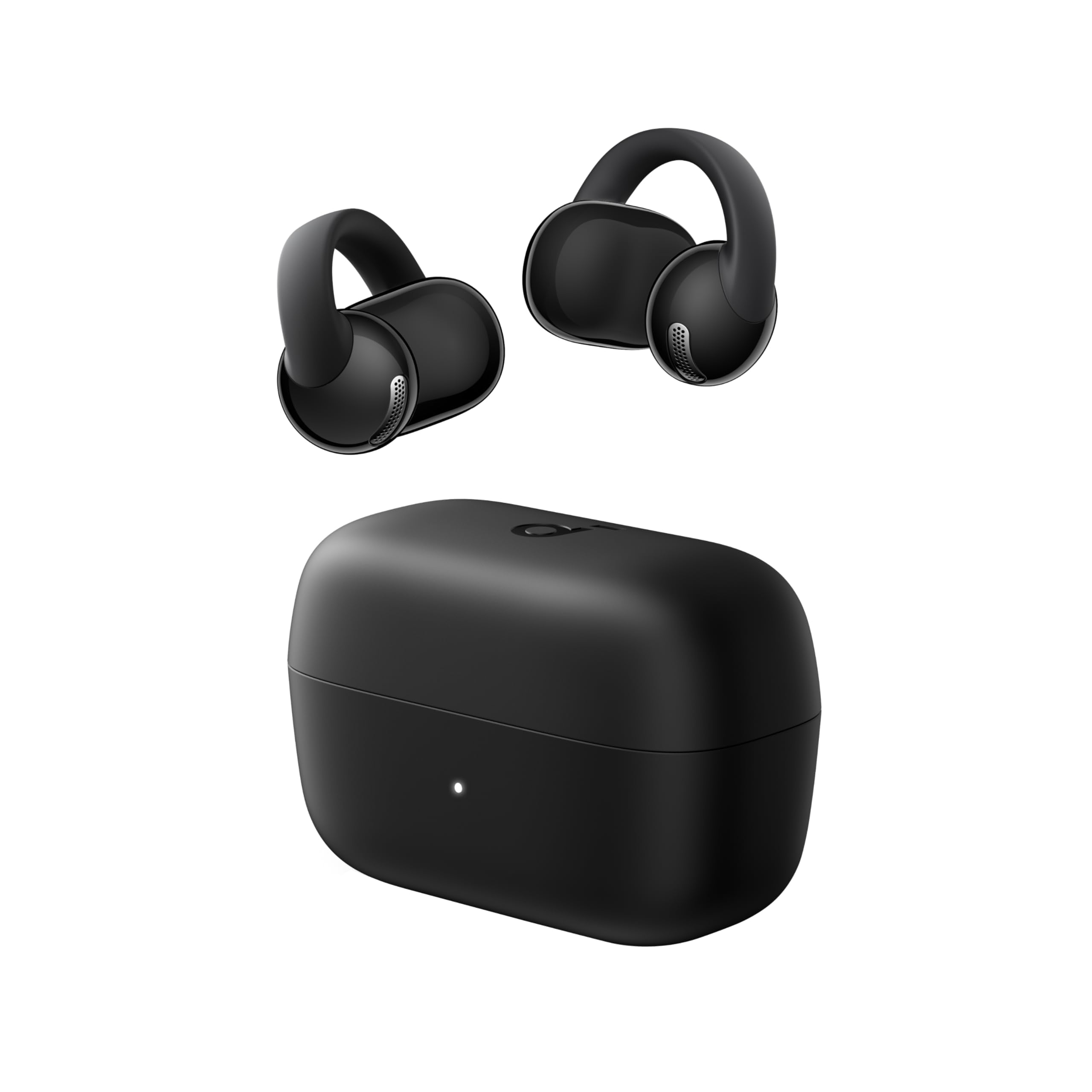
Anker’s ultra-light clip-on that rivals bone conduction with better bass.
The FlexiClip design uses a memory titanium wire that wraps around your ear and adapts to your shape — no headband, no pressure on your temples. At 12mm, the custom drivers deliver powerful bass that easily outperforms most bone conduction headphones in this price range, and the 86dB max output is plenty loud for a busy gym floor. The Bluetooth 6.0 chip is the newest in this list, offering ultra-stable connections and lower latency than the 5.3 models. Battery life is 8 hours per charge and 28 hours with the case — shorter than the V30i above, but the clip-on form factor means these disappear on your ears during intense movement.
Customers note that these stay secure even during 50-mile-per-week runs and that the sweat/rain resistance has held up over months of heavy use. One runner noted: “They stay secure and light on my ears, I don’t experience any ear fatigue.” The trade-off is volume and bass depth: while better than bone conduction, the 12mm driver cannot match the 14.2mm driver in the V30i for low-end punch, and the 8-hour single charge is modest compared to the LEVN’s 14 hours.
Why Clip-On Works
- FlexiClip memory titanium adapts to your ear shape
- Bluetooth 6.0 for fast, low-latency pairing
- IP55 waterproof — survives sweat, rain, and sunscreen
The Compact Compromises
- 8-hour single charge — shortest in this guide
- Bass is good for clip-on but not as deep as larger driver models
- Physical buttons are simple but less intuitive than touch controls
Great for: runners and gym-goers who prioritize a secure, forget-they-are-there fit and modern Bluetooth speed over maximum battery capacity.
Not ideal if: you need all-day wear without reaching for the case, or you want the widest soundstage for music enjoyment at home.
6. CXK Open Ear Headphones
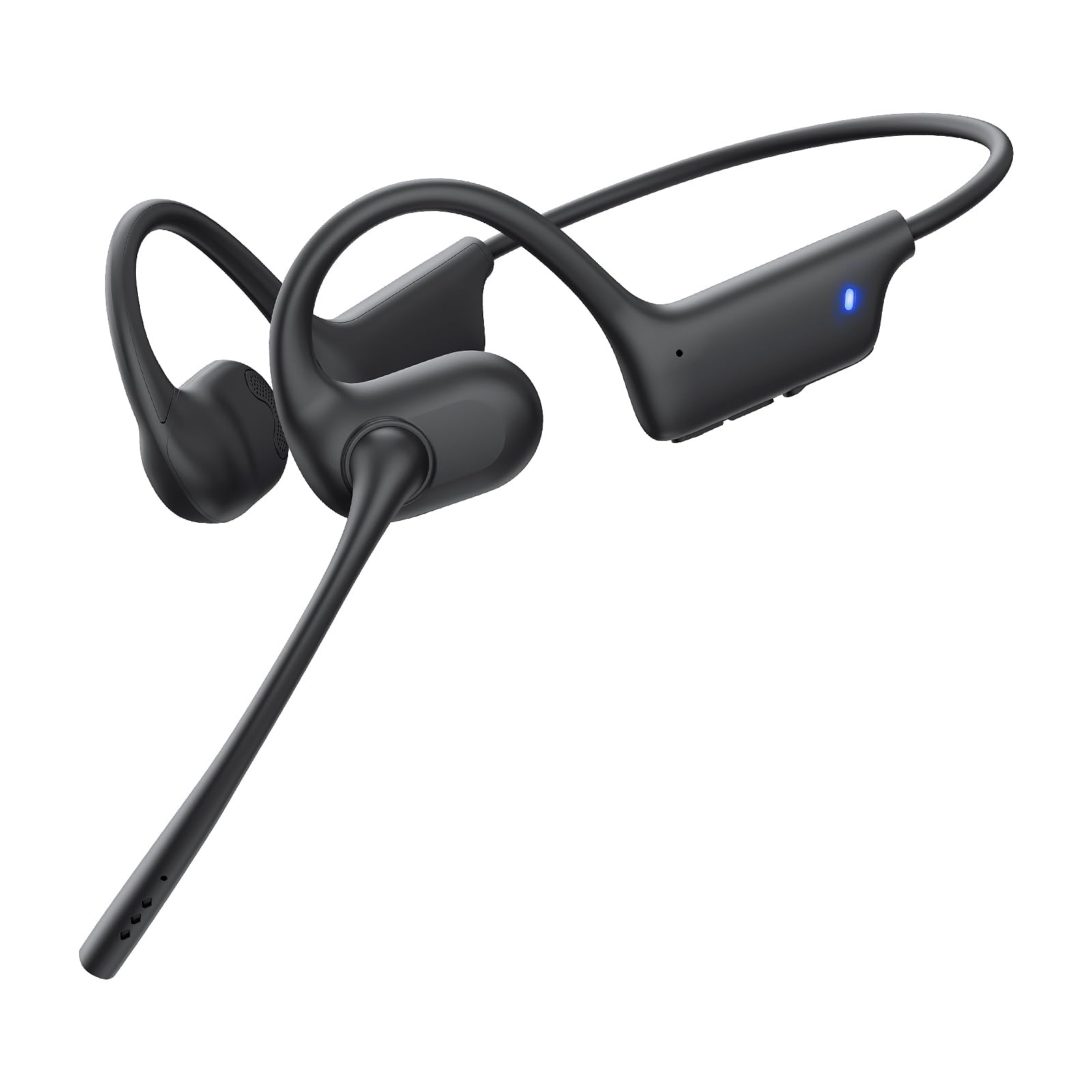
A featherweight 23-gram headset built specifically for clear calls and all-day meetings.
This is not a sports earbud — it is a single-piece headset with a 210° rotatable microphone boom that positions the pickup element close to your mouth for calls. The dual-microphone noise reduction filters out background chatter and low-frequency hum, and the quick-touch mute (three presses of the volume-down button) is a thoughtful addition for meetings when you need to cough or take a sip. The 15mm dynamic driver delivers rich, natural sound for voices and podcasts, and the open-ear air conduction design offers better bass than traditional bone conduction headsets in this form factor. At just 23 grams, it is the lightest pair in the guide and sits comfortably over glasses.
Buyers describe the sound as “decent” and say the headphones are “solid, lightweight, works great” for daily runs and calls. One Call quality is the clear standout here — the boom mic and dual-mic setup capture voice more clearly than any of the true-wireless earbuds on this list. Battery life is 12 hours of talk or music, charged via USB-C. The catch is build quality: the plastic construction feels less premium than the SHOKZ or Soundcore models, and the single-piece neckband design is less convenient to pocket than a true-wireless case.
Built for Conversations
- Dual-mic noise reduction makes voice calls exceptionally clear
- 210° rotatable microphone for optimal pickup position
- 23 grams — almost unnoticeable for hours of wear
Not a Gym Companion
- Plastic build feels less rugged than sport-oriented competitors
- Single-piece design is bulkier to carry than a charging case
- Sound quality is decent but not as full as the Soundcore V30i
Best for: remote workers and road warriors who spend hours on calls and need a lightweight headset that stays comfortable with glasses and allows full situational awareness.
Pass on this if: you want true-wireless earbuds for the gym, or you prioritize music playback quality over call clarity.
7. Boytond Ultra Open Ear Earbuds
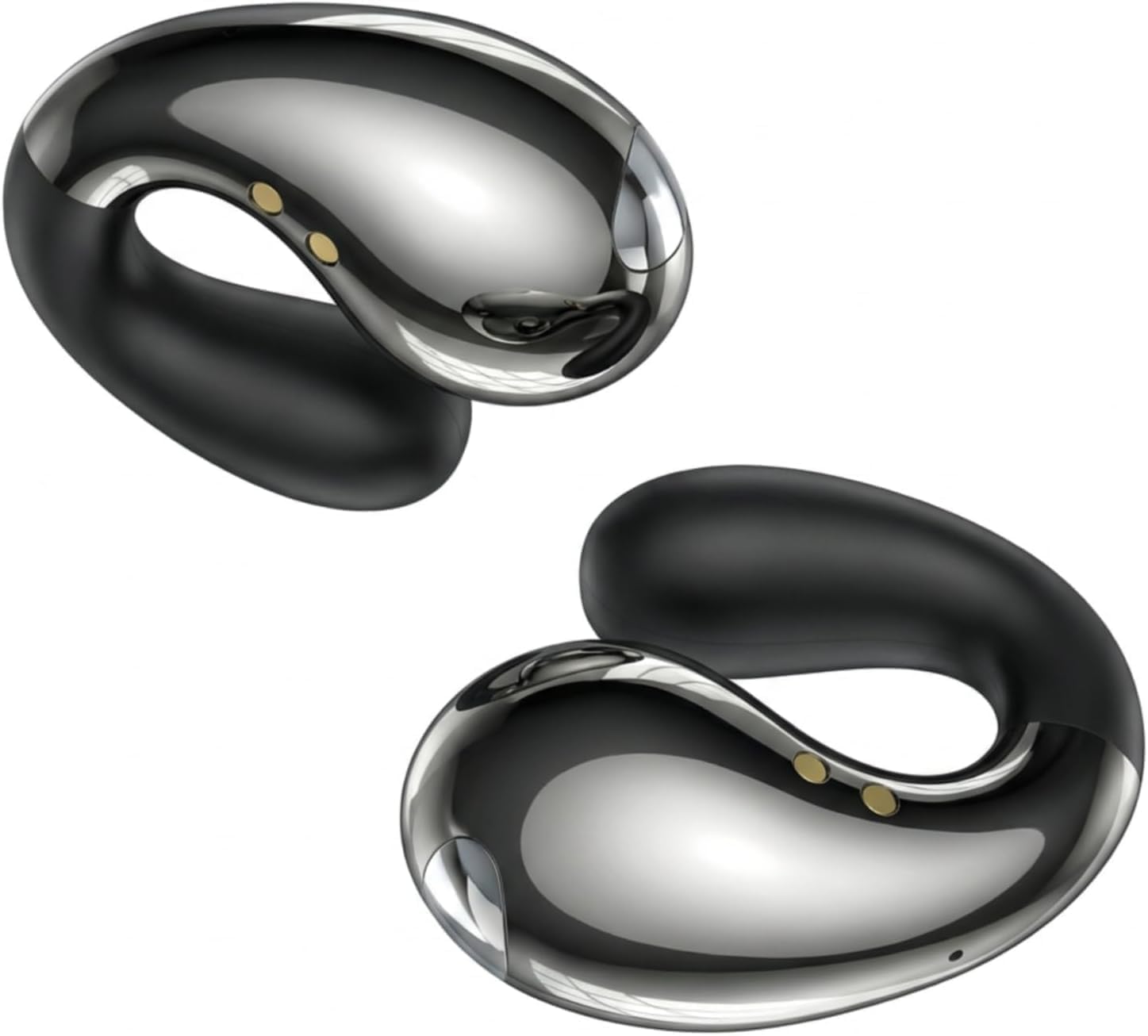
A surprisingly capable clip-on open-ear pair that outperforms pricier rivals.
The Boytond uses a small ergonomic clip structure that hooks over your ear without inserting anything into the canal, making it a solid entry point into open-ear listening. The 16.3mm dynamic drivers are the largest in this guide by diameter, and they deliver “balanced bass, clear treble, and detailed audio performance” according to the manufacturer — buyers tend to agree, describing the sound as “clear” and “balanced.” Battery life is 10 hours per charge and up to 40 hours total with the charging case, which is competitive with mid-tier models like the Soundcore V30i. Bluetooth 5.3 provides stable connectivity, and the waterproof build handles sweat and light moisture.
Buyers highlight the “comfortable clip-on design” and note that the “lightweight” form factor avoids ear fatigue even during extended wear. One reviewer called them “better than bone conduction.” The honest trade-off: the clip design is larger than some ears can accommodate — a 3-star reviewer noted that for “small ears” the buds cause “outer ear pain” because the clip does not fit snugly. If you have smaller or more sensitive ear cartilage, you may need to try a different form factor like the CXK headset or the Soundcore V30i’s flexible ear hooks.
Budget-Friendly Highlights
- 16.3mm drivers — largest in this guide for fuller sound
- 40 hours total playtime with the charging case
- Bluetooth 5.3 for stable, low-power connection
Fit Warning
- Clip-on housing is large — can cause pain on small ears
- Sound quality is good for the price but not as refined as the Soundcore V30i
- Touch controls can be less responsive during sweaty workouts
Ideal for: budget-conscious buyers with average or larger ears who want good sound, long battery life, and the convenience of a charging case at an entry-level price.
Look elsewhere if: you have small ears or cartilage that is sensitive to pressure — try the LEVN or Soundcore V30i for a more forgiving fit.
Understanding the Specs
Bone Conduction vs Air Conduction
Bone conduction headphones vibrate against your cheekbone to deliver sound directly to your inner ear, leaving your ear canals completely open. This gives you maximum environmental awareness but often sacrifices bass and can cause a tickling or vibrating sensation at higher volumes. Air conduction uses a forward-facing speaker aimed at your ear canal from outside — it delivers fuller sound and better bass, but it may leak a little audio at high volumes and does not keep your ears as open.
Bluetooth Version & Battery Life
Bluetooth 5.3 and newer (6.0, 6.1) bring lower power consumption, meaning longer battery life per charge, and more stable connections in crowded wireless environments (gyms, airports). Older versions like Bluetooth 5.1 are still reliable for basic audio streaming but lack the energy efficiency and multipoint performance of the newer standards. Battery life is listed two ways: single-charge hours (how long you can listen without the case) and total hours with case. For daily use, prioritize single-charge time — 8 hours is the minimum for a workday, 12+ hours means you can forget to charge overnight and still be fine.
FAQ
Can you hear the difference between bone conduction and air conduction?
Will open-ear headphones work with glasses or sunglasses?
How long does the battery last on a single charge for open-ear headphones?
Are open-ear headphones good for phone calls in noisy places?
Can I use open-ear headphones at the gym or in the rain?
What does the Bluetooth version number mean for open-ear headphones?
Do open-ear headphones leak sound that other people can hear?
Which open-ear headphones are best for small ears?
Final Thoughts: The Verdict
For the majority of shoppers, the bluetooth open ear headphones winner is the Soundcore V30i because it combines 12-hour single-charge battery life, Bluetooth 5.3 efficiency, IP55 sweat resistance, and full air-conduction sound quality at a budget-friendly price. If you want premium spatial audio and open-ear noise reduction for all-day wear, grab the SHOKZ OpenFit Pro. And for dedicated outdoor runners who need total environmental safety, the standout is the bone-conduction SHOKZ OpenRun Pro.
How We Picked
We do not accept paid placement. Every pick is matched to a real buyer and a real use-case; we do not hands-on test units.
Sources & Methodology
Specifications: manufacturer listings and product documentation. Review insights: verified customer reviews, as of July 2026. Pricing: not shown on this page (it changes often); check the current price via the retailer link.
As an Amazon Associate, Gadgets Feed earns from qualifying purchases. This does not affect which products we feature.