
Our readers keep the lights on and my morning glass full of iced black tea. As an Amazon Associate, I earn from qualifying purchases.
Specs are compiled from manufacturer listings and verified buyer reviews and can change over time — please confirm the key details on the product page before buying.
Drilling a 33/64″ hole in hard metal is a pain if your bit wanders, chips, or dulls halfway through. You want one cut, done clean, with no rework. This guide sorts through the real specs — cobalt content, shank type, and point angle — so you grab the right bit for your steel, stainless, or cast iron job without guessing.
I’m Min — the founder and writer behind Gadgets Feed. This guide is built by comparing the manufacturers’ published specifications and the patterns across verified customer reviews, so you get each pick’s real strengths and trade-offs instead of marketing spin.
Here is what matters when buying a 33/64 drill bit: the material (M35 cobalt beats standard HSS for hot, hard metals), the shank (a 1/2″ reduced shank fits most portable drills), and the point (a 135-degree split point stops wandering without a pilot hole).
Our Picks at a Glance
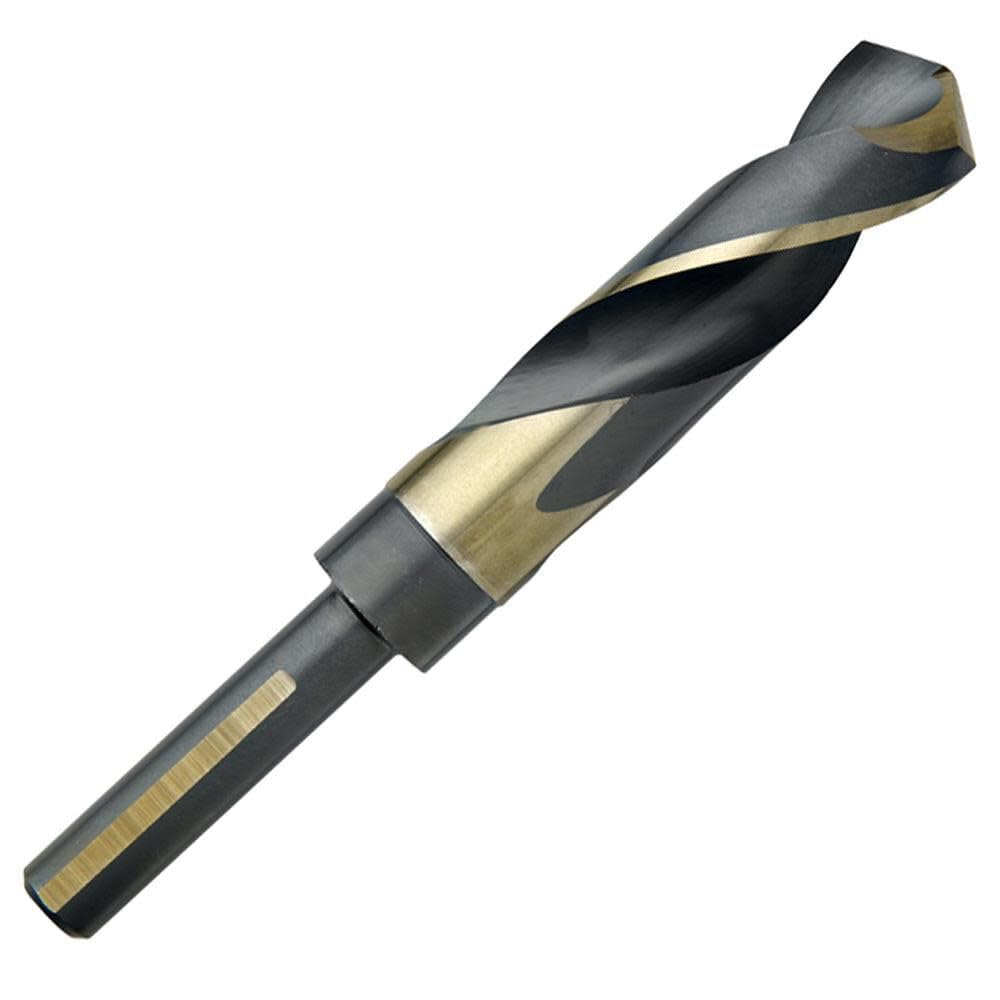

How To Choose The Best 33/64 Drill Bit
A 33/64″ bit is a specialty tool for large holes in metal. You are not buying a general-purpose wood bit — the wrong pick here means a ruined workpiece and a broken bit. Focus on three things: the steel, the point, and the shank.
Material: M35 Cobalt vs. HSS
Standard High-Speed Steel (HSS) works for mild steel and aluminum, but once you hit stainless steel, cast iron, or hardened steel, you need the extra heat resistance that 5% cobalt (M35) provides — it stays sharp longer. The data shows M35 bits like the Sinyeenglon and PATIKIL hold up where standard HSS dulls.
Point: The 135-Degree Split Point
A 118-degree point is the old standard, but a 135-degree split point cuts a flat-bottomed hole that self-centers. That means you can skip the pilot hole on most jobs and the bit won’t “walk” across the surface. The Drill America KFD3F and the PATIKIL both use this design.
Shank: Reduced vs. Round
A 1/2″ reduced shank fits into standard drill chucks, making a big bit usable in a hand drill. Some bits, like the MAXTOOL, come with a flatted shank for extra grip in the chuck. Round-shank bits like the Drill America D/ASTCO are better for drill presses with full-size chucks.
Quick Comparison
| Model | Best For | Material | Point Style | Shank Type | Amazon |
|---|---|---|---|---|---|
| Champion Cutting Tool BlackGold★ Best Overall | Precision lathe work | HSS | 118° Split Point | 1/2″ Straight | Amazon |
| MAXTOOL Silver & DemingDeep Reach | Deep drilling reach | HSS M2 | 118° Split Point | 1/2″ Reduced | Amazon |
| Drill America KFD3F | Secure chuck grip | M1 HSS | 135° Split Point | 1/2″ 3-Flat Reduced | Amazon |
| PATIKIL M35 Cobalt | High-temp stainless cutting | M35 Cobalt 5% | 135° Split Point | 1/2″ 3-Flat Reduced | Amazon |
| Sinyeenglon M35 Cobalt | Hardened steel and cast iron | M35 Cobalt 5% | 135° Split Point | 1/2″ 3-Flat Reduced | Amazon |
| Meccion M35 Cobalt | General metal drilling | M35 Cobalt 5% | 135° Pilot Point | Round | Amazon |
| Drill America D/ASTCO | Stub-length machine work | Cobalt | 135° Split Point | Round | Amazon |
In‑Depth Reviews
1. Champion Cutting Tool BlackGold XG12-33/64
Our pick — 4.5★ from 600+ verified ratings; the strongest balance of quality and price.
The American-made bit with a superlative finish that lathe workers trust for concentric holes.
This is the pick for precision. The BlackGold treatment on the HSS material holds lubricant on the surface, so the bit cuts smoother and stays cooler through multiple passes. The 118-degree split point helps the bit start cleanly on steel plate and stainless steel without wandering — buyers report it gives “clean, accurate holes” with a “rapid cut” on lathe work. The 1/2″ straight shank lets you use it in a standard hand drill or a drill press.
It is not the cheapest option, but owners mention that the “superlative finish and accuracy” make it a long-term companion in a machine shop. One reviewer who used it for an RV hitch installation said it worked well drilling overhead through an I-beam with a hand drill.
Why it stands out
- Made in the USA with quality control visible in the grind
- BlackGold finish holds cutting lubricant for longer, smoother cuts
- Comes in a storage tube for easy toolbox organization
One trade-off
- HSS material, not cobalt, so it is less suited for very high-heat jobs in hardened steel
Grab this if: you need repeatable precision for lathe work or machine shop setups where hole wandering is unacceptable.
Look elsewhere if: your primary work is hardened stainless steel at high speeds where M35 cobalt would last longer.
2. MAXTOOL 33/64″ Silver & Deming HSS M2
The long-reach bit that over-delivered on a hardened 4140 drilling job.
With a 6-inch overall length, the MAXTOOL gives you the extra reach needed for drilling through thick stock or deep-set workpieces. The HSS M2 material and black oxide finish reduce friction and resist corrosion, and the 118-degree split point provides a stable start. One reviewer used it to drill three holes through 0.3-inch hardened 4140 steel at 470 RPM with a pilot hole and peck drilling, and the bit showed “no visible wear other than oxide layer removed.” They noted it far exceeded their one-use expectation. Unlike the Drill America KFD3F with its 3-flat shank, this MAXTOOL uses a straight 1/2″ reduced shank that works with most chucks.
Buyers also report getting “way more than you pay for” — one source noted this bit was one-third the price of comparable bits from other suppliers and still drilled cleanly through a 2-inch solid bar on a drill press.
Best use-case: Deep drilling in mild to medium-hard steel where a longer flute helps clear chips and the price makes it a practical choice for occasional use.
Catch: The 118-degree point is not as aggressive as a 135-degree split point for self-centering on hard, slick surfaces.
3. PATIKIL 33/64″ M35 Cobalt Drill Bit
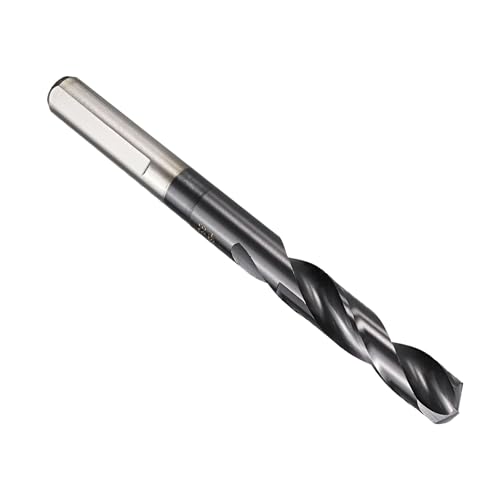
A surprisingly sharp M35 cobalt bit that beats the usual “crap” new bits, according to buyers.
The PATIKIL brings a 5% cobalt M35 body with a Titanium Aluminum Nitride (TiAlN) coating — a hard ceramic layer that resists oxidation at high temperatures. This makes it ideal for high-speed drilling in stainless steel and carbon steel. The 135-degree split point means you can skip the pilot hole on most jobs. One reviewer noted, “New drill bits are generally crap. Of the new bits I have recently purchased, this was the best of them.” The manufacturer recommends using cutting fluid and slower speeds for harder materials to keep the edge. Unlike the Sinyeenglon which has 2 flutes for chip clearance, the PATIKIL has a single-flute design, which may require more frequent chip clearing in deep holes.
It comes in a 1/2″ 3-flat reduced shank that grips tightly in your chuck to prevent slipping, a problem another buyer noted happening at punch-through with a different bit.
Why it works
- TiAlN coating provides exceptional oxidation resistance at high cutting temperatures
- M35 cobalt with 135-degree split point for hard metals without a pilot hole
- 3-flat shank reduces slipping in the chuck
One thing to note
- Single-flute design may not clear chips as quickly as a 2-flute bit in deep, continuous cuts
Reach for this if: you want a budget-friendly M35 cobalt bit with a high-temp coating for stainless steel jobs where you expect heat buildup.
skip it if: you need maximum chip evacuation in deep drilling — a 2-flute alternative like the Sinyeenglon may be better.
4. Sinyeenglon 33/64″ M35 Cobalt Drill Bit
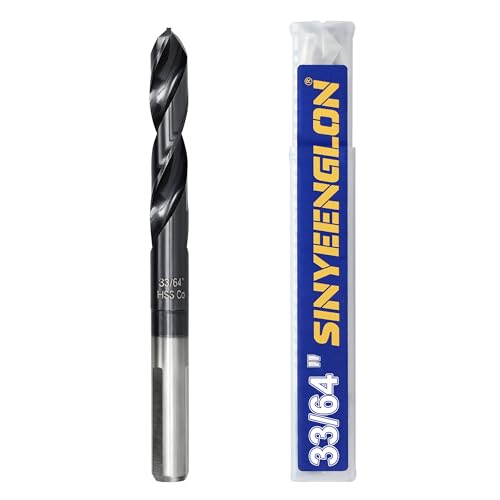
The M35 cobalt bit with a hardness rating of HRC67 that customers note cuts through stainless steel easily.
This Sinyeenglon bit uses an Aluminum Titanium Nitrite (AlTiN) coating — a different ceramic alloy than the PATIKIL’s TiAlN — which provides better resistance to high temperature and oxidation for longer bit life. The manufacturer claims its hardness reaches HRC67, making it suitable for cast iron and hardened steel. The 135-degree split point helps maintain concentricity for precise holes without a starter punch. The 2-flute design (double the flutes of the PATIKIL) clears chips more efficiently in deeper cuts. The bit comes in a labeled plastic storage case. One buyer mentioned the sticker on the case fell off, but the size is also engraved in the plastic.
Reviewers report that “cobalts are the very best” and that this bit “drilled through all types of metals including stainless steel.” Another buyer shared they “broke one due to drilling too fast and without oil” but learned that slower speed and oil make the bit last.
Who it is for: Users who face cast iron, hardened steel, or stainless steel regularly and want a bit that can take the heat with a 2-flute design for chip clearance.
Watch out for: The AlTiN coating is thinner than black oxide — use cutting fluid and moderate feed pressure on very hard materials to avoid edge chipping.
5. Drill America KFD3F 33/64″ Reduced Shank HSS

The contractor-grade bit with a 3-flat shank that locks in your chuck and a 135-degree point that won’t walk.
The KFD3F stands out for its 3-flat shank design — three flat surfaces machined into the 1/2″ reduced shank create a tighter, more secure hold in your drill chuck than a round shank. This matters when you are drilling metal overhead or in an awkward position where bit spin-out is a risk. Made from M1 High-Speed Steel, it is suitable for aluminum, iron, and steel. The 135-degree split point is the same self-centering geometry found on the premium cobalt bits, but on a more affordable HSS platform. The flute length is 3 inches and the overall length is 6 inches, which is the same reach as the MAXTOOL.
This bit is a strong mid-range choice — it lacks the cobalt content of the PATIKIL or Sinyeenglon for hot, hard cuts, but the 3-flat shank gives it a mechanical advantage in the chuck that those round-shank bits do not offer.
Why it is worth a look
- 3-flat shank provides an exceptionally secure grip in drill chucks
- 135-degree split point for self-centering without a pilot hole
- Good overall length (6″) for reach without excess flex
The trade-off
- M1 HSS material, not cobalt — it will dull faster in stainless steel or hardened steel compared to the M35 options above
Best for: DIYers and contractors who drill metal occasionally and need a bit that stays locked in the chuck under load.
Look elsewhere if: your primary material is stainless steel or you regularly push bits to high temperatures — move up to a cobalt bit.
6. Drill America D/ASTCO 33/64″ Cobalt Stub Drill Bit
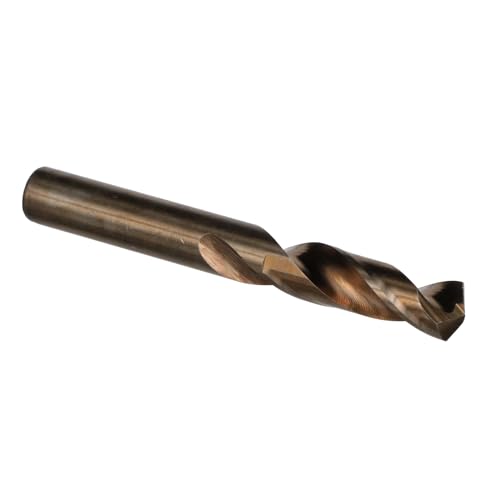
The stub-length cobalt bit built for mag drills and machine shops that outlasts standard HSS two to one.
The D/ASTCO is a different animal — it is a stub-length bit with a 2-3/8″ flute, designed for rigidity and reduced breakage in portable magnetic drills and drill presses. The cobalt steel content handles high heat better than M1 HSS, making it ideal for stainless steel and nickel alloys. The 135-degree split point and round shank mean it works with a wide variety of toolholding systems. Buyers who own machine shops report these bits “outlast regular high speed drills two times better, especially if you’re drilling stainless steel.”
One user drilled four through-holes in a 7/8″ thick steel table top with a mag drill, using lubricant and moderate speed, and reported “no sign of dulling.” Another noted the grind and split point finish are precise. Unlike the reduced-shank bits above, this one has a round shank, so it requires a full-size chuck on your drill press.
Perfect for: Professional machinists and serious DIYers who need a rigid, short cobalt bit for mag drills or thick steel plate where precision and tool life matter.
Note: The round shank (not 1/2″ reduced) and short stub length mean it is not ideal for deep holes or hand drills with small chucks.
7. Meccion 33/64″ M35 Cobalt Drill Bit
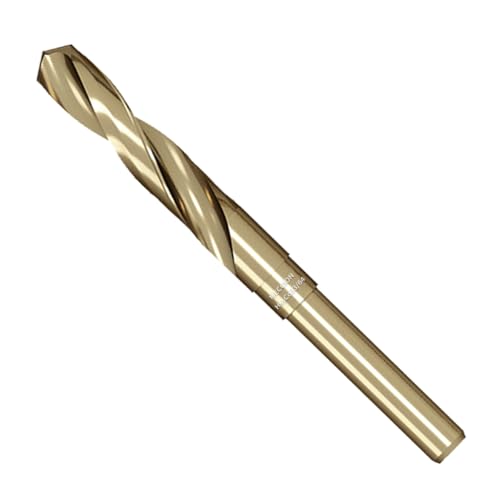
The entry-level M35 cobalt bit that gives you hard-metal capability without the premium price.
The Meccion brings 5% cobalt M35 HSS with a hardness rating up to HRC 67, the same benchmark as the Sinyeenglon, at a budget-friendly price point. The 135-degree pilot point tip helps reduce walking. Unlike the 3-flat shank of the KFD3F or the reduced shank of the MAXTOOL, the Meccion uses a straight round shank. This makes it more versatile across different chucks but gives you less anti-slip grip than a flatted shank. The manufacturer recommends pre-drilling a small pilot hole for best results due to the large diameter.
The uncoated finish is a notable difference — it lacks the heat-resistant TiAlN coating of the PATIKIL or the AlTiN coating of the Sinyeenglon, so it will rely entirely on its cobalt content and cutting fluid to manage heat. The tapered web helix design is meant to add stability during tough cuts.
Why it works for the price
- M35 cobalt material provides good heat resistance for stainless steel jobs
- 135-degree pilot point for reduced walking on metal surfaces
- Budget-friendly entry into cobalt bits without sacrificing material quality
The missing pieces
- Uncoated finish means less oxidation and heat protection during prolonged high-speed cuts
- Round shank is more prone to slipping in the chuck compared to 3-flat designs
Best for: The occasional metalworker who wants cobalt hardness at a low entry cost and is comfortable using cutting fluid to manage heat.
pass on it if: You need a bit for continuous production work where coating longevity and chuck grip matter more than initial price.
Understanding the Specs
M35 Cobalt vs. Standard HSS
M35 cobalt steel contains 5% cobalt in the alloy, which helps the bit stay hard even when it gets hot from friction. This makes it cut through stainless steel and hardened steel without losing its edge. Standard High-Speed Steel (HSS) is fine for mild steel, aluminum, and wood, but it will dull faster on hard metals. A bit marked “HSS M2” is better than basic HSS but still not as heat-resistant as M35 cobalt.
Split Point vs. Conventional Point
A 135-degree split point has a chisel edge that is ground down to create two cutting edges that meet at the center. This means the bit starts cutting immediately instead of scraping, so it does not “walk” or wander across the surface. A conventional 118-degree point is more common for general-purpose drilling, but the 135-degree split is better for self-centering on metal without a pilot hole.
Reduced Shank vs. Round Shank
A 1/2″ reduced shank means the body of the bit is wider than the shank, so it fits into a standard 1/2″ drill chuck even though the cutting diameter is larger. A “3-flat” reduced shank has three flat surfaces machined into the shank for extra grip. A round shank is simpler and works with many toolholding systems, but it is more prone to spinning in the chuck under high torque.
FAQ
Can a 33/64 drill bit fit into a standard 1/2 inch drill chuck?
Do I need to use a pilot hole with a 33/64 drill bit?
What is the difference between a Silver and Deming drill bit and a standard bit?
How do I prevent a 33/64 cobalt bit from breaking in hard steel?
What does “HRC 67” mean on a drill bit specification?
Is a 33/64 drill bit the same as a 0.52 inch bit?
What is the advantage of a stub-length drill bit like the Drill America D/ASTCO?
Which is better for drilling stainless steel: a TiAlN coating or black oxide?
Do these drill bits come with a storage case?
Final Thoughts: The Verdict
For most people, the 33/64 drill bit winner is the Sinyeenglon M35 Cobalt because it combines strong M35 material, a 135-degree split point, and a 2-flute design for chip clearance at a mid-range price. If you want precision for lathe work with a USA-made bit, grab the Champion Cutting Tool BlackGold. And for a budget-friendly entry into cobalt drilling with a round shank, the standout is the Meccion M35 Cobalt.
How We Picked
We do not accept paid placement. Every pick is matched to a real buyer and a real use-case; we do not hands-on test units.
Sources & Methodology
Specifications: manufacturer listings and product documentation. Review insights: verified customer reviews, as of July 2026. Pricing: not shown on this page (it changes often); check the current price via the retailer link.
As an Amazon Associate, Gadgets Feed earns from qualifying purchases. This does not affect which products we feature.