
Our readers keep the lights on and my morning glass full of iced black tea. As an Amazon Associate, I earn from qualifying purchases.
Specs are compiled from manufacturer listings and verified buyer reviews and can change over time — please confirm the key details on the product page before buying.
The moment you hang a birdhouse, the real test is whether the right tiny tenant moves in and raises a family safely. For small birds like wrens, chickadees, and nuthatches, the difference between a house that gets used and one that stays empty depends on three things: an entrance hole smaller than a quarter (a 1-1/8 inch opening), interior texture for baby birds to climb out, and a design that keeps raccoons and squirrels from chewing their way in. This guide focuses on six bird houses for small birds that hit those marks.
I’m Min — the founder and writer behind Gadgets Feed. This guide is built by comparing the manufacturers’ published specifications and the patterns across verified customer reviews, so you get each pick’s real strengths and trade-offs instead of marketing spin.
Whether you are setting up your first nesting box or adding to an existing backyard setup, these bird houses for small birds are selected for their specific hole sizes, predator defenses, and real-world feedback from people who have watched wrens move in within days.
Our Picks at a Glance


How To Choose The Best Bird Houses For Small Birds
Picking the right nesting box for tiny birds means thinking like the bird, not like a decorator. A hole that is a quarter-inch too wide invites house sparrows and starlings, which can bully wrens and chickadees out of their nests. Focus on these three details first.
The Entrance Hole Is Everything
For small birds, the entrance hole must be between 1 inch and 1-1/8 inches in diameter. That exact measurement keeps larger, aggressive birds out while being just right for a wren or chickadee to slip through. Every product in this list uses a 1-1/8 inch hole or smaller, which complies with standard birding specifications for these species.
Predator Protection Beyond Just Wood
A plain wooden hole is an invitation for squirrels, raccoons, and larger birds to gnaw the edges wider. Look for a metal ring or plate around the hole — that hard edge stops chewing cold. Some houses also add U-shaped bottoms that deter predators from gripping, along with sloped roofs that shed rain before it drips into the nest.
Interior Features That Help Babies Survive
Young birds need grooves or roughened surfaces inside the front wall so they can claw their way up to the exit hole. Without these fledging ladders, baby wrens can get trapped at the bottom and die. You also want drainage holes in the floor so the nest does not stay soggy, plus ventilation near the roof for hot days.
Quick Comparison
| Model | Best For | Entrance Hole | Weight | Material | Amazon |
|---|---|---|---|---|---|
| SISTERBIRD Wren House Red★ Best Overall | Best Overall | 1-1/8 in | 1.5 lb | Cedar Wood | Amazon |
| Audubon Wren House Red CedarLightweight Classic | Lightweight Classic | 1-1/8 in | 0.79 lb | Red Cedar | Amazon |
| Woodlink Audubon Traditional NAWREN | Roof-Access Cleanout | 1-1/8 in | 0.9 lb | Natural Cedar | Amazon |
| Gtongoko Wren House Black | Easy Setup Value | 1-1/8 in | 0.59 kg | Wood | Amazon |
| Kingsyard Wren House Royal Blue | Heavy-Duty Premium | 1 in | 2.1 lb | New Zealand Pine | Amazon |
| Wild Wings Farmhouse Wren House | Stylish Decorative | 1-1/8 in | 0.72 kg | Cedar Wood | Amazon |
In-Depth Reviews
1. SISTERBIRD Wren Bird Houses for Outside Cedar Hanging Birdhouses for Outdoors 1-1/8″ Entrance Hole, Red
Our pick — over 4.5★ from 550+ verified ratings; the strongest balance of quality and price.
A sturdy red cedar house with a steel predator ring that weighs 1.5 pounds — versus the Audubon’s 0.79 pounds — stops wind and chewers alike.
This house covers every real concern a small-bird landlord has. The 1-1/8 inch entrance hole is wrapped in a metal guard that stops squirrels from chewing it wider — a feature that matters enormously if you have ever watched a gray squirrel spend a morning enlarging a plain wooden hole. Unlike the Woodlink model that uses a basic latch, the SISTERBIRD uses an upgraded metal door latch secured with four screws, so curious critters cannot pop it open. Buyers report it is “well-built, precise assembly, attractive red,” and the vibrant enamel paint holds up well outdoors.
The house arrives fully assembled from the box, so there is zero setup fuss. At 1.5 pounds, it is substantially heavier than the 0.79-pound Audubon classic — that extra heft comes from the thick cedar walls and the metal reinforcement. Inside, five fledging ladders (vertical grooves) give baby birds a way to climb up to the exit, and the U-shaped bottom is designed to mimic a real nest shape, which makes wrens feel more comfortable. Three air vents at the top and six drainage holes at the bottom keep the interior from turning into a sauna or a puddle.
One reviewer noted a minor hitch: a red house was delivered when blue was ordered due to a box label mix-up. Not a product flaw, but a packing-accuracy note if color matters to you. The heavy-duty 304 stainless steel hanging hook is chew-proof and should last years in direct sun and rain.
Why it leads: The metal-hole guard, the weight that resists wind and predators, and the real-world tracker showing wrens start nesting within days of hanging make this the smartest single buy for most backyards.
Reach for this if: You want a fully assembled, predator-proof house that gives wrens and chickadees every survival advantage, with an attractive red finish that stands out in a garden.
Look elsewhere if: You prefer a neutral wood-tone look or need the absolute lightest house for a thin branch.
2. Audubon Wren Bird Hse Red Cedar
The 0.79-pound cedar box that wrens treat like a five-star hotel — reviewers report them nesting twice in one season.
If weight and simplicity are your priorities, this Audubon house is tough to top. At 0.79 pounds versus the SISTERBIRD’s 1.5 pounds, it is it ideal for hanging from a thin branch or a decorative shepherd’s hook that could not support a heavier box. It comes fully assembled with a heavy plastic-coated steel cable, so you can hang it in seconds. Owners mention that “they’ve nested in it so far twice this year,” and one buyer mentioned that a Carolina wren built a nest within a week of installation. The hole measures 1-1/8 inches, verified by recent reviews, so it correctly excludes larger birds.
The cedar wood construction uses brass screws to avoid rust, and there is an air ventilation gap at the top plus drainage slots at the bottom — the basics done right. The dimensions are 6.8 inches deep by 7.1 inches wide by 6.25 inches tall, giving a compact but functional interior. One owner reported that if it were slightly larger it would earn five stars, but also acknowledged the quality is solid for the price point.
A single recurring note from multiple owners: you must take the house down after nesting season and store it indoors, or mice may move in and leave a smell that is impossible to remove from the porous wood. The bottom plate releases with two Phillips screws for cleaning, which is easy enough, but plan on a quick winter storage routine.
The real strength: This is the house to grab when you want a proven track record — hundreds of reviewers report wrens moving in almost immediately, and the lightweight cedar construction means you can hang it just about anywhere.
Best suited for: New birders who want a simple, affordable, and effective wren house that comes ready to hang and has a long history of attracting tenants.
One honest drawback: The wood is light and porous, so it soaks up paint if you want to customize it, and the bottom latch is basic compared to the metal-reinforced designs on premium models.
3. Woodlink Audubon Traditional Wren House Model NAWREN
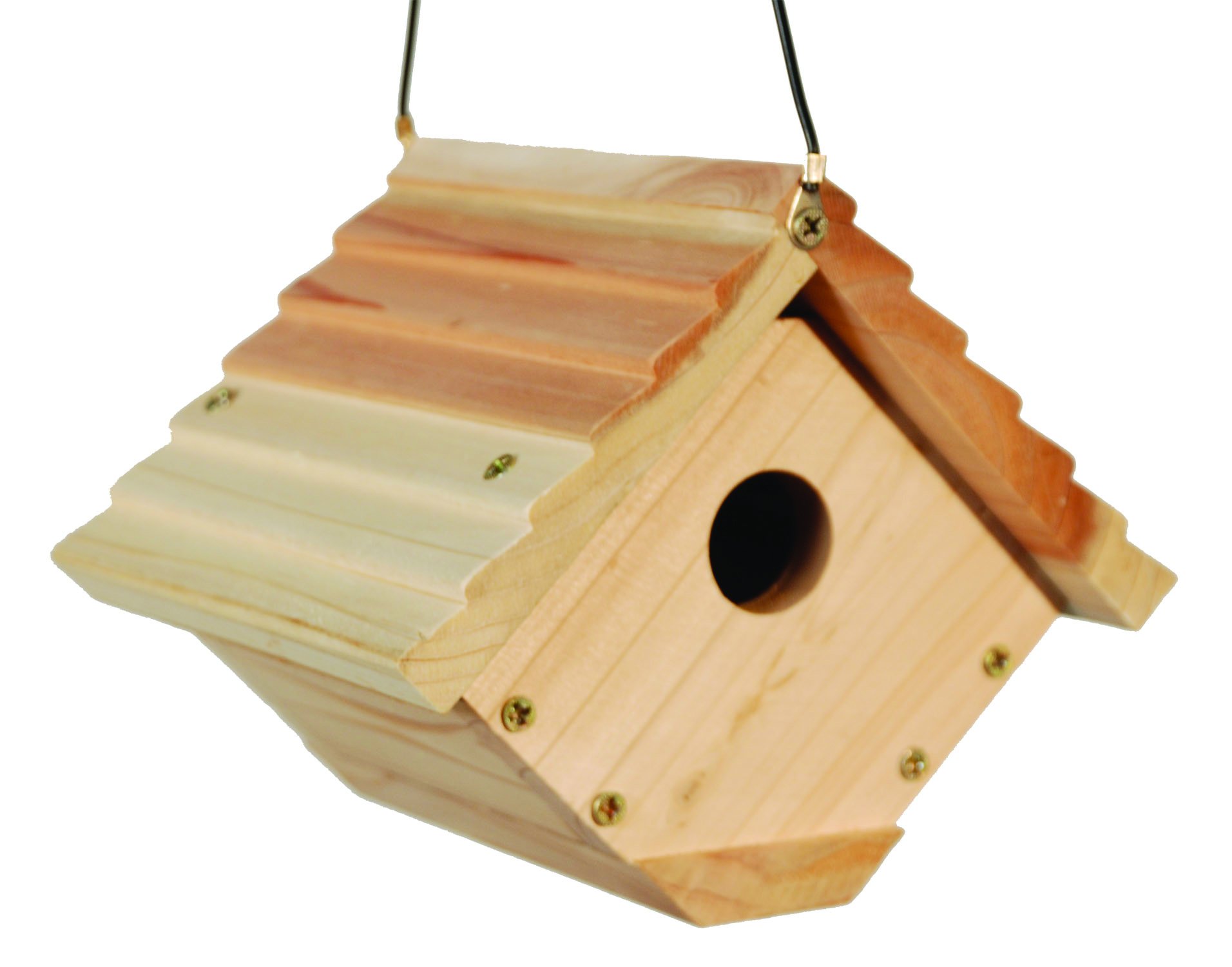
Screw-assembled cedar house where the roof lifts off for the easiest post-season cleaning — no screwdriver needed.
The standout feature on this Woodlink model is the screw-not-staple construction and the removable roof, which makes cleaning a genuinely simple job. One customer observed that their wrens “raised two sets (maybe three) of babies” in a single season. Another mentioned that last year they mounted the house just outside their door and the wrens came immediately. The house measures 6 inches deep by 7 inches wide by 5 inches tall and weighs 0.9 pounds, keeping it light enough for most hanging spots.
The natural cedar wood is unpainted, so it will weather to a silvery gray over time. Some customers note the wood surface is rough and soaks up paint quickly if you want to add a finish — but that same texture helps young birds climb inside. Brass screws are used throughout, which will not rust even after wet seasons. The heavy cable and traditional shape are classic Audubon specs, targeting wrens specifically without the decorative frills of modern designs.
A few buyers noted that the wood appears to be pine rather than cedar in some units, so longevity may depend on whether you store it indoors during winter. The color tag on the box says “white” in the specs but the actual house is natural unfinished wood, so do not expect a painted white finish.
Worth noting: Over 600 ratings and a solid 4.5-star average confirm this is among the most reliable wren house patterns available, with the removable roof being the defining advantage over models that only open from the bottom.
Pick this for: Easy post-season cleanout without needing a screwdriver — lift the roof, empty the old nest, and you are done for the year.
skip it if: You want a painted or sealed finish, or a predator guard around the entrance hole.
4. Gtongoko Wren Bird House for Outside, Hanging Wood Nesting Box 1-1/8″ Entrance Hole, Black
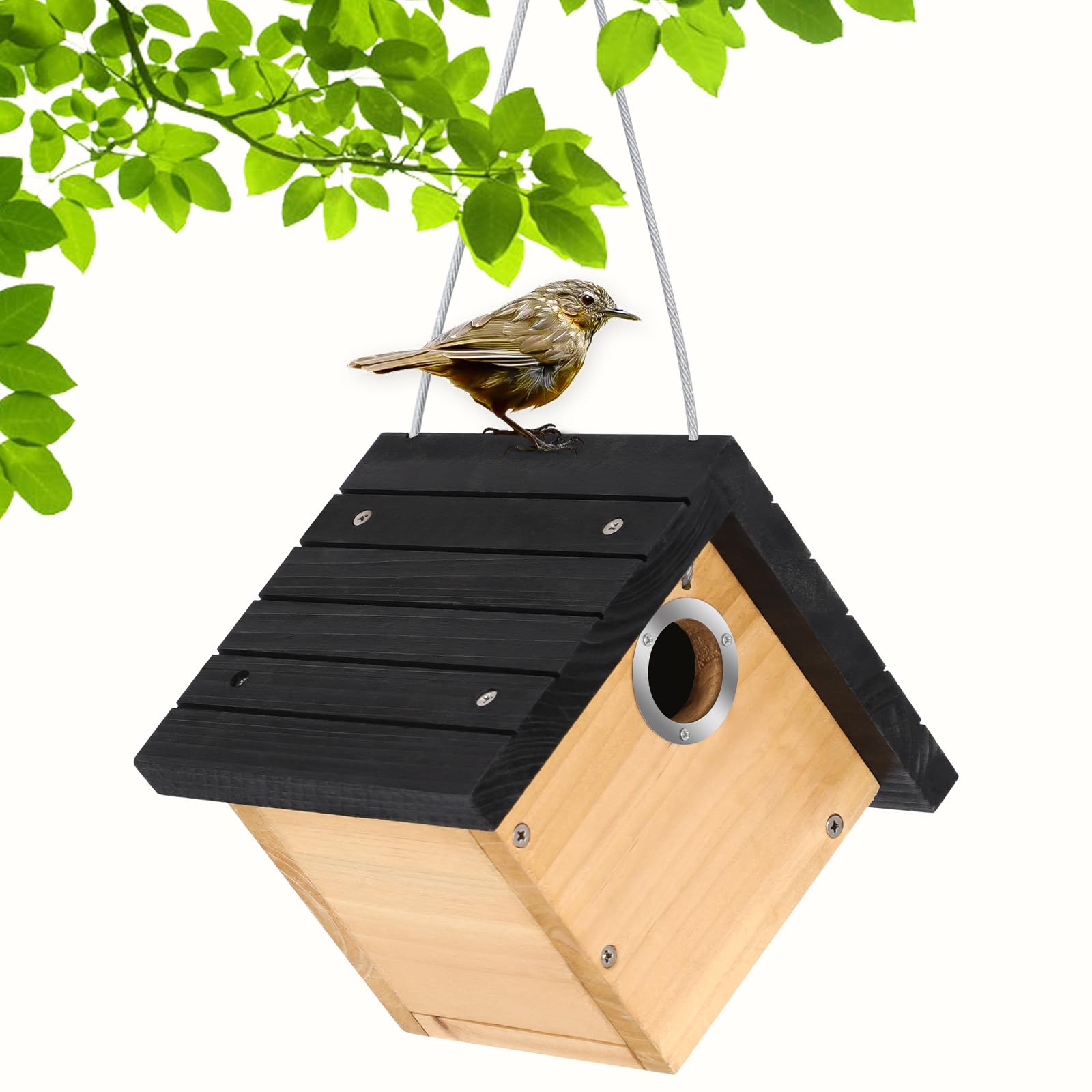
Comes with its own screwdriver and hardware bag — assembly takes under five minutes, and it weighs about 1.3 pounds.
This Gtongoko house is designed for the buyer who wants to be hanging a birdhouse twenty minutes after the package arrives. It arrives as a flat-pack kit, but reviewers point out that “easy assembly with included screwdriver; power driver recommended” makes the process fast. All hardware is included, and the instructions are straightforward. The entrance hole is the standard 1-1/8 inch size that targets house wrens and Carolina wrens while keeping larger birds out.
Inside, the walls feature interior climbing grooves that give fledglings something to grip as they work their way up to the exit. The clean-out door on the side offers easy access for seasonal cleaning, though you will need a screwdriver to open it. A metal-reinforced ring around the entrance hole prevents chewing — this is the same predator guard found on the pricier SISTERBIRD but in a lower-cost package. A lower grate helps keep debris from building up in the nest. The black color gives a modern look that blends into tree shadows better than bright red or white options.
One user highlighted that the wood feels sturdy and durable for the price, and that bluebirds were already checking out the house within days of installation. The main trade-off is that the weather durability is unproven over multiple seasons — a couple of reviewers mentioned they cannot yet vouch for how it holds up long-term. At 0.59 kilograms (about 1.3 pounds), it is mid-weight among the options here.
Standout trait: The hardware kit and included screwdriver make this the most accessible option for someone who has never assembled a birdhouse before — no separate trip to the toolbox.
Ideal for: First-time birdhouse buyers who want a budget-friendly, easy-to-assemble box with all the essential features: correct hole size, predator ring, and climbing grooves.
Not ideal for: Someone wanting a thick, heavy-walled house that looks like a permanent garden fixture; the wood is solid but not as thick as premium models.
5. Kingsyard Wooden Wren House with Predator Guard, Royal Blue

A 2.1-pound pine fortress with a 1-inch hole so tight even aggressive sparrows stay out — smaller than the standard 1-1/8 inch.
The Kingsyard takes a different approach to birdhouse design: go thicker and heavier. At 2.1 pounds, it is the heaviest pick in this list — 2.1 pounds versus the Audubon’s 0.79 pounds — and that bulk comes from solid New Zealand Pine that feels like furniture, not a garden accessory. The entrance hole is 1 inch, slightly smaller than the standard 1-1/8 inch, which means it is even more selective about which birds get in. Wrens and chickadees fit easily; house sparrows do not. The metal predator guard around the hole ensures it stays 1 inch forever, no matter what tries to gnaw it wider.
The roof is the key design win here. It removes without any screws or latches — just lift it off — but is still impossible for predators to open from the outside. One buyer described it as “genius and EASY.” The air vents in the walls and floor keep airflow consistent during hot summer afternoons. Shoppers say wrens claimed the house within days of hanging, and one reviewer had wrens raise a third clutch in the same season, which is a strong indicator that the interior conditions are right.
The royal blue roof adds charm, but the house is not pre-treated against weather, so you may want to apply a sealant to extend its life beyond a couple of seasons. The 8.94-inch depth is also note — it is deeper than most other options here, so you need a slightly larger branch or hook to hang it level.
What stands out
- Thickest walls of any pick — real New Zealand Pine that resists splitting
- Tool-free removable roof makes cleaning easy
- 1-inch hole is more exclusive for small birds
Trade-offs
- Heavier than any other pick, so needs a sturdy mounting point
- No factory-applied weather sealant; consider adding your own
A top choice for: Birders who want a nearly indestructible house with a tool-free cleaning roof and the tightest entrance hole to keep bullies out.
Consider something else if: You are hanging from a lightweight hook or thin tree branch — the 2.1-pound weight requires a solid anchor.
6. Wild Wings WWLH2-DECO Farmhouse Wren House, White
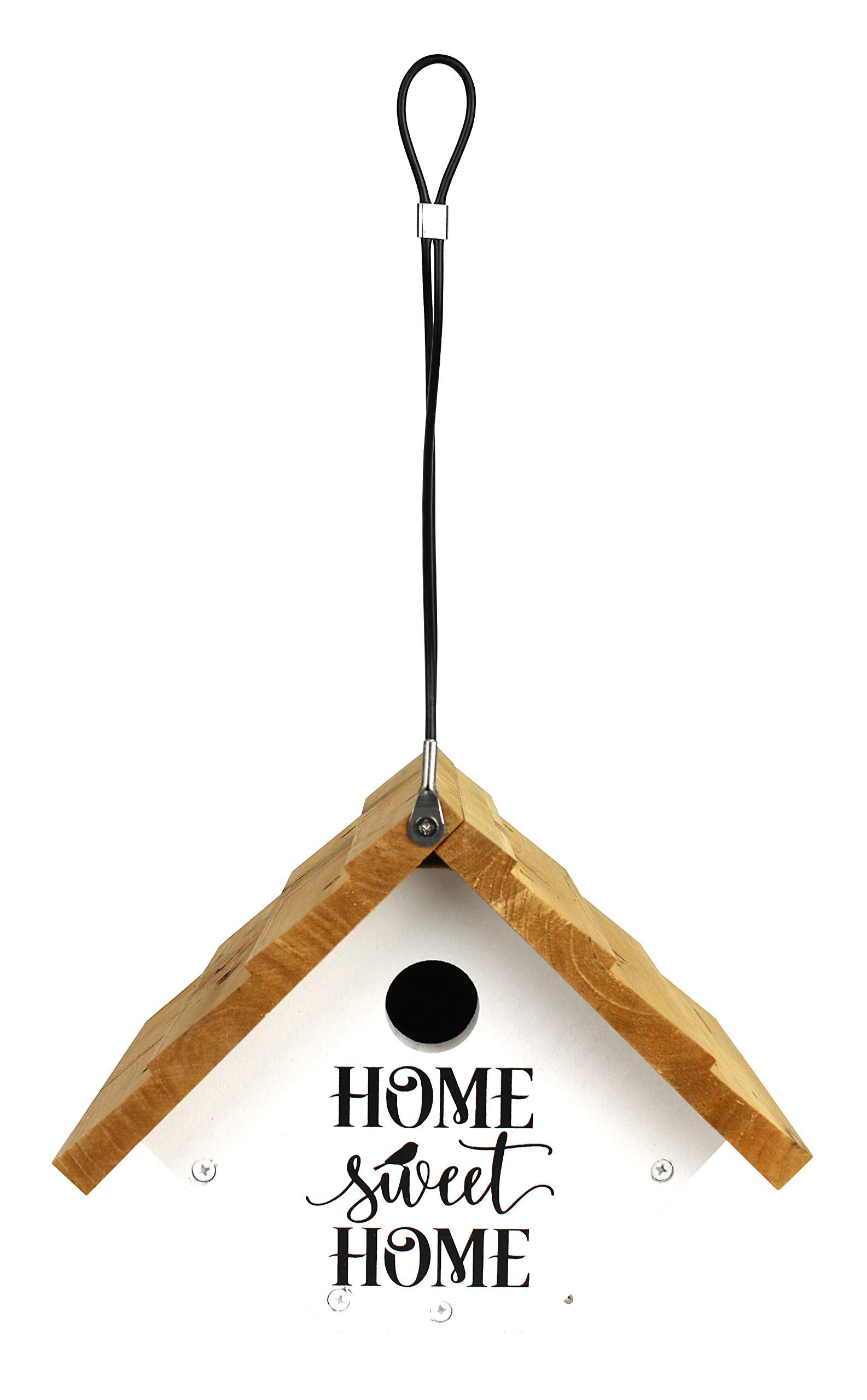
White-washed farmhouse charm that wrens move into within days — one shopper added birds occupied it “within days of hanging.”
If the birdhouse has to match your porch decor, this Wild Wings model proves you do not have to sacrifice function for style. The white-washed cedar sides with a stained roof and tray give it a trendy farmhouse look, but underneath the good looks are the same birding specs as the serious houses. The entrance hole is 1-1/8 inches, keeping out starlings and larger sparrows while letting wrens and chickadees in. Buyers love that “house occupied within days of hanging” and that the cedar construction with a vinyl-coated steel cable makes installation straightforward.
The clean-out door on the side makes seasonal maintenance simple, though one reviewer noted the door sticks a bit initially — their advice is to open it once before hanging to loosen it up. Air vents in the walls and floor provide good air circulation during the summer. The dimensions of 7.25 inches deep by 7.25 inches wide by 8.25 inches tall give it a slightly taller profile than many other wren houses, which some birds seem to prefer for the extra headroom.
The main consideration here is that the white-washed finish may show dirt sooner than natural wood or darker colors. Also, while the cedar is good quality, the decorative appeal means you might place it in a more visible spot, which could be closer to human activity than nesting wrens prefer — mount it 5 to 6 feet high and away from heavy foot traffic.
Bottom line: This is the house to pick when your spouse says “I want something that looks nice, not a plain wooden box” — because it actually attracts wrens, not just compliments.
Reach for this if: Aesthetics matter to your backyard design and you need a house that looks intentional rather than purely utilitarian.
Think twice if: You prefer a heavy, thick-walled house — this is built from standard-thickness cedar and prioritizes style over bombproof construction.
Understanding the Specs
Entrance Hole Size
This is the single most important number on a bird house for small birds. A 1-1/8 inch hole (about 29 millimeters across) is what wrens, chickadees, and nuthatches can fit through, while house sparrows, starlings, and larger birds cannot. If the hole is 1.5 inches or more, you are building a house for bigger birds, not small ones. Some manufacturers use a 1-inch hole for even tighter exclusion — that is fine for wrens but may keep out larger chickadees.
Interior Climbing Grooves
Also called fledging ladders or kerfs, these are vertical grooves carved or cut into the inside wall just below the entrance hole. They give baby birds a foothold to climb up and reach the exit. Without them, young birds can get trapped at the bottom of a smooth-walled box and starve even though food is being delivered at the entrance. If a house does not mention these grooves in the specs, check the reviews or look for photos of the interior.
FAQ
What is the best entrance hole size for a wren house?
Do bird houses for small birds need predator guards?
How high should I hang a wren birdhouse?
How often should I clean a small bird house?
Will a wren house attract other small birds?
Should I paint or seal a cedar birdhouse?
What is the difference between a wren house and a bluebird house?
Do bird houses need drainage holes and air vents?
Final Thoughts: The Verdict
For most people, the bird houses for small birds winner is the SISTERBIRD Wren House because it combines a proven 1-1/8 inch hole, a metal predator guard, interior fledging ladders, and the heft that keeps it stable in wind — all in a fully assembled package. If you want a lightweight cedar classic that has attracted wrens for years, grab the Audubon Wren House. And for a tool-free cleaning experience with thick New Zealand Pine, the standout is the Kingsyard Wren House.
How We Picked
We do not accept paid placement. Every pick is matched to a real buyer and a real use-case; we do not hands-on test units.
Sources & Methodology
Specifications: manufacturer listings and product documentation. Review insights: verified customer reviews, as of July 2026. Pricing: not shown on this page (it changes often); check the current price via the retailer link.
As an Amazon Associate, Gadgets Feed earns from qualifying purchases. This does not affect which products we feature.