
Our readers keep the lights on and my morning glass full of iced black tea. As an Amazon Associate, I earn from qualifying purchases.
Specs are compiled from manufacturer listings and verified buyer reviews and can change over time — please confirm the key details on the product page before buying.
You want a massive screen that fits in your pocket, but the real worry isn’t the size—it’s whether you’ll end up with a headache, blurry text, or buyers’ remorse after a single movie. This guide cuts through the specs to help you find the pair that actually works for your face, your devices, and your tolerance for tinkering.
I’m Min — the founder and writer behind Gadgets Feed. This guide is built by comparing the manufacturers’ published specifications and the patterns across verified customer reviews, so you get each pick’s real strengths and trade-offs instead of marketing spin.
The right pair of ar glasses on amazon can turn a cramped airplane seat or a quiet evening at home into a private cinema experience you wear on your face, but only if the brightness, field of view, and fit match your specific needs.
Our Picks at a Glance

How To Choose The Best AR Glasses On Amazon
AR glasses are a young category, so the specs that matter most aren’t always obvious. Start by focusing on how you will use them—gaming on a handheld, watching movies in bed, or working with multiple screens—then look at the numbers that make that use case actually enjoyable.
Brightness and Display Quality
The single spec that determines whether you can use these glasses in a bright room or near a window is the to-eye brightness, measured in nits. Higher numbers mean the image stays vivid instead of looking like a dim reflection. Look for at least 600 nits for occasional indoor use, and aim for 1000 nits or more if you plan to use them outside. The type of display matters too—Sony Micro-OLED panels are the gold standard for sharp, high-contrast images.
Field of View (FOV)
The field of view determines how much of your vision the virtual screen fills. A 46-degree FOV feels like a large TV floating a few feet away, while a 57-degree FOV or wider feels closer to sitting in a movie theater. Smaller FOVs are less rich but often make text easier to read edge-to-edge, while larger FOVs can suffer from blurring at the corners—a trade-off you should read about in reviews.
Built-in 3DoF vs. Simple Screen Mirroring
Simple glasses just mirror whatever is on your phone or laptop, so the screen moves with your head—which can cause nausea. Glasses with built-in 3DoF (three degrees of freedom) lock the screen in space so you can turn your head and the image stays put, like a real monitor. This is a huge comfort upgrade for long sessions.
Myopia Adjustment and Fit
If you wear glasses, look for built-in diopter dials that adjust focus—usually from 0 to -500 degrees—so you don’t need prescription inserts. For astigmatism or prescriptions stronger than -500 degrees, you will need magnetic prescription lens frames. Fit is personal: check the IPD (interpupillary distance) range the glasses support and whether the nose pads are adjustable.
Quick Comparison
| Model | Best For | Brightness | Field of View | Features | Amazon |
|---|---|---|---|---|---|
| RayNeo Air 3s Pro★ Best Overall | Bright all-rounder | 1200 nits | 46° | 120Hz, HueView 2.0, Spatial Audio | Amazon |
| VITURE Beast XRPremium Choice | Brightest, biggest screen | 1250 nits | 58° | Built-in 3DoF, Harman Audio | Amazon |
| XREAL One ProAlso Great | Premium clarity & Bose audio | 700 nits | 57° | X1 Chip, Real 3D, Bose Audio | Amazon |
| VITURE Luma Pro | Sharpest 1200p display | 1000 nits | 52° | Myopia adj., Harman audio, electrochromic | Amazon |
| Rokid Max2 & Station2 | Multitasking 3-screen setup | 600 nits | — | Station2 computer, 5000mAh battery | Amazon |
| XREAL 1S | Rock-solid 3DoF tracking | — | 52° | X1 Chip, Native 3DoF, Bose audio | Amazon |
| TOZO VIZO Z1 Pro | Lightest & best value | 1800 nits (6000 peak) | 47.5° | 63g, Micro-OLED, detachable frame | Amazon |
| RayNeo Air 4 Pro | Best HDR & audio value | — | 46° | HDR10, Bang & Olufsen audio | Amazon |
| TOZO VIZO V1 | Budget entry with myopia dials | 1800 nits | 118″ screen | Myopia (0-500°), stereo speakers | Amazon |
In‑Depth Reviews
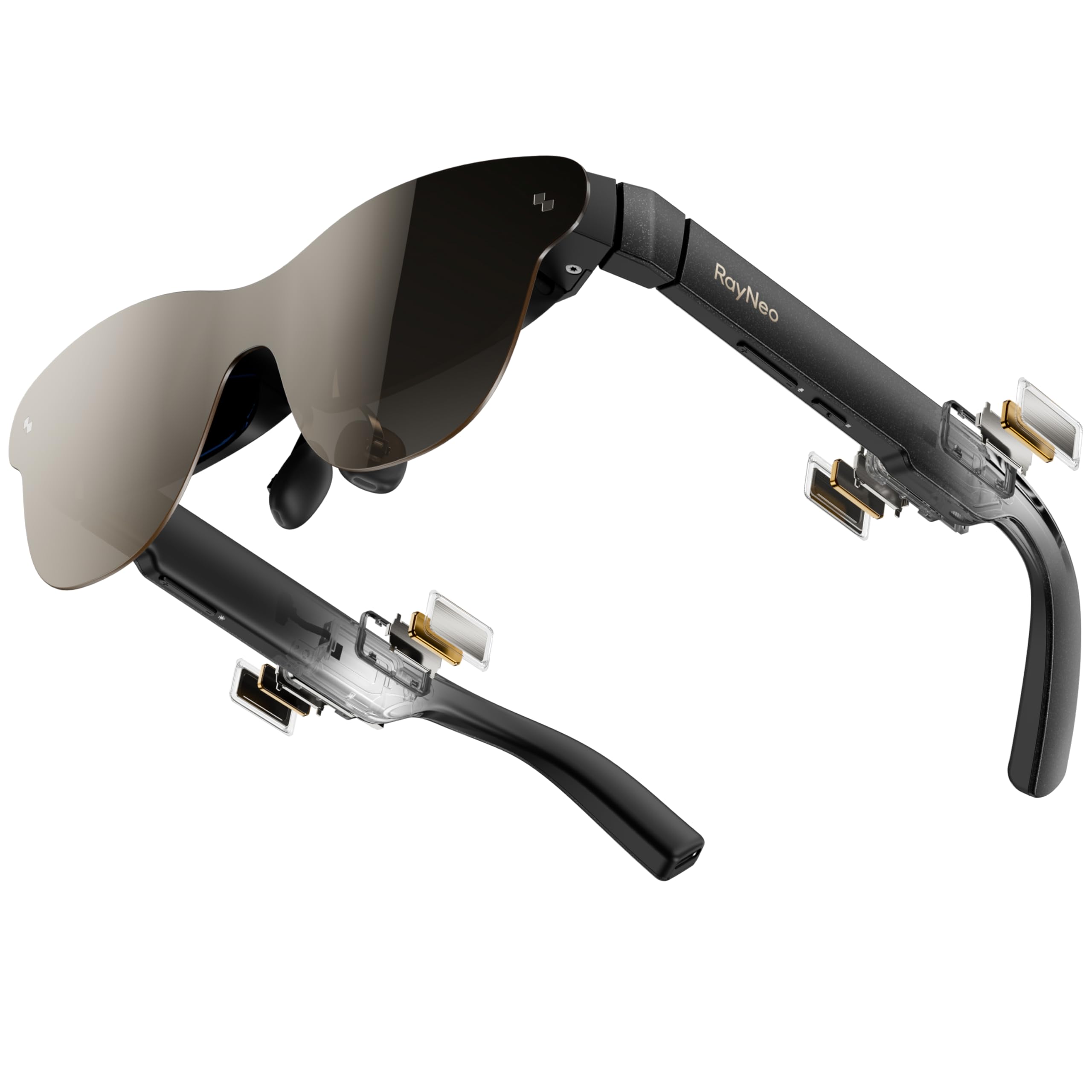
1. RayNeo Air 3s Pro AR/XR Glasses
Our pick — over 4★ from 550+ verified ratings; the strongest balance of quality and price.
World’s brightest AR glasses at 1200 nits with eye comfort certification.
RayNeo claims the Air 3s Pro has the highest to-eye brightness in any AR glasses today at 1200 nits. The HueView 2.0 system uses 5.5th-gen tandem Micro-OLED displays to achieve a 200,000:1 contrast ratio and 98% DCI-P3 color coverage, producing lifelike visuals. You get a 201-inch virtual display (at 6 meters away) with 6 tune viewing modes. The glasses are the only wearable display with TÜV SÜD Low Blue Light and Flicker-Free dual certification, plus 3,840Hz high-frequency PWM dimming to reduce eye fatigue during long sessions.
One reviewer praised the “superb picture quality and eye comfort mode prevents headaches.” They noted that the full screen is not visible initially—fixing it requires setting Pocket TV to 80% and adjusting the temple angles. The nose pads caused red marks after hours of use, so the same user removed the nose piece and used tape instead. The built-in spatial audio is good, but the glasses can become uncomfortable on ears after 2-4 hours. Reviewers also report that it is “excellent for travel/gaming” but “not suitable as WFH monitor replacement” because the screen moves with your head—there is no 3DoF anchor mode here. The price often drops to, making it a solid value for a bright, comfortable media viewer.
Top features
- 1200 nits brightness—among highest available
- TÜV SÜD dual certification for low blue light & flicker-free
- Lightweight at 76g with spatial audio
- Great price-to-performance ratio
Known limitations
- No 3DoF, so screen follows head movement
- Nose pads can cause red marks after hours
- Full screen requires adjustment to see clearly
Grab this for: A bright, eye-friendly personal cinema for travel and gaming that saves you money over premium options.
The one issue: Without 3DoF, you cannot pin the screen in space, which makes it less useful as a productivity monitor.
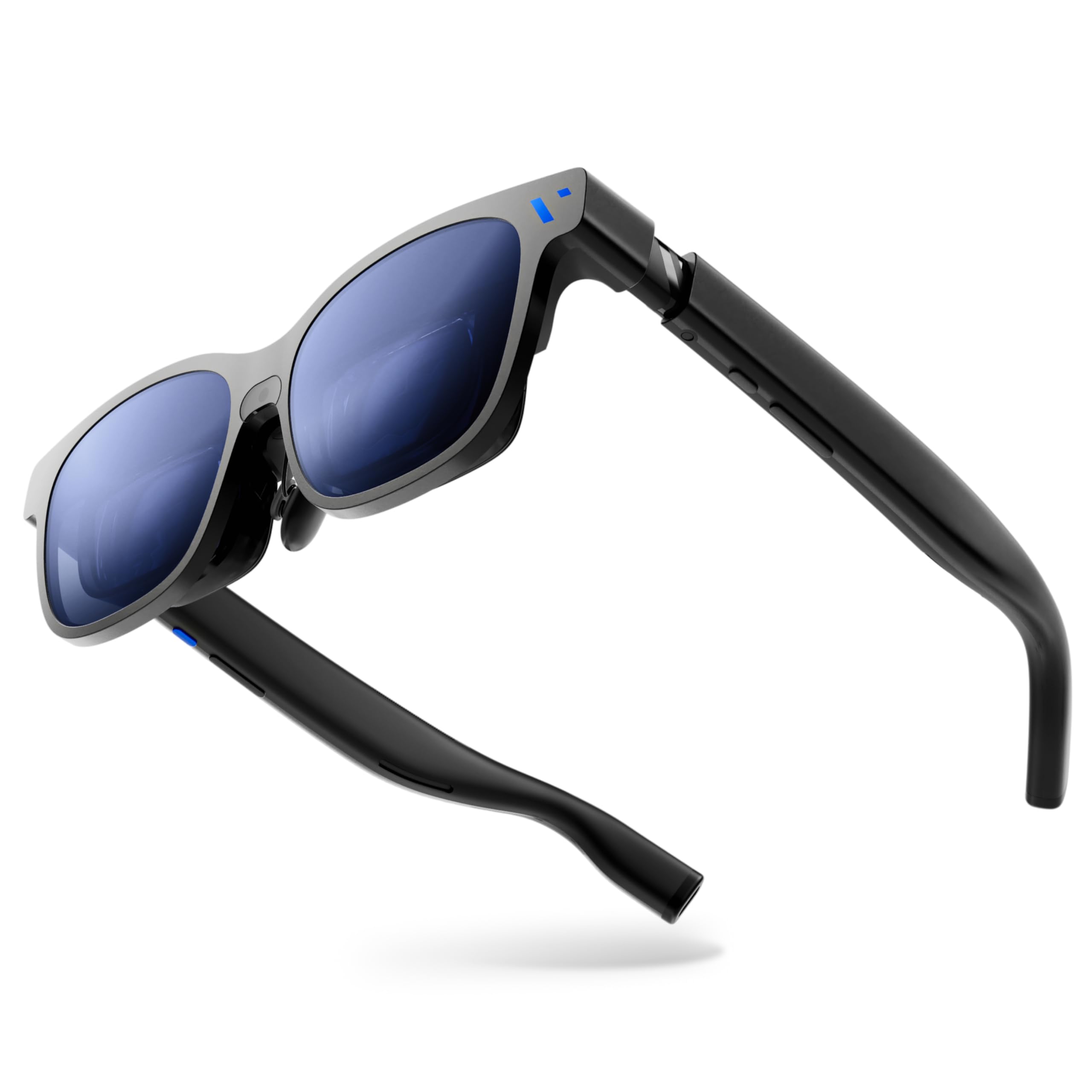
2. VITURE Beast XR/AR Glasses
The brightest screen in consumer XR that you can actually use in full sunlight.
This set earns its “Beast” name by delivering a massive 174-inch virtual screen with a class-leading 58° field of view, powered by Sony’s latest-generation Micro-OLED panels at 1250 nits peak brightness. For context, VITURE claims that is the 1250 nits brightness allows you to see the image clearly even outdoors without squinting. The 1200p per-eye resolution and 120 Hz refresh rate keep fast gaming scenes smooth and crisp. Built-in VisionPair 3DoF lets you pin that giant screen in space without any software or dongles—a step up from simpler glasses where the image follows your head.
HARMAN AudioEFX tuning delivers deeper bass and a wider soundstage directly from the frame, so you get rich audio without needing separate earbuds. One reviewer noted that the 8BitDo controller was incompatible with iOS, and some users reported blurry edges in the “Extra Large” or “Ultra Large” screen modes, though the 3DoF anchor mode helps. The smartest feature might be the 9-level electrochromic dimming with Auto Transparency—one tap shifts between seeing your surroundings and total blackout, adapting to your room without an app. At an all-day comfortable 88 grams with a full-metal frame, this is the pick for someone who wants the absolute biggest, brightest image and is willing to pay for it.
Why it leads the pack
- Largest virtual screen at 174″ with 58° FOV
- Brightest display at 1250 nits for outdoor use
- Built-in 3DoF with no software needed
- 9-level electrochromic dimming with Auto Transparency
Where it stumbles
- Edge blur in Ultra Large screen mode is noticeable
- Short non-replaceable cable limits positioning
- Android phone compatibility issues reported
One-glance verdict: Buy this if you want the biggest, brightest screen money can buy in a wearable and you don’t want to fiddle with software.
The single caveat: The extra-wide screen modes can blur at the edges, so you may need to use the 3DoF anchor mode for a sharp image.
3. XREAL One Pro AR Glasses
The all-rounder that finally makes AR comfortable for long sessions.
At the heart of the One Pro is XREAL’s self-developed X1 spatial computing chip, which delivers native 3DoF tracking with an ultra-low 3ms motion-to-photon latency, meaning the image stays glued in space with no perceptible delay as you move your head. The new X-Prism optics push the field of view to a top-tier 57°, recreating the feeling of watching a 171-inch screen from four meters away. Sony’s 0.55-inch Micro-OLED display paired with a 120Hz refresh rate gives you cinematic visuals with smooth motion.
Sound comes from Bose-tuned speakers built into the frame, so dialogue and game audio feel spacious without needing headphones. One buyer praised the “excellent resolution and text readability with IPD/clarity adjustments.” Another reviewer noted that the glasses are “well-made, simple monitor glasses with no bloatware.” The Dual IPD design comes in two sizes—M (57-66mm) and L (66-75mm)—so it fits over 95% of users. The catch reported by some users is slight drift in anchor mode, which is easy to reset, and that it drains your device’s battery since there is no internal battery. At 700 nits brightness, it is not the brightest on this list, but advanced electrochromic dimming helps you adjust the lens tint immediately.
What works
- Massive 171″ screen with 57° FOV
- Rock-solid built-in 3DoF tracking
- Bose audio tuning for rich sound
- Two IPD sizes fit most face shapes
What to know
- Moderate 700 nits brightness, not best for direct sun
- Anchor mode can have slight drift
- Requires HDMI adapter for iPhone 14 and earlier
Reach for this if: You want the most polished, comfortable AR glasses with great audio and a huge screen that doesn’t drift.
Look elsewhere if: You need the absolute brightest display for outdoor use or you have an older iPhone without USB-C.
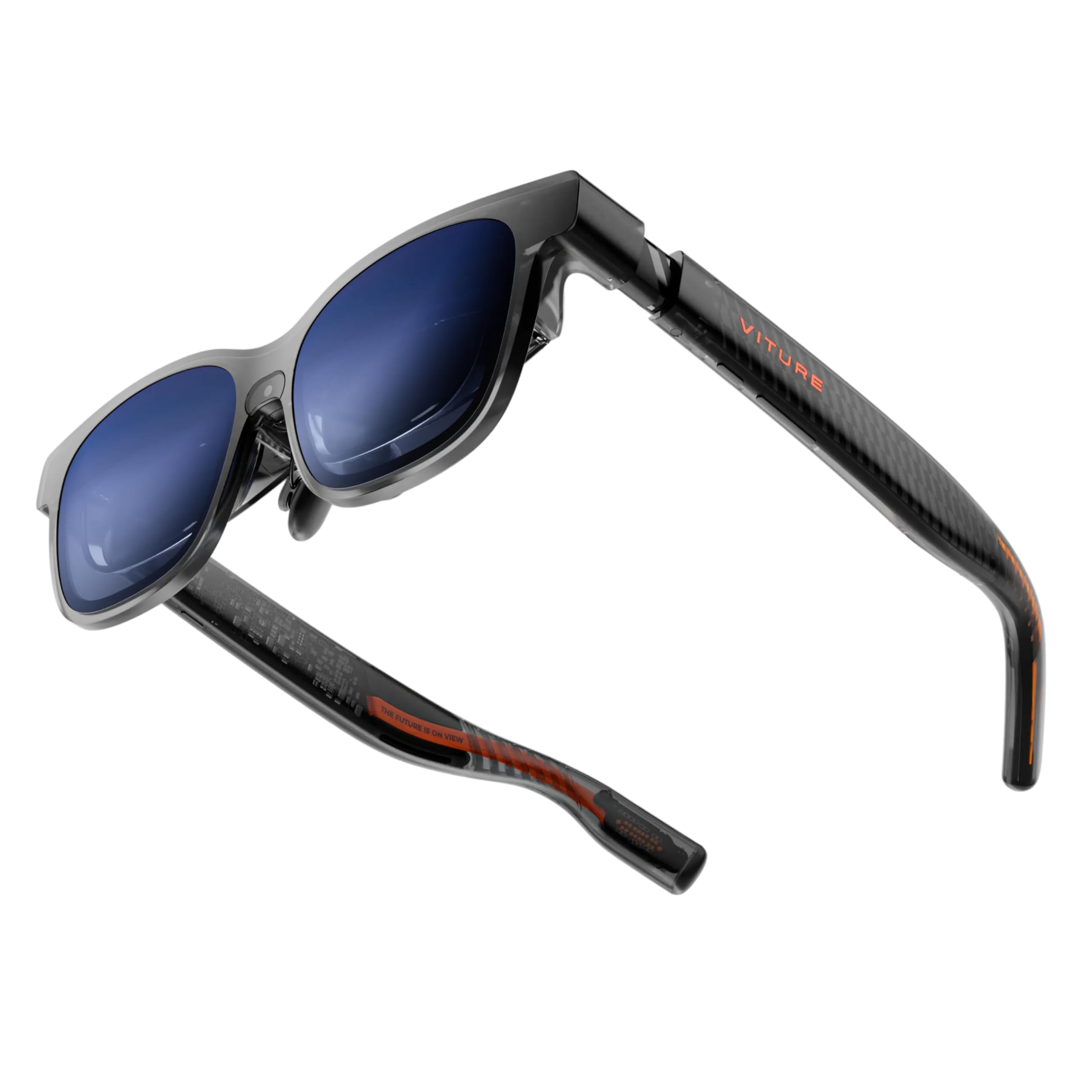
4. VITURE Luma Pro XR Glasses
The 1200p resolution that makes text look sharper than most competitors.
VITURE’s Luma Pro delivers a 152-inch virtual screen with a revolutionary 1200p resolution that the company says feels like 4K. The 52° field of view combined with a silky-smooth 120Hz refresh rate and Hollywood-grade color accuracy (DeltaE < 2) makes this a strong choice for detail-oriented users. With 1000 nits of peak brightness, it works well in bright indoor environments. The built-in myopia adjustment goes up to -4.0 diopters, so most nearsighted users can get a clear image without prescription inserts.
HARMAN audio experts tuned the built-in speakers for deeper bass and crisper highs. The electrochromic film lets you darken the lenses with one tap for total focus. One reviewer summed it up: “the 152″ virtual screen feels big, like in a cinema.” They also appreciated that it connected easily with their Pixel Pro, PC, and Switch. However, a buyer with astigmatism reported that the starburst effect from lights made viewing uncomfortable. The supplied hard zippered pouch is bulky but offers solid protection. The Luma Pro comes in two IPD sizes—Regular (64.0±6.0 mm) and Large (68.0±6.0 mm)—so you can pick the one closer to your measurement.
Biggest strengths
- Sharpest 1200p resolution in this price range
- Built-in myopia adjustment up to -4.0D
- Electrochromic film for instant immersion
- HARMAN audio with rich, full sound
Known issues
- Not suitable for users with astigmatism
- Image softens in corners slightly
- Requires adapter for iPhones without USB-C
Perfect for: Anyone who values razor-sharp text and color accuracy for movies or productivity over having the absolute largest screen.
The honest trade-off: The 52° FOV is smaller than the Beast or XREAL One Pro, so it feels more like a giant monitor than a full theater.
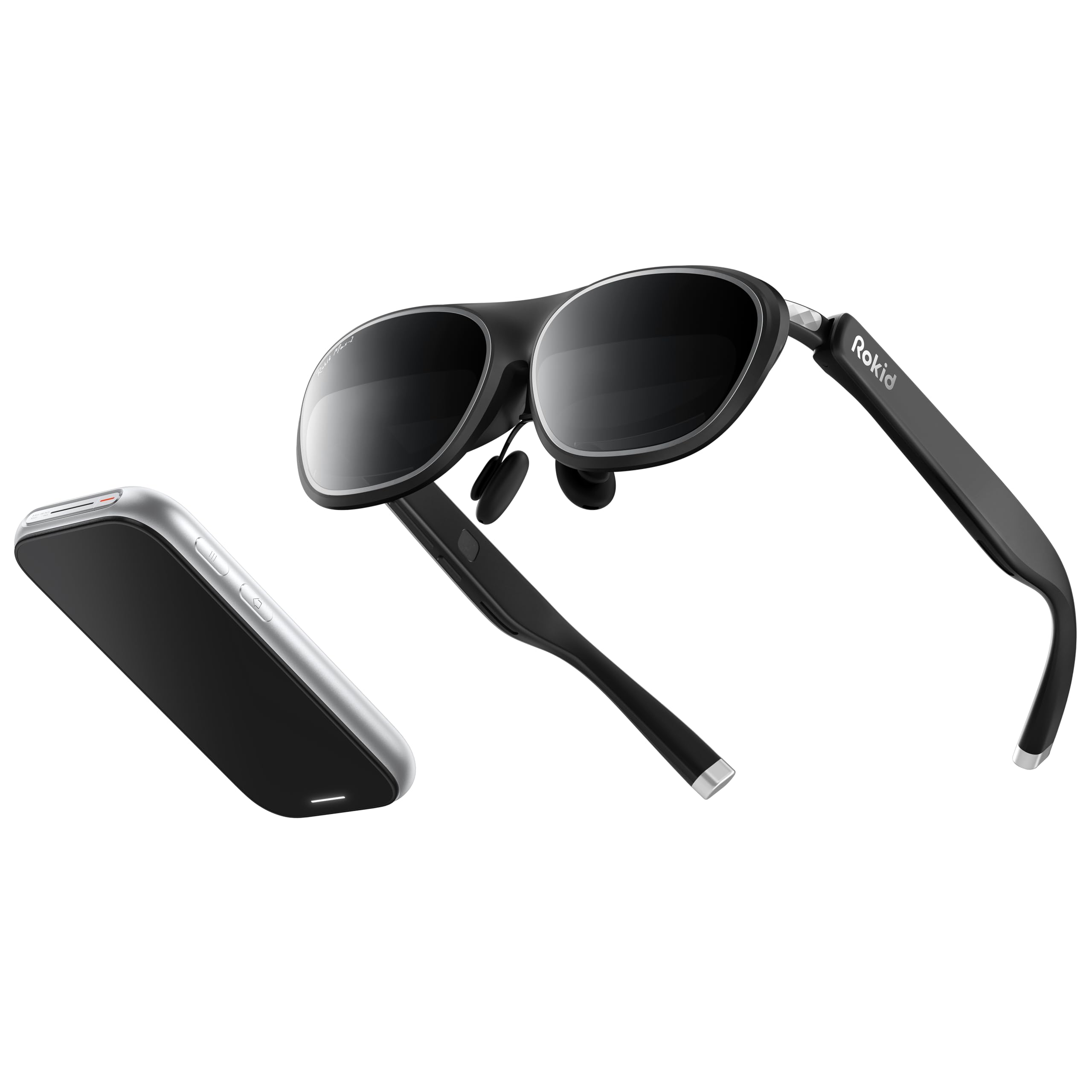
5. Rokid AR Spatial Glasses with Station2
The only AR glasses that let you run three apps side-by-side.
Rokid’s system pairs the Max2 glasses with a dedicated Station2 spatial computer, which packs a 5000mAh battery (giving about 3.5 hours of runtime), 8GB RAM, 128GB storage, Wi-Fi 6, and Bluetooth 5.2—so your phone’s battery stays untouched. The unique 3-screen display lets you run three apps simultaneously, which is a productivity boost you do not get from other glasses that simply mirror one screen. You can switch between Reading, Giant Screen, Sports, and Multi-Screen modes, with aspect ratios from 16:9 up to a massive 32:9 in Giant Screen mode.
The Max2 glasses use 1920×1200 resolution per eye, a 120Hz refresh rate, and 600 nits brightness. Built-in myopia adjustment supports up to 600 degrees. One buyer confirmed the “big, clear screen without face covering” and praised the “excellent OLED colors with no screen door effect.” Another reviewer, however, had a critical experience: after a firmware update their Station 2 showed a black screen. The 3-screen display only works with Android phones via DLNA (not with iPhones). The Station2 adds a full Rokid ecosystem with apps like Netflix and YouTube, but Netflix only supports 0DoF mode.
what separates it
- 3-screen multitasking with dedicated Station2 computer
- 5000mAh battery for 3.5h of use without draining phone
- Myopia adjustment up to 600 degrees
- Multiple spatial modes (Wide, Narrow, Ultra-Wide)
Downsides
- 3-screen mode does not work with iPhones
- Firmware reliability issues reported
- Only 600 nits, less bright than many competitors
Best suited for: Android users who want a standalone multi-screen workstation without draining their phone battery.
skip it if: You are on iPhone, or you value the brightest possible display, or firmware stability is your top priority.
6. XREAL 1S AR/XR Glasses
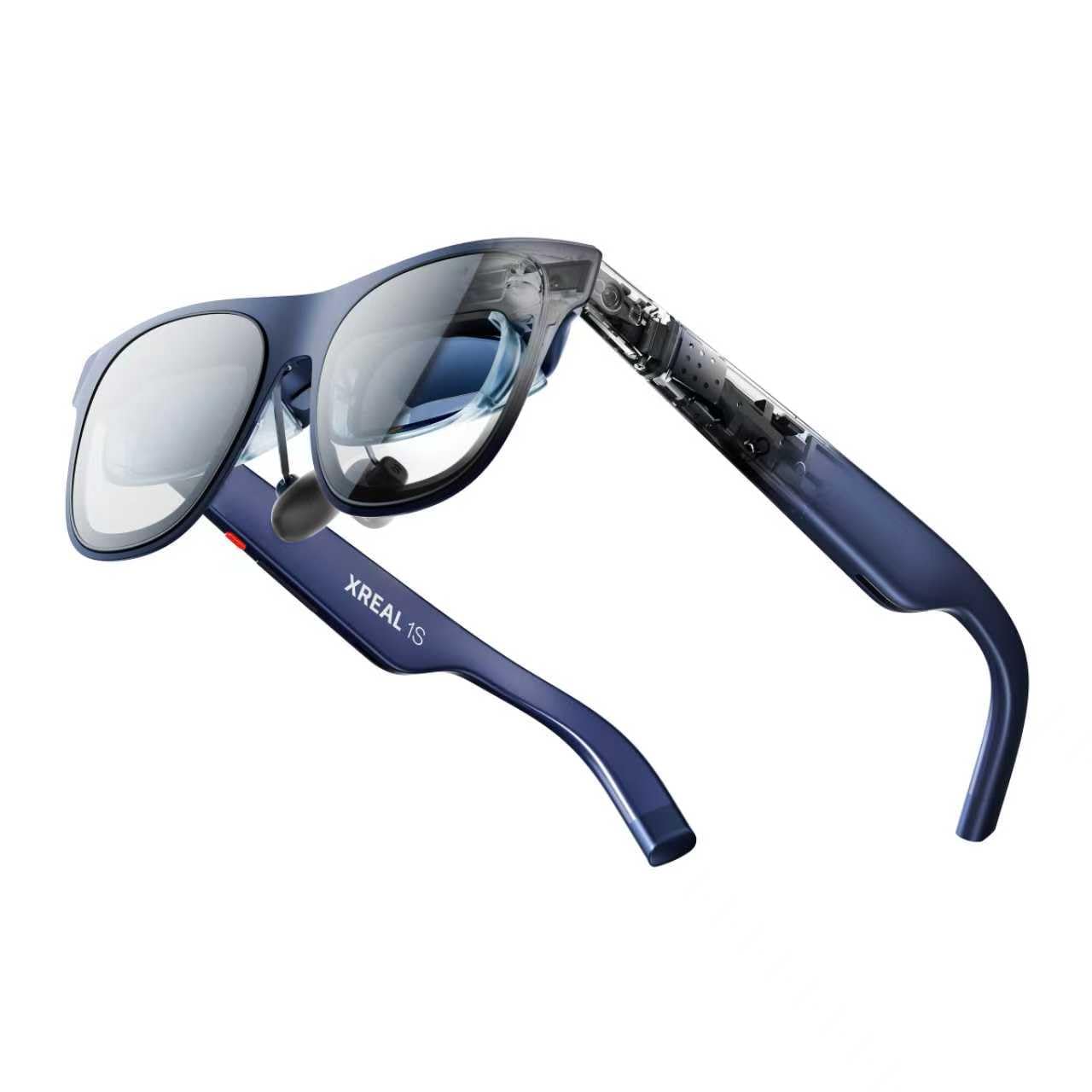
Native 3DoF that locks your screen in space with zero setup.
Powered by the self-developed X1 chip, the XREAL 1S is the world’s first AR glasses with native 3DoF spatial viewing built into the glasses themselves—no app, no phone software, no separate tracker needed. The screen size can go up to 500 inches, though the actual FOV is 52°. Each unit is individually color-tuned for precise natural hues, and the redesigned optical engine improves center-to-edge clarity. The 120Hz refresh rate in 3DoF mode and a 90Hz global refresh eliminate flicker and blur.
Sound is co-developed with Bose, engineering a spacious, balanced soundstage with deeper lows and crisp mids using custom AR-grade drivers. One reviewer called it “superior to Viture Pro,” praising the 3DoF anchor mode as critical for using the glasses on a treadmill. They noted the extensive menu with screen size, distance, ultra-wide, and 3D settings. Another buyer reported that the frame and tint create visual clutter, and that the 52° FOV restricts surroundings. Some users also mentioned that anchor mode drifts and needs a recenter button press. The IPD range covers 59.5-70.5 mm, accommodating about 95% of users.
The XREAL edge
- Native 3DoF with no setup or apps required
- Individually color-tuned displays for accuracy
- Bose-tuned audio with spacious sound
- Up to 500″ virtual screen capability
What holds it back
- Frame and tint cause some visual clutter
- Anchor mode drift requires frequent recentering
- Uncomfortable nose pad out of box for some
Grab these if: You want the most stable, app-free 3DoF experience for watching movies or using the glasses as a monitor while moving.
The main drawback: The drift in anchor mode and the nose pad comfort may require tweaks or third-party accessories.
7. TOZO VIZO Z1 Pro AR Glasses
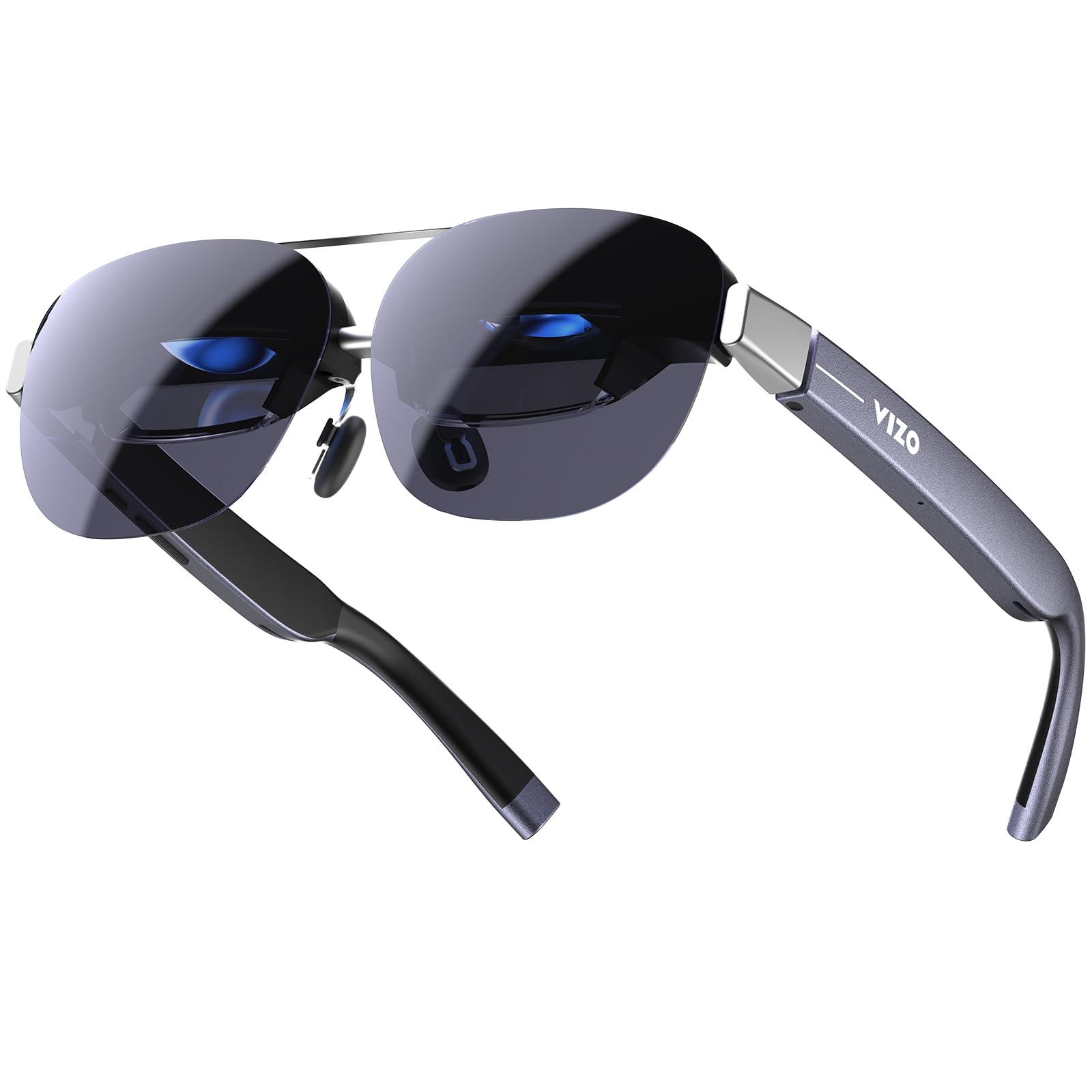
The lightest AR glasses at 63g with a blinding 6000-nit peak brightness.
The VIZO Z1 Pro weighs just 63 grams, making it far lighter than most alternatives—a huge relief for your nose and ears during long sessions. It delivers an ultra-high peak brightness of 6000 nits and a comfortable perceived brightness of 1800 nits, so the image stays vivid even in harsh direct sunlight. The 47.5° field of view presents a 160-inch-equivalent wearable screen with Micro-OLED technology, full HD per-eye resolution, 98% DCI-P3 color coverage, and up to 200,000:1 contrast for deep blacks. The 120Hz refresh rate keeps fast-moving scenes fluid.
One buyer mentioned the glasses have an “excellent large, crisp, bright screen for gaming/work” but noted the lack of a lens cover or adjustable screen size. They mentioned “slight corner blur” and “noticeable audio bleed” from the dual speakers. Another buyer praised the “foldable design like sunglasses” and the detachable frame that accepts prescription lenses. The built-in stereo speakers and tactile buttons provide complete control without extra accessories. Plug-and-play USB-C connectivity works with supported smartphones, tablets, and laptops. At this price, you get a lightweight, bright portable theater that fits in your pocket, though you miss out on built-in 3DoF.
Why it is a steal
- Ultra-light 63g frame for all-day comfort
- 6000 nits peak brightness for outdoor use
- Micro-OLED with 98% DCI-P3 color
- Detachable frame for prescription lenses
Missing features
- No built-in 3DoF (screen follows your head)
- Audio bleed from built-in speakers
- No lens cover provided
Buy it for: The lightest, brightest screen for outdoor use without breaking your budget.
Do not buy if: You need head-locked screen anchoring (3DoF) or you prefer a larger field of view.
8. RayNeo Air 4 Pro AR/XR Glasses
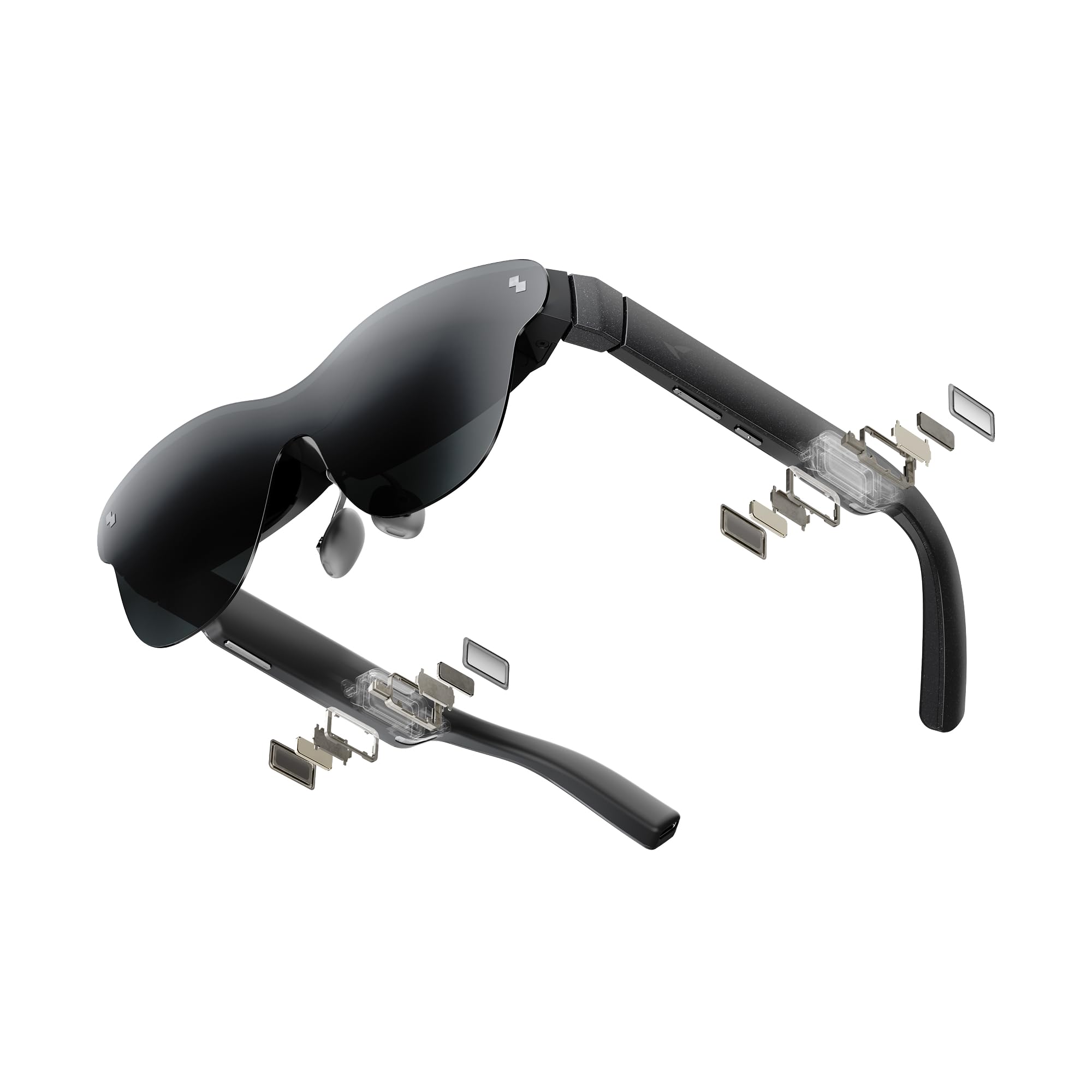
HDR10 AR display with AI upscaling and Bang & Olufsen audio.
The Air 4 Pro is the world’s first AR glasses with an HDR10 display, delivering over 10 billion colors and ultra-deep contrast on a massive 201-inch virtual screen. The Vision 4000 chip, co-developed with Pixelworks, uses AI SDR-to-HDR upscaling to enhance color, sharpness, and motion clarity in real time. Four precision speakers tuned by Bang & Olufsen deliver rich 360° spatial sound, and optional sound tubes (sold separately) direct audio into your ears for louder, clearer audio in noisy environments. The 120Hz refresh rate at 1920×1080 resolution means smooth gaming on PS5, Steam Deck, and Nintendo Switch 2.
One reviewer declared it the “best screen quality (HDR10, AI SDR-to-HDR), best audio (Bang & Olufsen, sound tubes included), and best price among portable monitor glasses.” They noted it is comfortable with no eye fatigue. However, another buyer reported that the glasses are not designed for large heads, only 90% of the screen is visible, and the sound tubes may not reach your ears. The 46° field of view is modest compared to the 52-58° competitors above. Universal USB-C compatibility works with iPhone 15/16/17 (USB-C models), Android, MacBook, iPad, and PlayStation consoles—no apps or Wi-Fi required.
What stands out
- First AR glasses with true HDR10 display
- AI SDR-to-HDR upscaling with Vision 4000 chip
- Premium Bang & Olufsen spatial audio
- Supports native 3D movie playback
Watch out for
- 46° FOV is narrower than top picks
- Not ideal for larger head sizes
- Sound tubes are an extra purchase
Ideal for: Movie lovers who want the most accurate HDR picture and highest-quality built-in audio at a reasonable price.
The honest catch: The narrower FOV means it feels like a large TV rather than a full theater, and fit is not universal for larger heads.
9. TOZO VIZO V1 AR Glasses
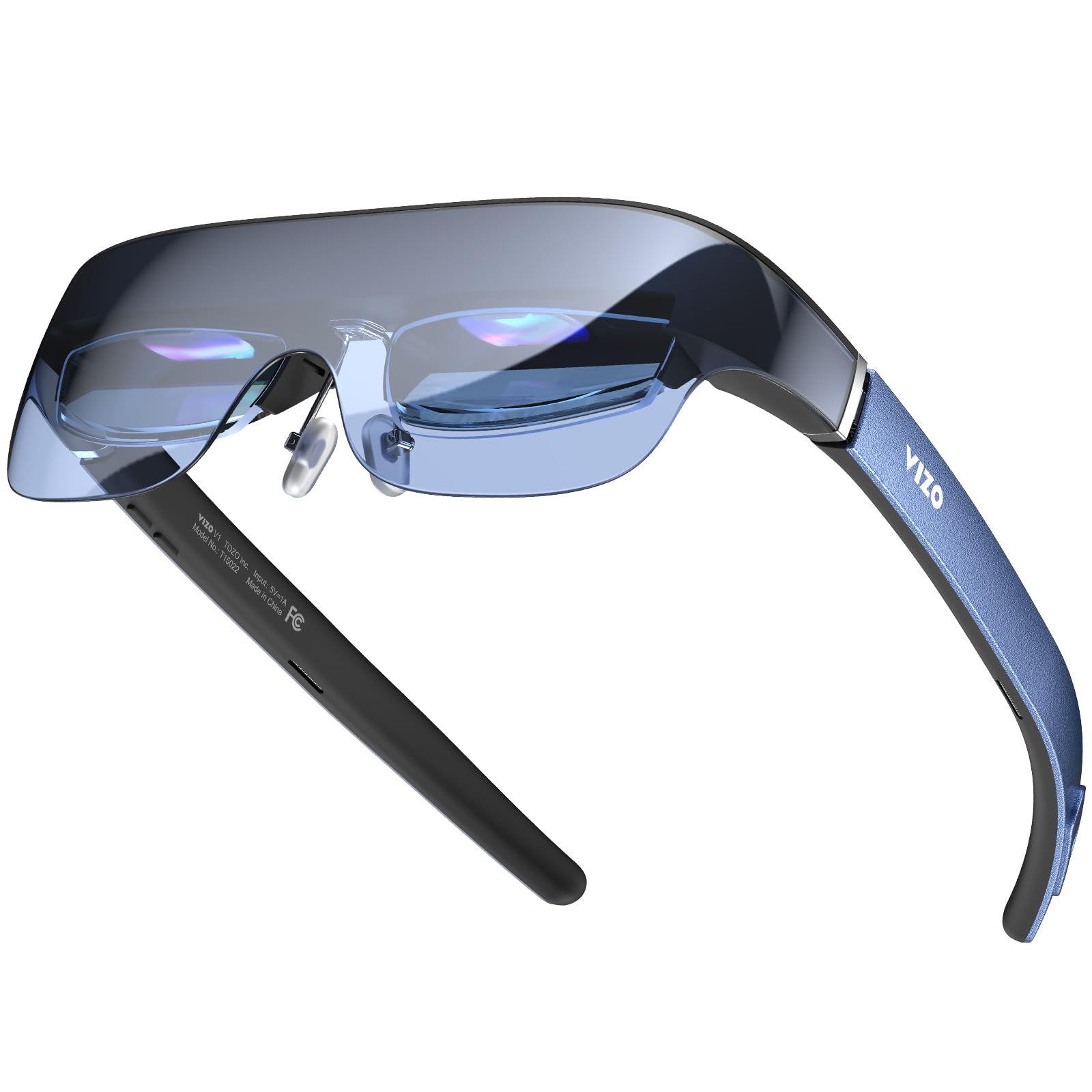
The entry-level pair that fixes vision without needing inserts.
The VIZO V1 offers an ultra-bright display rated at 1800 nits, with a perceived eye-level brightness of 800 nits, so the picture stays clear even near a window. The headline feature is the built-in myopia adjustment dial that lets you fine-tune focus from 0 to -500 degrees without wearing your glasses. This is a huge convenience for nearsighted users—no prescription inserts, no extra frame. The 118-inch virtual screen is smaller than the 150+ inch competitors, but this keeps the price low. The glasses support 2D/3D mode switching with a simple toggle.
Buyers report a “sharp, bright screen for movies/gaming” and note that the “built-in vision adjustment” works well. One reviewer called it a “solid second monitor for the home office,” finding it comfortable for 2-hour work sessions. However, one owner reported that the stability sensor caused vertigo and the screen was shaky on a plane—the V1 does not have 3DoF. Another noted “edge blurriness depending on face shape” and that the glasses run on your device’s battery (no internal power). The nitinol memory wire nose pads are adjustable and non-slip for long sessions. Plug-and-play USB-C connectivity works with iPhone 15/16/17, Samsung Galaxy S-series, and select PCs.
Why it wins on value
- Built-in myopia correction from 0 to -500°
- 1800 nit ultra-bright display
- Adjustable nitinol memory wire nose pads
- Plug-and-play with many phones and PCs
What you give up
- No 3DoF or head tracking
- Stability sensor issues reported in motion
- Smaller 118″ screen vs. 200″ competitors
Good for: Nearsighted buyers who want an affordable, simple AR viewer for movies and light productivity without the complexity of inserts.
Not for: Anyone who needs a stable, head-locked screen for use while moving, or who wants the largest rich display.
Understanding the Specs
Brightness (Nits)
Brightness measured in nits tells you how vivid the image looks in different lighting. A pair with 600 nits works well in a dim room, but you will need 1000 nits or more to use them comfortably near a sunlit window or outdoors. Higher nits also improve color contrast, making dark scenes in movies look deeper instead of washed out.
Field of View (FOV)
FOV measures how much of your natural vision the virtual screen covers. A 46° FOV looks like a large TV floating in front of you. A 52-58° FOV feels closer to sitting in a movie theater, filling more of your peripheral vision. Wider FOVs are more rich but can sometimes blur at the edges—read reviews to see if a specific model handles this well.
3DoF vs. 0DoF
0DoF means the screen moves with your head—turn your head left, and the screen follows. This can cause motion sickness. 3DoF (three degrees of freedom) locks the screen in space so it stays wherever you placed it, even as you move your head. Glasses with built-in 3DoF are much more comfortable for watching movies or working, but they cost more.
Myopia Adjustment
Built-in diopter dials let you adjust focus from 0 to -500 degrees or more without wearing your glasses. This is a critical feature for nearsighted users. If your prescription is stronger than -500 degrees or you have astigmatism, you will need magnetic prescription lens frames, which some brands include or sell separately.
FAQ
Do AR glasses work with my iPhone?
Can I use AR glasses without wearing my prescription glasses?
What is the difference between 0DoF and 3DoF in AR glasses?
How long does the battery last on AR glasses?
Can I play Nintendo Switch 2 with AR glasses?
What is the best field of view for a movie theater experience?
Do AR glasses work with Android phones?
Can I use AR glasses for productivity and coding?
How do I clean and maintain AR glasses?
Is 600 nits bright enough for AR glasses?
Final Thoughts: The Verdict
Across the board, the best ar glasses on amazon winner is the VITURE Beast XR. And for the best value with a lightweight frame and outdoor brightness, the TOZO VIZO Z1 Pro is a surprisingly strong contender.
How We Picked
We do not accept paid placement. Every pick is matched to a real buyer and a real use-case; we do not hands-on test units.
Sources & Methodology
Specifications: manufacturer listings and product documentation. Review insights: verified customer reviews, as of July 2026. Pricing: not shown on this page (it changes often); check the current price via the retailer link.
As an Amazon Associate, Gadgets Feed earns from qualifying purchases. This does not affect which products we feature.