
Our readers keep the lights on and my morning glass full of iced black tea. As an Amazon Associate, I earn from qualifying purchases.
Specs are compiled from manufacturer listings and verified buyer reviews and can change over time — please confirm the key details on the product page before buying.
Rucking—walking with a weighted pack—is among the most effective ways to build endurance, but if your footwear fails, every mile becomes a lesson in misery. Blisters, rolled ankles, and sore arches are the price of the wrong boot, while the right pair turns a punishing workout into a rhythm you can sustain for hours. This guide breaks down the nine best boots for rucking by the specs that actually keep you moving: ankle support, outsole grip, weight, and long-haul comfort.
I’m Min — the founder and writer behind Gadgets Feed. This guide is built by comparing the manufacturers’ published specifications and the patterns across verified customer reviews, so you get each pick’s real strengths and trade-offs instead of marketing spin.
Whether you’re training for a military selection event or just adding weight to your daily walk, finding the right pair of boots for rucking means matching your terrain, your foot shape, and your tolerance for break-in periods to a boot that can carry the load.
Our Picks at a Glance

How To Choose The Best Boots For Rucking
Picking a boot for rucking is different from picking a hiking boot for a day hike. The added weight changes how your foot strikes the ground and what your ankles need. A few core specs separate a boot that carries you through a ten-mile ruck from one that gives out at mile three.
Zero-Drop vs. Raised Heel
A zero-drop boot means your heel and forefoot sit at the same height off the ground, closer to a natural walking or running gait. This reduces strain on your lower back and knees over long distances, but it can put more load on your calves and Achilles tendon. A raised heel (typical in many hiking boots) shifts your weight forward, which some find more stable under a heavy pack but can feel unnatural after miles of flat walking.
Ankle Support Height
A taller shaft (typically 8 inches) provides more lateral stability, which is critical when your pack’s weight shifts on uneven trail surfaces. A mid-height boot (around 6 inches) saves weight and offers more ankle mobility for faster-paced rucks or running intervals, but it trades some protection against rolling an ankle on loose rock.
Outsole Rubber Compound
The rubber compound in the outsole directly affects grip and wear life. A softer compound like Vibram Megagrip gives excellent traction on wet rock but wears faster on concrete. A harder, denser rubber lasts longer on pavement but can feel slippery on smooth wet surfaces. Ruckers who split time between road and trail should look for a balanced compound like Vibram SPE or XS Trek, which trades some grip for longer life on mixed surfaces.
Weight
Every extra ounce on your foot feels like a pound under a heavy ruck. A boot in the 18-22 oz range per boot is considered lightweight and will reduce fatigue over a multi-hour ruck. Heavier boots (30+ oz) often provide more protection and durability but can sap your energy with every step. If you’re covering long distances, lighter is almost always better.
Waterproofing vs. Breathability
A waterproof liner (Gore-Tex or similar) keeps your feet dry in wet grass, puddles, and light rain, but it also traps heat and moisture from sweat. In hot climates or long rucks, a non-waterproof boot with mesh panels dries faster and keeps your feet cooler. For rucking in wet conditions, consider a waterproof boot; for dry or hot terrain, prioritize breathability.
Quick Comparison
| Model | Best For | Weight (per boot) | Height | Outsole | Amazon |
|---|---|---|---|---|---|
| Danner Tanicus 8″★ Best Overall | Long rucks on mixed terrain | 0.95 lbs | 8-inch | Danner Tanicus Traction (pentagonal lug) | Amazon |
| Oakley Field AssaultSmart Value | Rucking on road and light trail | — | 8-inch | Vibram Litebase + Vibram SPE | Amazon |
| Merrell Moab 3 8″ Tactical ZipAll-Day Comfort | Comfort straight from the start | — | 8-inch | Merrell outsole | Amazon |
| Under Armour Charged Valsetz Zip | Fast-paced, high-intensity rucking | 18 oz | 8-inch | Vibram XS Trek | Amazon |
| Belleville TR501 AMRAP | Zero-drop natural gait rucking | — | 8-inch | Rubber | Amazon |
| GARMONT T8 NFS 670 | Speed and agility on technical trails | 525 g (half pair, US 9) | 8-inch | Garmont outsole | Amazon |
| Danner Fullbore 4.5″ | Hot-weather rucking with maximum grip | — | 4.5-inch | Vibram Megagrip | Amazon |
| Lowa Zephyr GTX Mid TF | Technical terrain with heavy pack | 0.85 lbs | Mid | Lowa outsole (soft rubber) | Amazon |
| ROCKY S2V Tactical | Berry-compliant, all-conditions durability | 2.25 lbs | 8-inch | Vibram with high walls | Amazon |
In‑Depth Reviews
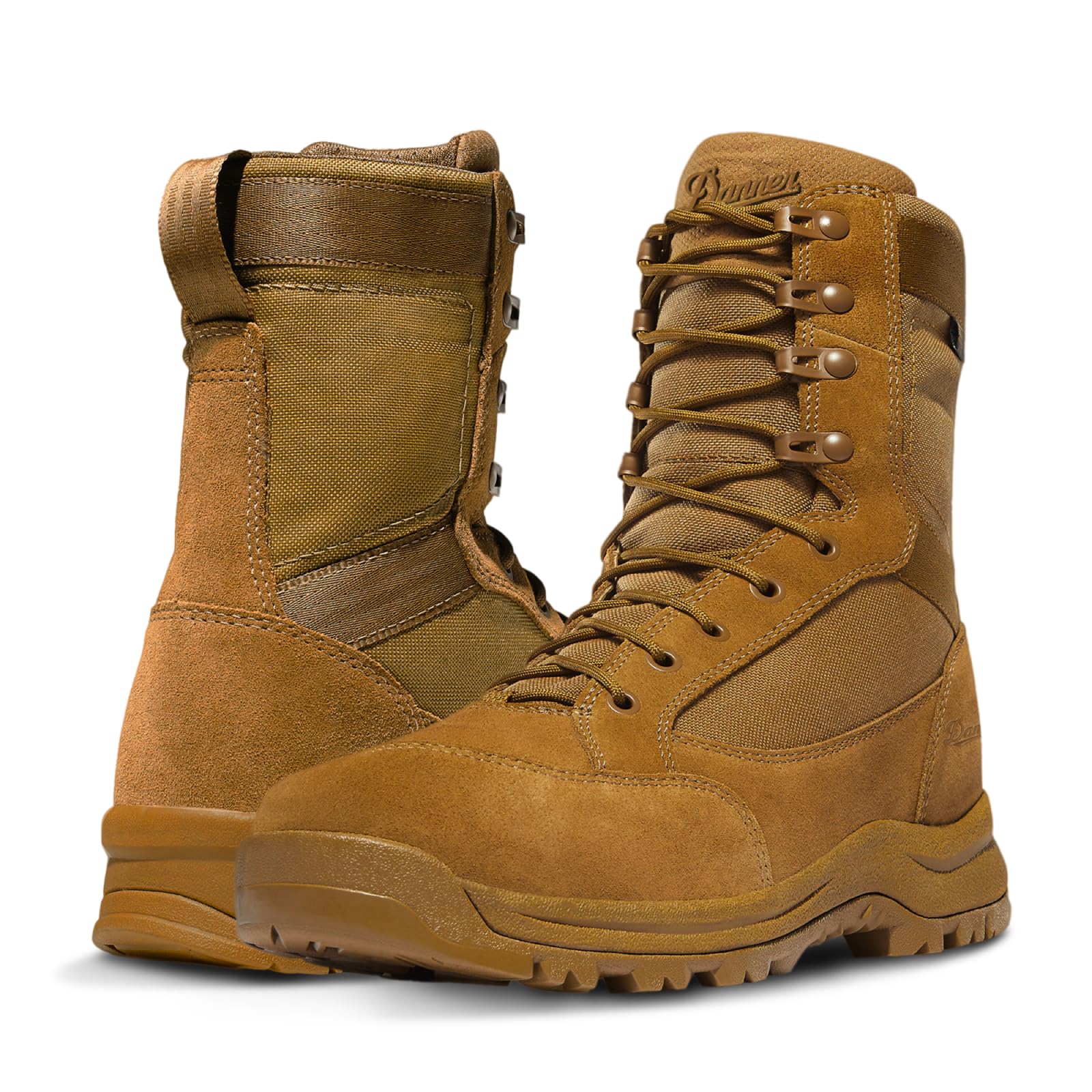
1. Danner Tanicus 8″ Military Boots
Our pick — over 4★ from 950+ verified ratings; the strongest balance of quality and price.
The Danner Tanicus delivers the lightest military boot in the lineup without ditching the rough-out leather durability that ruckers need.
At just 1.9 pounds for the pair, these boots shed serious weight compared to traditional combat boots, which means your legs stay fresher when you’re carrying a heavy pack. The pentagonal lug pattern on the outsole provides solid grip on loose dirt and gravel, and the polyurethane footbed is designed to resist breaking down over time, unlike cheaper foam insoles that go flat after a few months. Buyers report wearing these for 14 to 16 hours daily over multiple weeks without the boots falling apart.
The breathable, moisture-wicking mesh liner helps keep your feet cool in hot climates, a real advantage for summer rucking in the desert—one reviewer who lives in the desert noted that the boots are “cool” and don’t make his feet sweat. Unlike many AR 670-1 compliant boots that feel stiff and heavy, the Tanicus combines a supportive heel cup with a cushioned midsole so you don’t feel every rock underfoot.
Why It Carries The Load
- Very lightweight at 1.9 lbs (pair) for the category
- Breathable mesh liner handles hot-weather rucking without overheating
- Pentagonal lug outsole provides stability on varied terrain
- AR 670-1 certified for military use
The Hard Trade-Off
- Imported model rather than US-made Danner
- Some owners mention a snug fit that may require going up a half size
Your long-haul rucking partner: If your rucking is measured in miles, not minutes, the Tanicus’s light weight and breathable design save your legs over the distance.
Know the fit before you order: Danner recommends women size down 1.5 to 2 full sizes, and men between sizes should size down a half step—this is not a boot you guess on.
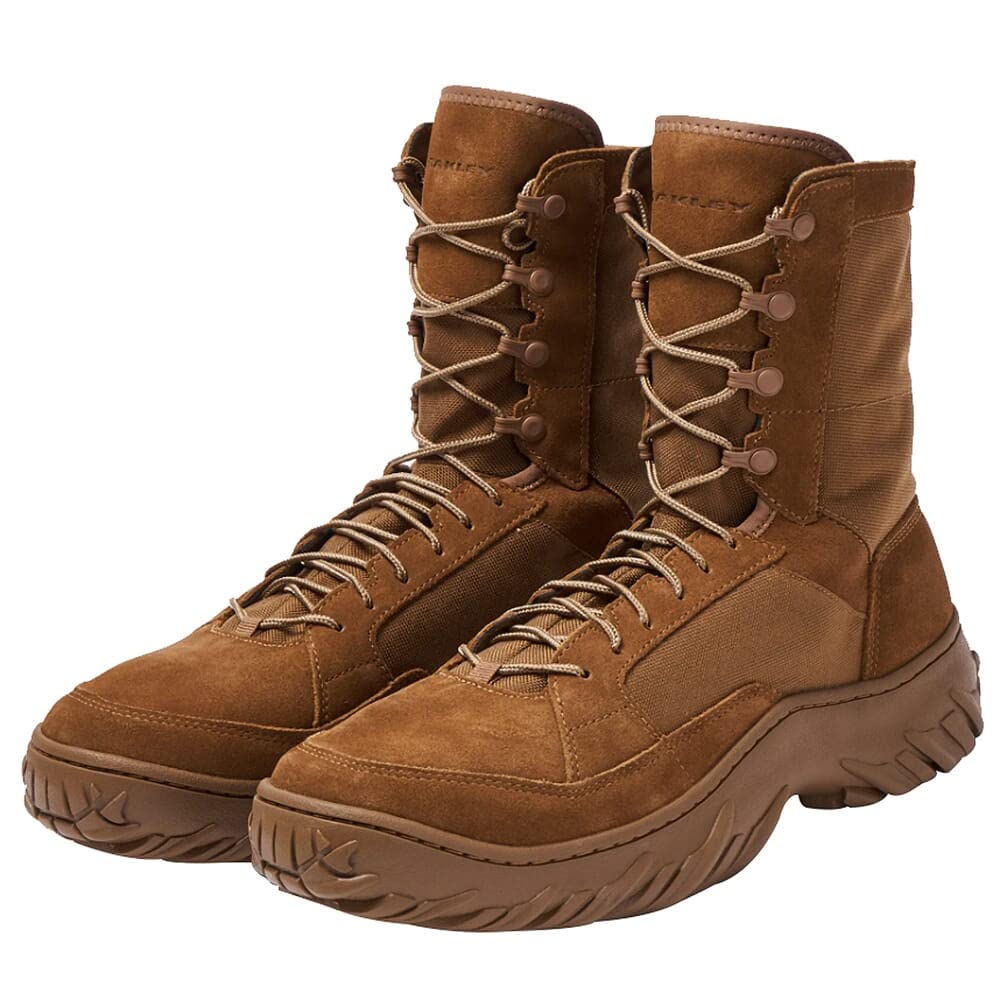
2. Oakley Men’s Field Assault Military Boots
A zero-drop lightweight boot that feels more like a running shoe, but with the durability and lacing system for a heavy ruck.
The Field Assault pairs a Cordura and suede upper with a Vibram Litebase outsole and Vibram Specialized Performance Elastomer (SPE) midsole (a lightweight rubber compound that cushions impact) to create a boot that is both flexible and responsive. One reviewer noted, “I’ve put these through hell for 3 months and have no rips etc.” The lace-lock system keeps your laces tight through the entire ruck, and the 8-inch stack height provides standard ankle coverage.
Compared to the heavier Danner Tanicus above, the Oakley feels more like a trail runner in step—great for ruckers who want to maintain a faster pace on pavement or packed dirt. The trade-off is that the semi-soft rubber compound wears down faster on concrete, as one buyer mentioned, and the ankle support is lighter than some competitors. For ruckers who prioritize speed and comfort over maximum ankle protection, this is a strong mid-range choice.
Why It Moves Fast
- Zero-drop design encourages a more natural, efficient stride
- Vibram SPE midsole absorbs impact well on hard surfaces
- Lace-lock system holds tension through long rucks
- AR 670-1 compliant for uniform use
Where It Wears Thin
- Semi-soft outsole compound wears faster on concrete and rocky terrain
- Minimal internal padding; thick socks recommended
- Sizing can be tricky—customers note ordering a full size down from their usual
Reach for this if: You’re rucking on mixed surfaces where a shoe-like feel helps you maintain pace and you value zero-drop comfort over hard-wearing outsole life.
Look elsewhere if: Your route is mostly concrete and you can’t afford to replace a boot every few months due to sole wear.
3. Merrell mens Moab 3 8 Inch Tactical Zip Waterproof Boot
The Moab’s legendary hiking boot comfort gets tactical treatment with a side zip and waterproof leather that works for long days on pavement and trail alike.
Merrell’s Moab hiking line is already famous for out-of-the-box comfort, and the Moab 3 Tactical translates that into an 8-inch zip boot that suits rucking. The COMFORTBASE footbed and midsole are what give it a “feel like sneakers” quality, as buyers repeatedly mention. One owner reported, “I have had these Merrill MOAB 3 boots for two weeks, and after putting several miles on them I must say that they are about the most comfortable boots for walking, both on pavement and in the woods, I have ever owned.” The side zip also makes getting them on and off quick, which matters when you’re already tired post-ruck.
The big caveat comes with heat. Multiple reviewers point out that the waterproof lining traps heat, making the boots uncomfortably hot in summer. If you ruck in warm climates, this boot is better reserved for cooler months or wet-weather rucking. Unlike the more breathable Oakley or Danner Fullbore, the Moab 3’s waterproof construction is a trade-off between dryness and breathability.
What Makes It Easy
- Zero break-in time—comfortable from the first step
- Side zip for easy on/off after a long ruck
- Waterproof leather upper handles wet grass and puddles
- Lightweight feel for an 8-inch boot
The Heat Check
- Waterproof lining traps heat, making boots feel hot in summer
- Spacious fit may not suit narrow feet without inserts
- Some shoppers say the zipper flap rubs against the ankle
Best for cool-weather ruckers: If you ruck in fall, winter, or wet conditions and want a boot that doesn’t need a break-in period, this is your pick.
skip it if: Your rucking is done in 80°F+ heat—the lack of breathability will make your feet uncomfortably hot and sweaty.
4. Under Armour Men’s Charged Valsetz Zip Waterproof Tactical Boots
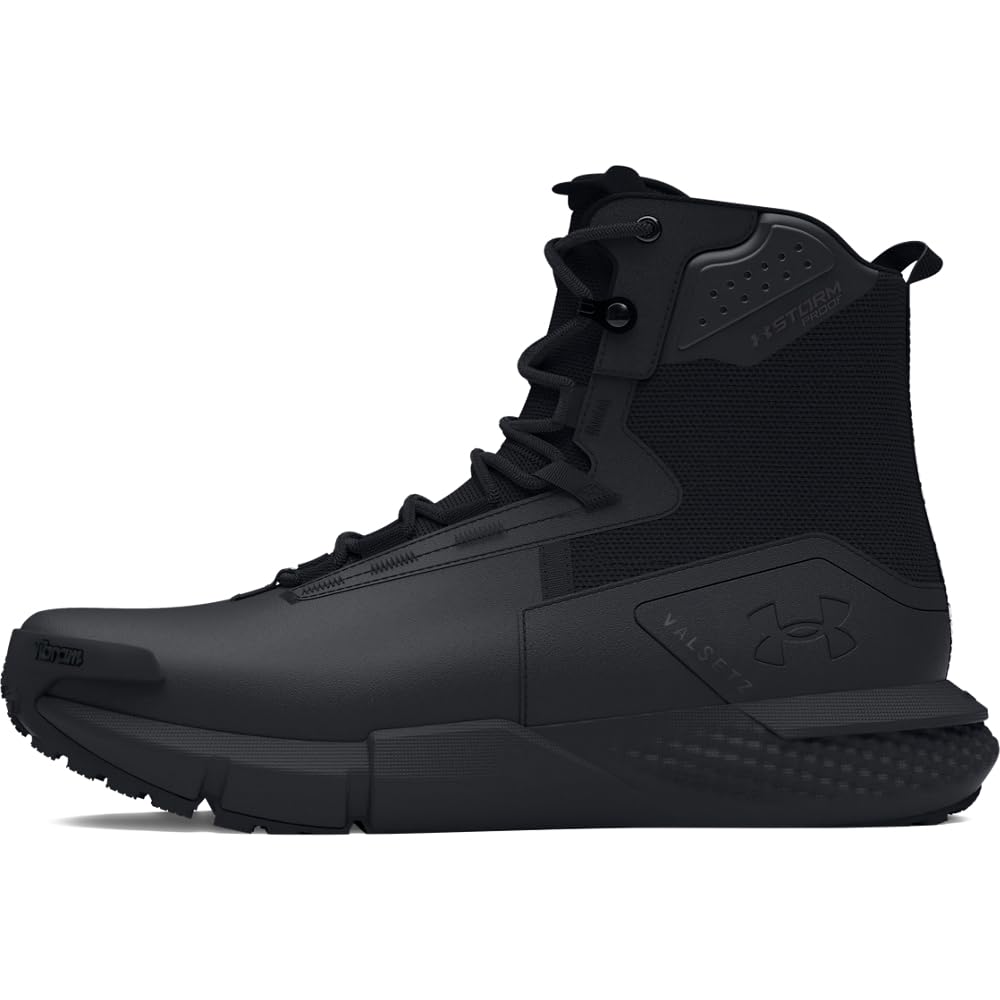
At 18 ounces per boot, this is the lightest 8-inch tactical boot in the lineup with a fast-rope compatible arch and a slip-resistant rating.
The Charged Valsetz Zip stands out for its full-length Charged Cushioning midsole, which absorbs shock effectively during high-impact rucking or when you add running intervals to your routine. The Vibram XS Trek outsole is designed to be responsive on unpredictable terrain while also offering good wet traction. An ASTM F3445-21 slip-resistant rating means it passes an independent lab test for slip resistance, a rare spec in the tactical boot category. One customer observed standing in rain for 3.5 hours with dry feet, confirming the waterproof liner works well.
Compared to the heavier Rocky S2V below, the Valsetz feels almost like a sneaker with added ankle coverage. The medial side zip and pull loops make them easy to get in and out of, and the PU overlays protect high-abrasion areas. A minor quirk: some buyers report the internal zipper cover flap can rub the ankle at first, but after a week of wear it typically softens up. Unlike the more expensive Lowa Zephyr, the Valsetz offers comparable cushioning at a much lower tier.
Why It Outpaces the Field
- Extremely lightweight at 18 oz per boot
- Full-length Charged Cushioning midsole absorbs impact well
- ASTM F3445-21 slip-resistant rating for wet conditions
- Fast-rope compatible arch adds durability at a high-wear point
Where It Grinds
- Internal zipper flap can cause ankle irritation during break-in
- Standing for 8+ hours may cause foot ache, per buyer reports
- Waterproofing limits breathability in warm weather
Your fast-ruck companion: If your training includes running intervals or high-intensity surges with a pack, the Valsetz’s cushioning and low weight keep you moving quickly.
One real concern: The zipper flap needs a brief break-in period, and if you’re on your feet all day without moving, the cushioning may not be enough for your arches.
5. Belleville TR501 AMRAP Military Boots
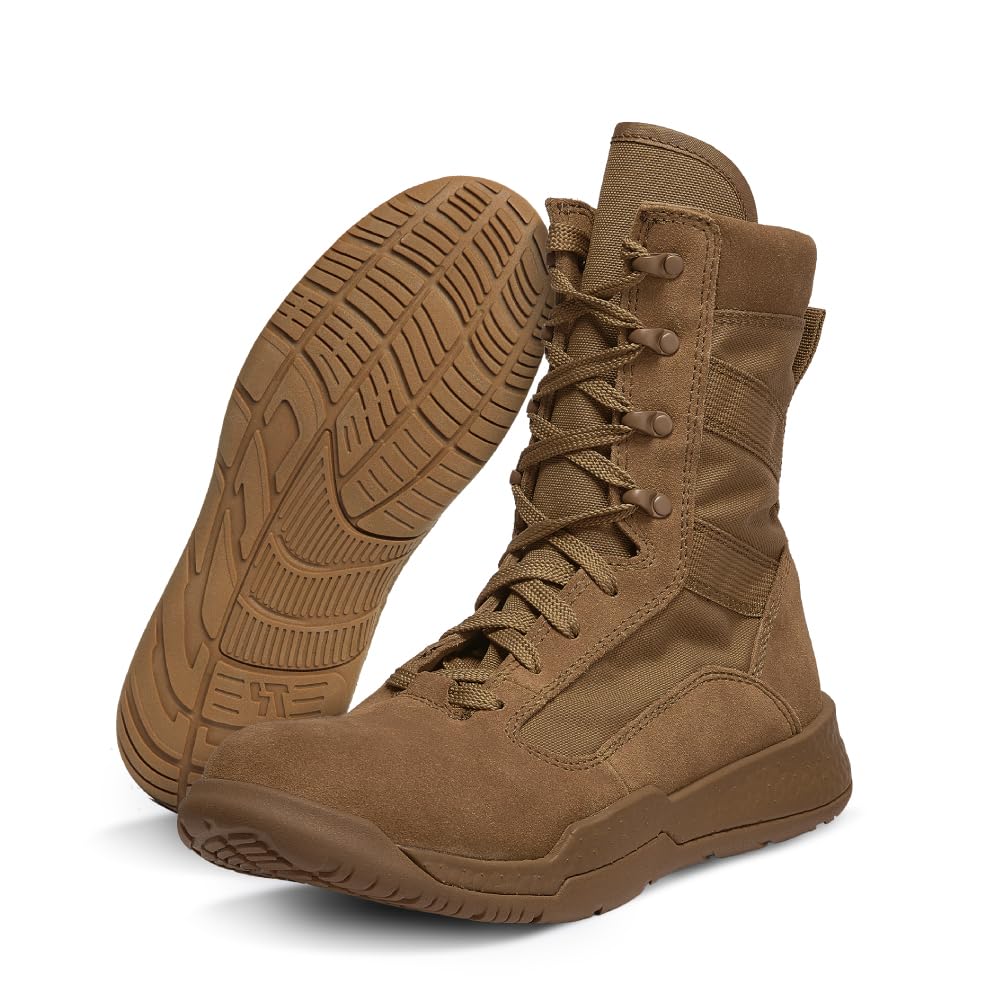
A zero-drop tactical boot from a legendary military footwear maker that tries to combine sneaker lightness with jump-boot support.
The TR501 is built on a zero-drop platform, meaning the heel sits at the same height as the forefoot, which encourages a midfoot or forefoot strike rather than a heavy heel slap. This is a popular setup among ruckers who want to reduce impact on their knees and lower back over long distances. The removable molded EVA insole lets you swap in your own orthotic if the stock cushioning doesn’t suit your foot. One buyer with 19 years in the Army called them “the most comfortable and supportive boots I’ve had” after buying his third pair.
The catch is traction. Buyers consistently note that the rubber outsole is very slippery on any wet or smooth surface. One reviewer who wore them for a full year said they are “not suitable for any sort of slippery terrain.” Compared to the Vibram-equipped Oakley above, the TR501 trades campus-friendly comfort for slick-surface grip. If your rucking route stays dry, this is a solid pick, but wet pavement or creek crossings are a genuine hazard.
Why Your Feet Will Thank You
- Zero-drop design reduces heel-strike impact on long rucks
- Wide toe box keeps toes comfortable during foot swelling
- Removable EVA insole allows orthotic customization
- Lightweight and supportive like a running shoe
The Slippery Truth
- Outsole offers very poor traction on wet, icy, or smooth surfaces
- Some owners mention stitching failure after a month of wear
- Not ideal for technical trail rucking
Reach for these if: You want a zero-drop boot for pavement, dry trails, and gym-based rucking with good arch support.
Look elsewhere if: Your route includes wet pavement, creek crossings, or muddy slopes—the TR501’s grip is its weakest link.
6. GARMONT TACTICAL T8 NFS 670 T.A.A.

At only 525 grams per boot (half pair, US 9), the Garmont T8 NFS 670 is the featherweight contender built for speed and precise ankle support.
The T8 NFS 670 uses a 1.8 mm suede leather upper with polyester inserts to keep weight low while maintaining durability. Its quick lacing system includes a ball bearing anchoring loop at the top, which lets you cinch the boot tight around your ankle with a single pull—a real time-saver during tactical transitions. One buyer who switched from the Belleville C320 noted “the NFS’ ankle support is class-leading” and said they wore them straight from the start on a 4-mile ruck without blisters.
Compared to the heavier Danner Tanicus, the Garmont is noticeably more agile on technical terrain, though some customers note the suede upper shows scratches early in its life. The Ortholite Ultra footbed provides cushioning and breathability, but reviewers mention the boots can feel hot during running and rucking. If you need a speed-oriented boot for rucking on uneven ground where ankle precision matters more than raw protection, the T8 NFS is a top-tier choice.
Why It Moves Like A Sneaker
- Extremely lightweight at 525 g (half pair, US 9)
- Speed lacing system with ball bearing loop for quick, secure fit
- Narrow-to-medium fit suits feet that feel swimming in wider boots
- Excellent ankle support for a lightweight boot
What You Give Up
- Suede upper scratches easily early on
- Can feel hot during extended rucking sessions
- Some reviewers point out durability issues with the upper ripping after heavy use
Your go-fast rucking boot: If your rucking involves technical trails, quick transitions, and you need precise ankle support without the heft of a traditional combat boot, the T8 NFS delivers.
Bear in mind: It runs narrow, so if you have wide feet or need arch support, this boot may feel too snug without custom insoles.
7. Danner Men’s Fullbore 4.5″ Military and Tactical Boots

A low-cut tactical boot with the grip and ventilation for hot-weather rucking, built on Danner’s DPDX last for a sleek, stable fit.
The Fullbore is an unconventional pick for rucking because of its 4.5-inch height, which provides less ankle support than an 8-inch boot. However, for ruckers who prioritize breathability and grip over ankle coverage, it excels. The Vibram Megagrip outsole offers excellent traction on wet and dry rock, and one user highlighted it allows you to “stand on rocks at an obtuse angle” without slipping. The ventilated upper keeps feet cooler than any waterproof boot in this list. An Ortholite footbed adds cushioning, and the DPDX last gives a low-profile feel that works well for urban rucking or mixed terrain.
Compared to the taller Danner Tanicus, the Fullbore trades ankle stability for superior hot-weather comfort. One reviewer with ankle replacement surgery reported that the boots provide the support and comfort they need, though another experienced rubbing from the sole edge stitching. The Fullbore sits at a premium mid-range price point but delivers the brand’s legendary outsole durability—one shopper added minimal sole wear after months of daily 2-3 mile walks on concrete.
Why It Breathes Heavy
- Ventilated upper keeps feet cool in hot climates like Arizona desert
- Vibram Megagrip outsole provides excellent traction on wet and dry rock
- Low-profile DPDX last fits comfortably for everyday wear
- Ortholite footbed adds all-day cushioning
The Height Trade-Off
- 4.5-inch height offers less ankle support than 8-inch boots, especially under a heavy pack
- Some shoppers say rubbing from sole-edge stitching internally
- No side zip for quick removal
Best for hot and technical terrain: If you ruck in desert heat or on rocky trails where grip and breathability matter more than maximum ankle support, the Fullbore is a standout.
Look elsewhere if: You regularly carry a 65+ lb ruck on uneven ground—the lower cut may not provide enough lateral stability for that load.
8. Lowa Men’s Zephyr GTX Mid TF Hiking Boot

Handcrafted in Europe and backed by nearly a century of bootmaking, the Zephyr GTX is the premium option for ruckers who demand long-term durability.
The Lowa Zephyr GTX is a mid-height boot (shorter than the 8-inch tactical boots in this list) that uses a Gore-Tex liner for waterproofing while still feeling relatively lightweight at 1.7 pounds per pair. The European craftsmanship shows in the materials and construction—buyers report the boots handle technical terrain with “no hot spots or discomfort” even on 8-mile hikes with substantial elevation gain. The extra plastic support around the ankle is a standout feature, with one reviewer noting it “saved me a twisted ankle” on rocky descents.
The Zephyr GTX is the most expensive boot on this list, and it comes with a softer rubber outsole that, while comfortable, is not the most grippy option. Unlike the Danner Tanicus, the Lowa is not a tactical-height boot, so it offers less ankle coverage for heavy rucking. For ruckers who value premium materials, consistent quality over multiple years, and a boot that fits narrow-to-medium feet well, the Zephyr GTX delivers a refined experience that cheaper boots can’t match.
Why It’s worth the money
- Handcrafted in Europe with premium materials for long-term durability
- Gore-Tex liner keeps feet dry in wet conditions while remaining breathable
- Excellent ankle support with extra plastic reinforcement for stability
- Virtually zero break-in period reported by buyers
The Price Of Premium
- Soft rubber outsole is not the grippiest option on slick surfaces
- Mid-height offers less ankle coverage than 8-inch tactical boots
- Narrow fit may not accommodate wider feet comfortably
Invest in longevity: If you’re willing to pay for European craftsmanship and want a boot that will last for years with proper care, the Zephyr GTX is a smart choice.
Mind the fit: It runs narrow, so if you need a wide toe box or have had issues with other European boots, try them on with thick socks before committing.
9. ROCKY S2V Tactical Military Boot

Berry-compliant and built in the USA, the Rocky S2V is the heaviest boot here but also the most rugged for flat-out abuse.
The S2V’s claim to fame is its S2V Sieve technology, a series of drainage vents combined with a Dri-Lex lining (a moisture-wicking fabric) that circulates air in and pushes water out. This makes it the best option for wet, amphibious rucking conditions. The flash-resistant, water-resistant leather and 1,000-denier CORDURA nylon upper is PTFE-coated for flame resistance, and the Roll-Stop Ankle Stability system is a built-in support that reduces the chance of rolling your ankle under a heavy load. Owners mention wearing these boots for years with “the best footwear I have ever owned for longevity.”
At 4.5 pounds per pair, the S2V is the heaviest boot on this list by a significant margin—at 4.5 pounds per pair versus the Under Armour Valsetz at 18 ounces per boot. Compared to the lightweight Garmont T8 NFS above, the Rocky feels like a tank. This weight and bulk are the price of its extreme durability. For ruckers who need Berry-compliant US-made gear and frequently operate in wet environments where a quick-drying boot matters, the S2V is class-leading. For those who prioritize speed and light weight, the S2V will feel cumbersome.
Why It Takes A Beating
- Drainage vents and Dri-Lex lining allow water to exit and feet to dry quickly
- Berry-compliant (made in USA) for military procurement requirements
- Roll-Stop Ankle Stability system helps prevent injuries under load
- Triple-stitched upper and PTFE-coated CORDURA for flame and abrasion resistance
The Weight Penalty
- Heaviest boot in the list at 4.5 lbs (pair), which adds fatigue over distance
- May be overbuilt for casual or road-only rucking
- Some customers note squeaking during walking
For the hardest conditions: If you need a Berry-compliant boot for wet, dirty, or high-abuse environments and are willing to carry the weight, the S2V is the most rugged option here.
pass on it if: You’re focused on speed, long-distance pavement rucking, or light weight—the S2V’s bulk works against you in those scenarios.
Understanding the Specs
Zero-Drop vs. Raised Heel
A zero-drop boot places your heel and forefoot at the same height off the ground. This encourages a more natural midfoot or forefoot strike, reducing the impact on your knees and lower back that a hard heel strike can cause. Raised heels, common in many hiking boots, shift your body weight forward, which can feel more stable on steep climbs but may lead to a heavy heel slap on flat terrain. For rucking, where you’re covering miles on relatively flat ground, a zero-drop design can reduce cumulative joint stress.
Outsole Rubber and Traction
The outsole rubber compound determines how well the boot grips different surfaces and how long the sole lasts. Vibram Megagrip is a softer compound that excels on wet rock but wears down faster on concrete. Vibram XS Trek is a more balanced compound designed for mixed terrain with good wet traction. Vibram SPE is a lightweight elastomer that provides good cushioning but may wear faster. For ruckers on mixed surfaces, a balanced compound is better than an ultra-soft one, as the constant weight of your pack accelerates wear.
FAQ
Can I use regular hiking boots for rucking or do I need tactical boots?
What does zero-drop mean for rucking?
How much does boot weight matter for rucking?
Should I get a waterproof boot for rucking?
How should boots for rucking fit?
What is the difference between AR 670-1 and Berry Compliance?
How long should a good rucking boot last?
Can I ruck in the Danner Fullbore despite its 4.5-inch height?
Why do some ruckers prefer a softer outsole rubber?
What is the best way to break in a new pair of rucking boots?
Are rucking boots the same as combat boots?
Final Thoughts: The Verdict
For the majority of shoppers, the boots for rucking winner is the Danner Tanicus 8″ because it delivers an ideal balance of lightweight construction, breathability, and durable materials at a price that doesn’t require a second mortgage. If you want zero-drop comfort and sneaker-like feel, grab the Oakley Field Assault. And for the toughest conditions where you need maximum protection and a boot that sheds water fast, the standout is the ROCKY S2V.
How We Picked
We do not accept paid placement. Every pick is matched to a real buyer and a real use-case; we do not hands-on test units.
Sources & Methodology
Specifications: manufacturer listings and product documentation. Review insights: verified customer reviews, as of July 2026. Pricing: not shown on this page (it changes often); check the current price via the retailer link.
As an Amazon Associate, Gadgets Feed earns from qualifying purchases. This does not affect which products we feature.