
Our readers keep the lights on and my morning glass full of iced black tea. As an Amazon Associate, I earn from qualifying purchases.
Specs are compiled from manufacturer listings and verified buyer reviews and can change over time — please confirm the key details on the product page before buying.
Choosing a bag of potting soil feels simple until you are staring at 50 different bags, each claiming to be “premium” and “all-purpose.” The biggest mistake beginners make is grabbing the cheapest bag and then wondering why their seedlings never take off or why their houseplants attract gnats. The real secret is matching the soil’s ingredients and drainage to exactly what you are growing — and a few trusted brands make that much easier than the rest.
I’m Min — the founder and writer behind Gadgets Feed. This guide is built by comparing the manufacturers’ published specifications and the patterns across verified customer reviews, so you get each pick’s real strengths and trade-offs instead of marketing spin.
Whether you are repotting a fussy Monstera, starting vegetable seeds, or filling a dozen hanging baskets, the best bag of potting soil depends on three things: what is inside the mix, how well it drains, and whether it feeds your plants without introducing pests or synthetic chemicals.
Our Picks at a Glance
How To Choose The Best Bag Of Potting Soil
Potting soil is not dirt. It is a carefully blended mix of components designed to hold moisture, drain excess water, provide air pockets for roots, and deliver nutrients. Understanding the main ingredients is the shortcut to picking the right bag for your plants.
The Big Three: Peat Moss, Perlite, and Vermiculite
Most quality potting soils start with sphagnum peat moss, which holds water and gives the mix its light, fluffy texture. Perlite (those small white rocks) creates air pockets so roots can breathe and excess water drains away — without it, soil turns into a soggy mess that rots roots. Vermiculite (golden-brown flakes) also retains moisture and helps anchor seeds during germination. A premium mix balances all three; a cheap mix often skimps on perlite, leading to compacted, waterlogged soil.
Organic vs. Synthetic Nutrients
Organic potting soils feed your plants with naturally derived ingredients like worm castings, kelp meal, crab meal, or fish emulsion. These break down slowly and improve soil structure over time. Synthetic fertilizers give a faster green-up but can burn roots if you over-apply them. If you are growing vegetables or herbs you will eat, an organic mix removes the guesswork about chemicals.
Bag Size: Quarts vs. Cubic Feet
Smaller bags (4 to 8 quarts) are perfect for repotting a handful of houseplants or starting seeds. A 1.5-cubic-foot bag (which equals 48 dry quarts) is what you want for filling a raised bed, multiple outdoor containers, or a large batch of hanging baskets. Buying a small bag for a big job means buying more bags later — check the volume before you check the price.
Quick Comparison
| Model | Best For | Volume | Item Weight | Key Ingredient | Amazon |
|---|---|---|---|---|---|
| FoxFarm Ocean Forest★ Best Overall | Heavy feeders & big projects | 1.5 cu ft | 34 Pounds | Aged forest products | Amazon |
| Coast of Maine Bar Harbor BlendPremium Pick | Premium organic container gardens | 16 Quarts | 14 Pounds | Lobster & crab shell meal | Amazon |
| Espoma Organic Potting Mix | Indoor & outdoor versatility | 8 Quarts | — | Myco-tone mycorrhizae | Amazon |
| Perfect Plants Indoor Plant Soil | Bug-free indoor houseplants | 4 Quarts | — | Pine bark & coco coir | Amazon |
| Midwest Hearth Premium Mix | Seed starting & small projects | 4 Quarts | 0.88 kg | Peat moss, perlite, vermiculite | Amazon |
| Back to the Roots | Eco-conscious budget buyers | 6 Quarts | 4.4 Pounds | Peat-free coconut coir | Amazon |
In‑Depth Reviews
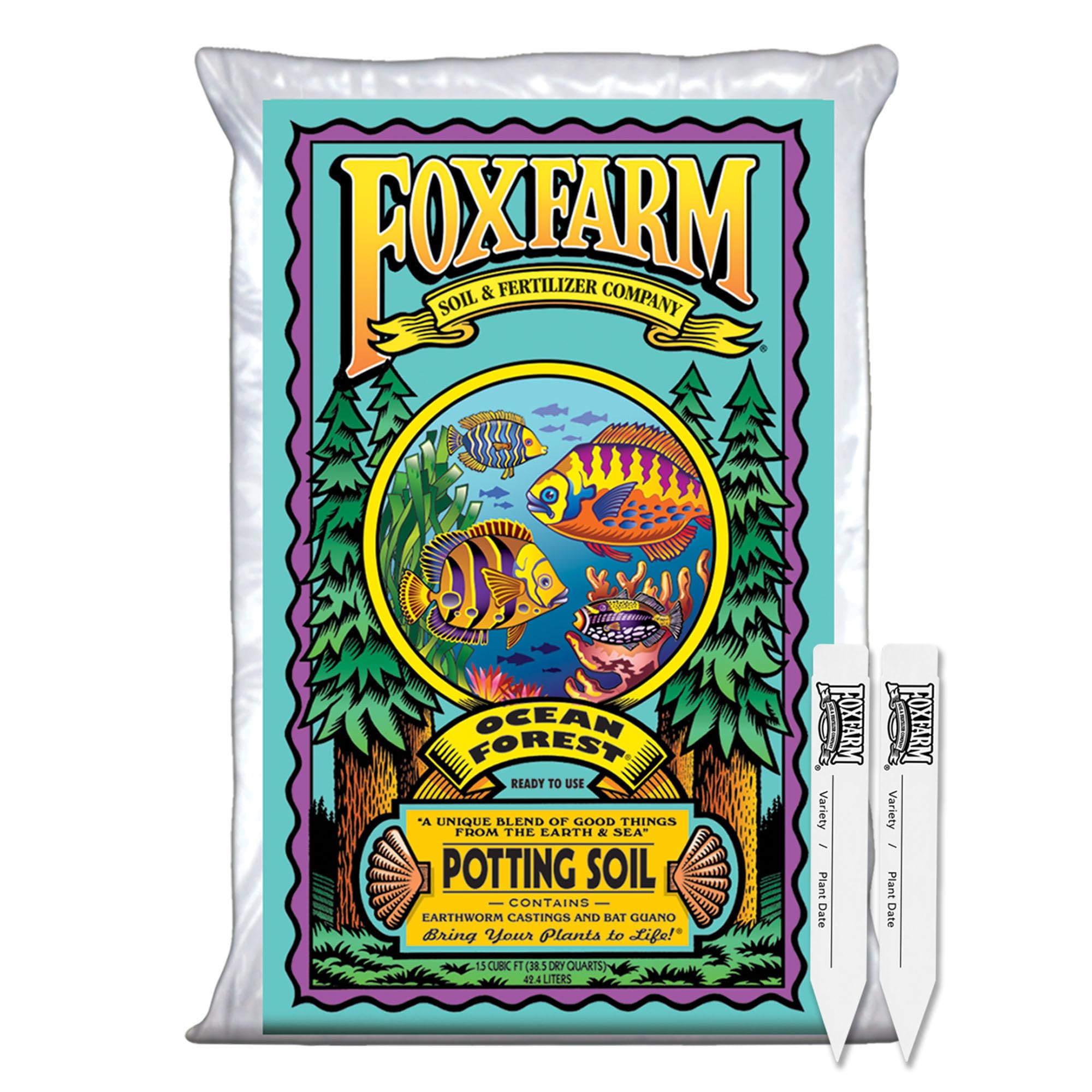
1. FoxFarm Ocean Forest Potting Soil with 2 Plant Tags, 1.5 cu ft
Our pick — over 4.5★ from 10,000+ verified ratings; the strongest balance of quality and price.
The heavyweight champion that turns tomato plants into giants with its premixed nutrient buffet.
This is the bag serious gardeners reach for when they want immediate results without mixing in their own fertilizers. The 1.5-cubic-foot bag is loaded with 50-60% aged forest products, sphagnum peat moss, perlite for aeration, and sandy loam for drainage — plus a built-in fertilizer blend derived from fish emulsion, crab meal, shrimp meal, earthworm castings, kelp meal, and oyster shell. That means you can plant directly into this soil without adding anything else. At 34 pounds, it is the heaviest bag here, but the weight reflects the rich, dense ingredients inside.
Buyers report this soil has real muscle: one reviewer noted that “Fox Farm soil outperforms Miracle-Gro: tomato plants from the same seed size grew significantly larger with equal watering.” That is a concrete head-to-head win that matches the 4.7-star rating across over 10,000 reviews. It also includes two plant tags for labeling varieties and planting dates — a small but thoughtful touch. The catch is that it sits at the premium end of the price spectrum, and the heavy bag can be awkward to carry if you are not expecting 34 pounds.
FoxFarm weighs 34 pounds versus the Back to the Roots bag’s 4.4 pounds — FoxFarm is for the gardener who values performance over portability.
What puts it on top
- Rich organic fertilizer blend packed into every scoop — no extra feeding needed
- Proven in side-by-side tomato tests vs. a major competitor with visible results
- The 1.5-cubic-foot volume is the most generous in this lineup
The honest downsides
- Heavy 34-pound bag is tough to haul around the garden
- Price is noticeably higher than mid-range options like Espoma
Reach for this if: you are planting heavy-feeding vegetables, roses, or shrubs in outdoor containers and want a soil that delivers nutrients from day one.
Think twice if: you only need a small bag for a couple of houseplants — the 1.5-cubic-foot size is massive for indoor use alone.
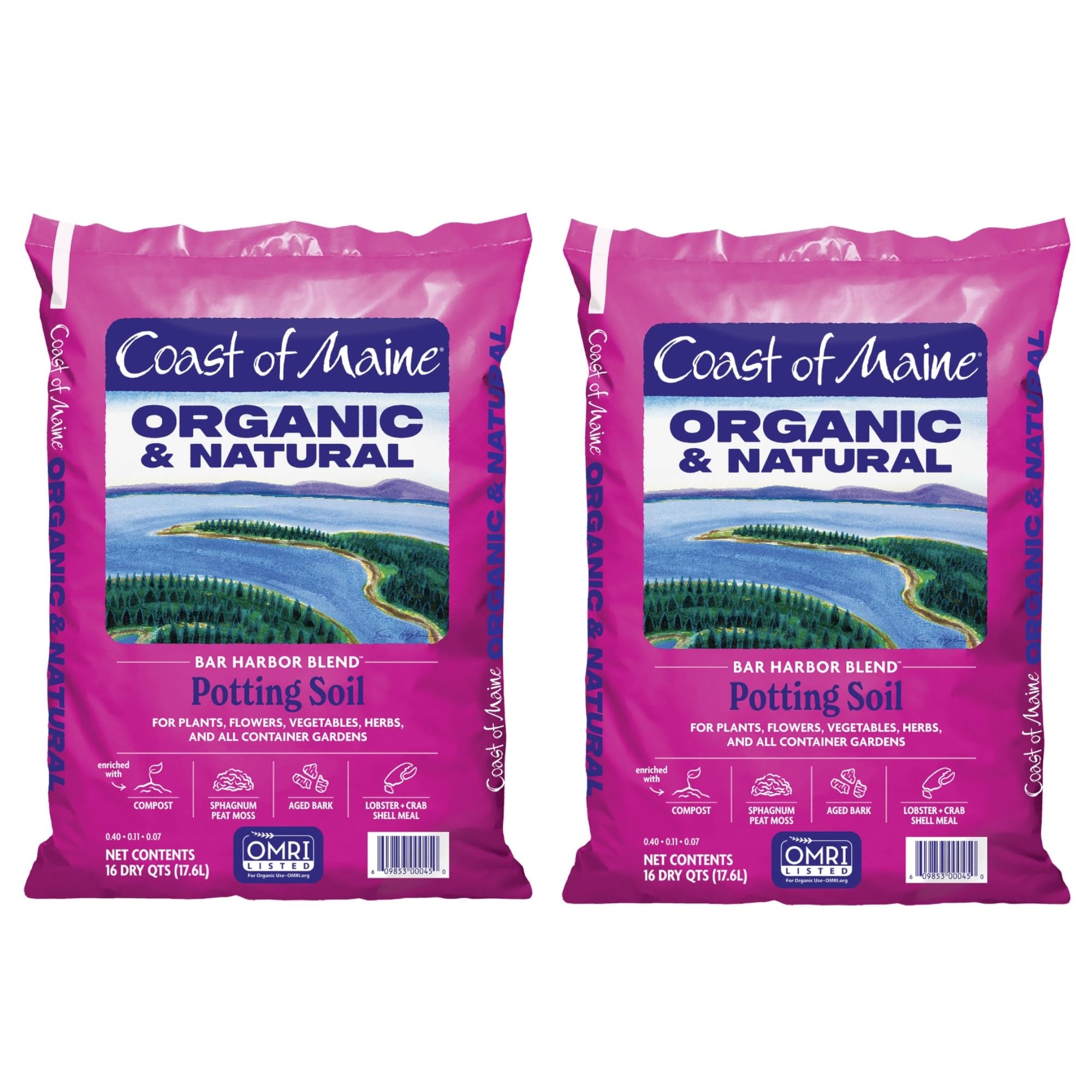
2. Coast of Maine Organic & Natural Bar Harbor Blend Potting Soil (16 QT)
Maine’s secret weapon for vegetable gardens — shellfish compost gives this mix a distinct edge.
This 16-quart bag from Coast of Maine brings something unusual to the table: lobster and crab shell meal mixed into the soil. Those shellfish byproducts provide a slow-release source of chitin and calcium that naturally feeds plants over their entire growing cycle. The formula also includes sphagnum peat moss, compost, perlite, and kelp meal, creating a balanced, nutrient-rich base that buyers consistently rate at 4.8 stars — the highest rating in this lineup. Owners mention that the soil is “nutrient-rich with compost” and has a darker color that indicates less filler peat moss.
One reviewer specifically reported that their tomato plants “never looked so good” after switching to Bar Harbor Blend, calling it perfect for container gardens. Customers also appreciate the total absence of weed seeds — a common complaint with cheaper soil bags. At 14 pounds, it is significantly lighter and easier to handle than the 34-pound FoxFarm bag, making it a better fit for balcony gardeners or anyone who needs to carry soil up stairs.
The catch is the higher price-per-quart compared to FoxFarm, even though the bag is physically smaller. It is a premium choice for those who prioritize organic, slow-release shellfish nutrition over a high-volume value play.
The shellfish advantage: lobster and crab meal delivers a gentle, long-lasting nitrogen boost that mimics natural forest-floor nutrients.
One caveat everyone mentions: the 16-quart bag is ideal for several medium containers but runs out fast if you are filling raised beds — you will need multiple bags.
Who it fits best: organic gardeners growing edibles — peppers, tomatoes, herbs — in patio pots or raised containers who want a soil that feeds steadily without synthetic chemicals.
Where it falls short: budget-focused shoppers looking for the lowest cost per quart; this is a premium-priced product.
3. Espoma Organic Potting Soil Mix, 8qt. (Pack of 2)

The mid-range workhorse that works indoors and out while staying affordable.
Espoma’s organic potting mix comes as a pack of two 8-quart bags, giving you a total of 16 quarts of soil that works just as well for indoor herbs as it does for outdoor vegetable containers. The ingredient list is solid: sphagnum peat moss, humus, perlite, earthworm castings, alfalfa meal, kelp meal, and feather meal. what separates it from most competitors in this price range is the inclusion of Myco-Tone — a proprietary blend of both endo and ecto mycorrhizae (beneficial fungi that attach to plant roots and help them absorb more water and nutrients).
Customers note that plants “took to it immediately” and are “growing tall and green.” One reviewer who transplanted an African violet noted it responded “very well” and grew quickly after the switch. The soil itself arrives clean and ready to use, though a few customers mentioned it can arrive “too dry” to absorb water on a first watering — a quick pre-moisten solves it. In terms of volume, the 8-quart size slots neatly between the 4-quart bags and the 1.5-cubic-foot giant, making it a smart the just-right choice for regular gardeners who need enough soil for several pots.
Each 8-quart bag holds 8 quarts compared to Coast of Maine’s 16-quart bag, but the total package price keeps Espoma firmly in the value tier.
What you are really paying for
- Organic ingredients plus beneficial mycorrhizae that help roots thrive — rare at this price point
- Versatile enough for both indoor houseplants and outdoor container vegetables
- Pack of two bags offers flexibility to use one now and store one for later
Keep this in mind
- Some bags arrive very dry and need watering-in before they absorb moisture properly
- More expensive than bulk options like FoxFarm on a per-quart basis
Grab it when: you want a certified organic mix with extra root-boosting fungi and plan to use it across a mix of indoor and outdoor projects.
Pass if: you are doing a single small repot — the 2-pack gives you more soil than one houseplant needs.
4. Perfect Plants Indoor Plant Soil 4qt

The bag that banishes fungus gnats — a rare clean-soil promise that actually delivers.
If you have ever repotted a houseplant with a bargain bag and watched tiny flies emerge a week later, you know the value of sterile soil. Perfect Plants Indoor Plant Soil explicitly markets itself as bug-free, and buyers consistently confirm it. One reviewer who switched from a gnat-infested bag of Miracle Grow wrote: “Bug-free, high-quality soil. Plants thriving after switching. Expensive but worth it.” The mix uses pine bark, coco coir, perlite, sand, and garden lime — all natural ingredients that drain quickly to prevent the soggy conditions where gnats breed.
At 4 quarts, this is a smaller bag designed for repotting a handful of indoor favorites like Monstera, Aloe, Snake Plants, and African Violets. The texture is light and airy, and buyers mention that it “retains moisture well” while still providing excellent drainage. It comes in a heavy-duty resealable bag that stays fresh for months if you only use part of it. The biggest trade-off is the price-per-quart, which runs higher than bulkier outdoor mixes — this is not the bag for filling a large planter box.
Compared to the larger Espoma bag, the 4-quart volume is a deliberate choice for indoor-only use. You get exactly what you need for a few pots and no soggy leftovers.
The clean-soil difference: formulated without synthetic additives or uncomposted materials that attract fungus gnats.
The trade-off worth knowing: priced at a premium per quart vs. all-purpose mixes, but buyers view it as a low-maintenance insurance policy for their houseplants.
Best suited for: indoor plant owners who have battled fungus gnats before and want a guaranteed bug-free substrate for their Monstera, ivy, or snake plants.
Not the best fit for: vegetable gardens or large outdoor containers — the 4-quart bag is too small and the formula is designed for houseplants.
5. Premium Potting Soil Mix with Peat Moss, Vermiculite, Perlite (4 Dry Quarts)

The professional-grower formula in a small bag that makes seed-starting simple to use.
Midwest Hearth’s Premium Potting Soil Mix uses the same formulation as professional growers: a classic blend of peat moss for moisture, perlite for aeration, and vermiculite for seed germination. This triple mix creates a light, fluffy texture that one reviewer described as “great for my germinating petunias.” The bag is pH-controlled for broad plant compatibility, so you do not have to worry about acidity shocking your seedlings. At 4 quarts, it is a compact size that works perfectly for starting a tray of herbs or repotting a few young plants.
Reviewers highlight the resealable bag as a practical feature — easy to open, easy to pour, and the soil “takes moisture and holds together well.” A few buyers noted the bag looks small for the price, but given the consistent quality and Made-in-USA manufacturing, most consider it well worth it. The 4-quart volume is 4 quarts while Espoma’s bag is 8 quarts, making it strictly a small-project option.
The one honest ding from reviews: some wish the bag were larger for the same price. This is a targeted purchase for seed starting and delicate transplants, not a bulk buy.
Why seed starters love it
- Peat moss + perlite + vermiculite offers the exact balance new roots need without compaction
- pH-balanced so you do not have to test or adjust before planting
- Resealable bag keeps the unused portion fresh for weeks
A couple of honest catches
- The 4-quart bag goes fast — you may need two bags for a full seed-starting session
- Higher per-quart cost compared to larger all-purpose bags
Pick this when: you are starting flower seeds, transplanting young seedlings, or repotting a few small houseplants and want a controlled, sterile mix that will not overwhelm delicate roots.
skip it if: you need soil for outdoor garden beds or large containers — you will run through the 4-quart bag in one session.
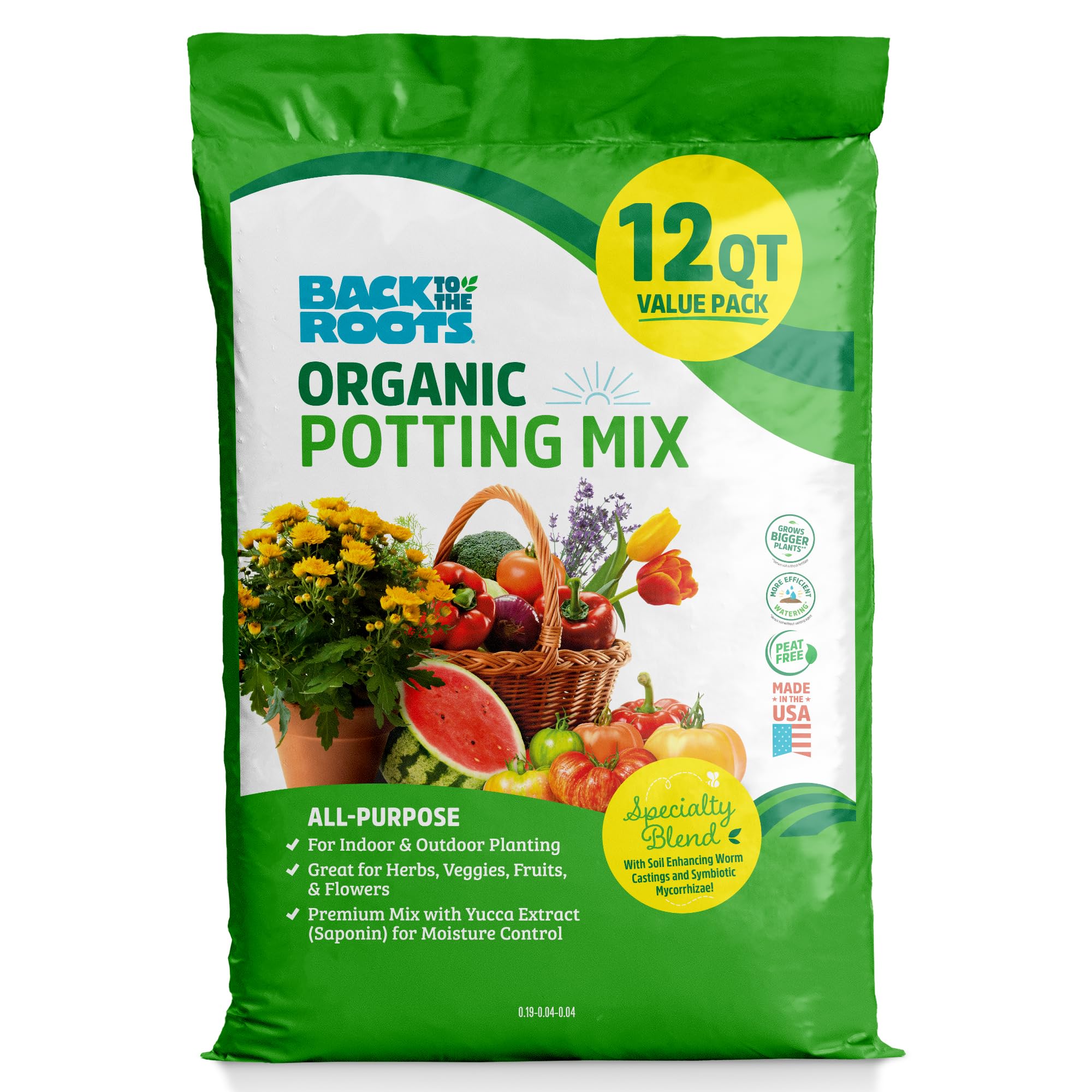
6. Back to the Roots All-Purpose Potting Mix 6 Quarts (2 Packs)
The peat-free pioneer that saves peat bogs while growing your tomatoes.
Back to the Roots is the first major brand to sell a 100% peat-free potting mix at a genuinely accessible price. Instead of mined peat moss, this 6-quart bag uses coconut coir for moisture retention, yucca extract as a natural wetting agent, and mycorrhizae to boost root uptake. It also includes pH-balancing dolomitic limestone (calcium and magnesium carbonates) to prevent nutrient lockout. The result is an eco-friendly soil that still performs for herbs, vegetables, and flowers.
Reviewers point out that “good quality” soil works well for transplanting larger plants, but one buyer mentioned it contains “bark particles unsuitable for seedlings.” That is the main practical limitation: the texture is a bit chunky for seed-starting trays. However, for transplanting established plants into 24 pots, multiple buyers called it a “great value” and said they bought it “3 times.” At only 4.4 pounds per bag, it is dramatically lighter than the 34-pound FoxFarm bag, making it very easy to carry.
The catch is the bark content can be too coarse for fine seed germination, and the bag itself is only 6 quarts — you will need multiple packs for larger gardening tasks.
The eco advantage: peat-free means you are not contributing to the annual CO2 emissions caused by mining peatlands — the brand’s stated mission.
The honest seedling warning: skip this one for tiny seeds like petunias; the bark pieces can interfere with delicate new roots.
Who it is perfect for: budget-conscious gardeners who want an organic, peat-free mix for transplanting vegetables and flowers into medium-sized pots.
Best to pass on it if: you are starting seeds indoors — pick a finer-textured mix like the Midwest Hearth Premium Potting Soil instead.
Understanding the Specs
Peat Moss vs. Coco Coir
Peat moss is the traditional base for potting soil — it holds many times its weight in water and lasts for years in the bag. The downside is that peat mining releases stored carbon. Coco coir (made from coconut husks) is a renewable alternative that holds water just as well, but some brands add bark pieces that make it chunky. If you want the finest texture for seedlings, stick with peat-moss-based blends like the Midwest Hearth mix. For eco-conscious gardeners, coco-coir-based soils like Back to the Roots avoid peat entirely.
Perlite and Vermiculite: What They Do
Perlite looks like small white Styrofoam beads but is actually volcanic glass that has been heat-expanded. It does not hold water — its job is to create air pockets so oxygen reaches the roots and excess water drains away. Vermiculite is a mica mineral that expands into accordion-like flakes; it absorbs water and releases it slowly. Premium seed-starting mixes use both: vermiculite to keep seeds moist, perlite to keep the mix loose. A balanced potting soil typically contains 10-20% perlite by volume. If a bag looks mostly dark with very few white flecks, it likely drains poorly.
FAQ
What is the difference between potting soil and garden soil?
How much potting soil do I need for a 10-inch pot?
Can I reuse potting soil from last year?
Is organic potting soil worth the extra cost?
Why does my potting soil have fungus gnats?
Can I use potting soil from a bag that has been sitting in my garage for two years?
What does “pH-balanced” potting soil mean for my plants?
Which bag of soil is best for starting vegetable seeds indoors?
Final Thoughts: The Verdict
For the majority of shoppers, the best bag of potting soil winner is the FoxFarm Ocean Forest Potting Soil because its pre-loaded nutrient blend and proven track record across tens of thousands of growers make it the most reliable pick for serious plants. If you want an organic mix with a unique slow-release formula, grab the Coast of Maine Bar Harbor Blend — the lobster-and-crab-shell base is unlike anything else on the shelf. And for indoor gardeners who have fought gnats one time too many, the standout is the Perfect Plants Indoor Plant Soil for a clean, low-maintenance repotting experience.
How We Picked
We do not accept paid placement. Every pick is matched to a real buyer and a real use-case; we do not hands-on test units.
Sources & Methodology
Specifications: manufacturer listings and product documentation. Review insights: verified customer reviews, as of July 2026. Pricing: not shown on this page (it changes often); check the current price via the retailer link.
As an Amazon Associate, Gadgets Feed earns from qualifying purchases. This does not affect which products we feature.