
Our readers keep the lights on and my morning glass full of iced black tea. As an Amazon Associate, I earn from qualifying purchases.
Specs are compiled from manufacturer listings and verified buyer reviews and can change over time — please confirm the key details on the product page before buying.
Accurate heart rate data does not require a high price tag. A good budget heart rate monitor delivers real-time feedback that is often more reliable than a smartwatch. Cheap options vary widely in reliability. This article compares seven specific monitors using their real specs and patterns across verified buyer reviews, so you know which ones actually hold up.
I’m Min — the founder and writer behind Gadgets Feed. This guide is built by comparing the manufacturers’ published specifications and the patterns across verified customer reviews, so you get each pick’s real strengths and trade-offs instead of marketing spin.
A budget heart rate monitor can match the accuracy of expensive gear. The key is choosing the right form factor and battery type for your routine.
Our Picks at a Glance

How To Choose The Best Budget Heart Rate Monitor
The biggest decision is not about the brand—it is about if you want a chest strap or an armband. Chest straps use ECG (electrocardiography) sensors that detect the electrical signal of your heartbeat. They tend to be more accurate during steady exercise like running or cycling, but you need to wet the strap for good contact, and some people find them uncomfortable. Armbands use optical sensors that shine a light through your skin to measure blood flow. They are more comfortable and easier to put on, but they can lose accuracy during exercises with lots of arm movement or in bright sunlight. Both work well; the right one depends on your sport and your willingness to prepare the strap.
Battery Life and Type
Some use a standard CR2032 coin cell battery that you replace when it dies—they last from 300 to 500 hours, so you might not change the battery for over a year. Others have a built-in rechargeable lithium battery that runs for 20 to 110 hours per charge. A replaceable battery never leaves you waiting for a recharge, but you have to keep spare batteries handy. A rechargeable battery costs less over time, but when it runs out in the middle of a workout, you are stuck charging it for 30 minutes to an hour.
Connectivity: Bluetooth and ANT+
All the monitors on this list support both Bluetooth and ANT+ wireless protocols. Bluetooth lets you connect to a phone app like Strava or Wahoo Fitness. ANT+ is a different wireless standard that is common on bike computers (Garmin, Wahoo) and gym equipment (Peloton, Matrix treadmills). If you use a bike computer or work out at a gym with connected machines, ANT+ is not optional—it is essential. A monitor that only does Bluetooth will not talk to your gym’s treadmill. Check that your monitor supports the specific device you plan to pair it with.
Water and Dust Resistance (IP Rating)
The IP (Ingress Protection) rating tells you how well the device is sealed against dust and water. Nearly every budget chest strap is rated IP67, which means it is fully dust-tight and can handle being submerged in 1 meter of water for 30 minutes. That is plenty for heavy sweat and rain. The Scosche Rhythm+ 2.0 goes further with IP68, which means it can handle deeper, longer submersion. However, no budget monitor is recommended for swimming—the water pressure and arm movement confuse the sensors. If you only sweat and run in the rain, IP67 is enough.
Heart Rate Variability (HRV) and Recovery Features
Some mid-range monitors now track HRV (heart rate variability), which measures the tiny variation in time between each heartbeat. HRV data can tell you how recovered you are from a hard workout and whether your nervous system is balanced. The Scosche Rhythm+ 2.0 and the COOSPO HW807 explicitly support HRV tracking and can send that data to apps like HRV4Training or Welltory. If you train smart instead of just hard, this feature is worth a few extra dollars. Most basic chest straps do not offer it.
Quick Comparison
| Model | Best For | Type | Battery Life | Connectivity | Amazon |
|---|---|---|---|---|---|
| moofit HR8★ Best Overall | Longest battery chest strap | Chest Strap (ECG) | 500 Hours (CR2032) | Bluetooth 5.0, ANT+ | Amazon |
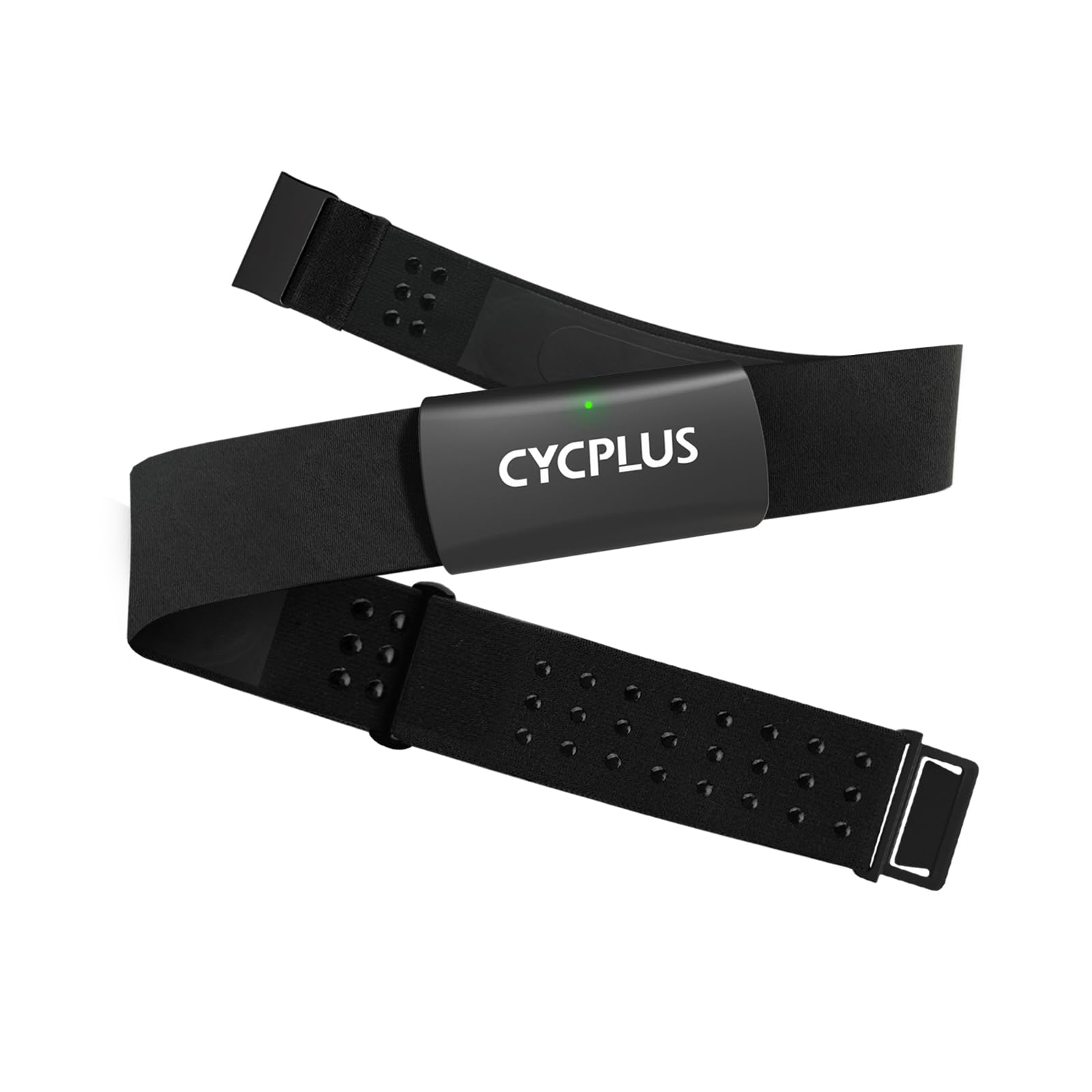
| CYCPLUS H2ProBest Battery Life | Reliable long-term chest strap | Chest Strap (ECG) | 500 Hours (CR2032) | Bluetooth, ANT+ | Amazon |
| COOSPO H6M | Budget-friendly chest strap | Chest Strap (ECG) | 500 Hours (CR2032) | Bluetooth, ANT+ | Amazon |
| CYCPLUS H1 Armband | Rechargeable armband without chest strap | Armband (Optical) | 110 Hours (Rechargeable) | Bluetooth 5.1, ANT+ | Amazon |
| COOSPO HW807 | Advanced HRV and zone tracking | Armband (Optical) | 20 Hours (Rechargeable) | Bluetooth 5.0, ANT+ | Amazon |
| Xiaomi Smart Band 10 | Wrist-based all-in-one tracker | Wrist Band (Optical) | 21 Days (Rechargeable) | Bluetooth 5.4 | Amazon |
| Scosche Rhythm+ 2.0 | Best armband for HRV data | Armband (Optical) | 24 Hours (Rechargeable) | Bluetooth, ANT+ | Amazon |
In‑Depth Reviews
1. moofit HR8 Heart Rate Monitor Chest Strap
The no-fuss chest strap that matches the top battery life in the budget tier.
The moofit HR8 matches the CYCPLUS H2Pro with 500 hours of battery life from a single CR2032 coin cell, so you can wear it for daily training sessions and replace the battery maybe once a year. It uses Bluetooth 5.0 and ANT+ dual mode for pairing with gear like Wahoo bike computers, IGPSPORT devices, and apps like Strava and Kinomap. The adjustable strap fits from 63.5 cm to 132 cm to cover a wide range of body sizes. It is rated IP67 for sweat and rain but is not recommended for swimming.
Customers note mixed long-term reliability. One reviewer says it “worked for about a week (daily use), now no longer pairs at all with my setup,” while another has used it 2-3 times per week for months with no issues, noting it pairs easily with an Apple Watch and saves the watch’s battery. The accuracy is rated at ±1 bpm, which is standard for this tier. It does not sync to Matrix gym equipment at Planet Fitness according to one buyer, despite another review claiming otherwise—so compatibility with specific gym machines may be hit or miss.
Great value, variable luck: When the moofit works, it is a fantastic deal with class-leading battery life. But quality control seems inconsistent, with some units failing quickly.
Works best with phones: Most positive reviews mention phone pairing (Apple Watch, smartphone apps). Gym equipment compatibility is less reliable.
Ideal for: someone who wants the longest battery life for the lowest upfront cost and mainly pairs with a phone app.
Not for: you if you cannot risk a unit that might fail after a week—other straps with more consistent build quality may be worth the small extra cost.
2. CYCPLUS Heart Rate Monitor Chest Strap H2Pro
The chest strap that keeps running long after the cheaper ones quit.
You get stable heart rate data with the CYCPLUS H2Pro because its ECG algorithm is designed to cut through interference from movement, breathing, and sweat. It connects via Bluetooth or ANT+ to phones, Garmin and Wahoo bike computers, and even treadmills. Both the CYCPLUS H2Pro and the COOSPO H6M deliver 500 hours on their replaceable CR2032 batteries.
Buyers report it “works flawlessly after 8 months (3-5 hrs/week)” with instant pairing to gym equipment and dual connection showing heart rate on both the machine and phone. One reviewer noted the battery drains if you leave the sensor snapped into the band after a workout, but detaching it is easy. Another user who could not get it working with the app found it useless—though that seems like a setup issue rather than a hardware defect. The H2Pro is also compatible with HRV (Heart Rate Variability) monitoring, using ECG to identify R-wave peaks for scientific training load management.
For the long haul: If you want a chest strap that you set up once and forget about for nearly three years of regular workouts, the H2Pro’s 500-hour battery life is the standout reason to pick it.
The app hiccup: The CYCPLUS app only shows real-time data—it does not record or export files. You will want a third-party app like Strava or Zwift for logging.
Reach for this if: you are a runner, cyclist, or gym-goer who wants the longest lasting budget chest strap with proven long-term durability.
Look elsewhere if: you rely on the manufacturer’s app for full data history and export—you will need a more established app ecosystem.
3. Scosche Rhythm+ 2.0 Heart Rate Monitor Armband

The armband that delivers recovery data most budget monitors skip entirely.
You get HRV and RRi (the precise time between each heartbeat) with the Scosche Rhythm+ 2.0, an optical sensor armband you wear on your forearm, bicep, or tricep. That means you can stream raw heart rate variability data to apps like HRV4Training or Morpheus Training to measure your recovery and stress levels—a feature usually found on monitors twice the price. It is also IP68 waterproof, meaning it handles deeper submersion than the IP67 standard on most rivals.
Owners mention it “solves wrist-based HR reliability issues” and gives consistent readings during running, unlike Garmin and Galaxy watches. One buyer mentioned that it works great on the upper forearm while running, with accurate interval HR changes that match a Hammerhead chest strap. However, some users report random dropouts and wildly inaccurate readings—a reviewer mentioned a steady erg session at 122-132 bpm where the Scosche was way off compared to a Garmin chest strap. The proprietary charger is also a minor annoyance compared to the universal USB-C found on newer devices. It offers up to 24 hours of continuous battery life.
Recovery-focused: The HRV and RRi streaming is the real differentiator here. If you train with intent and use apps that analyze recovery, this is your pick.
Not for the easily frustrated: Occasional Bluetooth dropouts and the need to restart the armband may test your patience. The Scosche works best for casual to moderate use.
Choose this if: you want to track your recovery and stress with HRV data without spending big on a Polar or Garmin strap.
skip it if: you need rock-solid accuracy during every single workout—the occasional dropout makes it unreliable for race-day data.
4. CYCPLUS Heart Rate Monitor Armband H1

The rechargeable armband that beats the battery-changing hassle of chest straps.
The CYCPLUS H1 Armband is an optical monitor you slip onto your upper or lower arm, keeping your wrist free. Its biggest advantage over the chest-strap options is the rechargeable lithium battery—just 30 minutes of charging gives you 110 hours of use, compared to the 20-hour battery of the COOSPO HW807. It also has a built-in LED indicator that changes color based on your heart rate zone: green for 80 BPM and below, orange for 80-140 BPM, and red for 140 BPM and above. That visual cue means you do not need to look at a phone screen to know your zone.
Reviewers point out it is “more accurate than a watch” and connects consistently to an iPhone Health app. One reviewer who owns a Specialized Turbo Levo e-bike says it hooks up great. Another notes that it pairs easily with a Coospo CS600 bike computer and is “fairly accurate” for the price. The H1 is rated IP67 for dust and water resistance. A few users had pairing issues with the CYCPLUS app itself, but the monitor works with third-party apps. The caveat is that you must use the included magnetic charging cable—if you lose it, you cannot charge the device.
Convenience wins: Rechargeable and comfortable with clear zone indicators. No need to buy CR2032 batteries or wet a strap before exercise.
Not for swimmers: Despite the IP67 rating, the optical sensor is not recommended for swimming. The armband works best for running, cycling, and gym sessions.
Best for: anyone who hates chest straps and wants a comfortable, long-lasting armband with quick recharging. Also great for e-bike and indoor cycling.
Look elsewhere for: swimming or deep-water training—this is an armband for dry and rainy land sports, not the pool.
5. COOSPO Heart Rate Monitor Armband HW807

The armband that sees your heart rate zones in color.
The COOSPO HW807 is an optical armband that tracks your heart rate with a claimed accuracy of ±1 BPM and supports HRV (Heart Rate Variability) tracking, giving you deeper insight into your recovery status. Its LED indicator lights up in different colors to show your zone—so you see at a glance whether you are in a recovery zone or pushing anaerobic effort. It works with over 200 apps including Peloton, Wahoo Fitness, Strava, and Polar Beat, and connects via Bluetooth 5.0 and ANT+ to Garmin and Wahoo bike computers. It also pairs directly with gym equipment like Concept2 rowers, Nordic treadmills, and Bowflex Max Trainers.
Shoppers say it “provides great feedback on workouts” with accurate pulse and calorie tracking through the Wahoo app, and the color-coded zone indicator is a favorite feature. One owner reported the battery lasts about a week with regular use, which matches the 20-hour rated life. Another user had a bad experience with extremely inaccurate readings—reporting 175 BPM during a walk when their Samsung watch showed 120 BPM, so individual unit variance exists. The HW807 comes with two arm straps and a charging cable. It also uses a proprietary charger, not USB-C.
Zone training made simple: The color-coded LED removes the need to glance at a phone. It is a genuinely useful feature for interval and zone-based workouts.
Short battery life: The 20-hour rating is low compared to the CYCPLUS H1’s 110 hours. You will charge this weekly, not monthly.
Grab this if: you use Peloton, Concept2, or gym equipment that supports ANT+ pairing and you want visual zone feedback.
Avoid if: you want a low-maintenance armband that lasts weeks between charges—the short battery life requires more attention.
6. Xiaomi Mi Smart Band 10 (Global Version)
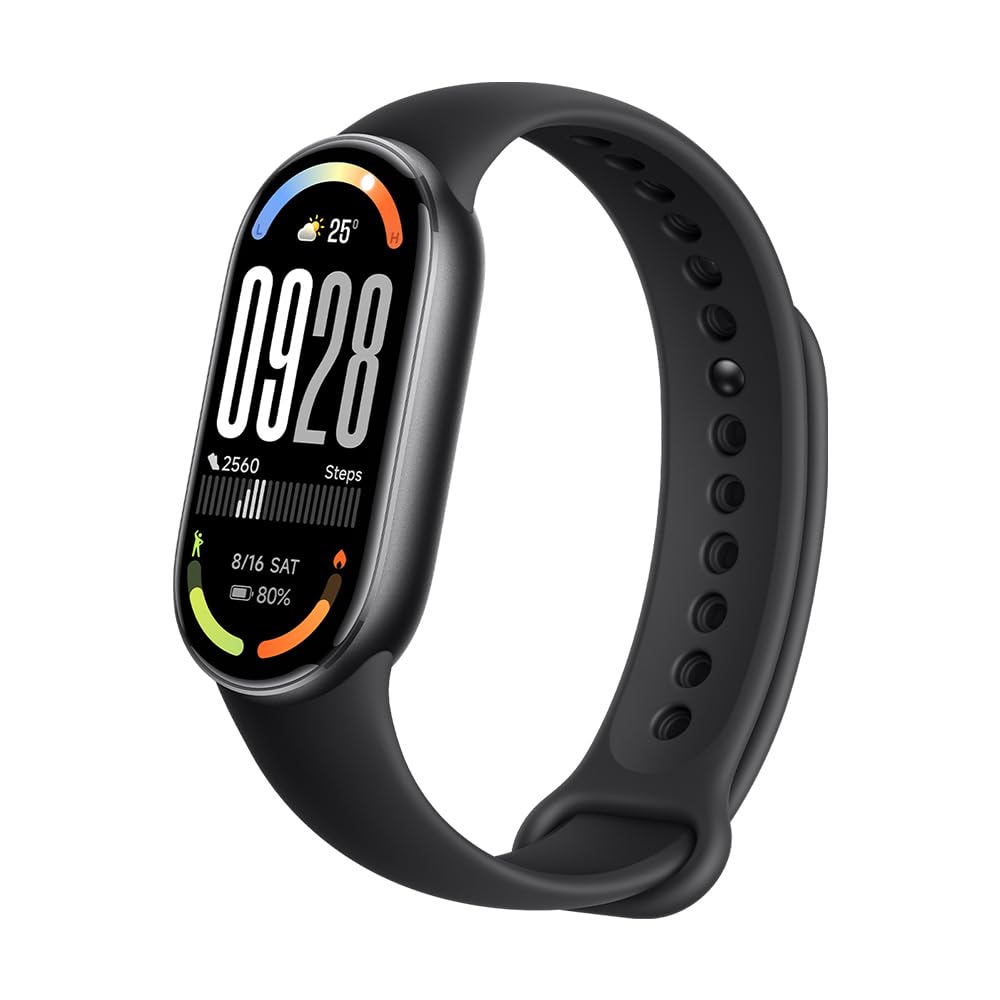
The wrist band that does heart rate, sleep, and steps without draining your wallet.
The Xiaomi Mi Smart Band 10 is a full-featured fitness tracker, not a dedicated heart rate monitor. It uses an optical sensor on your wrist to track heart rate continuously, and its 1.72-inch AMOLED display with 1500 nits peak brightness (HBM—High Brightness Mode) makes it readable even in direct sunlight. The battery lasts 21 days on a single charge, and it recharges fully in one hour. It tracks heart rate, SpO2 (blood oxygen), blood pressure, glucose, stress, sleep stages, and offers over 100 workout modes with GPS tracking. It uses Bluetooth 5.4 for connectivity, but it does not support ANT+, so it will not pair with Garmin bike computers or most gym equipment.
Buyers report it is “perfect for the average person” who wants simple fitness tracking without a subscription fee. One customer observed the step counter is inaccurate (4500 steps measured versus 6000 on a Fitbit), but the heart rate and sleep tracking are solid. Another user mentioned the display scratches easily and recommends a screen protector. The Xiaomi Fit app only supports the metric system, so you need to connect it with Google Fit for imperial measurements. It is IP68 waterproof, making it suitable for pool swimming.
All-in-one value: This is a smart band that happens to do heart rate monitoring, plus sleep, stress, and workout tracking—all for a low price.
Not a specialist HRM: It lacks ANT+ and does not pair with gym consoles or bike computers. For heart rate data during structured training, a dedicated chest strap or armband is more reliable.
Perfect for: daily wear, casual fitness tracking, and getting heart rate data alongside sleep and activity metrics without a subscription.
Not for: serious cyclists or gym-goers who need ANT+ connectivity to their Garmin or Wahoo equipment.
7. COOSPO Heart Rate Monitor Chest Strap H6M
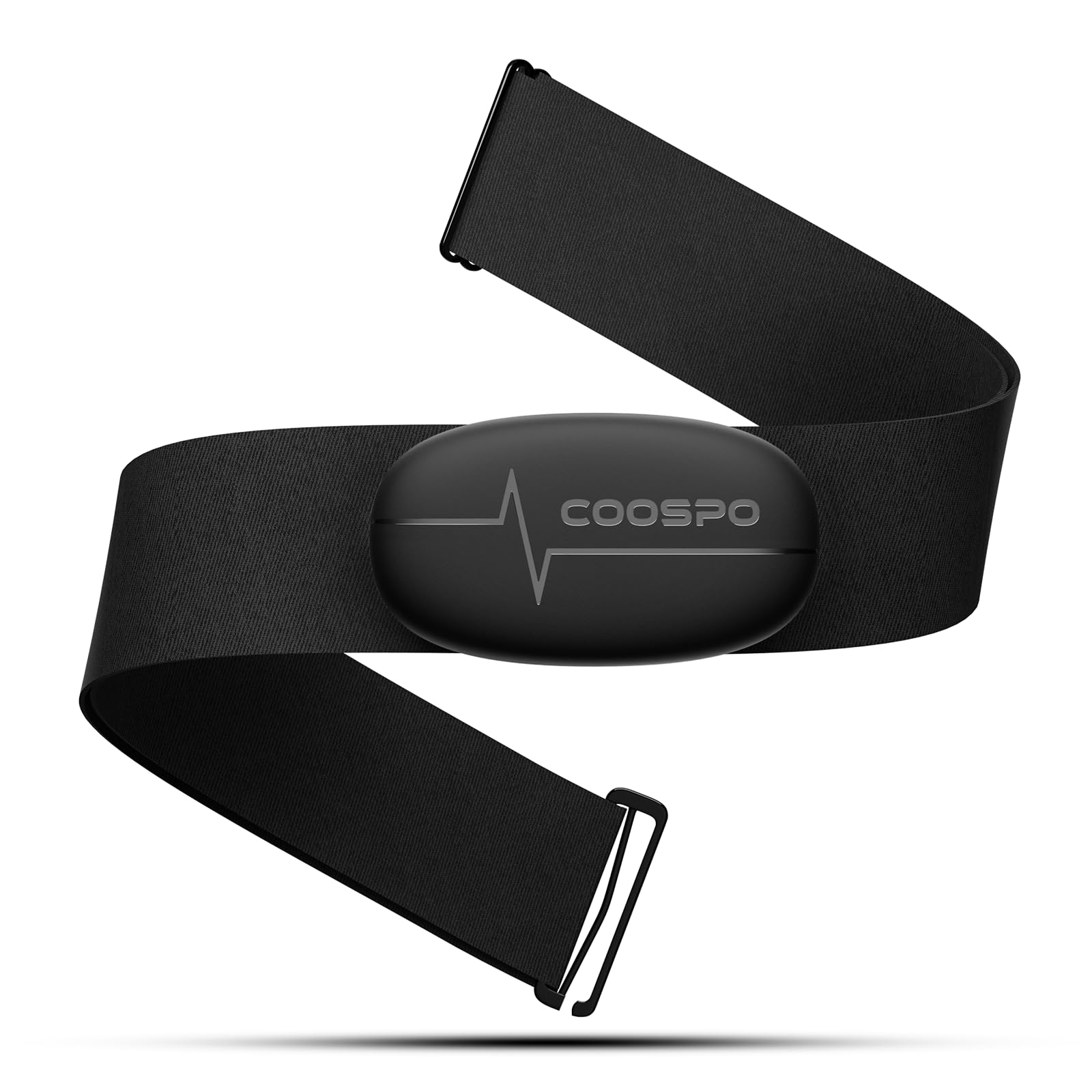
The chest strap that is cheap enough to replace the expensive Garmin version.
The COOSPO H6M is a straightforward ECG chest strap that connects via Bluetooth and ANT+ to your phone, bike computer, or gym equipment. It is rated IP67 so it handles sweat and rain fine, but it is not meant for swimming. The strap is adjustable up to about 36 inches, which should fit most users.
Buyers generally praise its value. One reviewer called it a “great replacement” for a Garmin Dual HRM, noting you should remove the battery when not in use because the sensor always transmits. Another reviewer reported it “failed on 32″ chest; only worked 30 min of 3 sessions” and had continuous “no reading” errors on Zwift. A customer service success story: when the strap stopped picking up heartbeat after 6 weeks, COOSPO sent a replacement strap at no charge. The H6M is compatible with Strava, Wahoo Fitness, Polar Beat, Peloton, and DDP Yoga apps. It comes with the sensor module and a strap, but no battery is included in some packages.
Great price, decent reliability: The H6M is among the most affordable ECG options and works well for most users. The customer service is a strong safety net.
Strap failure risk: The included strap may fail over time. Wetting the electrodes before use is essential, especially in dry weather.
Ideal for: budget-conscious runners and cyclists who want the accuracy of a chest strap without a high price tag, especially if they are replacing a dead Garmin.
Skip if: you have a larger chest or need longer battery life—the 500-hour battery and 36-inch strap may limit you.
Understanding the Specs
ECG vs Optical Sensors
ECG (electrocardiography) sensors pick up the electrical signals of your heart through two contact points on your skin—these are found inside chest straps. Optical sensors shine a green or red LED light through your skin and measure the light scattered by blood flow. ECG is generally more accurate during steady exercise and is not affected by arm movement or skin tone. Optical sensors are more comfortable and easier to wear, but they can be thrown off by a loose fit, tattoos, bright sunlight, or intense arm motion. Many dedicated athletes prefer chest straps for accuracy, while casual users prefer armbands for comfort.
ANT+ vs Bluetooth
Both are wireless protocols for sending heart rate data. Bluetooth (usually version 4.0, 5.0, or 5.1 in these monitors) connects directly to your smartphone and is perfect for apps like Strava, Wahoo Fitness, or Polar Beat. ANT+ is a different wireless standard designed for multi-device environments—it can connect to a bike computer, a smartwatch, and a gym treadmill all at once. Many gym machines (Peloton, Concept2, Matrix, Bowflex) and bike computers (Garmin, Wahoo) only accept ANT+ connections. A monitor without ANT+ will not work with these devices. If you train indoors on connected equipment, you need ANT+.
IP67 vs IP68 Waterproofing
IP (Ingress Protection) ratings tell you how well a device is sealed against dust and water. IP67 means the device is fully dust-tight and can survive immersion in up to 1 meter of water for 30 minutes. That is more than enough for heavy sweating and running in the rain. IP68 goes further, meaning it can handle continuous immersion beyond 1 meter (exact depth set by the manufacturer). The Scosche Rhythm+ 2.0 is IP68, while most budget chest straps and armbands are IP67. Neither rating means the device is safe for swimming—the water pressure and movement can break the seal or confuse optical sensors. Always treat these ratings as sweat and rain protection, not swim-proofing.
Battery Life (Replaceable vs Rechargeable)
Your choice of battery type heavily impacts long-term ownership. Chest straps like the moofit HR8 and CYCPLUS H2Pro use a CR2032 coin cell that lasts 500 hours. You swap it yourself in seconds when it dies—no downtime, no cables. Armbands like the CYCPLUS H1 and COOSPO HW807 use sealed rechargeable lithium batteries. They need to be charged via a magnetic cable (proprietary, not USB-C) and their lifespan is measured in charge cycles. A rechargeable monitor saves you the cost of buying CR2032 cells, but when the internal battery eventually degrades (usually after 1-2 years), the whole unit becomes e-waste. Coin-cell monitors are replaceable and repairable by you.
FAQ
Will a chest strap heart rate monitor work with my Peloton or treadmill?
Do I need to wet the chest strap before using it?
Can I use a budget heart rate monitor for swimming?
How do I turn off a budget heart rate monitor to save battery?
What is the difference between a budget chest strap and a budget armband for accuracy?
Can I connect a budget heart rate monitor to my Apple Watch or Garmin watch?
How long does a CR2032 battery last in a chest strap?
Will a budget heart rate monitor pair with my Zwift or Rouvy setup?
What does a heart rate zone LED indicator do?
Is it worth buying a budget heart rate monitor with HRV tracking?
Final Thoughts: The Verdict
For most people, the budget heart rate monitor winner is the CYCPLUS H2Pro chest strap because it offers the longest battery life (500 hours) and proven long-term reliability in buyer reviews, all at a price that undercuts many alternatives. If you want a comfortable armband with visual zone feedback and HRV tracking, grab the Scosche Rhythm+ 2.0. And for an all-in-one wrist tracker that also does heart rate monitoring without a subscription, the standout is the Xiaomi Smart Band 10.
How We Picked
We do not accept paid placement. Every pick is matched to a real buyer and a real use-case; we do not hands-on test units.
Sources & Methodology
Specifications: manufacturer listings and product documentation. Review insights: verified customer reviews, as of July 2026. Pricing: not shown on this page (it changes often); check the current price via the retailer link.
As an Amazon Associate, Gadgets Feed earns from qualifying purchases. This does not affect which products we feature.