
Our readers keep the lights on and my morning glass full of iced black tea. As an Amazon Associate, I earn from qualifying purchases.
Specs are compiled from manufacturer listings and verified buyer reviews and can change over time — please confirm the key details on the product page before buying.
Watching a colony of ants carve an underground city from a pile of sand is a rare window into a world we usually never see. But the magic can collapse fast if the habitat itself is poorly designed — think moldy sand, ants that escape, or tiny workers that simply won’t dig. The best ant farm kit makes that tiny civilization visible and thriving, not a stressful science experiment that goes wrong in a week.
I’m Min — the founder and writer behind Gadgets Feed. This guide is built by comparing the manufacturers’ published specifications and the patterns across verified customer reviews, so you get each pick’s real strengths and trade-offs instead of marketing spin.
Whether you are buying for a curious kid or want a desktop observation project for yourself, the right ant farm kit depends on three things: how the colony gets air and water, whether the design lets you actually see the tunnels, and how easy it is to keep the whole system from turning into a moldy mess.
Our Picks at a Glance

How To Choose The Best Ant Farm Kit
The perfect ant farm turns a plastic box of sand into a living documentary. Here are the three things that separate a great habitat from one that collects dust after a week.
Sand vs. Gel — Which One Shows More?
Real sand is the gold standard for watching ants dig. The tunnels cut by the workers stay visible for weeks, and you can rehydrate the sand to make digging easier. Gel-based farms (like the National Geographic unit below) keep ants from escaping and feed them automatically, but the gel itself blocks your view and it cannot be reused once it dries out. Sand wins on pure observation.
Water and Air — The Most Common Failure Point
Reviewers of multiple kits mention ants dying of drowning or dehydration. Look for a design with a separate feeding area or a top that opens in a controlled way so you can add water drops without flooding the nest. A built-in water tower or a flood outlet (the Kahopy Ant Farm includes one) is a big plus — it stops you from overwatering by accident.
Escape-Proof Design and Viewing Access
An ant farm that leaks ants is a nightmare. Check that the lid snaps shut securely and that any feeding holes are small enough to keep ants inside. A build-in magnifier or a large transparent viewing area (the Educational Insights GeoSafari has a rated 12 x 9 inch viewing surface) makes it much easier for kids to watch without needing to open the lid and risk an escape.
Quick Comparison
| Model | Best For | Dimensions | Viewing Area | Material | Amazon |
|---|---|---|---|---|---|
| NAVAdeal Sand Ant Castle★ Best Overall | Connecting tube for multiple habitats | 4.25 x 4.25 x 4 inches | Small square | Plastic | Amazon |
| Kahopy Ant Farm CastleBest All-Rounder | Serious colony watching | 9.37 x 1.7 x 5.67 inches | Large wide-acrylic | Acrylic | Amazon |
| Uncle Milton Vintage Ant Farm | Classic nostalgic experience | 9.95 x 3.83 x 6.4 inches | Standard | Plastic | Amazon |
| National Geographic Light-Up Terrarium | Gel-based easy-care viewing | 8.46 x 7.4 x 2.83 inches | Built-in magnifiers | Plastic | Amazon |
| Educational Insights GeoSafari | Large viewing and classroom use | 12 x 9 x 5 inches | Large viewing area | Plastic | Amazon |
| Dan&Darci Ant Farm Kit | Budget starter with learning guide | 9 x 2 x 7 inches | Standard | Plastic | Amazon |
| Tigerific Ant Farm | Wide viewing with a documentary bonus | 9 x 2 x 7 inches | Fully transparent sides | Plastic | Amazon |
In‑Depth Reviews
1. NAVAdeal Sand Ant Castle
Our pick — over 4★ from 750+ verified ratings; the strongest balance of quality and price.
A tiny cube that grows bigger when you link two with the included tubes — but the steep angles trip up ants.
The sand castle measures just 4.25 inches per side, making it the smallest unit in this roundup. The standout feature is the included plastic connecting tubes — you can link two or more castles together to create a multi-habitat network, something no other budget kit offers. It comes with a magnifying glass, pipette, and cotton pads for feeding, plus a coupon for buying ants online (they recommend harvester or carpenter ants over ¼ inch, 20-30 ants preferred).
One real-world issue owners mention is that the feeding area is small and the tubes angle upward so steeply that ants struggle to climb them without sand sprinkled inside for traction. Another buyer noted that when their child shook the unit, the sand mixed up and it took 40 minutes with a toothpick to free the trapped ants. The cube form factor works best for careful older kids or adults who want a desktop ant display rather than a rough-and-tumble toy.
What makes it unique
- Connecting tubes allow expansion into a multi-habitat ant network
- Small footprint fits any desk or shelf
- Includes magnifying glass, pipette, and cotton pads for feeding
Where it frustrates
- Tube angles are steep — ants need sand added for traction
- Small feeding area and cramped interior make maintenance difficult
Best for modular builders: connect two or three units for a bigger network only this design supports.
Not for young children: the small openings and steep tubes require a steady hand for feeding and cleaning.
2. Kahopy Ant Farm Castle
You get a clear, wide view of the tunnels plus a water system that stops you from killing the colony.
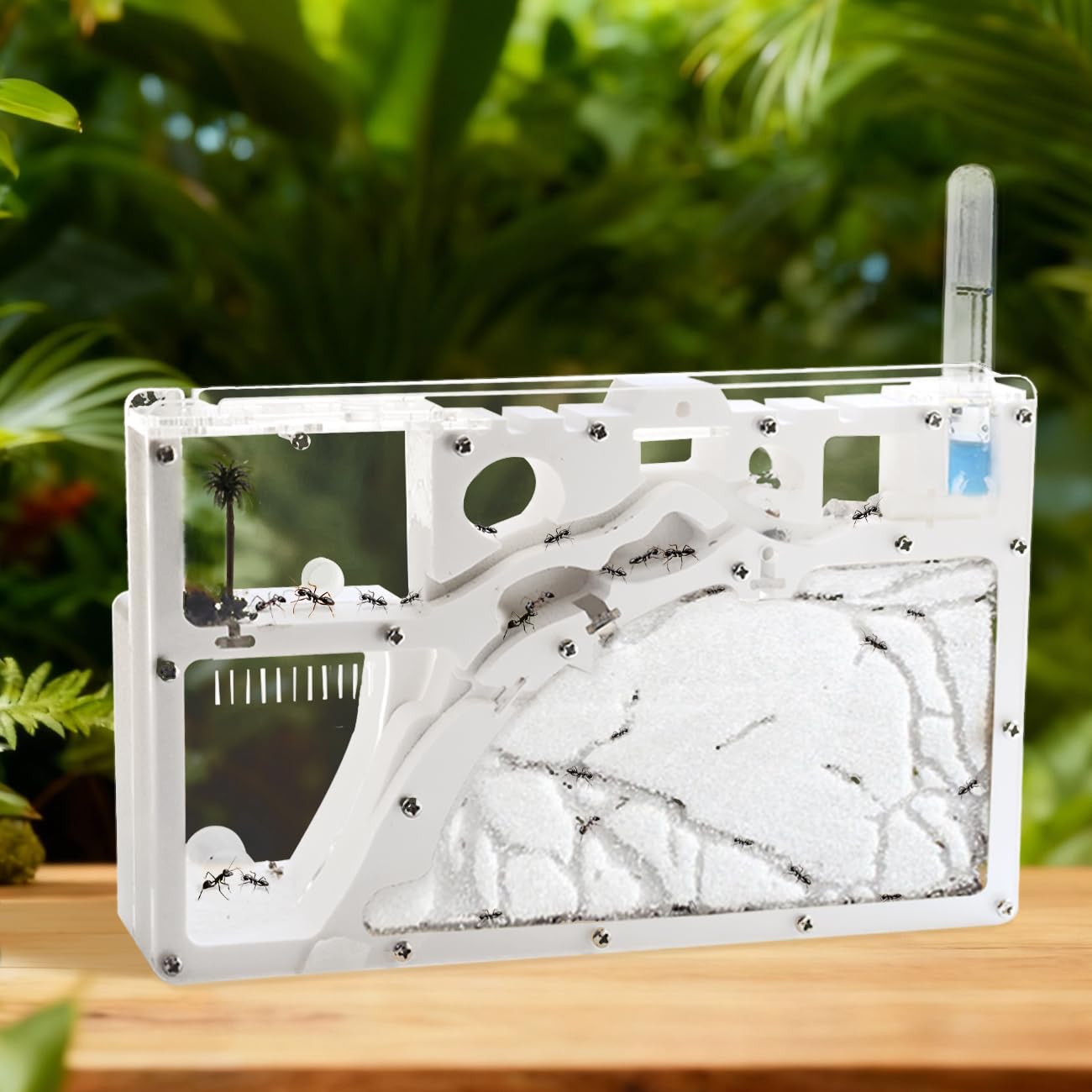
This farm gives you an uninterrupted front-row view of your colony’s tunnels. The clear acrylic sides (the farm measures 9.37 x 5.67 x 1.7 inches) offer a larger viewing area than the typical plastic model, which means you actually see the day-to-day digging without peering through a tiny window. A built-in water tower and a flood outlet on the back mean you cannot accidentally drown the ants — a problem buyers report with simpler kits like the Dan&Darci kit.
The escape-proof lid and the child lock give parents confidence, and the kit comes with all accessories: sand, a 40ml drip bottle, a magnifier, tweezers, a food basin, and even a decorative tree. The main downside is that cleaning the interior is nearly impossible once the ants seal off areas — buyers have reported mold forming inside after months. Keep an eye on moisture levels.
Why it stands out
- Acrylic build is sturdier than standard plastic and gives a clearer view
- Automatic water supply system with flood outlet prevents drowning accidents
- Larger sand capacity and multiple rooms for tunnels
The catch
- Sealed interior cannot be cleaned once tunnels are built; mold may form over time
- Ants can escape if the sand cover is opened slowly
Reach for this if: you want a long-term colony observation kit where water management and viewing clarity matter more than budget.
Look elsewhere if: you need an easy-clean design — once the ants settle in, the castle stays sealed.
3. National Geographic Light-Up Ant Terrarium
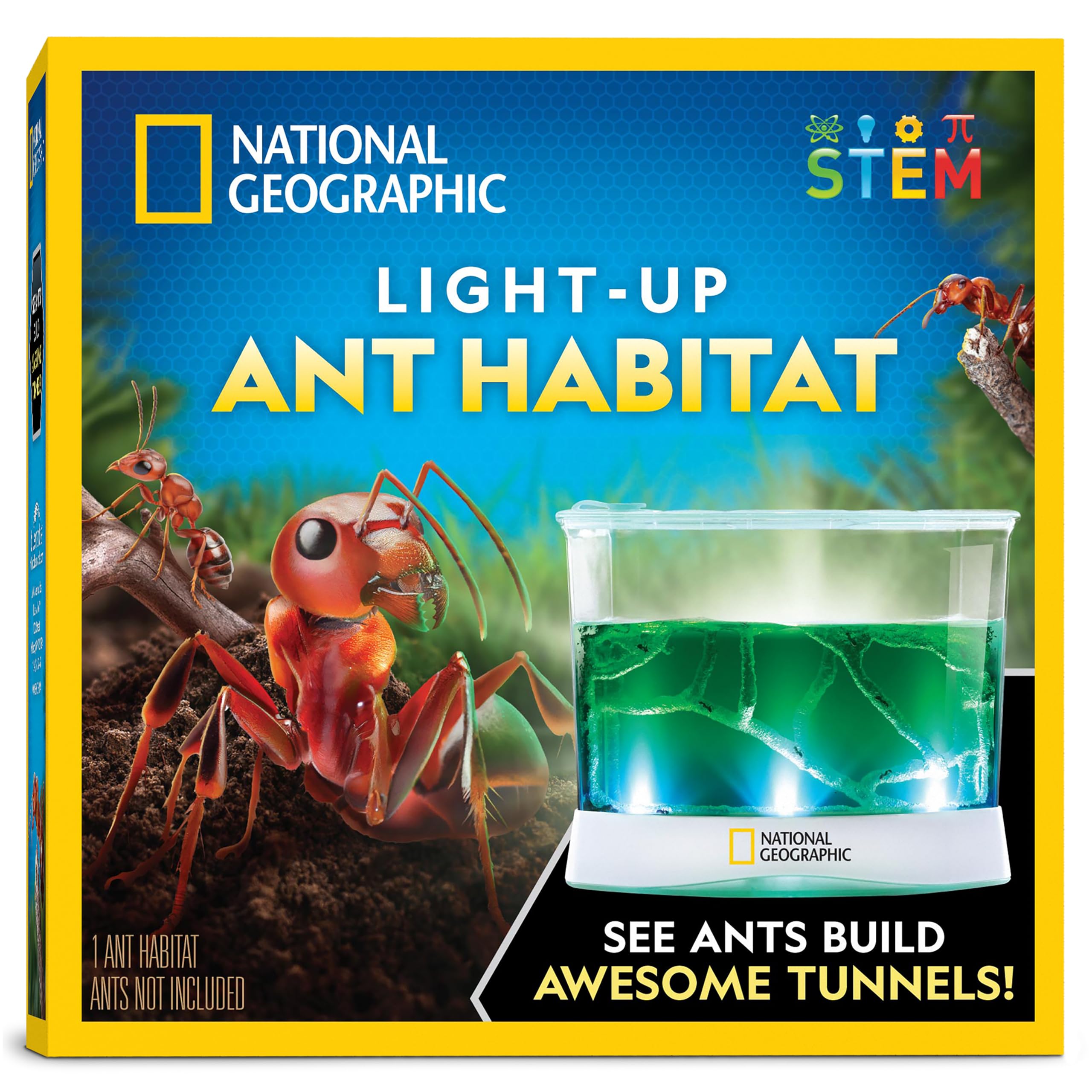
A plug-in light turns this gel-filled habitat into a night-time ant theater — and you barely have to feed them.
This is the only pick in the lineup that uses a translucent nutrient gel instead of sand. The gel feeds the ants and holds tunnel structure without needing separate food or water, so maintenance is near zero. The light-up base (the habitat lights up when plugged in) makes the tunnels visible even in the dark, and two built-in magnifying glasses in the lid give a close-up view of workers carrying gel pellets.
Owners mention that the light and booklet were a hit with both kids and adults. The gel eliminates the sand-water balance problems that plague other kits. The trade-off is that gel cannot be replaced once it dries out, and the habitat’s 8.46 x 7.4 x 2.83 inch frame is smaller than the larger sand-based farms like the Kahopy castle. Also, live ants sold separately — National Geographic suggests ordering from “Ants Alive” at an extra cost. One reviewer noted the overall kit feels pricier once you add the ants and the light is on.
Why it impresses
- Built-in LED light provides clear viewing day and night
- Nutrient-rich gel feeds ants and eliminates watering schedules
- Includes two built-in magnifying glasses plus an extra magnifier
The catch
- Gel habitat cannot be re-hydrated or replaced once it shrinks
- Total cost is higher when separate ant purchase and shipping are factored in
Best for viewers who love display: the light and magnifiers turn ant behavior into a show, ideal for a desk or nightstand.
Not for colony purists: gel limits tunnel depth and cannot be restored once the ants eat through it.
4. Educational Insights GeoSafari Ant Factory
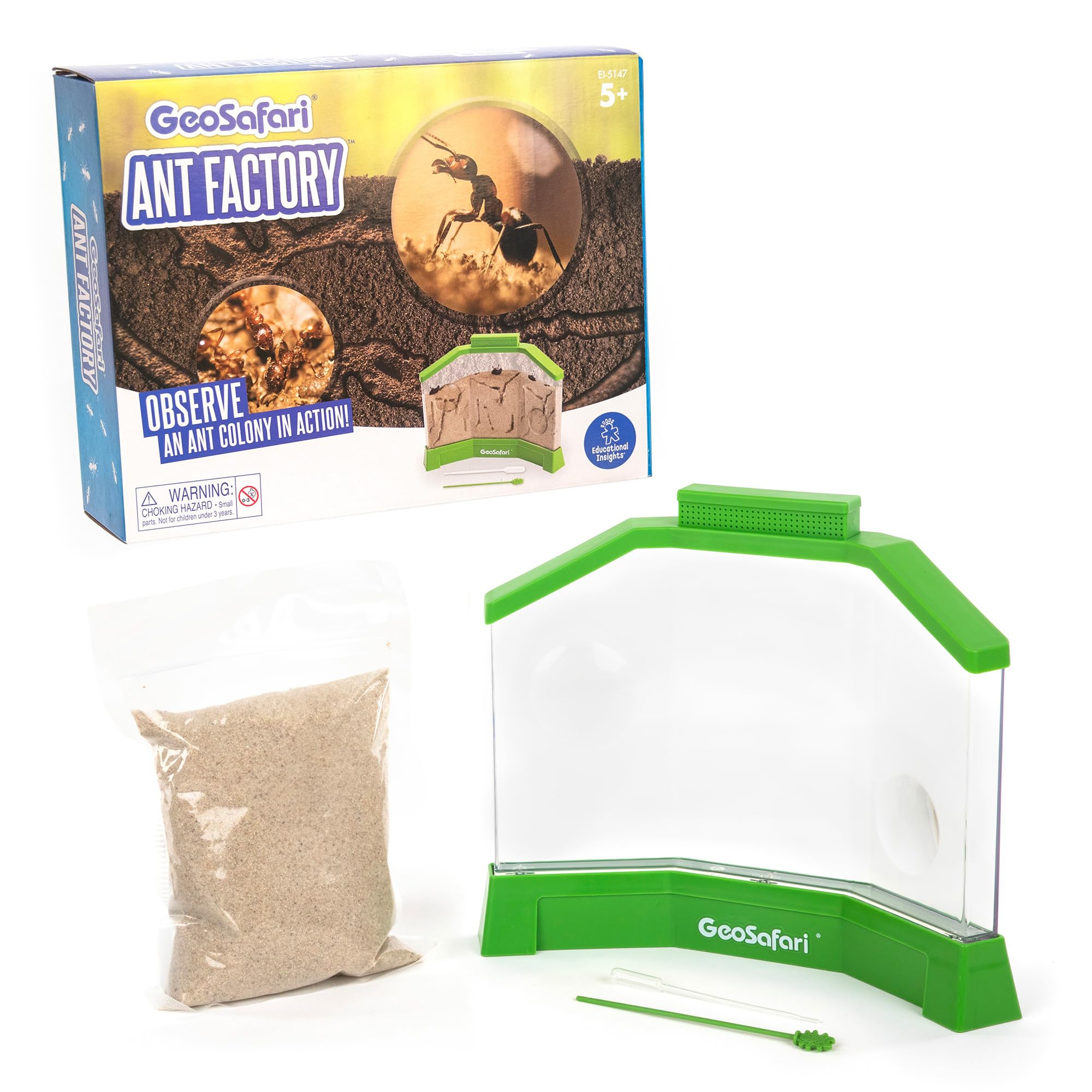
The biggest viewing window in the list — 12 x 9 inches — gives you a magazine-size look at ant tunnels.
At 12 x 9 x 5 inches overall, this is the largest ant farm kit we compared and its viewing area dwarfs the others. It ships with specialized ant sand that holds tunnel shape better than generic play sand, and the included feeding tool and activity guide make it a ready-to-go classroom project. The escape-proof habitat and built-in magnification spots let students observe without opening the lid.
Customers note that the sand is the right consistency for tunneling and that you can even use locally gathered ants. The kit includes a redemption card for ordering live ants (separate shipping and handling cost applies, cannot ship to Alaska or Hawaii). One limitation: no built-in lighting, so it works best on a bright desk or windowsill. The design also requires some assembly, though the instructions are rated as clear by most buyers.
Why it leads
- Rated 12 x 9 inch footprint creates the largest tunnel visibility
- Special ant sand keeps tunnels from collapsing compared to loose sand
- Includes activity guide with scientific journaling ideas for school use
The catch
- Needs a bright spot for good viewing — no built-in light
- Requires assembly before first use
Best for classroom or shared observation: the large viewing window lets multiple kids watch at once without crowding.
skip it if you want night viewing: no light-up base means dark hours are tunnel-blind.
5. Uncle Milton Ant Farm Live Ant Habitat, Vintage

A self-locking lid and a free ant voucher help this decades-old design still sell today.
There is a reason this kit has been around for decades: the self-locking lid and tip-proof stand make it safe for a kid’s desk. It measures 9.95 x 3.83 x 6.4 inches, compared to the Dan&Darci kit’s 9 x 2 x 7 inch profile — and comes with two bags of sand, a tunnel starter tool, and a connector tube so you can link two habitats together. The included voucher lets you order free harvester ants (just pay shipping).
Reviewers point out that worker ants purchased separately die quickly, and that older workers from hibernation died within a month. Small ants can escape through the ventilation slots, so this kit works best with large harvester ants over ¼ inch. The green lid can be tricky to snap shut correctly. It is not a long-term colony keeper — it is a fun starter that gets kids watching digging behavior for a few weeks.
Why it endures
- Break-resistant plastic and self-locking lid minimize escape risk
- Connector tube lets you join multiple habitats into a larger network
- Free ant voucher is included with the purchase
The catch
- Smaller ants escape through ventilation slots
- Worker ants from hibernation die within a month
- Customer service is slow for replacement ants
Perfect for nostalgia seekers: the classic design and antway tube make it a fine weekend project for a 6-year-old.
Not for serious ant keepers: the design is hard to feed and clean — the ants are short-term occupants.
6. Tigerific Ant Farm for Live Ants

Real sand and a full-color learning booklet make this a science project in a box — just buy extra sand.
The fully transparent sides let you watch ants from multiple angles, and the included AntWay Connector Tube gives them a bridge to run across. The kit ships with two bags of sand, a water dropper, and a coupon for discounted live harvester ants. what separates it from the Dan&Darci starter is the extensive learning booklet and the exclusive ant documentary video — a deeper dive than most competitors provide.
Shoppers say the kit is well-built and well-thought-out for the price, but some report the two bags of sand do not fill the container to the advertised level, requiring a third bag for a full look. The colony needs sand of the right moisture to tunnel effectively. It also lacks the self-cleaning water system of the Kahopy castle, so you need to monitor the water dropper manually.
What works
- Clear plastic walls offer viewing from every side side
- Learning booklet and documentary add educational depth for kids
- Connector tube lets ants move between compartments
Where it falls short
- Included sand does not fill the container completely
- No automatic water system — requires manual dropper
Reach for it if: you want a science-rich gift with real sand and a multi-angle view that a child can read along with.
Buy extra sand: the two bags won’t fill the farm as shown in the product images.
7. Dan&Darci Ant Farm Kit for Kids

Its slim profile (just 2 inches wide) costs less but the sliding lid makes feeding a risk.
Measuring just 9 x 2 x 7 inches, this is a slim, budget-friendly habitat that focuses on the basics: sand, the farm, and a voucher to order ants separately. The included learning guide is packed with information about ant behavior and life cycles, so it actually feels like a legitimate STEM gift. Buyers report that ant shipping can be slow and some ants arrived dead, but that the surviving colony thrived after settling in. The compact width of only 2 inches means tunnels are visible from the sides without much depth distortion.
The main design flaw reported by buyers is that ants build tunnels right against the sliding lid, making feeding difficult without risking escapes. The sand stays saturated if too much water is added, which can drown the colony. Stick to small water additions and use the included pipette carefully. Despite those quirks, the kit is surprisingly sturdy and costs less than most premium options.
Why it wins
- Budget-friendly price point with a full educational workbook included
- Thin profile means tunnels are visible from side immediately
- Good build quality for the price tier
The catch
- Sliding lid design makes feeding hard without ant escapes
- Sand retains water easily; ants may drown if over-watered
Ideal for a first-time ant farm: low cost and included learning guide make it a low-risk introduction for a curious 6-year-old.
Not for heavy use: the small size and lid design suit occasional observation, not daily handling.
Understanding the Specs
Viewing Window and Dimensions
The single most important spec is the viewing area — the bigger it is, the more tunnel you see. A farm with a 9 x 2 inch profile (like the Dan&Darci or Tigerific) is slim and easy to store, but the Kahopy’s 9.37 x 5.67 inch acrylic sides give you a much wider stage for watching the colony work. The Educational Insights GeoSafari at 12 x 9 inches offers the largest viewing surface, which is why it works best for classrooms.
Sand vs. Gel
Sand-based farms let ants build natural tunnels that stay visible for weeks, and you can re-moisten the sand to encourage more digging. Gel farms (like the National Geographic) are self-feeding and almost mess-free, but the gel shrinks over time and cannot be replaced. If you want the real ant experience, sand is the winner. If you hate maintenance and want a clean desktop display, gel works well.
FAQ
Can I use ants I find outside in an ant farm kit?
How many ants should I start with in my ant farm?
How do I keep the sand moist enough for tunneling?
Why did my ant farm get moldy?
Can ants escape from ant farm kits?
How long do ants live in an ant farm?
Which ant farm kit is easiest for a young child to use?
Can I connect two ant farms together?
Do ant farm kits include live ants?
Are ant farm kits reusable?
Final Thoughts: The Verdict
For the majority of shoppers, the ant farm kit winner is the Kahopy Ant Farm Castle because its acrylic build, automatic water system, and flood outlet make long-term colony care survivable. If you want a plug-and-play display that glows at night, grab the National Geographic Light-Up Terrarium. And for the largest tunnel viewing area suitable for a classroom, the standout is the Educational Insights GeoSafari.
How We Picked
We do not accept paid placement. Every pick is matched to a real buyer and a real use-case; we do not hands-on test units.
Sources & Methodology
Specifications: manufacturer listings and product documentation. Review insights: verified customer reviews, as of July 2026. Pricing: not shown on this page (it changes often); check the current price via the retailer link.
As an Amazon Associate, Gadgets Feed earns from qualifying purchases. This does not affect which products we feature.