
Our readers keep the lights on and my morning glass full of iced black tea. As an Amazon Associate, I earn from qualifying purchases.
Specs are compiled from manufacturer listings and verified buyer reviews and can change over time — please confirm the key details on the product page before buying.
If you are outfitting an RV, boat, or off-grid solar setup, the single biggest upgrade you can make is switching from heavy lead-acid batteries to a lithium-iron-phosphate (LiFePO4, pronounced “life-poe-four”) version. You get three to ten times the usable cycles of lead-acid in a smaller, lighter 100Ah package.
I’m Min — the founder and writer behind Gadgets Feed. This guide is built by comparing the manufacturers’ published specifications and the patterns across verified customer reviews, so you get each pick’s real strengths and trade-offs instead of marketing spin.
You need a drop-in replacement for your travel trailer or a long-lasting power source for a trolling motor. This breakdown of the best 12v 100ah lithium battery options helps you match the right battery to your actual setup.
Our Picks at a Glance
How To Choose The Best 12V 100Ah Lithium Battery
Every battery in this category claims 100 amp-hours, but the real differences hide in the cycle-life rating, the BMS features, and physical dimensions. Here are the three specs you need to compare side by side.
Cycle Life and Depth of Discharge
Cycle life tells you how many times you can fully drain and recharge the battery before it drops to 80% of its original capacity. A 4,000-cycle battery at 100% DoD (depth of discharge — how much of the battery’s capacity you used before recharging) will last roughly 11 years if you cycle it once daily. Batteries rated for 15,000 cycles at 60% DoD will last even longer if you do not drain them completely every time. For a weekend camper, 4,000 cycles is plenty. For full-time solar or off-grid living, look for 15,000 cycles.
Built-in BMS (Battery Management System)
The BMS is the brains inside the battery case. It cuts off charging if the temperature drops below freezing, stops discharging during a short circuit, and balances the cells so you get maximum usable capacity. Every battery here has a 100A BMS, but some add Bluetooth connectivity so you can see the state of charge from your phone.
Physical Size and Weight
Lithium batteries are roughly 60% lighter than lead-acid equivalents. A BCI Group 24 case (roughly 10 x 6.6 x 8.2 inches) is the most common drop-in size for RVs and boats. Some brands offer mini cases that are 46% smaller than a Group 31, which matters if you are squeezing a battery into a kayak or a teardrop trailer.
Quick Comparison
| Model | Best For | Cycle Life | Weight | Bluetooth | Amazon |
|---|---|---|---|---|---|
| Redodo 12V 100Ah LiFePO4★ Best Overall | Long-term RV/solar use | 4000-15000 cycles | 22 lbs | No | Amazon |
| SUPER EMPOWER Group 24Best Value | Best value drop-in replacement | 5000-15000 cycles | 21.6 lbs | No | Amazon |
| CYCLENBATT Mini BluetoothCompact Pick | Compact marine/kayak setups | 5000 cycles | 20.83 lbs | Yes (5.0) | Amazon |
| ECO-WORTHY Group 24 Bluetooth | Smart monitoring on a budget | — | 23.15 lbs | Yes (5.1) | Amazon |
| Wattcycle BCI Group 24 | High-cycle solar storage | Up to 15000 cycles | 23.2 lbs | No | Amazon |
| Renogy Core Mini 100Ah | Tight-space installations | 4000+ cycles | 22.7 lbs | No (shunt optional) | Amazon |
| Litime Group 24 Bluetooth | Bluetooth tracking with long warranty | 4000+ deep cycles | 21.9 lbs | Yes (5.0) | Amazon |
| Battle Born 100Ah | Premium built for harsh conditions | 3000-5000 deep discharge cycles | 31 lbs | No | Amazon |
In‑Depth Reviews
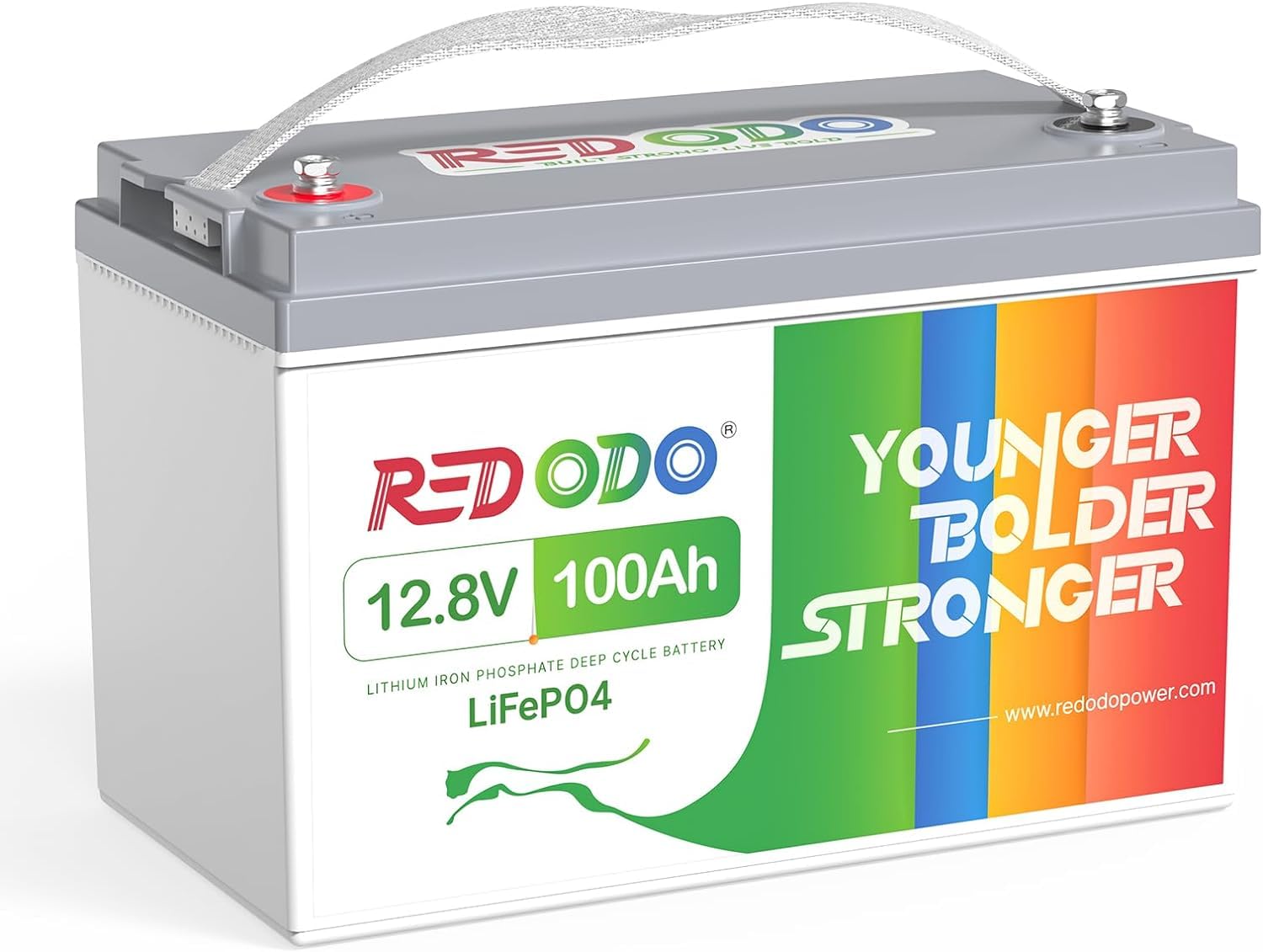
1. Redodo 12V 100Ah LiFePO4 Battery
Our pick — 4.5★ from 900+ verified ratings; the strongest balance of quality and price.
The workhorse that cycles deep for a decade-plus in your RV or solar bank.
You get up to 15,000 cycles at 60% DoD (depth of discharge) from this battery because it uses automotive-grade LiFePO4 cells. The built-in 100A BMS (Battery Management System) shields against overcharge, over-discharge, over-current, short circuit, and high temperature — so you can safely power your RV fridge and lights without worrying about damage. At 22 lbs, it is roughly 60% lighter than a lead-acid battery of the same capacity, and it fits a BCI Group 31 box (roughly 13 x 6.8 x 9 inches). You can connect up to 4 in series (wired end-to-end to raise voltage) or 4 in parallel (wired side-by-side to add capacity) for a maximum 48V system.
Buyers report using these for 3 years in a motorhome with no issues, which backs up the 10-year lifetime claim. One reviewer noted that the battery works great for a pool-cleaning company where technicians drain batteries hard every day — the Redodo held up where lead-acid failed in months.
Compared to the SUPER EMPOWER Group 24 below, the Redodo weighs 22 lbs versus 21.6 lbs, a negligible difference. The SUPER EMPOWER edges ahead on cycle count at 100% DoD (5,000 vs 4,000), but the Redodo matches it at 60% DoD (15,000 cycles each).
Long-haul verdict: If you want a proven battery that motorhome owners have trusted for years and you need series expansion to 48V, this is the pick.
Reach for this if: you run an RV or off-grid solar setup where you want a 10-year lifespan and the flexibility to wire batteries in series.
Look elsewhere if: you need Bluetooth monitoring or a very tight Group 24 space — this is a Group 31 case.
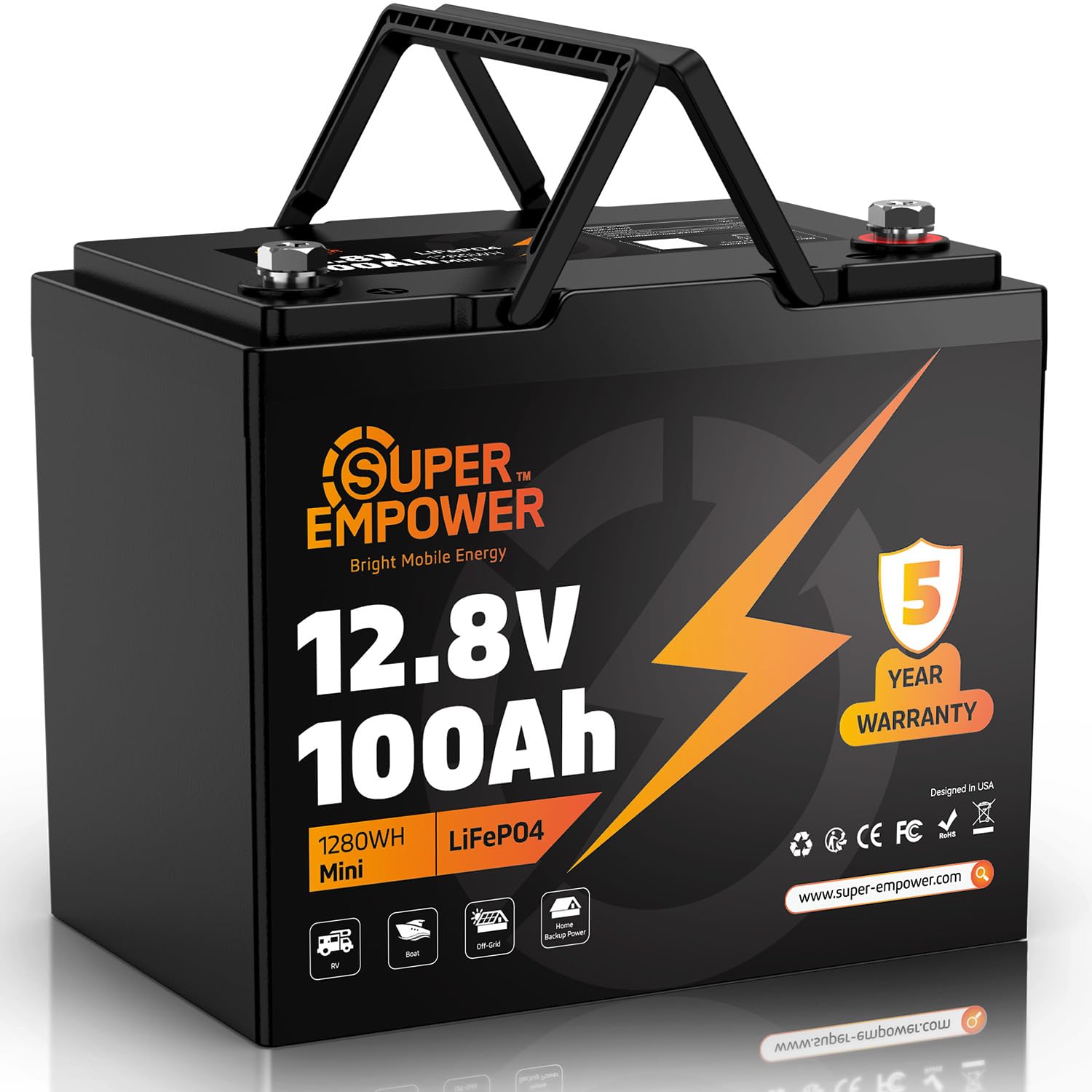
2. SUPER EMPOWER 12V 100Ah LiFePO4 Battery, BCI Group 24
The budget-friendly Group 24 that packs 5,000 full cycles into a lighter frame.
You get 5,000 full cycles at 100% DoD (depth of discharge — fully draining the battery each time) from this SUPER EMPOWER battery, which is 1,000 more than the Redodo at that depth. It slips into any standard BCI Group 24 battery box without modifications, measuring 6.49 x 10.24 x 8.98 inches and weighing 21.6 lbs. The built-in BMS (Battery Management System) manages charge, discharge, and temperature conditions, and charging automatically pauses below 32°F (freezing) to protect the LiFePO4 cells.
Reviews highlight the strong built-in handles and the easy installation. One buyer mentioned using it on a kayak motor and getting very far per charge. Another noted it lasted 5 hours on a trolling motor with no power loss and recharged fast. The battery supports up to 4 in series and 4 in parallel, giving you a 51.2V 400Ah configuration (20.48kWh).
Smart-buy read: You get the same 15,000-cycle potential at 60% DoD as the Redodo, but in a Group 24 case that fits tighter spaces, and at a lower price.
Grab this if: you need a drop-in Group 24 replacement for an RV, boat, or solar system and want the best balance of cycle life and price.
skip it if: you need Bluetooth monitoring or a very compact form factor for a kayak.
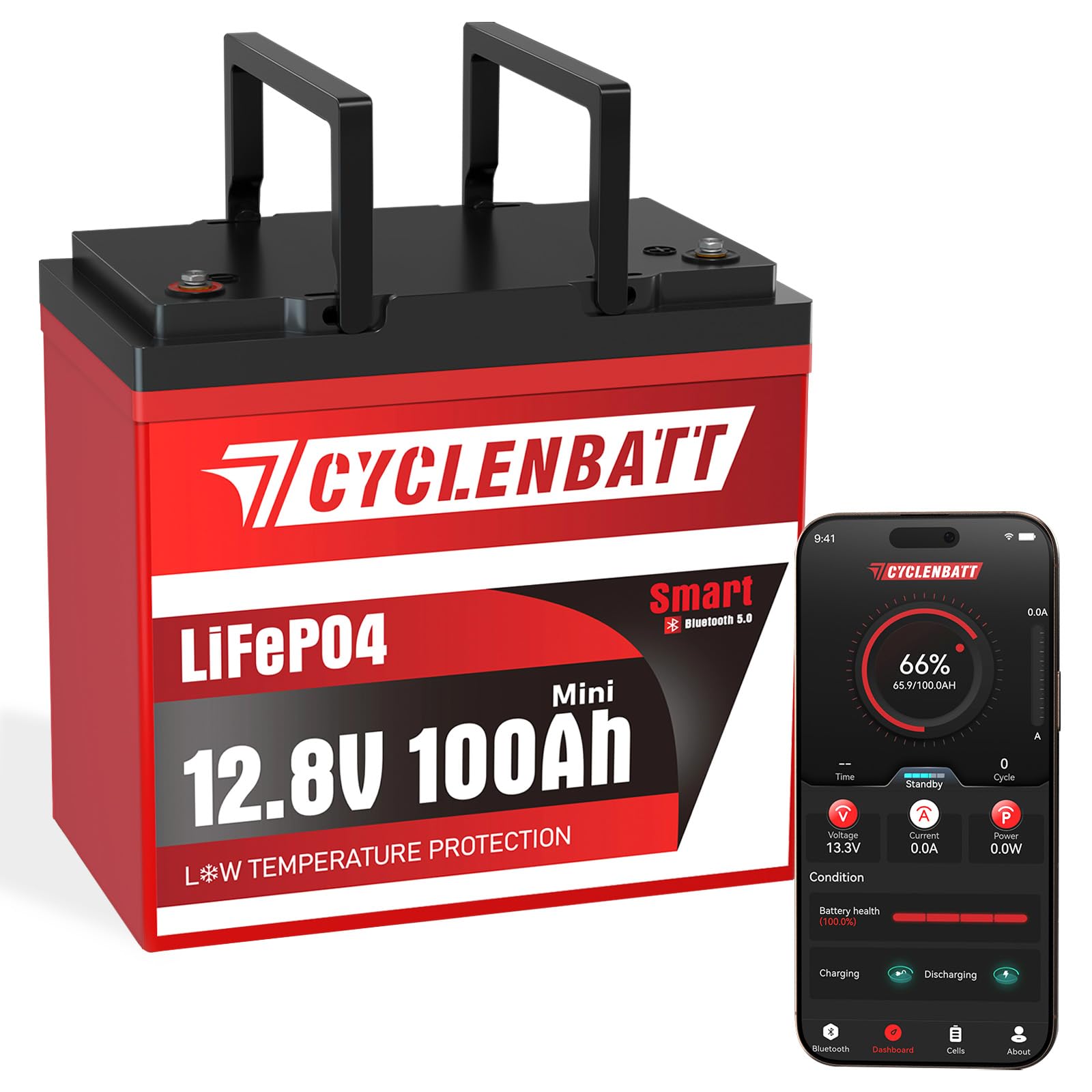
3. CYCLENBATT 12V 100Ah Mini Bluetooth LiFePO4 Battery
The mini marvel that fits tight kayaks and lets you monitor SOC from your phone.
You can check your battery’s SOC (state of charge — how much juice is left), voltage, current, power, and temperature in real time through the CYCLENBATT app because this battery integrates Bluetooth 5.0. According to the manufacturer, it is 46% smaller than a Group 31 size 100Ah lithium battery, and at 20.83 lbs, it is the lightest on this list. The compact case (9.02 x 5.44 x 8.19 inches) is designed for RVs, campers, and kayaks where space is extremely limited. You can even switch charging or discharging on and off remotely via the app.
It uses A-grade cells and delivers 5,000 cycles at 100% DoD. One buyer tested it and found it delivered over 105Ah at a 140W discharge with cells balanced within 0.04V. The BMS includes low-temperature shutdown — charging stops below 32°F and discharging stops below -4°F. Another reviewer noted that it powered an old fridge and freezer for over 8 hours. Compared to the SUPER EMPOWER above, the CYCLENBATT offers Bluetooth but a shorter cycle life — 5,000 cycles versus the SUPER EMPOWER’s 15,000 at 60% DoD.
Why it fits tight builds
- 46% smaller volume than Group 31 batteries — slips into kayak hatches and teardrop trailers
- Bluetooth app shows voltage, cell balance, charge cycles, and temperature
- Up to 330A instantaneous discharge current for larger loads
Where it gives ground
- 5,000 cycles max — less than the 15,000-cycle options above
- Not suitable for golf carts or starter batteries
Best for: kayak anglers, small campervan builders, or anyone who needs a Bluetooth-equipped battery in the smallest physical package.
Not for you if: you need maximum cycle life for full-time off-grid solar and you are okay without phone monitoring.
4. ECO-WORTHY 12V 100AH LiFePO4 Lithium Battery with Bluetooth

The Group 24 battery that talks to your phone and handles winter charging safely.
You can monitor voltage, current, capacity, and estimated remaining working time from the ECO-WORTHY app because this battery features Bluetooth 5.1. It is built to the BCI Group 24 standard and measures 10.23 x 6.6 x 8.43 inches, weighing 23.15 lbs. The built-in 100A BMS uses automotive-grade cells that the brand states are UL and IEC tested, and it includes low-temperature cutoff that stops charging when the cell temperature drops below 19.4°F — lower than the typical 32°F cutoff on most batteries here.
Owners mention that the Bluetooth drain is negligible and the battery holds a charge for weeks. One reviewer verified it delivered 98% of its 100Ah capacity (1.05kWh output through an inverter) and praised the customer service when a terminal case softened. Another noted it powers an electric cooler fully via solar and charges a 258Wh power station more than 4 times. The battery supports 4P2S expansion up to 10.24kWh.
App-first angle: If you want a Group 24 battery with dedicated Bluetooth monitoring and a low-temperature cutoff that kicks in at 19.4°F instead of the usual 32°F, this is a strong mid-tier choice.
Reach for it when: you camp in cold weather and need the lower temp cutoff, and you want to track battery life from your phone.
Consider other options if: you need the absolute longest cycle life — ECO-WORTHY does not advertise a cycle count.
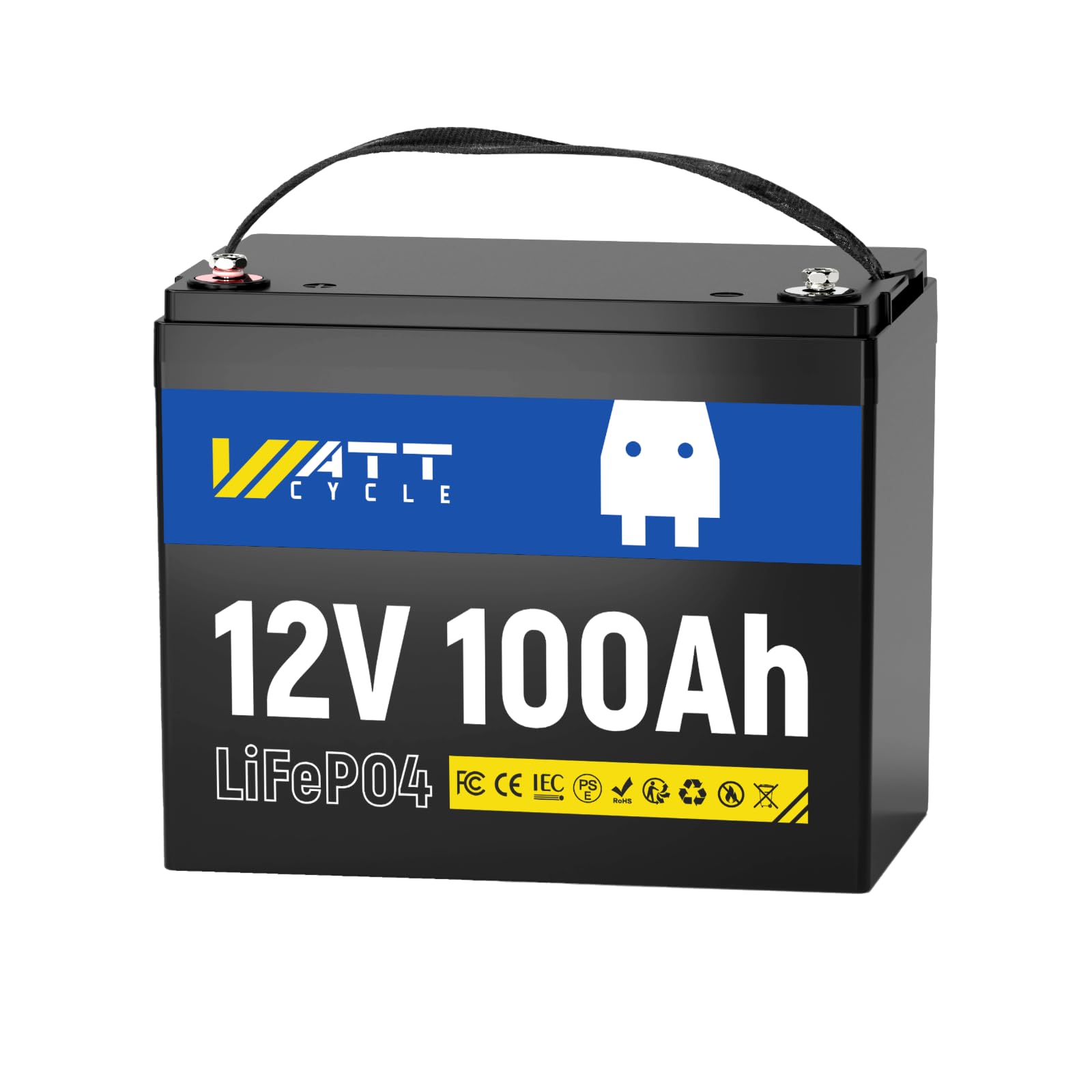
5. Wattcycle 12V 100Ah LiFePO4 Lithium Battery – BCI Group 24
A stout Group 24 with 15,000-cycle potential for full-time solar duty.
You get up to 15,000 cycles from this Wattcycle battery because it uses A+ grade LiFePO4 cells. That is the same as the Redodo and SUPER EMPOWER at 60% DoD (depth of discharge), making it a strong pick for daily solar storage. It measures 10.2 x 6.6 x 8.2 inches, weighs 23.2 lbs, and has obtained SDS, UN38.3, FCC, CE, and RoHS certifications — meaning it meets multiple safety standards. The built-in 100A BMS automatically disconnects if the discharge current exceeds 300±50A, a safety feature for heavy loads.
Customers note using it in an RV and finding it holds a charge for a long time. One owner connected two in parallel for a solar generator and said the build quality was very nice. Another reviewer pointed out that the M8 terminal bolts are short, so if you are connecting two batteries in parallel, you may need to buy longer M8x16mm bolts and additional washers — a small inconvenience. The battery operates in temperatures as low as -4°F and as high as 158°F.
Top-line strength
- Up to 15,000 cycles for long-term solar or off-grid storage
- Operating range from -4°F to 158°F covers extreme climates
- Multiple safety certifications (SDS, UN38.3, FCC, CE, ROHS)
One catch
- No Bluetooth — you will need a third-party monitor if you want to check SOC from your phone
- Terminal bolts are short; plan to buy longer ones for parallel setups
Choose this for: a high-cycle solar battery where you do not need Bluetooth and you prioritize certifications and wide temperature tolerance.
Pass if: you want an app to monitor state of charge — look at the ECO-WORTHY or CYCLENBATT instead.
6. Renogy 12V 100Ah LiFePO4 Lithium Battery Mini Size
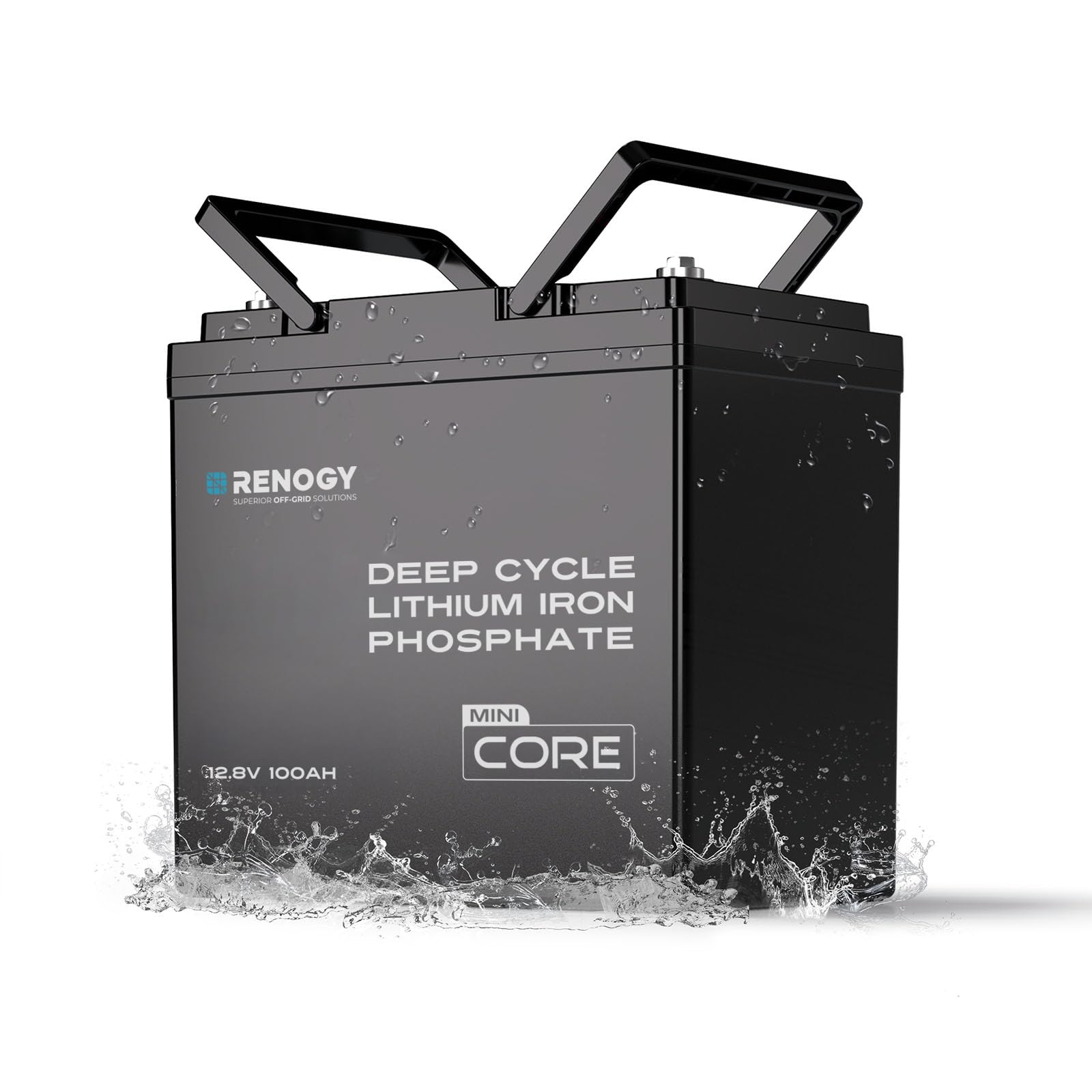
The smallest 100Ah case in the lineup, built to survive water splashes and rough roads.
You can mount this Renogy battery where water splashes and dust are a concern because it features an IP65-rated casing (meaning it resists splashes, water, and dust). According to the manufacturer, it is 50% smaller than a Group 31 battery and 13% smaller than other equivalent mini 100Ah batteries, at 9.02 x 5.43 x 8.39 inches. It weighs 22.7 lbs. The integrated metallic cell spacers keep the EV-grade prismatic cells in position even on unpaved roads or choppy water — so your battery stays secure in a bouncy boat or teardrop trailer.
The 100A BMS protects against low temperature (charging), high temperature, overvoltage, undervoltage, overcurrent, and short circuits. Renogy offers optional remote monitoring via a 300A Battery Shunt (sold separately — a device that measures current in and out) that works with the DC Home app or Renogy ONE monitor. One owner reported it was a 10x improvement over their old AGM battery (a type of lead-acid battery) of the same spec, with noticeably better discharge and capacity performance.
Build-quality read: This is the only battery here with an IP65 water/dust resistance rating, so if your installation is exposed to moisture or vibration, the Renogy is built for that environment.
Best for: teardrop trailers, kayaks, or boat compartments where water splashes and vibration are daily realities and space is at a premium.
Not ideal if: you want built-in Bluetooth without buying an extra shunt.
7. Litime 12V 100Ah LiFePO4 Battery Bluetooth, Group 24
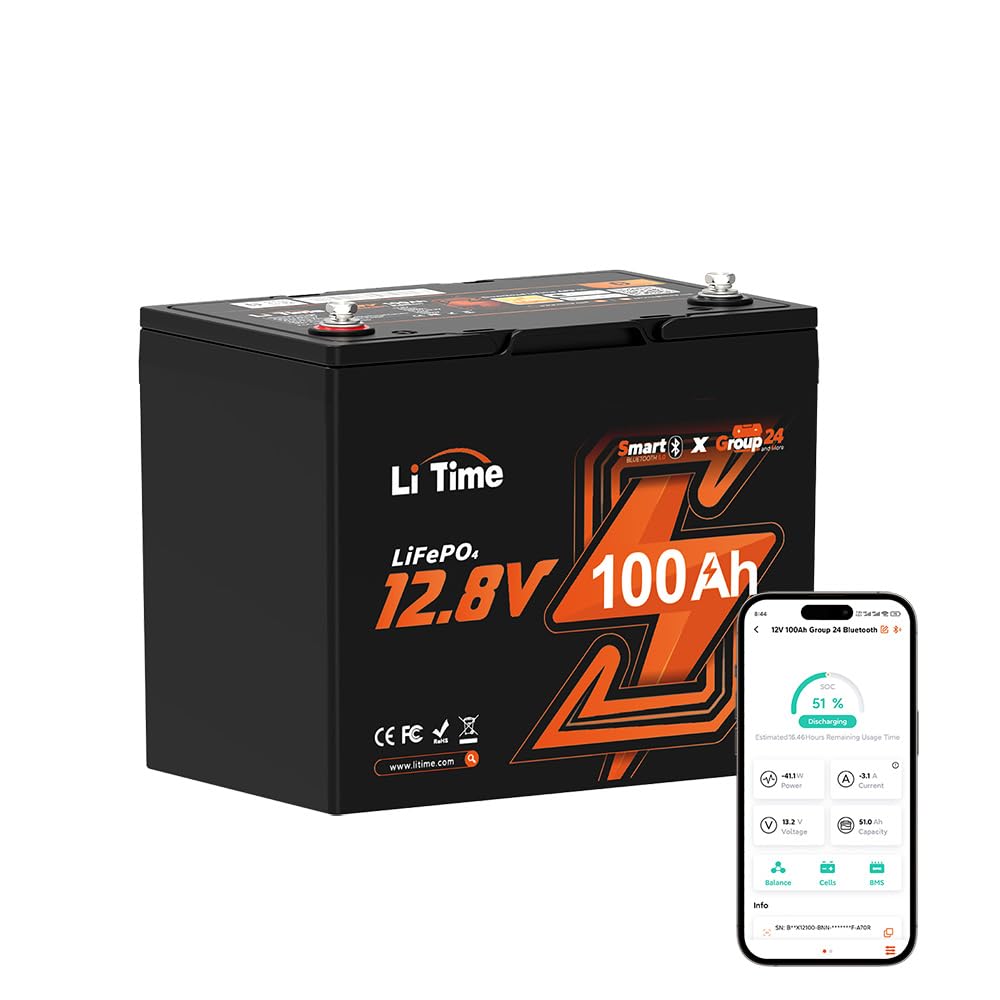
A Group 24 Bluetooth battery with over 20 BMS safeguards and a 5-year warranty.
You get 20+ BMS safeguards and a 5-year warranty with this Litime battery, which pairs instantly with the LiTime app via QR code using Bluetooth 5.0. It weighs 21.9 lbs and measures 10.24 x 6.61 x 8.3 inches, fitting a standard Group 24 box. The app lets you monitor battery status and levels remotely — voltage, charge rate, discharge rate, and cycle count — so you never guess how much charge remains like you might with a lead-acid battery.
It uses A+ automotive-grade LiFePO4 cells with a 10-year lifespan and 4,000+ deep cycles. One reviewer has been using it in the bed of their truck for almost 2 years, powering a fridge 6-7 months of the year with no issues. Another buyer said the Bluetooth app is actually useful — they can see exactly how much charge remains and the charge/discharge rate, eliminating the conservative guessing they did with lead-acid batteries. The battery supports up to 4P4S expansion for a total of 20.48kWh.
What the app does
- Bluetooth 5.0 pairs quickly via QR code — shows voltage, charge rate, discharge rate, and cycle count
- 20+ BMS protections including low-temp cutoff
- Long track record — reviewer used it nearly 2 years in a truck bed through heat and cold
Installation note
- Some RV reviewers point out the battery draws high charge current (over 50A), which may overwhelm older RV chargers — you might need a lithium-compatible charger
Reach for this if: you want the reassurance of a 5-year warranty, Bluetooth monitoring in a Group 24 case, and a battery that has proven itself over two years in a real truck-bed environment.
Look elsewhere if: your RV has an auto-detect charger that might not support lithium charging profiles.
8. Battle Born 100Ah 12V LiFePO4 Battery
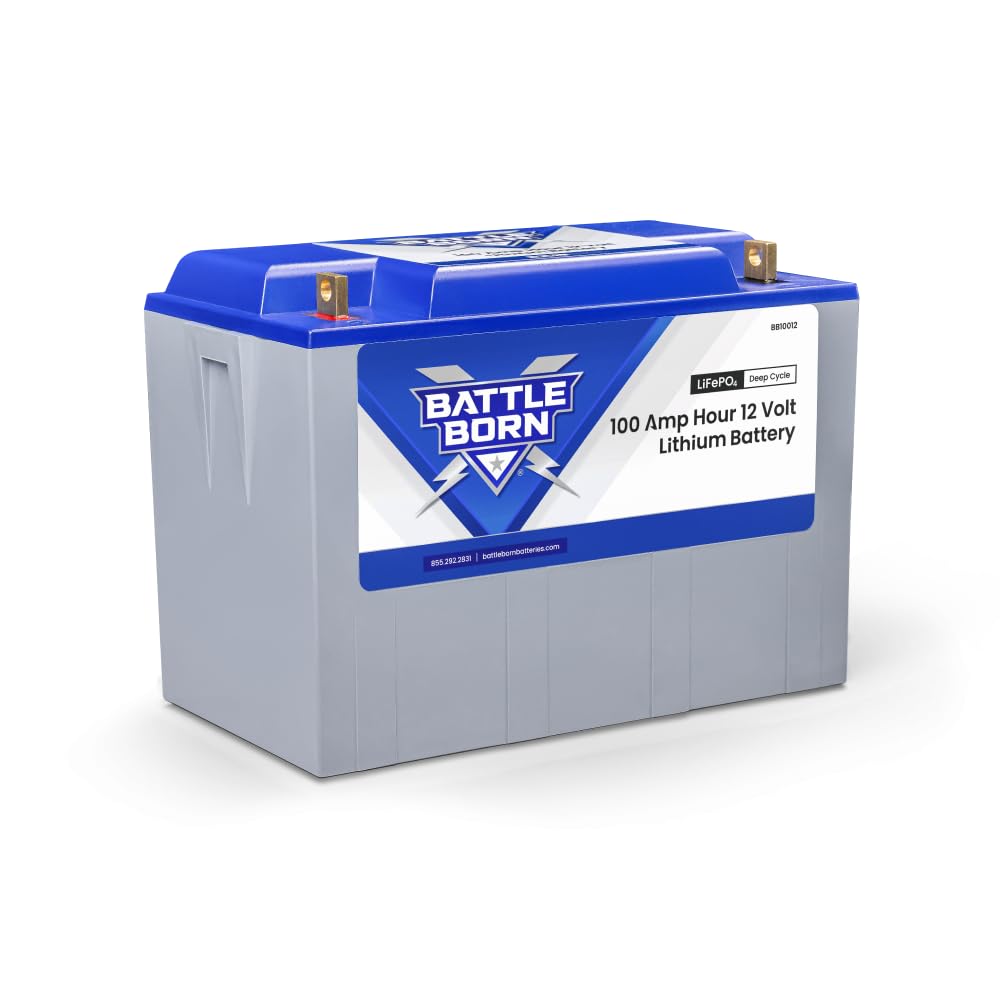
The heavy-duty veteran with a 10-year warranty that stands behind its rugged build.
You get a 10-year warranty with this Battle Born battery, the longest in this lineup, from a brand with US-based customer service. It is a drop-in replacement for Group 27 and Group 31 battery boxes and is built for rugged RV, camper van, boat, industrial, and off-grid applications. The LiFePO4 chemistry supports 3,000 to 5,000 deep discharge cycles, providing up to 10-15 years of power.
The internal BMS features low temperature protection, high and low voltage protection, short circuit protection, and more. One owner reported that it powered a 450W space heater for 1.5 hours, raising their RV temperature by 12°F, and ran the fridge, lights, water pump, and USB devices 24/7 on a 3,000-mile trip. Another noted that it lasted 28 hours versus 8 hours for their old lead-acid battery. One buyer experienced a slow warranty process that took up to 8 weeks.
The premium trade-off: You pay more and carry extra weight (31 lbs vs 21-23 lbs for most competitors), but you get a proven brand with US-based customer service and a decade of warranty coverage.
Choose Battle Born if: you want the longest warranty in the category, you have a Group 27 or 31 battery box, and you prioritize brand reputation and US-based support.
pass on it if: weight matters for your boat or RV (it is 31 lbs vs 21-23 lbs for most competitors), or if you want Bluetooth monitoring.
Understanding the Specs
Cycle Life and Depth of Discharge (DoD)
Cycle life is the number of full charge-discharge cycles a battery can deliver before its capacity drops to 80% of the original rating. DoD tells you how much of the battery’s capacity you used before recharging. A battery rated for 4,000 cycles at 100% DoD means you can fully drain it 4,000 times. The same battery might last 15,000 cycles if you only use 60% of its capacity each time. For occasional weekend use, 4,000 cycles is more than enough. For daily solar storage, aim for 15,000 cycles.
BMS (Battery Management System)
The BMS is a circuit board inside the battery that manages its safety and lifespan. It monitors each cell’s voltage and temperature, balances the cells, and automatically disconnects the battery if it detects overcharge, over-discharge, over-current, short circuit, or extreme temperatures. All batteries here have a 100A BMS. Some add Bluetooth connectivity so you can see the state of charge, voltage, current, and temperature from a phone app.
Low-Temperature Protection
LiFePO4 cells can be permanently damaged if you try to charge them below freezing (32°F / 0°C). Every battery on this list with low-temperature protection automatically stops charging when the internal temperature drops below a certain threshold — typically 32°F, though the ECO-WORTHY cuts off at 19.4°F. Discharging at low temperatures is usually safe down to -4°F. If you winter-camp or store your battery in an unheated space, this feature is essential.
Series and Parallel Expansion
Wiring batteries in parallel keeps the voltage at 12V but adds capacity — two 100Ah batteries in parallel give you 200Ah. Wiring in series doubles the voltage while keeping the same capacity — two 12V batteries in series give you 24V. Most batteries here support up to 4 in series and 4 in parallel, letting you build a 48V 400Ah system (20.48kWh) for a full home solar installation. Check the maximum series/parallel limit for each model before connecting more than one battery.
FAQ
Can I use a 12V 100Ah lithium battery as a starter battery for my engine?
What size charger do I need for a 12V 100Ah lithium battery?
How long does a 12V 100Ah lithium battery last running a fridge?
Can I connect a lithium battery to my existing solar charge controller?
Is it safe to use a lithium battery in freezing temperatures?
How much lighter is a 100Ah lithium battery compared to lead-acid?
Do I need a special alternator charger for a lithium battery in an RV?
What is the difference between 12V 100Ah lithium batteries and AGM batteries?
Can I mount a lithium battery on its side or upside down?
How do I know when my 12V 100Ah lithium battery is fully charged?
Final Thoughts: The Verdict
Across the board, the best 12v 100ah lithium battery winner