
Our readers keep the lights on and my morning glass full of iced black tea. As an Amazon Associate, I earn from qualifying purchases.
Specs are compiled from manufacturer listings and verified buyer reviews and can change over time — please confirm the key details on the product page before buying.
You want to listen to local police and fire radio, but entering a zip code never works. You need a scanner you program by hand or with a computer — not one that depends on a zip-code database. This guide covers five workhorse models built for manual control, from base stations to rugged handhelds.
I’m Min — the founder and writer behind Gadgets Feed. This guide is built by comparing the manufacturers’ published specifications and the patterns across verified customer reviews, so you get each pick’s real strengths and trade-offs instead of marketing spin.
You will see how each unit handles Phase 2 trunking (a newer digital standard), audio quality, and simulcast distortion (garbled audio from multiple towers) — the deciding factor between a usable scanner and a frustrating one. Everything below compares the most serious non-zip code digital police scanners available now.
Our Picks at a Glance

How To Choose The Best Non-Zip Code Digital Police Scanners
Manual-programming radios give you full control over frequencies and talkgroups (specific digital channels). But they demand certain hardware and software choices that zip-code scanners handle automatically. Focus on these three filters first.
Phase 2 vs Phase 1 Trunking
If your local police or fire department switched to APCO P25 Phase 2 (a newer voice standard), a Phase 1 scanner like the Whistler WS1065 will hear only silence on those channels. Check your local agency on RadioReference before buying. Phase 2 capable units, such as the Uniden BCD996P2 or SDS200, catch both Phase 1 and Phase 2 transmissions.
Simulcast Distortion — The Dealbreaker
Agencies that use multiple broadcast towers on the same frequency cause garbled audio in many scanners. Only radios with True I/Q or SDR technology — found in the Uniden SDS200 and SDS150 — handle this cleanly. If you hear digital warble from other units, this spec is your answer.
Ease of Programming Without a Zip Code
Non-zip code scanning means you either enter frequencies by hand on the keypad, or use PC software like Freescan, Sentinel, or PSREdit to upload a channel list. Budget-friendly units like the Whistler WS1065 require extra software purchases and a USB cable. Premium models include free Sentinel software and a USB cord in the box, making setup faster.
Quick Comparison
| Model | Best For | Trunking Support | Digital Decode Tech | Weight / Form | Amazon |
|---|---|---|---|---|---|
| Uniden BCD996P2★ Best Overall | Desktop powerhouse for experts | Phase 1 & 2, X2-TDMA, Motorola, EDACS | TrunkTracker V | 2.1 lbs / Base & Mobile | Amazon |
| Uniden SDS200Simulcast Crusher | Simulcast killer base station | Phase 1 & 2, Motorola, EDACS, LTR | True I/Q SDR | 5 lbs / Base & Mobile | Amazon |
| Whistler TRX-1 | Carry-everywhere Phase 2 handheld | Phase 1 & 2, DMR, NXDN, Motorola | APCO P25 / DMR / NXDN | 7.4 oz / Handheld | Amazon |
| Whistler WS1065 | Budget Phase 1 workhorse | Phase 1 only, Motorola, EDACS, LTR | Adaptive Digital Tracking | 2.65 lbs / Desktop | Amazon |
| Uniden SDS150 | Portable SDR with built-in GPS | Phase 1 & 2, Motorola, EDACS, LTR | True I/Q SDR | 10.9 oz / Handheld | Amazon |
In‑Depth Reviews
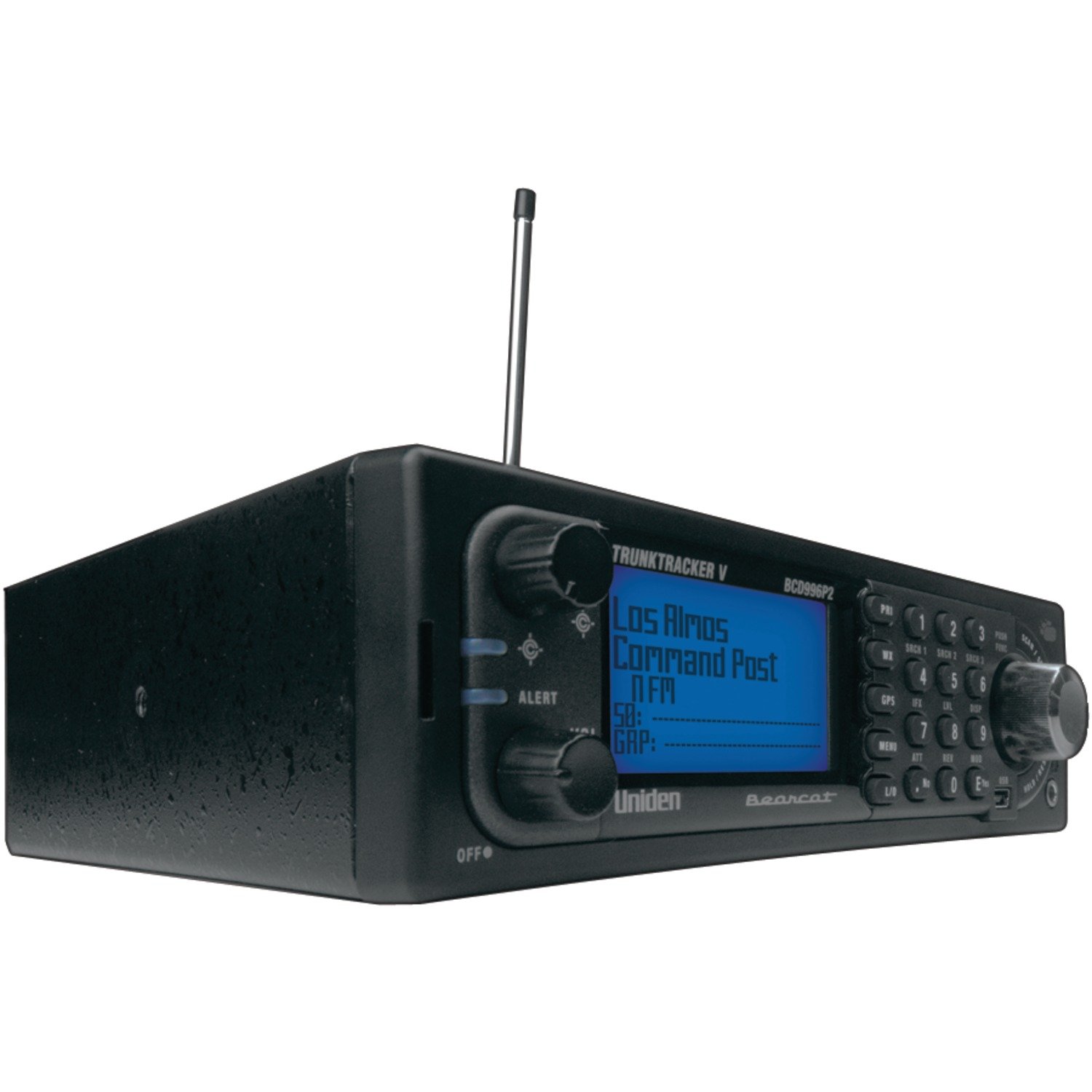
1. Uniden BCD996P2 Digital Mobile TrunkTracker V Scanner
Our pick — over 4★ from 1,500+ verified ratings; the strongest balance of quality and price.
The 25,000-channel desktop that hardcore enthusiasts learn to master.
This is the classic 996-series upgraded to Phase 2 digital trunking, capable of holding up to 25,000 dynamically allocated channels. It scans APCO P25 Phase 1 and Phase 2, X2-TDMA (an early form of Phase 2), Motorola, EDACS, and LTR trunked systems. One buyer mentioned “excellent P25 Phase I/II and analog reception with stock antenna in good location,” even pulling in analog signals from over 60 miles with an attic-mounted antenna. The same buyer noted that simulcast distortion is a “major challenge” — the BCD996P2 lacks the True I/Q SDR that the SDS200 uses to fix that, so it can struggle in multi-tower metro areas.
The unit supports up to 100 systems with 10 groups each (1000 programmable toggles), plus GPS compatibility for automatic location-based scanning. Connect a compatible GPS receiver, and the scanner will automatically select the correct systems for your location. Close Call RF Capture with Do-Not-Disturb mode checks for nearby radio bursts without interrupting active channels, so you never miss a transmission.
Buyers agree on the catch: the learning curve is steep. As one reviewer put it, “excellent P25 Phase I/II and analog reception,” but “computer programming (Freescan) essential; steep learning curve.” The manual is difficult for digital trunked systems, so you will need YouTube tutorials and Freescan software (plus a RadioReference subscription) to get it going. This scanner is not plug-and-play — it rewards time with powerful customization.
Deep Channel Management
- Massive 25,000-channel dynamic memory with 100-system x 10-group organization
- GPS jack auto-selects systems as you travel — great for road trips
- Phase 2 digital trunking included at no extra license cost
Steep Learning Curve
- Simulcast distortion is a major challenge — no SDR tech here
- Setup requires Freescan software, RadioReference subscription, and patience
- Small, low-resolution 4-line display feels dated versus the SDS200
For the dedicated enthusiast: The BCD996P2 rewards hours of learning with deep control over 25,000 channels and solid Phase 2 support — choose it if you love tinkering and already own a Windows PC for Freescan.
Avoid if: you want grab-and-go ease or you live in a simulcast-heavy city (get the SDS200 instead).
2. Uniden SDS200 True I/Q TrunkTracker X Base/Mobile Digital Scanner
The desktop station that silences digital simulcast distortion when other scanners fail.
Simulcast is a radio technique where multiple towers broadcast the same signal on the same frequency. It causes a garbled, warbling sound on most scanners. The SDS200 is built to stop that. Its True I/Q and Software Defined Radio (SDR) technology — which decodes signals in software instead of fixed electronics — allows it to pick the cleanest copy, something the Whistler WS1065 or standard Uniden BCD996P2 cannot do. The 3.5-inch fully customizable color display lets you tag each channel with the agency name, so you see “Metro Fire” instead of a frequency number.
You program it through the free Uniden Sentinel software, pulling from the company’s weekly-updated US/Canada database. Reviewers report that setup with Sentinel is straightforward, and the audio is clean without garbling. You also get Close Call RF Capture (a feature that instantly finds a nearby radio signal) to grab nearby unlicensed radio bursts, plus a GPS port (receiver not included) that automatically picks the right frequencies when you drive between counties.
One reviewer noted that to open up DMR (Digital Mobile Radio) or NXDN (Next Generation Digital Narrowband) digital modes you must buy separate licenses for each. The unit weighs 5 pounds, making it a permanent desk or vehicle install rather than a portable grab-and-go. The optional digital license cost is the only real drawback against an otherwise strong base station.
Desktop Dominance
- Crushes simulcast distortion with True I/Q SDR that no other base in this list matches
- Free Sentinel software with weekly database updates makes manual programming painless
- 3.5″ color display with per-channel alpha tagging — read it from across the room
The Cost of Extras
- Large 5 lb chassis is desk-bound; not for carry
- DMR and NXDN decoding cost extra each
- LAN port is described by one reviewer as “useless”
Your simulcast solution: The SDS200 is the only base/mobile here that truly fixes garbled digital simulcast audio — choose it if you live in a multi-tower city and want one clean receiver.
Reconsider if: you need DMR from the start without paying extra, or you want a light handheld to throw in a bag.
3. Whistler TRX-1 Handheld Digital Police Scanner Radio
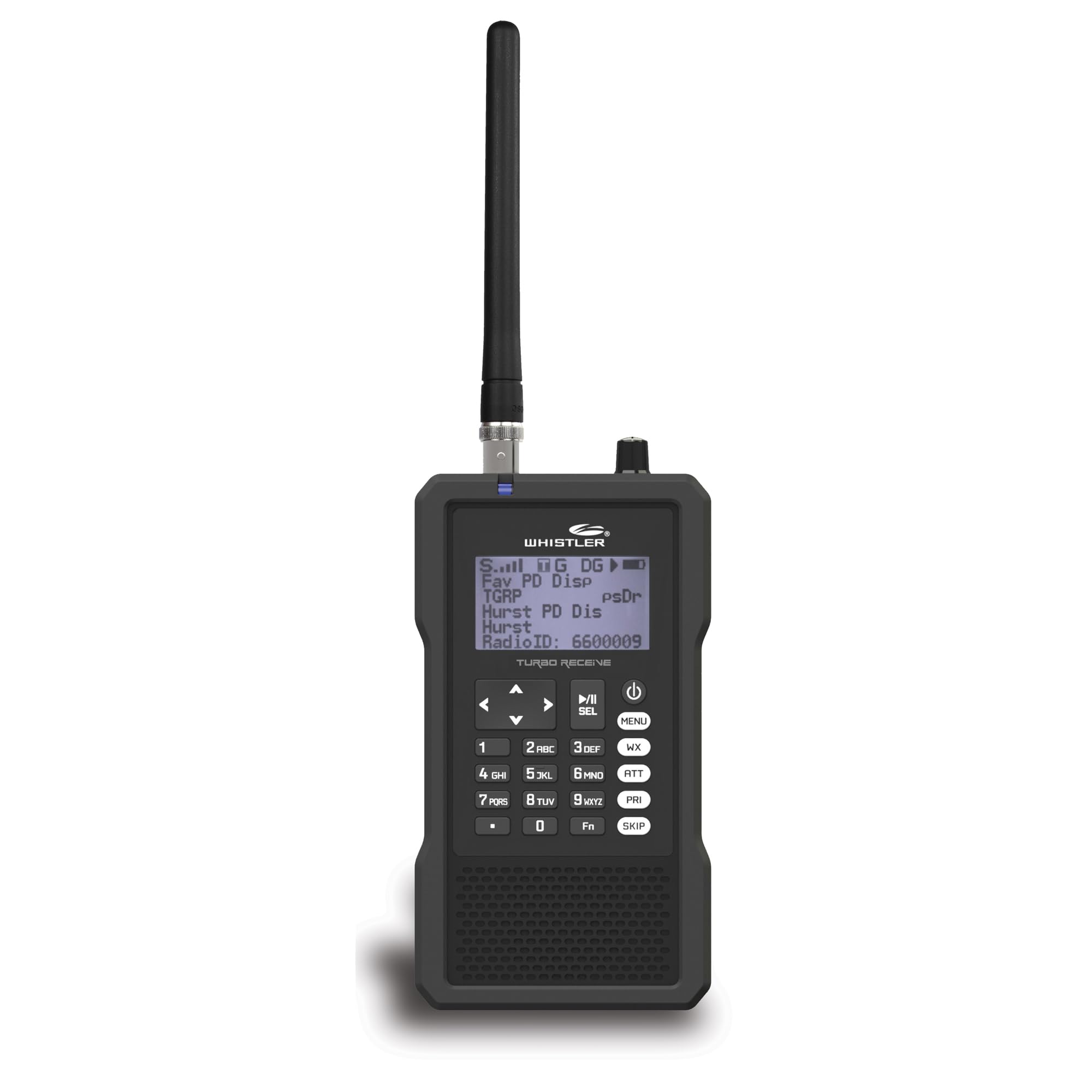
The portable that packs Phase 2, DMR, and NXDN into one rugged 7.4-ounce body.
Unlike the desktop Uniden BCD996P2 or the Whistler WS1065, this handheld brings Phase 2 trunking and digital modes (DMR and NXDN) with you anywhere. It is 7.4 ounces and measures 1.81 inches deep — about three times thinner than a bulky desktop. The catch: you program it through Whistler’s EZ-Scan PC software, and it runs on Windows only with no Mac version. A buyer who purchased the TRX-1 reported strong Phase 2 performance but noted the software was “powerful but non-intuitive,” missing a key “PREFERRED SCAN” step in tutorials.
You get a 2GB MicroSD card for recording up to 50 hours of radio traffic directly on the unit. The tri-color LED can flash custom patterns, even mimicking emergency vehicle strobes. The raw discriminator output — a direct feed of the decoded signal — lets you send unprocessed data to third-party decoding apps without voiding the warranty. With no zip-code shortcut, expect to spend an evening learning the EZ-Scan software, but once locked in, the scanner covers Motorola, EDACS, LTR, and P25 trunked systems comprehensively.
The same buyer also mentioned a 30-second boot time, which feels slow when you need it mid-incident. Audio is clear for talkgroup monitoring, but a few users found digital warble occasionally made speech hard to follow. The TRX-1 is the best middle-ground for Phase 2 portability without paying the Uniden SDS150 premium, but you must own a Windows PC to program it.
Most Versatile Handheld
- Monitors Phase 2, DMR, and NXDN without needing extra paid licenses
- Records 50 hours of radio traffic to the included 2GB MicroSD card
- Raw discriminator output for third-party decoding — no soldering required
Windows-Only Headache
- EZ-Scan software is Windows-only; no Mac support at all
- Roughly 30-second startup delay reported by users
- Some buyers experienced digital warble on certain trunked systems
Your Phase 2 portable: The TRX-1 is the best go-anywhere scanner for Phase 2, DMR, and NXDN without buying extra keys — ideal for monitoring multiple systems on foot.
Not for you if: you run a Mac computer (no software) or you need true simulcast-killing SDR technology (that is the SDS200 or SDS150).
4. Whistler WS1065 Digital Trunking Desktop Scanner
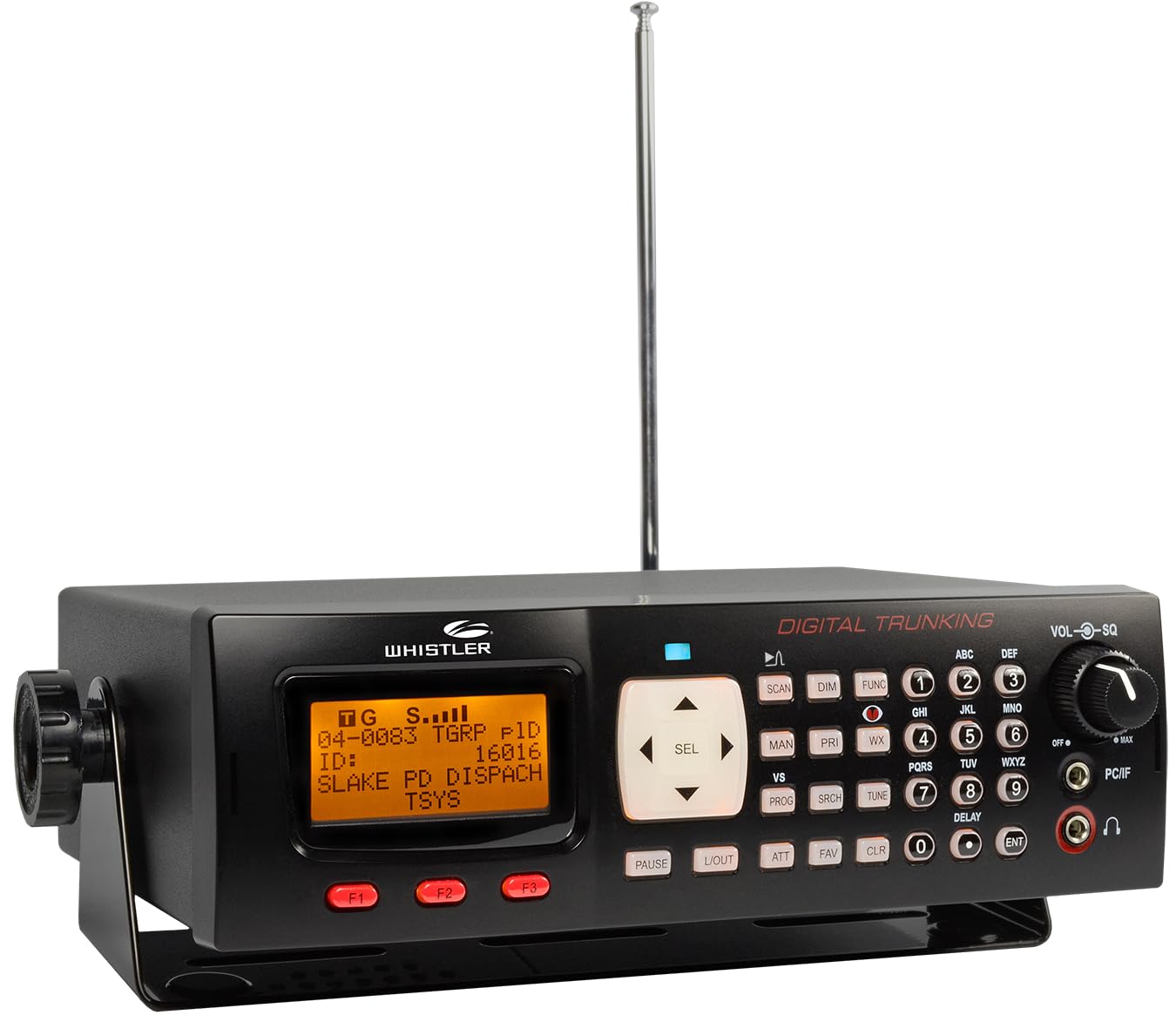
The cheapest route into non-zip scanning — if you know your area runs Phase 1 only.
At a lower price than the Uniden SDS200, the WS1065 is an entry-level desktop scanner that handles analog and P25 Phase 1 digital trunking, plus Motorola, EDACS, and LTR systems. It supports 1,800 memory channels with free-form memory (over 37,800 object slots) so you never hit artificial bank limits. The Spectrum Sweeper automatically finds active frequencies in your area, helping you discover new signals. However, one buyer pointed out that the WS1065 is “Phase 1 digital trunking only, no Phase 2, DMR, or encryption” — so if your local police upgraded to Phase 2, this scanner will not decode those channels.
The desktop unit measures 5.3 inches deep by 7.3 inches wide by 2.2 inches tall — significantly smaller than the SDS200’s 8.5-inch depth (a 2.9x difference). Its menu-driven programming includes help text for every option, which some buyers found useful for basic setup. The multi-color Alert LED (up to 8 custom colors) gives a visual cue for each type of transmission, handy for night-time monitoring.
Reviewers consistently warn about the lack of included programming cable and software. One buyer called it “extremely hard to program; manual unclear” and noted the software is “old DOS-based, requires payment after demo.” You will need a RadioReference subscription and third-party software like PSREdit to open up the scanner’s full potential. The WS1065 works well for ham radio operators in Phase 1 areas, but it is a bare-bones experience compared to the TRX-1 or Uniden lineup.
Budget Entry
- Lower price point for a digital trunking desktop scanner that accepts manual entry
- Adaptive Digital Tracking adjusts P25 decode 50+ times per second
- Spectrum Sweeper helps you discover unknown local frequencies
Phase 1 Limbo
- No Phase 2, DMR, or NXDN — stuck if your area upgrades
- No USB cable or programming software included in the box
- Manual is unclear; setup often requires old DOS-based third-party software
Your Phase 1 budget choice: The WS1065 is the most affordable Phase 1 digital trunking receiver — pick it only if you have verified your local agencies are not on Phase 2 or simulcast.
Look elsewhere if: you need Phase 2, DMR, or any simulcast handling — the TRX-1 handheld or SDS200 desktop will actually work for you.
5. Uniden SDS150 Digital Radio Scanner
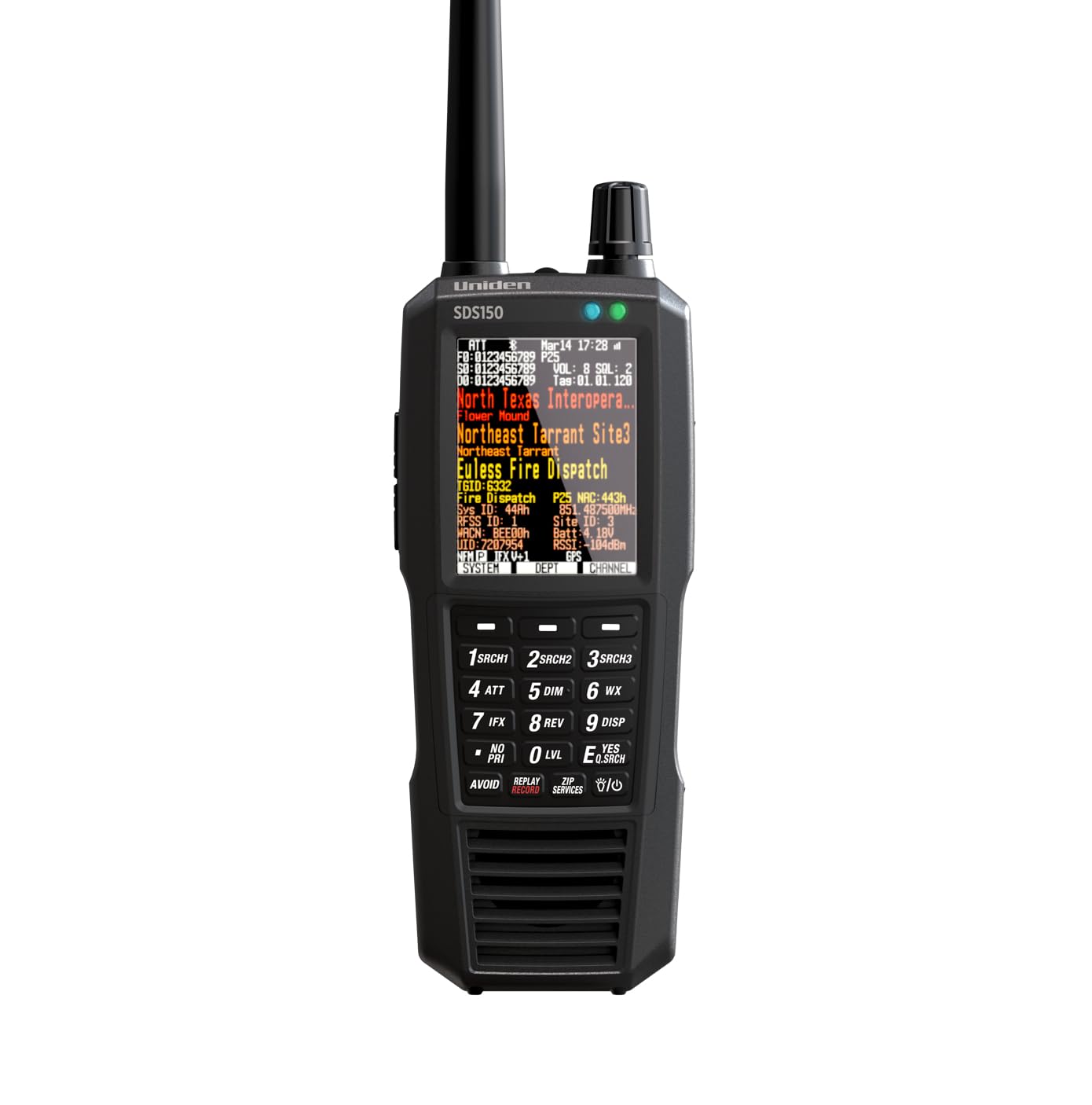
Uniden’s first handheld SDR with built-in GPS and IPX4 water resistance for outdoor use.
The SDS150 is the only handheld here that combines Software Defined Radio (SDR), a built-in GPS receiver, and IPX4 water resistance (meaning it handles splashing rain without damage). It uses True I/Q technology, which — like the SDS200 base station — decodes weak signals and simulcast distortions that leave the BCD996P2 struggling. One owner reported “excellent P25/simulcast decoding; plug-and-play zip code/GPS setup” and reported an impressive ~10-hour battery life. For a non-zip code scanner, the built-in GPS lets the unit self-locate even if you never type a postal code — perfect for traveling between jurisdictions.
The SDS150 supports Bluetooth connectivity, pairing with the U/Aware smartphone app for remote monitoring and notifications. The charge cradle comes with an extra battery charging slot (extra battery sold separately), so you can always have a fresh pack ready. The handheld runs on a rechargeable lithium-ion battery pack, and buyers report the sound quality is “clear, low noise” — a step up from the occasional digital warble on the Whistler TRX-1. The unit also supports AM, NFM (Narrowband FM), FM, WFM (Wideband FM), and FMB (FM Broadcast) radio bands, covering everything from airband to weather.
The main catch is the price — it is the most expensive scanner here, and one experienced buyer felt it was only faster than the older SDS100 but at double the cost. A different reviewer had trouble with the Bluetooth connection to the U/Aware app, calling it “VERY bad.” The SDS150 is also a bit bulkier than expected, and the belt clip does not include a swivel or lanyard from the start. If budget is secondary to having the most advanced portable SDR scanner available, this is it.
Mobile SDR Power
- True I/Q SDR decodes weak-signal and simulcast environments — outperforms all non-SDR handhelds
- Built-in GPS with U/Aware Bluetooth app for remote monitoring
- IPX4 water resistant and ~10-hour battery with charge cradle
Premium Premium
- Highest price in this list — some buyers felt it is overpriced vs the SDS100
- Bluetooth connection to U/Aware app is reportedly unreliable
- Bulky for a handheld; no belt clip swivel or lanyard included
For the serious field monitor: The SDS150 is the most advanced portable SDR scanner you can buy — choose it if you need built-in GPS, rain resistance, and simulcast-crushing performance in a single handheld package.
Pass if: the price feels steep for a color screen and battery pack upgrade — the TRX-1 gives you Phase 2 and DMR for less, or the SDS200 gives you SDR tech in a desktop form for lower cost.
Understanding the Specs
Trunk Tracking & Phase Support
Trunk tracking lets the scanner follow a conversation as it jumps between several radio frequencies in a shared system — like a police dispatch talking to a unit on a different channel. “Phase 2” refers to APCO P25 Phase 2, a newer digital standard that packs two voice conversations into one frequency slot, commonly used by larger city police and fire networks. If your local agencies use Phase 2, a Phase-1-only scanner (like the Whistler WS1065) simply will not hear them. Check on RadioReference.com which phase your area uses before buying.
Simulcast Distortion and SDR
Simulcast happens when a radio system broadcasts the same signal from multiple towers at the same time. Many scanners, including the Uniden BCD996P2, struggle to decode this overlapping signal, producing garbled audio or digital “warble.” Software Defined Radio (SDR) technology, found in the Uniden SDS150 and SDS200, processes the signal in software rather than fixed electronics, giving it the ability to pick out the strongest clean copy. If you live in a city with multiple cell towers for public safety, SDR or True I/Q is the spec that makes the difference between clear speech and silence.
FAQ
Can I program these scanners without a Windows computer?
Do I need a RadioReference subscription?
What does “trunking” mean in simple terms?
Can I listen to encrypted police communications?
What is the difference between Phase 1 and Phase 2 scanners?
Why do some scanners have garbled audio on digital channels?
Can I use these scanners in my car?
What is the difference between Close Call and Spectrum Sweeper?
Is a handheld or base/mobile scanner better for beginners?
How do I update the firmware or database on these scanners?
Final Thoughts: The Verdict
Across the board, the non-zip code digital police scanners winner is the Uniden SDS200 because it solves simulcast distortion (the most common complaint) with True I/Q technology, offers a huge color display, and the free Sentinel software makes manual programming as simple as possible. If you want a Phase 2 handheld with DMR and NXDN included for field work, grab the Whistler TRX-1. And for the most advanced portable SDR scanner with built-in GPS and water resistance, the Uniden SDS150 is the one to get.
How We Picked
We do not accept paid placement. Every pick is matched to a real buyer and a real use-case; we do not hands-on test units.
Sources & Methodology
Specifications: manufacturer listings and product documentation. Review insights: verified customer reviews, as of July 2026. Pricing: not shown on this page (it changes often); check the current price via the retailer link.
As an Amazon Associate, Gadgets Feed earns from qualifying purchases. This does not affect which products we feature.