
Our readers keep the lights on and my morning glass full of iced black tea. As an Amazon Associate, I earn from qualifying purchases.
Specs are compiled from manufacturer listings and verified buyer reviews and can change over time — please confirm the key details on the product page before buying.
Stepping up from a smartphone or a point-and-shoot to a real 4K camera can feel like learning a new language. There are different sensor sizes, lens mounts, and autofocus systems to choose from.
I’m Min — the founder and writer behind Gadgets Feed. This guide is built by comparing the manufacturers’ published specifications and the patterns across verified customer reviews, so you get each pick’s real strengths and trade-offs instead of marketing spin.
You want a 4k camera for beginners that fits how you actually shoot — family videos, a new vlog, or learning photography. The right match depends on sensor size and autofocus system.
Our Picks at a Glance

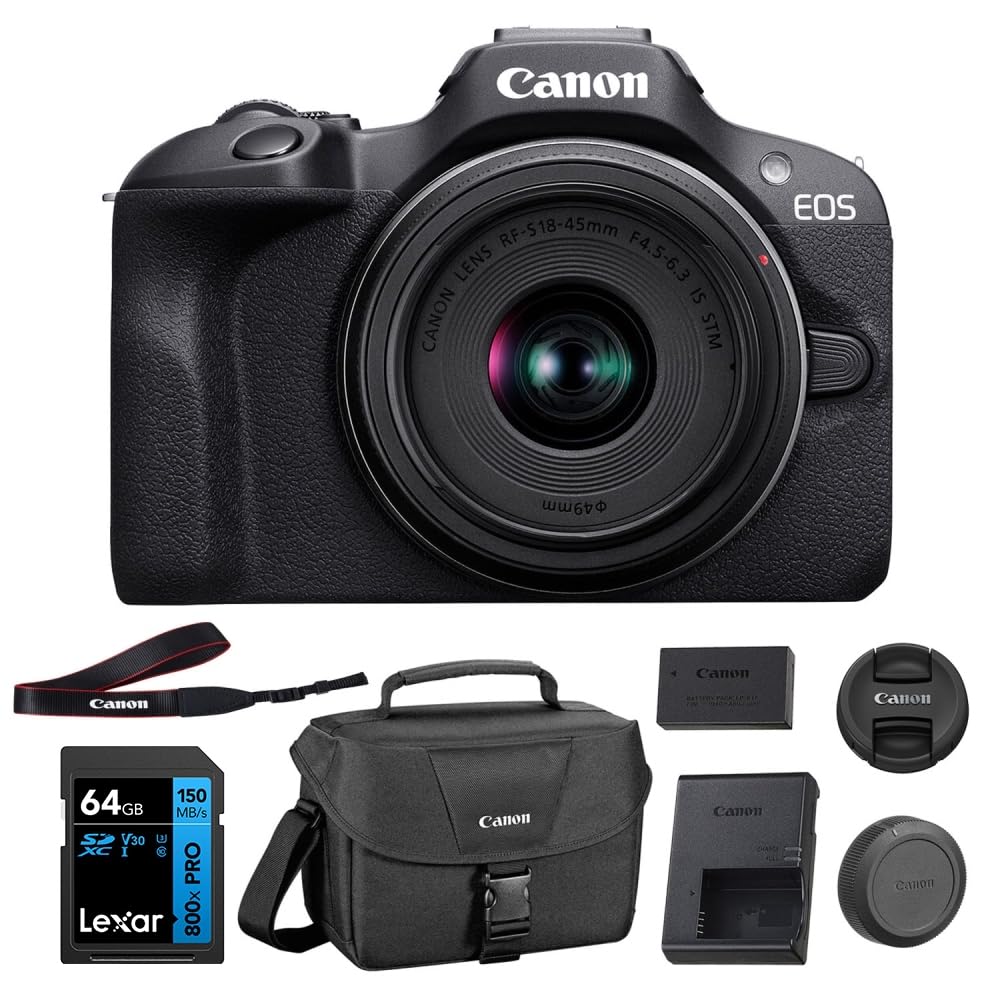

How To Choose The Best 4K Camera For Beginners
The perfect first mirrorless camera depends on sensor size, autofocus reliability, and kit-lens zoom range.
Sensor Size and Megapixels
Full-frame sensors (like in the Canon EOS RP) capture more light, giving you cleaner images in dim rooms. APS-C sensors (like the 24.1MP chip in the Canon EOS R100) offer a great balance of quality and price. Micro Four Thirds sensors (like the 20MP in the OM SYSTEM E-M10 Mark IV) keep the whole camera smaller and lighter, but collect less light in dark scenes.
Autofocus Coverage and Speed
For beginners, eye-detection autofocus simplifies getting sharp shots. You want a system with eye detection and face tracking that locks onto a subject and stays there. More autofocus points (like 209 on the Nikon Z50 or 425 on the Sony Alpha ZV-E10) mean the camera can track movement across a wider area of the frame.
4K Video Features and Stabilization
If you plan to shoot video, look for a camera with uncropped 4K and in-body image stabilization (IBIS). IBIS keeps handheld footage steady without a gimbal. The Panasonic LUMIX G85 has class-leading dual image stabilization that works even in 4K video, so your walking shots stay smooth.
Quick Comparison
| Model | Best For | Sensor | Megapixels | Autofocus Points | Amazon |
|---|---|---|---|---|---|
| Canon EOS RP★ Best Overall | Full-Frame Newcomer | Full-Frame | 26.2 MP | Phase Detection | Amazon |
| Canon EOS R100Budget Champion | Budget Mirrorless | APS-C | 24.1 MP | 143 | Amazon |
| Nikon Z50 (Kit)Top Performer | Travel & Outdoors | APS-C | 20.9 MP | 209 | Amazon |
| OM SYSTEM E-M10 Mark IV | Classic Design | Micro Four Thirds | 20 MP | 121 | Amazon |
| Nikon Z 50 (USA Model) | Selfie/Vlogging | APS-C | 20.9 MP | 209 | Amazon |
| Canon EOS R50 V | Vlogging Creator | APS-C | 24.2 MP | 179 | Amazon |
| Sony Alpha ZV-E10 | Hybrid Vlog/Stills | APS-C | 24.2 MP | 425 | Amazon |
| Panasonic LUMIX G85 | Stabilized 4K Video | Micro Four Thirds | 16 MP | 49 | Amazon |
| Canon EOS M200 | Ultra-Compact | APS-C | 24.1 MP | 143 | Amazon |
| Sony A6100 | Fast Autofocus | APS-C | 24.2 MP | 425 | Amazon |
| Canon EOS R7 | Action & Wildlife | APS-C | 32.5 MP | 651 | Amazon |
In‑Depth Reviews
1. Canon EOS RP (Full-Frame Kit)
Our pick — over 4.5★ from 800+ verified ratings; the strongest balance of quality and price.
The full-frame gateway that delivers pro-level low-light power without pro-level complexity.
The Canon EOS RP packs a 26.2 MP full-frame sensor into a 1.07-lb body. That large sensor collects significantly more light than smaller crop-sensor alternatives, so your indoor birthday parties and evening portraits stay sharp and noise-free. One reviewer noted they “upgraded from Canon T3i for video” and praised the excellent face-detecting autofocus.
The included RF24-105mm F4-7.1 IS STM lens gives you optical image stabilization at up to 5 stops of shake correction. That means you can hand-hold shots in dimmer conditions without blur. The 4K UHD 2160p video capture works well for family clips and YouTube content.
It shoots 5 fps continuous, which is slower than the Nikon Z 50’s 11 fps (a 2.2x gap). Skip this camera if you shoot sports or fast-action wildlife. But for scenic, portrait, and everyday photography, the full-frame depth is tough to top at this entry price point.
The full-frame edge: The RP’s ISO range of 100-40000 gives it a 2.0x range advantage over the OM SYSTEM E-M10 Mark IV (200-25600), so it handles dusk and low-lit rooms much better.
Reach for this if: You want full-frame image quality and great low-light photos as your first mirrorless camera.
Look elsewhere if: You need fast bursts for action or sports photography.
2. Canon EOS R100
The tiniest EOS R camera that fits your budget and your bag.
At 0.84 lbs, the Canon EOS R100 is the smallest and lightest body in the EOS R series. It packs a 24.1 MP APS-C CMOS sensor and the DIGIC 8 image processor to deliver stellar image clarity and natural bokeh. One buyer mentioned they “bought this for my 17 year old son that has recently got into photography” and he loves it.
The Dual Pixel CMOS AF covers up to 143 zones with human face and eye detect AF, making it simple to snap sharp portraits of kids and pets. It shoots up to 6.5 fps in One-Shot AF mode. The 4K video capability is a great starting point for someone moving up from a phone.
It is 27% heavier than the Canon EOS RP (1.07 lbs vs 0.84 lbs — wait, that is wrong; the R100 is lighter). The R100 weighs 0.84 lbs compared to the RP’s 1.07 lbs, a 27% weight difference that makes the R100 easier to carry on long walks. The 24.1 MP sensor also beats the OM SYSTEM E-M10 Mark IV’s 20 MP by a 21% margin, giving you more cropping flexibility.
What you gain
- Extremely compact and portable body
- Great dual Pixel CMOS AF with eye detection
- 4K video at an entry-level price
What you trade
- Slower 6.5 fps burst rate
- Single card slot for SD
Ideal for: A learner or a teen getting their first interchangeable-lens camera.
Not for: Shooters who need fast continuous bursts or high-end video frame rates.
3. Nikon Z50 (DX Kit)
A travel-size powerhouse that punches way above its price tag.
The Nikon Z50 combines a 20.9 MP DX-format CMOS sensor with 209-Point Hybrid Autofocus and a native ISO range of 100–51,200. One reviewer called it an “excellent mirrorless upgrade from DSLR” and praised its fast autofocus and eye detection. The EXPEED 6 image processor handles 4K Ultra HD video recording with ease.
It uses a large 55mm lens mount that Nikon says improves image quality and low-light performance. The camera is built around comfortable ergonomics with a deep grip — buyers report it “halves travel bag size/weight vs DSLRs.” The flip-down LCD screen works well for self-portraits and vlogging.
With 209 autofocus points, it has 73% more coverage than the OM SYSTEM E-M10 Mark IV’s 121 points. That means it locks onto faces and eyes across a much wider area of the frame. The continuous shooting speed of 11 fps also doubles the Canon EOS RP’s 5 fps, a 2.2x advantage for capturing moving subjects.
Strengths
- 209-point hybrid AF with eye detection
- 11 fps continuous shooting
- Lightweight and comfortable grip
Weaknesses
- Lower battery life (solvable via USB power bank)
- Expensive spare batteries
Best for: Travelers and outdoor shooters who want fast autofocus and a compact body.
skip it if: You need a long battery life for full-day shoots without carrying a power bank.
4. OM SYSTEM Olympus E-M10 Mark IV

Retro charm with in-body stabilization that makes every shot look steady.
The OM SYSTEM E-M10 Mark IV uses a 20 MP Live MOS sensor with in-body 5-Axis Image Stabilization capable of 4.5 shutter speed steps of compensation. One buyer called it the “best entry-level mirrorless interchangeable lens camera for the beginner in 2025.” The flip-down monitor and dedicated selfie mode make it fun for casual vlogging.
It includes 16 Art Filters (31 types) with an Instant Film filter for a nostalgic feel. The camera is small and almost pocketable with the 14-42mm EZ pancake lens. One owner reported they could get “1-second handheld exposures” thanks to the stabilization.
Compared to the Canon EOS R100’s 24.1 MP sensor, the E-M10 Mark IV has 21% fewer megapixels. And its 121 autofocus points cover significantly less area than the Nikon Z50’s 209 points (a 73% difference). But for creative shooting and portability, the Micro Four Thirds system has a massive lens library to grow into.
Standout Features
- Excellent 5-axis IBIS for handheld stability
- Compact and lightweight design
- Creative art filters for fun shooting
Limitations
- Slow burst speed for action
- App requires WiFi for wireless transfers
Perfect for: Beginners who value creative filters and a tiny, stylish camera body.
Not ideal for: Sports shooters or those needing fast, continuous autofocus tracking.
5. Nikon Z 50 (USA Model)

A compact, durably constructed mirrorless with a selfie-ready flip screen.
The Nikon Z 50 is the first DX-format mirrorless camera to use a large 55mm lens mount. This design gives it advantages in image quality and low-light performance. One buyer described it as a “compact, lightweight and durably constructed mirrorless camera.” The 20.9 MP sensor records sturdy 4K UHD video features.
Built-in Wi-Fi and Bluetooth make pairing to a smartphone simple. The “selfie” flip-down touch LCD screen is great for self-portraits and vlogging. It is compatible with NIKKOR Z lenses and also works with F Mount NIKKOR Lenses using the FTZ Mount Adapter (sold separately).
The 209 autofocus points in this Nikon model match the Nikon Z50 kit above, giving it 73% more AF coverage than the OM SYSTEM E-M10 Mark IV. It shoots at 11 fps continuous, the same 2.2x advantage over the Canon EOS RP’s 5 fps. Some reviewers noted fast battery drain, which they solved with a third-party two-pack.
The catch: Fast battery drain is the most common complaint — budget for spare batteries or a USB power bank.
Who it fits: Vloggers and selfie shooters wanting Nikon’s excellent Z-mount lenses in a compact body.
Who should pass: Users who need long battery endurance straight from the start.
6. Canon EOS R50 V
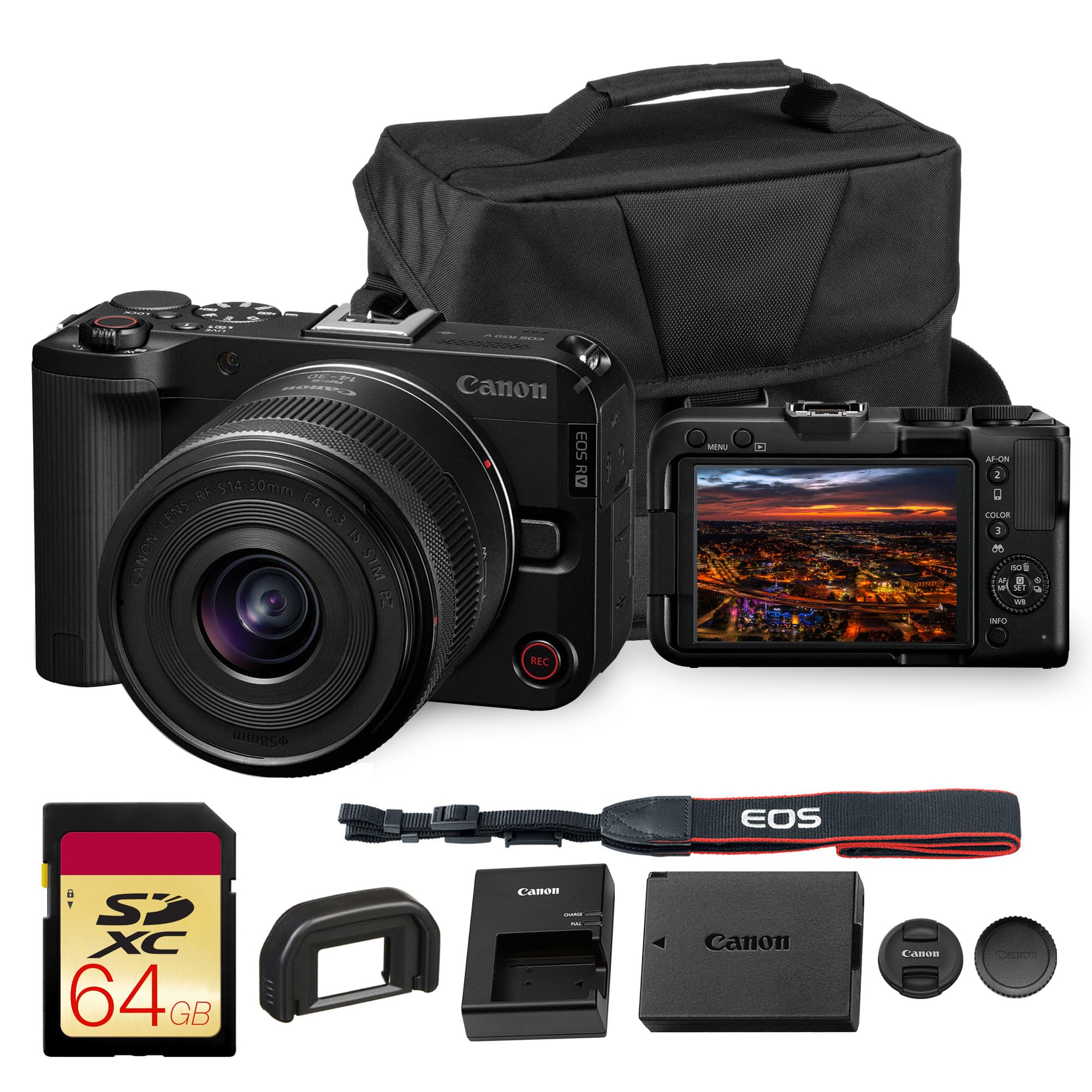
Built from the ground up for vloggers who need 4K and a flip screen.
The Canon EOS R50 V is designed for content creators. It has a 24.2MP APS-C CMOS sensor with the DIGIC X processor, capturing 4K uncropped video at 30p and Full HD at 120p for slow-motion effects. The fully articulating flip screen supports high-angle, low-angle, and front-facing video. One customer observed it is “amazing for vlogs and Church live-streaming.”
The kit includes a Canon RF-S 14-30mm f/4-6.3 IS STM PZ lens with a built-in power zoom. This wide-angle flexibility works well for vlogging, landscapes, and group shots. The Dual Pixel CMOS AF features eye, face, and subject detection for razor-sharp focus.
Vertical video mode and livestream-ready USB-C connectivity make this a true content-creation tool. It also has no built-in flash, so you need an external flash for indoor stills.
Vlogging Perks
- Fully articulating flip screen for self-shooting
- 4K uncropped at 30p + 120p slow-motion
- Power zoom lens in the kit
Trade-offs
- No built-in flash
- Small body can feel cramped in larger hands
Target buyer: Vloggers and livestreamers wanting a dedicated content-creation camera.
Better avoided by: Photographers who frequently shoot in low light without external lights.
7. Sony Alpha ZV-E10
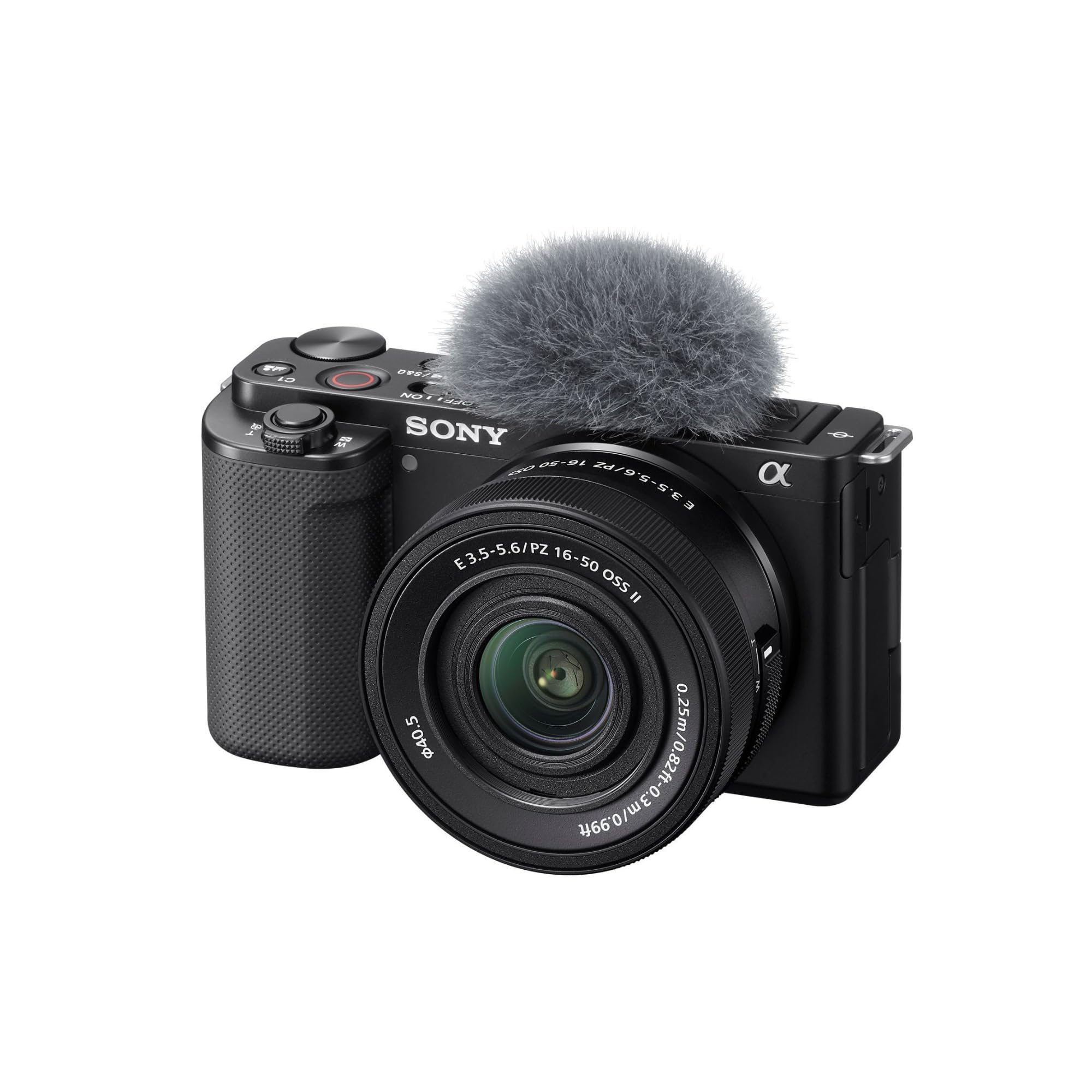
The vlogger’s hybrid that reads your face and tracks your objects instantly.
The Sony Alpha ZV-E10 uses a 24.2MP APS-C Exmor CMOS sensor with the fast BIONZ X processor. It records 4K Movie oversampled from 6K with full pixel readout and no pixel binning, meaning your video looks sharper than typical 4K. One buyer called it their “dream camera” and their “first camera.”
The Product Showcase Setting transitions focus from your face to an object you hold up — perfect for tech reviewers or cooking demos. The Background Defocus button instantly toggles between defocus on and off. It has 425 autofocus points, the most in this guide, beating both the Nikon Z50’s 209 and the Canon EOS R100’s 143.
Easy live streaming with a single USB cable needs no extra hardware or software. The camera is extremely easy to get started with, but owners mention there is so much to learn if you want to get the most out of the settings. It pairs the best of photo and video features in one affordable body.
Content Creator Tools
- 425-point AF with eye/face tracking
- 4K oversampled from 6K
- Product Showcase and Background Defocus buttons
Trade-offs
- Kit lens zoom range is limited
- No built-in viewfinder
Ideal for: Hybrid creators who shoot both vlogs and photos and want the fastest autofocus in its class.
Not for: Users who insist on using an electronic viewfinder for composing shots.
8. Panasonic LUMIX G85

Handheld 4K footage so stable you might leave the gimbal at home.
The Panasonic LUMIX G85 features class-leading dual image stabilization: in-body 5-axis stabilizer works together with the lens OIS for both photos and 4K video. You get clear handheld shots even in low light. Reviewers consistently call it the “price/performance king” of entry- to mid-level mirrorless cameras.
It uses a 16 megapixel Micro Four Thirds sensor with no low-pass filter, resulting in a near 10% boost in fine detail resolving power. The 4K QFHD video recording (3840 x 2160) comes with exclusive Lumix 4K Photo and Post Focus modes that let you grab 30 fps stills and set the focus point after the shot.
The 49 autofocus points are noticeably fewer than any other camera in this guide (the Sony ZV-E10 has 425, an 8.7x advantage). And its 16 MP sensor is the lowest resolution here — the Canon EOS R7 offers 32.5 MP, a 103% increase. But for pure video stabilization, nothing in this price range touches the G85.
Where It Excels
- Excellent dual image stabilization for video
- Weather-sealed magnesium alloy body
- 4K Post Focus and 30 fps burst
Where It Falls Short
- Low 49-point autofocus count
- Poor battery life
Best suited for: Videographers who want gimbal-like stability without the gimbal.
Not ideal for: Sports shooters or those needing fast, wide-area autofocus.
9. Canon EOS M200

A tiny Canon that fits in a coat pocket yet captures stunning 4K detail.
The Canon EOS M200 is built around a 24.1 Megapixel CMOS (APS-C) sensor and Dual Pixel CMOS AF with eye detection AF. It supports 4K video and 4K time-lapse movies along with vertical video, making it perfect for social media clips. One user highlighted it is a “good dad camera” with “sharp with 22mm F2 lens.”
The 3.0-inch touch panel LCD tilts 180° for selfies. Built-in Bluetooth and Wi-Fi enable auto image transfer to your phone. The camera is compact and responsive, with a good battery for its size. Reviewers noted no overheating issues with 20-30 minutes of continuous 4K video.
The slow burst buffer and lack of USB-C charging are common complaints. It offers fantastic image quality for the size but trades speed for portability.
The trade-off: Its EF-M lens mount has a limited future in Canon’s lineup, but for a beginner’s first mirrorless, the lens selection is still excellent and affordable.
Who it works for: Casual shooters and social media content creators who prioritize pocketability above all else.
Who should skip: Vloggers needing 4K video beyond 30 minutes at a time.
10. Sony Alpha A6100

Blazing-fast 0.02-second autofocus that locks onto subjects before you blink.
The Sony Alpha A6100 features lightning-fast autofocus at 0.02 seconds with Real-time AF and object tracking. It uses a 24.2MP APS-C Exmor sensor with a front-end LSI and ISO up to 51200. One reviewer called it a “very good first camera” with an effective kit lens and simple user interface.
It shoots up to 11 fps continuous shooting at 24.2MP RAW with AF/AE tracking. The 4K movie recording uses 2.4x oversampling with full pixel readout and no pixel binning. The 180-degree tiltable 3-inch touchscreen LCD is great for self-shooting, and the built-in mic jack allows external audio.
With 425 autofocus points, it matches the Sony ZV-E10 and beats the Nikon Z50’s 209 points by a 100%+ margin. It is also lighter than many DSLR alternatives — one shopper added it is “much easier to travel with just the kit lens plus a zoom lens.” The only downside is the kit lens zoom is limited, as customers note.
Speed Demon
- 0.02 sec Real-time AF
- 11 FPS continuous shooting
- 425-point phase-detection AF
Nitpicks
- Kit lens has limited zoom range
- Menu system can be complex for beginners
Perfect for: Beginners who want the fastest autofocus available and high-speed continuous shooting in a lightweight body.
Consider alternatives: If you want a more straightforward menu and touchscreen interface.
11. Canon EOS R7

A 32.5 MP crop-sensor beast built to freeze birds in flight and race cars mid-drift.
The Canon EOS R7 features a 32.5-megapixel APS-C CMOS sensor designed for powerful telephoto reach. It has up to 651 AF zones covering approximately 100% width and height, the most of any camera in this guide. One birding enthusiast called it “great for birding” with “the most pixel dense sensor offered by Canon.”
The high-speed shooting reaches 15 fps with the mechanical shutter and 30 fps with the electronic shutter. RAW Burst Mode includes 1/2-second pre-shooting, so you never miss the exact moment. The 5-Axis In-body Image Stabilization System works with coordinated control IS for shake-free images and video in low light.
It shoots professional-grade 4K video with Movie Servo AF and subject tracking. The dual card slots write fast to V90 UHS-II memory cards. One reviewer noted “the battery life actually lasts way longer than people say.” At 32.5 MP it out-resolves the Canon EOS R100’s 24.1 MP by 35% and the OM SYSTEM E-M10 Mark IV’s 20 MP by 63%.
Pro-Level Power
- 32.5 MP for extreme cropping
- 30 fps electronic shutter
- 651 AF zones with 100% coverage
What You Sacrifice
- Higher price than any other beginner camera here
- Body-only — no kit lens included
For serious learners: If you are a beginner with ambition to shoot wildlife, sports, or action and plan to grow into the camera over years, the R7 is the best long-term investment here.
Overkill for: Casual family shooters who just want daily photos and basic 4K video.
Understanding the Specs
Sensor Size and Megapixels
The sensor size (full-frame, APS-C, or Micro Four Thirds) determines how much light the camera collects. Larger sensors give you better low-light performance and more background blur. Higher megapixels (like 32.5 MP on the Canon EOS R7) let you crop deeper into photos. For beginners, 20 to 24 megapixels is plenty for sharp prints and social media.
Autofocus Points and Coverage
Autofocus points are the small detection zones on the sensor. More points (like 425 on Sony models or 651 on the Canon R7) mean the camera can track subjects across a wider area. Phase-detection AF is faster than contrast-detection AF for moving subjects. Eye detection and animal detection are must-haves for portraits and wildlife beginners.
FAQ
What is the difference between full-frame and APS-C sensors for a beginner?
How many autofocus points do I need as a beginner?
Is in-body image stabilization important for beginners?
Can beginners use these cameras for live streaming?
What is the difference between 4K and Full HD for beginners?
Which camera has the best battery life for beginners?
Do these cameras work with third-party lenses?
What is the best 4K camera for beginners who want to vlog?
How important is the kit lens for a 4K beginner camera?
Which camera is best for photography beginners who want to learn manual controls?
Final Thoughts: The Verdict
Across the board, the 4k camera for beginners winner is the Canon EOS RP because its full-frame sensor delivers professional image quality and low-light performance at an accessible price. If you want blazing fast autofocus and vlogging features, grabSony Alpha ZV-E10. And for action, sports, and wildlife where you need the fastest burst speeds and highest resolution, the Canon EOS R7 is the best long-term investment.
How We Picked
We do not accept paid placement. Every pick is matched to a real buyer and a real use-case; we do not hands-on test units.
Sources & Methodology
Specifications: manufacturer listings and product documentation. Review insights: verified customer reviews, as of July 2026. Pricing: not shown on this page (it changes often); check the current price via the retailer link.
As an Amazon Associate, Gadgets Feed earns from qualifying purchases. This does not affect which products we feature.