
Our readers keep the lights on and my morning glass full of iced black tea. As an Amazon Associate, I earn from qualifying purchases.
Specs are compiled from manufacturer listings and verified buyer reviews and can change over time — please confirm the key details on the product page before buying.
Getting a factory-like paint job on a car depends on one thing: the sprayer. Rollers and brushes leave texture, and cheap handheld sprayers just do not push automotive paint hard enough. Airless technology forces paint through a tiny tip at extreme pressure, breaking it into a mist that lays down flat and smooth on metal body panels.
I’m Min — the founder and writer behind Gadgets Feed. This guide is built by comparing the manufacturers’ published specifications and the patterns across verified customer reviews, so you get each pick’s real strengths and trade-offs instead of marketing spin.
Restoring a project car or repainting a daily driver? These five sprayers cover every shop size and budget. This is the guide for the best airless paint sprayer for cars you can buy today.
Our Picks at a Glance

How To Choose The Best Airless Paint Sprayer For Cars
Airless sprayers for automotive work are different from the ones you use for house siding. Car paints are thicker and more corrosive, so you need a machine that can handle high pressure and is built with the right materials.
Maximum Pressure (PSI)
The pump’s maximum pressure, measured in pounds per square inch (PSI), determines how finely the paint is atomized into a mist. You want at least 3000 PSI for automotive-grade enamels and urethanes. Lower pressure leaves an uneven “orange peel” texture that requires a lot of wet sanding to fix.
Pump Material
The pump is the heart of the sprayer. Stainless steel pistons and cylinders resist the solvents in automotive paint. Plastic or rubber pumps can swell or degrade when used with harsh thinners, leading to early failure. If you plan to spray urethane or epoxy primers, a stainless steel pump is non-negotiable.
Hose Length
A longer hose lets you walk around the car without dragging the whole machine. A 50-foot hose gives you full reach around a pickup truck or SUV. A 16-foot hose forces you to move the pump around the car, which risks tipping the paint bucket over. For car work, 50 feet is the balance.
Quick Comparison
In‑Depth Reviews
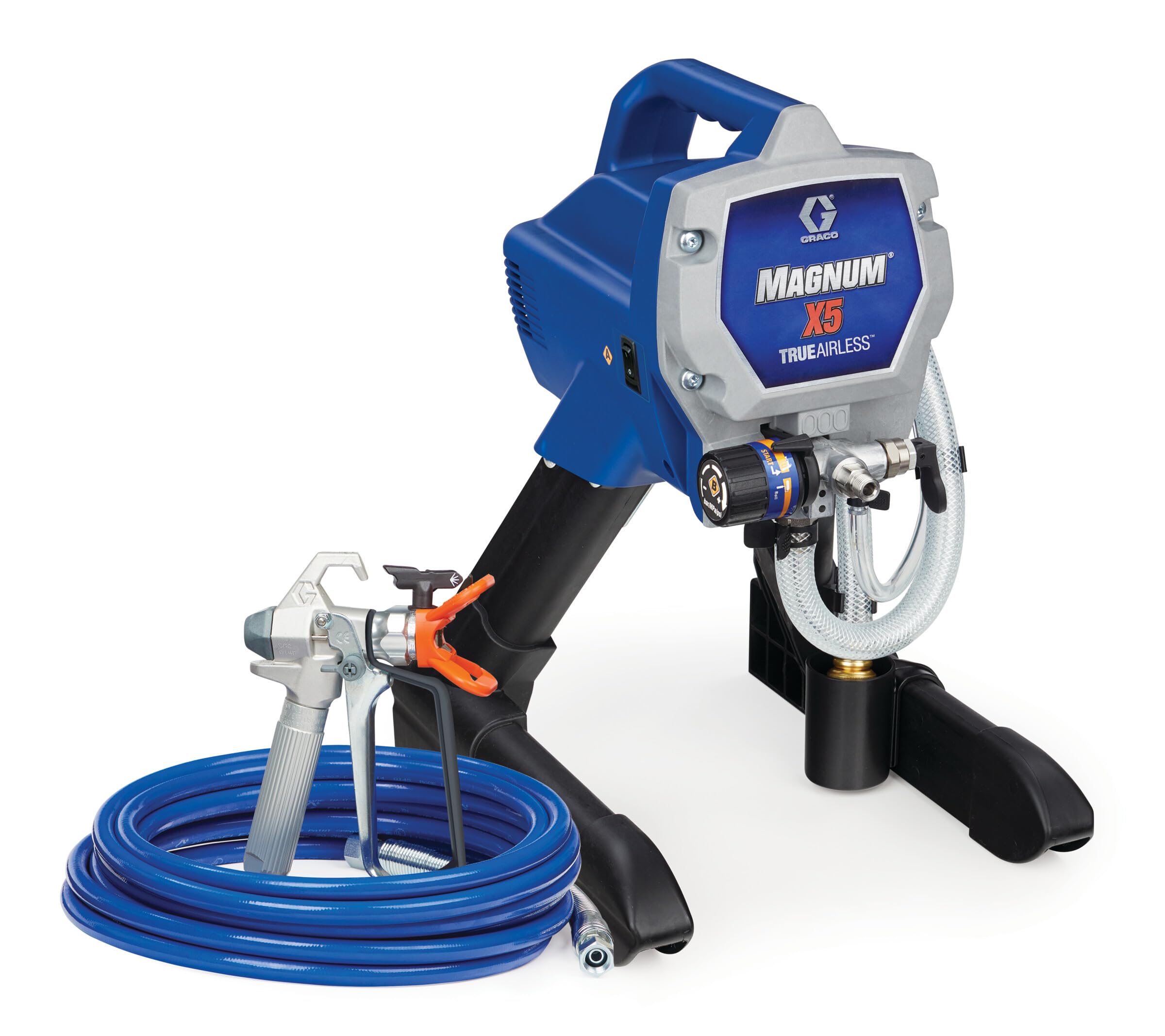
1. Graco Magnum X5 3000 psi Steel Airless Sprayer
Our pick — over 4.5★ from 6,500+ verified ratings; the strongest balance of quality and price.
The same 3000 PSI as the pro models, but at 15 pounds it is easy to carry.
This unit delivers 3000 PSI from a stainless steel pump, which is the same pressure rating as the much heavier Graco ProX17 cart model that weighs 38 pounds. The fully adjustable pressure control lets you dial down the flow for clear coat or crank it up for high-build primer. The flexible suction tube pulls paint straight from a 1-gallon or 5-gallon bucket so you can spray a quart of automotive enamel without transferring it to a smaller container.
Owners mention using the X5 to paint basement joists with black dryfall paint, and they found two coats gave even coverage. For automotive work, the lighter gun reduces hand fatigue during long painting sessions. The unit supports up to 75 feet of paint hose, though the included hose is shorter. One reviewer noted that the all-plastic construction raises durability concerns compared to a steel-frame Graco, but for the price point that is a reasonable trade-off.
The cleaning process takes longer than brushing or rolling, as one reviewer shared, but that is true of every airless sprayer. At 15 pounds, this is the lightest machine in the comparison by a 2.5x margin versus the 38-pound ProX17, which makes it easy to carry around the garage during a multi-panel job.
Smart money: Perfect for the DIY car enthusiast who wants pro results without a pro budget — the 3000 PSI rating handles urethane, the weight keeps you mobile.
Plastic pump housing: The lighter construction means the pump is not as armored as the steel-framed models, so be careful moving it around a shop floor.
Best for side jobs: Grab the Magnum X5 if you are restoring a weekend project car and want to spray a whole-body paint job without spending four figures.
Not for continuous pro use: If you paint cars every day, the all-plastic chassis may not survive years of shop abuse compared to the steel-frame Graco models.
2. Graco 17C310 390 PC Electric Airless Sprayer
Its 3300 PSI stainless steel pump atomizes thick urethane better than anything else here.
You get 3300 PSI (pounds per square inch) from the stainless steel Endurance Chromex Piston Pump. That extra 10% over the 3000 PSI models means thick automotive primer pushes through a tiny tip without sputtering. The result is a controlled, even mist that lays down flat on a hood or door panel with less orange peel. Buyers who have used Graco equipment for forty years report zero issues with this machine.
Cleaning is straightforward because of the Easy Out Pump Filter. The filter catches paint clumps before they reach the tip. You pull the filter out from the outside for a quick rinse — no disassembly. The ProConnect system lets you swap the entire pump in minutes without tools if the pump ever wears out.
The 50-foot BlueMax II hose lets you circle a full-size pickup without moving the pump. That is three times the length of the 16.4-foot hose on the budget 1600W sprayer. Buyers report that the unit arrived with a 515 spray tip instead of the advertised 310 tip, so check the box before you start spraying primer. Other than that, this is a ready-to-run pro setup for any car painting job.
Ready for the booth: Ideal for shop owners and restorers who spray urethane and enamel daily — the pump material and pressure are built for solvent-based paint.
One box detail: Verify the included spray tip matches your need, as a few units shipped with the wrong tip. It is an easy swap but worth a glance before first use.
Shop favorite: Buy this if you spray cars as a business or serious hobby — the durability and pressure justify the premium.
Overkill for: Anyone who only paints a single car every few years could save money with a lighter, lower-pressure option.
3. Graco Magnum ProX17 Cart Airless 3000 PSI Paint Sprayer 17G178

An entry-level sprayer for small parts, but the reviews warn of rust and leaks right from the start.
This is the most affordable option here, but it comes with trade-offs. The 16.4-foot hose forces you to reposition the machine multiple times during a full paint job. The 2.5-liter tank works for a door panel or bumper but requires frequent refills on larger sections. The all-copper wire motor spins at 850 RPM, and the unit uses high-pressure airless technology to atomize paint without compressed air.
Reviewers point out significant problems. One reviewer found rust in the pump when the unit was brand new, and the tip fell off during a test run. Another buyer described the machine as “extremely loud, poorly built” and said it “leaked paint out of the bottom of machine and at hose connection.” A separate buyer had the power switch arrive broken, with the pins missing. The seller has a product page video on how to fix a loosened switch after shipping, which suggests a known handling issue.
With only 20 ratings and a 3.6-star average, this is a high-risk buy. If you are on a strict budget and painting a single small project like a motorcycle fender, it may get the job done. But for a full-car paint job where reliability matters, the reviews suggest you should keep your expectations very low.
Cheap entry point: The price is the lowest among these five machines, and a few shoppers say it works acceptably for small jobs after they fixed the switch.
QC lottery: Rust in a brand-new pump and leaking from multiple points are real issues reported in the reviews. Expect to inspect and possibly return the unit.
Only for risk-tolerant DIYers: Buy this if you have a very small project and the budget cannot stretch to any Graco model, and you are willing to check for defects immediately.
Avoid for any real car paint job: The short hose, plastic internal parts, and the risk of leaks make it a poor choice for spraying a whole car. Save up for the X5.
Understanding the Specs
PSI — Pounds per Square Inch
This is the pressure the pump generates to force paint through a tiny opening in the spray tip. Higher pressure breaks the paint into finer droplets, which gives you a smoother finish with less orange peel texture. For automotive urethane and enamel paints, 3000 PSI is the minimum you want. The Graco 390 PC pushes 3300 PSI, giving it a 10% advantage over the 3000 PSI models.
Hose Length
The hose delivers paint from the pump to your gun. A longer hose lets you walk farther around the vehicle without moving the pump. A 50-foot hose gives you full access around a large car or small truck. A 16-foot hose forces you to relocate the pump mid-project, which can tip a paint bucket and waste material. For car painting, 50 feet is ideal.
FAQ
Can I use a Graco Magnum X5 to paint a car body?
What is the difference between an airless sprayer and an HVLP sprayer for cars?
Will a 1600W budget sprayer ruin my car paint job?
How long does a Graco pump last on automotive paint?
Do I need a 50-foot hose for painting a car?
What spray tip should I use for automotive paint with an airless sprayer?
Is the Graco Ultra 395 PC worth the premium price?
Can I spray urethane paint with a plastic pump sprayer?
Final Thoughts: The Verdict
For most people, the best airless paint sprayer for cars winner is the Graco 390 PC because its 3300 PSI stainless steel pump and 50-foot hose give pro-level atomization and reach in a portable package. If you want the best value for a DIY project car, grab the Graco Magnum X5 — it delivers the same 3000 PSI as heavier models at 15 pounds. And for anyone on a tight budget painting small parts, the standout is the low entry price of the 1600W High-Pressure Sprayer, provided you check the unit for defects immediately upon arrival.
How We Picked
We do not accept paid placement. Every pick is matched to a real buyer and a real use-case; we do not hands-on test units.
Sources & Methodology
Specifications: manufacturer listings and product documentation. Review insights: verified customer reviews, as of July 2026. Pricing: not shown on this page (it changes often); check the current price via the retailer link.
As an Amazon Associate, Gadgets Feed earns from qualifying purchases. This does not affect which products we feature.