
Our readers keep the lights on and my morning glass full of iced black tea. As an Amazon Associate, I earn from qualifying purchases.
Specs are compiled from manufacturer listings and verified buyer reviews and can change over time — please confirm the key details on the product page before buying.
Using a standard household bulb for video or product shots is the fastest way to get skin tones and textures wrong. A camera light bulb is different — it gives you consistent color and brightness your camera’s sensor can trust, so you skip the long color-fix sessions in post. The Neewer E26 24W LED wins overall because it shoots video at 1/16000 shutter speed with zero flicker and a color accuracy rating (CRI) of 93+. For adjustable color via remote, the EMART 85W LED is a flexible alternative. And for massive brightness in a large softbox, the 2 x 85W CFL pair puts out 6000 lumens.
I’m Min — the founder and writer behind Gadgets Feed. This guide is built by comparing the manufacturers’ published specifications and the patterns across verified customer reviews, so you get each pick’s real strengths and trade-offs instead of marketing spin.
The six bulbs reviewed here cover everything from high-lumen output for large softboxes to flicker-free LEDs for high-speed video. This is the best camera light bulb guide for anyone who wants studio-grade light without a studio budget.
Our Picks at a Glance


How To Choose The Best Camera Light Bulb
The right bulb depends on three things: the kind of work you shoot, the socket in your light modifier, and how much control you need over the color of the light.
Color Rendering Index (CRI) — the number that defines accuracy
CRI (Color Rendering Index) measures how faithfully a light source shows colors compared to natural daylight on a 0–100 scale. A CRI of 90 or higher means skin looks natural and fabrics read true — so you do not have to fix tint during editing. Bulbs with a CRI of 80 work for basic product shots but miss subtle tones in makeup, food, or artwork. For portraits and video, aim for CRI 90+.
Color temperature — matching the mood you want
Measured in Kelvin (K), a 5500K bulb gives you daylight-balanced light — the standard for most studio and video work. A lower number like 3200K is warmer (tungsten-style) and a higher number like 6500K is cooler. Some bulbs let you switch between them, which is handy if you mix natural and artificial light.
Flicker — the silent video killer
Many cheap bulbs flicker at a rate your eye can’t see but your camera catches as a rolling band across the frame. A bulb that is advertised as flicker-free or no-flicker uses a better power circuit that keeps the light steady even at shutter speeds above 1/1000th of a second.
Wattage and brightness — what the numbers actually mean
Camera bulbs often list an equivalency (85W equals 800W incandescent) so you can guess brightness without doing math. But the real number to look at is lumens — that tells you how much light actually comes out. Around 2000 lumens is enough for a single small softbox; 6000 lumens fills a large one or lights a whole subject.
Quick Comparison
| Model | Best For | Brightness (Lumens) | CRI | Lifespan Hours | Amazon |
|---|---|---|---|---|---|
| EMART 2x 45W CFL★ Best Overall | Budget entry into studio lighting | 2500 | 80 | 8000 | Amazon |
| Neewer E26 24W LEDTop Performer | Flicker-free video & high CRI accuracy | 2160 | 93+ | 15000 | Amazon |
| EMART 2x 85W LED (Remote) | Adjustable color temp & remote control | — | 80 | 8000+ | Amazon |
| 175W Tricolor LED | Highest lumen output & versatile modes | — | 70 | 20000+ | Amazon |
| 2 x 85W CFL Daylight | Maximum brightness for large softboxes | 6000 | 80 | 8000 | Amazon |
| Skytex 2x 135W CFL | Long-run daylight for umbrellas | — | — | 20000 | Amazon |
In‑Depth Reviews
1. EMART Full Spectrum Light Bulb, 2 x 45W 5500K Spiral CFL Daylight
Our pick — over 4.5★ from 950+ verified ratings; the strongest balance of quality and price.
An entry-level daylight pair for under the price of a single fast-food meal.
If you are just setting up your first softbox or umbrella and do not care about fancy features, this EMART two-pack is the cheapest way to get a daylight-balanced (5500K) light source. One buyer summed it up: “Not as bright as my other studio light bulb, but it works well in my soft box for photography.”
The 8000-hour lifespan is standard for a CFL, and the 6.7-inch length and 2.3-inch width are compact enough to fit in smaller E27 fixtures. If you need just enough daylight to get started, this is the set that gets you there with no fuss.
Why it’s a good start
- Very affordable entry into daylight-balanced lighting (5500K)
- Compact size (6.7 inches) fits most common E26/E27 fixtures
- No noise and no flicker for basic still photography
Where it falls short
- 2500 lumens is significantly lower than 85W CFL (6000 lumens)
- CRI 80 is good for basic work, not for high-end color accuracy
Perfect for beginners: The simplest way to get a daylight-balanced modifier without spending much.
it’s not for you if: You need to light big sets — this bulb works best in pairs or as a single fill light.
2. Neewer E26 24W LED Light Bulbs, 2 Packs
The bulb that passes the 1/16000 shutter-speed test with zero banding.
If you shoot video, this is the bulb you want. The Neewer delivers 2160 lumens of 5700K cool daylight with a color rendering index (CRI, a scale from 0–100 that shows how accurate colors look) of 93+ — the highest CRI in this lineup, so skin tones and product colors come out accurate without fighting white balance. One verified reviewer reported testing it at the camera’s highest shutter speed of 1/16000 and saw no banding or flickering, which is rare even among more expensive LED bulbs. The 15000-hour lifespan is also a huge leap over the 8000-hour bulbs in the same price bracket — that is 88% more runtime than the EMART CFL options.
There are trade-offs. The 24W power is non-dimmable and on the lower side compared to the 85W and 135W CFL bulbs here. If you need to light a large softbox or shoot on a 240V system, a higher-wattage CFL may match you better. But for tight studio work, talking-head video, or small product tables where color accuracy matters most, the Neewer leads the pack for its quiet, consistent performance.
Unlike the AQIRUI 175W tricolor LED, the Neewer keeps a steady 5700K without any mode-toggling — so what you see is what your camera records, every time.
Why it wins for video
- CRI 93+ delivers accurate, natural color for skin and products
- Proven flicker-free output at shutter speeds up to 1/16000
- 15000-hour lifespan — 88% longer than 8000-hour CFL bulbs
Things to know
- 2160 lumens is less than high-wattage CFL bulbs (6000 lumens)
- Non-dimmable – no brightness adjustment
Best for video creators: Anyone shooting interviews, YouTube, or product demos who needs flicker-free light and accurate skin tones straight out of camera.
Consider another if: You need a single bulb to light a large softbox — Neewer’s 2160 lumens is modest next to a 6000-lumen CFL.
3. EMART 2 Pack 85W E27 LED Light Bulb
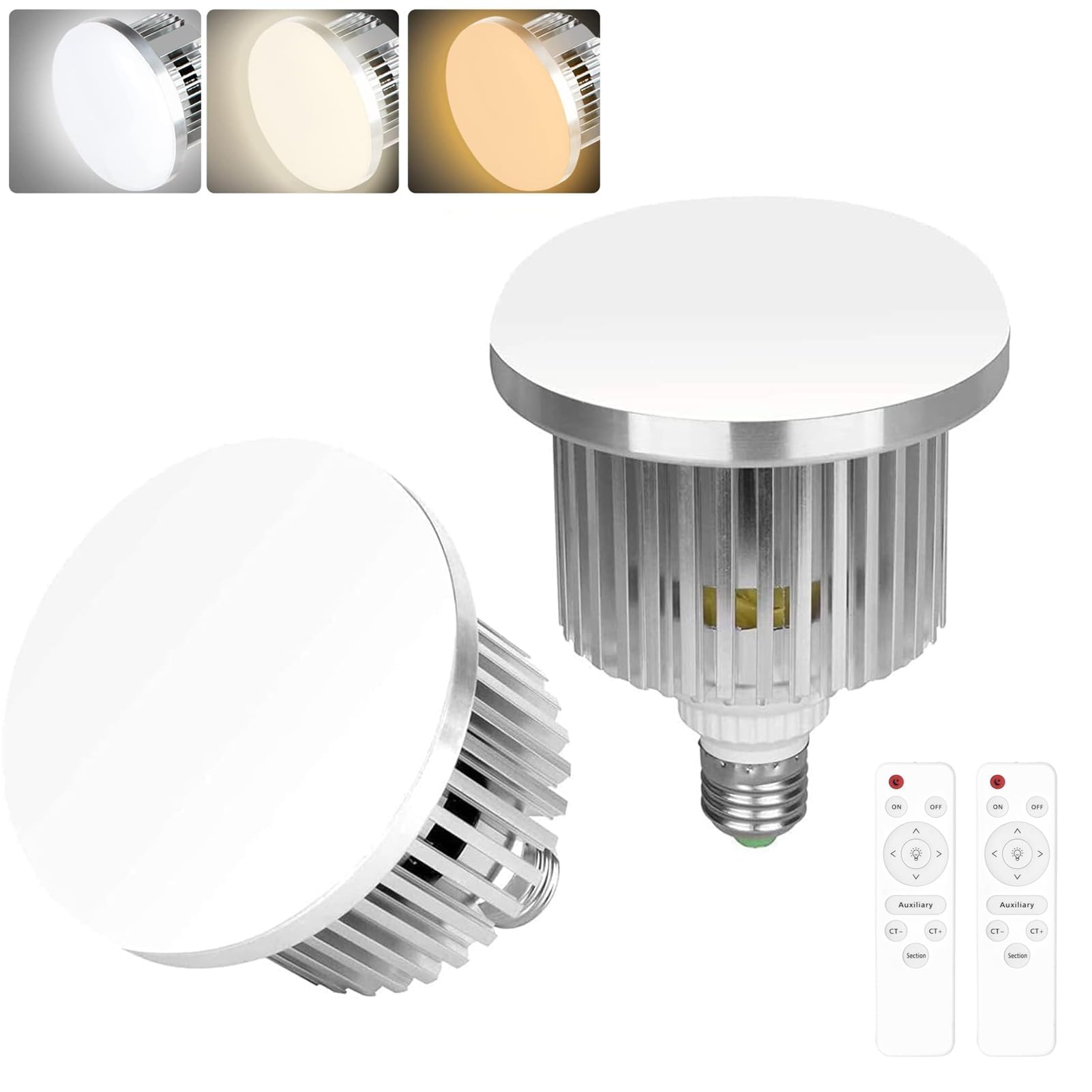
Adjustable color temperature and brightness from your chair.
The two-key feature here is the ability to dial the color temperature from 3000K (warm) to 6500K (cool) and adjust brightness from 1% to 100% — all via the included remote control that works from 7-8 meters away. That flexibility makes this EMART the best choice for shooters who mix tungsten and daylight sources or who need to change the mood without swapping bulbs. The 85W output replaces a 150-watt incandescent, and the thickened aluminum alloy body helps it run cooler than plastic-shelled CFLs.
One catch: the CRI is listed as over 90 in the features section but as 80 in the technical specifications, so consistency on color accuracy is not as reliable as the Neewer’s locked 93+. If you are shooting fast-paced video with changing light conditions, this remote-controlled versatility beats the single-color CFL alternatives. Just know that the CRI discrepancy means you may still spend time adjusting color in post.
Remote control advantage
- Adjust color temperature from 3000K to 6500K — smooth for mixed lighting
- Brightness ranges from 1% to 100%
- Comes with two remote controls for 7-8 meter range
One inconsistency
- CRI rated 80 in specs but marketed as 90+ — color fidelity is less reliable than the Neewer
- Limited to 8000 hours versus Neewer’s 15000
Reach for this if: Your lighting setup changes between warm and cool scenes — the remote makes it painless.
skip it if: You need verified high CRI for product photography — the Neewer is a better bet.
4. 175W Photography Light Bulb Dimmable Tricolor LED
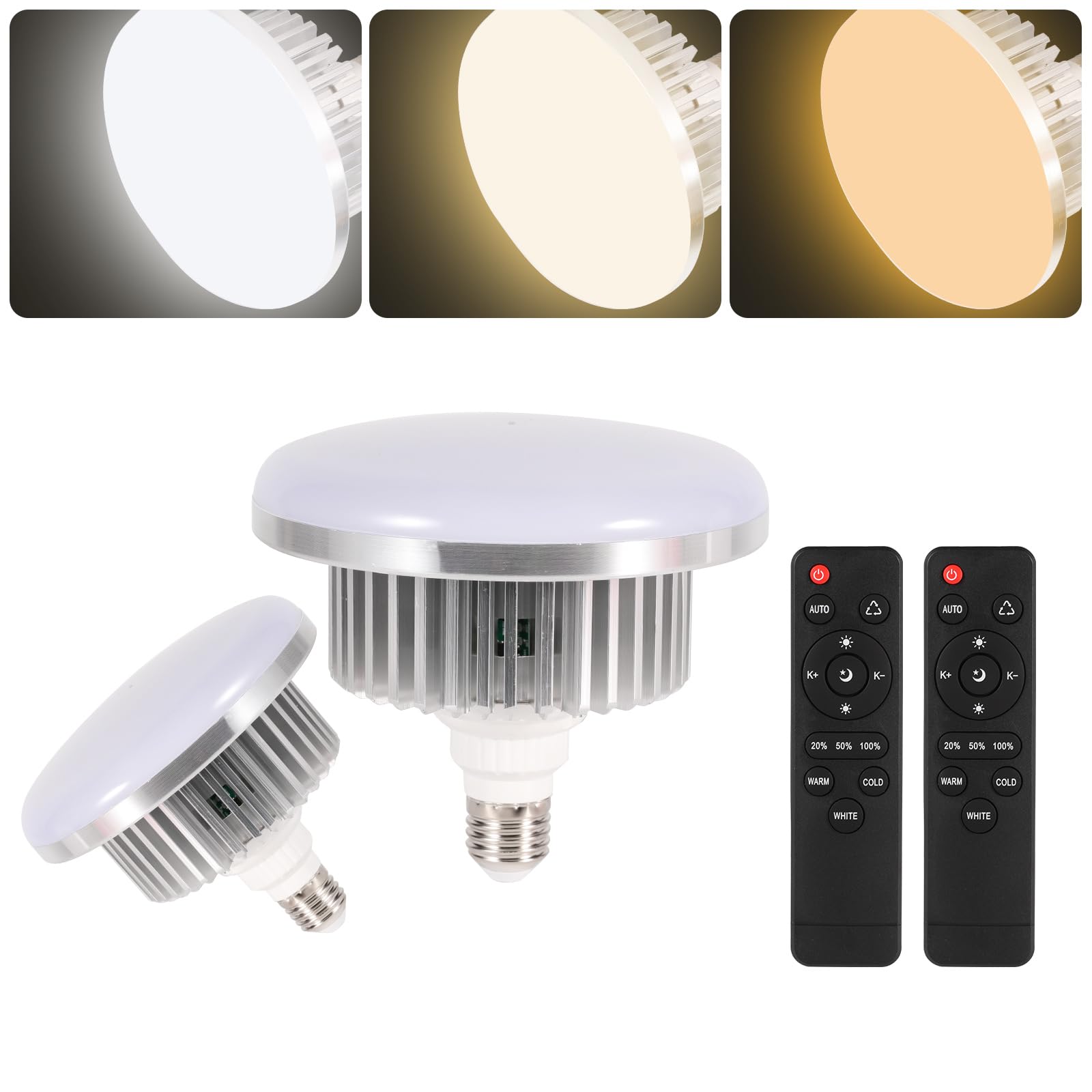
More raw light than any other bulb on this list, with a long lifespan to match.
This AQIRUI unit packs 180 LED bulbs and a tricolor system that toggles between white, warm, and cold modes (3000-6700K), plus a remote to switch them. It claims more than 20000 hours of lifespan — the longest of any bulb here, tying the Skytex’s 20000-hour figure. One verified reviewer said they use it for real estate photography to light up dark hallways and side rooms, praising the decent brightness and decent color rendering.
The important catch: on a standard 120V US system the maximum power is about 65W, not the full 175W. That full power only appears on a 240V system. Also, the CRI (Color Rendering Index) is rated at 70, which is the lowest in this roundup — colors will be noticeably less accurate than the Neewer’s 93+. A review compared its white-mode output to a 500W tungsten light using a light meter, finding the brightness matches at F2.8 1/60 ISO100 at 1m. It is a versatile powerhouse for filling a room, but not a color-critical task.
Big light, big lifespan
- Tricolor modes (3000-6700K) with remote control
- 20000+ hour lifespan — rivals the Skytex CFL for longevity
- 180 LED beads give very bright output
Watch the wattage
- CRI of 70 is the lowest here — color accuracy suffers
- Maximum 65W on 120V US power (not 175W as listed)
Best for fill light: Great for lighting up whole rooms or dark corners where color accuracy is less critical — like real estate or event B-roll.
Avoid for product work: The low CRI means you will spend more time color-correcting in post.
5. 2 x 85W Light Bulb 5500K CFL Daylight Spiral Softbox Bulb

Fills a 24-inch softbox with 6000 lumens of daylight for under the cost of a coffee machine.
At 6000 lumens, this AQIRUI pair outputs 2.8 times more light than the Neewer LED (2160 lumens), making it the clear choice for large modifiers or clients who need every shadow filled. Each bulb measures 9.5 inches long and 3 inches wide — 42% longer and 30% wider than the EMART 45W CFL — so check your softbox compatibility if space is tight. The 5500K daylight color temperature (balanced at 5500 Kelvin) is the standard for studio work, and the CRI (Color Rendering Index) is rated at 80, which is fine for general product shots but not high-fidelity portrait work.
The trade-off is that CFL bulbs run hot and their 8000-hour lifespan is roughly half of the Neewer or Skytex options. A buyer’s note about the company’s other products mentions that “the price to quantity and how long they last” is a consideration — so plan to replace them more often than an LED.
Maximum brightness
- 6000 lumens is 2.8x more than Neewer’s 2160 lumens
- 5500K daylight standard — works with most white balances
- E27 socket fits most softboxes and umbrellas
CFL realities
- 8000-hour lifespan is half the Neewer or Skytex bulbs
- Larger size (9.5 inches long) may not fit enclosed fixtures
Reach for this if: You need a massive light source for large product sets or full-body portraits on a tight budget.
pass on it if: You shoot video — these bulbs may flicker at certain shutter speeds due to the CFL ballast.
6. Skytex 2pcs 135W Light Bulb 5500K CFL Daylight Spiral Softbox Lighting Kit
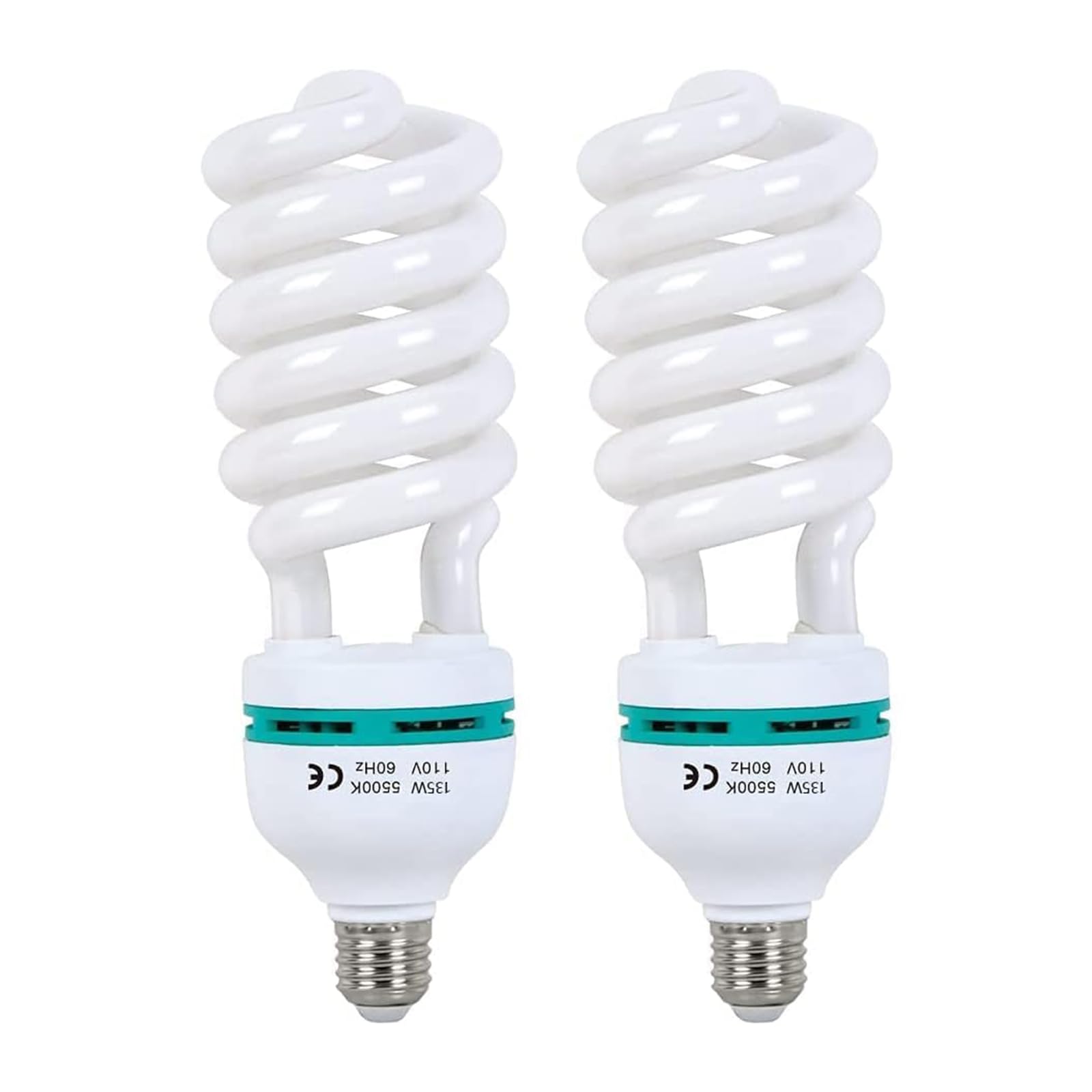
CFL power with a 20000-hour lifespan — four times the typical CFL run-time.
Most CFL bulbs in this category give you around 8000 hours before they dim or die. The Skytex pushes that to 20000 hours — based on three hours of daily use — which means you may only need to replace these bulbs once every few years even in a busy studio. The 135W power at 5500K daylight gives you a bright, consistent 5500 Kelvin color temperature that fits smoothly into any standard E27 softbox or umbrella mount. At 9.5 inches long and 3 inches wide, the physical size matches the 85W CFL from AQIRUI (both are 9.5 inches).
Buyers report that “solid packaging work extremely well” but the “only negative would be the price to quantity and how long they last” — a reference to the lifespan being longer than typical CFLs, though the overall experience was positive.
Built to last
- 20000-hour lifespan — exceeds most CFLs by 2.5x
- 135W power gives very bright, instant daylight at 5500K
- E27 base fits standard modifiers and umbrellas
Trade-offs
- CFL bulbs can flicker at high shutter speeds — not ideal for 60fps+ video
- Physical size (9.5 inches) limits use in smaller softboxes
Best for still photography: Great for product or portrait shoots where you need consistent daylight and don’t want to swap bulbs often.
Not for video: CFL ballasts can produce visible stripes in recorded footage — pick the Neewer LED if you shoot motion.
Understanding the Specs
Color Rendering Index (CRI)
CRI (Color Rendering Index) measures how truthful a light source makes colors look compared to natural daylight on a 0-100 scale. A CRI of 90 or above is great for portrait and product photography because skin and fabrics look natural. Bulbs like the Neewer with CRI 93+ let you skip heavy color correction, while bulbs with CRI 70–80 like the 175W tricolor will shift colors enough to notice in final images, especially reds and greens.
Lumens vs Wattage
Lumens tell you the actual brightness coming out of the bulb; wattage tells you how much power it draws. A CFL can produce 6000 lumens at 85W while an LED produces 2160 lumens at just 24W. For a single small softbox or umbrella, 2000–3000 lumens is enough. For a large 24-inch softbox or lighting a whole person, 4000–6000 lumens gives you better coverage.
FAQ
Can I use a regular household bulb for video or photography?
What is the difference between a CFL and an LED camera bulb?
What shutter speed can I use without seeing flicker?
What does 5500K mean in a camera light bulb?
Will a 135W CFL bulb fit my softbox?
What is the E26 versus E27 socket difference?
How many camera light bulbs do I need for a basic studio setup?
What does it mean when a bulb is non-dimmable?
Final Thoughts: The Verdict
If you want one dependable pick, the best camera light bulb winner is the Neewer E26 24W LED because it pairs flicker-free video performance with a CRI of 93+ and a 15000-hour lifespan — giving you accurate, consistent light for years. If you want adjustable color temperature and remote control, grab the EMART 2 Pack 85W E27 LED. And for maximum raw brightness to fill a large softbox, the standout is the 2 x 85W 6000-lumen CFL pair.
How We Picked
We do not accept paid placement. Every pick is matched to a real buyer and a real use-case; we do not hands-on test units.
Sources & Methodology
Specifications: manufacturer listings and product documentation. Review insights: verified customer reviews, as of July 2026. Pricing: not shown on this page (it changes often); check the current price via the retailer link.
As an Amazon Associate, Gadgets Feed earns from qualifying purchases. This does not affect which products we feature.