
Our readers keep the lights on and my morning glass full of iced black tea. As an Amazon Associate, I earn from qualifying purchases.
Specs are compiled from manufacturer listings and verified buyer reviews and can change over time — please confirm the key details on the product page before buying.
Black and white photography is about texture, contrast, and light—not color. The best camera for the job can capture subtle tonal gradations in shadows and hold detail in highlights. A sensor with strong dynamic range and good low-light performance is essential for rich monochrome files straight out of camera.
I’m Min — the founder and writer behind Gadgets Feed. This guide is built by comparing the manufacturers’ published specifications and the patterns across verified customer reviews, so you get each pick’s real strengths and trade-offs instead of marketing spin.
Whether you are shooting moody street scenes, fine-art portraits, or high-contrast landscapes, the right camera black and white photography kit delivers the tonal depth that makes monochrome images sing.
Our Picks at a Glance


How To Choose The Best Camera For Black And White Photography
When buying a camera for black and white, you are shopping for a sensor that captures a wide range of brightness values. Color accuracy takes a back seat to dynamic range, low-noise files, and the ability to render subtle grays. Here are the key things to check.
Dynamic Range and Bit Depth
Dynamic range is the sensor’s ability to capture detail in both the brightest highlights and the darkest shadows in one frame. In black and white, this becomes the difference between a flat gray image and one with punchy contrast. Bit depth (measured as 10-bit or 14-bit) tells you how many tonal steps the file captures — a 14-bit file carries smoother gradations in sky tones and shadow transitions than a 10-bit one.
Sensor Size and Megapixels
Full-frame sensors (35mm size) generally offer the best dynamic range and cleanest blacks at high ISO settings. That matters when you are shooting street photography at night or indoors without a flash. APS-C sensors are smaller but still deliver excellent monochrome results in good light. For black and white, resolution (megapixels) affects how much fine texture you can resolve before grain becomes distracting.
Lens Aperture and Sharpness
A fast lens (with a wide aperture like f/1.7 or f/2.0) lets in more light, so you can shoot in dim conditions without pushing the ISO too high. In black and white, lens sharpness is critical because there is no color contrast to mask softness — the image relies entirely on edge definition and micro-contrast to create depth.
Quick Comparison
| Model | Best For | Sensor Resolution | Bit Depth | Autofocus Points | Amazon |
|---|---|---|---|---|---|
| Canon EOS R50★ Best Overall | Entry-level mirrorless with 4K | 24.2MP | 10 Bit | 651 | $799.00$899.00Amazon |
| Sony Alpha 7 VAlso Great | Hybrid full-frame monochrome | 33MP | 14 Bit | 759 | $2,898.00Amazon |
| Nikon Z fRetro Choice | Retro full-frame stills | 24.5MP | 10 Bit | 273 | $2,436.95Amazon |
| Panasonic LUMIX S9 | Compact full-frame travel | 24.2MP | 12 Bit | 255 | $1,397.99$1,799.99Amazon |
| Fujifilm X100VI | Fixed-lens street photography | 40.2MP | 10 Bit | 1 | $2,285.08Amazon |
| Leica Q3 | Premium compact with Summilux lens | 60MP | 10 Bit | 256 | $7,187.70Amazon |
| Nikon RED Z Cinema | Cinema-grade video and RAW | 6K | 12 Bit | 273 | $2,196.95Amazon |
| OM SYSTEM OM-3 | Weather-sealed travel and street | 20MP | 14 Bit | Phase Detection | $1,699.99$1,999.99Amazon |
| Panasonic LUMIX GH5M2 | Micro Four Thirds video hybrid | 20.3MP | 14 Bit | 225 | $997.99$1,499.99Amazon |
| Canon PowerShot V1 | Compact vlogging and streaming | 22.3MP | 10 Bit | 100 | $786.43Amazon |
| Sony RX100 VII | Ultra-compact zoom | 20.1MP | — | 425 | $1,498.00Amazon |
In‑Depth Reviews
1. Canon EOS R50 Mirrorless Camera
Our pick — 4.5★ from 1,500+ verified ratings; the strongest balance of quality and price.
A lightweight APS-C camera with a 651-point autofocus system perfect for learning monochrome.
The Canon EOS R50 is an approachable entry point for black and white photography. Its 24.2-megapixel APS-C sensor and DIGIC X processor produce clean images, and the 651 autofocus points cover almost the entire frame — a huge number for this price tier. Reviewers point out it is “lightweight, compact, professional-grade photos” and “a perfect camera to start vlogging and beyond.”
The camera shoots up to 15 fps with the electronic shutter, making it responsive for capturing movement. The vari-angle touchscreen makes waist-level street photography easy.
The kit lens (RF-S 18-45mm F4.5-6.3) has a slow aperture, so you will need good light or a higher ISO for black and white shots. The APS-C sensor has less dynamic range than full-frame — expect less shadow detail recovery in post. One reviewer notes the 18-45mm lens is “adequate but upgrade planned.”
Great starting point: If you are new to black and white and want a modern mirrorless camera with fast autofocus and 4K video, the R50 delivers at an accessible price.
The catch: The 10-bit RAW files and APS-C sensor give up some tonal range compared to more expensive full-frame options.
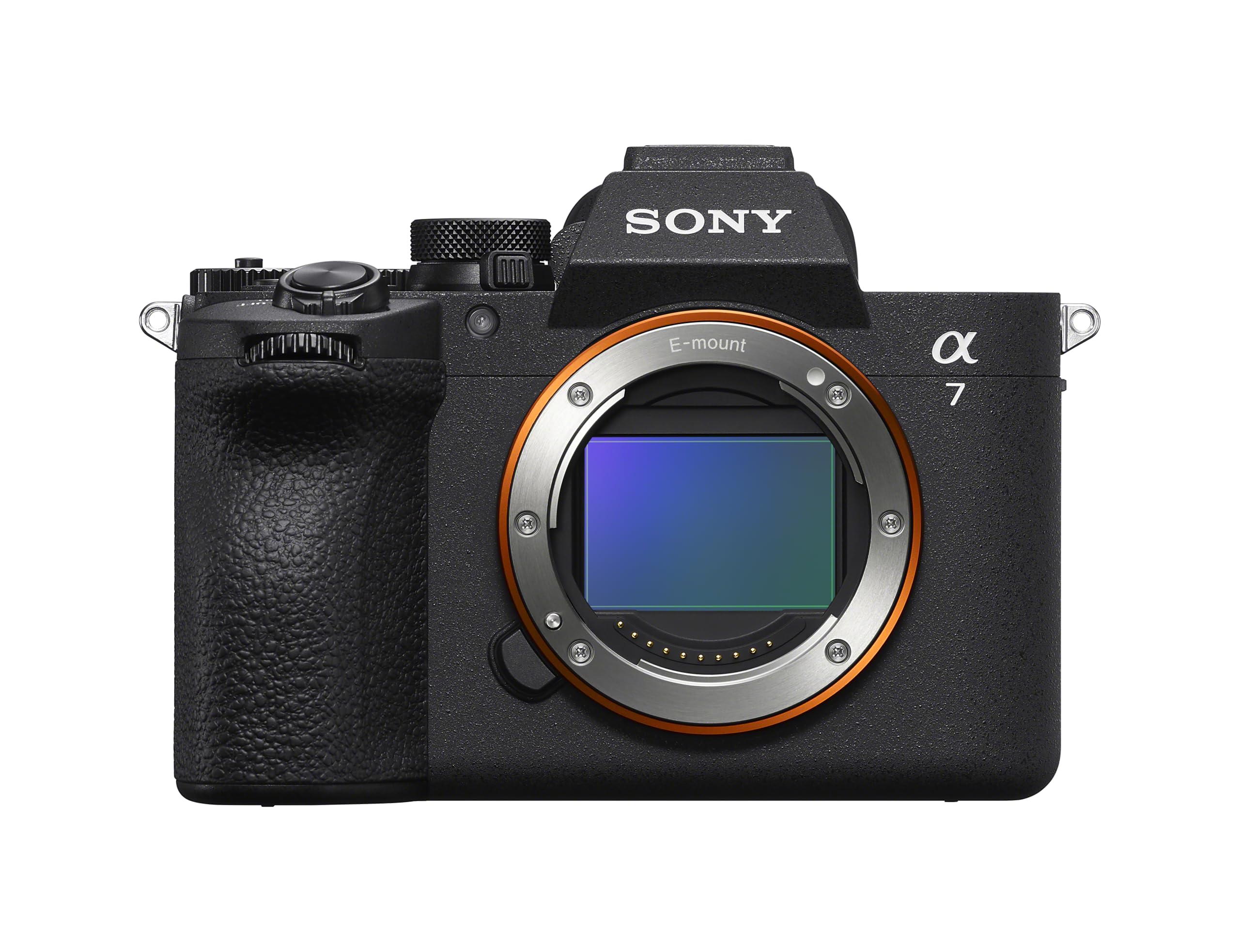
2. Sony Alpha 7 V Full-Frame Hybrid Mirrorless Camera
This all-rounder full-frame camera nails monochrome from shadow to highlight.
The Sony Alpha 7 V delivers the kind of tonal flexibility that black and white shooters crave. Its full-frame sensor captures 33 megapixels of detail with a 14-bit depth, meaning you get 14 times the tonal data of a 10-bit file for silky transitions across gray gradients. The 759 autofocus points cover nearly the entire frame, making it fast to lock onto a subject in low contrast — a common challenge in monochrome scenes.
Buyers report that the JPEGs are “perfect out of camera” and the AI-assisted subject recognition tracks animals, birds, vehicles, and even insects. For black and white street or portrait work, having reliable eye tracking means you can focus on composition rather than dialing in focus manually. The 30 fps burst with blackout-free shooting is a bonus for capturing decisive moments in motion.
The 5-axis in-body stabilization helps you shoot handheld at slower shutter speeds in dim light without blur. That is a real advantage when you are shooting monochrome at night without a tripod. The main trade-off is the Sony menu system — reviewers mention a learning curve if you are new to the brand.
Strengths for BW shooters
- 14-bit RAW files with rich tonal gradation
- 759-point AF for precise low-contrast focus
- 30 fps blackout-free burst for decisive moments
Things to consider
- Sony menu system has a learning curve
- Extra batteries needed for extended video sessions
Reach for this if: you want a single camera that handles fine-art stills, street photography, and video with equal authority.
Look elsewhere if: you prefer a more tactile, retro control layout for black and white shooting.
3. Nikon Z f with Special Edition Prime Lens
Old-school feel meets a modern full-frame sensor for monochrome purists.
The Nikon Z f is a camera you pick up and want to shoot with. Its retro design with physical dials for shutter speed, ISO, and exposure compensation makes it intuitive for black and white street photography — you adjust settings without looking away from the scene. Underneath the brass-and-metal body is a 24.5-megapixel BSI full-frame sensor with an EXPEED 7 processor that delivers clean, high-ISO files ideal for grayscale work.
The 273-point autofocus system recognizes nine different subject types and uses 3D tracking, so you can track a person walking through shadows. The 40mm f/2 prime lens in the bundle gives you a natural field of view with a wide aperture for low-light shooting. One pro photographer reviewer says the Z f “excels for photography, especially lowlight” and that it is “the best digital camera I’ve owned overall.” The 10-bit internal recording means you get smooth gradients in video as well, though it trails the Sony A7 V’s 14-bit RAW stills for pure tonal depth.
The Pixel Shift shooting can create 96-megapixel still files for large prints. The vari-angle touchscreen is handy for waist-level street shots. One honest trade-off: the body can feel heavy with a large lens attached, and some buyers recommend a SmallRig grip for larger hands.
Monochrome magic: The Z f’s intuitive controls and excellent low-light performance make it a joy for black and white shooters who prefer a tactile, deliberate shooting style.
One honest trade-off: the 10-bit still RAW files don’t have as much tonal headroom as the 14-bit files from the Sony A7 V above.
4. Panasonic LUMIX S9 Full-Frame Mirrorless Camera

A slim full-frame body that slips into a bag for monochrome on the move.
The LUMIX S9 gives you a full-frame sensor in a body the size of many APS-C cameras. That means you get the wider dynamic range and better high-ISO noise performance of a full-frame sensor for black and white shooting, without lugging a heavy kit. The 24.2-megapixel sensor paired with the 18-40mm F4.5-6.3 lens covers wide to standard views — perfect for environmental portraits and street scenes.
Owners mention “no overheating in 4k30 over 1 hour,” so it is reliable for long video sessions if you shoot monochrome video. The 12-bit RAW files offer a solid tonal range, though they are not as deep as the 14-bit files from the Sony A7 V or OM-3. The S9 has a 4.5-6.3 aperture range, which is slower than the f/2.8-4.5 on the Canon PowerShot V1 — meaning you need more light or higher ISO in dim conditions.
The camera has a cold shoe with no flash capability, which one reviewer found frustrating on an expensive camera. For pure black and white stills, you get good results, but the lens is better suited to video than fine-art photography.
Portable pull
- Compact full-frame body for easy carry
- Good battery life and no overheating in 4K
Watch for
- Slow kit lens limits low-light monochrome
- No built-in flash or hotshoe for external flash
Who it suits: Travelers who want full-frame tonal quality in the smallest possible package.
Who should pass: Anyone who needs a fast lens or external flash for indoor black and white portraits.
5. Fujifilm X100VI Digital Camera

This fixed-lens camera makes black and white street photography easy.
The Fujifilm X100VI is famous for its film simulations, and its black and white modes (including Monochrome and Monochrome+Ye filters) produce gorgeous grayscale JPEGs straight out of camera. The 40.2-megapixel X-Trans CMOS 5 HR sensor gives you enough resolution to crop tightly and still hold fine detail — ideal for composing in post. The fixed 23mm f/2 lens (equivalent to 35mm full-frame) is a classic street photography focal length.
The 6-stop in-body image stabilization lets you shoot at surprisingly slow shutter speeds handheld, which helps keep ISO low for cleaner blacks. The built-in 4-stop ND filter is useful for shooting wide open in bright sunlight to get shallow depth of field in your monochrome portraits. One reviewer calls it a “near perfect hybrid camera” and says they “rarely use my mirrorless camera anymore.”
Some users report inconsistent autofocus behavior. It is also a fixed-lens camera — you cannot swap lenses for different focal lengths.
Niche perfection: If street and travel black and white is your thing, the X100VI’s compact size, film simulations, and excellent lens make it a joy to carry everywhere and shoot all day.
The hard truth: You are paying a premium for the retro design and fixed-lens convenience — and you get no zoom flexibility.
6. Leica Q3 Compact Digital Camera
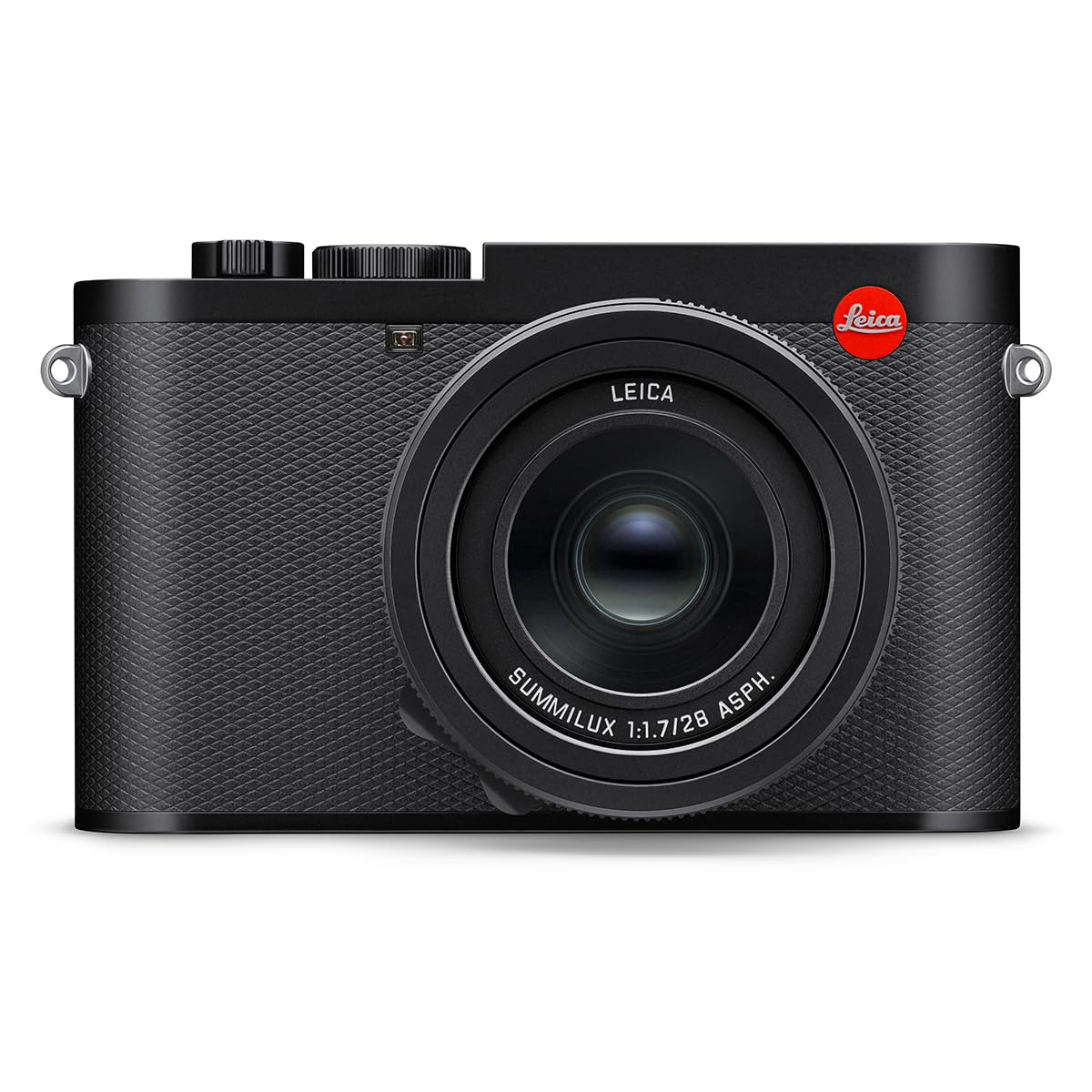
A 60-megapixel full-frame sensor with a legendary lens delivers exquisite monochrome detail.
The Leica Q3 is in a class of its own for black and white photography. Its 60-megapixel BSI CMOS sensor with Triple Resolution Technology captures enough data to produce prints at massive sizes while maintaining smooth tonal gradations. The Summilux 28mm f/1.7 ASPH. lens is one of the sharpest wide-angle lenses available — critical for black and white because the image relies entirely on edge detail rather than color to define shapes.
The hybrid autofocus combines contrast and phase detection with 256 points, and the Maestro IV processor with 8GB of memory ensures snappy performance. The digital zoom goes up to 90mm, giving you framing flexibility even without a zoom lens. A buyer who owns multiple cameras says the Q3 has “morphed into one camera for everything,” and another calls it “the ultimate travel/vacation camera.”
It is priced firmly as a luxury tool. The fixed 28mm lens is a love-or-hate focal length — some find it too wide for portraits.
Where it shines
- 60MP sensor with triple resolution for massive prints
- Summilux f/1.7 lens is incredibly sharp
Considerations
- Very expensive — not for budget-conscious buyers
- Fixed 28mm lens limits flexibility compared to interchangeable lens cameras
Ideal for: Fine-art photographers who want the ultimate compact camera for black and white and value Leica’s lens quality and build.
Skip if: You need interchangeable lenses or a more affordable entry point for monochrome work.
7. Nikon RED Z Cinema | ZR Cinema Camera

A cinema camera with 15+ stops of dynamic range for extreme black and white tonal range.
The Nikon RED Z Cinema is a specialized tool designed for high-end video production, but its sensor specs make it remarkable for monochrome. The 6K full-frame sensor delivers over 15 stops of dynamic range — more than any stills camera on this list — so you can capture detail in both deep shadows and bright highlights simultaneously. This is directly useful for high-contrast black and white scenes where you want pure blacks and bright whites without losing texture.
It records REDCODE RAW (R3D) footage at 12-bit depth, giving you a huge amount of tonal data to work with in post. The 32-bit float audio recording is overkill for stills, but the camera excels at monochrome video production. Customers note the boot time is “much faster than my Komodo” and the autofocus is “great.” The 4-inch DCI-P3 touchscreen makes it easy to frame shots.
The trade-off is that this is a cinema camera, not a stills camera. It has no built-in flash, and the CFexpress Type B cards are expensive. For pure black and white photography, a dedicated stills camera like the Sony A7 V offers more practical features at a lower cost.
For whom: Filmmakers and hybrid shooters who need maximum dynamic range for black and white video work and are willing to invest in a cinema-grade workflow.
Not for: Traditional photographers who just want to shoot stills — you will pay for video features you do not need.
8. OM SYSTEM OM-3 Silver Micro Four Thirds Camera

A weather-sealed, compact camera with a dedicated Monochrome Profile Control dial.
The OM-3 has a dedicated Creative Dial that includes Monochrome Profile Control, so you can dial in your black and white look instantly while shooting. The 20-megapixel Stacked BSI Live MOS sensor combined with the TruePic X processor delivers clean files with good dynamic range for its size. The 14-bit depth gives you smooth tonal transitions, matching the Sony A7 V for headroom despite the smaller sensor.
The 5-axis image stabilization is excellent — one of the best in any system — so you can shoot handheld at slower shutter speeds in low light. The camera is IP53-rated (dustproof, splashproof, freezeproof), making it a rugged choice for outdoor black and white landscapes. Reviewers love the “nimble 20MP files” and “excellent IBIS,” calling it the “cheapest stacked sensor camera” available.
As a Micro Four Thirds camera, the sensor is smaller than APS-C or full-frame, so high-ISO noise performance is not as clean. The 20-megapixel resolution is lower than the 33MP on the Sony A7 V, limiting how much you can crop. The retro silver body is beautiful but the grip is small — some users find it fine with a proper hold, others want more purchase.
Strengths
- 14-bit RAW files with excellent tonal range for the sensor size
- Rugged weather sealing for outdoor monochrome shooting
- Dedicated monochrome profile control dial
Compromises
- Smaller Micro Four Thirds sensor limits low-light noise performance
- 20MP resolution is less forgiving for cropping than 33MP or 40MP sensors
Best for: Adventurous photographers who shoot black and white landscapes in harsh weather and want a compact, durable kit with excellent stabilization.
Consider alternatives if: You need maximum resolution and high-ISO performance for fine-art prints.
9. Panasonic LUMIX GH5M2 Mirrorless Micro Four Thirds Camera

A Micro Four Thirds workhorse with 14-bit depth and 6.5-stop stabilization for black and white video.
The GH5M2 stands out for its 14-bit RAW stills — a higher bit depth than many full-frame cameras on this list, including the Canon R50 and Fujifilm X100VI. That means smoother tonal transitions in your black and white files, especially in gradients like skies or skin tones. The 20.3-megapixel sensor is paired with a 12-60mm f/2.8-4 lens in the kit.
The 6.5-stop 5-axis image stabilization is class-leading, allowing you to shoot handheld in very low light. The camera is built like a tank with a magnesium alloy frame that is splash, dust, and freeze-proof down to -10°C (14°F). A buyer reports the GH5 II has “vastly faster, more reliable continuous autofocus with native zooms” and calls the linear focus lens control “a standout for manual focus.”
As a Micro Four Thirds camera, the sensor is smaller than full-frame APS-C, so you get more noise at higher ISO settings. For pure black and white stills, the smaller sensor size is a limitation compared to the OM-3 or Sony options.
What stands out
- 14-bit depth delivers excellent tonal gradation
- 6.5-stop stabilization for low-light handheld shots
- Rugged weather-sealed body
Limitations
- Small Micro Four Thirds sensor produces more noise at high ISO
- Contrast-detection AF is slower than phase-detection systems
Perfect for: Hybrid shooters who need 14-bit black and white stills and want excellent video stabilization in a durable body.
Better options exist if: Image quality at high ISO is your top priority — full-frame sensors handle low-light monochrome more cleanly.
10. Canon PowerShot V1 Hybrid Camera

A compact hybrid with a bright f/2.8 lens and Canon Log 3 for black and white video.
The PowerShot V1 is built for vlogging and streaming, but its 22.3-megapixel 1.4-Type sensor and bright f/2.8-4.5 wide-angle zoom lens make it interesting for black and white content creation. The lens is 61% brighter at the wide end than the Panasonic S9’s f/4.5-6.3 kit lens, letting in more light for cleaner monochrome video. It records Canon Log 3 with 10-bit color depth for a wide dynamic range in post.
The cooling fan allows for longer high-resolution shooting times without overheating, which is a practical advantage for extended monochrome video projects.
The main limitation for black and white photography is the fixed lens — you only get 16-50mm (35mm equivalent) zoom range, no telephoto options. It also lacks optical image stabilization, so walking shots can be shaky. The sensor is smaller than both APS-C and full-frame, meaning less dynamic range and more noise at high ISO for stills.
Best suited for: Content creators who want a compact camera for black and white video with a bright lens and reliable cooling.
Not ideal for: Serious stills photography where you need the tonal range and resolution of a mirrorless interchangeable lens system.
11. Sony RX100 VII Premium Compact Camera
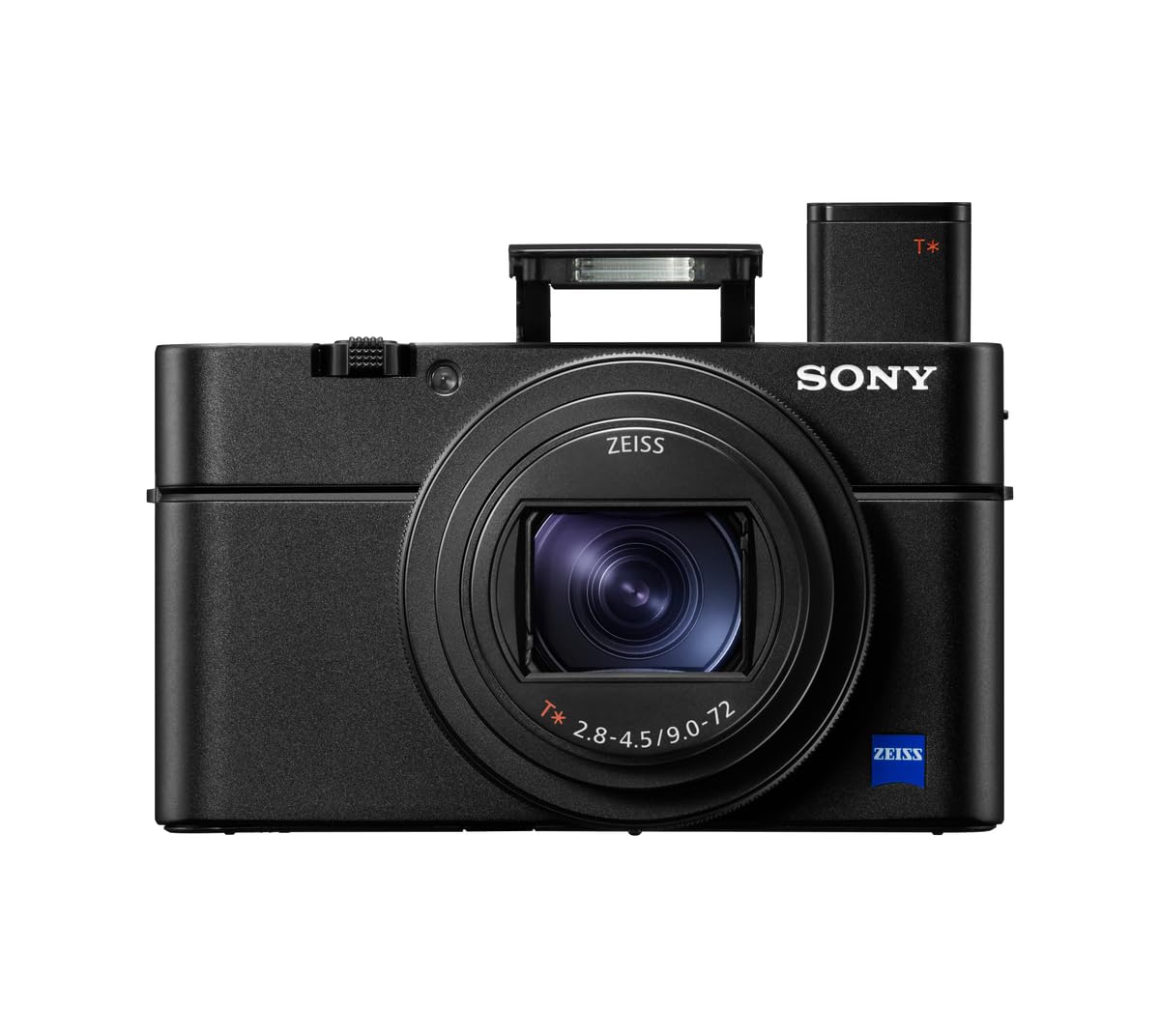
A pocket-sized powerhouse with a 24-200mm zoom lens for versatile black and white on the go.
The RX100 VII packs a Zeiss Vario-Sonnar T 24-200mm f/2.8-4.5 lens into a body that fits in a coat pocket. That zoom range covers everything from wide street scenes to telephoto portraits, making it the most versatile single-lens compact for black and white photography. The 20.1-megapixel 1.0-Type stacked CMOS sensor delivers clean files with decent dynamic range for its class.
The autofocus is fast — 0.02 seconds — with 357 phase-detection points and 425 contrast-detection points working together. It shoots up to 20 fps blackout-free with real-time eye tracking for humans and animals. One reviewer says it is a “little powerhouse of a mini camera” with a “Zeiss lens is amazing.” It records 4K video with S-Log3 for monochrome video grading.
The 1.0-Type sensor is physically smaller than APS-C or full-frame, so high-ISO noise is more prominent — expect grainier blacks in low light. The built-in flash is weak but present. Some users find the body almost too small and slippery, recommending an aftermarket grip for security. The menu system is extensive and takes time to learn.
Portable advantage
- 24-200mm zoom in a truly pocketable body
- 20 fps burst with real-time eye tracking
Size trade-offs
- Small sensor limits high-ISO performance for black and white
- Body can feel slippery; aftermarket grip recommended
Ideal if: You want one tiny camera that handles everything from wide-angle street to telephoto portraits without swapping lenses.
Not for: Shooters who need the cleanest high-ISO files and maximum tonal range for fine-art monochrome prints.
Understanding the Specs
Bit Depth (Why 14-Bit vs 10-Bit Matters for Black and White)
Bit depth determines how many tonal steps your camera records between pure black and pure white. A 10-bit file gives roughly 1,024 steps per color channel, while a 14-bit file gives about 16,384 steps. In black and white, those extra steps show up as smoother gradients in skies, richer shadow detail, and fewer banding artifacts when you push contrast in editing. If you shoot monochrome and do heavy post-processing, a 14-bit camera like the Sony Alpha 7 V or OM SYSTEM OM-3 gives you more headroom.
Dynamic Range (The Key to Black and White Tones)
Dynamic range is measured in stops and describes how much detail the sensor can capture in the brightest and darkest parts of a scene simultaneously. A camera with 15 stops of dynamic range (like the Nikon RED Z Cinema) can hold detail in both a bright window and a dark interior in the same frame. For black and white, this is critical — you want to see texture in the highlights and separation in the shadows without clipping. Cameras with larger sensors (full-frame) typically offer more dynamic range than those with smaller 1.0-Type or Micro Four Thirds sensors.
FAQ
Is a full-frame sensor better than APS-C for black and white photography?
Do I need a camera with a dedicated monochrome mode?
What lens focal length is best for black and white street photography?
Can I shoot black and white video with any of these cameras?
What is the difference between a 10-bit and a 14-bit camera for black and white?
How many megapixels do I need for black and white prints?
Is in-body image stabilization (IBIS) important for black and white photography?
Will the Canon PowerShot V1 work for professional black and white photography?
How does the OM SYSTEM OM-3 compare to the Panasonic GH5M2 for black and white stills?
Do I need a camera with fast autofocus for black and white photography?
Final Thoughts: The Verdict
For the majority of shoppers, the camera black and white photography winner is the Sony Alpha 7 V because its 33-megapixel full-frame sensor, 14-bit depth, and 759-point autofocus deliver the best balance of tonal quality, resolution, and usability across all monochrome styles. If you want a compact street camera with incredible out-of-camera JPEGs and film simulations, grab the Fujifilm X100VI. And for a rugged, weather-sealed option with dedicated monochrome controls that handles harsh conditions, the standout is the OM SYSTEM OM-3.
How We Picked
We do not accept paid placement. Every pick is matched to a real buyer and a real use-case; we do not hands-on test units.
Sources & Methodology
Specifications: manufacturer listings and product documentation. Review insights: verified customer reviews, as of July 2026. Pricing: not shown on this page (it changes often); check the current price via the retailer link.
As an Amazon Associate, Gadgets Feed earns from qualifying purchases. This does not affect which products we feature.
Related Guides
Product prices and availability are accurate as of the date/time indicated and are subject to change. Any price and availability information displayed on Amazon at the time of purchase will apply to the purchase of this product. As an Amazon Associate I earn from qualifying purchases.
CERTAIN CONTENT THAT APPEARS ON THIS SITE COMES FROM AMAZON. THIS CONTENT IS PROVIDED "AS IS" AND IS SUBJECT TO CHANGE OR REMOVAL AT ANY TIME.
Amazon and the Amazon logo are trademarks of Amazon.com, Inc. or its affiliates.