
Our readers keep the lights on and my morning glass full of iced black tea. As an Amazon Associate, I earn from qualifying purchases.
Specs are compiled from manufacturer listings and verified buyer reviews and can change over time — please confirm the key details on the product page before buying.
You want cardinals, chickadees, and maybe a painted bunting at your feeder — not a patch of weeds and a fat squirrel. The right seed blend makes the difference, and the best bird seed for North Carolina skips cheap filler so the species you actually want show up.
I’m Min — the founder and writer behind Gadgets Feed. This guide is built by comparing the manufacturers’ published specifications and the patterns across verified customer reviews, so you get each pick’s real strengths and trade-offs instead of marketing spin.
This roundup of the best bird seed for north carolina gives you facts on which blend attracts painted buntings, which no-grow mix keeps your lawn clean, and which 20-pound bag gives you the most volume for your money.
Our Picks at a Glance

How To Choose The Best Bird Seed For North Carolina
North Carolina sits in a balance for bird diversity — you get both year-round residents like cardinals and seasonal visitors like painted buntings. The seed you pick controls who shows up and who stays.
Focus on Regional Blends
A national generic mix often contains milo (a grain that NC songbirds mostly ignore) and millet (a small seed that ground-feeding birds eat, but many feeder birds leave behind). A Southern regional blend has been tested to match the feeding habits of birds in this area. You get more birds at the feeder and less waste thrown onto the ground.
Look for No-Filler Ingredients
Black oil sunflower, sunflower hearts (shelled sunflower kernels), safflower, and peanuts are the top four ingredients that NC cardinals, chickadees, and grosbeaks actually eat. Corn, milo, and millet are cheap fillers that birds kick out of the feeder — they rot on the ground and attract rodents.
Decide on No-Grow or Standard Seed
Standard seed can sprout under the feeder, especially in NC’s humid climate. No-grow seed is heat-treated to prevent germination (the seed cannot start growing) without chemicals. It keeps your lawn clean and stops unwanted weeds from popping up where birds eat.
Quick Comparison
| Model | Best For | Weight | Key Ingredients | Seed Type | Amazon |
|---|---|---|---|---|---|
| Kaytee Southern Regional★ Best Overall | Painted Buntings | 7 lb | Regional Blend | Standard | Amazon |
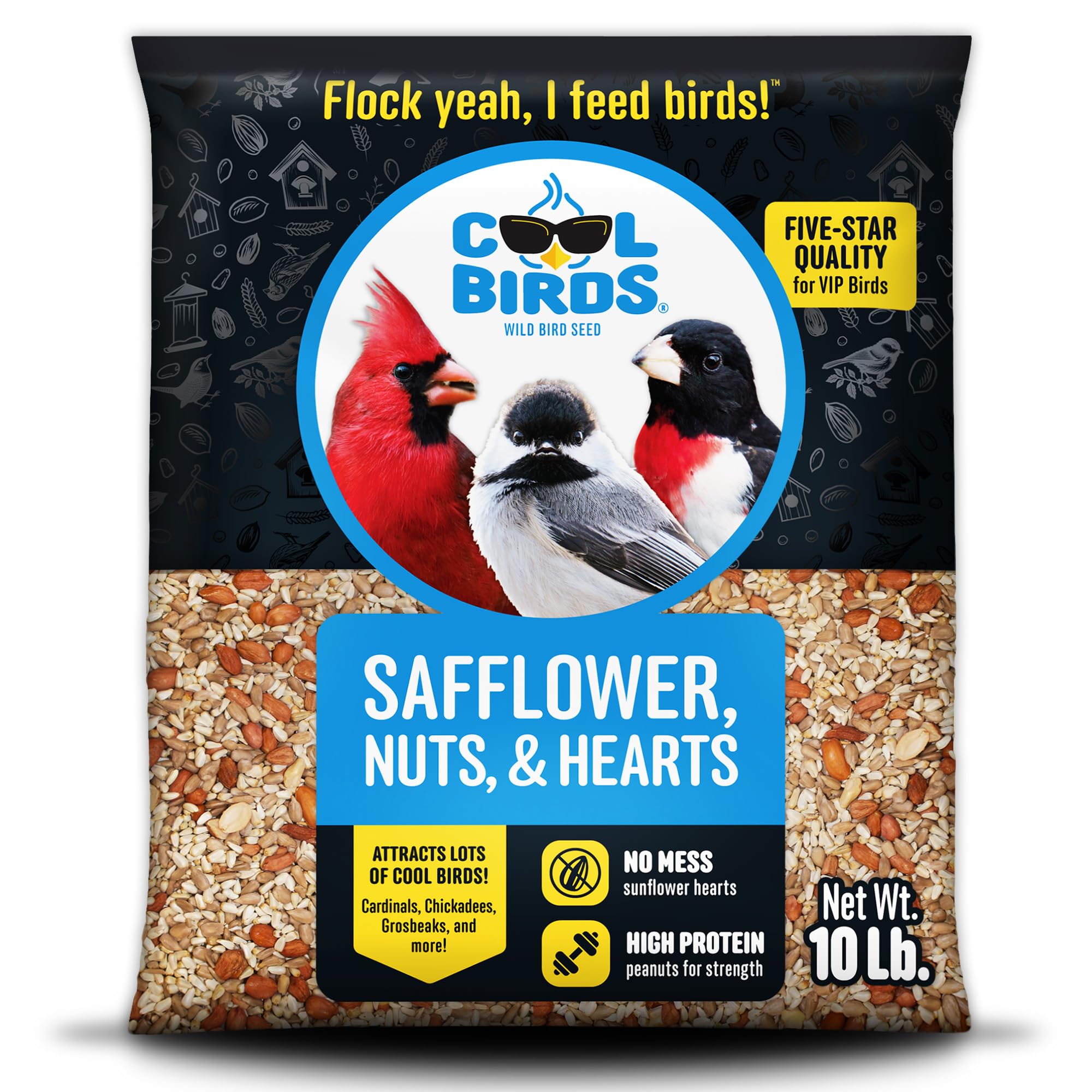
| Cool Birds Safflower, Nuts & HeartsBest Value | No-Filler Quality | 10 lb | Safflower, Sunflower Hearts, Peanuts | No Waste | Amazon |
| Happy Wings Cardinal Blend | Immediate Attraction | 5 lb | Sunflower, Safflower | No Grow | Amazon |
| Happy Wings No Grow Mix | Clean Lawn | 5 lb | Sunflower, Safflower, Peanuts | No Grow | Amazon |
| Cool Birds Cardinal & Crew | Cardinal Magnet | 10 lb | Black Oil Sunflower, Sunflower Hearts, Safflower | Standard | Amazon |
| Nature Anywhere Bird Banquet | Variety of Species | 5 lb | Mixed No-Filler Blend | Standard | Amazon |
| Armstrong Safflower | Large-Volume Safflower | 20 lb | 100% Safflower | Standard | Amazon |
In‑Depth Reviews
1. Kaytee Southern Regional Wild Bird Blend, 7-Pound Bag
Our pick — over 4.5★ from 850+ verified ratings; the strongest balance of quality and price.
A regional blend that, according to the brand, university researchers tested and found to outperform plain sunflower seed.
Kaytee designed this mix specifically for Southern birds, and it shows in the species it pulls. Buyers report that this 7-pound bag of seeds attracts painted buntings — a colorful migratory bird that visits North Carolina’s coastal and piedmont regions in summer. The brand claims the formula was independently field tested by researchers at leading universities and proven to attract more birds than either black oil sunflower seed or other non-regional blends.
This bag is 7 pounds, lighter than the 10-pound Cool Birds options, but the regional specificity means less wasted seed. One reviewer noted it also attracts cardinals, red-headed woodpeckers, and uncommon small species while drawing fewer jays and blackbirds than cheaper bulk food. That selective pull is exactly what an NC backyard needs.
Why It Wins
- University-tested regional formula, per the maker, matches NC bird preferences
- Attracts rare painted buntings, per real buyer reports
- Fresh seed quality with strong 4.8-star average from 889 ratings
The Only Catch
- 7-pound bag runs out fast if you have a busy feeder
Your NC Best Bet: Pair this regional blend with a feeder for a front-row seat to painted buntings and songbirds that generic mixes miss.
Reconsider if: You need a giant bag — this 7-pound size demands more frequent refills than the 10 or 20-pound alternatives.
2. Cool Birds Safflower, Nuts & Hearts Wild Bird Seed, 10 lb
A no-waste blend that skips corn, milo, and millet (three types of filler birds often toss aside) so every seed counts.
This 10-pound bag packs only the three ingredients birds actually eat: safflower, sunflower hearts, and peanuts. There is zero filler, which means less mess under the feeder and more nutrition delivered to the bird. Owners mention good seed variety with minimal filler and excellent value for the quantity. One buyer mentioned it attracts grosbeaks and woodpeckers — both common North Carolina visitors.
The 10-pound bag is twice as heavy as the Happy Wings Cardinal Blend (5 pounds), giving you a 2.0x weight gap for consistent long-term feeding. Just know that squirrels do enjoy this mix — one owner reported the birds love it but the local squirrels do too.
What You Get
- Three-ingredient premium mix with no corn, milo, or millet
- 10-pound bag lasts longer than 5-pound alternatives
- Works with tube, tray, hopper, and smart feeders
Watch Out For
- Squirrels will raid this seed — not a solution for squirrel problems
Best for fill-up-and-forget feeding: The 10-pound bag and no-waste formula mean you refill less often and clean up less mess.
skip it if: Squirrels are your main pest — this seed does not deter them and may actually attract more.
3. Cool Birds Cardinal & Crew Wild Bird Seed, 10 lb
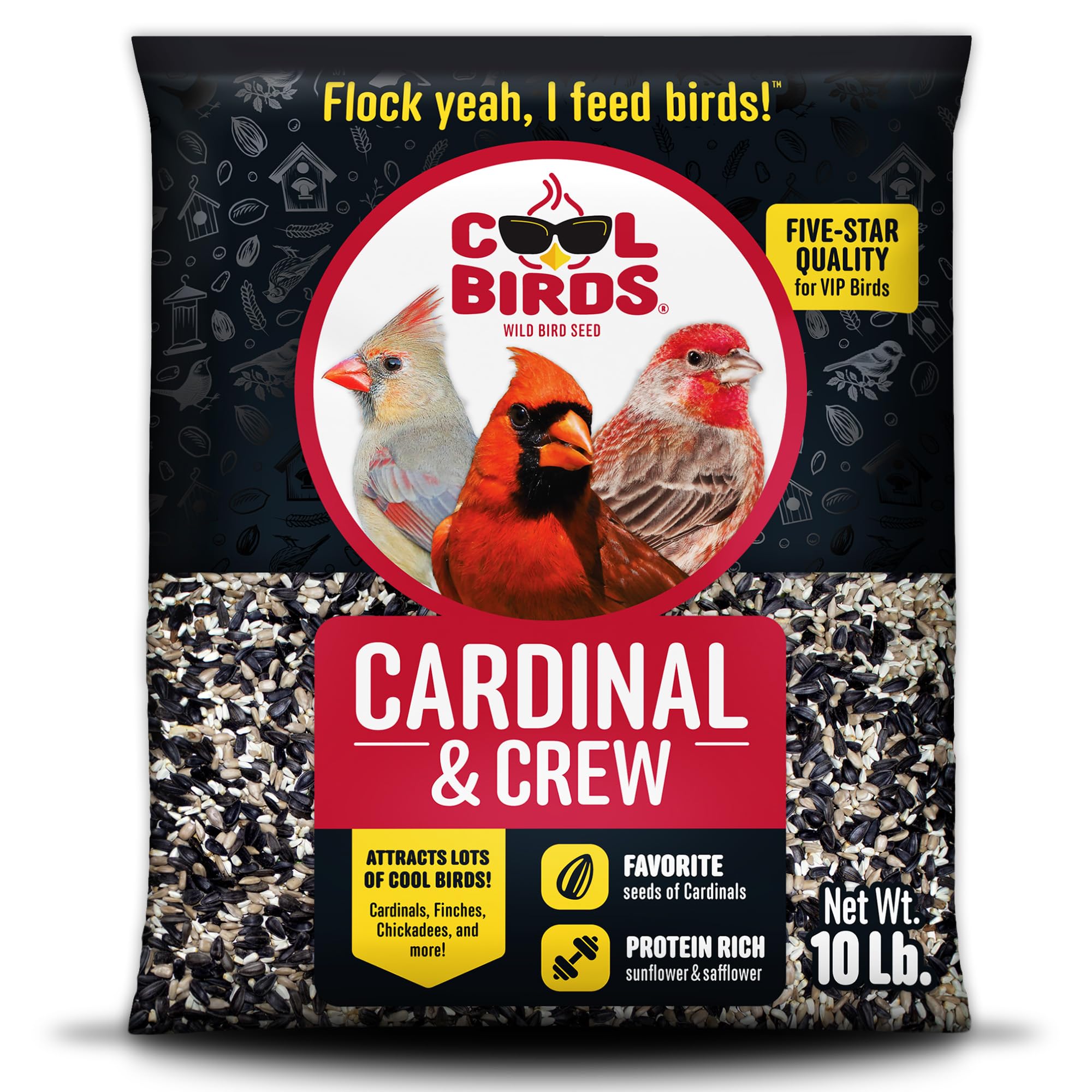
A cardinal-specific blend that one buyer ranked as the best among six brands tested.
This 10-pound mix combines three ingredients that cardinals, chickadees, and grosbeaks target: black oil sunflower, sunflower hearts, and safflower. Customers note high-quality seeds that were the best among 6 brands tested, with no fillers like corn, milo, or millet. One customer observed it attracted cardinals and house finches within the first day.
Unlike the Kaytee 7-pound bag (our top pick), this gives you 10 pounds for the same kind of premium bird experience. The catch: one reviewer found the birds ignored the sunflower and safflower hearts, eating only the black oil sunflower and scattering shells everywhere. Your results may vary by local bird population.
Strengths
- High-protein, high-fat blend for energy in all seasons
- 10 pounds at a competitive per-pound value
- Versatile for tube, tray, hopper, and platform feeders
Weakness
- Some birds may avoid the hearts and leave shells behind
A strong mainstream choice: If you want a safe bet for cardinals, grosbeaks, and chickadees without guesswork, this 10-pound bag delivers reliable results.
The tradeoff: The “hearts” ingredient is hit-or-miss depending on your local birds’ preferences.
4. Nature Anywhere Bird Seed Bird Banquet, 5 Pounds
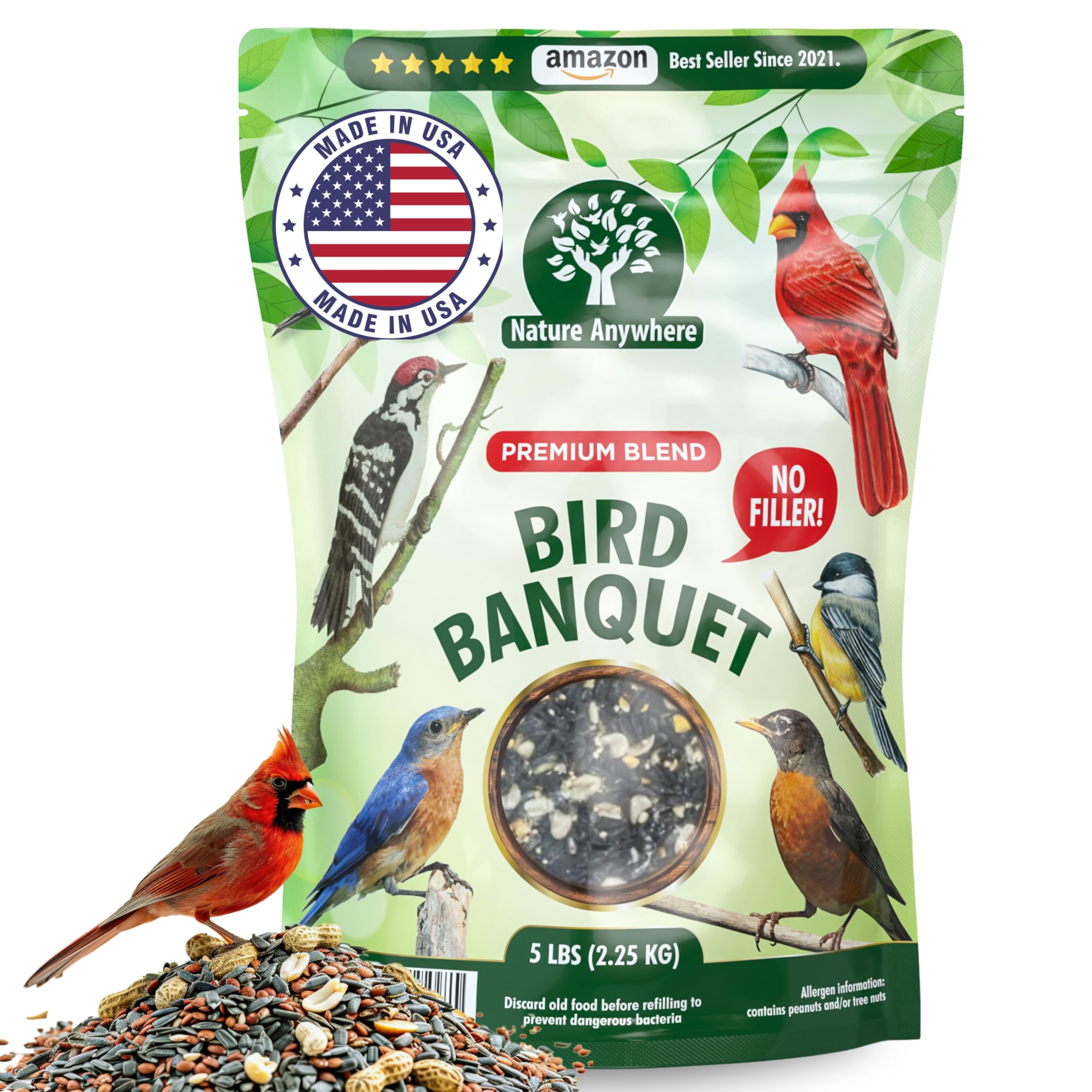
A made-in-the-USA blend with a money-back guarantee if birds do not swarm your feeder.
Nature Anywhere uses domestically grown ingredients and promises no cheap filler grains. Reviewers point out that it attracts a larger number and greater variety of birds than what they got in the past. The blend is designed to work for cardinals, finches, chickadees, and jays — all common North Carolina backyard birds.
The manufacturer offers a satisfaction guarantee: if your feeder does not become the busiest in the neighborhood, they refund you no questions asked. One user highlighted the big sunflower seeds are often left behind until a squirrel grabs them, so you may still get some ground activity. At 5 pounds, it is a smaller bag than the Cool Birds options, but the no-filler approach means less waste per pour.
Why Consider It
- Made with US-grown ingredients
- Money-back performance guarantee
- Birds reportedly go through a refill in 2 days
The Downside
- 5-pound bag empties quickly with a busy feeder
For the skeptical buyer: The money-back guarantee removes the risk of trying a new brand. If your NC birds do not like it, you get a refund.
Not ideal for: Large-volume feeders — the 5-pound size means frequent restocking compared to the 10 or 20-pound bags.
5. Happy Wings No Grow Bird Seed Mix 5lb
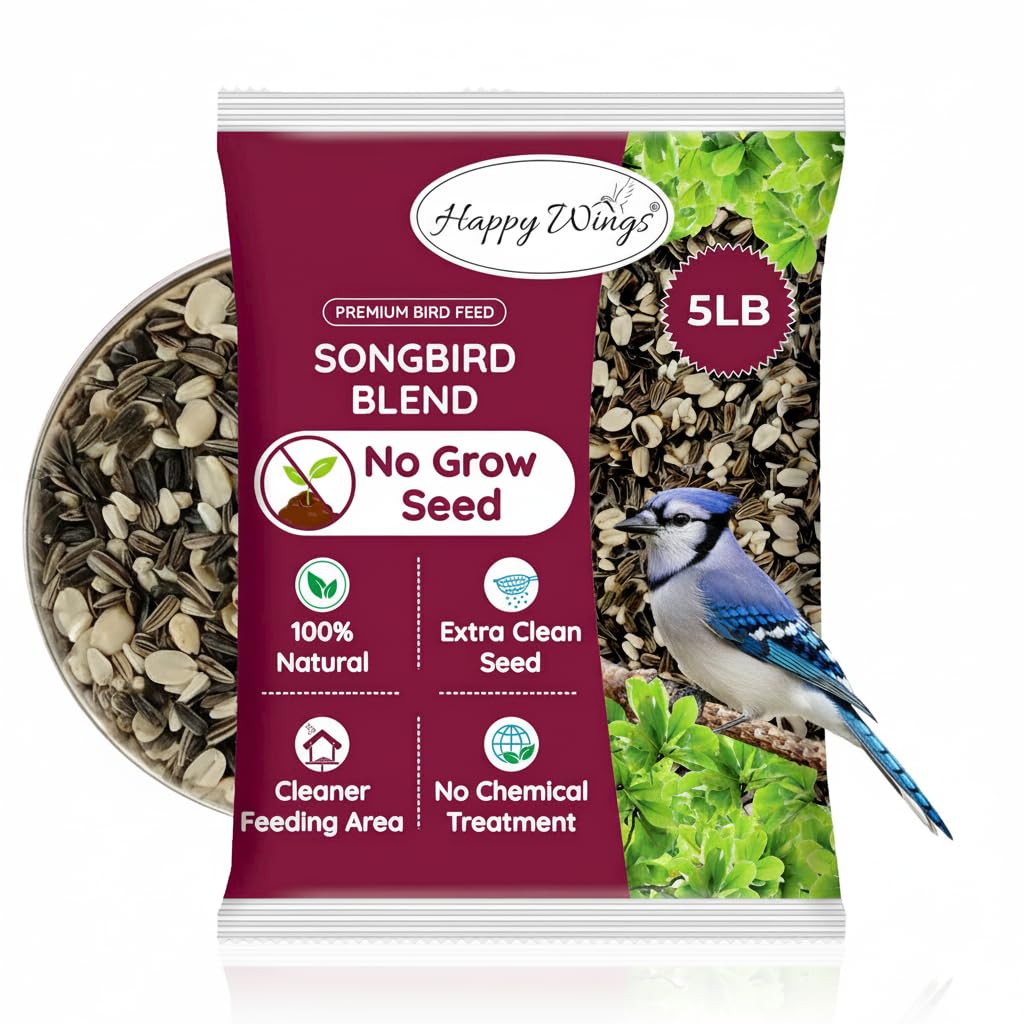
Heat-treated seed (so it cannot sprout) that attracts songbirds without sprouting weeds under your feeder.
This 5-pound mix combines sunflower, safflower, and peanuts in a no-grow formula that prevents germination. Shoppers say it attracts birds and no growth under feeders, which is a big deal in North Carolina’s humid climate where standard seeds can sprout into unwanted plants. One reviewer specifically mentioned the cardinals love it and there is no yard full of thistles.
The vacuum-sealed bag locks in freshness, and the blend is processed in USDA (United States Department of Agriculture) and BRC-GS (Brand Reputation Compliance Global Standard) approved facilities. One shopper added the peanut chunks sometimes get left behind at the bottom of the feeder, which then attracts squirrels. That is a minor trade-off for a clean lawn.
Pros
- No-grow processing prevents seed sprouting in NC’s humid climate
- Attracts cardinals, finches, and chickadees
- Vacuum-packed for freshness
Cons
- Peanut chunks can accumulate at the bottom of the feeder
Perfect for the tidy lawn lover: If you are tired of pulling weeds from under your feeder, this no-grow mix stops the problem at the source.
Not for: Those who want a pure seed experience without peanut pieces left behind.
6. Happy Wings Cardinal Blend Bird Food, 5 Pounds

Human-grade, no-grow seed that buyers report attracted birds almost immediately.
Happy Wings uses extra-clean human-grade seeds that are high in oil and protein. The no-grow treatment prevents germination without any chemicals. Owners mention it attracted birds almost immediately and brought in cardinals, juncos, house finches, and gold finches.
One reviewer called it a little expensive for the quantity, but noted the birds seem to enjoy it. The vacuum packaging keeps the seeds fresh, and the blend is processed in a USDA and BRC-GS approved facility. At 5 pounds it is a smaller bag than the Cool Birds 10-pound options, which matters if you have multiple feeders.
Highlights
- Human-grade seeds with high oil and protein content
- No-grow heat treatment keeps your yard clean
- Attracts a wide variety of songbirds quickly
Limitation
- Some buyers find the per-pound cost high compared to larger bags
For the bird enthusiast: The quick attraction and high seed quality make this a great choice if you want to see results fast.
Better for: Single-feeder setups — the 5-pound bag goes fast with multiple stations.
7. Armstrong Wild Bird Food Safflower Bird Seed, 20 Pounds

20 pounds of pure safflower that attracts cardinals while, according to the brand, initially deterring blackbirds and jays.
This 20-pound bag is 100% safflower seed, packaged in a barrier bag that is sealed airtight and CO2 flushed for freshness. Safflower is known to repel blackbirds and blue jays at first, giving smaller birds like cardinals, chickadees, and house finches a chance to feed. The manufacturer lists Northern Cardinals, Black-capped Chickadees, Dark-eyed Juncos, White-breasted Nuthatches, Downy Woodpeckers, Hairy Woodpeckers, Northern Flickers, House Finches, and Mourning Doves as target species — all birds you see across North Carolina.
One reviewer noted that blackbirds and jays eventually learned to eat it, so the deterrent effect may wear off over time. Another buyer mentioned squirrels rarely eat it, but a separate reviewer said squirrels do eat it like sunflower. The bag is large enough to fill a hopper feeder multiple times, making it among the most cost-effective single-ingredient options on this list.
Strengths
- 20-pound bag provides the best per-pound economy in this guide
- 100% safflower with no filler or debris
- Initial squirrel and blackbird deterrence
Weaknesses
- Blackbirds and jays may eventually adapt and eat the seed
- Squirrel deterrence is inconsistent between locations
For volume buyers: If you have a large hopper feeder or multiple tube feeders, the 20-pound bag keeps you stocked up for weeks.
Reconsider if: You need a guaranteed squirrel-proof solution — results vary by local wildlife population.
Understanding the Specs
Black Oil Sunflower
This is the single most popular seed for North Carolina songbirds. It has a thin shell that small birds like chickadees and finches can crack open. The high oil content provides the energy birds need, especially during cold winter months. Most high-quality blends use this as the base ingredient.
No-Grow vs. Standard
No-grow seed is heat-treated to kill the embryo inside the seed so it cannot sprout. This is done without chemicals, making it safe for birds. Standard seed may germinate (start growing) under your feeder if it lands on soil, especially in North Carolina’s humid climate. If you have a feeder over a lawn or garden bed, no-grow saves you from weeding.
Safflower
Safflower is a small white seed that cardinals, grosbeaks, and chickadees love. Many squirrels and blackbirds dislike its bitter taste at first, which gives you a natural deterrent without poison. Over time, some animals may adapt and eat it anyway. Pure safflower blends are a good option if you want to target specific species.
Sunflower Hearts vs. Whole Seeds
Sunflower hearts are the shelled kernel of the sunflower seed. They are 100% edible with no waste, which means no empty shells under the feeder. Whole sunflower seeds require the bird to crack the shell, which can be more natural and keeps birds busy. Hearts are more expensive per pound but produce zero mess.
FAQ
Which bird seed is best for cardinals in North Carolina?
What is the difference between no-grow and regular bird seed?
Will safflower seed keep squirrels away?
How much bird seed should I put out per feeder?
Is millet or milo good for North Carolina birds?
What is the best size bag for a single feeder?
How should I store bird seed to keep it fresh?
Do regional blends really attract more birds?
Final Thoughts: The Verdict
For most people, the best bird seed for north carolina is the Kaytee Southern Regional Blend because it targets the specific species you will actually see in your yard, backed by university testing (per the brand) and real painted bunting sightings. If you want a no-filler, high-value bag that lasts longer, grab the Cool Birds Safflower, Nuts & Hearts 10 lb. And for a clean lawn with zero germination, the Happy Wings No Grow Mix stops weeds at the source.
How We Picked
We do not accept paid placement. Every pick is matched to a real buyer and a real use-case; we do not hands-on test units.
Sources & Methodology
Specifications: manufacturer listings and product documentation. Review insights: verified customer reviews, as of July 2026. Pricing: not shown on this page (it changes often); check the current price via the retailer link.
As an Amazon Associate, Gadgets Feed earns from qualifying purchases. This does not affect which products we feature.