
Our readers keep the lights on and my morning glass full of iced black tea. As an Amazon Associate, I earn from qualifying purchases.
Specs are compiled from manufacturer listings and verified buyer reviews and can change over time — please confirm the key details on the product page before buying.
Rucking is the simplest way to turn a walk into a full-body workout—just add weight and go. But the wrong backpack turns that weight into a bouncing, shoulder-grinding mess that ruins your posture and kills your motivation. This guide cuts through the noise to find the packs that actually keep the load high, tight, and comfortable mile after mile.
I’m Min — the founder and writer behind Gadgets Feed. This guide is built by comparing the manufacturers’ published specifications and the patterns across verified customer reviews, so you get each pick’s real strengths and trade-offs instead of marketing spin.
When you ruck with a weighted backpack, the way the load sits on your back, the comfort of the straps after an hour, and the fabric’s ability to handle rough use all matter. The right backpack for rucking keeps the weight stable so you can move without chafing or sagging.
Our Picks at a Glance
How To Choose The Best Backpack For Rucking
A rucking backpack is different from a hiking pack or a school backpack. The weight in a rucking pack sits much heavier and needs specific engineering to keep it from wrecking your back and shoulders. Here is what to look for.
Plate Pocket Position
The single most important feature is a dedicated plate pocket that sits high on your back. Without it, the weight sinks to the bottom of the bag and pulls you backward, forcing you to lean forward to compensate. An improve pocket (sometimes called a “ruck plate pocket”) keeps the load between your shoulder blades where it belongs.
Strap and Frame Construction
Standard backpack straps dig into your neck and shoulders when you add 30 or 40 pounds. Look for heat-laminated foam straps and an internal frame sheet (a flat rigid panel inside the back panel) that transfers weight to your hips rather than your collarbones. Breathable back panel fabric like Cordura or closed-cell foam also helps reduce sweat and chafing on longer rucks.
Weight Capacity and Fabric
Check the max load rating—most budget packs cap out around 40 lbs, while premium options can handle 75 lbs or more. For the fabric, 600D Oxford polyester is a solid baseline for durability. Higher-end packs use 210D Cordura, which resists abrasion and moisture better. If you plan to drag your pack over concrete or rocks, go with the tougher material.
Quick Comparison
| Model | Best For | Weight | Max Load | Dimensions (DxWxH) | Amazon |
|---|---|---|---|---|---|
| GORUCK Rucker 4.0 20L★ Best Overall | Intense training & heavy loads | 1.68 kg | 75 lbs | 5.5″ x 4.53″ x 18″ | $255.00Amazon |
| Polyfit Rucking Backpack 2.0 | Lightweight daily training | 0.48 kg | 40 lbs | — | $69.99$79.99Amazon |
| WOLF TACTICAL Weighted Backpack | Budget-friendly entry rucking | 8.96 kg | 40 lbs | 2″ x 12″ x 14″ | $79.99$89.99Amazon |
In‑Depth Reviews
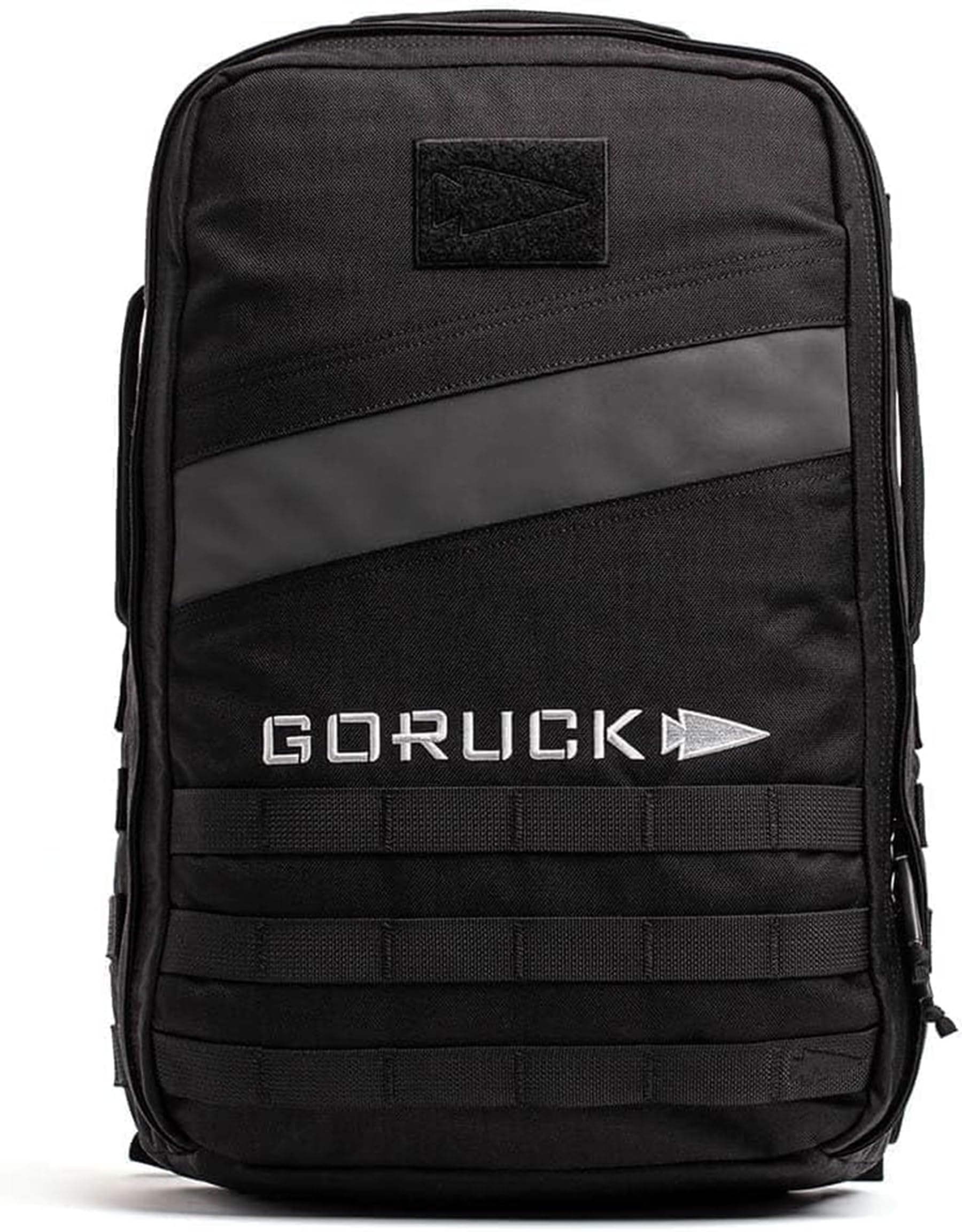
1. GORUCK Rucker 4.0 20L
Our pick — over 4.5★ from 200+ verified ratings; the strongest balance of quality and price.
The gold standard that keeps 75 lbs locked high and tight.
This is the pack designed to be nothing but a rucking tool—and it shows in every detail. The improve plate pocket positions the weight between your shoulder blades so you are not leaning forward to compensate for a load that sags to the bottom. Buyers report the pack holds two 15lb and one 45lb plates, covering a range of 15 to 75 lbs, and that the weight “rides high and tight, no wobble.”
The straps are the standout feature here: two layers of high-density polyethylene foam are heat-laminated together, providing cushioning that owners mention “doesn’t dig” even under heavy loads. The back panel uses 210D Cordura fabric that moves with you and resists sweat absorption, plus a built-in frame sheet for structural support. Unlike the Wolf Tactical pack, which caps out at 40 lbs, the Rucker handles 75 lbs without compromising stability. The trade-off is that at 1.68 kg the bag itself is not light, and at 20L the capacity is compact—this is fitness equipment, not a travel backpack. One reviewer warned to store it flat strap-side down to avoid deforming the lumbar support.
Where it shines
- improve plate pocket keeps weight high and stable on your back
- Heat-laminated foam straps resist digging into shoulders
- Rugged 210D Cordura back panel and closed-cell foam repel moisture
- Accepts up to 75 lbs with no wobble or shifting
The trade-offs
- It is several times pricier than entry-level packs
- Only 20L capacity limits it to fitness use, not everyday carry
- Heavier than the Polyfit (1.68 kg vs 0.48 kg)
Best for heavy lifters: If you plan to ruck with 40+ lbs regularly and want a pack that will outlast your training, this is the one.
Skip if on a budget: If you are new to rucking and want to keep the upfront cost low, the Polyfit or Wolf Tactical are more wallet-friendly starting points.
2. Polyfit Rucking Backpack 2.0
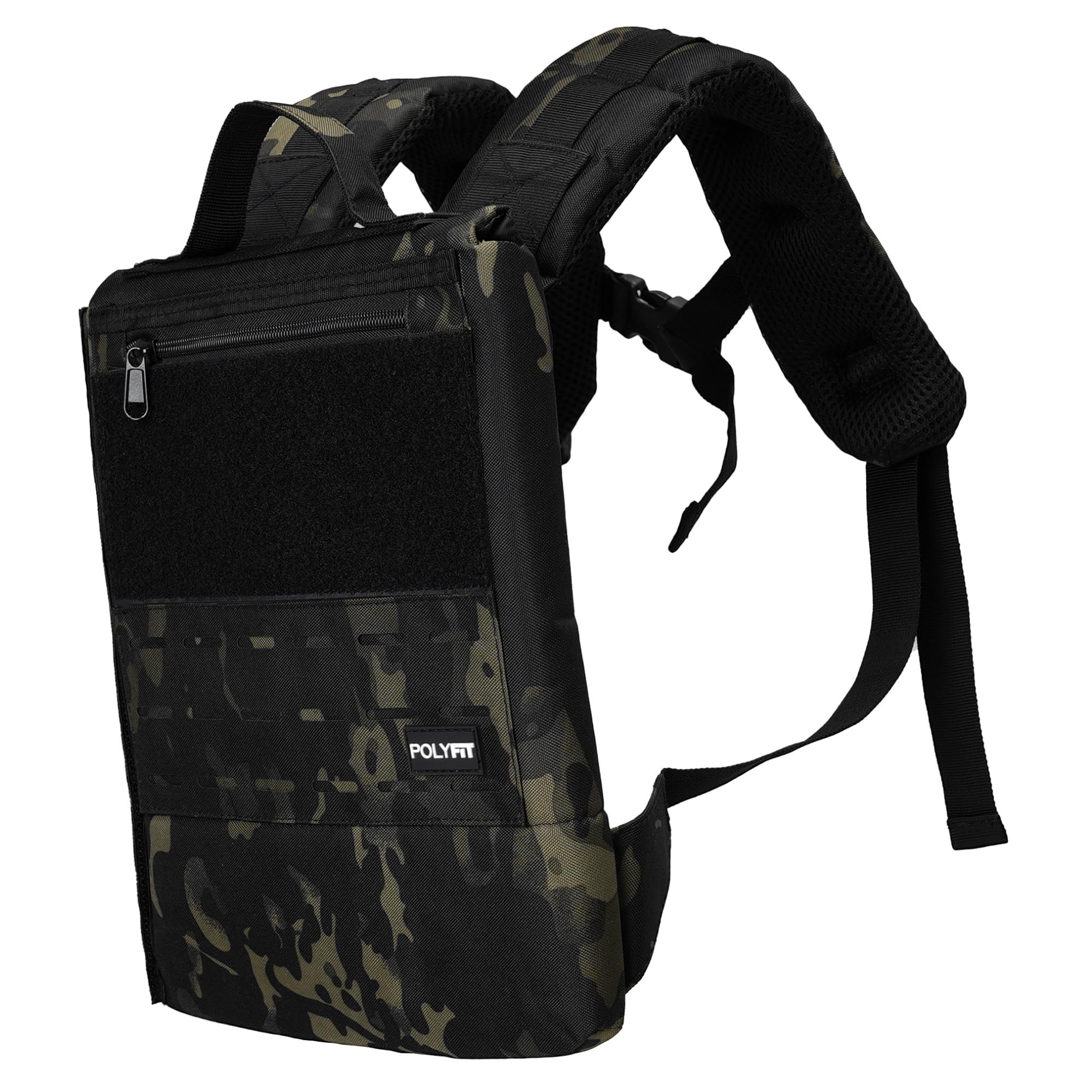
A featherlight 0.48 kg pack that moves with you, not against you.
This is the lightest pack in the comparison by a huge margin—at 0.48 kg versus the GORUCK’s 1.68 kg and the Wolf Tactical’s 8.96 kg. At just 0.48 kilograms, the Polyfit is built for range of motion: the low-profile design lets you run, jump, and do bodyweight exercises without the bag flopping around. The patent-pending side-loading system makes sliding plates in and out quick, and an internal buckle locks them so there is no shifting during high-intensity movement.
It accepts weight plates up to 10×12 inches and holds a maximum of 40 lbs. The fit is designed for body types from XS to Large, though the manufacturer notes that tall or broad-shouldered users (6’0″+) may find it snug. Unlike the Wolf Tactical pack, which uses a bulky 600D polyester frame, the Polyfit uses lightweight fabrics that keep the total carry weight down—your energy goes into training, not hauling the bag itself. The main drawback is that reviewers have flagged that the fabric is less rugged, so if you drag your pack over concrete or rocks regularly, this may wear faster.
What makes it great
- Extremely lightweight at 0.48 kg—barely noticeable before you load it
- Side-loading design for fast plate swaps without overstuffing
- Breathable back panel keeps you cool during long sessions
- Fits most body sizes from XS to Large
Where it falls short
- Max load of 40 lbs—not enough for advanced lifters
- Lightweight fabric may not survive abrasion from rough surfaces
- Snug fit for users over 6’0″ with broad shoulders
Perfect for runners and HIIT: The Polyfit weighs less than most rucking packs, so it stays close to your back during running or bodyweight circuits. Customers note it feels less bulky than the backpack for rucking alternatives that use heavier fabrics.
Not for heavy dragging: If your rucking involves trails with rough rocks or you plan to overload past 40 lbs, look at the GORUCK instead.
3. WOLF TACTICAL Weighted Backpack

A sturdy workhorse for entry-level rucking that won’t break the bank.
This pack is built around simplicity and value. It uses 600D Oxford polyester that can handle sweat, dirt, and repeated use without looking ragged. The straps have thick breathable padding, and an adjustable chest strap helps keep the load from shifting side to side. Reviewers point out that the pack “holds weight close without shifting” and that it is “comfortable” for a weighted pack. It fits standard 10×12 cast iron plates up to 40 lbs, and one reviewer noted it fits 2x10lb and 1x5lb plates comfortably.
At 8.96 kg, the pack itself is notably heavy—compared to the Polyfit’s 0.48 kg—which means your total carry weight includes the bag’s own heft before you even add plates. The dimensions are compact at 2″D x 12″W x 14″H, so it is not designed for massive loads (shoppers say it feels too small to exceed 25 lbs). The laser-cut MOLLE webbing on the front is a nice touch for attaching pouches or a water bladder. Compared to the GORUCK, it lacks the high-end Cordura fabric and improve plate pocket, but for a fraction of the price, it gets the job done for a beginner testing the waters of rucking.
Why it delivers value
- Durable 600D Oxford polyester stands up to heavy use
- Adjustable chest strap and padded shoulder straps keep it stable
- MOLLE webbing allows you to attach extra gear or accessories
- Budget-friendly entry point for beginning ruckers
What holds it back
- At 8.96 kg the pack itself is very heavy—adds to your load
- Max capacity of 40 lbs limits progressive overload
- Too small to comfortably handle more than 25 lbs per reviewers
Reach for this if: You are new to rucking and want a reliable, affordable pack to start with light plates under 25 lbs.
Look elsewhere if: You plan to ruck heavy (40+ lbs) or want a bag that does not add its own weight to your load—the Polyfit or GORUCK are better choices.
Understanding the Specs
Plate Pocket
A plate pocket is a fabric sleeve inside the backpack specifically designed to hold a weight plate. The best pockets sit high on your back, near your shoulder blades, keeping the weight from sagging to the bottom of the bag. This reduces forward lean and lowers strain on your lower back. Without an improve pocket, the plate will bounce around and pull you off balance.
Frame Sheet
A frame sheet is a rigid flat panel (often made of high-density polyethylene or closed-cell foam) sewn into the back panel of the backpack. It gives the pack structure so it does not collapse into a sagging shape under heavy weight. It also helps transfer the load from your shoulders to your hips, reducing pressure on your collarbones. Packs rated for 40+ lbs almost always include a frame sheet.
Cordura vs 600D Polyester
Cordura (nylon-based) is more abrasion-resistant and dries faster than standard polyester. 600D Oxford polyester is the baseline for budget and mid-range packs—it is tough enough for most rucking but will wear faster if dragged across concrete or rocks. Cordura is lighter for the same strength but costs significantly more. If you plan to ruck on trails and rough terrain, Cordura pays off in longevity.
MOLLE Webbing
MOLLE (Modular Lightweight Load-carrying Equipment) is a grid of heavy-duty nylon strips sewn onto the outside of a pack. You thread pouches, pockets, or water bottle holders through the strips to attach extra gear. It adds versatility to a rucking pack, letting you customize your setup without needing a bigger bag. It is common on tactical-style packs like the Wolf Tactical.
FAQ
Can I use a regular hiking backpack for rucking?
What size weight plate fits a rucking backpack?
How much weight should I start with for rucking?
Is a heavier backpack better for rucking?
Will a rucking backpack fit a water bladder?
What is the difference between MOLLE webbing and regular webbing?
How do I clean a rucking backpack after a sweaty workout?
Can I run while wearing a rucking backpack?
Do I need a hip belt for a rucking backpack?
What does “closed-cell foam” mean in a rucking backpack?
Final Thoughts: The Verdict
For the majority of shoppers, the backpack for rucking winner is the GORUCK Rucker 4.0 20L because it handles the heaviest loads (up to 75 lbs) with no wobble and straps that do not dig into your shoulders. If you want a featherlight pack that disappears during runs and high-intensity training, grab the Polyfit Rucking Backpack 2.0. And for a budget-friendly entry point that holds standard plates while staying affordable, the WOLF TACTICAL Weighted Backpack gets you started without a big commitment.
How We Picked
We do not accept paid placement. Every pick is matched to a real buyer and a real use-case; we do not hands-on test units.
Sources & Methodology
Specifications: manufacturer listings and product documentation. Review insights: verified customer reviews, as of July 2026. Pricing: not shown on this page (it changes often); check the current price via the retailer link.
As an Amazon Associate, Gadgets Feed earns from qualifying purchases. This does not affect which products we feature.
Related Guides
Product prices and availability are accurate as of the date/time indicated and are subject to change. Any price and availability information displayed on Amazon at the time of purchase will apply to the purchase of this product. As an Amazon Associate I earn from qualifying purchases.
CERTAIN CONTENT THAT APPEARS ON THIS SITE COMES FROM AMAZON. THIS CONTENT IS PROVIDED "AS IS" AND IS SUBJECT TO CHANGE OR REMOVAL AT ANY TIME.
Amazon and the Amazon logo are trademarks of Amazon.com, Inc. or its affiliates.