
Our readers keep the lights on and my morning glass full of iced black tea. As an Amazon Associate, I earn from qualifying purchases.
Specs are compiled from manufacturer listings and verified buyer reviews and can change over time — please confirm the key details on the product page before buying.
A climbing bike needs to be a little stubborn. It refuses to let gravity win. The right one shaves ounces where you feel them most — in the frame, the wheels, the drivetrain — so every pedal stroke sends you up the grade instead of deeper into the saddle. A bike that climbs well means shifting stays crisp under load, braking feels sure on a steep descent, and the whole package weighs under 20 pounds (about 9 kg).
I’m Min — the founder and writer behind Gadgets Feed. This guide is built by comparing the manufacturers’ published specifications and the patterns across verified customer reviews, so you get each pick’s real strengths and trade-offs instead of marketing spin.
If you are hunting for a stiff, lightweight frame paired with a wide-range cassette (a rear gear set with big teeth for low gears) to keep your cadence (pedal speed) steady on a double-digit grade, the right bike for climbing turns a punishing stretch of asphalt into a spinning rhythm.
Our Picks at a Glance
How To Choose The Best Bike For Climbing
A bike that climbs well is different from a bike that flies on the flats. You want a frame that does not flex under torque (twisting force from pedaling hard), a gearing setup that keeps you from grinding to a halt, and a weight that does not fight you on every upward pedal stroke. Here is what separates a good climber from a heavy one.
Frame Material & Weight
Carbon fiber is the go-to for climbing because it saves serious weight without sacrificing stiffness. A T800 grade carbon frame, for instance, is roughly five times harder than an aluminum alloy frame at the same volume, according to the manufacturer. That stiffness means every watt you push goes into forward motion, not into flexing the frame. Look for a complete build weight under 20 pounds (around 9kg) — that is the threshold where a bike starts to feel genuinely light on a climb.
Drivetrain & Gear Range
Climbing is about cadence, not brute force. A compact crankset (50/34T — a two-ring front gear set with 50 teeth on the big ring and 34 on the small one) paired with a wide-range cassette (11-34T rack of rear gears) gives you the low gears you need to spin up a steep grade without mashing the pedals. The number of speeds matters less than the spread: an 18-speed bike with a climbing-friendly range can out-climb a 24-speed bike built for flat-out racing. Shimano 105 and Ultegra groupsets (complete gear-changing systems) are common here because they shift reliably under load.
Brakes & Wheel Specs
What goes up must come down. Hydraulic disc brakes (brakes that use fluid in a sealed line to squeeze metal discs on the wheel hubs) give you consistent, one-finger braking power on a descent, even in wet conditions — mechanical rim brakes struggle with heat buildup and wet rims. On the wheel side, a carbon wheelset in the 40-50mm depth range balances aero gains on the flats with manageable weight for climbing. Tires around 700x25C (standard road diameter, 25mm wide) offer a good compromise of grip and rolling resistance.
Quick Comparison
| Model | Best For | Weight | Drivetrain | Brake Type | Amazon |
|---|---|---|---|---|---|
| SAVADECK Carbon Disc SORAEntry Disc Climber | Entry-level disc brake climber | 9.6kg (21.1 lb) | Shimano SORA 18-speed | Disc | $1,269.00Amazon |
| SAVADECK SORA V-Brake | Budget-friendly carbon entry | 8.9kg (19.6 lb) | Shimano SORA 18-speed | Linear Pull (V-Brake) | $999.00Amazon |
In‑Depth Reviews
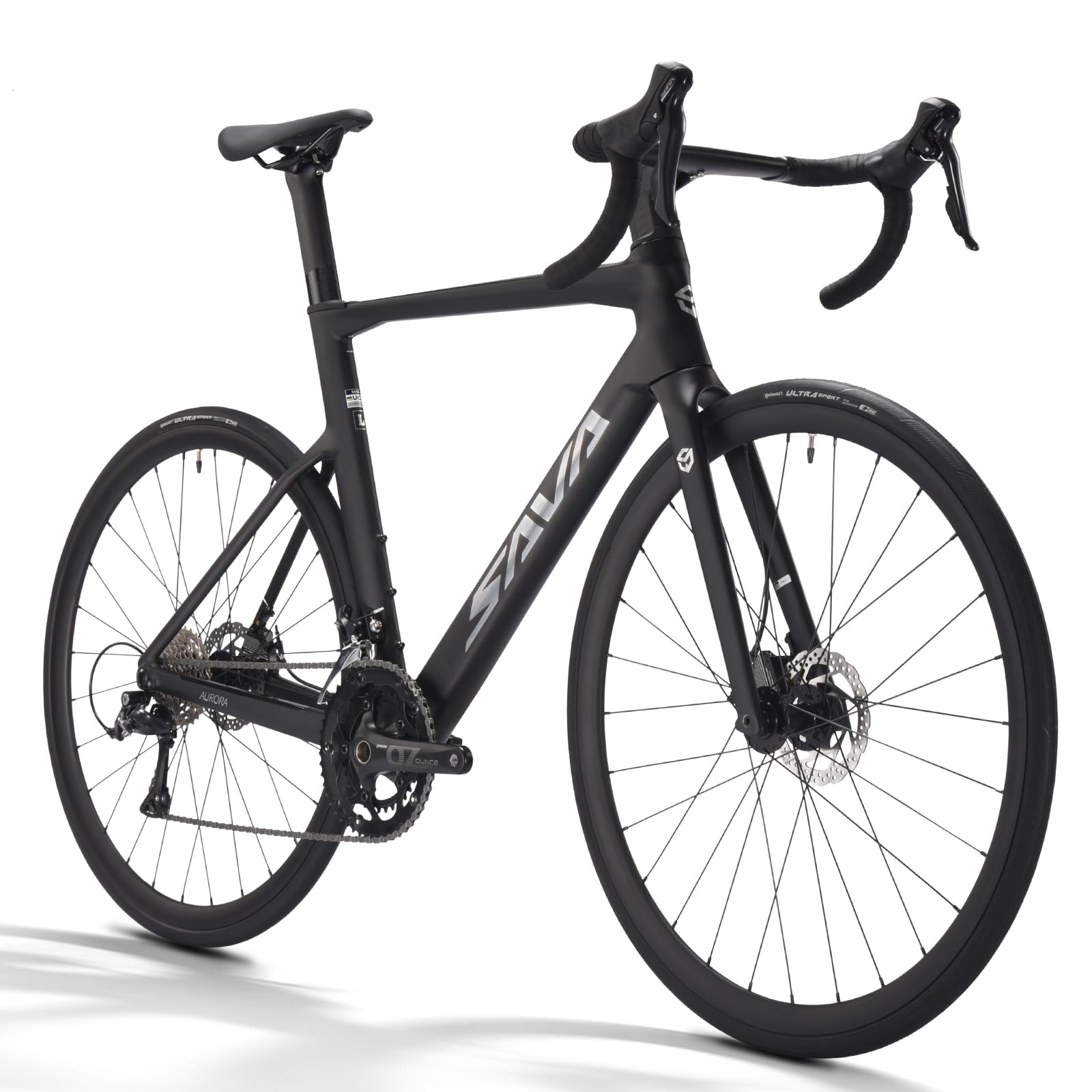
1. SAVADECK A7L Pro Full Carbon Fiber Racing Bike
At 8.8kg this is the lightest build in the line — it uses the same R7120 groupset and hydraulic discs found on bikes costing hundreds more.
This bike weighs 8.8kg (19.4 lb) and uses the same T800 carbon frame, fork, seatpost, and wheelset. The drivetrain is identical (Shimano R7120 24-speed with R7100 front and rear derailleurs), so you are getting the same climbing-friendly gear range and the same hydraulic disc brakes from R7120 levers and R7170 calipers. Shoppers say that “the hydraulic disc brakes are a standout” for downhill confidence, calling them “smooth, responsive, and confident stopping power even at higher speeds or on descents.”
A 24-speed drivetrain paired with a compact crankset (50/34T) and a wide-range cassette gives you a low enough gear to spin up steep paved grades without mashing. The 700x25C carbon wheels with JETTY PLUS tires add an anti-skid design on both sidewalls, so cornering at high speed after a descent feels planted. One reviewer coming from a Specialized said this bike “definitely seems a lot better than my specialized I had.”
The most common buyer complaint is that the freewheel cassette (the gear cluster that spins when you stop pedaling) can be noisy from the start because the grease has not spread — a ten-minute shop fix. A couple of owners also mentioned the packaging took a beating in transit (though the bike itself arrived undamaged). Still, at roughly a third of the Ultegra Di2 build’s cost, this is the sharpest price-to-performance point in the lineup for pure climbing.
Why it climbs well
- Lightest frame in the range at 8.8kg — you feel the difference on every pedal stroke up a grade
- Full R7120 groupset with hydraulic discs for consistent braking on descents
- 24-speed gearing gives you the low-end range to spin instead of grind
Small compromises
- Freewheel cassette may need a grease redistribution by a shop
- Packaging can be rough — inspect the frame thoroughly on arrival
Best for: Riders who want the lightest possible build price without sacrificing hydraulic disc brakes, and who do not need the complexity of electronic shifting.
Skip if: You want a bike that is perfectly quiet from the first ride without a trip to the mechanic, or you prefer the slightly higher-spec components of the A7L Pro.
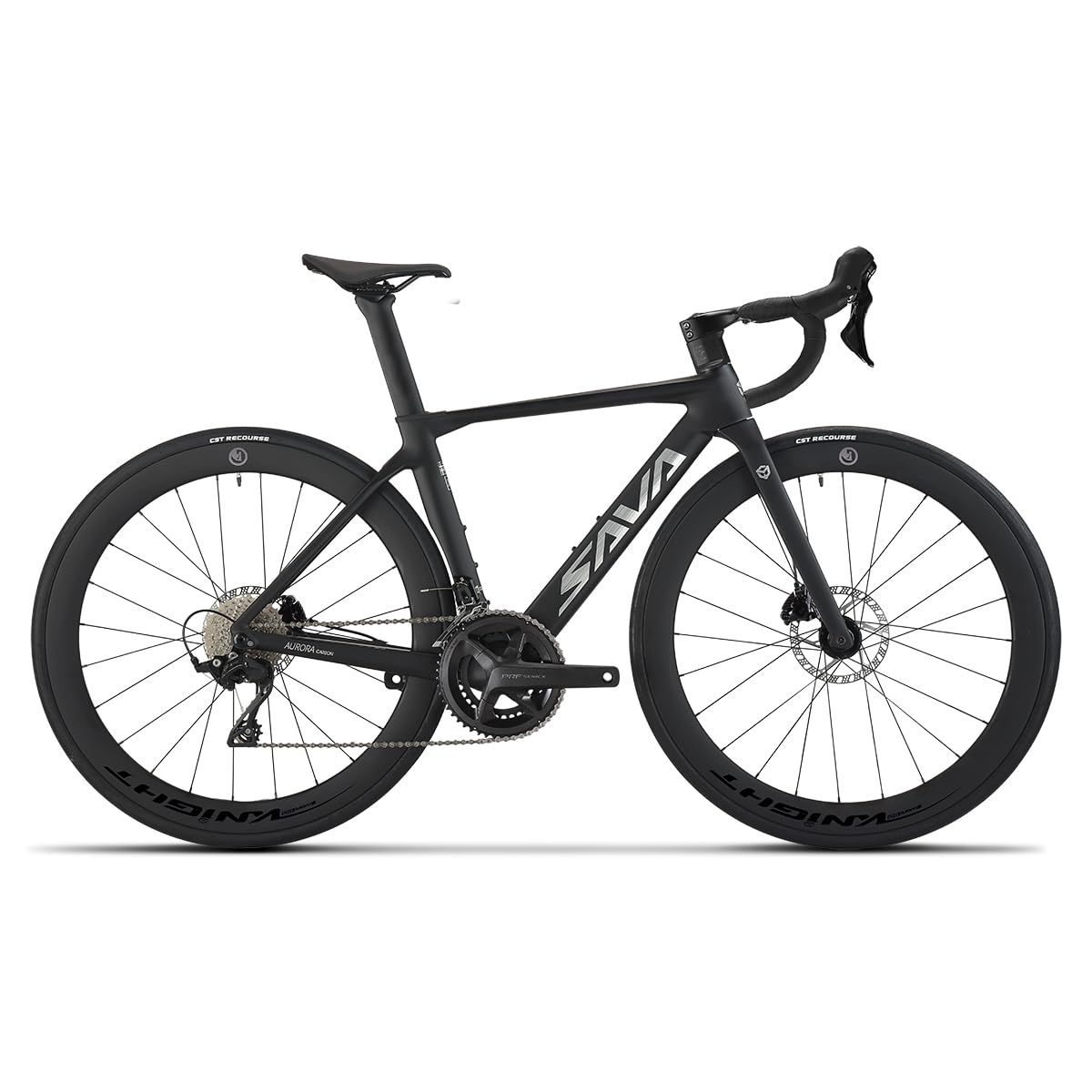
2. SAVADECK Carbon Disc Road Bike, Shimano SORA 18-Speed
Disc brakes on a carbon frame that weighs 9.6kg — 1.8 lb heavier than the lightest build here, but still a big step up from a standard aluminum road bike that often tips 11-12kg.
This build uses a Toray T800 carbon frame, fork, rims, and seatpost, but comes at 9.6kg (21.1lb) — about 9% heavier than the 8.8kg model above. The extra weight comes primarily from the SORA R3000 18-speed mechanical drivetrain and the dual disc brakes (which use a bilateral brake line pulling system for balanced power). For a rider on a budget, 9.6kg is still light enough to make a noticeable difference on a climb compared to a standard aluminum bike that often tips 11-12kg. The SORA groupset has 9 speeds in the rear, so the gear range is narrower than the 12-speed 105 builds — you will have slightly bigger jumps between gears, but the lowest gear is low enough for most paved climbs.
Customers note that the bike is “super light, super fast” and that the setup is “easy and pain free, was riding around in less than 20 minutes.” Another owner, aged 78, said the bike is “light as a feather” and found it much easier to handle than their previous taller bike. The 700x25C Continental tires are a nice touch at this price point — Continental is known for good grip and puncture resistance. Free pedals are included, though you will want to upgrade to clipless pedals for serious climbing.
The most honest limitation: several buyers noted that the generic assembly instructions are incomplete (they show a quick-release axle, but this bike uses a bolt-through axle — a stiffer type of wheel mount), and the front wheel may rub the disc caliper from the start, requiring a simple realignment. The weight difference between this build (9.6kg) and the lighter R7120 build (8.8kg) is 0.8kg — about 1.8 lb — which is noticeable over a long climb but not a dealbreaker for an entry-level budget.
Suitable for: New road cyclists who want a carbon frame with disc brakes at an accessible entry point, and who are comfortable with a narrower 18-speed gear range. The 9.6kg weight is still a solid climbing platform for the price tier.
Not for: Experienced climbers who will feel the 0.8kg gap to the lighter builds, or anyone who wants a wide-range cassette with small gear steps for sustained gradients.
Best for: The rider moving up from an aluminum hybrid who wants their first carbon road bike with disc brakes, and who values the brand’s customer support (buyers praise the sizing guidance).
Skip if: You are chasing the lightest possible build weight or need a wide-range 12-speed cassette for steep alpine passes.
3. SAVADECK Carbon Road Bike for Beginners, Shimano SORA 18-Speed V-Brake
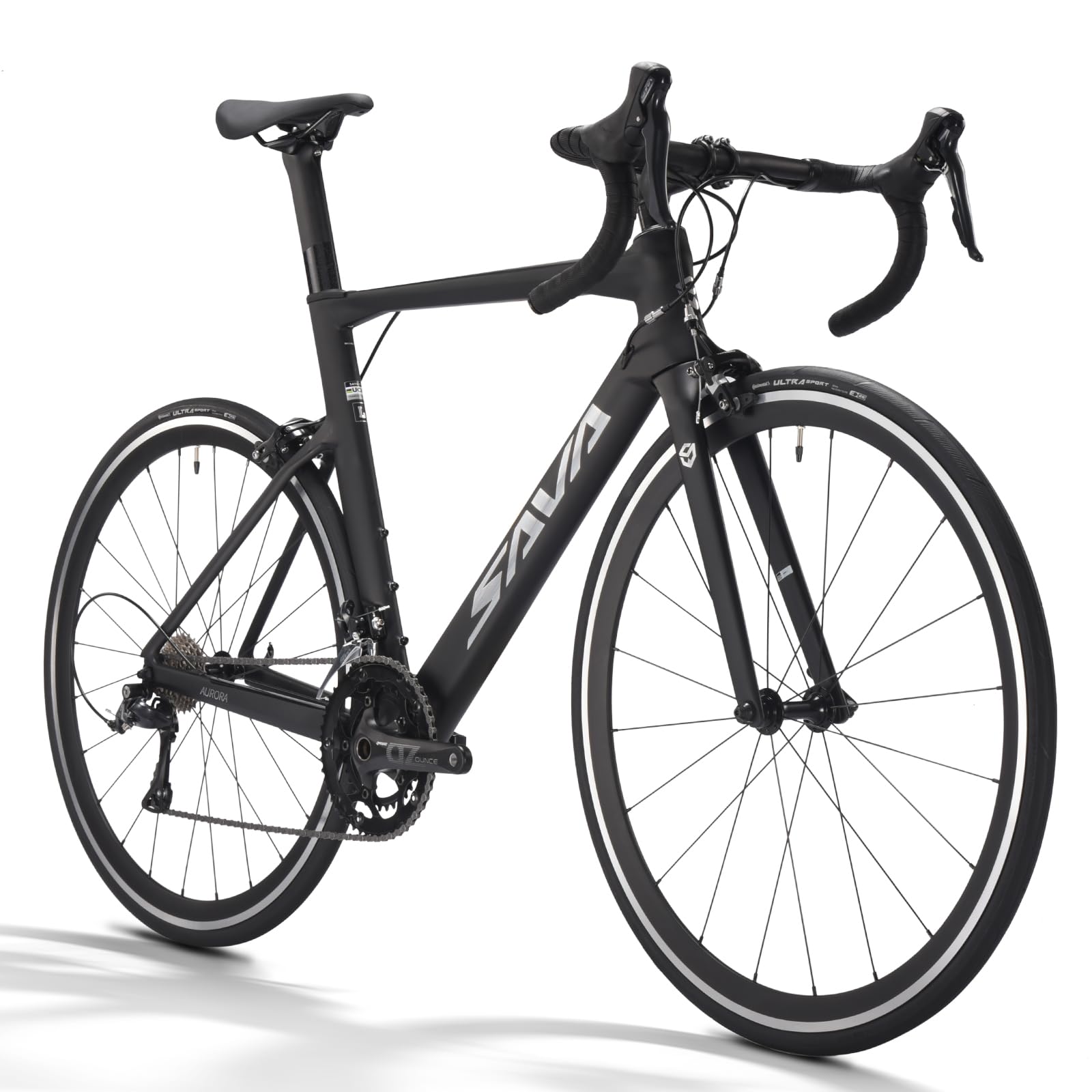
The cheapest way to get an 8.9kg full carbon frame — at the same weight as the A7L Pro builds but with simpler V-brakes instead of discs, and an 18-speed SORA drivetrain instead of 24-speed 105.
At 8.9kg (19.6 lb), this is the same weight as the A7L Pro and A7L Carbon builds — but it trades the disc brakes for a double V-brake system (linear pull — the classic caliper brake that squeezes the wheel rim) and uses the entry-level Shimano SORA 18-speed groupset. For a climbing-specific budget, the light weight is the real story here: 8.9kg is a legitimate number for a bike at this price tier, and the T800 carbon frame is the same material used on the more expensive builds. The drivetrain is 2×9-speed with SORA shift levers, front derailleur, and rear derailleur, giving you smooth, reliable shifting that is proven for new road cyclists.
Buyers are very positive: one said “it took only 7 days for delivery” and called the bike “well built” and “rides very smoothly.” A shorter rider (4’11”) said the bike fit great after trimming 1.5 inches from the seatpost, and the “smooth shifting” and light weight made it easy to handle. Another owner described the Continental Ultra Sport II 700x25C tires as “responsive on wet roads.” The bike arrives 90% pre-assembled — attach the handlebar, front wheel, seatpost, and pedals — and most reviewers point out about 15 to 40 minutes of work.
The biggest trade-off is the V-brake system. Rim brakes work fine on dry days for moderate descents, but they lose stopping power in the rain and wear down the wheel rims over time. Compared to the SORA disc build above (which is 0.7kg heavier but has disc brakes), this bike is lighter and cheaper but less confident on long, wet descents. Also, a few shoppers say that the seat does not stay in its set position under heavier riders — a simple fix with a seatpost clamp upgrade.
Budget climbing strengths
- 8.9kg full carbon frame — lighter than many disc-brake bikes at twice the price
- Shimano SORA drivetrain shifts reliably and is easy to maintain yourself
- Continental Ultra Sport II tires provide good grip for the price
Where it cuts corners
- V-brakes lack stopping power on wet descents compared to any disc brake model
- 18-speed gear range means bigger jumps between ratios on climbs
- Seat may shift under aggressive pedaling without a clamp upgrade
Best for: Riders on a strict budget who still want a genuinely light carbon climbing bike (8.9kg) and mostly ride on dry, paved roads with moderate descents. The frame gives you a solid platform to upgrade components over time.
Not for: Anyone who rides in rain, does steep alpine descents, or wants the late-model 12-speed gear range for tight-cadence climbing on long grades.
Understanding the Specs
Frame Weight & Stiffness
A climbing bike’s frame needs to be light enough that you do not feel like you are hauling dead weight, but stiff enough that every watt of power pushes you forward instead of bending the frame. T800 carbon fiber is a common material here — manufacturers claim it is about five times harder than aluminum alloy at the same volume, which translates to less frame flex under heavy pedaling. A complete build weight under 20 pounds (about 9kg) is the benchmark for a bike that feels genuinely “light” on a climb.
Drivetrain & Gear Range
The number of speeds tells only part of the story. What matters for climbing is the actual gear range — specifically, how low the lowest gear is. A compact crankset (50/34T) paired with a cassette that goes up to 34 teeth or more gives you a gear that lets you spin at a comfortable cadence (80-90 rpm) on a steep grade. An 18-speed groupset with a 34T cassette can climb just as well as a 24-speed groupset if the low gear ratio is similar; the extra speeds just give you smaller jumps between gears.
FAQ
What makes a bike specifically good for climbing?
Is 18-speed enough for climbing hills?
How much does a good climbing bike weigh?
Do I need disc brakes for climbing?
Will a carbon bike break on rough roads?
What size should I order for a SAVADECK bike?
Are these bikes easy to assemble at home?
How long does shipping take for these bikes?
Are the included pedals good enough for climbing?
Final Thoughts: The Verdict
For most riders, the bike for climbing winner is the SAVADECK A7L Pro because its 8.8kg carbon frame, full Shimano R7120 24-speed drivetrain, and hydraulic disc brakes deliver the complete climbing package without pushing into premium territory. If you want uncompromised electronic shifting with a Di2 groupset that finds your gear instantly, grab the SAVADECK Ultegra Di2. And for the tightest budget that still gets you a genuinely light carbon bike, the SAVADECK SORA V-Brake is the frame-only platform worth building from.
How We Picked
We do not accept paid placement. Every pick is matched to a real buyer and a real use-case; we do not hands-on test units.
Sources & Methodology
Specifications: manufacturer listings and product documentation. Review insights: verified customer reviews, as of July 2026. Pricing: not shown on this page (it changes often); check the current price via the retailer link.
As an Amazon Associate, Gadgets Feed earns from qualifying purchases. This does not affect which products we feature.
Related Guides
Product prices and availability are accurate as of the date/time indicated and are subject to change. Any price and availability information displayed on Amazon at the time of purchase will apply to the purchase of this product. As an Amazon Associate I earn from qualifying purchases.
CERTAIN CONTENT THAT APPEARS ON THIS SITE COMES FROM AMAZON. THIS CONTENT IS PROVIDED "AS IS" AND IS SUBJECT TO CHANGE OR REMOVAL AT ANY TIME.
Amazon and the Amazon logo are trademarks of Amazon.com, Inc. or its affiliates.