
Our readers keep the lights on and my morning glass full of iced black tea. As an Amazon Associate, I earn from qualifying purchases.
Specs are compiled from manufacturer listings and verified buyer reviews and can change over time — please confirm the key details on the product page before buying.
Black ice doesn’t care about your morning routine. One slick patch on a driveway or a hidden sheet on a hiking trail can turn a brisk walk into a falling hazard. That’s why having boots with a dedicated ice-grip system — not just a deep tread pattern — is the real safety difference between staying upright and taking a spill.
I’m Min — the founder and writer behind Gadgets Feed. This guide is built by comparing the manufacturers’ published specifications and the patterns across verified customer reviews, so you get each pick’s real strengths and trade-offs instead of marketing spin.
Whether you are clearing an 8-inch snowfall, sitting still in 20-degree weather on a deer stand, or hiking an Icelandic glacier in March, the boots for ice you choose must deliver reliable traction on frozen surfaces, warmth in subzero wind chills, and waterproof protection against slush and meltwater — this guide breaks down three of the most capable winter boots built to handle the worst winter can throw at you.
Our Picks at a Glance

How To Choose The Best Boots For Ice
Picking a winter boot is simple if you stay warm at home. Picking one that actually grips ice and keeps your feet warm when you are standing still in subzero weather requires looking at three things: the outsole rubber technology, the insulation weight, and how waterproof the boot really is. Here is what matters.
Ice Grip Technology — The Real Safety Feature
Standard winter boot treads are designed for mud and loose snow. Ice needs something different. Look for outsoles using Vibram Arctic Grip or an equivalent polar-traction compound — these rubbers contain microscopic particles (so tiny you cannot see them) that dig into frozen surfaces. Without this technology, you will likely need bolt-on crampons or microspikes for serious ice.
Insulation Rating — Warmth Without the Sweat
Insulation is measured in grams. Taller shafts also help trap heat by wrapping higher up your calf, preventing snow from sneaking in at the top.
Waterproof Construction — Staying Dry Is Staying Warm
Wet feet get cold fast. A dedicated waterproof membrane like KEEN.DRY (a breathable inner liner that blocks water but lets sweat escape) or a rubber outer shell keeps meltwater out during snow shoveling, slushy walks, or standing in shallow creeks. Taller boots around 15 inches give you extra protection when trudging through deeper snow.
Quick Comparison
| Model | Best For | Ice Grip Tech | Insulation | Boot Height | Amazon |
|---|---|---|---|---|---|
| KEEN Revel 4 Polar★ Best Overall | Hiking & all-day comfort on ice | KEEN.POLAR TRACTION | 200g to -25°F | 3.94 inches (mid) | Amazon |
| Merrell Coldpack 3 Thermo Tall Zip | Deep snow & premium traction | Vibram Arctic Grip | 200g | Tall (zip closure) | Amazon |
| MUCK Arctic Ice Tall | Stationary cold-weather use | Vibram Arctic Grip A.T. | — | 15 inches | Amazon |
In‑Depth Reviews
1. KEEN Women’s Revel 4 Mid Height Polar Insulated Waterproof Snow Boots
Our pick — over 4★ from 600+ verified ratings; the strongest balance of quality and price.
A hiking-boot feel with a subzero down-jacket warmth — and ice grip that A Canadian lab rated the KEEN.POLAR TRACTION outsole as top-tier for ice grip..
These boots earned a spot on this list because A Canadian laboratory rated the KEEN.POLAR TRACTION outsole among the best for ice grip.. One buyer who specifically tracked down this boot after reading that lab test said “as an older person in a colder climate I dont want to risk falls.” The KEEN.POLAR TRACTION outsole uses microscopic shards (tiny particles embedded in the rubber) to dig into icy terrain — a different approach from the Vibram systems on the other two picks, and one that multiple reviewers confirm works well on actual ice, so you feel stable on frozen sidewalks.
The 200g of KEEN.WARM Recycled P.E.T. (a synthetic insulation made from recycled plastic bottles) insulation is rated to -25°F/-32°C, matching the Merrell’s warmth. But where the Revel 4 stands apart is its comfort for all-day hiking. One reviewer wore them “during my trip to Iceland in March, and they were absolutely fantastic” — hiking through snow, slush, and even climbing Angels Landing without slipping. At 20.32 oz (576g) per boot they are noticeably lighter than the 15-inch MUCK boots, making them a better choice if you plan to walk miles rather than stand still. The Heat Trapolator technology underfoot uses three layers to trap warmth, and the Thermal Heat Shield insole captures heat before it escapes.
The trade-off is the mid-height shaft at just 3.94 inches. If you are stomping through knee-high snow like the Merrell buyer did, you will want a taller boot. One customer observed they performed well with microspikes if extra grip was needed. Another buyer pointed out that while Keens are famous for a wide toe box, these run slightly narrower than expected — something to consider if you have wide feet. The leather and mesh upper is less rugged than the full rubber build of the MUCK, so expect to treat these as a winter hiker rather than a farm chore boot.
Lab-Tested Grip
- KEEN.POLAR TRACTION rubber with microscopic shards provides verified grip on ice
- 200g insulation rated to -25°F/-32°C keeps feet warm in extreme cold
- Lightweight at 20.32oz per boot — built for hiking, not just standing
Snow Depth Limit
- Mid-height shaft at 3.94 inches lets snow in during deep-powder conditions
- Traction is very good but some reviewers still added microspikes for steep ice
- Toe box runs narrower than typical KEEN fit, which may disappoint wide-foot buyers
Perfect for active winter days: If you hike, snowshoe, or explore cold-weather destinations on foot — and you need Canadian-lab-tested ice grip — the KEEN Revel 4 gives you hiking-boot comfort with real subzero warmth.
Deep-snow limit: For shoveling 8-inch driveways or trudging through fields of powder, the taller Merrell or MUCK boots will keep your socks drier.
2. Merrell Men’s Coldpack 3 Thermo Tall Zip Waterproof Snow Boots

The snow-day specialist that zips shut so you never fight a frozen lace again.
This boot handles the worst winter chores you throw at it — one reviewer noted they “were out clearing the driveway of 8 inches of snow this morning” without any complaints about wet or cold feet. The waterproof construction blocks meltwater while the 200g (a standard mid-weight insulation) of insulation and fleece lining keep warmth locked in when the temperatures dip, so your toes stay warm shovelling at dawn.
What separates the Coldpack 3 from most winter boots is the Vibram Arctic Grip outsole — the same ice-specific rubber used on the MUCK boot below, but paired with a tall shaft (roughly 15 inches) and zipper closure so you can pull them on quickly without wrestling with soggy laces. The height keeps snow from creeping in at the top, a big advantage over the shorter 3.94-inch KEEN boot in deep powder.
Buyers do report a tight fit at first. One buyer mentioned they felt snug initially and needed a week of walking laps around the basement to break them in. Another owner had the tread separate from the footbed in under a month and had to glue it themselves — a durability risk to weigh against otherwise strong reviews. The side zipper also adds convenience but some users find the fabric behind it too stiff for an easy foot entry.
Ice-Grip Excellence
- Vibram Arctic Grip outsole provides tested traction on frozen surfaces
- 200g insulation plus fleece lining keeps feet warm in deep cold
- Tall shaft with side zipper makes on/off quick and easy
The Break-In Hurdle
- Fit is snug initially and requires deliberate break-in before comfort improves
- One owner reported tread separation from the footbed in less than a month
- Zipper fabric can make inserting the foot difficult for some users
The deep-snow pick: If you are clearing driveways, hiking in knee-high powder, or want a boot that zips on in seconds and grips ice aggressively, this Merrell is the top choice for traction and convenience — but make sure you budget time for break-in.
Watch for durability: The tread separation reports, while not universal, mean you should buy from a retailer that makes returns easy if you get a defective pair.
3. MUCK Men’s Arctic Ice Tall Boot + Vibram Arctic Grip A.T.
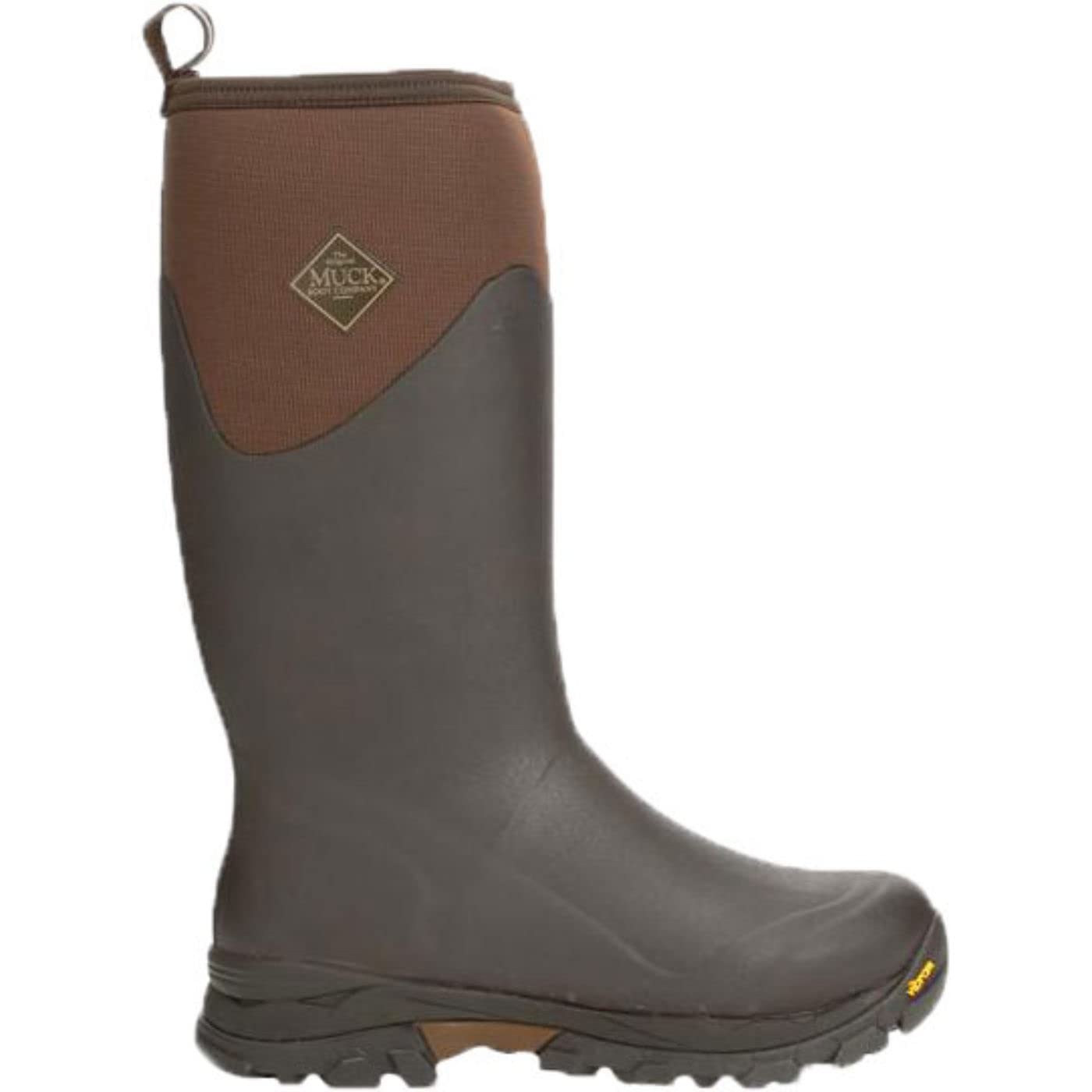
The stationary hunter’s best friend — keeps your feet warm while you sit for hours.
This boot is built for one job that most winter footwear fails at: keeping your feet warm when you are not moving. One buyer reports that they “sat out for hours waiting on deer in the cold (roughly 20 degree weather), not moving around and my feet felt like I was at home on the couch.” That kind of stationary warmth comes from the 100% waterproof rubber outer shell and a lightweight midsole that traps heat without adding bulk.
The Vibram Arctic Grip A.T. outsole (where “A.T.” stands for All Terrain) is the same ice-biting rubber technology found on the Merrell, and according to reviewers it delivers excellent traction on both mud and frozen ice. The 15-inch shaft is the tallest in this lineup, which means you can wade through deep snow or soak in standing water during farm work or hunting hikes without any moisture reaching your socks. The pull-on closure with a pull tab makes entry fast, though unlike the Merrell there is no zipper assistance.
Long-term durability is the biggest question here. Multiple long-time MUCK buyers report that the boots last about two years before the rubber cracks and starts leaking. If you need a boot that survives multiple heavy winters, these might fall short — but the immediate warmth and grip are tough to top for cold-weather sits.
Arctic Comfort
- Vibram Arctic Grip A.T. outsole delivers tested traction on icy terrain
- 15-inch tall shaft provides deep-snow and standing-water protection
- bioDEWIX footbed with NZYM (an odour-fighting treatment) controls smell and pulls moisture away
Cracking Under Pressure
- Several long-time owners mention the rubber cracks and leaks after about two years
- The pull-on design lacks a zipper, which makes entry slower and harder
- Recent quality-control issues with soles detaching have been reported
Great for stationary use: If you hunt from a blind, take ice-fishing trips, or stand around in cold weather for hours without moving your feet, this MUCK boot keeps you warm better than any other pick in this guide.
Not for long-term investment: The two-year lifespan before rubber cracking is a real trade-off you should factor in if you plan to wear these daily through multiple seasons.
Understanding the Specs
Ice-Traction Rubber
Not all boot rubber grips ice. Standard winter treads harden in cold and lose grip. Special rubber compounds use microscopic particles (so tiny you cannot see them) that dig into frozen surfaces. Vibram Arctic Grip and KEEN.POLAR TRACTION are two examples of this technology. A boot without it will likely require bolt-on microspikes (strap-on metal spikes for your boots) on solid ice — so check the outsole spec before buying if you live in an icy climate.
Insulation Weight (grams)
Insulation is measured in grams — 200g is the most common rating for serious winter boots, keeping you warm down to about -25°F. Heavier insulation traps more heat but also makes the boot stiffer and warmer for your feet during active use. Boots without a stated insulation weight (like the MUCK Arctic Ice) rely on the rubber shell and liner materials instead, which can still be very warm for stationary use.
FAQ
Do I need ice-spike boots or will a good tread pattern work on black ice?
What does 200g insulation mean for real temperature comfort?
How tall should ice boots be for deep snow?
Can I wear these boots for all-day hiking or are they only for standing around?
Are winter boots with a side zipper less waterproof than pull-on boots?
How long do rubber winter boots typically last before they crack or leak?
Will these boots fit wide feet or do I need to size up?
Do I need microspikes even if the boot has an ice-grip sole?
Final Thoughts: The Verdict
For the majority of shoppers, the boots for ice winner is the Merrell Men’s Coldpack 3 Thermo Tall Zip because it combines the most aggressive ice grip (Vibram Arctic Grip), a generous 200g insulation layer, and a tall zip-up shaft that handles deep snow without struggle. If you want hiking-level comfort with lab-tested traction on frozen ground, grab the KEEN Women’s Revel 4 Polar. And for extended stationary use in 20-degree weather — sitting on a deer stand or ice-fishing — the standout is the all-rubber warmth and 15-inch protection of the MUCK Men’s Arctic Ice Tall Boot.
How We Picked
We do not accept paid placement. Every pick is matched to a real buyer and a real use-case; we do not hands-on test units.
Sources & Methodology
Specifications: manufacturer listings and product documentation. Review insights: verified customer reviews, as of July 2026. Pricing: not shown on this page (it changes often); check the current price via the retailer link.
As an Amazon Associate, Gadgets Feed earns from qualifying purchases. This does not affect which products we feature.