
Our readers keep the lights on and my morning glass full of iced black tea. As an Amazon Associate, I earn from qualifying purchases.
Specs are compiled from manufacturer listings and verified buyer reviews and can change over time — please confirm the key details on the product page before buying.
Every ounce you carry on the trail is a tax on your legs. A backpack tent that is too heavy ruins the hike before you even set up camp, and one that cannot handle a surprise storm ruins the night. You need a shelter that disappears into your pack when you walk and locks out the wind when you stop. That is exactly what this guide delivers—a clear look at the tents that actually earn their spot on your back.
I’m Min — the founder and writer behind Gadgets Feed. This guide is built by comparing the manufacturers’ published specifications and the patterns across verified customer reviews, so you get each pick’s real strengths and trade-offs instead of marketing spin.
Whether you are a weekend thru-hiker or a first-time solo camper, these reviews break down the real-world weight, weather protection, and livability of each backpack tent so you can choose the one that fits your trail, your budget, and your sleep style.
Our Picks at a Glance

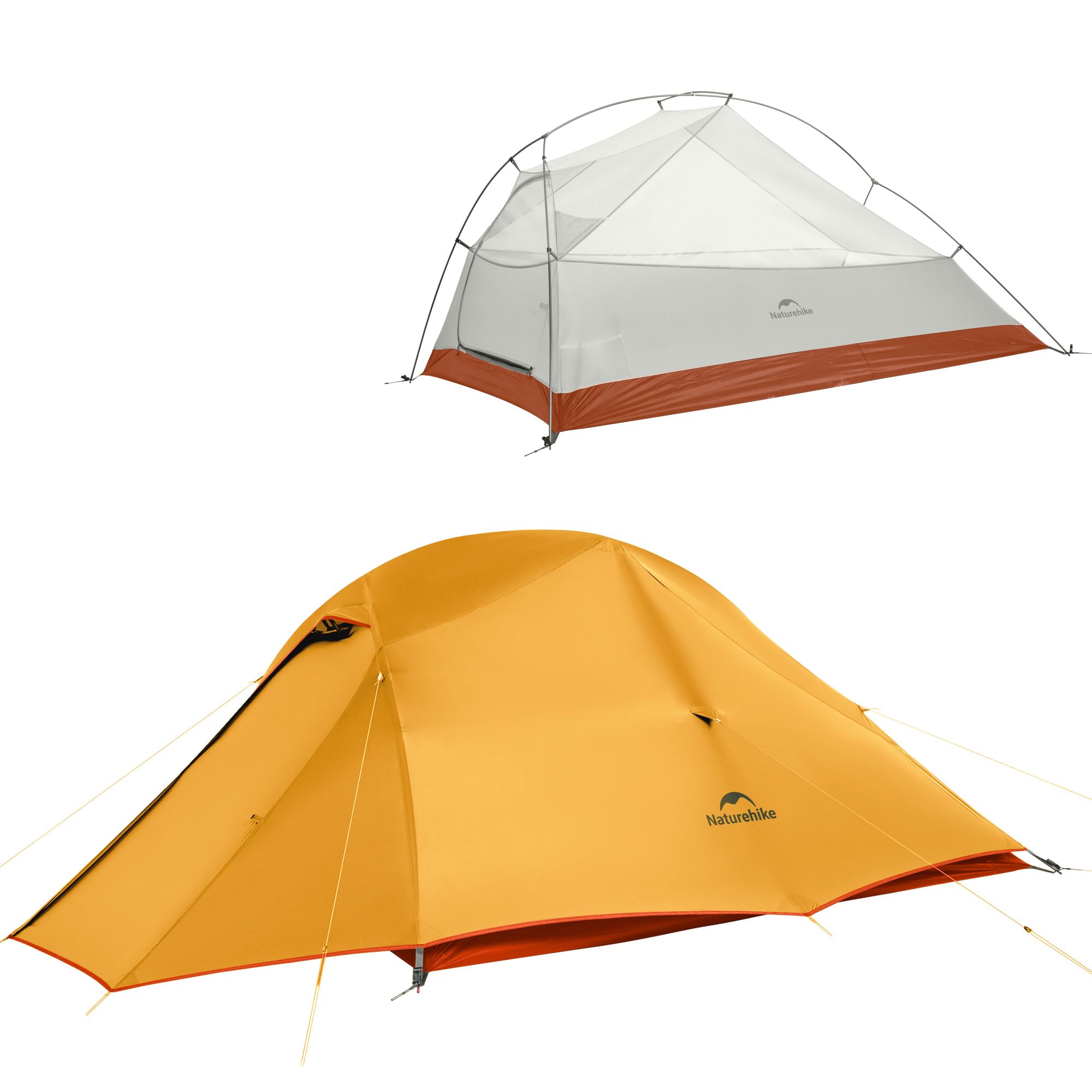

How To Choose The Best Backpack Tent
A backpack tent is not a car-camping tent. You carry every piece of it on your shoulders, so its weight, packed size, and setup style are just as critical as its waterproof rating. Here are the three factors that separate a good hike from a miserable one.
Trail Weight vs. Packed Weight
The number that matters most is the minimum trail weight — that is the tent body, rainfly, and poles, but not the stakes, stuff sacks, or footprint. A tent that claims 4 lbs. 1 oz. but hits 5 lbs. with everything inside is a different animal on a 15-mile day. Always check the spec sheet for both numbers, and mentally add the weight of your sleeping pad and bag.
Waterproof Coating and Seasonality
Look at the PU (polyurethane) rating on the rainfly and floor. A 1500 mm coating sheds light rain, while 3000 mm or higher handles a proper downpour. Three-season tents are the standard for backpacking — they breathe well in warm weather and block wind and rain. A four-season tent adds snow-load strength but weighs significantly more, so stick with three-season unless you winter camp.
Freestanding vs. Trekking-Pole Setup
A freestanding dome tent (with aluminum poles) lets you pick it up and move it to a better spot, a big advantage on rocky or sandy ground. A trekking-pole tent shaves off half a pound or more by using your hiking poles as the frame — great for ultralight hikers, but it requires the ground to be soft enough for stakes. Your hiking style decides which one feels like freedom and which feels like a chore.
Quick Comparison
| Model | Best For | Trail Weight | Floor Area | Peak Height | Amazon |
|---|---|---|---|---|---|
| ALPS Mountaineering Lynx 1★ Best Overall | Solo backpacker on a budget | 4 lbs 1 oz | 20 sq ft | 36 in | Amazon |
| Naturehike Cloud Up 3 PersonAlso Great | Spacious three-season shelter | Under 6.3 lbs | 42.6 sq ft | 45.3 in | Amazon |
| Kelty Late Start 2PFastest Pitch | Ultra-fast setup, 3 minutes | — | 30.6 sq ft | 43 in | Amazon |
| OneTigris COSMITTO 2P | Durable budget-friendly dome | — | 30.96 sq ft | — | Amazon |
| Featherstone Backbone 1P | Ultralight trekking-pole shelter | 2 lbs 6 oz | — | — | Amazon |
| Snugpak Ionosphere 1P | Compact solo survival shelter | — | 3,270 sq in (22.7 sq ft) | 28 in | Amazon |
| Naturehike Mongar 2P | Budget two-person dome | 5.3 lbs | Over 30 sq ft | 41.3 in | Amazon |
| Kelty Grand Mesa 2P | Classic reliable 3-season tent | 4 lbs 1 oz | 30 sq ft | 44 in | Amazon |
| LANSHAN Ultralight 1P Khaki | Minimalist ultralight thru-hiker | 2.1 lbs | 22.3 sq ft | — | Amazon |
In‑Depth Reviews
1. ALPS Mountaineering Backpacking-Tents Lynx 1
Our pick — over 4.5★ from 900+ verified ratings; the strongest balance of quality and price.
A 4-pound solo dome that packs a vestibule without packing a premium price tag.
The Lynx 1 is a straightforward solo tent with a floor area of 20 square feet and a 36-inch peak. The floor is just 32 inches wide — compared to the Naturehike Cloud Up’s 82.7-inch width — so you have room for one sleeping pad and little else. The total packed weight is 4 lbs 1 oz, which is about 2 lbs heavier than the Featherstone Backbone but notably lighter than the Naturehike Mongar. The 75D 185T poly taffeta floor has a 2000mm coating, and the rainfly uses a 1500mm coating — adequate for moderate rain but not as sturdy as the Snugpak’s 5000mm.
Setup is fast thanks to the freestanding two-pole aluminum frame. Half-mesh walls provide good airflow for warm nights, and the small vestibule keeps a pack and boots dry. Reviewers point out the gray/navy color is discreet and that the tent handles light winds well. The included mesh storage pockets and gear loft help keep small items organized. While the interior is snug, the Lynx 1 is a reliable entry-level shelter for solo hikers starting out.
The honest take: This is a solid, no-frills tent for the solo backpacker on a tight budget. It will not win any ultralight awards, but it will get you through a season of weekend trips while staying affordable.
Grab it for: Your first solo backpacking season or any trip where you want a simple freestanding dome at a price that leaves money for a warmer sleeping bag.
Move on if: You are 5’10” or taller — the 90-inch floor length works for average height, but taller hikers will find their head and feet pressing the walls.
2. Naturehike Cloud Up 3 Person Backpacking Tent with Footprint
The tent that gives a trio actual breathing room without making you pay in pack weight.
You get the biggest floor in this roundup — 42.6 square feet — which is 2.1 times the space of the ALPS Mountaineering Lynx 1 at 20 square feet. That means three average adults can sleep side by side without elbowing each other, or two people can spread gear out and still have room to sit up at the 45.3-inch peak height.
The waterproofing is serious: both the outer tent and the floor are 210T ripstop polyester with a PU3000mm+ coating, and the included footprint adds a PU5000mm+ layer. Buyers report the upgraded buckles (replacing old straps) make this easier to pitch alone than previous versions. It packs down to 16.9 by 6.7 inches and weighs under 6.3 lbs — reasonable for a three-person freestanding dome. The integrated footprint saves you a separate purchase and about 12.7 ounces of extra gear.
Who it fits best: A couple or trio who wants a roomy backpack shelter with real storm protection and zero assembly guesswork. The dual-Y pole structure goes up fast even when you are tired.
One genuine trade-off: At over 6 lbs packed, solo hikers will find lighter options. If every ounce is a battle, the Featherstone or LANSHAN below shave off 3-4 lbs.
Get it if: You share the carry with a partner or need a palace for two with the footprint already sorted.
Look elsewhere if: You are a solo gram-counter who needs sub-3-lb shelter — this tent is built for space, not extreme lightness.
3. Kelty Late Start Backpacking Tent 2P
One person, three minutes, and you are done — Kelty engineered the hurry out of setup.
The Late Start lives up to its name with a claimed 3-minute pitch time using Quickcorner pole sleeves and color-coded buckle attachments. That matters when you roll into camp exhausted and rain is moving in. The 2P model offers 30.6 square feet of floor with a 43-inch peak height — similar to the Kelty Grand Mesa below but with a more streamlined single-door layout. The rainfly is 68D polyester with a 1200 mm coating, and Kelty uses DWR/PFC-free fabrics to reduce environmental impact.
Buyers highlight the roomy 56-inch peak on the 4P version, though this review covers the 2P which peaks at 43 inches — enough to sit up but not stand. The full-coverage fly has extra guylines for airflow in wet weather. It is a freestanding design, so you can pitch it and then carry it to the ideal flat spot. One owner mentioned the single vestibule is generous enough to hold a pack and boots, which is a relief when the ground is damp.
Standout move: The “Shark Mouth” stuff sack makes pack-up faster than wrestling a crammed bag — a small detail that matters at 6 AM in the cold.
Reach for this if: You value a no-fuss, fast freestanding tent for weekend trips where time under the stars matters more than saving every gram.
skip it if: You need a two-door design for two people — the single door means the person against the far wall has to climb over their partner to get out.
4. OneTigris COSMITTO 2 Person Backpacking Tent

A rugged dome that shrugs off drizzle without costing a week’s groceries.
The COSMITTO uses a 20D plaid ripstop polyester fly with a 1500mm waterproof coating and a 75D nylon bathtub floor — that floor material is the same type used in the ALPS Lynx 1, but the OneTigris gives you significantly more interior space at 30.96 square feet. The floor measures 7.2 feet long and 4.3 feet wide, so two average-sized people sleep without touching the walls. It packs down to a 23.6 by 6.3-inch stuff sack, which is a bit bulkier than the Naturehike Mongar but still fits inside a 50-liter pack.
Setup takes about 3 minutes with the aluminum alloy frame poles and a simple clip-and-stake design. The fly has four 9.8-foot guy lines for extra stability in wind. OneTigris backs it with a 1-year limited warranty. Buyers mention the coyote brown color blends well into wooded campsites. At this price point, it sits between the Mongar and the Kelty Grand Mesa, offering a solid mid-range option for pairs who want weather protection without stepping up to premium pricing.
Where it lands: A straightforward 3-season dome that does nothing flashy but does everything competently — a reliable, no-nonsense shelter for fair-weather trips and light storms.
Grab this if: You and a partner need a durable, comfortable tent for weekend backpacking and want to keep the budget under control.
Think twice if: You are counting grams for a thru-hike — at this weight and pack size, ultralight shelters like the Featherstone or LANSHAN will save you serious ounces.
5. Featherstone Backbone Ultralight Tent 1P

The solo shelter that disappears into your pack and leaves room for a full-size sleeping pad.
It is a single-wall shelter made from Sil-Nylon with seam-taped construction, and it uses your hiking poles (not included) as the frame. The 40/60 pole placement means the foot end tapers, giving you extra headroom at the top while keeping the packed size small.
The floor is 85 inches long and 20 inches wide, which is snug for a wide pad but the vestibule adds enough space for a backpack and boots. Two doors and two vestibules mean you can enter and exit without crawling over gear. The TPU waterproof zipper resists snagging, and wide mesh panels provide airflow so condensation stays low. Owners mention that sealing the seams is straightforward and that the tent handles wind better than expected for a non-freestanding design.
Smart detail: The reflective guylines glow under a headlamp, so you do not trip over your own shelter when you get up for a midnight break.
Pick this if: You are a solo thru-hiker or ultralight enthusiast who already carries trekking poles and values every ounce saved.
Avoid if: You camp on hard-packed or rocky ground where staking is difficult — this tent needs good soil to pitch properly; a freestanding dome is more forgiving.
6. Snugpak Ionosphere 1 Person Tent

A tiny tunnel tent that wraps you in monsoon-ready fabric without the extra bulk.
The Ionosphere measures 94 inches long and 35 inches wide, giving you a floor area of about 22.7 square feet — comparable to the LANSHAN 1P at 22.3 square feet but with a peak height of just 28 inches. That low profile is a trade-off: you cannot sit up, but it sheds wind brilliantly and packs tiny. The rainfly uses 210T polyester ripstop with a 5000mm PU coating, which is the highest waterproof rating on this list and double the Kelty Grand Mesa’s 1500mm.
The poles are lightweight anodized aluminum with pressfit connectors, and the single front entry has a small porch for gear storage. All seams are taped and sealed. It includes 14 alloy Y-stakes (plus 2 spares) and a basic repair kit. Packed in its compression bag, it is one of the smallest bundles here — ideal for bikepacking or any trip where every cubic inch counts. Customers note the olive color blends well into the woods, and the 5000mm coating handles sustained downpours without leakage.
One real compromise: The 28-inch peak height means you will be crawling in and out and spending all your tent time lying down — fine for sleeping, tough for changing clothes or reading in the rain.
Best for: Solo hikers in wet climates who prioritize waterproofing and packability over in-tent comfort and need a bombproof bivy-style shelter.
Not for you if: You sit up to read, cook, or organize gear inside the tent — this shelter is strictly a sleep pod.
7. Naturehike Mongar 2 Person Backpacking Tent

A solid two-person dome that leaves room in your budget for a good sleeping pad.
The Mongar weighs 5.3 lbs for the whole set (including the free groundsheet), making it noticeably heavier than the Kelty Grand Mesa but lighter than the Naturehike Cloud Up. It has more than 30 square feet of floor area with dimensions of 82.7 by 53.2 inches and a 41.3-inch peak — enough for two people to sit up, though the 82.7-inch floor length is 40% shorter than the Cloud Up’s 116.1 inches, so taller sleepers might find their feet touching the wall. The waterproofing is solid: both the fly and floor use 210T polyester with a 3000mm PU coating.
Two doors and two vestibules give each person their own entry and gear storage, a feature usually found on more expensive tents. The Y-frame structure sets up quickly, and the inner tent uses B3 mesh for breathability while keeping bugs out. Buyers appreciate the included groundsheet and the stuff sack size (19.7 by 5.9 inches). At this price, it competes directly with the ALPS Lynx 1 but offers space for two instead of one.
Neat touch: The vestibules can be rolled up partially for ventilation, which helps reduce condensation on mild nights.
Choose this if: You are a couple on a budget who wants separate doors and decent weather protection for fair-weather and moderate-rain trips.
Pass if: You need to keep pack weight low — 5.3 lbs is heavy for two people to split; ultralight pairs will prefer the Featherstone-style setup.
8. Kelty Grand Mesa 2P Backpacking Tent

The time-tested dome that does not try to be clever — it just works.
The Grand Mesa is a classic freestanding 2-person dome from a brand that has been making outdoor gear for decades. It weighs 4 lbs 1 oz (minimum) with a packed weight of 4 lbs 7 oz, placing it right in the middle of this list for weight. The floor area is 30 square feet, with dimensions of 85 by 57 inches and a 44-inch peak height — that is an inch taller than the Naturehike Mongar and 2 inches shorter than the Kelty Late Start, providing good sitting room for two. The rainfly and floor are 68D polyester with fully taped seams.
The “Quick Corners” system holds the poles in place during setup, and the color-coded clip attachments make the fly easy to align. The single door and single vestibule mean gear storage is limited to one side, unlike the Mongar’s dual-vestibule design. It packs into a “Shark Mouth” stuff sack that makes stuffing easier than rolling. Kelty includes aluminum pressfit poles and backs the tent with a trusted name in outdoor recreation. One reviewer called it “the just-right tent” for its balance of weight, price, and livability.
Where it stands: A middle-of-the-road tent in every positive sense — not the lightest, not the cheapest, but among the most reliable choices for a hiker who just wants a tent that sets up easily and holds up season after season.
Ideal for: The backpacker who values build quality over ultralight weight and wants a tent from a brand with decades of field testing.
Skip if: You need two doors for two people — the single entry means one person always crawls over the other to get out.
9. LANSHAN Ultralight Waterproof 1-2 Person Backpacking Tent Khaki (1-Person)
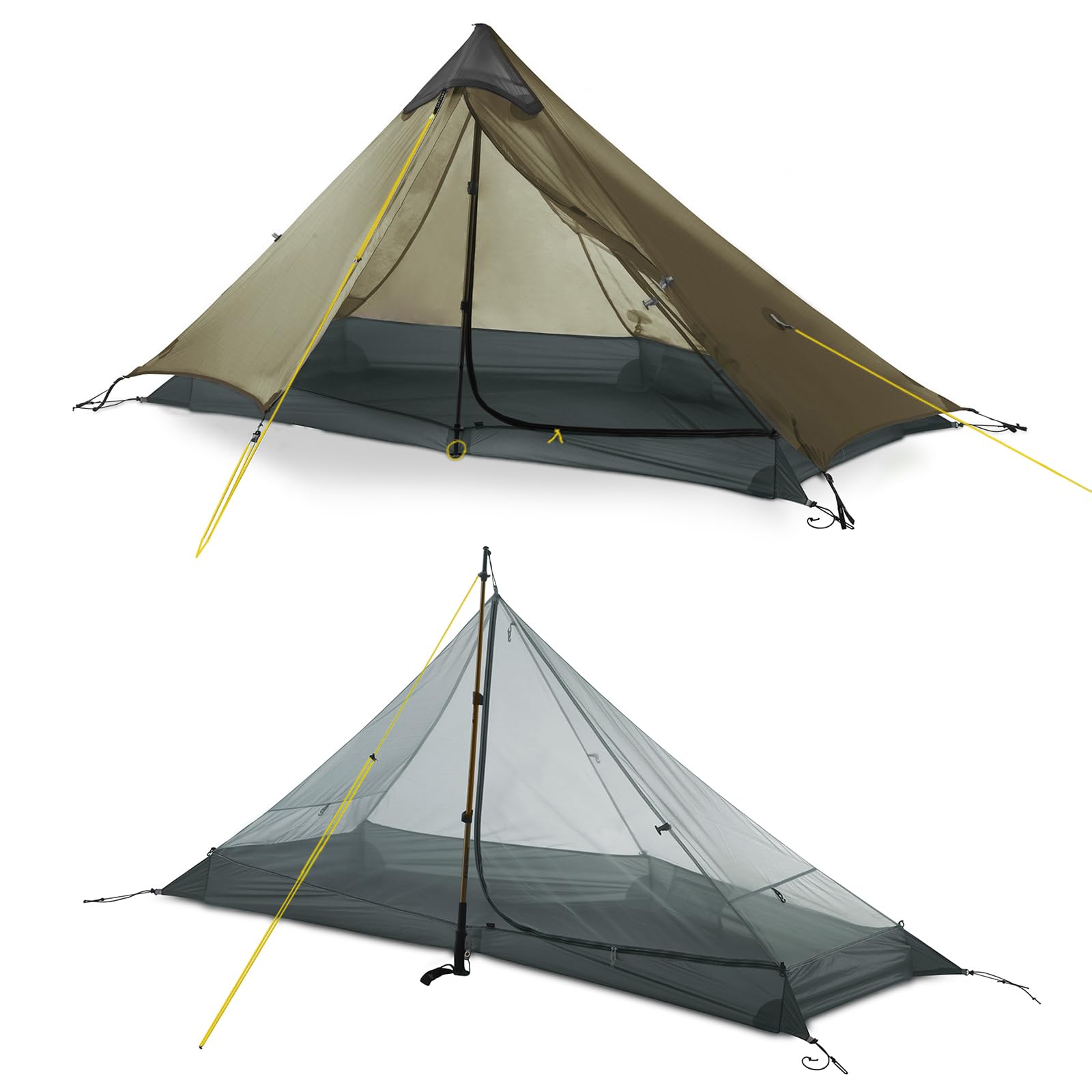
At just over two pounds, this tent makes a heavy pack disappear on the first climb.
The LANSHAN 1-person weighs only 2.1 lbs — that is 2.5 times lighter than the Naturehike Mongar at 5.3 lbs. For a solo thru-hiker, that difference means carrying a full extra pound per day across a week-long trip. It packs down to just 12.6 by 4.7 inches, which is smaller than the Featherstone Backbone and roughly half the packed volume of the ALPS Lynx 1. The floor area is 22.3 square feet with a length of 90.6 inches, which gives a tall sleeper decent stretch room.
The rainfly uses 15D nylon with a 5000mm waterproof rating, and the bathtub floor steps up to 6000mm — the highest floor rating on this list. This is a trekking-pole tent (poles not included), so you save the weight of dedicated tent poles. The full high-density mesh inner tent provides excellent ventilation and condensation control. Buyers mention the khaki color blends well into dry landscapes. The versatile design allows you to pitch just the tarp or just the mesh inner depending on conditions.
The catch: It takes 5-10 minutes to set up with practice and requires soft ground for stakes. If you camp on hard-packed soil, the Snugpak or a freestanding dome will serve you better.
Best for: The weight-conscious solo adventurer who knows their trekking poles well and wants a compact, weatherproof shelter that disappears into a daypack.
Not for you if: You prefer a quick, tool-free setup or camp on rocky, hard ground where trekking-pole tents struggle to anchor.
Understanding the Specs
Trail Weight vs. Packed Weight
The trail weight is the bare minimum — tent body, fly, and poles only. The packed weight adds stakes, stuff sacks, repair kits, and the footprint. A tent that claims 4 lbs packed but hits 5 lbs on your scale is a different load on a 20-mile day. Always check both numbers, because the stakes and bag can add 6 to 12 ounces, which is a full water bottle worth of weight.
PU (Polyurethane) Waterproof Rating
Measured in millimeters, this number tells you how much water pressure the fabric can handle before leaking. A 1500mm coating handles light rain, 3000mm is good for moderate storms, and 5000mm+ is overkill for most 3-season trips but great for sustained downpours. The bathtub floor (the bottom piece that wraps up the sides) usually has a higher rating than the fly because it sits directly on wet ground.
Freestanding vs. Trekking-Pole Design
A freestanding tent uses a pole frame to hold its shape — you can pick it up and move it, and it does not rely on stakes for structure. A trekking-pole tent uses your hiking poles as the frame and must be staked at every corner to stand. Trekking-pole tents are lighter but demand soft ground and a bit of practice. Freestanding domes are heavier but far more flexible about where you pitch them.
Vestibule Space
A vestibule is the covered area outside your tent door where you store your pack, boots, and wet gear. A single vestibule on a 2-person tent means one person’s gear sits outside the other’s door. Two vestibules give each sleeper their own dry storage. The size of the vestibule determines whether you can fit a full backpack or just a pair of boots.
FAQ
What is the difference between 3-season and 4-season tents?
How much trail weight should I aim for in a backpack tent?
Can I use a trekking-pole tent without trekking poles?
How do I make my tent more waterproof?
What is the best way to reduce condensation inside my tent?
How many people actually fit in a 2-person backpack tent?
What is the difference between dome and tunnel tents?
Do I really need a footprint for my tent?
How long does a 3-season backpack tent last?
Final Thoughts: The Verdict
For most backpackers, the backpack tent winner is the Naturehike Cloud Up 3 Person because it combines the largest floor area in this test with a strong 3000mm+ waterproof coating and an included footprint — all in a package that still fits in one person’s pack. If you want a fast, freestanding shelter that sets up in three minutes, grab the Kelty Late Start 2P. And for solo gram-counters, the standout is the LANSHAN Ultralight 1P at 2.1 lbs with a 6000mm floor rating — that is proper storm protection at featherweight.
How We Picked
We do not accept paid placement. Every pick is matched to a real buyer and a real use-case; we do not hands-on test units.
Sources & Methodology
Specifications: manufacturer listings and product documentation. Review insights: verified customer reviews, as of July 2026. Pricing: not shown on this page (it changes often); check the current price via the retailer link.
As an Amazon Associate, Gadgets Feed earns from qualifying purchases. This does not affect which products we feature.