
Our readers keep the lights on and my morning glass full of iced black tea. As an Amazon Associate, I earn from qualifying purchases.
Specs are compiled from manufacturer listings and verified buyer reviews and can change over time — please confirm the key details on the product page before buying.
Landing a spike or digging a hard-driven ball puts serious torque on your ankles. The wrong brace slides, bunches up inside your shoe, or just does not provide enough lateral stop to prevent a roll. This guide breaks down the seven braces that actually lock your ankle in place during a match, so you can plant, cut, and jump without that moment of fear.
I’m Min — the founder and writer behind Gadgets Feed. This guide is built by comparing the manufacturers’ published specifications and the patterns across verified customer reviews, so you get each pick’s real strengths and trade-offs instead of marketing spin.
From lace-up designs that mimic athletic tape to low-profile sleeves that fit under your tightest court shoes, these are the best ankle braces for volleyball based on real support specs and the feedback from hundreds of players.
Our Picks at a Glance
How To Choose The Best Ankle Braces For Volleyball
Buying an ankle brace for volleyball is different than picking one for running or daily walking. Volleyball involves explosive jumps, lateral cuts, and sudden stops. You need a brace that resists rolling without restricting your vertical jump or causing discomfort during extended play. The wrong choice will either slide around or feel too bulky in your shoe.
Lace-Up vs. Sleeve vs. Figure-8 Strap
The support mechanism is the most critical choice. Lace-up braces tighten evenly across the whole foot and ankle. They provide a close fit that stays put. Figure-8 straps add extra resistance against ankle roll by mimicking athletic tape. Simple compression sleeves without straps offer minimal lateral support and are best only for very mild stability or proprioception. For volleyball, a lace-up or figure-8 design is the safer bet for preventing sprains.
Profile and Shoe Fit
Volleyball shoes have a low-cut design to allow maximum ankle flexibility. A bulky brace will push against the sides of the shoe, causing discomfort and changing your foot position. Look for a low-profile brace that fits inside your court shoe without forcing you to size up. Several models now use thin, breathable materials and narrow heels to avoid that stuffed feeling.
Weight and Breathability
A brace that weighs half a kilogram will tire your legs out over a full match. You want something lightweight that does not hold sweat. Nylon and polyester blends with ventilation zones are ideal. A brace that keeps air moving around the foot will stay cooler and prevent skin irritation from friction.
Quick Comparison
| Model | Best For | Closure Type | Weight | Special Features | Amazon |
|---|---|---|---|---|---|
| AGPTEK Quick Lace-Up★ Best Overall | Value with 360 support | Hook & Loop, Lace-Up | 0.18 kg | Removable splints | Amazon |
| DonJoy Performance PODProactive Roll Control | Proactive roll prevention | Hook & Loop | 0.16 kg | Molded TPU shell | Amazon |
| McDavid Bio-Logix (MD4197) | Moderate instability recovery | Lace-Up / Wrap | 0.2 kg | Flex-link hinge | Amazon |
| Ultra 360 Lace-Up | Mimicking athletic tape | Lace-Up | — | Figure-8 straps | Amazon |
| Active Ankle AS1 Pro | Reducing heel irritation | Lace-Up | 6.72 oz | Silicone non-slip sole | Amazon |
| McDavid Phantom (B07X1TSPH5) | Lace-free convenience | Lace-Free | 0.05 kg | Rear-entry design | Amazon |
| Fitomo Figure 8 | Adjustable compression | Hook & Loop | 0.18 kg | Removable stabilizers | Amazon |
In‑Depth Reviews
1. AGPTEK Ankle Brace (Quick Lace-Up)
Our pick — over 4★ from 900+ verified ratings; the strongest balance of quality and price.
A quick-lace system with removable splints makes this a versatile recovery tool.
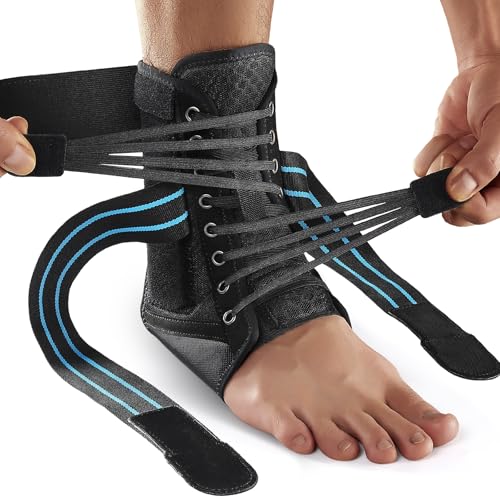
The AGPTEK brace uses a triple-support system: reinforced dual side stabilizers (splints), X-cross compression straps, and a top wrapping layer. This is a 360-degree approach to ankle support. It is made with abrasion-resistant nylon Oxford fabric and has honeycomb ventilation zones for breathability. At 0.18 kilograms, it is the same weight as the Fitomo brace, but it adds the convenience of a quick-lace system that the company claims secures the brace in just 1 second.
The key differentiator here is the removable splints. You can keep them in for rigid protection during rehabilitation, or remove them for flexible mobility during sports. This makes it ideal for transitioning from post-injury recovery back to active play. It fits basketball, volleyball, tennis, soccer, hiking, and running. Customers note the honeycomb ventilation actually works — they do not overheat during long games. The open heel design helps with natural movement and prevents irritation.
One downside is the size availability: it is listed as Medium, which may not fit larger feet. It is also hand wash only. The elastic laces adapt to different foot sizes, even swollen ones, which is a nice touch for recovery periods. With a 4.4 rating from 926 ratings, it is very popular for its price point.
Versatile Support
- Triple-support system (splints + X-straps + wrap)
- Removable splints for rehab vs. active play
- Quick-lace system saves time
- Breathable honeycomb fabric
Size & Care
- Only Medium size listed — check measurements
- Hand wash only
- Splints can be a hassle to reinsert if removed
Best for recovery athletes: if you are using a brace to come back from an injury and want one that works for both rehab and then sports, the removable splints do that.
pass on it if: you have very large or very small feet — size options are limited.
2. DonJoy Performance POD Ankle Brace
The brace that only locks up when you need it to, preserving your natural jump.
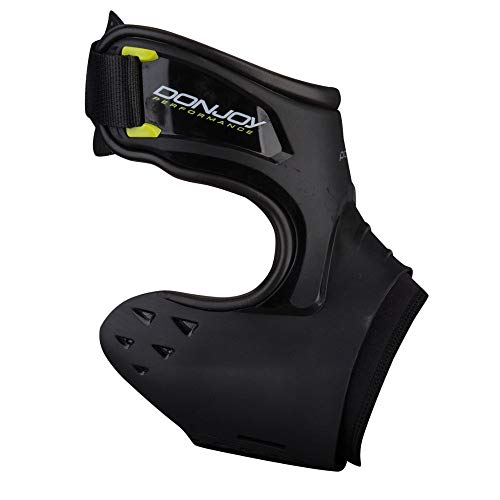
The DonJoy Performance POD does something different — it uses a molded TPU (thermoplastic polyurethane) shell that adapts to the anatomical shape of your foot. This gives you a rigid outer frame that resists rolling but does not restrict your normal range of motion. DonJoy calls this “On Demand” technology, meaning the support engages specifically when your ankle is about to roll. It provides enough stability for football or soccer, making it a strong choice for volleyball too.
The super-soft EVA (ethylene-vinyl acetate) underlayer lining hugs the foot and ankle for comfort without being overly bulky. It is designed to treat and protect against ankle instability, inversion and eversion sprains, and roll control. So if you have a history of rolling your ankle, this brace gives you active protection that moves with you. At 0.16 kilograms, it is noticeably lighter than the McDavid Bio-Logix (0.2 kg) which makes a difference during a long tournament day.
Buyers report the low-profile design fits most court shoes without issue. The one caveat is the price — it sits at the higher end of the spectrum, reflecting its competition-grade construction. You also need to pick the correct hand (left or right) when ordering, as it is anatomically specific.
Active Protection
- “On Demand” technology only activates during a roll
- Molded TPU shell adapts to your foot shape
- Low-profile design fits well in court shoes
Fit Considerations
- Higher price than most options here
- Must select correct foot (left vs right)
- Not for mild support needs
Reach for this if: you have a history of ankle rolls and want proactive support that only engages when you need it, not clunky all-day bulk.
Look elsewhere if: you just need light compression or a low-cost brace for occasional use, as the investment is better suited to competitive players.
3. McDavid Bio-Logix Therapy Support (MD4197)
The hinge gives you a level of support that flat braces just cannot match.
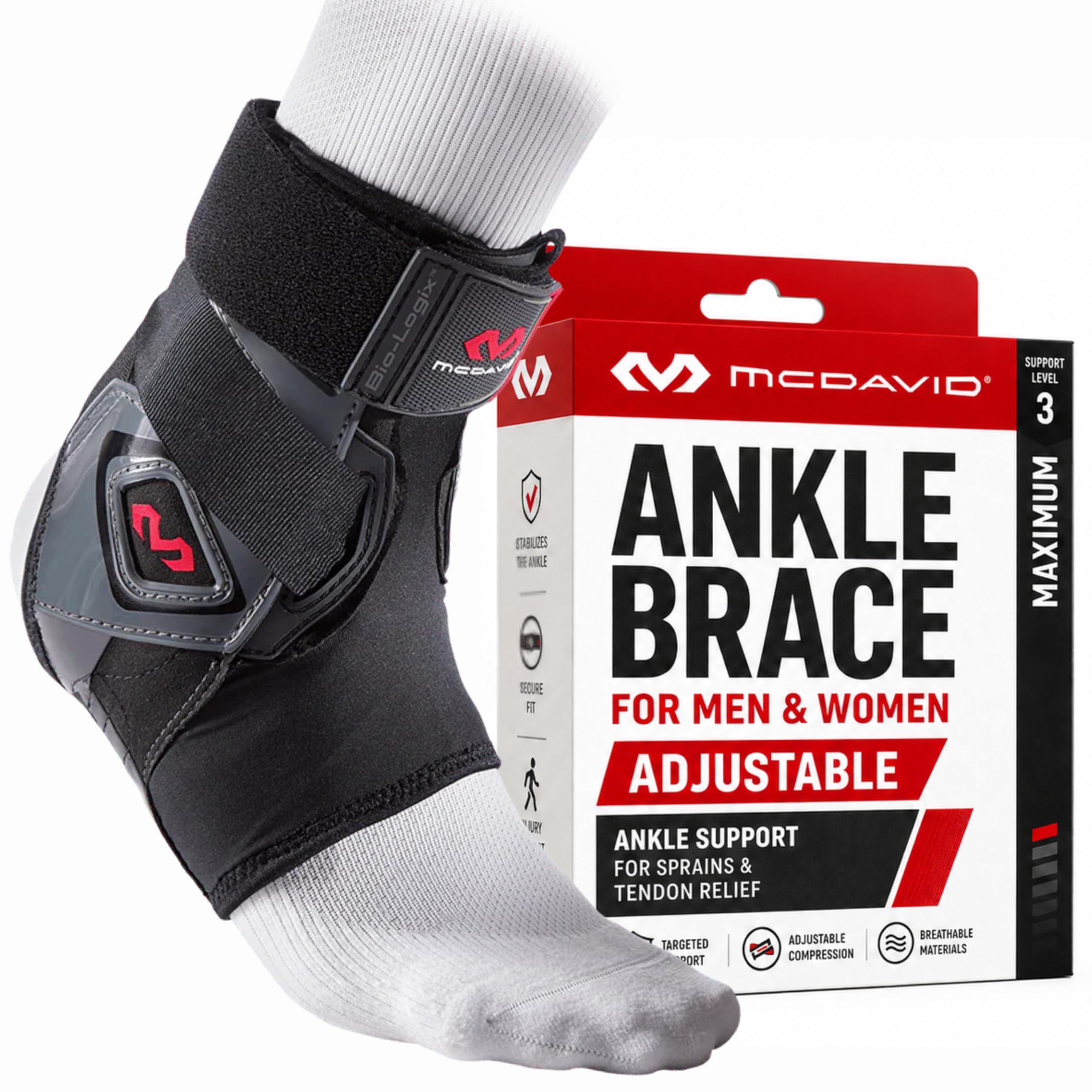
If you are recovering from moderate ankle instability or Achilles tendonitis (inflammation of the tendon at the back of your ankle), the McDavid Bio-Logix gives you the most support here. Its Flex-link hinge (a hinge that bends with your ankle) stops your ankle from rolling sideways while still letting you move naturally. The body is made from lightweight neoprene, nylon, and spandex with memory foam padding that molds around your joint for a custom fit. At 0.2 kilograms (about 7 ounces), it is the heaviest brace in this list, but owners mention it is also among the most supportive.
The brace is anatomically designed for a specific left or right foot. Customers note that it feels snug and secure during high-intensity movements like jumping and cutting. The multiple anchor straps let you dial in the tightness exactly to your liking. Reviewers point out that the memory foam padding really helps reduce irritation around the ankle bone. The one trade-off is its weight — compared to the McDavid Phantom at 0.05 kg, this is four times heavier, which might feel noticeable during a 5-set match.
It is designed to provide pain relief and support for various moderate ankle instabilities and conditions, including Achilles tendon issues. If you are playing post-injury or dealing with chronic instability, the added hinge support is worth the extra grams. For casual pickup games, you might find it overbuilt.
Structural Support
- Flex-link hinge prevents rolling without blocking motion
- Memory foam padding for custom feel
- Good for moderate ankle instability and Achilles issues
Heavier Build
- At 0.2 kg, it is the heaviest brace here
- You must pick left or right — no one-size
- Could feel bulky for those who prefer minimal support
Best for recovery: if you are coming back from a moderate sprain or dealing with chronic ankle instability, the hinge support gives you confidence to play again.
Not ideal for: players who want the lightest, most minimal feel possible during practice — the Phantom is a better fit there.
4. Ultra 360 Lace Up Ankle Brace
Lace-up system that mimics athletic tape without the hassle of actual tape.
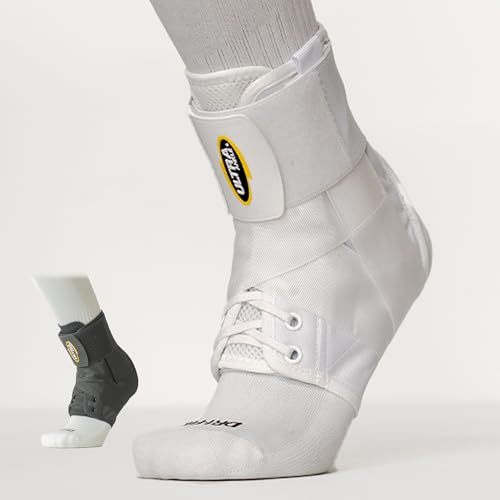
The Ultra 360 uses a combination of a full lace-up closure and adjustable figure-8 straps. This mimics the professional athletic trainer taping technique, where the ankle is wrapped both around the foot and the lower leg for stability. It is specifically designed for volleyball, basketball, running, and other high-impact sports. The slim, breathable construction fits easily into sneakers, cleats, boots, and high-top athletic shoes without adding bulk.
The lace-up design allows you to fine-tune compression across the whole ankle. Then the figure-8 straps add a second layer of resistance against inversion (the most common volleyball ankle sprain). The Ultra 360 is also FSA/HSA eligible, meaning you can use health savings funds for the purchase. Shoppers say the material is durable and breathable, making it comfortable for full matches. It has a rating of 4.4 out of 5 from 285 ratings, which is strong for a niche product.
The main limitation is that it does not have a molded shell like the DonJoy, so it provides a good balance of support and flexibility rather than rigid protection. For players who want the familiar feel of a taped ankle without the cost and time of taping, this is a solid alternative.
Trainer-Inspired Design
- Lace-up + figure-8 straps mimics athletic tape
- Low-profile fit for most shoes and cleats
- FSA/HSA eligible
Moderate vs Rigid
- No rigid shell, so less protection than the DonJoy POD
- May need slightly thicker socks to prevent lace pressure
- Not for severe instability
Choose this if: you want the familiar support of athletic tape but in a reusable brace that takes seconds to put on.
skip it if: your doctor recommended a rigid, hinged brace for post-surgery or severe sprain recovery.
5. Active Ankle AS1 Pro Lace Up Ankle Brace

Wider heel hole and speed lacing reduce the universal complaint of rubbed skin.
The Active Ankle AS1 Pro focuses on two things that volleyball players hate: a brace that rubs your heel raw and laces that take too long to tighten. This brace uses a pro-fit design that removes excess material at the forefoot and has a wider, more comfortable heel hole. Speed lacing eyelets improve ease of application and reduce hot spots on the body of the brace. The laces themselves are reinforced to prevent fraying and breaking, which is a common durability complaint with cheaper braces.
It uses non-stretch vertical straps that are fully adjustable and imitate the basket weave and heel lock technique used in traditional athletic taping. Non-slip silicone printing on the sole keeps the straps in place during explosive movements. The brace is available in XX-Large and measures 6.5 x 2.25 x 9 inches. Buyers report that it stays put without constant readjustment, which is a huge win during a match. The figure-8 and circumferential straps help stabilize the brace, preventing unwanted slippage.
At 6.72 ounces, it is heavier than the McDavid Phantom (0.05 kg, or about 1.76 ounces), but the extra weight comes from a stronger strapping system that keeps the brace in place. If you have a narrow heel or find that braces usually slide up your ankle, this design is worth a look.
Comfort Design
- Wider heel hole reduces friction and irritation
- Speed lacing saves time between games
- Non-slip silicone sole keeps straps in place
- Reinforced laces resist fraying
Heavier Build
- At 6.72 oz, heavier than lace-free options
- Lace-up can loosen during play if not double-knotted
- XX-Large may be too big for smaller feet
Best for narrow heels: if every brace you try rides up and rubs your heel, the wider heel hole on the AS1 Pro solves that specific pain point.
Not for: players who prefer a quick slip-on brace without any laces — check the McDavid Phantom for lace-free convenience.
6. McDavid Phantom Ankle Brace (B07X1TSPH5)
A slip-on brace that weighs almost nothing — easy to wear, easy to forget.
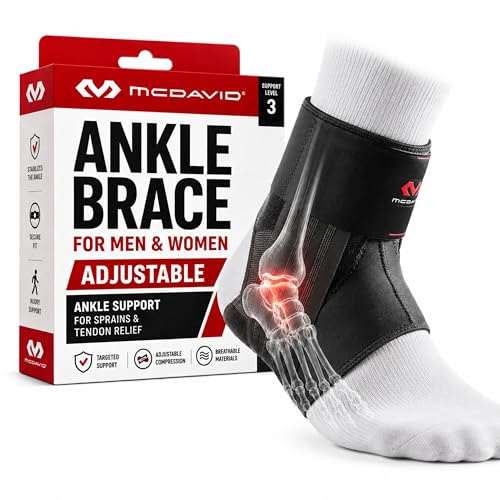
At just 0.05 kilograms (about 1.76 ounces), the McDavid Phantom is the lightest brace in this entire list. For reference, the Fitomo brace weighs 0.18 kg, making the Phantom more than 3x lighter. This makes it an ideal choice for volleyball players who worry about any extra weight affecting their jump. It uses a rear-entry, lace-free design, so you just pull it on over your foot. There are no laces to tighten, no straps to adjust — just a snug, low-profile sleeve.
It is crafted with 80% nylon and 20% polyester on the outer, with a 100% nylon inner and 90% polyester/10% spandex lining. The support stays are made of 100% polyethylene (PE), which is a flexible plastic. It works for basketball, soccer, and volleyball, and fits tight-fitting cleats and shoes. However, the trade-off for the lace-free convenience is less customizable compression. You cannot tighten a specific area like you can with a lace-up brace. Owners mention that it is best for mild to moderate support and prevention, not for recovering from an acute sprain.
McDavid says it prevents moderate injuries and is suitable as a volleyball ankle brace. It offers adequate compression and low-profile non-slip straps, making it a solid pick for players who just want a little extra stability without the hassle. It measures 8.5 x 2.36 x 3.35 inches.
Lace-Free Speed
- Ultra-lightweight at 0.05 kg
- Rear-entry design — no laces to tie
- Low-profile fits easily in tight shoes
Less Customization
- Cannot adjust compression in specific areas
- Not enough support for moderate-severe sprains
- Support stays may loosen over time
Grab this if: you want the lightest possible brace for daily practice, and you just need light to moderate support without any fuss.
Look elsewhere if: you are recovering from a sprain and need the customizable tightness of a lace-up or figure-8 brace.
7. Fitomo Figure 8 Ankle Brace (B0FF9CGWGS)
Fine-tune your compression with the figure-8 strap system — no more guessing.
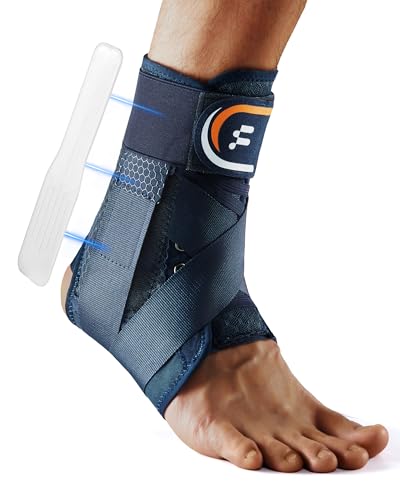
The Fitomo brace uses a “Triple-Lock” system that combines top strap compression, dual removable side stabilizers, and cross straps. Its defining feature is the figure-8 adjustable strap, which allows you to fine-tune compression for specific activities. It is designed for ankle sprains, ligament injury, Achilles tendonitis, swelling, and general instability. The materials are 69% polyester, 17% nylon, and 11% plastic. It is also FSA/HSA approved, which is a nice bonus for eligible buyers.
The dual removable side stabilizers give you flexibility in support level. Keep them in for sports, remove them for daily wear. Reviewers point out the brace stays secure without the constant readjustment that some cheaper braces require. At 0.18 kilograms, it is heavier than the McDavid Phantom (0.05 kg) but offers far more customizable compression. It measures as size S, which is good for smaller ankles but might not fit larger athletes.
The one limitation is the closure type: it uses hook and loop only, not a lace-up system. So you lose the even, distributed tightening that laces provide. The hook and loop straps focus tension at the strap points. This is fine for many players, but if you prefer the snug full-foot feel of laces, the AGPTEK or Ultra 360 might be a better fit.
Adjustable Compression
- Figure-8 strap for fine-tuned compression
- Dual removable side stabilizers
- FSA/HSA eligible
- Stays secure without readjustment
Straps Only
- No lace-up system — compression is via straps only
- Size S only — may not fit larger ankles
- Hand wash only
Good for: anyone who wants to dial in exactly the right amount of compression for different activities, from walking to volleyball.
it’s not for you if: you need full, evenly distributed support across the whole foot from a lace-up design, or if you have larger ankles than the S size allows.
Understanding the Specs
Closure Type — Lace-Up vs. Hook & Loop vs. Sleeve
The closure type determines how evenly the brace distributes compression. Lace-up braces tighten across the full foot and ankle, similar to tying your shoes. This provides a customized fit that conforms to the shape of your foot. Hook and loop (Velcro) straps focus compression at the strap points, which is great for targeted support but can leave other areas loose. Sleeve braces slip on with no fasteners — they offer the least customization but the fastest wear time. For volleyball, where you need consistent support during dynamic movement, a lace-up or a well-designed strap system is usually the better choice.
Weight and Profile — The Feel Factor
A light brace (around 0.05 kg) feels almost invisible, which helps your vertical jump and energy over a long match. Heavier braces (0.18-0.2 kg) often include more structural components like hinges or thicker stabilizers, which provide stronger protection but cost a bit of leg energy. Profile refers to how much the brace protrudes from your foot. A low-profile brace sits flat against your skin and fits easily inside your volleyball shoes without pushing against the sides. A high-profile brace with thick padding or a rigid shell might require a half-size-up in shoes.
FAQ
Can I wear an ankle brace with volleyball shoes?
Should I get a lace-up or a figure-8 strap brace for volleyball?
How tight should an ankle brace be for volleyball?
Can I play volleyball with a sprained ankle and a brace?
Will an ankle brace affect my vertical jump?
How do I clean an ankle brace?
What is the difference between the McDavid Phantom and the McDavid Bio-Logix?
How long does an ankle brace typically last?
Can I use the same brace on both ankles?
Is it safe to sleep in an ankle brace?
Final Thoughts: The Verdict
For most players, the ankle braces for volleyball winner is the Ultra 360 Lace-Up because it combines the feel of athletic tape with a low-profile design that fits court shoes easily. If you want the highest level of proactive roll prevention, grab the DonJoy Performance POD. And for the lightest, most convenient slip-on brace for daily practice, the McDavid Phantom is the one to pick.
How We Picked
We do not accept paid placement. Every pick is matched to a real buyer and a real use-case; we do not hands-on test units.
Sources & Methodology
Specifications: manufacturer listings and product documentation. Review insights: verified customer reviews, as of July 2026. Pricing: not shown on this page (it changes often); check the current price via the retailer link.
As an Amazon Associate, Gadgets Feed earns from qualifying purchases. This does not affect which products we feature.