
Our readers keep the lights on and my morning glass full of iced black tea. As an Amazon Associate, I earn from qualifying purchases.
Specs are compiled from manufacturer listings and verified buyer reviews and can change over time — please confirm the key details on the product page before buying.
If you get headaches from dust, smoke, or strong odors in your home, the air you are breathing might be the trigger. This guide cuts through the noise to find the machine that actually clears the air — not just the marketing.
I’m Min — the founder and writer behind Gadgets Feed. This guide is built by comparing the manufacturers’ published specifications and the patterns across verified customer reviews, so you get each pick’s real strengths and trade-offs instead of marketing spin.
We look at filter efficiency, room coverage, and noise levels to help you find an air purifier for headaches that genuinely matches where you sleep and how sensitive you are.
Our Picks at a Glance

How To Choose The Best Air Purifier For Headaches
A headache-friendly purifier is not just about power — it is about trapping the right sized triggers without creating new noise or odor problems. Here are the main decisions you face.
Focus on the Filter Type
The core of any purifier is its filter. You want a True HEPA filter, which physically captures 99.97% of particles as small as 0.3 microns — that includes the dust mites, pollen, and pet dander that often set off sinus headaches. Some machines use a “HEPA-type” or “HEPA-like” label, but only True HEPA gives you that guaranteed capture rate.
Match the Room Size
A purifier rated for a 150 sq. ft. bedroom will struggle in a 400 sq. ft. living room. Check the Clean Air Delivery Rate (CADR — a number that tells you how fast the machine cleans smoke, dust, and pollen) and the recommended room size. You want a unit that can cycle the air in your room at least 4 times per hour for effective relief.
Consider the Noise
Since headaches often strike at night, a quiet purifier matters more than raw power. Look for a stated sleep-mode decibel level — anything at or under 24 dB is roughly a whisper and should not disturb light sleepers. A machine with a display-off button or dimmable lights also avoids the bright glow that can make a headache worse.
Quick Comparison
| Model | Best For | Room Coverage | Filter Type | Noise Level (Sleep Mode) | Amazon |
|---|---|---|---|---|---|
| LEVOIT Core 200S-P★ Best Overall | Small Bedroom | 140 sq ft | 3-in-1 HEPA | 27 dB | Amazon |
| Coway Airmega AP-1512HHTop Performer | Premium Daily Use | 361 sq ft | True HEPA | 24.4 dB | Amazon |
| Winix 5520 | Large Room + Odor Control | 392 sq ft (AHAM) | True HEPA | 23.5 dB | Amazon |
| LEVOIT Core 400S-P | Smart Large Room | 1,733 sq ft (1 hr) | 3-in-1 HEPA | 24 dB | Amazon |
| ECOSELF HAP602 | Massive Coverage | 2,400 sq ft | 3-Stage True HEPA | 20 dB | Amazon |
| Honeywell HPA125W | Compact & Quiet | 110 sq ft (4.8x/hr) | HEPA 3-in-1 | 20.81 dBA | Amazon |
| GermGuardian AC4825E | Budget Starter | 153 sq ft | HEPA Pure | — | Amazon |
In‑Depth Reviews
1. LEVOIT Core 200S-P
Our pick — over 4.5★ from 105,000+ verified ratings; the strongest balance of quality and price.
A lightweight, smart-ready purifier that fits a nightstand and refreshes a bedroom every 12 minutes.
You get air refreshed 4.8 times per hour in rooms up to 140 sq ft (a small bedroom, nursery, or home office). The 360° Air Intake pulls air from all sides, and the 3-in-1 filter captures 99.97% of particles as small as 0.1 to 0.3 microns (a micron is one-millionth of a meter, so it traps dust, pollen, and mold spores). This matches the same particle range as the larger Core 400S-P. Over 105,000 ratings back this popular small-room purifier.
It runs as low as 27 dB, which is a soft whisper, and the Display Off button kills all lights — helpful if bright LEDs aggravate a headache at night. You can control it with the VeSync app or voice assistants, and the AHAM Verifide seal means its performance numbers have been independently verified. Buyers mention that it is barely noticeable on the nightstand and that the sleep mode is genuinely quiet.
One trade-off versus the larger models is coverage — the Coway covers 361 sq ft, compared to 140 sq ft for this unit.
Why it works for small spaces
- AHAM Verifide — independently tested performance you can trust
- Smart and voice control via VeSync app
- Display Off button removes all light for headache-sensitive sleepers
The limitation
- Only covers 140 sq ft — not enough for larger rooms or open areas
Best suited for: A compact bedroom, dorm room, or office where you want smart features on a budget.
Not ideal for: Large living spaces or open floor plans.
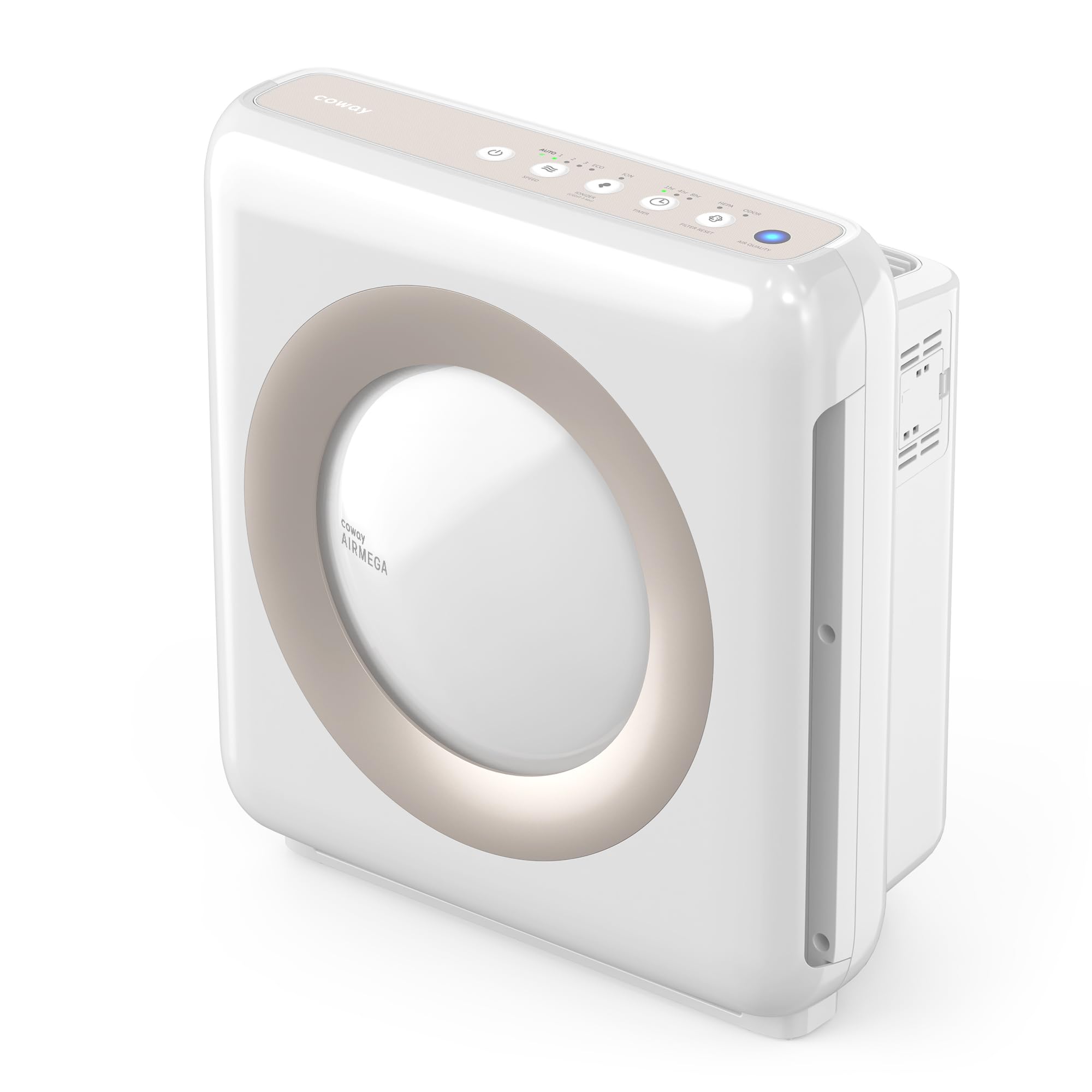
2. Coway Airmega AP-1512HH(W)
The mid-sized powerhouse that snagged Wirecutter’s top spot for a reason.
This machine covers a room up to 361 sq ft — a typical master bedroom or living room — with a CADR rating of 246 for dust, 240 for pollen, and 233 for smoke. The 4-stage filtration uses a pre-filter, deodorization filter, True HEPA filter, and a Vital Ionizer to catch 99.97% of particles as small as 0.3 microns. That is the gold standard for trapping the dust and pollen that trigger headaches.
The real-time pollution sensor shows you air quality with a colored LED — green, yellow, or red — so you know when the room is getting stuffy. It runs as quietly as 24.4 dB in its lowest setting, making it unobtrusive for a bedroom. The timer lets you set it for 1, 4, or 8 hours, and the Eco mode stops the fan when no pollution is detected for 30 minutes, saving energy. Buyers report the filter replacement indicator is very helpful for keeping performance consistent.
At 12.5 pounds, it is noticeably heavier than some compact models — the Honeywell HPA125W at 2.1 pounds — so it is less portable, but it feels built to last. The 77-watt power draw is modest for its output.
Why it works for headaches
- True HEPA captures 99.97% of particles at 0.3 microns — that includes common sinus triggers
- Auto mode adjusts fan speed based on real-time air quality so you do not have to guess
- Quiet 24.4 dB low speed keeps your sleep undisturbed
A couple trade-offs
- Heavier than rivals — 12.5 pounds means it is not easy to move room to room
- Higher up-front investment than entry-level options
Ideal if: You want a proven, mid-to-large room purifier with automatic sensing and a quiet sleep profile.
Skip it for: A tiny nightstand footprint — this is a floor unit, not a desktop model.
3. Winix 5520
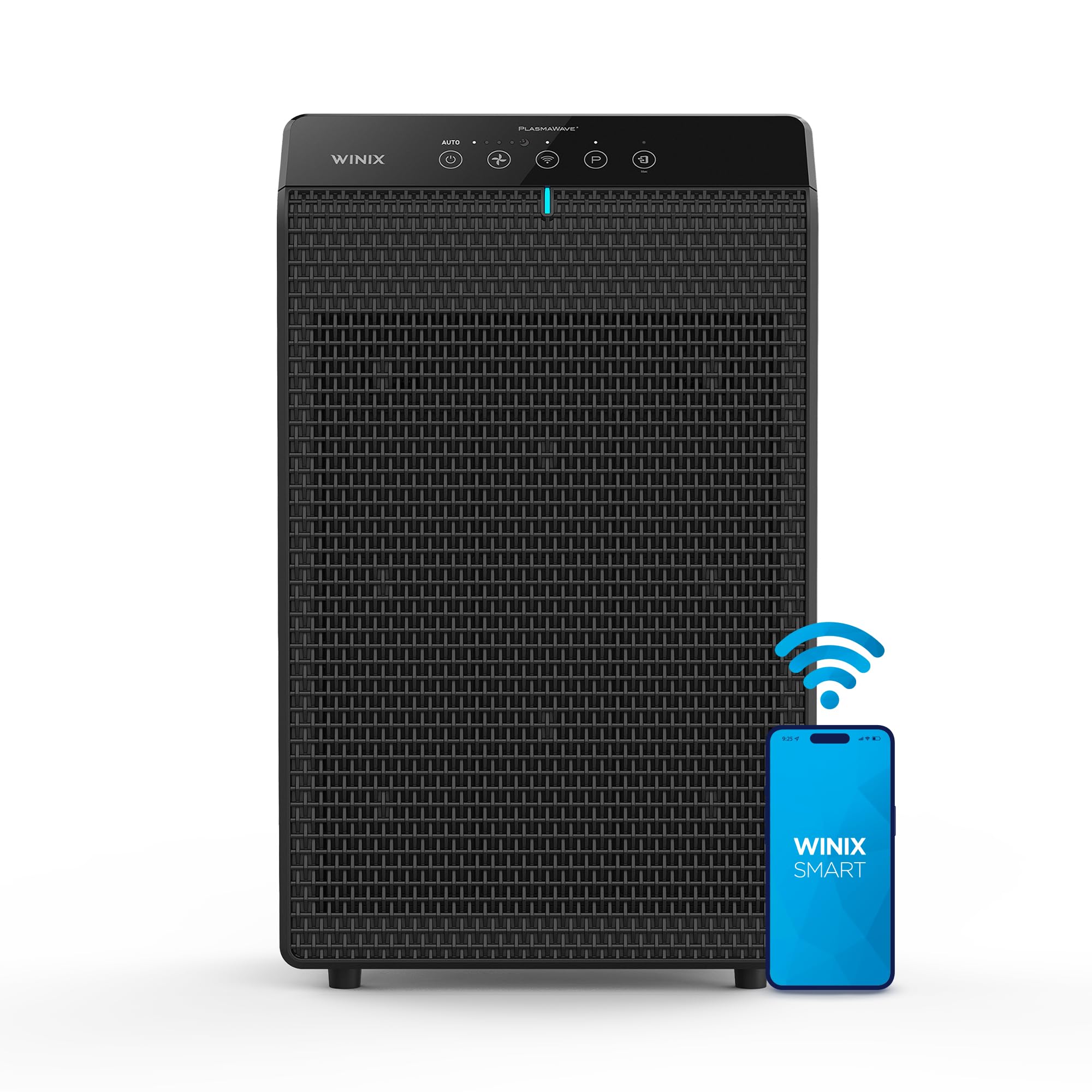
A large-room beast that stays nearly silent while scrubbing odors.
This unit is AHAM Verified for a 392 sq ft room, but it can clean up to 1,882 sq ft in one hour — that is an entire main floor. The True HEPA filter catches 99.97% of airborne particles, while the advanced deodorization carbon filter targets volatile organic compounds (VOCs — chemical vapors from paints, cleaners, or cooking) and household odors from pets and smoke. For headache sufferers sensitive to smells, that second stage is a direct win.
The Winix 5520 runs at just 23.5 dB on its slowest speed — lower than the Coway’s 24.4 dB — making it one of the quietest options here. Its Light Automated Sleep Mode automatically kicks in when the room darkens and returns to Auto Mode when you turn the lights on. The built-in air quality sensor adjusts the fan speed in real time, and with the free Winix Smart App you can monitor and control the unit remotely. Owners mention the carbon filter makes a real difference in kitchen smells.
It weighs 13.3 pounds, so it is not a lightweight, but the washable fine mesh pre-filter means you do not have to replace the main filter as often.
Headache relief strengths
- Carbon filter reduces VOCs and cooking odors — a common headache trigger
- 23.5 dB sleep mode is ultra-quiet for light sleepers
- AHAM Verified so the CADR numbers are independently tested
The honest downsides
- At 13.3 pounds it is not meant to be moved frequently
- The smart app adds convenience but the unit works fine without it
Reach for this if: You have a large living area or open floor plan and you want automatic odor-fighting without a loud fan.
Look elsewhere if: Your bedroom is under 150 sq ft and you want a smaller, cheaper unit.
4. LEVOIT Core 400S-P

AHAM-verified cleaning for up to 1,733 sq ft with smart controls you can operate from bed.
This LEVOIT model is AHAM Verifide and carries verified CADR ratings of 231 CFM for smoke, 240 CFM for dust, and 259 CFM for pollen. It can clean a room up to 1,733 sq ft in one hour, which covers large basements or open-concept main floors. The 3-in-1 filter captures 99.97% of airborne particles between 0.1 and 0.3 microns — a slightly wider range than the Coway’s 0.3-micron rating, meaning it catches some smaller particulates too.
The AirSight Plus laser sensor continuously scans for particles and updates a PM2.5 display (a measurement of fine particulate matter that can worsen headaches). You can set it to Auto Mode, and it will adjust the fan speed automatically. The 24 dB Sleep Mode is whisper-quiet, and the patented ARC Formula targets kitchen VOCs. With the free VeSync app, you can control the purifier, set timers, and check filter life from your phone. It also works with voice assistants like Alexa.
One reviewer noted that the PM2.5 display is very responsive — you can see the number drop in real time as the filter does its work.
Why it stands out
- AHAM Verifide with high CADR ratings — 259 CFM for pollen is excellent for allergy headaches
- WiFi + voice control means you can start it before you walk in the door
- Quiet Sleep Mode at 24 dB works well for overnight use
What to consider
- At 12.79 pounds it is a floor-standing unit, not something you set on a desk
- Smart features require the VeSync app — the purifier still works without it
Perfect for: Someone who wants to monitor air quality on their phone and cover a large room.
Not for: A tight budget — this sits at the high end of mid-range pricing.
5. ECOSELF HAP602
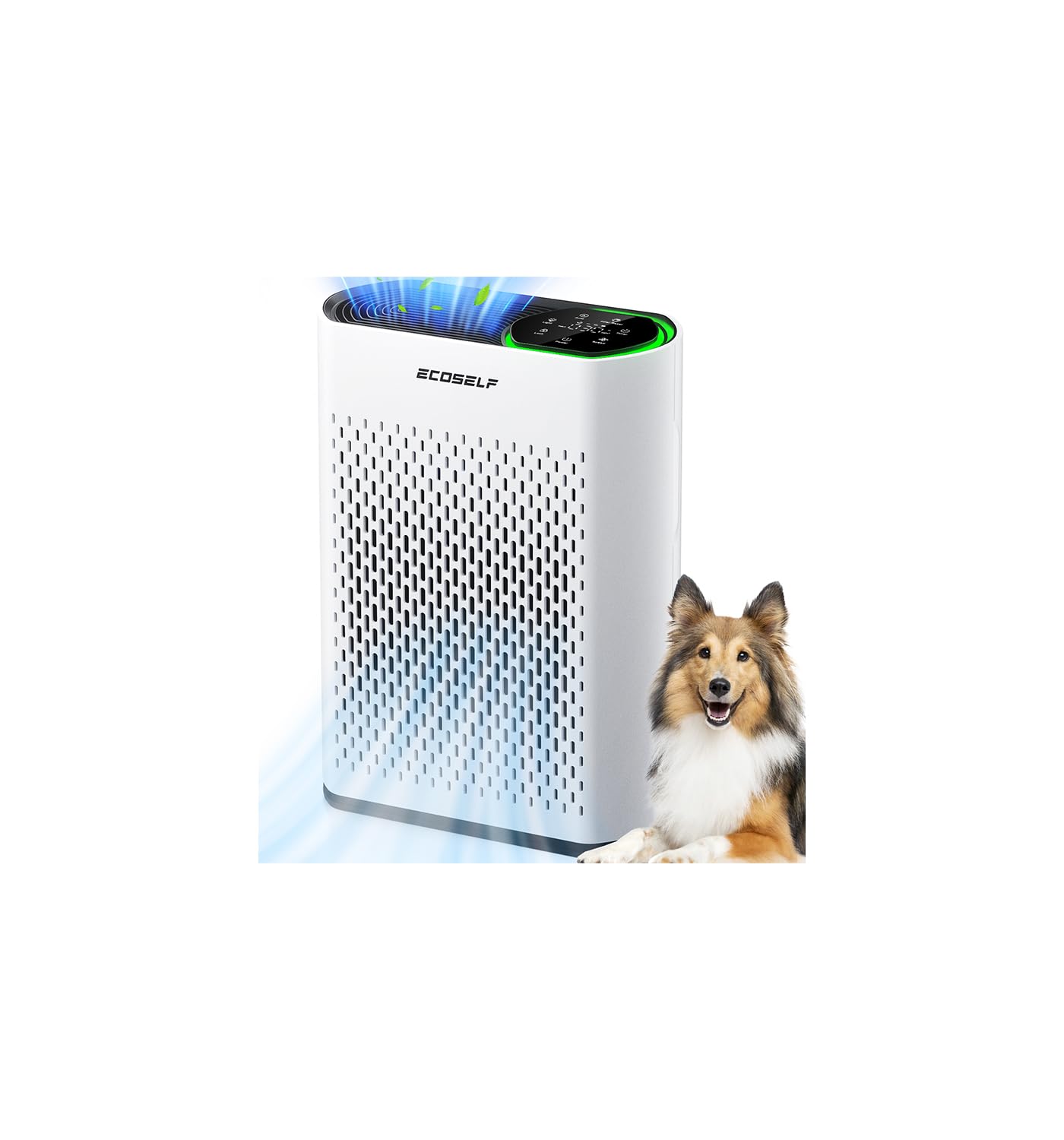
Cleans a 2,400 sq ft area in 30 minutes — the biggest coverage in this lineup.
This is the machine to pick if you want to cover an entire floor or a very large open space. It cleans rooms up to 2,400 sq ft every 30 minutes, compared to the GermGuardian’s 153 sq ft room coverage. That kind of throughput means less waiting for headache relief in a big home. The 3-Stage True HEPA filter traps particles like dust, pollen, pet dander, and smoke.
The built-in PM2.5 sensor shows real-time air quality with a color-coded indicator — green, blue, yellow, or red — and the Auto mode ramps up the fan when it detects a drop in air quality. The Sleep Mode runs at just 20 dB, which is even quieter than the Winix and Coway — the data shows it runs at 20 dB, compared to the LEVOIT Core 200S-P’s 27 dB. That makes it ideal for light sleepers who get headaches from noise as well as particles. The control panel has a child lock, and the manufacturer says the filter should be replaced every 3 to 6 months.
Reviewers report the real-time air quality display is satisfying to watch — you see the number drop as the unit cleans the room.
Best features for headaches
- 20 dB Sleep Mode is virtually silent — the quietest in the group
- Covers 2,400 sq ft in 30 minutes, so large homes get fast relief
- PM2.5 sensor takes the guesswork out of air quality
Things to know
- Newer model with only 155 ratings — less long-term track record
- Filter changes every 3-6 months are a recurring cost to budget
Choose this for: A very large room, basement, or open-concept home where coverage is the top priority.
Skip it for: A small bedroom — the massive capacity is overkill for a compact space.
6. Honeywell HPA125W
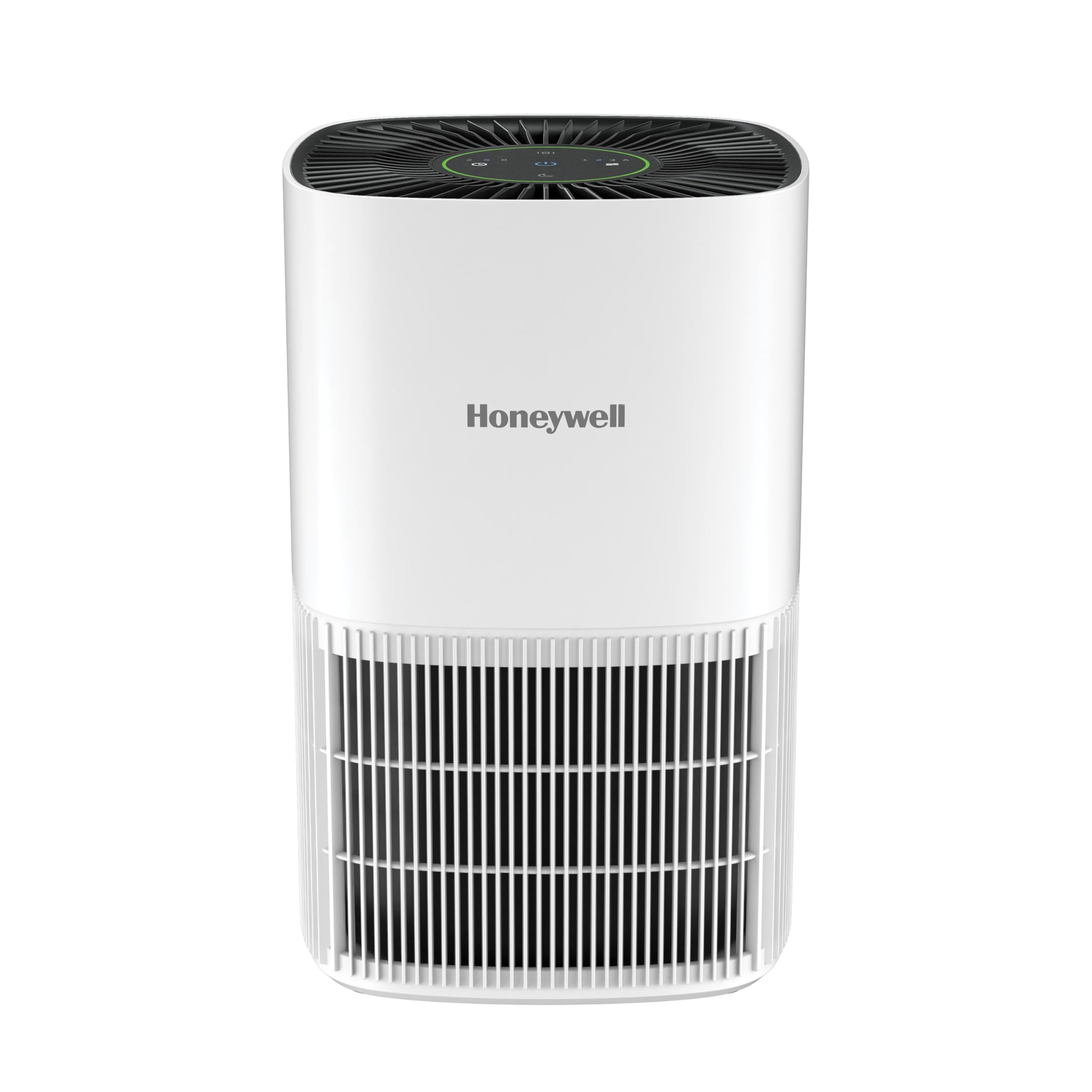
A tiny 2.1-pound tabletop purifier that uses a sensor to clean small rooms automatically.
This Honeywell is one of the lightest and most portable purifiers here at 2.1 pounds — in fact, the Coway weighs 12.5 pounds. It is designed for small spaces like dorm rooms, apartments, and desks. The AQSense Auto Mode uses an air quality sensor to adjust the fan speed, with color-coded indicators (green, yellow, red) so you can see the current air quality at a glance.
It filters the air with a 3-in-1 HEPA system that captures up to 99.97% of allergens like dust, pollen, and smoke. The activated carbon layer helps reduce VOCs, which can be a hidden headache trigger from paints or cleaning supplies. The Sleep Mode runs as low as 20.81 dBA — a whisper — with dimmable lights, making it a very peaceful companion for a small bedroom.
Note that its 110 sq ft coverage is smaller than the LEVOIT Core 200S-P’s 140 sq ft. It is designed for a nightstand or desk, not a main living room.
Compact advantages
- Very lightweight at 2.1 pounds — easy to move from room to room
- 20.81 dBA Sleep Mode is among the quietest here
- Air quality sensor with Auto Mode takes the guesswork out
What it gives up
- Small coverage area (110 sq ft) limits it to compact rooms
- Slower air changes compared to larger models
Pick this if: You need a lightweight, ultra-quiet purifier for a very small room or desk.
Look at a larger unit if: Your room exceeds 110 sq ft — the coverage will be insufficient.
7. GermGuardian AC4825E

A long-running budget tower that cycles a small bedroom every 12.5 minutes.
With over 63,000 ratings, this GermGuardian has been a staple in the small-room air purifier space since 2011. It is built for a compact bedroom of 153 sq ft, refreshing the air every 12.5 minutes It captures 99.97% of allergens as small as 0.1 microns, which is a finer particle range than the standard 0.3-micron rating.
The optional UV-C light is a unique extra — it helps reduce airborne bacteria and viruses, though it is not a replacement for the HEPA filter. The activated carbon filter targets cooking and pet odors, so it helps if smells set off your headaches. Three fan speeds include a quiet sleep mode, and the unit is CARB Certified, ETL Certified, and Zero Ozone Verified. It weighs 8.55 pounds and stands 22 inches tall.
Customers note that the UV-C light can be turned on or off independently, which is useful if you prefer to run only the HEPA filtration to save energy.
Why it still sells
- Captures particles down to 0.3 microns — finer than many rivals
- Built-in UV-C light for added air sanitation
- Long track record — over a decade of buyer trust
Where it falls short
- Coverage of 153 sq ft is relatively small — suitable only for a single bedroom
- No smart features or air quality display
Best for: A first-time buyer who wants an affordable, proven purifier for a single bedroom.
Pass on this if: You want app control, air quality monitoring, or larger room coverage.
Understanding the Specs
True HEPA vs. HEPA-Type
True HEPA is the industry standard for capturing 99.97% of particles as small as 0.3 microns — these are the dust, pollen, and pet dander that trigger many headaches. HEPA-type filters do not have the same guaranteed capture rate, so if you are buying for medical or sinus relief, stick with True HEPA. Some machines, like the LEVOIT Core 400S-P and the GermGuardian AC4825E, also capture particles down to 0.3 microns, which includes even finer irritants.
CADR and Room Coverage
CADR (Clean Air Delivery Rate) tells you how many cubic feet of clean air the purifier delivers per minute — the higher the number, the faster it cleans. You need a machine that can cycle the air in your room at least 4 times per hour. Check the recommended room coverage, not just the maximum square footage. A unit rated for 361 sq ft, like the Coway, will handle a large bedroom but may struggle in a 500 sq ft living space.
Noise and Sleep Mode
Decibels (dB) measure sound level. A drop from 27 dB to 20 dB is a significant drop in perceived noise — the ECOSELF HAP602 at 20 dB is the quietest of the group. If you are a light sleeper or your headache is noise-sensitive, look for a sleep mode at or below 24 dB. Also check if the unit has a display-off button, since bright LEDs can worsen nighttime headaches.
Air Quality Sensors and Auto Mode
A PM2.5 sensor detects fine particulate matter and shows a reading on the display. In Auto Mode, the purifier ramps up the fan speed when the sensor detects a spike in particles — that means it reacts without you having to touch any buttons. The Honeywell HPA125W and ECOSELF HAP602 both have color-coded indicators (green, yellow, red) so you can see at a glance when the air quality drops.
FAQ
Will an air purifier actually stop my headaches?
What filter type is best for headache relief?
How big of a room do I need to cover?
Is a quieter purifier better for headaches?
Can an air purifier make a headache worse?
How often do I need to change the filter?
What is the difference between 0.3 microns and 0.1 microns?
Do I need a smart air purifier with an app?
What does CADR mean and why does it matter?
Can I run an air purifier 24/7?
Final Thoughts: The Verdict
For most people, the air purifier for headaches winner is the Winix 5520 because it combines large-room coverage, an effective carbon filter for odors, ultra-quiet 23.5 dB operation (quieter than a whisper), and AHAM-verified ratings (certified by the Association of Home Appliance Manufacturers for real-world performance) at a price that sits right in the balance. If you want powerful smart controls and a PM2.5 display (a screen that shows the concentration of fine particles in the air), grab the LEVOIT Core 400S-P. And for a compact, whisper-quiet bedroom unit you can set on a nightstand, choose the Honeywell HPA125W.
How We Picked
We do not accept paid placement. Every pick is matched to a real buyer and a real use-case; we do not hands-on test units.
Sources & Methodology
Specifications: manufacturer listings and product documentation. Review insights: verified customer reviews, as of July 2026. Pricing: not shown on this page (it changes often); check the current price via the retailer link.
As an Amazon Associate, Gadgets Feed earns from qualifying purchases. This does not affect which products we feature.