
Our readers keep the lights on and my morning glass full of iced black tea. As an Amazon Associate, I earn from qualifying purchases.
Specs are compiled from manufacturer listings and verified buyer reviews and can change over time — please confirm the key details on the product page before buying.
An alpaca beanie sounds simple, but the difference between a hat that makes you smile every morning and one that ends up in the bottom of a drawer depends on the fiber itself — its origin, its weight, and whether it is baby alpaca or standard grade. You want something that keeps your head warm without the scratchiness that drove you away from wool in the first place, and you want it to look good enough that you actually wear it.
I’m Min — the founder and writer behind Gadgets Feed. This guide is built by comparing the manufacturers’ published specifications and the patterns across verified customer reviews, so you get each pick’s real strengths and trade-offs instead of marketing spin.
The three hats reviewed here each take a different approach to solving that problem, from a traditional sailor-style ribbed cap to a hand-knitted chullo with earflaps to a modern baby-alpaca beanie spun in three different weights. You will find the right alpaca beanie for your climate, your style, and your skin.
Our Picks at a Glance

How To Choose The Best Alpaca Beanie
Picking the right alpaca beanie means understanding that not all alpaca fiber is the same. The biggest choice you will face is between standard alpaca and baby alpaca fiber, which comes from the first shearing of a young alpaca and is noticeably finer and softer against your forehead and ears. A beginner often grabs the first nice-looking hat, but the wrong fiber grade or wrong knit style can leave you with a hat that itches, stretches out, or simply does not keep your ears warm on a cold afternoon.
Fiber Grade: Standard Alpaca vs. Baby Alpaca
Standard alpaca fiber is warm and durable, but the micron count (the thickness of each individual strand) is higher, which means you can feel it on sensitive skin. Baby alpaca fiber, at roughly 18-22 microns, is finer than cashmere and is the main reason people say alpaca “does not itch.” If you plan to wear your beanie directly on your forehead with no hat liner, baby alpaca is the move. The ALPAWOOL Beanie, for example, uses baby alpaca in its worsted and bulky weights (the super air variant blends 80% baby alpaca with 20% polyamide), while the Ribbed Stocking Cap uses standard 100% alpaca — both warm, but a different feel on the skin.
Yarn Weight and Knit Style
The weight of the yarn changes the beanie’s warmth and drape. A worsted-weight yarn gives a denser, smoother finish that holds its shape well and looks dressed-up. A bulky-weight yarn adds more loft and trapped air, making it warmer for extreme cold but a bit heavier on your head. The super air blend (baby alpaca mixed with a small amount of polyamide) creates a featherlight, breathable knit that works for active days or milder winters. The right choice depends on whether you are standing still on a freezing morning or moving around in variable temperatures.
Fit and Coverage
Look at the crown height and whether the hat has a fold-over brim. A taller crown gives you fabric to pull down over your ears, while a fold-over brim lets you adjust the fit around your forehead. The chullo style, with its integrated earflaps, offers the most coverage and locks warmth around your ears without needing to stretch the brim down. The product dimensions tell you a lot: the ALPAWOOL Beanie measures 7.8 x 1.2 x 11.8 inches, a much larger package than the Ribbed Stocking Cap at 0.5 x 6 x 9.5 inches, which reflects a taller crown and more substantial knit.
Quick Comparison
| Model | Best For | Fiber Type | Knit Style | Weight | Amazon |
|---|---|---|---|---|---|
| Ribbed Stocking Cap★ Best Overall | Work & outdoor durability | 100% Alpaca | Ribbed fisherman style | 3 ounces | Amazon |
| ALPAWOOL Beanie | Everyday luxury & softness | 100% Baby Alpaca (Worsted/Bulky); 80/20 Blend (Super Air) | Worsted / Bulky / Super Air | — | Amazon |
| Tumia LAC Chullo | Cold wind & ear coverage | Alpaca wool | Hand-knitted chullo | — | Amazon |
In‑Depth Reviews
1. Ribbed Stocking Cap – 100% Alpaca Wool – Traditional Fisherman Style
Our pick — over 4★ from 80+ verified ratings; the strongest balance of quality and price.
The simple, no-fuss workhorse that has been keeping heads warm for generations.
If you want a classic alpaca beanie that does not need to be babied, this ribbed stocking cap is your pick. It is made from 100% standard alpaca wool and weighs only 3 ounces, so it is lightweight enough to stuff in a jacket pocket without weighing you down. The close-to-the-head fit means it stays put in wind, and the adjustable fold-over edge lets you dial in how much of your forehead and ears it covers.
This hat is significantly smaller and lighter than the ALPAWOOL Beanie — the product dimensions are 0.5 x 6 x 9.5 inches versus the ALPAWOOL’s 7.8 x 1.2 x 11.8 inches. That smaller profile makes it ideal for wearing under a hood or helmet, or for anyone who prefers a snug, low-profile beanie over a tall crown. The fisherman-style ribbing gives it a timeless, no-nonsense look that works as well on a job site as it does on a city street.
Buyers mention that the hat is durable and holds its shape after repeated wear, which is important for a daily beanie. With a 4.2 out of 5 stars rating from 87 reviews, it has the most feedback of any hat here and a solid reputation. The fiber is not baby alpaca, so it is a touch less delicate than the ALPAWOOL, but it is also much more affordable and easier to replace.
Solid all-rounder
- Lightweight at 3 ounces, easy to carry in a pocket or pack
- Adjustable fold-over brim lets you customize fit and ear coverage
- Ribbed knit is durable and holds its shape over time
Not quite as refined
- Standard alpaca fiber is slightly less soft than baby alpaca, so sensitive skin may feel a difference
- Smaller size means less fabric to pull over ears for tall head shapes
Reach for this if: You need a trustworthy, lightweight, and durable beanie for work or outdoor wear at a reasonable price — and you prioritize practicality over status.
Think twice if: You have very sensitive skin or want the plushest, softest feel possible, because standard alpaca is less fine than baby alpaca.
2. ALPAWOOL Beanie 100% Pure Baby Alpaca Unisex Hat

The hat that feels like nothing is on your head, until you step into the wind.
The ALPAWOOL Beanie is the hat you reach for when you want zero compromise between warmth and comfort. It uses baby alpaca fiber, which is finer and softer than standard alpaca, so there is no itch against your forehead even on a long walk. Unlike the Ribbed Stocking Cap, which uses 100% alpaca, the worsted and bulky versions of the ALPAWOOL Beanie are 100% baby alpaca; the super air variant is an 80% baby alpaca / 20% polyamide blend — and you feel the difference the second you put it on.
What makes this pick special is that it comes in three distinct yarn weights. The worsted version is dense and smooth for a refined look that holds its shape. The bulky version offers plush warmth for bitter cold days, with a bold texture. The super air version blends 80% baby alpaca with 20% polyamide for a featherlight, breathable knit that works during active days. You pick the weight that matches your climate and style. The product dimensions (7.8 x 1.2 x 11.8 inches) show this is a taller, more substantial beanie than the Ribbed Stocking Cap, which measures 0.5 x 6 x 9.5 inches.
Buyers report that the hat is remarkably soft straight out of the package and that the warmth-to-weight ratio is noticeably better than wool. The brand, Alpalove, is a US-based company that sources from Peruvian breeders and prioritizes fair trade practices. At a 4.5 out of 5 stars rating from 16 reviews, it is the highest-rated hat in this lineup.
Why it wins
- 100% baby alpaca fiber is finer and softer than standard alpaca, so you get zero itch even on sensitive skin
- Three distinct yarn weight options (worsted, bulky, super air) let you match warmth and weight to your specific climate and activity
- Comes in 14 colors, giving you plenty of style choices
The price of luxury
- Premium-tier price point makes it a bigger investment than standard alpaca beanies
- Super air blend includes 20% polyamide, not 100% natural fiber
First choice for most: This is the alpaca beanie to buy if you value max softness, want to choose your ideal warmth level, and are willing to pay for baby alpaca quality.
The honest trade-off: It is the most expensive hat here, so it is best for someone who plans to wear it daily and wants the highest fiber grade — not for a spare beanie thrown in a car.
3. Tumia LAC Adult Alpaca Knitted Chullo Hat with Earflaps
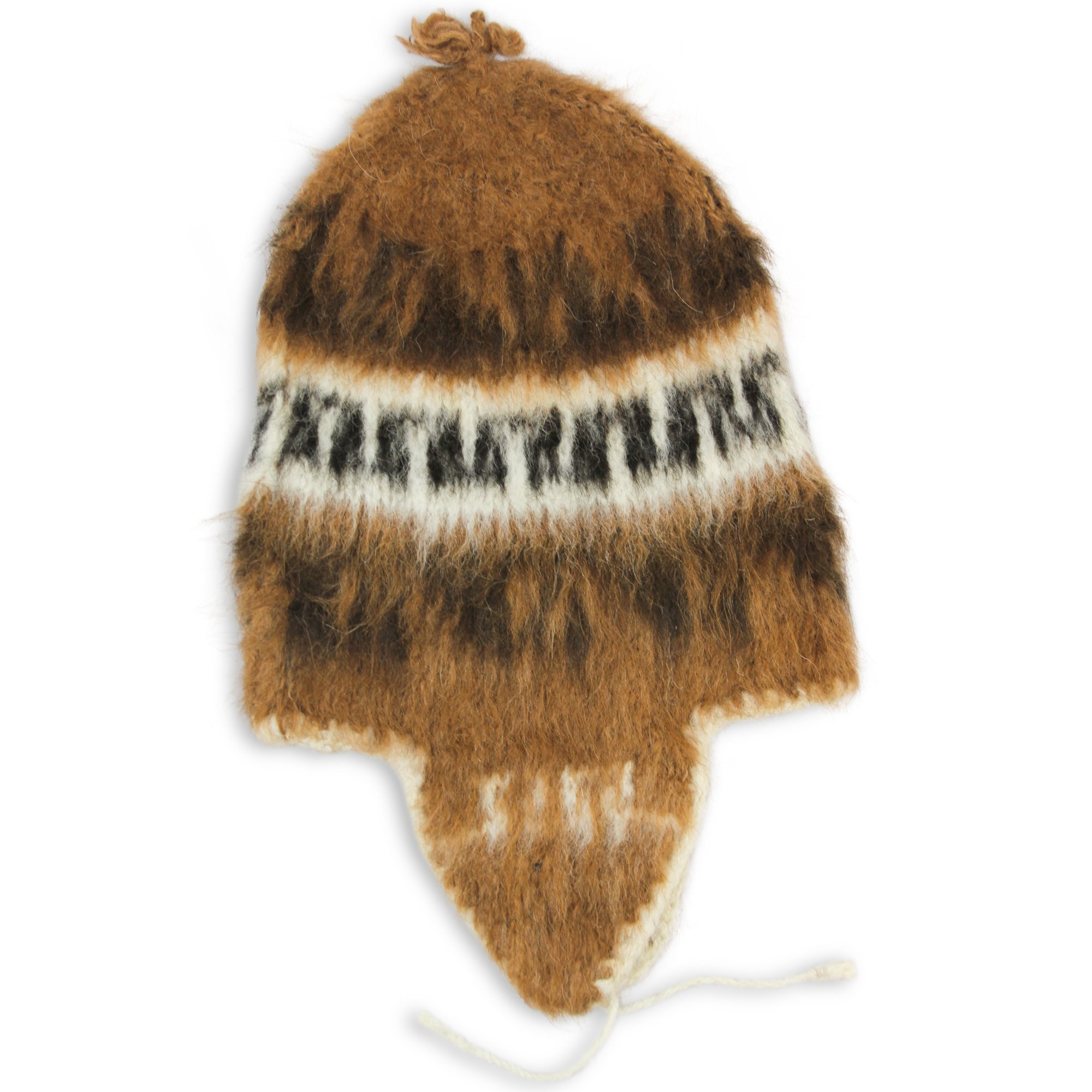
A hand-knitted piece of Peruvian tradition that wraps your ears in insulation.
This is not just a beanie — it is a chullo hat, a traditional Andean design that covers your ears with integrated earflaps for maximum wind protection. It is hand-knitted from alpaca wool by artisans in Peru and Bolivia, and Tumia LAC has been working with fair trade organizations like Tradecraft and Oxfam Trading since 1978. If you spend time in truly cold, windy conditions, the earflap design is tough to top for keeping your ears warm without needing to pull a brim down.
The hand-knitted nature means each hat has slight variations in pattern and color, giving it a one-of-a-kind character that mass-produced beanies lack. The alpaca wool is described as exceptionally strong, warm, and soft. It is a unisex design, available in natural alpaca colors. This hat is a different shape than the other two — it is not a ribbed beanie or a modern worsted cap — so it stands out visually and functions differently, with a more tailored fit around the head and full ear coverage.
Owners mention that the hat is well-constructed and that the earflaps actually stay in place, which is a common frustration with chullo designs that are too loose. Rated 3.7 out of 5 stars from 36 reviews, it has a shorter track record of feedback, but the fair trade story and handcrafted nature give it an appeal that goes beyond the spec sheet.
What it does best
- Earflap design provides superior ear coverage and wind protection compared to standard beanies
- Hand-knitted by Peruvian artisans, with each hat having unique variations
- Fair trade partnership supports sustainable working conditions for Latin American craftspeople
What to consider
- Standard alpaca yarn, not baby alpaca, so the fiber is not as fine as the premium ALPAWOOL
- Handcrafted nature means color and pattern vary, so what you see online may differ slightly from what arrives
Best for: Someone who braves cold, windy conditions regularly and values the extra coverage of earflaps, plus wants a hat with a meaningful backstory and fair trade ethics.
Not for: A minimalist or someone who prefers a low-profile, modern beanie — the chullo style is visually distinct and sits differently on the head.
Understanding the Specs
Fiber Grade: Standard vs. Baby Alpaca
This is the most important spec in an alpaca beanie. Baby alpaca comes from the first shearing of a young alpaca and is finer (around 18-22 microns thick) than standard alpaca (around 25-30 microns). The lower the micron count, the softer the fiber feels on your skin. Baby alpaca is the reason people say alpaca does not itch — it has low lanolin content naturally, but the finer fiber makes it even gentler. Standard alpaca is still warm and durable, but you will notice the difference if you have sensitive skin or plan to wear the hat without anything underneath.
Yarn Weight: Worsted, Bulky, and Super Air
The weight of the yarn determines how the beanie feels, how warm it is, and how it drapes. Worsted-weight yarn is dense and smooth, producing a beanie with a refined texture that holds its shape well and looks clean. Bulky-weight yarn is thicker, with more trapped air, making it warmer and giving it a softer, more textured look. Super air is a blend (typically 80% baby alpaca and 20% polyamide) that creates a featherlight, breathable knit — it is ideal for all-season wear or for being active in cold weather because it does not trap sweat. Choosing the right yarn weight for your climate and activity level is key to getting the most out of your beanie.
FAQ
Is baby alpaca warmer than standard alpaca?
Does alpaca wool stretch out over time?
Can alpaca beanies be washed?
What is the difference between a chullo and a beanie?
How long does an alpaca beanie last with regular use?
Is alpaca wool itchy?
Which beanie is the best for extreme cold?
What does the “super air” blend mean?
Final Thoughts: The Verdict
For most buyers, the alpaca beanie winner is the ALPAWOOL Beanie because its 100% baby alpaca fiber delivers the softest, most comfortable feel without any itch, and the three yarn weight options let you tailor the warmth and weight to your exact needs. If you want a lightweight, durable beanie for work or outdoor use at a great value, grab the Ribbed Stocking Cap. And for extreme wind and a connection to traditional craftsmanship with fair trade ethics, the standout is the Tumia LAC Chullo.
How We Picked
We do not accept paid placement. Every pick is matched to a real buyer and a real use-case; we do not hands-on test units.
Sources & Methodology
Specifications: manufacturer listings and product documentation. Review insights: verified customer reviews, as of July 2026. Pricing: not shown on this page (it changes often); check the current price via the retailer link.
As an Amazon Associate, Gadgets Feed earns from qualifying purchases. This does not affect which products we feature.