
Our readers keep the lights on and my morning glass full of iced black tea. As an Amazon Associate, I earn from qualifying purchases.
Specs are compiled from manufacturer listings and verified buyer reviews and can change over time — please confirm the key details on the product page before buying.
Nothing kills a big game or movie night quite like a frozen screen or that annoying pixelated block of green. Your antenna picks up a perfectly good signal, but by the time it travels through long cables and across splitters to your living room, the picture has lost its strength. A signal booster fixes this by re-amplifying the weak signal right before it hits your TV, giving you a stable, clear picture on every channel you get.
I’m Min — the founder and writer behind Gadgets Feed. This guide is built by comparing the manufacturers’ published specifications and the patterns across verified customer reviews, so you get each pick’s real strengths and trade-offs instead of marketing spin.
We cut through the marketing noise to find the amplifiers that actually clean up the picture and get you every channel your antenna can grab, making this the only guide you need for the best antenna tv signal booster.
Our Picks at a Glance

How To Choose The Best Antenna TV Signal Booster
Picking the wrong booster can actually make your reception worse by overloading the tuner with too strong a signal. Before you click buy, match the booster type to your exact setup and check these three key specs.
Preamplifier vs. Distribution Amplifier
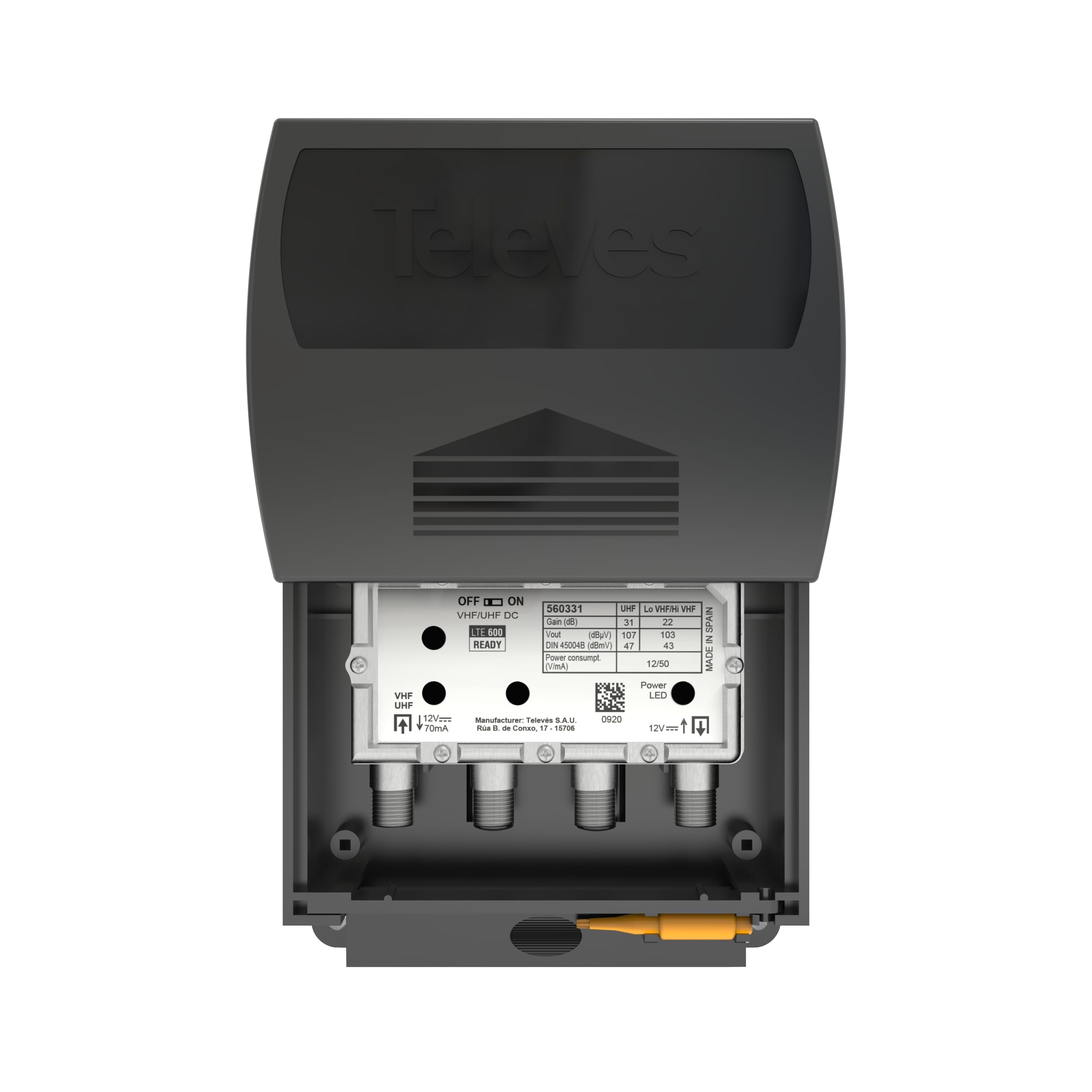
A preamplifier mounts up on the mast right at the antenna (like the Televes 560383). Its job is to overcome long cable loss from the roof down to your first splitter. A distribution amplifier (like the Channel Master CM-3424) sits near your TVs, in the attic or a closet, and compensates for the loss caused by splitting the signal to multiple rooms. If you have a long cable drop from the antenna, you want a preamp. If you just need to push a strong signal to several TVs, a distribution amp is what you need.
Gain in dB and Port Count
Gain tells you how much the signal is amplified—measured in decibels (dB). Higher gain is not always better for a distribution amp, because a signal that is too strong can overwhelm your TV’s tuner and cause dropouts. For a 4-port distribution amp, +7 dB gain to +12 dB per port is ideal for most homes. The more ports you need, the higher your required total output, but each port should never be starved of its share of the power. A product like the Antennas Direct JUICE4 is rated for 4K and 8K, so its design focuses on clean amplification rather than raw power.
Built-in Filtering for LTE and 5G
Cell towers pump out signals that can leak into your TV cable and cause pixelation or frozen video on certain channels. A modern booster should have built-in LTE filtering (blocking signals above 608 MHz). Products like the Televes 552380 and the Channel Master CM-3424 include this filter, which cleans the signal before your TV ever sees it. Without it, you might buy a booster and still see dropouts on channels 14 through 51.
Quick Comparison
| Model | Best For | Ports | Gain | Weight | Amazon |
|---|---|---|---|---|---|
| Channel Master CM-3424★ Best Overall | Replacing a bad splitter | 4 | 7.5 dB | 11 Ounces | $55.00Amazon |
| Televes 560383 TForce Mast PreamplifierAlso Great | Extreme weak-signal areas | 1 input | 31 dB (UHF) / 22 dB (VHF) | — | $79.95Amazon |
| Antronix MRA4-8 | Salt-fog / coastal homes | 4 | 7.5 dB | — | $51.86Amazon |
| Televes 552380 Indoor Distribution Amplifier | Fine-tuning gain per room | 5 | 12 dB / 16 dB (adjustable) | 11 Ounces | $55.95Amazon |
| Antennas Direct JUICE4 | 4K / 8K NextGen TV | 4 | — | 9.6 ounces | $59.99Amazon |
| Reliable LSA48 8-Port | Whole-home distribution | 8 | +4 dB | — | $65.87Amazon |
In‑Depth Reviews
1. Channel Master TV Antenna Booster 4-4-Port
Our pick — over 4★ from 1,500+ verified ratings; the strongest balance of quality and price.
The distribution amp that finally kills pixelation in a multi-TV home.
If you already get a decent picture on one TV but lose it when you split the signal to a second or third room, the Channel Master CM-3424 is the tool. It provides 7.5 dB of gain per port across four outputs, which is enough to overcome the signal loss caused by a standard four-way splitter. The unit has a built-in LTE filter, which eliminates the buzzing cell noise that causes dropouts on certain channels, and its heavy-duty weatherproof housing means you can mount it outdoors in an attic or on a wall without worrying about moisture.
Channel Master has been making antenna gear since 1949, and the 11-ounce unit reflects that experience. A key note from the manufacturer: this is a distribution amplifier, not a preamplifier. If your signal at the antenna is already weak, it cannot create channels out of thin air. Buyers report a noticeable reduction in pixelation and a more stable picture across all rooms after installation.
What it nails
- Weatherproof housing fits indoors, outdoors, or in an attic.
- Built-in LTE filter fights interference without a separate add-on.
- Heavy-duty build from a 75-year-old brand.
The limit
- Only works with passive (non-amplified) antennas, not as a mast preamp.
Best for: homes with decent roof signal that just need clean distribution to three or four TVs.
skip it if: your reception at the antenna is already poor — you need a mast preamp like the Televes 560383 first.
2. Televes 560383 TForce Mast Preamplifier
The brainy preamp that tunes itself when the weather turns.
If your antenna is on the roof and your signal fades every time a cloud rolls in or the leaves get thick, this is your fix. The Televes 560383 mounts directly at the mast and uses its proprietary TForce technology to continuously monitor and self-adjust amplification independently across both the VHF (Very High Frequency) and UHF (Ultra High Frequency) bands. It delivers up to 31 dB of gain on UHF and 22 dB on VHF, giving you a massive boost before the signal even hits the cable run down to your house. That is 31 dB versus the 7.5 dB of the Channel Master distribution amp below, making this the heavy lifter for tough reception zones.
It also blocks LTE, 5G, and FM interference with its built-in steep filters, so you do not need to buy a separate filter. The unit is rated IP23 for outdoor use and comes with a UL-listed power supply. One reviewer noted that after installing this preamp, he picked up 10 more channels that his previous booster had never been able to lock onto.
What you get
- Automatic gain control handles changing weather without manual fiddling.
- 31 dB UHF gain is the highest here, perfect for fringe areas.
- Built-in 5G/LTE filter cleans up interference before it enters the cable.
What to watch
- Single input limits you to one antenna setup (no combining two antennas).
- Requires a power injector near your TV, adding a small box to your setup.
Reach for this if: you live far from broadcast towers and need the strongest, cleanest start for the signal coming off your roof.
Look elsewhere if: you already have good signal strength but just need to split it to three or four TVs — a distribution amp suits you better.
3. Antronix MRA4-8 4-Port Distribution Amplifier

A tough coastal workhorse that shrugs off the weather.
The Antronix MRA4-8 brings a +7.5 dB boost per port across four ports, matching the Channel Master on gain but adding a specialty: a nickel-plated housing that is highly resistant to corrosion from salt fog and rust. If you live near the ocean or in a humid environment, this is your strongest contender. It also offers 6 kV surge protection on every port, guarding your TV and antenna against lightning strikes hitting the cable drop. The built-in 3 dB Noise Figure (a measure of how much extra noise the amplifier adds) keeps the signal clean instead of boosting it with added static.
One caveat: this unit is designed to replace the splitter at the point where the cable enters the home. It is not compatible with systems that already have an amplifier or a preamp. The package includes the amplifier, a 36-inch coaxial power cable, and two 75-ohm terminators for unused ports.
Why it stands out
- Nickel-plated housing resists salt fog and rust in coastal climates.
- 6 kV surge protection gives confidence during thunderstorms.
- Self-resetting circuit protection prevents long outages from power surges.
Something to know
- Cannot be used in a home that already has a signal amplifier or preamp inline.
Solid choice for: anyone in a coastal or high-humidity area who needs a corrosion-proof splitter-amp combo.
Not for you if: you have an existing preamp or distribution amp — the two will fight each other and cause problems.
4. Televes 552380 Indoor 5-Output Distribution Amplifier
The only amp that lets you dial in exactly the right signal per room.
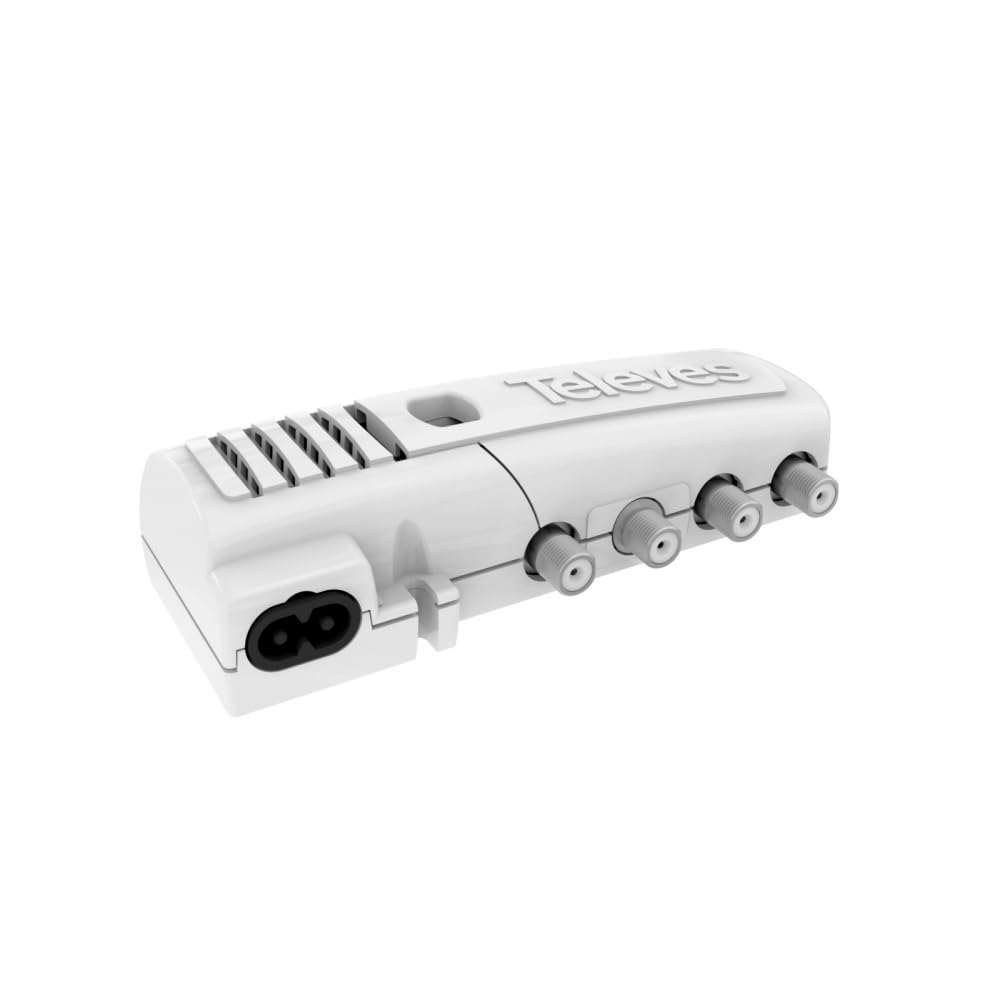
Most distribution amps apply one fixed gain to every port, but the Televes 552380 lets you adjust each output independently between 0 and 15 dB. One port nearest the TV gets 12 dB gain, and the other four get 16 dB gain for longer cable runs, and you can tweak each one manually to prevent over-amplifying a short run while feeding enough juice to a distant room. It weighs 11 ounces — the same as the Channel Master — and includes built-in LTE filtering that blocks cellular signals above 608 MHz, the most common cause of interference on UHF channels.
It works with both amplified and non-amplified antennas. One buyer mentioned they were able to fix a specific room that kept losing channel 7.1 by simply turning down the gain on that port.
What makes it special
- Independent gain control (0-15 dB) per output for precise tuning.
- 5 outputs — perfect for homes with more than four TV jacks.
- Low power consumption saves energy over 24/7 operation.
What to note
- Indoor-only unit, cannot be mounted outdoors or in a wet attic.
- Manual gain adjustment means a bit of trial-and-error tuning at first.
Go with this if: you have different cable lengths feeding different rooms and want to fine-tune each one.
pass on it if: you need an outdoor-rated unit for an unconditioned attic or exterior wall.
5. Antennas Direct ClearStream JUICE4 Distribution Amplifier
The tiny silver box that preps your home for NextGen TV.
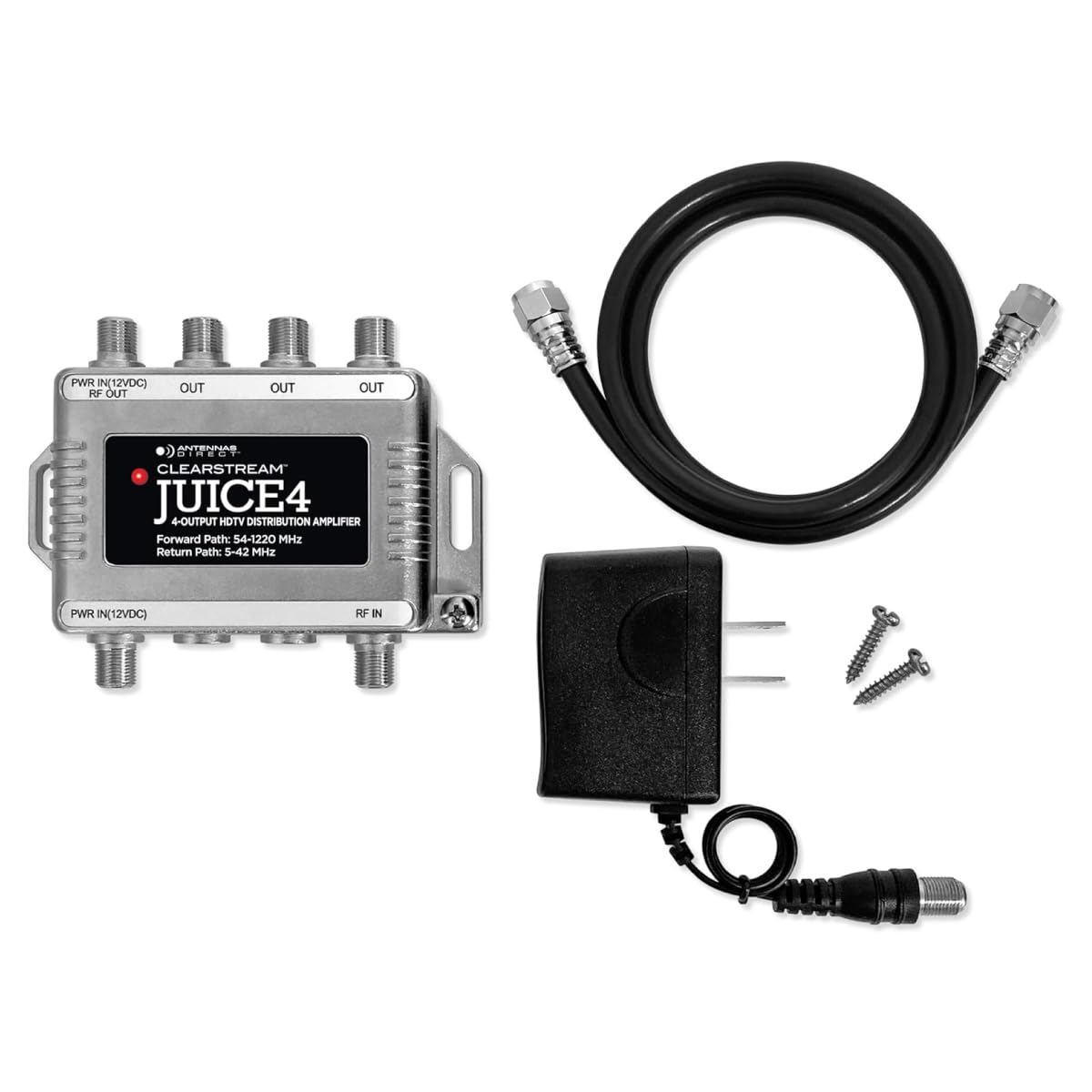
If you have upgraded to an ATSC 3.0 antenna or plan to, the Antennas Direct JUICE4 is built to handle it. It supports 4K and 8K UHD signals, so it will not bottleneck your picture quality if you are watching NextGen TV broadcasts. The unit measures just 3.5 inches high by 3.8 inches wide by 1 inch deep, making it the most compact option here at 9.6 ounces — slightly lighter than the 11-ounce Televes 552380 indoor amp. The precision machine-sealed zinc diecast housing offers excellent surge protection and can be used outdoors with the included watertight F-connectors and weather boots.
The operating frequency extends to 1.2 GHz, which also makes it compatible with CATV and cable broadband applications. Owners mention that it fits easily behind an entertainment center without being an eyesore, and the silver finish matches most modern TV cabinets.
What works
- Supports the latest ATSC 3.0, 4K, and 8K broadcast standards.
- Compact zinc housing is both outdoor-ready and less than 10 ounces.
- Operating frequency up to 1.2 GHz for compatibility with cable systems.
Consider this
- Limited to four outputs — if you need five or more, look at the Televes 552380.
- No per-port gain adjustment; the boost is fixed across all outputs.
Ideal for: cord-cutters who watch NextGen TV broadcasts and want a future-proof, compact amplifier that hides out of sight.
Not ideal if: you need to calibrate signal strength differently to different rooms.
6. Reliable LSA48 8-Port Distribution Amplifier

All eight TVs get a clean signal from one tiny box.
The Reliable LSA48 is the only amplifier here that feeds eight separate devices from a single antenna or cable line. At +4 dB of gain per port, it does not boost as aggressively as the Channel Master’s 7.5 dB or the Televes distribution amp, but that is by design — when you are distributing to eight rooms, the main goal is to overcome the signal loss from such a massive split, not to blast the signal. It is compatible with both over-the-air antennas and standard cable TV services, but it is not meant for use with amplified antennas or setups that already have a preamp.
The ultra-small form factor fits into tight spaces easily, and it can be used outdoors in an approved enclosure (though the power supply is strictly indoor use). A buyer using it in a four-unit apartment building reported that it finally got clean reception on all eight outlets where a passive splitter had failed. Note that it has eight ports versus the single input of the Televes 560383, making it a very different tool for a different job.
What you get for the money
- Eight ports — the highest port count in this list, ideal for whole-home setups.
- Ultra-compact size fits inside a structured wiring cabinet or behind a panel.
- +4 dB gain per port compensates for signal loss from an 8-way passive splitter.
The trade-off
- +4 dB gain is the lowest boost here, best used with a strong incoming signal.
- Not compatible with amplified antennas or existing preamplifiers.
Top choice for: landlords, house flippers, or anyone wiring a home with eight TV outlets off a single antenna.
Not your pick if: the incoming signal is already borderline weak — the 4 dB boost may not be enough to save it.
Understanding the Specs
Gain (dB)
Gain measures how much the booster increases the signal’s voltage, expressed in decibels (dB). For a distribution amplifier, you usually want between +4 dB and +12 dB per port. Too much gain on a short cable run can overload your TV’s tuner and cause picture dropouts. A mast preamplifier like the Televes 560383 can deliver 31 dB because it is fighting a hundred feet of cable loss before the signal ever reaches your home.
LTE / 5G Filtering
Cell towers broadcast signals in the 600-700 MHz range, right in the middle of the UHF TV band. Without a filter, this cell noise gets into your coax cable and ruins channels. A built-in LTE filter (usually cutting off at 608 MHz) cleans out that interference at the amplifier, so your TV only sees the broadcast channel signal. If you live near a cell tower, this filter is essential.
FAQ
Can I use a signal booster with an amplified antenna?
What is the difference between a mast preamplifier and a distribution amplifier?
How many TVs can one antenna signal booster support?
Will a signal booster help me get more channels?
What does the dB gain number mean for my TV?
Can I install a signal booster outdoors in a weatherproof box?
Why does my picture freeze when a car passes or the wind blows?
Does a TV antenna signal booster work with cable or satellite TV?
What does LTE filtering do and do I need it?
How do I know if I need a preamplifier or a distribution amplifier?
Final Thoughts: The Verdict
For most buyers, the best antenna tv signal booster winner is the Televes 560383 TForce Mast Preamplifier because it automatically handles fluctuating weather and delivers the highest 31 dB gain to lock in the weakest stations. If you want to cleanly distribute a strong existing signal to multiple rooms, grab the Channel Master CM-3424. And for a whole-house setup that feeds eight separate TVs, the standout is the Reliable LSA48.
How We Picked
We do not accept paid placement. Every pick is matched to a real buyer and a real use-case; we do not hands-on test units.
Sources & Methodology
Specifications: manufacturer listings and product documentation. Review insights: verified customer reviews, as of July 2026. Pricing: not shown on this page (it changes often); check the current price via the retailer link.
As an Amazon Associate, Gadgets Feed earns from qualifying purchases. This does not affect which products we feature.
Related Guides
Product prices and availability are accurate as of the date/time indicated and are subject to change. Any price and availability information displayed on Amazon at the time of purchase will apply to the purchase of this product. As an Amazon Associate I earn from qualifying purchases.
CERTAIN CONTENT THAT APPEARS ON THIS SITE COMES FROM AMAZON. THIS CONTENT IS PROVIDED "AS IS" AND IS SUBJECT TO CHANGE OR REMOVAL AT ANY TIME.
Amazon and the Amazon logo are trademarks of Amazon.com, Inc. or its affiliates.