
Our readers keep the lights on and my morning glass full of iced black tea. As an Amazon Associate, I earn from qualifying purchases.
Specs are compiled from manufacturer listings and verified buyer reviews and can change over time — please confirm the key details on the product page before buying.
Buying a subwoofer is about one thing: feeling the bass, not just hearing it. The difference between a good system and a great one is a subwoofer that disappears into the mix, delivering low frequencies with weight and control. But with so many sizes, power ratings, and cabinet types on the market, picking the right one for your room or car can feel like guesswork.
I’m Min — the founder and writer behind Gadgets Feed. This guide is built by comparing the manufacturers’ published specifications and the patterns across verified customer reviews, so you get each pick’s real strengths and trade-offs instead of marketing spin.
Whether you are building a home theater, upgrading a car stereo, or filling out a studio setup, the best 10 subwoofers here are ranked by real-world performance, matching each one to the right buyer and budget.
Our Picks at a Glance


How To Choose The Best Subwoofer
Picking a subwoofer depends on matching its power, size, and cabinet design to your space. A sub that sounds massive in a small room can turn muddy in a large open area. Here are the three specs that separate the right fit from the wrong one.
Driver Size and Cabinet Design
The driver size (8 inches up to 12 inches) directly affects how much air the subwoofer can move. A 12-inch driver shifts more air than an 8-inch one, which means louder, deeper bass. Cabinet design matters just as much — sealed cabinets give you tight, punchy bass, while ported cabinets let you push louder levels with more rumble. The trade-off is that ported cabinets are often bigger.
RMS Power vs Peak Power
RMS (the continuous power a subwoofer can handle) is the number that tells you how loud it plays cleanly over time. Peak power only matters for short bursts. A subwoofer with 100W RMS will sound reliable day to day, while one with only a high peak rating might distort at sustained volume. Always compare RMS ratings between models.
Crossover and Phase Controls
A low-pass crossover lets you set the frequency where the subwoofer hands off to your main speakers, usually between 80Hz and 160Hz. Phase control (0 or 180 degrees) makes sure the sub’s sound waves arrive at your ears at the same time as the speakers. Without these controls, the bass can feel disconnected or hollow in your listening spot.
Quick Comparison
| Model | Best For | Driver Size | RMS Power | Frequency Response | Amazon |
|---|---|---|---|---|---|
| SVS SB-1000 Pro★ Best Overall | Home Theater & Music (Sealed) | 12″ | 325W | — | $599.00Amazon |
| Pioneer TS-A2500LS4Best Value | Car Audio (Shallow Mount) | 10″ | 300W Nominal | — | $127.56$169.99Amazon |
| Rockville Rock Shaker 10Budget Champion | Home Theater (Budget) | 10″ | 300W | 20Hz-200Hz | $144.95Amazon |
| Edifier T5s | Desktop & Studio | 8″ | 70W | 35Hz | $199.99Amazon |
| Klipsch R-101SW | Home Theater (Premium Style) | 10″ | — | — | $349.00$549.99Amazon |
| Polk Monitor XT12 | Home Theater (Large Room) | 12″ | 100W | 24Hz | $359.00$399.00Amazon |
| JBL SUBBP12AM | Car Audio (Powered) | 12″ | 150W | 35 – 120Hz | $364.95Amazon |
| SVS PB-1000 Pro | Home Theater (Ported Power) | 12″ | 325W | — | $849.00Amazon |
| Sonos Sub 4 | Wireless Home Theater | 5″ | — | — | $899.00Amazon |
In‑Depth Reviews
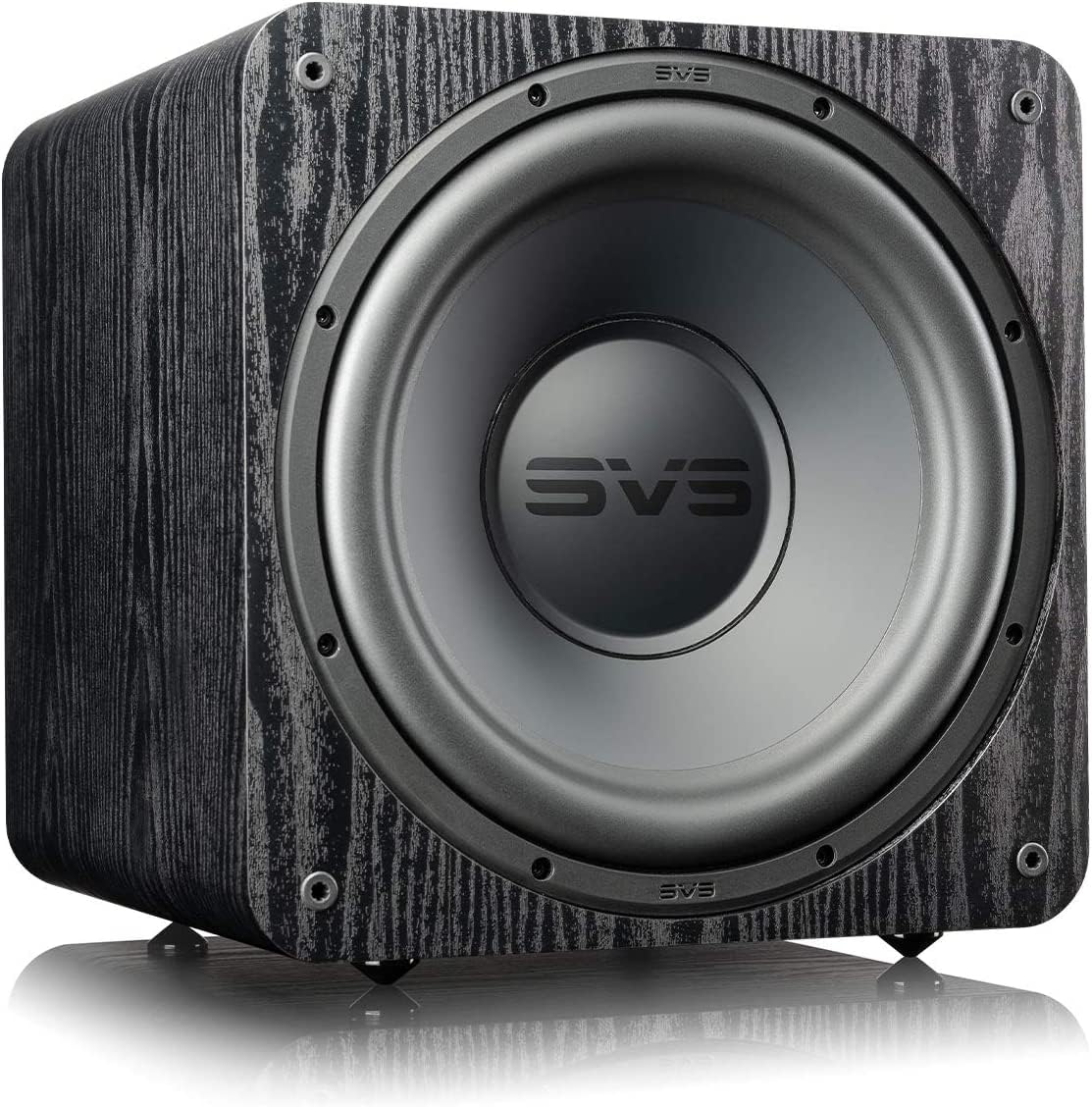
1. SVS SB-1000 Pro Subwoofer (Black Ash)
Our pick — over 4.5★ from 600+ verified ratings; the strongest balance of quality and price.
The sealed-cabinet titan that balances thunderous output with pinpoint control.
You get tight, accurate bass that stays clean even when the volume climbs. The 325 Watts RMS Sledge STA-325D amplifier (a Class D amp with discrete MOSFETs) packs high current without wasting heat, so the subwoofer plays loud for hours without strain. The high-excursion 12-inch driver uses a dual ferrite magnet motor and long-throw parabolic surround to move air with finesse, which means you feel the kick drum without the boom overshadowing vocals or strings.
The 50MHz Analog Devices Audio DSP (a digital processor that shapes the sound in real time) keeps the frequency response pinpoint accurate. You adjust everything — volume, presets, room tuning — through the SVS Subwoofer DSP Smartphone App, no need to crouch behind the cabinet. The sealed enclosure is built with an extra-thick MDF front baffle and rigid internal bracing, so the cabinet itself never adds its own resonance. Buyers report near-universal satisfaction with how compact it is, fitting easily into systems where a bigger ported sub would crowd the room.
Sealed Power: The SVS SB-1000 Pro delivers 325W RMS from a sealed 12-inch driver, making it the reference for accuracy in a compact footprint.
One Limit: For the deepest, room-shaking lows in a very large open space, the ported PB-1000 Pro below will push more air at similar power.
Reach for this if: You want a clean, musical bass that blends with high-end speakers and never sounds sloppy.
Look elsewhere if: You need maximum raw air movement for a huge home theater without any compromise on extension.
2. Pioneer A-Series TS-A2500LS4 10” Subwoofer
A car subwoofer that fits under a seat while still delivering punchy bass you can feel.
This is a passive subwoofer, so you connect it to your own external amplifier. The 1200W max power and 300W nominal power come from a Glass-Fiber & Mica Reinforced IMPP cone — a lightweight but stiff cone material that keeps distortion low when the bass hits hard. The 4Ω Single Voice Coil (SVC) design makes wiring simple and efficient, pairing cleanly with a typical car amp, while the 85 dB sensitivity rating means it doesn’t need a massive external amp to wake up.
The shallow-mount design is the key here. Pioneer engineered it specifically for tight spaces, so you can mount it behind or under seats in a wide variety of vehicles — trucks and compact cars included. Buyers consistently praise how much bass fits into a space that would normally only hold a slim enclosure. It is more work to install than a powered sub, but the flexibility in placing it exactly where you want is the payoff.
Space Saver: The Pioneer TS-A2500LS4 uses a shallow-mount 10-inch design to fit behind or under seats while delivering 300W nominal power.
One Note: You need a separate external amplifier to drive it, which adds to the install complexity and cost.
Reach for this if: You have limited space in your car or truck and want deep, punchy bass without a bulky box.
Look elsewhere if: You prefer a simple powered all-in-one sub that just needs a power wire and signal cable.
3. Rockville Rock Shaker 10 Black 600W Powered Subwoofer
An entry-level powered sub that brings a real 300W RMS punch to movies and music on a tight budget.
You plug this directly into your receiver or TV without needing a separate amp. The 10-inch woofer is driven by a built-in Class-D amplifier that is precisely matched to the enclosure, so you get 300W RMS of clean output. The frequency response spans 20Hz-200Hz, which means it extends deep enough for most home theater use. Volume, crossover frequency, and phase controls are all on board, so you can dial in the blend with your main speakers.
Connectivity is flexible — RCA line inputs and outputs, plus high-level speaker inputs and outputs, so it works with older receivers that lack a dedicated subwoofer output. The MDF enclosure with high-grade vinyl finish and a detachable foam grill means it looks decent in a living room without screaming “budget.” With 985 ratings averaging 4.3 out of 5, buyers routinely note that it outperforms expectations for the price, though they mention it is not built for massive rooms or very loud reference levels.
Surprising Punch
- 300W RMS from a built-in Class-D amp means real bass without external gear.
- High-level inputs let it work with old-school stereo receivers.
Reality Check
- 20Hz-200Hz response is present, but the deepest notes lack the authority of bigger drivers.
Best for: A first-time buyer on a strict budget who wants a powered sub for a small to medium home theater.
skip it if: You need sub-20Hz extension for critical music production or a massive open room.
4. Edifier T5s Powered Active Subwoofer
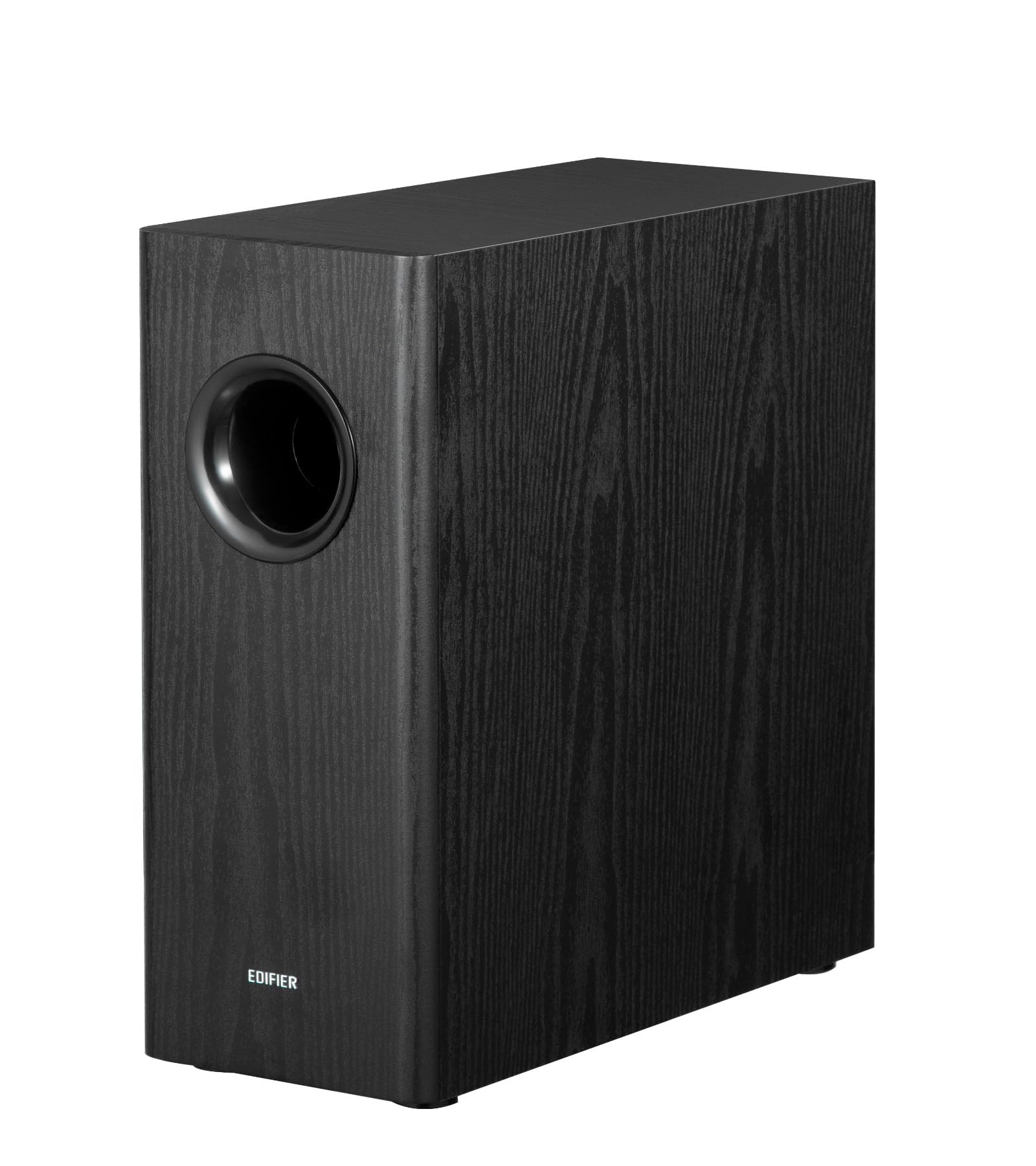
A slim 8-inch sub that extends down to 35Hz for desktop and small room setups without wasting space.
The Edifier T5s is an ideal match for desktop speakers or a small living room where a 12-inch box would dominate the floor. Its 8-inch long-throw woofer reaches 35Hz deep bass with only 70W RMS from its built-in Class-D amplifier, so it brings out the low end of movies and music without shaking the walls uncomfortably. The low-pass filter is adjustable from 30Hz to 160Hz, and the phase selector switches between 0° and 180°, giving you the tools to match your main speakers precisely.
The 18mm MDF cabinet with a front-firing driver and right-firing acoustic port keeps the sound clean. Auto-standby kicks in after 15 minutes of inactivity to save power, which is handy for a setup you leave on. It connects easily to Edifier bookshelf speakers like the R1280Ts and R1700BTs, and the included 3.5mm-to-RCA and RCA cables mean you can set it up immediately. The 8-inch driver is notably smaller than the 12-inch on the SVS models above, so its absolute output is lower, but in a desk space, it hits a balance.
Desktop Fit: The Edifier T5s reaches 35Hz from an 8-inch long-throw woofer in a slim 18mm MDF cabinet, ideal for near-field listening.
One Caveat: At 70W RMS it will not match the sheer room-filling output of a 12-inch powered subwoofer for a large home theater.
Reach for this if: You want a powered sub for a computer desk or compact bookshelf system that blends smoothly.
Look elsewhere if: You want cinema-level volume in a big living room or need to pair with non-Edifier speakers without a sub-out.
5. Klipsch Reference R-101SW 10” Front-Firing Subwoofer

A front-firing sub that matches the iconic Klipsch look with deep, clean home theater bass.
The new 10-inch spun-copper thermoformed crystalline polymer (TCP) woofer is exceptionally light and stiff, which means it delivers low-frequency response with minimal cone breakup. An all-digital amplifier pairs with it, providing high efficiency and true-to-source accuracy — you hear the bass as it was recorded, not boosted or distorted. The front-firing driver is placed on the front of the cabinet, giving you flexibility in where you put it against a wall compared to a down-firing sub.
Low-pass crossover and phase controls let you dial in the blend with other Klipsch speakers, and the Line/LFE inputs ensure compatibility with any AV receiver. Buyers consistently rate this sub 4.7 out of 5 across 195 reviews, noting that it integrates smoothly with Klipsch towers or bookshelves for a cohesive, powerful front soundstage. The 10-inch driver is a step down in cone area from the 12-inch Polk XT12 below, but its TCP material design keeps the bass tight and musical.
Signature Sound
- Spun-copper TCP woofer resists cone breakup for cleaner, more accurate bass at louder volumes.
- Front-firing driver and all-digital amp give flexible placement and efficient power use.
Size Trade-off
- The 10-inch driver cannot physically move as much air as a 12-inch for the deepest, room-shaking lows.
Best for: Anyone building a Klipsch-based home theater who wants timbre-matched, accurate bass from a stylish 10-inch sub.
pass on it if: You have a very large room and need the absolute maximum air-pushing capacity of a 12-inch driver.
6. Polk Monitor XT12 Powered Sub

A 12-inch dynamo that digs down to 24Hz for an easy, full-room bass experience.
Polk pairs a long-throw, high-excursion 12-inch Dynamically Balanced Woofer with a 100W Class A/B Amplifier, reaching a very deep 24Hz frequency response. That low extension means you feel the sub-bass in modern movies and action games, not just hear a generic thump. The MDF cabinet is rigidly braced with a removable precision-fit grille to keep resonances away from the driver’s output.
Volume, variable crossover from 80Hz to 160Hz, and phase polarity (0/180) control are all on the back panel, giving you the tools to tune the sub to your room. It connects via line level RCA, LFE (unfiltered/low pass disabled), and nickel-plated 5-way binding posts — so it works with nearly any AV receiver. Buyers with 258 ratings averaging 4.6 out of 5 consistently note how easily it blends with a surround system, and many mention that a single XT12 fills a mid-sized room with authority. Add a second unit for even more uniform low frequencies across the space.
Deep Extension: The Polk Monitor XT12 reaches 24Hz from a 12-inch driver with a 100W Class A/B amplifier, giving true sub-bass for a large room.
One Note: At 100W RMS it is less powerful than the SVS 325W offerings, but the 12-inch cone and deep tuning make it competitive on extension.
Reach for this if: You want 24Hz sub-bass from a 12-inch driver in a room where extreme SPL (loudness) is less critical than depth.
Look elsewhere if: You need very high output levels for a very large open-plan home theater space.
7. JBL SUBBP12AM – 12” Amplified Subwoofer

A fully powered car subwoofer that brings 150W RMS of JBL bass without needing a separate amp.
JBL packages a 12-inch (305mm) woofer with a built-in amplifier that delivers 150W RMS or 450W Peak, so you wire it directly to your car’s electrical system and signal source. The powered polypropylene cone is durable and resists moisture better than paper cones in a car environment. The Slipstream port design actively reduces port noise — unwanted air turbulence that makes a “chuffing” sound — so you get distortion-free bass even at high output. Frequency response runs from 35Hz to 120Hz, covering the core subwoofer range for music and movies in a car.
The included remote control lets you adjust the sub level from the driver’s seat, which is a big convenience when you switch between music genres. It is a single-unit enclosure (the SUBBP12AM) that fits in trunks or larger hatchback areas. The 12-inch driver here is the same size as the Polk XT12 above, but the JBL is a fully self-contained car solution, whereas the Polk is for home theater. The RMS rating of 150W is lower than the SVS models, but in a car cabin, it produces a very punchy result.
Car Convenience
- Built-in amplifier (150W RMS) means no external amp purchase or complex wiring.
- Slipstream port reduces chuffing for cleaner, louder bass in a car.
Car Limitation
- Not designed for home use — wiring and input are specific to 12V car electrical systems.
Best for: Anyone wanting a plug-and-play JBL powered 12-inch sub for a car without the hassle of a separate amplifier.
it’s not for you if: You need a subwoofer for a home theater or desktop system — this is strictly for 12V automotive setups.
8. SVS PB-1000 Pro Subwoofer (Black Ash)

The ported powerhouse for maximum air movement — the definitive choice for cinema-level, room-filling lows.
The SVS PB-1000 Pro shares its 325 Watts RMS Sledge STA-325D amplifier with its sealed sibling, but the ported cabinet design changes everything. The acoustically tuned dual-port cabinet allows maximum airflow without distortion, which translates to louder, deeper bass at the same power level. The high-excursion 12-inch driver with its dual ferrite magnet motor and long-throw parabolic surround is identical to the SB-1000 Pro, but the ports add more output and extension in the lowest octave.
You still get the 50MHz Analog Devices Audio DSP for precise frequency tuning and the SVS Subwoofer DSP Smartphone App for easy control. The PB-1000 Pro is the clear upgrade path if the SB-1000 Pro’s sealed sound felt a little restrained for your action movie collection. With a 4.8 out of 5 average across 282 reviews, it is the highest-rated sub in this guide. Buyers consistently mention that it “pressurizes the room” in a way sealed cabinets cannot match.
Ported Authority: The SVS PB-1000 Pro uses a dual-port cabinet with a 325W RMS amp and a 12-inch driver to move maximum air for the deepest bass.
Room Factor: The ported cabinet is larger than the sealed SB-1000 Pro, so measure your space before buying.
Reach for this if: You want the best possible home theater bass from a 12-inch ported sub with smartphone app control.
Look elsewhere if: You need a compact sub to tuck into a tight cabinet or a very small room where a ported design might be too boomy.
9. Sonos Sub 4 – Wireless Subwoofer

A wireless sub that erases cabinet buzz through force-canceling — and disappears under your sofa.
The Sonos Sub 4 uses two built-in drivers that face each other inside the cabinet. This force-canceling design virtually eliminates distortion, buzz, and rattle because the opposing forces cancel out. You get deep, dynamic bass without any physical vibration from the cabinet itself. It connects to your Sonos soundbar (Arc Ultra, Arc, or Beam) over WiFi, so there is no speaker wire running across the room — just a single power cable.
The iconic sculptural design now has an updated matte finish. You can stand it upright or lay it on its side and hide it under a couch — the force-canceling design means orientation does not affect the sound. Pairing two Sub 4s with an Arc Ultra or Arc is possible for next-level immersion. It only works within the Sonos system, though, so if you do not own a Sonos soundbar or speaker, the Sonos Sub 4 is not compatible. With 510 ratings averaging 4.7 out of 5, buyers love the absolute simplicity: plug in, open the Sonos app, and it just works.
Clean & Simple
- Force-canceling architecture eliminates cabinet buzz for perfectly clean bass.
- WiFi connection and plug-and-play setup mean no messy wires.
Ecosystem Lock
- Only works with Sonos soundbars and speakers — no universal RCA or LFE inputs.
Best for: Sonos Arc or Beam owners who want wireless, buzz-free bass with a minimalist furniture-friendly design.
look elsewhere if: You have a non-Sonos audio system or want a subwoofer that can be shared between a home theater and a stereo setup.
Understanding the Specs
RMS Power
RMS stands for Root Mean Square and it measures how much power a subwoofer can handle continuously without overheating or distorting. A sub rated at 300W RMS will play cleanly at its full loudness for hours, while a sub that only lists a high peak power (like 1200W max) might struggle to maintain clean output. In the picks above, the SVS SB-1000 Pro and PB-1000 Pro lead with 325W RMS, while the Edifier T5s is designed for desktop use at 70W RMS.
Driver Size and Sealed vs Ported
The driver size in inches (8, 10, or 12) determines how much air the subwoofer can move — bigger drivers shift more air for deeper and louder bass. A sealed cabinet delivers tight, accurate bass that is easier to place in a room, while a ported cabinet uses a tuned opening to boost output in the lowest frequencies, often sounding louder but taking up more space. The Polk Monitor XT12 uses a 12-inch driver in a ported design to reach 24Hz, while the SVS SB-1000 Pro uses a sealed 12-inch for more punch precision.
FAQ
Can I use a car subwoofer like the Pioneer TS-A2500LS4 in my home theater?
Does the Sonos Sub 4 work with a regular TV or receiver that is not Sonos?
What is the difference between the SVS SB-1000 Pro and the SVS PB-1000 Pro?
How do I connect the Edifier T5s to my existing bookshelf speakers?
Does the Polk Monitor XT12 need an external amplifier?
How long does a powered car subwoofer like the JBL SUBBP12AM last?
Will the Klipsch R-101SW fit under my TV stand?
What is force-canceling architecture in the Sonos Sub 4?
Final Thoughts: The Verdict
For most buyers, the best 10 subwoofers winner is the SVS SB-1000 Pro because it
Related Guides
Product prices and availability are accurate as of the date/time indicated and are subject to change. Any price and availability information displayed on Amazon at the time of purchase will apply to the purchase of this product. As an Amazon Associate I earn from qualifying purchases.
CERTAIN CONTENT THAT APPEARS ON THIS SITE COMES FROM AMAZON. THIS CONTENT IS PROVIDED "AS IS" AND IS SUBJECT TO CHANGE OR REMOVAL AT ANY TIME.
Amazon and the Amazon logo are trademarks of Amazon.com, Inc. or its affiliates.