
Our readers keep the lights on and my morning glass full of iced black tea. As an Amazon Associate, I earn from qualifying purchases.
Specs are compiled from manufacturer listings and verified buyer reviews and can change over time — please confirm the key details on the product page before buying.
Finding a camera that delivers real, sharp photos without demanding a second mortgage is the single biggest hurdle for anyone new to photography or looking to upgrade from a phone. The spec sheets are dense, the jargon thick, and it is all too easy to overpay for features you will never use or buy something too basic to grow with you.
I’m Min — the founder and writer behind Gadgets Feed. This guide is built by comparing the manufacturers’ published specifications and the patterns across verified customer reviews, so you get each pick’s real strengths and trade-offs instead of marketing spin.
These nine models have been picked because they represent the best balance of image quality, useful features, and honest value — proving that the right cameras on a budget are about smart choices, not empty compromises.
Our Picks at a Glance


How To Choose The Best Cameras On A Budget
When your budget is limited, the temptation is to grab the camera with the highest megapixel count or the longest zoom range. That approach often leads to disappointment. The real secret is matching the camera’s core specs to how you actually plan to use it.
Sensor Size Over Megapixels
A larger sensor, like the APS-C or 1-inch type, captures more light. This gives you better photos in dim conditions and lets you blur the background behind your subject. A 24.2 megapixel sensor on an APS-C camera will outperform a 20 megapixel sensor on a smaller 1/2.3-inch sensor, even though the megapixel number is close. For a budget camera, the physical sensor size is more important than the pixel count.
Optical Zoom vs. Digital Zoom
Optical zoom uses the lens to magnify the image without losing quality. Digital zoom simply crops and enlarges the picture, which makes it blurry. If you plan to photograph wildlife, sports, or anything far away, look for a higher optical zoom number like 30x or 52x. For everyday photos, a standard 18-55mm kit lens on a DSLR or mirrorless is perfectly fine.
DSLR vs. Mirrorless vs. Bridge Cameras
DSLRs offer the widest selection of lenses and a traditional optical viewfinder. Mirrorless cameras are smaller and quieter but often have shorter battery life. Bridge cameras have a built-in superzoom lens and are simpler to use, but you cannot change the lens later. Your choice depends on whether you value future flexibility or immediate convenience.
Quick Comparison
| Model | Best For | Megapixels | Optical Zoom | Autofocus Points | Amazon |
|---|---|---|---|---|---|
| Kodak PIXPRO AZ405★ Best Overall | Budget Superzoom | 20 MP | 40x | 9 | Amazon |
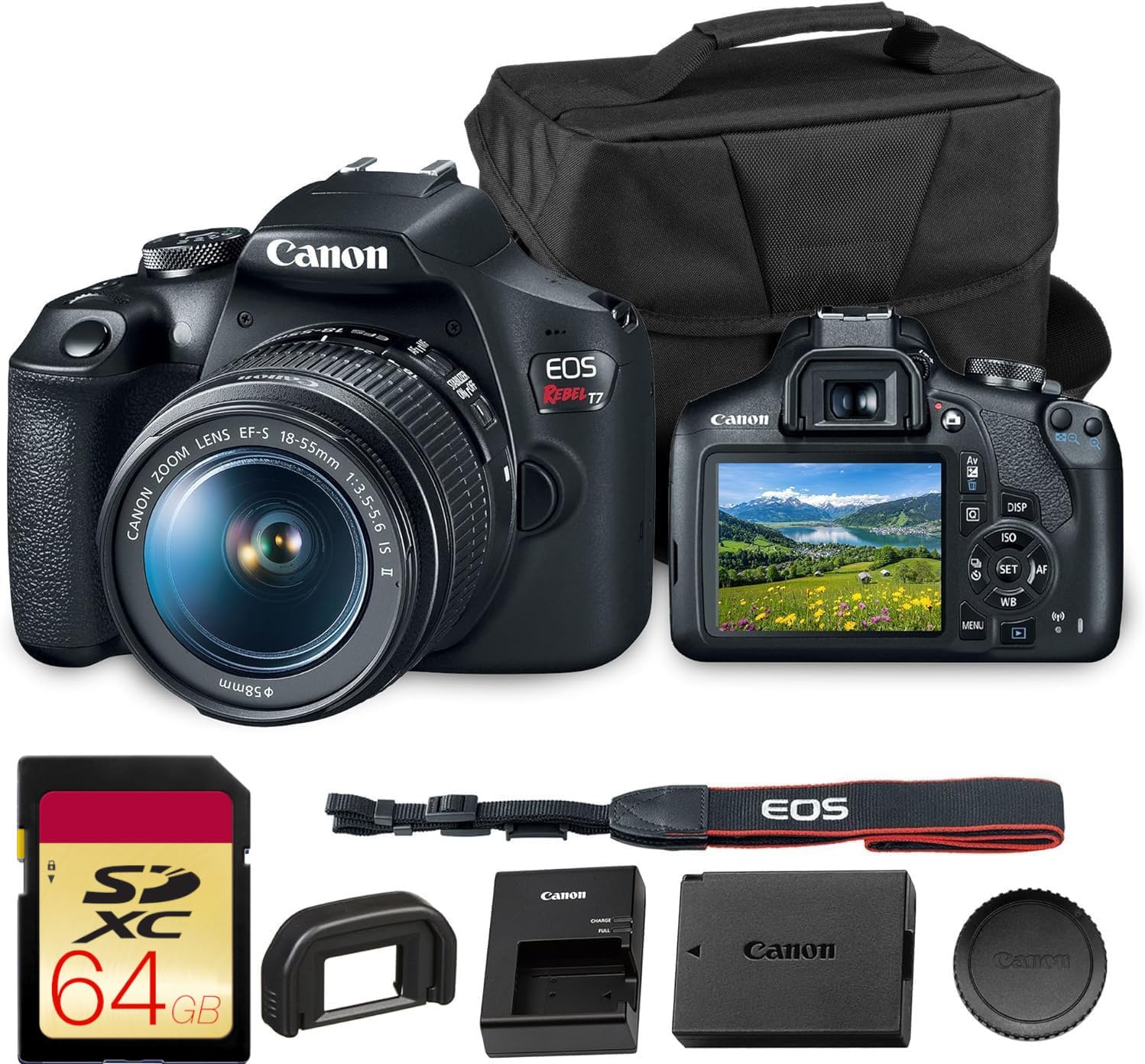
| Canon EOS Rebel T7 KitAlso Great | Best Overall DSLR | 24.1 MP | Kit lens | 9 | Amazon |
| Canon EOS R100 KitModern Pick | Best Mirrorless Starter | 24.1 MP | Kit lens | 143 | Amazon |
| Panasonic LUMIX ZS99 | Travel Pocket Camera | 20.3 MP | 30x | 121 | Amazon |
| Sony ZV-1F | Vlogging & Content | 1-inch sensor | None | 425 | Amazon |
| Nikon D3400 (Renewed) | Value DSLR Upgrade | 24.2 MP | Kit lens | 11 | Amazon |
| Nikon D3200 (Renewed) | Entry-Level DSLR | 24.2 MP | Kit lens | 11 | Amazon |
| Canon Rebel T7 Bundle (Renewed) | Bundle Value | 24.1 MP | Kit lens | 9 | Amazon |
| Kodak PIXPRO AZ528 | Superzoom Reach | 16 MP | 52x | 25 | Amazon |
In‑Depth Reviews
1. Kodak PIXPRO AZ405 Digital Camera
A no-frills superzoom that proves convenience and a huge zoom range can come cheap.
The AZ405 gives you 40x optical zoom and a 20MP CMOS sensor in a bridge camera body that runs on standard AA batteries — a huge convenience for travelers who never want to hunt for a proprietary charger. The F3.0 aperture and built-in Optical Image Stabilization help keep your 40x zoom shots usable in decent light. It records 1080p Full HD video and pairs with Class 10 SD, SDHC, or SDXC memory cards up to 512GB.
With only 9 autofocus points and a sensor-based autofocus system, it is not built for fast-action sports photography. But automatic scene detection handles exposure decisions well for everyday shooting. One reviewer called it a “perfect first camera” for kids or teens learning the basics of composition and zoom control without worrying about a fragile, expensive lens system.
Accessible Power
- 40x optical zoom with OIS for steady long-distance shots
- 20MP sensor delivers more resolution than the AZ528
- AA battery powered — no proprietary batteries or chargers needed
- Works with SD cards up to 512GB for plenty of storage
Honest Limits
- 9 autofocus points are minimal for tracking moving subjects
- Contrast-detection autofocus is slower than phase-detection systems
Travel-Friendly: Choose this if you want a high-zoom camera for vacations and the ability to power it with batteries bought at any corner store is a deal-maker.
The Fine Print: The slow autofocus and limited AF coverage mean this is not suitable for fast action photography; it is best for landscapes, posed portraits, and slow-moving wildlife.
2. Canon EOS Rebel T7 DSLR Camera Kit
The all-around starter DSLR that grows your skills without growing the price tag.
The Rebel T7 sits at the balance for anyone wanting a proper interchangeable-lens camera without a learning curve that punishes mistakes. Its 24.1MP APS-C CMOS sensor (a type of sensor that is physically larger than the ones in phones and basic point-and-shoots) captures vibrant colors and fine detail, and the DIGIC 4+ image processor keeps the camera responsive. That larger sensor is the key reason your photos will look noticeably cleaner in low light than anything from a smaller sensor.
Built-in Wi-Fi and NFC let you transfer images straight to your phone using Canon’s Camera Connect app — no digging for a cable after a day of shooting. The kit includes the 18-55mm lens, a shoulder bag, and a 64GB memory card, so you have everything to start photographing right away. Buyers report that the automatic scene modes handle tricky lighting well, making this a forgiving camera for learning on.
Why It Works
- 24.1MP APS-C sensor with DIGIC 4+ processor for sharp images
- Built-in Wi-Fi and NFC for quick sharing to your phone
- Compatible with the huge Canon EF and EF-S lens lineup for future upgrades
- Comes with a shoulder bag and 64GB card in the box
The Trade-offs
- 9 autofocus points is low compared to the 143 on the Canon R100 mirrorless
- Battery life is rated at 2 hours, so carry a spare for longer days
Smart Start: If you want a traditional DSLR with room to grow into different lenses, this kit gives you everything you need from the start.
Honest Limit: The 9-point autofocus system means you will miss some fast-moving action shots that a more advanced camera would catch.
3. Canon EOS R100 Mirrorless Camera Kit
A compact mirrorless that swaps the heavy mirror for smarter autofocus.
If you are drawn to the smaller size and quieter operation of a mirrorless camera, the R100 is an excellent entry point. It packs the same 24.1MP APS-C CMOS sensor as the Rebel T7 but uses Canon’s DIGIC 8 processor and Dual Pixel CMOS AF — a phase-detection autofocus system that covers 143 AF zones across the frame. That is a massive jump from the 9 autofocus points on the T7, meaning it locks onto moving faces and animals much more reliably.
The kit lens is the RF-S 18-45mm f/4.5-6.3 IS STM, which has built-in image stabilization to keep handheld shots steady. You also get 4K 24p video and Full HD 60p, a 2.36m-dot OLED electronic viewfinder, and a 3-inch 1.04m-dot LCD touchscreen. Unlike the T7, it has no built-in flash. Buyers often mention that the compact size and lighter weight make it far easier to bring on daily walks than a bulkier DSLR.
Why It Stands Out
- 24.1MP APS-C sensor with DIGIC 8 processor for fast performance
- 143 autofocus points with Dual Pixel CMOS AF for accurate tracking
- Compact RF mount body is easy to carry everywhere
- 4K 24p and Full HD 60p video capability
What to Know
- No built-in flash — you will need an external one for dark indoor shots
- The RF-S lens line is newer and has fewer budget options than Canon’s EF system
Mirrorless Convert: Reach for this if you want Canon’s latest mirrorless system with modern autofocus that tracks subjects far better than the Rebel T7.
Skip If… You need a built-in flash for spontaneous indoor photography. The T7 is a better fit there.
4. Panasonic LUMIX ZS99 Point and Shoot Camera

A pocket-sized powerhouse that brings distant subjects closer than any phone can.
The ZS99 is for travelers and concert-goers who need a 24-720mm Leica zoom lens (that is 30x optical zoom) in a body that actually fits in a jacket pocket. The 20.3MP 1/2.3-inch MOS sensor and 5-Axis HYBRID O.I.S.+ keep those long shots steady.
It records 4K video and 4K PHOTO at 30fps, plus HD high-speed video at 120fps for slow-motion clips. The 1,840k-dot tilting touchscreen makes composing shots at awkward angles easy, and universal USB Type-C charging means you can top up with the same cable your phone uses. Built-in Bluetooth v5.0 and a dedicated Send Image button let you transfer photos to your smartphone via the Panasonic Image App without fuss.
Why It Travels
- 24-720mm Leica lens with 30x optical zoom — incredible reach in a small body
- 20.3MP sensor with 5-Axis HYBRID O.I.S. for steady telephoto shots
- USB Type-C charging and Bluetooth v5.0 for convenience
- 1,840k-dot tilting touchscreen for flexible framing
The Trade-offs
- Small 1/2.3-inch sensor cannot match the low-light quality of a DSLR or mirrorless
- No viewfinder — all framing is done on the rear touchscreen
All-in-One Traveler: Grab this if your priority is fitting a huge zoom range into a pocket and you shoot mostly in good daylight.
Where It Falters: In dim concert lighting or at dusk, the small sensor will produce grainier images than a larger-sensor camera.
5. Sony ZV-1F Vlog Camera

Designed from the ground up for vloggers who need good audio and a selfie screen.
The ZV-1F is a dedicated content creation tool with an ultra-wide 20mm lens (great for getting everything in frame at arm’s length) and a large 1-inch sensor paired with an F2 aperture. That combination allows for defocused backgrounds in your videos and better low-light performance than compact cameras with smaller sensors. The 425 autofocus points with Eye-AF and subject tracking technology means focus stays locked on your face or whatever you point at.
The side-articulating touchscreen LCD flips out to face you for easy selfie composition. Sony also built in a directional 3-capsule microphone with a windscreen accessory, so your audio is clearer than what most on-camera mics deliver. One reviewer noted that the “Clear Voice” setting is genuinely effective at filtering out background noise in a busy cafe.
The Content Creator Edge
- 1-inch sensor with F2 lens for background blur and better low light
- 425 autofocus points with Eye-AF and tracking for sharp focus
- Ultra-wide 20mm lens ideal for selfie-style vlogging
- Directional 3-capsule mic with included windscreen for clear audio
The Limits
- No optical zoom — you are fixed at 20mm, so framing is all about physical distance
- No built-in flash and no hotshoe for an external flash
Creator-First: Reach for this if vlogging and video content are your main focus and you want top-tier autofocus and audio from the start.
Photo Trade-off: This is not a camera for telephoto photography; the fixed ultra-wide lens limits your framing options significantly.
6. Nikon D3400 Digital SLR Camera (Renewed)

A classic DSLR that proves a renewed camera can still outperform most new budget models.
The D3400 uses a 24.2MP DX-format CMOS sensor and the EXPEED 4 image processor — a step up from the earlier D3200. It also has no optical low-pass filter, which lets the sensor resolve sharper fine detail than it otherwise would. The 18-55mm VR lens includes Vibration Reduction (a type of lens-based image stabilization) that helps keep handheld shots sharp.
Nikon’s SnapBridge Bluetooth connectivity keeps your camera linked to your phone for automatic photo transfers, so you rarely need to remember a cable. With 11 autofocus points using phase detection and a 3:2 aspect ratio, this is a solid, straightforward photographer’s tool. The D3400 is a renewed (refurbished) unit, which keeps the price low while delivering sturdy Nikon build quality — an advantage for anyone who prefers the classic Nikon ergonomics and menu layout.
The Advantages
- 24.2MP DX-format sensor with no low-pass filter for extra sharpness
- EXPEED 4 image processor for fast performance
- SnapBridge Bluetooth for simple, low-power image transfers
- VR lens helps reduce camera shake in handheld shots
What to Expect
- Renewed product with a 90-day warranty — condition varies, but owners mention good results
- 11 autofocus points is functional but dated for action photography
Nikon Fan: This is the pick if you want Nikon’s renowned build quality and ergonomics without paying full retail price for a new model.
One Caution: As a renewed unit, cosmetic blemishes are possible, but the core performance is identical to the original new camera.
7. Nikon D3200 Digital SLR Camera (Renewed)
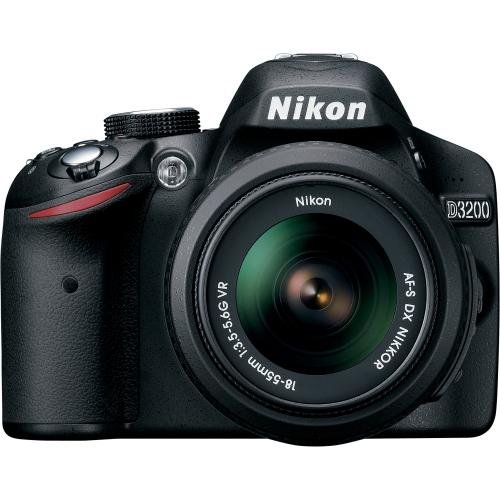
An older but proven DSLR that delivers the same sensor as newer models at a lower cost.
The D3200 features the same 24.2MP DX-format CMOS sensor found in the D3400, paired with the older EXPEED 3 image processor. For still photography, the image quality is remarkably close to its successor. Its 18-55mm f/3.5-5.6 AF-S DX NIKKOR kit lens is a solid standard zoom that covers everyday shooting needs from portraits to landscapes.
You get a 3.0-inch rear LCD with 921,000 dots, an 11-point autofocus system, and one-touch Full HD 1080p movie recording. The wide ISO sensitivity range gives you flexibility in changing light. This is a certified refurbished product that includes all original accessories and a 90-day warranty. One buyer mentioned that the D3200 is a reliable workhorse for learning photography basics without feeling limited by the gear.
Why It Works
- 24.2MP DX-format sensor delivers near-identical image quality to the D3400
- EXPEED 3 processor is still very capable for photo shooting
- Included 18-55mm kit lens covers the most commonly used focal range
- Certified refurbished with a 90-day warranty for confidence
Where It Shows Its Age
- No built-in Wi-Fi or Bluetooth for easy photo transfers
- 11 autofocus points and older processor mean slower performance in burst shooting
Pure Value: Choose this if the absolute lowest entry price to a 24.2MP DSLR sensor is your main requirement and you can manage without wireless sharing.
Reality Check: You will need a separate card reader or USB cable to transfer photos — SnapBridge is not available on this model.
8. Canon EOS 2000D / Rebel T7 DSLR Camera Bundle (Renewed)

The same core camera as the T7 kit, wrapped in a 20-piece accessory bundle for the frugal buyer.
This renewed Canon EOS 2000D (also known as the Rebel T7) comes with the EF-S 18-55mm lens plus a SanDisk 32GB card, a tripod, a case, and additional wide-angle lenses — a bundle that saves you from buying those extras separately. The camera itself packs a 24.1MP sensor, built-in Wi-Fi with NFC for wireless remote control and sharing via the Canon Camera Connect app, and an optical viewfinder.
Autofocus uses 9 phase-detection points, and the aperture range goes from F2.8 to F5.6 depending on the lens. Batteries are not included in the box, so you will need to purchase one separately. Customers note that the bundle makes this an especially attractive option for someone who wants a tripod and extra lenses from day one without additional shopping around.
Bundle Benefits
- 24.1MP sensor with Wi-Fi and NFC for easy wireless sharing
- Includes a 32GB card, tripod, case, and wideangle lenses in one purchase
- Built-in Wi-Fi enables remote control from a smartphone via the Camera Connect app
Important Notes
- Battery is not included — you must buy a Canon LP-E10 separately
- Renewed product condition and accessories may vary
All-in-One Start: This bundle is for you if you want a Canon DSLR and the essential accessories in one box without any hunting.
Watch Out: Remember to factor in the cost of a battery and charger, as they are not included here.
9. Kodak PIXPRO Astro Zoom AZ528-BK

A bridge camera that reaches further than most people need — and that is its biggest selling point.
The AZ528 leaps past the AZ405 with a 52x optical zoom on a 24mm wide-angle lens, giving it a 30% tighter view of distant subjects than the AZ405’s 40x zoom. Its 16MP BSI CMOS sensor (a backside-illuminated sensor that improves low-light performance) works with built-in Optical Image Stabilization to keep those extreme handheld telephoto shots from turning into blurry messes. The aperture opens to F2.8, which is slightly wider than the F3.0 on the AZ405, helping in dimmer conditions.
You get 6 frames per second burst shooting for action sequences, a 3-inch LCD screen, and built-in Wi-Fi for transferring shots to your phone or using it as a remote viewfinder. The 25 autofocus points use contrast detection, which is slower than phase detection but fine for stationary or slow-moving subjects. Reviewers point out the AZ528 is particularly useful for daytime birding and nature observation where carrying a massive telephoto lens is impractical.
Long-Reach Advantage
- 52x optical zoom with a 24mm wide-angle lens for extreme close-ups
- 16MP BSI CMOS sensor and F2.8 aperture for better low-light than the AZ405
- 6 fps burst shooting to capture fast action
- Built-in Wi-Fi for remote control and wireless image transfer
The Drawbacks
- 16MP resolution is lower than the AZ405’s 20MP
- Contrast-detection autofocus can struggle with fast-moving subjects like birds in flight
Reach Winner: This is the right choice if your main photography goal is capturing distant wildlife, moon shots, or stage performances where 52x zoom makes the difference between a speck and a usable image.
Trade-off Acknowledged: You give up megapixels (16MP vs 20MP on the AZ405) to get that extra zoom reach and a slightly faster F2.8 lens.
Understanding the Specs
Autofocus Points
Autofocus points are small sensors on the camera that detect contrast or phase differences to lock focus on your subject. More points, like the 425 on the Sony ZV-1F, mean the camera can track a moving face across a larger portion of the frame. Fewer points, like the 9 on the Canon Rebel T7, mean the coverage area is smaller and you may need to recompose the shot to keep a moving subject in focus.
Optical Zoom
Optical zoom physically moves glass elements inside the lens to magnify the image without any loss of quality. The magnification is expressed as a ratio — 30x means the lens can zoom in to make a subject appear 30 times closer than the widest view. This is fundamentally different from digital zoom, which simply crops the image and blows it up, causing visible blur and grain.
Sensor Size vs. Megapixels
A larger sensor (like the 1-inch sensor in the Sony ZV-1F or the APS-C sensor in the Canon Rebel T7) captures more light per pixel than a smaller sensor with the same or even higher megapixel count. This directly affects image quality in low light and the ability to blur the background. A 24.2MP APS-C sensor will generally produce cleaner, more detailed images than a 20MP 1/2.3-inch sensor in dim conditions.
DSLR vs. Mirrorless vs. Bridge
A DSLR uses a mirror to reflect the image from the lens into an optical viewfinder. A mirrorless camera has no mirror, using an electronic viewfinder instead. Bridge cameras are fixed-lens cameras that look like DSLRs but cannot swap lenses. DSLRs offer the largest lens ecosystems; mirrorless are more compact; bridge cameras provide huge zoom ranges in one sealed unit without the complexity of changing lenses.
FAQ
Can I use my old smartphone as a remote viewfinder for these cameras?
Is a 16MP camera worse than a 24MP camera?
Which camera is better for a beginner who wants to learn photography?
How important is image stabilization for a budget camera?
Can the Sony ZV-1F be used for still photography, or is it only for vlogging?
What does “bridge camera” mean exactly?
Is buying a renewed or refurbished camera a good idea?
Can I use a flash on the Canon EOS R100?
Final Thoughts: The Verdict
For most people looking for the best balance of image quality, ease of use, and room to grow, the cameras on a budget winner is the Canon EOS Rebel T7 Kit because it combines a large 24.1MP APS-C sensor with a forgiving user experience and access to Canon’s enormous lens library. If you want a more compact body with smarter autofocus for the same sensor quality, the Canon EOS R100 is your mirrorless alternative. And for travel and zoom lovers, the standout is the Panasonic LUMIX ZS99’s ability to put 30x optical zoom in your pocket.
How We Picked
We do not accept paid placement. Every pick is matched to a real buyer and a real use-case; we do not hands-on test units.
Sources & Methodology
Specifications: manufacturer listings and product documentation. Review insights: verified customer reviews, as of July 2026. Pricing: not shown on this page (it changes often); check the current price via the retailer link.
As an Amazon Associate, Gadgets Feed earns from qualifying purchases. This does not affect which products we feature.