
Our readers keep the lights on and my morning glass full of iced black tea. As an Amazon Associate, I earn from qualifying purchases.
Specs are compiled from manufacturer listings and verified buyer reviews and can change over time — please confirm the key details on the product page before buying.
If your miss is a pulled or pushed putt, the problem might not be your stroke — it could be the shaft position. A center shaft putter moves the connection point to the middle of the head, so the face naturally stays square through impact. That geometry keeps more putts on line, cutting three-putts and second-guessing on short ones.
I’m Min — the founder and writer behind Gadgets Feed. This guide is built by comparing the manufacturers’ published specifications and the patterns across verified customer reviews, so you get each pick’s real strengths and trade-offs instead of marketing spin.
Whether you are a mid-handicapper chasing consistency or a single-digit player fine-tuning your lag distance, the best center shaft putters deliver a straighter, more repeatable roll by design — and this breakdown tells you which model fits your game and your budget.
Our Picks at a Glance
How To Choose The Best Center Shaft Putters
Center shaft putters position the shaft right at the midline of the head rather than at the heel. That single design change makes the face less likely to twist open or closed during your stroke. Before you scroll, dial in the three factors that matter most for this category.
Head Weight and Balance
A heavier head (often called high MOI, or Moment of Inertia — a measure of how much the head resists twisting) resists twisting on off-center hits — useful if your strike point varies. Lighter heads give more feedback and suit players who prefer to feel the head throughout the stroke. Center shaft models often pair with a counterbalanced grip to shift weight up the shaft, smoothing out tempo.
Face Technology and Feel
The face is where the ball meets the club. A milled aluminum or Surlyn insert can soften impact and promote forward roll, while a fully milled steel face gives a firmer, more responsive sound. Look for a groove pattern at 45 degrees — that angle grabs the cover and starts the ball end-over-end faster.
Alignment Aids
Because the shaft sits at center, the visual line on top of the head becomes even more important. Wide single lines, three-line systems, or a milled track help you square the face to your target. Test what your eye picks up fastest in the address position — some players prefer one bold line, others like a triple-rail reference.
Quick Comparison
| Model | Best For | Head Weight | Face Type | Grip | Amazon |
|---|---|---|---|---|---|
| TaylorMade Spider ZT★ Best Overall | Premium stability & feel | 1.2 lbs | Pure Roll Insert (Surlyn/Aluminum) | SuperStroke Pistol | Amazon |
| COOLO Low TorqueQuality Pick | Mid-range quality & value | 0.54 kg | CNC Milled | Oversized Pistol | Amazon |
| Wilson Infinite South Side | Solid value with alignment | — | Double‑Milled | Rubber (4.25 in) | Amazon |
| Wilson Zero Torque 606 | Zero torque technology | — | Double‑Milled | Rubber (4.25 in) | Amazon |
| MAZEL Stand Up | Budget self-standing design | 0.61 kg | CNC Milled | PU Standard | Amazon |
In‑Depth Reviews
1. TaylorMade Golf Spider ZT Putter
Our pick — over 4.5★ from 80+ verified ratings; the strongest balance of quality and price.
A tour-level putter that makes five-footers feel automatic.
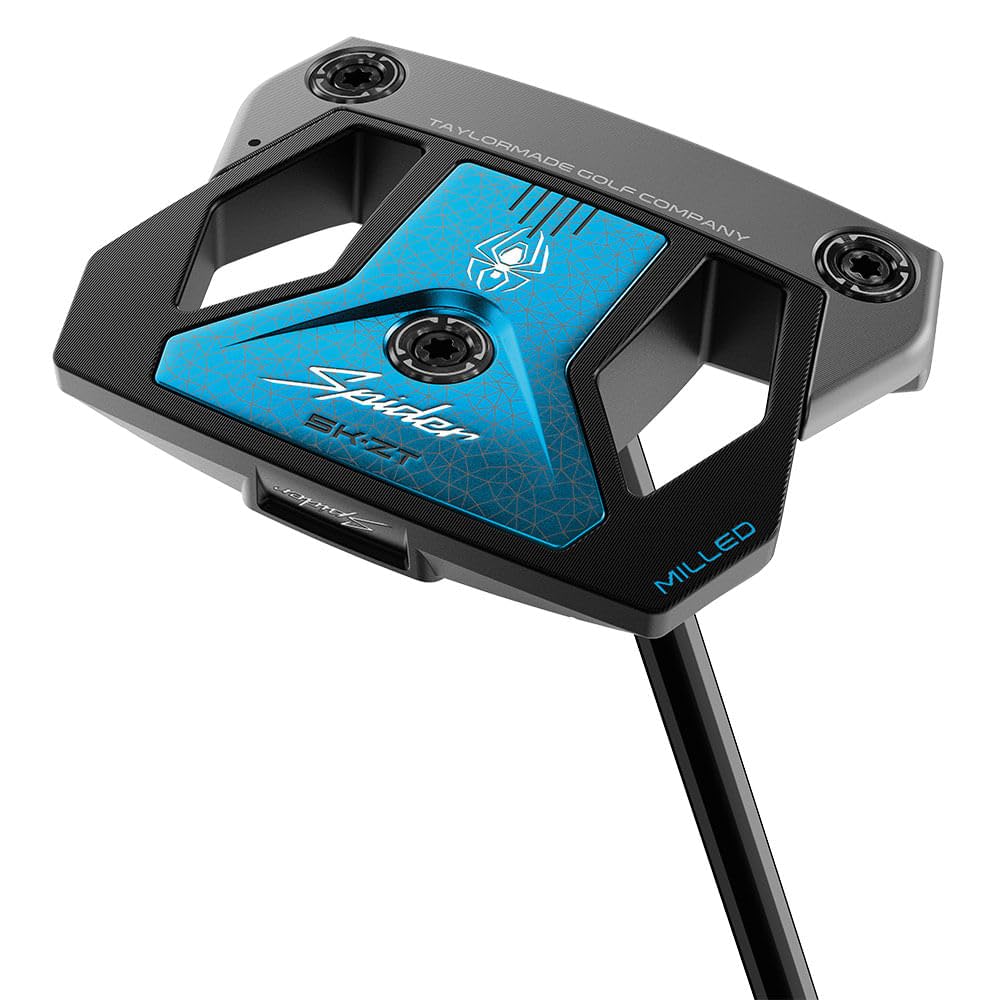
The TaylorMade Spider ZT eliminates excuses on the green. It combines a high-density stainless steel frame with aerospace-grade aluminum — that mix keeps the MOI high and the head stable even when you catch one off-center. The KBS putter shaft is bored directly through near the center of gravity with a 1-degree lean and 25mm of onset, so the face sits closer to the ball line at address. Buyers report a “soft touch improves downhill and lag putts,” and several owners mention shaving two to three strokes after switching from an older Spider. This makes it more stable on off-center hits than the Wilson Zero Torque 606, which uses a different weight distribution strategy.
The Pure Roll insert is a Surlyn-and-aluminum blend with grooves angled at 45 degrees to get the ball end-over-end faster. That softer feel takes some adjustment if you are coming from a firm milled face — one reviewer coming from a LAB DF3 noted it took time to calibrate distance in slower green conditions. But once you dial it in, the alignment is where this putter shines: the milled True Path lines are the same width as the golf ball, so indexing the center of the face becomes almost subconscious.
At 1.2 pounds, it has serious heft. That weight pairs with a midsize SuperStroke pistol grip that locks your hands in place. Out of 80 ratings, it holds a 4.6-star average, and the 17 owners who singled out putter quality call it the strongest trait. The feel aspect gets 9 mentions, all positive.
What earns the top spot
- High MOI head resists twisting on off-center hits
- Pure Roll insert improves forward roll and sound
- True Path alignment lines match ball width for easy indexing
One adjustment to plan for
- Soft insert changes distance feel — expect a short learning curve on slower greens
Grab it if: you want a stable, confidence-inspiring putter that turns makeable putts into made putts — the 4.6 rating across 80 reviews backs up the performance claims.
Think twice if: you prefer a firm, all-metal face or cannot spend the time re-learning distance control after switching inserts.
2. COOLO Low Torque Golf Putter
A counterbalanced mallet that cures the chronic short-putt problem while staying affordable.
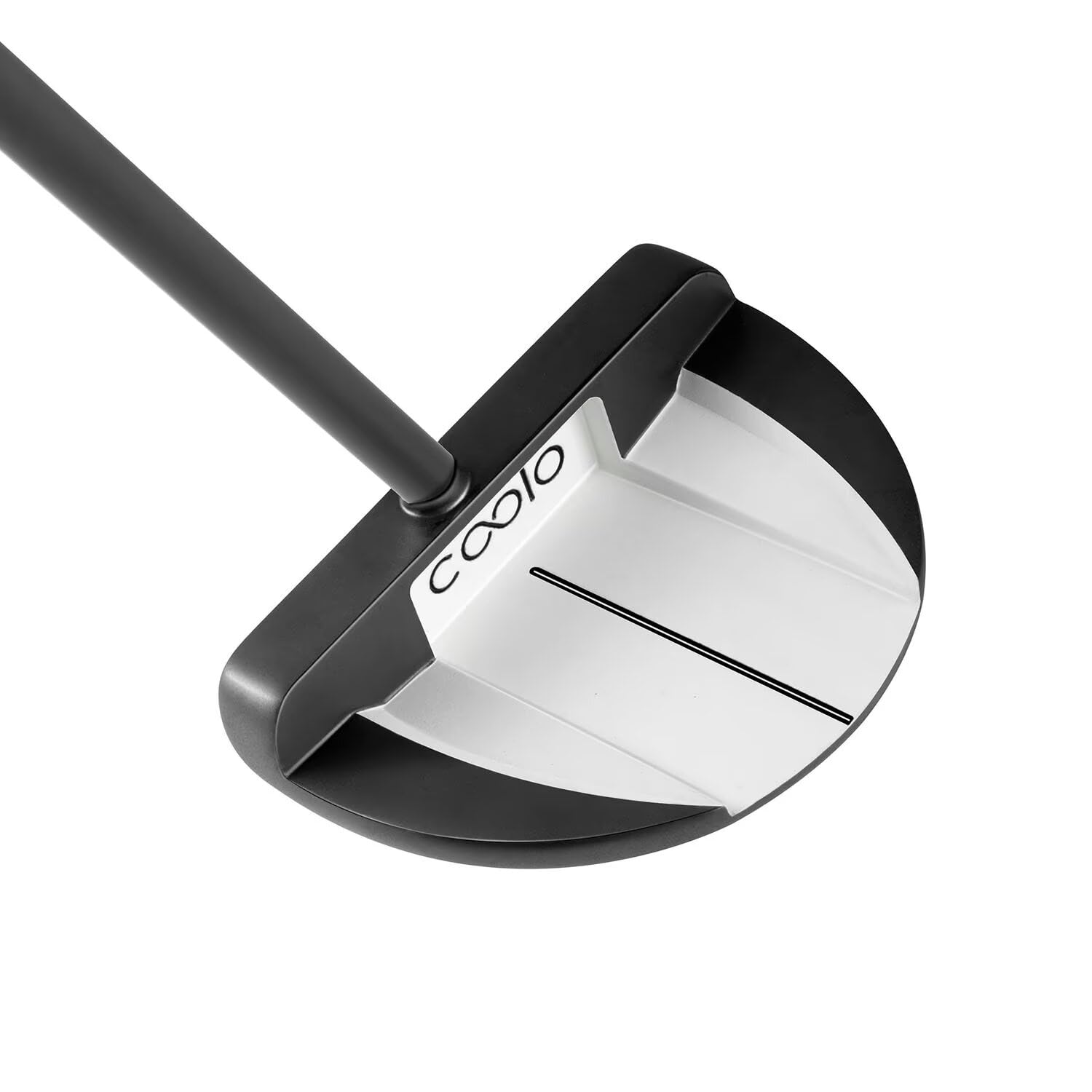
The COOLO Low Torque putter rewrites what you expect at this price tier. It uses a graphite shaft weighing just 60 grams to redistribute mass toward both the head and the butt end of the club — that counterbalanced setup steadies your tempo and keeps the face square through the hitting zone. At 0.54 kilograms, it is 13% lighter than the MAZEL stand-up putter, so it swings with less effort and rewards a smooth stroke. If you struggle with short putts like many buyers, the COOLO’s lighter feel may improve your distance control more predictably than the Wilson South Side’s double-milled face.
The CNC milled face is the headline here. Those precise grooves add grab to the surface, which helps impart forward spin rather than skid. One owner said, “very good putter love the weight.I leave a lot of putts short before I got this putter” — that “short-putt-eliminator” theme pops up across multiple reviews. The oversized pistol grip is soft without being mushy and works especially well if you have an arc putting stroke.
With a 4.6-star average across 33 ratings, the numbers line up with the praise. Quality gets 14 mentions (the top aspect) and value for money gets 10, making this the strongest mid-range play in the list. The only mixed note is weight — 6 people mentioned it, and among them opinions split between “perfect heft” and “a touch light” depending on what you are used to.
Balanced build: 14 owners call quality excellent, and 10 more highlight the value for money — rare alignment between feel and price in a center shaft.
Who this helps most: if you regularly leave putts short, the counterbalanced weight and milled face will change that distance gap fast.
Reach for this if: you want a well-made, well-balanced putter that fixes distance control — especially useful if you are coming from a heavier or off-brand club.
Look elsewhere if: weight sensitivity bothers you — the mixed feedback on heft means you should try it before committing if possible.
3. Wilson 2024 Infinite Men’s South Side Putter

A no-nonsense mallet with a three-line alignment system that locks your eyes on the target.
The Wilson Infinite South Side is built around a simple premise: the best putter is the one you aim correctly every time. Its Focus Activation system uses a thick center line flanked by two thinner support lines — that triple-rail visual stops your eyes from wandering and keeps the face square. The double-milled face pattern delivers a consistent roll regardless of where on the face you strike the ball, and the two-tone PVD anti-glare finish cuts reflections so you stay locked in under bright sun.
One owner replaced their Odyssey 2-Ball with this Wilson and, as a 9.2 handicap, found the balance “equal to the Square to Square at half the cost.” That value angle repeats in the reviews — buyers describe it as a putter that “handles and feels like a more expensive club.” At 4.5 stars across 37 ratings, it sits close to the top of the list on score alone. The triple-rail system is more precise than the COOLO’s single-line reference, but the standard rubber grip at 4.25 inches is thinner than you might prefer.
The 71-degree lie angle is slightly more upright than some competitors, so if you set up with your hands low, your toe may sit up. But for players with a conventional setup, that lie works naturally and keeps the sole flat through the stroke. The included headcover is basic — nothing premium — but the putter itself delivers where it counts.
Alignment-first design: the triple-line system gets your eyes dialed in faster than a single line, especially useful on breaking putts.
Honest trade-off: the stock grip is standard rubber at 4.25 inches — if you prefer a thicker pistol or a SuperStroke, budget for a regrip.
Best for: mid-to-high handicappers who need a reliable alignment aid and a clean, balanced feel without paying.
Not ideal if: you need a very flat lie angle or want a premium headcover — the basic cover does the job but nothing more.
4. Wilson Infinite Zero Torque The 606 Putter
A technology-driven mallet that fights face rotation to keep the putter square longer.
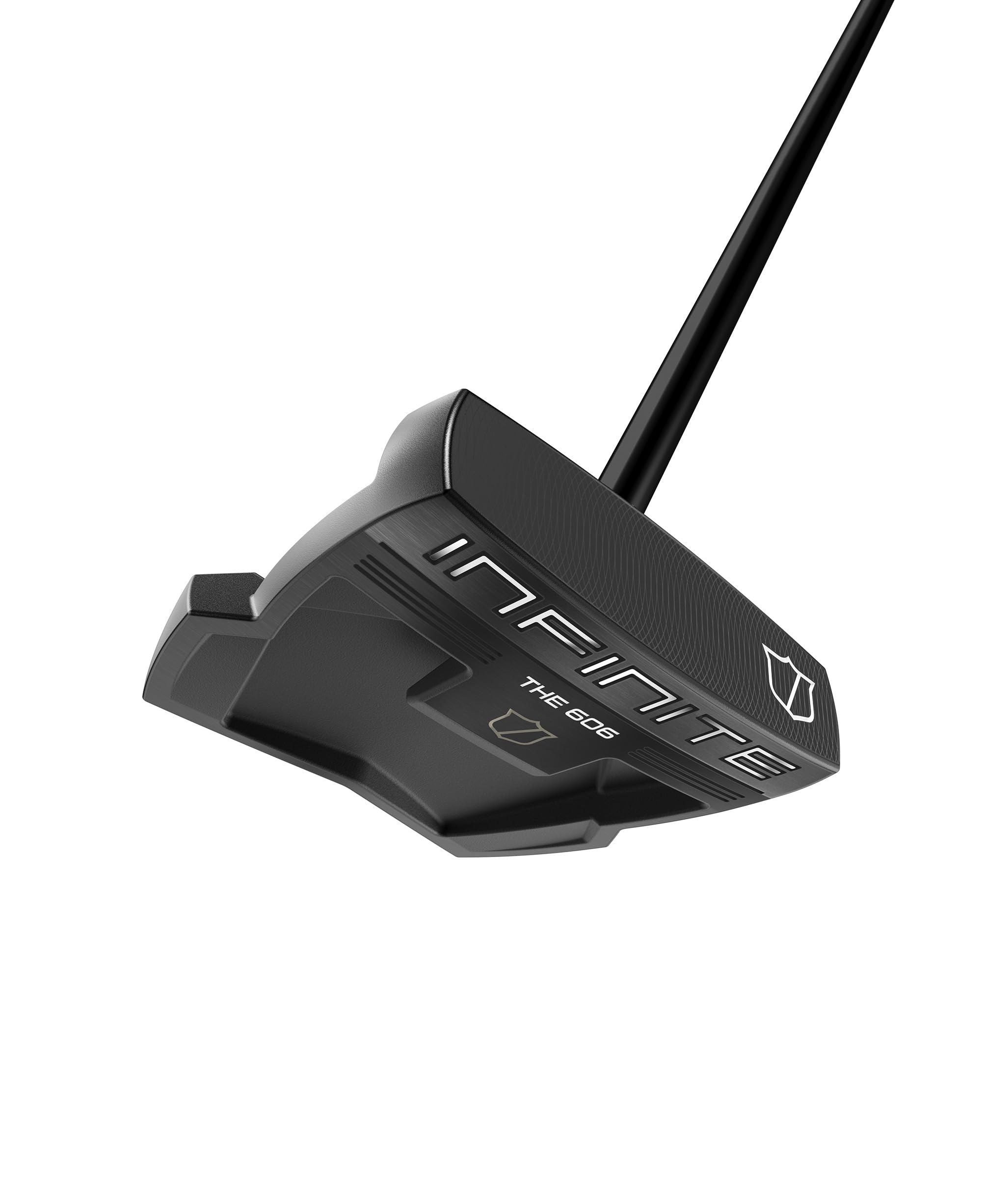
The Wilson Zero Torque 606 is the brand’s answer to the LAB-style “zero-twist” movement, but at a more accessible price point. It uses Metal Injection Molding (MIM) to shape the head with extreme precision, then positions the center of gravity exactly under the central shaft axis. That CG placement is the core of the zero-torque claim — with less rotational force on the face, your stroke stays squarer through impact regardless of how aggressively you accelerate. The 1-degree forward shaft lean promotes proper hand position at address. This design gives you less face rotation than the TaylorMade Spider ZT, but only if your stroke is straight; an arc puts more pressure on that flat lie.
Reviews are serious about the performance upside. One buyer wrote, “I putted the best I ever had in the past 10 years” and described knocking strokes off their score. Another said the putter outperformed their TaylorMade Spider, LAB Golf, and Odyssey putters. Out of 43 ratings, the 3.9-star average is lower than the South Side, largely because of two recurring themes: a very flat lie angle that some players find hard to adjust to, and a threaded shaft connection that one owner reported stripping during a regrip.
The quality and feel hit positive notes — 11 owners praise putter quality and 8 mention the feel — but the zero-torque design shines brightest for players with a straight-back, straight-through stroke who want less face rotation. If you have a stronger arc, the shaft lean may feel unfamiliar.
The tech that works
- Zero-torque CG keeps face square through impact
- MIM construction gives precise, high-detail head shaping
- PVD anti-glare finish reduces distraction
The catch to know
- Flat lie angle requires adjustment for players used to standard specs
- Shaft-to-head threaded connection has been a failure point for some owners
Reach for this if: you have a straight stroke and want a technology-forward putter that reduces face twist — one 5-star owner says it outperformed their + putter.
skip it if: you need a standard lie angle or plan to regrip immediately — the threaded connection has caused issues for a small number of buyers.
5. MAZEL Stand Up Golf Putter

A budget-friendly putter that stands itself up for alignment checks from behind.
The MAZEL Stand Up putter does something no other pick on this list can: it stands upright on its own when you position it behind the ball. That lets you step back and check your line from two angles — behind and down the target line — then step in and stroke without guessing. The design uses extra weighted screws on the sole to lower the center of gravity, which also makes the head feel hefty at 0.61 kilograms — 13% heavier than the COOLO.
The CNC milled hitting face has precision grooves and a flat surface that produce a consistent roll. The graphite shaft is ultra-light, which balances that heavy head and sends “tons of feedback to your hands” according to the manufacturer. The PU grip offers non-slip and shock absorption. Several owners appreciate the center-shaft geometry for accuracy — one says “center shafted gives more accurate stroke” and another notes it offers great improvement for their game. However, the stand-up feature is not legal in sanctioned competition, only beer-league play, as one reviewer points out.
The rating sits at 3.8 stars across 38 reviews. A handful of buyers highlight quality control — one noted “hairline cracks in the shaft, disappointed” — and multiple owners describe the head as “very heavy” with no available replacement weights. The weight is a love-it-or-leave-it trait; players who like a heavy putter respond well, while those who prefer a lighter feel struggle to adjust.
Unique alignment trick: the self-standing feature is genuinely useful for solo practice and checking your line — no other putter here does it.
Heads-up: the heavy feel and occasional quality concerns mean this is best suited for recreational players who want a unique tool, not for tournament-goers.
Best for: beer-league golfers and practice-round players who want the alignment feedback of a self-standing design and do not mind a heavier head.
Not for: competitive players who need tournament-legal equipment, or anyone who prefers a lighter putter that can be re-weighted.
Understanding the Specs
MOI and Head Weight
MOI stands for Moment of Inertia — a measurement of how much the putter head resists twisting when you strike the ball off-center. A higher MOI (often achieved with a heavier head or perimeter weighting) keeps the face more stable through impact. Center shaft putters typically have a higher MOI because the shaft connection is closer to the head’s center of mass, so the club naturally wants to stay square.
Face Milling and Insert Type
Milling refers to the precision grooves cut into the putter face. A CNC milled face has machine-cut grooves that are consistent across the entire surface, which helps the ball start rolling forward instead of skidding. Some putters use a soft insert (like Surlyn or aluminum) to dampen vibration and create a softer feel, while fully milled steel faces give a firmer click at impact. The groove angle — often 45 degrees — is designed to grab the golf ball’s cover and induce topspin faster.
Lie Angle and Shaft Lean
Lie angle is the angle between the shaft and the ground when the putter is soled flat. Most standard putters sit around 70 degrees, but a flatter lie (closer to 68-69 degrees) suits players who set up with their hands lower. Shaft lean is how much the shaft tilts forward or backward at address — 1 degree of forward lean helps position your hands ahead of the ball, which promotes a descending blow and cleaner contact.
Grip Type and Counterbalance
A pistol grip tapers from top to bottom, which helps your hands sit naturally and reduces wrist breakdown. An oversized pistol (sometimes called a “pistol-style”) is thicker and fills the palm more, softening out stroke tempo. Counterbalanced putters add weight to the butt end of the shaft, shifting the balance point upward — that makes the head feel lighter and encourages a pendulum motion rather than a handsy stroke.
FAQ
Are center shaft putters legal for tournament play?
What stroke type suits a center shaft putter best?
How does a center shaft differ from a heel shaft?
Does a lighter or heavier putter head work better with a center shaft?
What does “counterbalanced” mean for a center shaft putter?
Can I use a center shaft putter if I am right-handed but need a left-handed model?
What does a 3-degree loft do on a center shaft putter?
How long does a center shaft putter typically last?
Final Thoughts: The Verdict
For most people, the best center shaft putters winner is the TaylorMade Spider ZT because its high-MOI construction and Pure Roll insert deliver tour-level stability and a soft feel that owners consistently call “perfection” across 80 ratings. If you want exceptional value with a milled face and counterbalanced shaft, grab the COOLO Low Torque. And for a self-standing alignment tool that helps you check your line without a second set of eyes, the MAZEL Stand Up is the one to reach for — just be aware the heavier head and standalone feature are best for casual rounds, not tournament play.
How We Picked
We do not accept paid placement. Every pick is matched to a real buyer and a real use-case; we do not hands-on test units.
Sources & Methodology
Specifications: manufacturer listings and product documentation. Review insights: verified customer reviews, as of July 2026. Pricing: not shown on this page (it changes often); check the current price via the retailer link.
As an Amazon Associate, Gadgets Feed earns from qualifying purchases. This does not affect which products we feature.