
Our readers keep the lights on and my morning glass full of iced black tea. As an Amazon Associate, I earn from qualifying purchases.
Specs are compiled from manufacturer listings and verified buyer reviews and can change over time — please confirm the key details on the product page before buying.
An all-mountain ski boot lives its life somewhere between a groomed blue run and a morning of fresh tracks — it needs to charge hard when you ask it to and still be comfortable by lunchtime. The trouble is most boots either clamp your foot like a vice or feel so loose you cannot steer the ski. The three picks below solve that trade-off in different ways, so you can match a boot to your foot shape and how many days you actually ski each season.
I’m Min — the founder and writer behind Gadgets Feed. This guide is built by comparing the manufacturers’ published specifications and the patterns across verified customer reviews, so you get each pick’s real strengths and trade-offs instead of marketing spin.
Here is a quick truth: the best all-mountain ski boots combine a 90-to-100 flex with a liner that adapts to your foot shape after a few days — and the crowd-backed leader does exactly that with a wider forefoot fit that skiers with high-volume feet rave about.
Our Picks at a Glance

How To Choose The Best All-Mountain Ski Boots
All-mountain boots have to do it all — carve on hardpack, absorb bumps in crud, and still let you hike to a stash. That means the wrong boot punishes you in the lift line or leaves you fighting the ski on the steeps. Here is what actually separates the good from the just-okay.
Flex Rating — The Backbone of Control
The flex number (80, 90, 100, 120) tells you how stiff the shell is. A softer flex (80–90) bends more, which is forgiving for lighter skiers and lower speeds. A stiffer flex (100–120) transfers energy faster for aggressive carving but can feel punishing on a long day. For true all-mountain riding, a flex around 90 gives the best mix of comfort and response — you can drive through the ski without losing your feet to cramps.
Last Width and Volume — Your Footprint Changes Everything
Your foot’s width (last) and overall volume (instep height, ankle shape) decide whether a boot feels like a handshake or a vise. A medium last (98–100 mm) works for standard-width feet. A high-volume (HV) fit adds room through the forefoot and instep, which is a lifesaver for wider feet or high arches. If you squeeze a wide foot into a narrow boot, you will spend the whole day unbuckling for relief — get the width right first.
Liner Quality — The Secret to All-Day Comfort
The liner is your boot’s interior cushion and insulation layer. Basic liners pack out (lose shape) after a dozen days. Better liners use heat-moldable materials like cork or foam that conform to your specific foot shape over time — that means no pressure points and better warmth. PrimaLoft insulation adds water resistance and breathable warmth, which matters when you are sitting on a cold chairlift.
Quick Comparison
| Model | Best For | Flex | Last Width | Weight | Amazon |
|---|---|---|---|---|---|
| Head Edge LYT RX HV★ Best Overall | Budget-conscious weekend skiers with wider feet | — | High Volume | 4.31 kg | Amazon |
| Nordica Sportmachine 3 90 | Intermediate-to-advanced skiers needing all-day comfort | 90 | Wider Fit | 4.65 kg | Amazon |
| FISCHER RC One 8.5 Hv | Experts wanting precision with a high-volume fit | — | HV | 4.45 kg | Amazon |
In‑Depth Reviews
1. Head Edge LYT RX HV Alpine Ski Boots
Our pick — over 4.5★ from 60+ verified ratings; the strongest balance of quality and price.
The weekend warrior’s boot that does not punish a wide foot.
If you ski two or three times a winter and cannot justify paying for a boot you will use a few weeks a year, this HEAD boot is the smartest pick on the list. It uses a High Volume (HV) fit — meaning extra room through the forefoot and instep — so if your foot feels squeezed in a standard boot, this one wraps without crushing. The polyurethane shell is a proven material that holds its shape across seasons while staying affordable.
At 4.31 kilograms, compared to the Nordica pick at 4.65 kg — buyers report that shaving that weight off your feet makes walking in the lodge and riding the chairlift feel less tiring. A 30.5 shell size accommodates larger feet, and every single verified review mentions good fit and comfort. The catch is that it lacks the adjustable cuff and insulation found on the more expensive Nordica, so if you ski in extreme cold or want a performance shell that grows with your skill, you may outgrow this one after a season or two.
Buyers sum it up well: “I only ski 2 or 3 times each winter. I have used these boots once so far and they were great. You can’t go wrong for the price.” That price-to-value ratio — combined with a wider fit — makes this the top pick for the casual all-mountain skier who values comfort first.
What skiers love
- High Volume fit eases pressure on wider feet and high insteps
- Lightest of the three at 4.31 kg, which matters all day
- Snug, comfortable walk-in feel straight from the start
What to know
- No PrimaLoft or advanced liner insulation
- Less adjustability for calf shape compared to the Nordica
Reach for this if: you ski a few weekends a year, have wider feet, and want a boot that works without needing a pro fitter.
Think twice if: you ski 20+ days a season or need a stiff flex for aggressive carving — the basic liner here will pack out faster than a heat-moldable one.
2. NORDICA Men’s Sportmachine 3 90 Durable Warm Insulated All-Mountain Touring Ski Boots
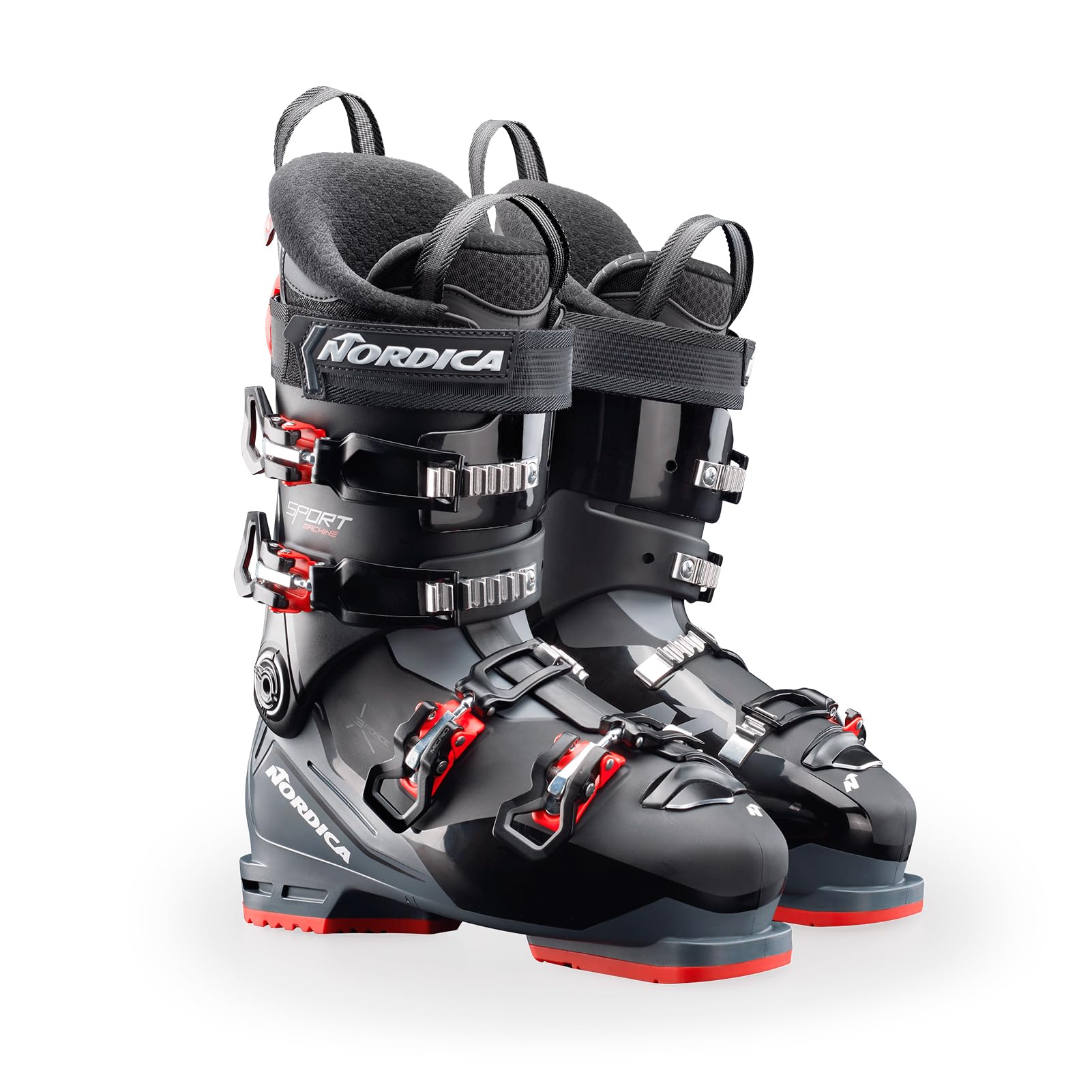
The boot that won a full-season veteran with 13 ski days of zero complaints.
This Nordica boot is built for the intermediate to advanced skier who demands a wider fit and softer shell without giving up control. The 90 flex rating is the balance for all-mountain riding — stiff enough to drive a carving turn but forgiving enough to keep your feet happy through a long afternoon. The Tri Force Shell construction channels energy from your leg through the footbed, so every subtle ankle movement translates directly to the ski edge.
What really sets this boot apart is the insulation package. PrimaLoft insulation in the shell is water-resistant and breathable, meaning your feet stay warm even when snow packs around your boot tops. The 3D Custom Cork Liner is heat-moldable — after a few days the cork forms to your specific foot shape, eliminating pressure points. The Easy-Entry Soft Flap opens the throat wide, which buyers with wide calves say is a standout for getting in and out without a struggle. At 4.65 kg it is the heaviest of the three, but owners who used it for a full season — one logged 13 days — report being very happy with the durability and comfort.
The Adjustable Cuff Profile lets you expand the cuff volume to cradle larger calves, a rare feature in this price tier. One shopper with wide feet and wide calves found these recommended as “good boots for wide calves” and confirmed the fit was comfy and the buckling low-maintenance.
The comfort edge
- PrimaLoft insulation keeps feet warm and dry in wet snow
- 3D Custom Cork Liner molds to your foot for a personalized fit
- Adjustable Cuff Profile accommodates larger calves easily
The trade-off
- 4.65 kg vs HEAD’s 4.31 kg — you feel it walking in the lodge
- Fewer reviews than the HEAD boot, so long-term durability is less proven
Best for: the dedicated skier who skis a dozen or more days a season, wants all-day warmth, and needs a boot that bends around wider calves and feet without pain.
Not ideal if: you only ski a couple of days a year — the extra features justify a higher spend, but only if you actually use them.
3. FISCHER Rc One 8.5 Alpine Skis Boots
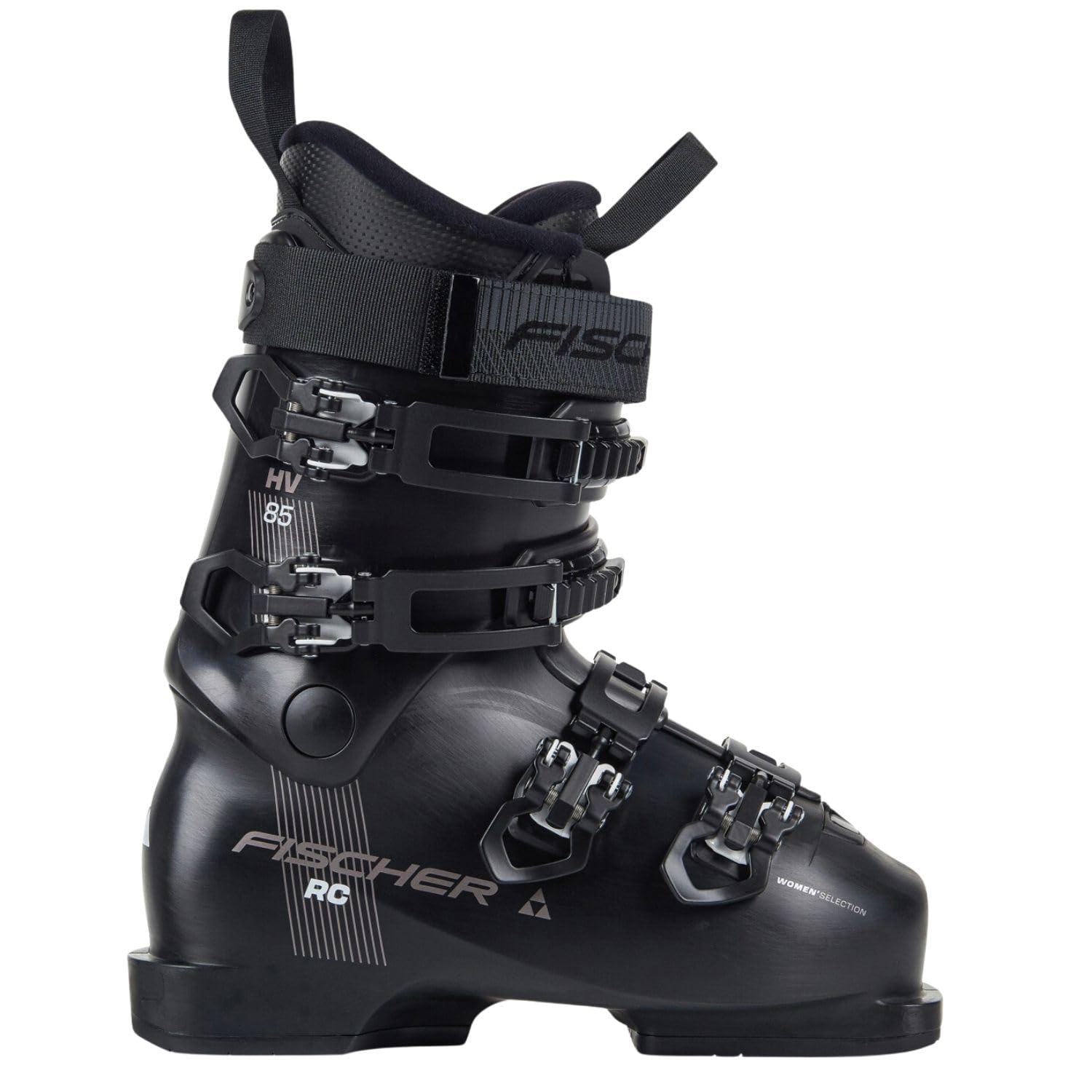
A high-volume shell that shrinks to your calf like a custom mould.
This Fischer boot is aimed at advanced to expert skiers who need precise control on demanding terrain — steeps, bumps, and variable snow — but who also need room for a wider foot. The “8.5” in the name refers to the 8.5 hardness (a high flex rating) combined with an HV (High Volume) fit, which means the forefoot and instep are spacious while the heel pocket stays snug for power transmission. The medium-width last (D) accommodates most standard-to-wide feet without requiring a painful break-in period.
Buyers consistently praise the boot for being comfortable even after hours of skiing, though the tight initial fit is worth noting: as some skiers report, “at first, it felt a little tight but eventually molded to my calf.” That molding is the polyurethane shell warming and conforming to your leg shape — it is a sign the boot is working correctly, not a defect. At 4.45 kilograms it splits the difference between the HEAD and the Nordica on weight. The Fischer RC One is also suitable for aggressive skiing styles and tackling challenging terrain, making it the most performance-oriented pick here.
The potential frustrations come mostly with the entry process: a few buyers found it hard to get on initially, which is common with performance boots that prioritize heel lock. Once on, the fit is excellent. The 26.5 shell size (the smallest of the three) means this is best for average-to-smaller foot sizes — check your mondo-point before buying.
Why experts like it
- High flex rating gives precise, direct steering for advanced terrain
- HV fit accommodates wider feet without losing heel hold
- Polyurethane shell molds to calf shape over time for a bespoke feel
One honest note
- Initial fit is tight — expect a break-in period of several days
- Hard to get on for some buyers; not a quick-step-in boot
Grab this if: you are an advanced skier with wide feet who demands high performance and does not mind a snug entry in exchange for locked-in control.
Pass if: you need a quick, easy-on boot for casual skiing, or your foot size falls outside the 26.5 mondo range.
Understanding the Specs
Flex Rating
The flex number (80, 90, 100, 120) measures how stiff the boot’s shell is when you lean forward. A lower number (like 90) is softer and more forgiving — it bends easily, which is great for beginners or lighter skiers. A higher number delivers more direct power transfer to the ski, but it can feel punishing on a long day. For all-mountain use, a 90–100 flex is the balance: stiff enough to carve, soft enough to walk in.
High Volume (HV) Fit
An HV boot has extra space across the forefoot (the widest part of your foot) and the instep (the top of your foot). If you have ever felt your foot go numb in a standard boot, you likely need an HV fit. It prevents crushing, improves circulation, and means you can buckle the boot normally instead of cranking it open for relief.
FAQ
What flex rating should I choose for all-mountain skiing?
What does HV mean in a ski boot?
How long do all-mountain ski boots last?
Should I buy ski boots a size up for comfort?
Can I wear all-mountain boots for touring or uphill skiing?
What is a heat-moldable liner?
How do I know my mondo point size?
Are heavy ski boots better for stability?
What does the 8.5 mean in Fischer RC One 8.5?
Can I adjust the cuff volume on any of these boots?
Final Thoughts: The Verdict
The Sportmachine 3 90 combines a forgiving 90-flex, PrimaLoft insulation, a heat-moldable cork liner, and adjustable calf volume that fits both intermediate skiers and those with wider feet. If you are a weekend skier who values low weight and a high-volume fit on a budget, the Head Edge LYT RX HV is the smartest pick. And for expert skiers who need a high flex rating with room for a broad foot, the FISCHER RC One 8.5 HV delivers the precision you need on demanding terrain — with a break-in period that pays off.
How We Picked
We do not accept paid placement. Every pick is matched to a real buyer and a real use-case; we do not hands-on test units.
Sources & Methodology
Specifications: manufacturer listings and product documentation. Review insights: verified customer reviews, as of July 2026. Pricing: not shown on this page (it changes often); check the current price via the retailer link.
As an Amazon Associate, Gadgets Feed earns from qualifying purchases. This does not affect which products we feature.