
Our readers keep the lights on and my morning glass full of iced black tea. As an Amazon Associate, I earn from qualifying purchases.
Specs are compiled from manufacturer listings and verified buyer reviews and can change over time — please confirm the key details on the product page before buying.
Carbon monoxide is a silent, invisible, odorless killer—and the only defense is a detector that never sleeps. Choosing the wrong one can mean a false sense of security, while the right one gives you and your family a critical early warning that can mean the difference between a close call and a tragedy. This guide cuts through the noise to find the alarms that genuinely work when it counts.
I’m Min — the founder and writer behind Gadgets Feed. This guide is built by comparing the manufacturers’ published specifications and the patterns across verified customer reviews, so you get each pick’s real strengths and trade-offs instead of marketing spin.
From plug-in units with battery backup to sealed 10-year combo detectors, here are the most reliable options for your carbon monoxide alarm.
Our Picks at a Glance


How To Choose The Best Carbon Monoxide Alarm
Choosing a CO alarm can feel like sorting through a stack of identical white plastic discs. But the differences inside—the sensor type, power source, and extra features—determine how well it protects your home. Here is what really matters.
Sensor Type: Electrochemical vs. Biomimetic
The vast majority of modern, reliable detectors use an electrochemical sensor. This type constantly samples the air and reacts to CO at a specific chemical level, triggering the alarm only when a genuine threat is present. Avoid older or cheaper alarms that may still use a biomimetic gel sensor, as they are less accurate and have a shorter lifespan.
Power Source: Plug-In, Battery, or Hardwired
Plug-in detectors are the simplest to install but stop working during a power outage unless they have a battery backup. Battery-operated units (standard AA or sealed 10-year lithium) offer flexibility in placement and work during outages. Hardwired alarms are the most integrated but require professional installation. The crowd favorite is a plug-in unit with a 9-volt battery backup—you get the plug-and-play convenience plus fail-safe coverage when the lights go out.
Digital Display & Peak Level Memory
A digital display shows the current CO concentration in parts per million (PPM), which is reassuring when the alarm isn’t sounding but you want to know your air is clean. Peak Level Memory is a critical feature: it stores the highest CO reading recorded since the last reset, so after a suspected event you can see exactly how bad it got. This helps you decide if you need to call the gas company or just ventilate.
Quick Comparison
| Model | Best For | Power Source | Sensor Type | Alarm Loudness | Amazon |
|---|---|---|---|---|---|
| Kidde Plug In 4-Pack★ Best Overall | Whole-home safety with battery backup | Plug-in + 9V battery backup | Electrochemical | 85 dB | Amazon |
| SITERWELL Plug InTop Performer | Budget-conscious plug & play | Plug-in + 10-year CR123A battery | Electrochemical | 85+ dB | Amazon |
| First Alert SMCO100Smart Choice | Combined smoke & CO detection (battery) | AA Batteries | Precision Detection (Electrochemical) | — | Amazon |
| TOPTES CT-580 | Portable & diagnostic use (boat/RV/car) | Rechargeable (USB-C) | Electrochemical | Audible + Vibration | Amazon |
| SimpliSafe Smoke & CO | Smart home security system integration | Battery Powered | Electrochemical | Built-in siren | Amazon |
| Kidde Hardwired Smoke & CO | Wired installation with interconnect | 120V AC + 2 AA battery backup | Enhanced Sensing | 85 dB | Amazon |
| X-Sense SC06 3-Pack | Sealed 10-year battery, simple install | 10-Year Sealed Lithium Battery | Photoelectric & Electrochemical | 85 dB | Amazon |
| First Alert SMICO100 3-Pack | Battery combo detectors in a multi-pack | 9V Alkaline Battery | Ionization (Smoke) / Electrochemical (CO) | — | Amazon |
| X-Sense SC01-W 3-Pack | Wireless interconnection without Wi-Fi | 10-Year Sealed Lithium Battery | Photoelectric & Electrochemical | 85 dB | Amazon |
In‑Depth Reviews
1. Kidde Carbon Monoxide Detector, Plug In Wall with 9-Volt Battery Backup, Digital LED Display – 4 Pack
Our pick — over 4.5★ from 700+ verified ratings; the strongest balance of quality and price.
The 4-pack that gives every bedroom and hallway a watchful digital eye.
You get four units in one box, each one plugging directly into a standard 120V outlet. An 85-decibel alarm announces danger, but the real standout is the digital LED display that shows you the CO level in real time. Peak Level Memory records the highest reading since the last test, so after an event you know if you faced a small spike or a serious leak. The 9-volt battery backup keeps everything running during a power outage.
Buyers report these units literally saved lives: when the alarm hit levels of 463 and 268 parts per million—where zero is the safe number—the loud alarm and bright display gave the family time to evacuate.
What Wins People Over
- Digital display shows CO concentration in real time
- Peak Level Memory records the highest reading
- Battery backup keeps it running when the power is out
- Owners call it “dependable” and “not hypersensitive”
What to Know Before You Buy
- Battery life can vary—some owners replace the 9V more often than expected
- One unit in a batch may flash a “Lb” (low battery) warning earlier than the others
Reach for this if: you want whole-home coverage in a single purchase—four detectors for a typical house, each with a digital display and a 9V battery backup that keeps it working during a power outage.
The real trade-off: the battery backup is a standard 9V, so you will need to keep spares on hand and remember to swap them every year or two.
2. SITERWELL Plug in Carbon Monoxide Detector 10 Year Battery, CO Alarm Detectors with Electrochemical Sensor and Sound Warning, AC Powered Portable Carbon Monoxide Detector for Home Office Travel,1-Pack
A clean, low-profile unit that packs a 10-year sealed battery inside a simple plug-in shell.
At just 0.4 pounds and only 2.24 inches deep, this SITERWELL detector is noticeably smaller than its competitors—about 30% lighter than the First Alert combo alarm. That makes it ideal for tight spots near a couch or behind a curtain. The advanced electrochemical sensor detects CO from any common source, and the 85+ decibel alarm sounds a clear warning.
The big advantage here is the built-in CR123A battery that lasts up to 10 years, so you never have to replace it. Buyers mention that it “looks like more expensive models” and call it a “solid, dependable safety upgrade.” One owner simply summed it up: “plugged it in and it works like a charm.”
The One-Line Verdict: A fuss-free, budget-friendly plug-in alarm that looks clean and works reliably—perfect for a bedroom or home office where you want low-profile protection.
3. First Alert Combination Smoke & Carbon Monoxide Alarm, Battery Operated Detector with Test & Silence Button, SMCO100, 1-Pack,White
Two threats, one battery-powered disc that tucks onto any ceiling or wall.
This single-pack unit covers both smoke and carbon monoxide with First Alert’s Precision Detection technology. It is engineered to cut down on false alarms from cooking—a common pain point owners praise—while still providing an early warning in a real fire emergency. The battery-operated design runs on AA batteries (included) and uses a standard test/silence button for weekly checks. An end-of-life warning chirps when the whole unit needs replacing.
Owners consistently note the reliable performance and easy installation. As one buyer put it, “good battery life over 2 years already.” The unit has a 5.6-inch diameter and weighs just 0.52 pounds, meaning it is barely noticeable on the ceiling. The honest caveat: a few owners found it sensitive to cooking steam or fish frying without a lid, though that is a trade-off for early smoke detection.
Praise Points
- Combines smoke and CO detection in one unit
- Precision Detection reduces nuisance alarms
- AA battery operation means no hardwiring needed
- End-of-life warning eliminates guesswork
Consider This
- Can false alarm on very steamy cooking conditions
- Some owners mention it doesn’t last “forever” after several years
Who it suits: Anyone who wants a single device to watch for both smoke and carbon monoxide without drilling wires. Ideal for apartments or renters.
Who may want more: If you have a large home, consider a multi-pack version or a model with a digital CO readout for troubleshooting.
4. TOPTES CT-580 Portable Carbon Monoxide Detector, Rechargeable CO Detector with Vibration, Visual & Audible Alarms, 0-1000PPM, TFT Color Display for Home, Camping, Travel, Industrial & Professional Use

A handheld troubleshooter that finds CO leaks inside a boat, car, or by the wood stove.
This is not your typical wall-mounted alarm. The TOPTES CT-580 is a portable, rechargeable detector with a TFT color display that reads CO from 0 to 1000 PPM. It offers three alarm modes—visual light, audible alarm, and vibration—so you never miss a warning even in a noisy environment. The build quality is solid ABS plastic, and the included USB-C charging means you can top it off from any car or wall adapter.
Owners use this as a diagnostic tool: one used it on a boat to find which engine was leaking CO into the cabin, another traced a propane water heater leak in an RV. The consensus is that it is accurate and responsive, though a handful of buyers found the readings inconsistent across multiple units. The backup feature—a built-in flashlight—is a nice touch for dark crawlspaces.
Best Diagnostic Tool: If you suspect a leak from a specific appliance or need a portable monitor for travel, this is the one to grab. skip it if you just need a permanent alarm for a bedroom wall.
5. SimpliSafe Smoke & Carbon Monoxide Detector, Battery Powered, 1 Count

The smoke and CO alarm that talks to your SimpliSafe hub and alerts your phone.
This detector is designed exclusively for the SimpliSafe Gen 3 security system. That means when it senses smoke or CO, it does three things: sounds its built-in siren, triggers the Base Station siren, and sends real-time alerts to your phone through the SimpliSafe app. If you have a monitoring plan, the 24/7 professional dispatch center is notified immediately.
Installation is truly wireless—screw the anchor to the ceiling and snap the detector into place. It is engineered to ignore burning food, so you avoid late-night false alarms from cooking. Owners consistently praise the easy setup and connectivity, though some note that the overall reliability can be variable—a few units have failed and were replaced under the premium subscription’s lifetime warranty. The honest fit note: this is only for homes already within the SimpliSafe ecosystem.
System Advantages
- Real-time alerts to your phone, even when away
- 24/7 professional dispatch with a monitoring plan
- Engineered to ignore cooking smoke
- Easy battery-powered ceiling installation
System Limitations
- Only works with the SimpliSafe Gen 3 system
- Some customers note unit failures within weeks
- Premium plan needed for lifetime warranty on replacements
Reach for this if: you have a SimpliSafe security system and want integrated smoke/CO monitoring plus phone alerts.
Look elsewhere if: you do not already own a SimpliSafe Gen 3 base station—this detector will not function on its own.
6. Kidde Hardwired Smoke & Carbon Monoxide Detector, AA Battery Backup Smoke Alarm, Interconnectable, LED Warning Light Indicators, 2 Pack

Hardwired detection with a whole-home shout—when one goes off, they all do.
This Kidde unit connects directly to your home’s 120V wiring with a 2 AA battery backup, so it stays on during a power outage. The interconnect feature means if a smoke or CO threat is detected in the basement, every linked alarm in the house sounds an 85-decibel warning. Three LED indicators show green (normal), amber (error), or red (threat detected).
Enhanced sensing technology reduces false alarms from cooking. However, the data shows a mixed picture: while installation and quality are praised frequently, reliability is the most-discussed topic overall, with some units triggering random alarms. The battery backup also gets mixed feedback, with some owners saying the AA batteries drain faster than expected.
The Wired Pick: Ideal if you are replacing older hardwired detectors and want a system that communicates across every room. Just be prepared to swap the AA backup batteries more often than you might expect.
7. X-Sense Smoke & Carbon Monoxide Alarm, SC06, 3-Pack | 10-Year Sealed Battery (Not Hardwired), 2-in-1 smoke & CO detection, Easy Installation, UL 217 & UL 2034 Certified
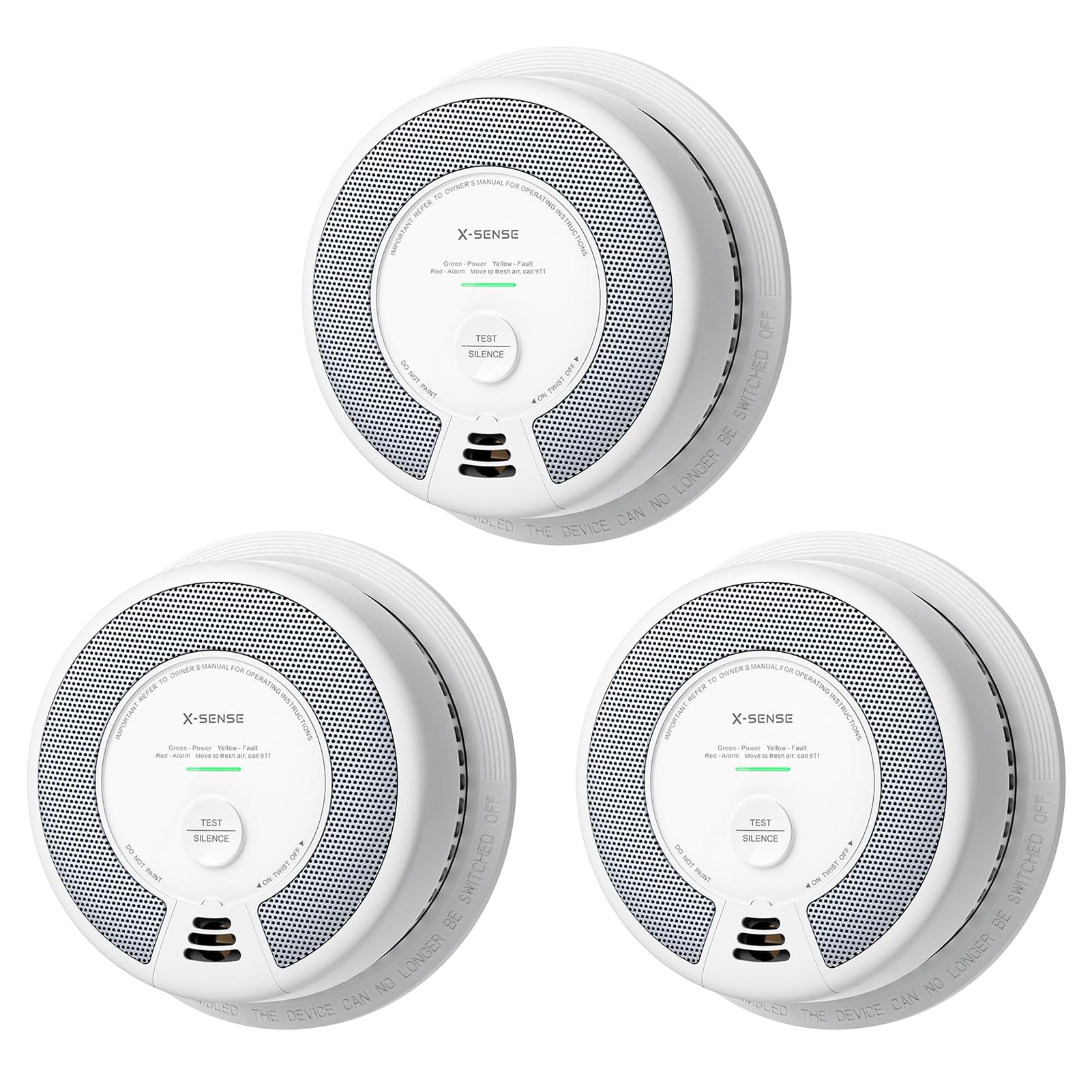
A sealed lithium battery inside means ten years of silence, then one chirp that says it is time to go.
The X-Sense SC06 uses a sealed lithium battery that powers the unit for a full decade. No battery swapping, no low-battery chirps at 2 AM. The 2-in-1 detection uses both a photoelectric sensor for smoke and an electrochemical sensor for CO, certified to meet UL 217 and UL 2034 standards. Installation is simple—mount the bracket, twist the unit on, and press a single button to test.
Owners like the quick setup and the solid, non-cheap feel of the heat-resistant PC material. The honest trade-off is that a small number of units arrive not working, and the reliability among that minority is hit-or-miss. The 60-day money-back guarantee and 5-year warranty cover you, but it is worth testing each unit immediately.
Best for Fuss-Free Homes: If you hate the annual 9V battery dance and want a low-maintenance alarm for a decade, this 3-pack is the simplest route. Just check each unit right away.
8. First Alert Combination Smoke & Carbon Monoxide Alarm, Battery Operated Detector with Test & Silence Button, SMICO100, 3-Pack
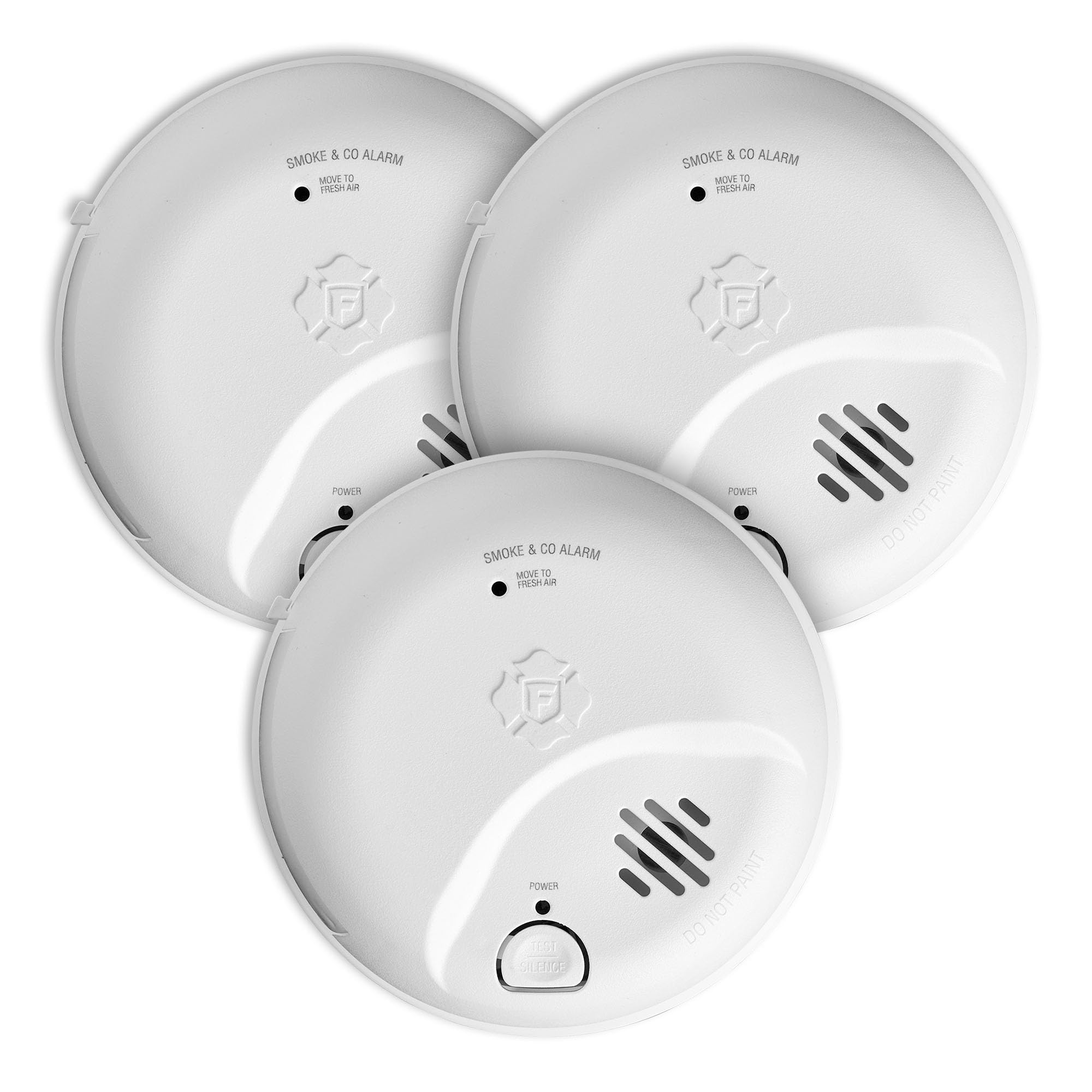
Three First Alert combo alarms for one price—cover the whole floor in one go.
This is the same Precision Detection technology as the single SMCO100 but in a three-pack. Each unit runs on a 9V alkaline battery and includes a test/silence button and an end-of-life warning. The combination smoke and CO sensor means you only need one device per room instead of two.
Buyers consider it one of the best alarms on the market, with clear instructions and easy installation. The dual-detector feature is praised, but the most-discussed topic is reliability—some reviewers point out false alarms or units that stop working before the battery is dead. The honest bottom line: this is a trusted brand in a convenient multi-pack, but test each unit and keep your receipt.
What Stands Out
- Three units for whole-floor coverage
- Trusted First Alert brand with Precision Detection
- End-of-life warning eliminates guesswork
- Easy 9V battery operation
Watch For
- Reliability is mixed—some units trigger false alarms
- Battery life can vary; some shoppers say dead batteries early
Best for Multi-Room Installations: If you need to cover a few rooms or an entire floor with combo detectors, this 3-pack is the most direct option. The trade-off is that not every unit in every pack is flawless.
9. X-Sense Interconnected Smoke and CO Detector Combo, SC01-W, 3-Pack | 10-Year Sealed Battery (Not Hardwired), Whole-Home Wireless Interconnection, UL 217 & UL 2034 Certified
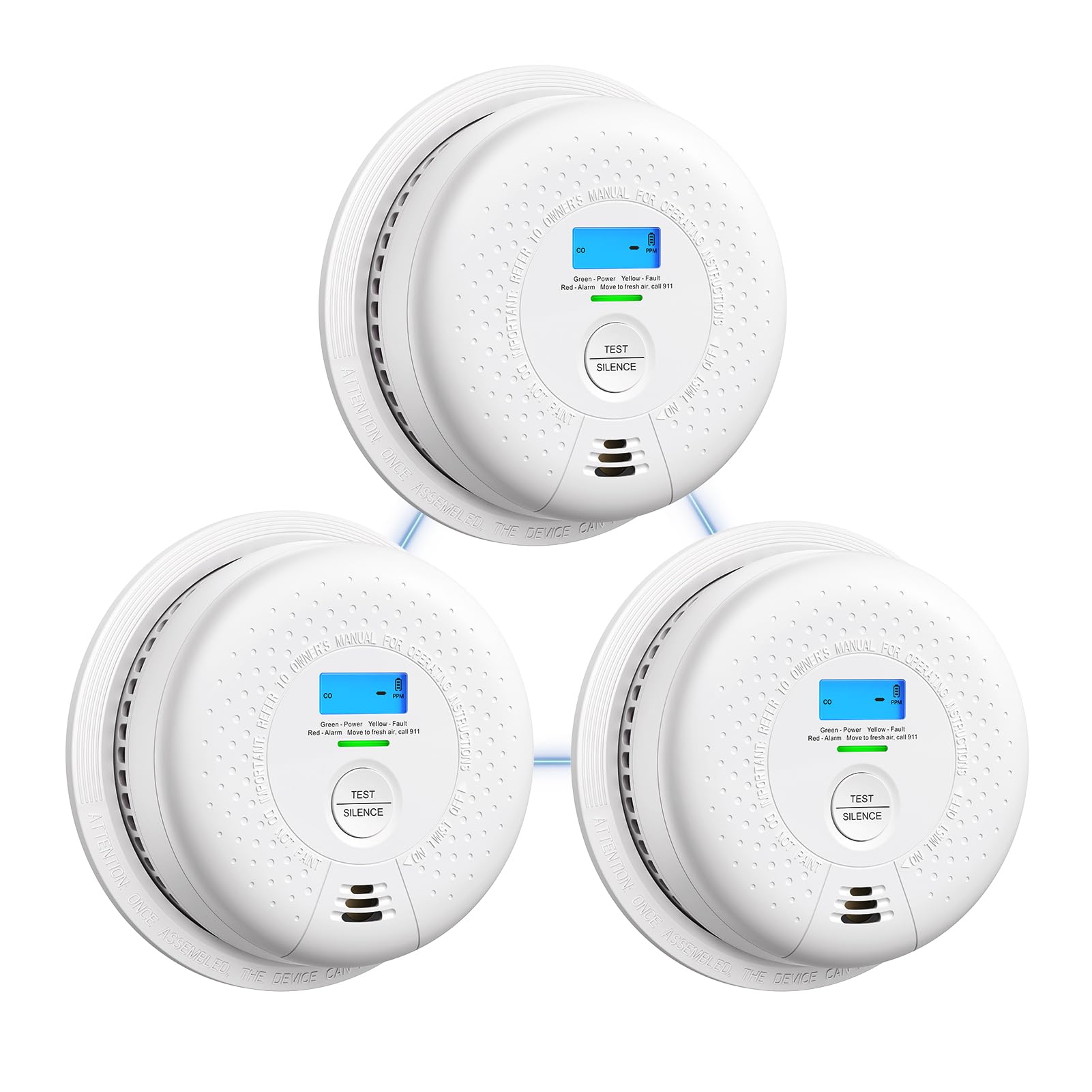
Wireless interconnection that lets every room talk to each other—without a single wire running through the walls.
The SC01-W is the “no wires” version of a whole-home system. When one unit detects smoke or CO, it sends a wireless signal to every other linked X-Sense Link+ device within range, up to 18 units total. The 10-year sealed lithium battery means zero battery changes for a decade. Each unit includes both a photoelectric smoke sensor and an electrochemical CO sensor, certified to UL 217 and UL 2034.
Installation is straightforward with the included mounting bracket and screws, though some owners note the mounting plate is a tight fit over round electrical boxes. The LCD screen provides real-time CO readings, and the 85 dB alarm is loud enough for whole-home warning. The biggest frustration is occasional false alarms—some buyers report them twice a week—and the test button placement makes it hard to reach once the unit is on the ceiling.
The Wire-Free Network: If you want interconnected alarms but cannot run 120V wires, this 3-pack delivers whole-home coverage with a 10-year battery. The trade-offs are the occasional false alarm and the fiddly mounting.
Understanding the Specs
Decibels (dB) — How Loud the Alarm Actually Is
You hear “85 dB” on almost every CO alarm box. That is the standard for a reason: at 85 dB, the sound is loud enough to wake most sleepers through a closed bedroom door. It is about as loud as a hair dryer from a foot away. If you are hard of hearing or sleep in a separate wing of the house, you may want an interconnected system so every unit sounds at once.
Electrochemical Sensor — The Brain Inside the Alarm
This is the technology that measures CO levels in parts per million (PPM). An electrochemical sensor contains a chemical solution that creates an electrical current when it reacts with carbon monoxide. The alarm triggers when the current reaches a threshold that corresponds to a dangerous CO level. It is far more accurate and longer-lasting than older biomimetic gel sensors, and it is the standard you want in any alarm you buy today.
FAQ
How many carbon monoxide alarms do I need in a typical house?
What is the difference between a plug-in and a battery-operated CO alarm?
Why do some CO alarms have a digital display showing numbers?
What does “Peak Level Memory” mean on a CO alarm?
How long does a CO alarm last before it needs replacing?
Can I use a CO alarm in my RV, camper, or boat?
What is the difference between “UL 217” and “UL 2034” certification?
A CO alarm is better than a combined smoke/CO alarm, right?
What is a “false alarm” and how can I reduce them?
How do I properly test my CO alarm once a week?
Final Thoughts: The Verdict
For most people, the carbon monoxide alarm winner is the Kidde 4-Pack Plug-In with 9V Backup because it combines a digital display, peak level memory, and battery backup across four units—enough to cover a typical home. If you want a combined smoke/CO detector that is dead simple to install, grab the First Alert SMCO100. And for a portable diagnostic tool that tracks down specific leaks, the TOPTES CT-580 is the one to reach for.
How We Picked
We do not accept paid placement. Every pick is matched to a real buyer and a real use-case; we do not hands-on test units.
Sources & Methodology
Specifications: manufacturer listings and product documentation. Review insights: verified customer reviews, as of July 2026. Pricing: not shown on this page (it changes often); check the current price via the retailer link.
As an Amazon Associate, Gadgets Feed earns from qualifying purchases. This does not affect which products we feature.